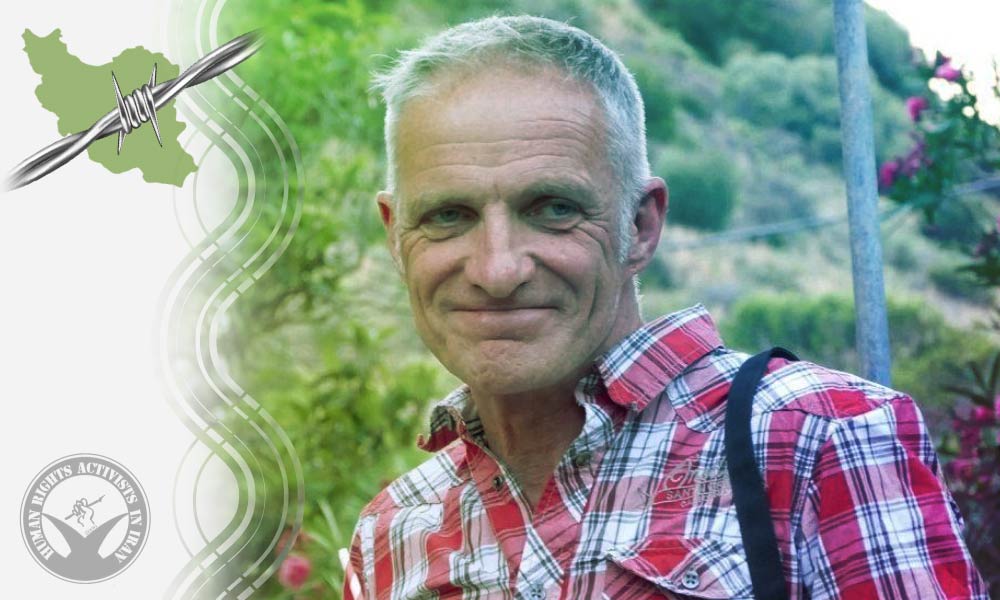
Journalist Mandana Sadeghi and Reza Mohammadi Arrested

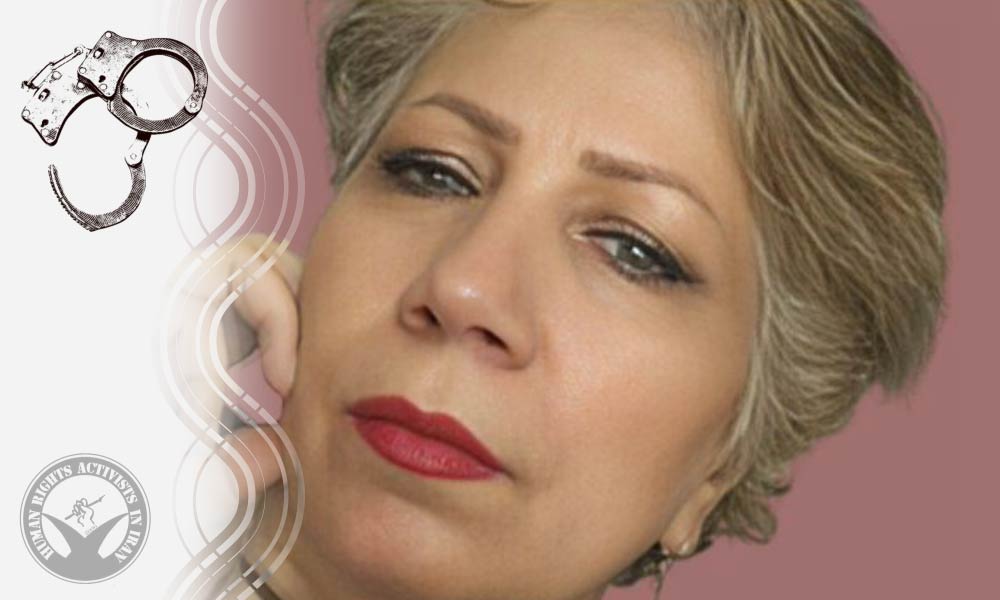
On October 19, 2022, security forces arrested writer and journalist Mandana Sadeghi and her husband Reza Mohammadi at their house in Abadan. The agents transferred them to Ahvaz.

According to HRANA, the news agency of Human Rights Activists, on October 19, Mandana Sadeghi and Reza Mohammadi were arrested.
 
The reason for this arrest and the charges are still unknown.
 
In March of this year, Sadeghi was acquitted of “propaganda against the regime” by the Criminal Court of Ahvaz.


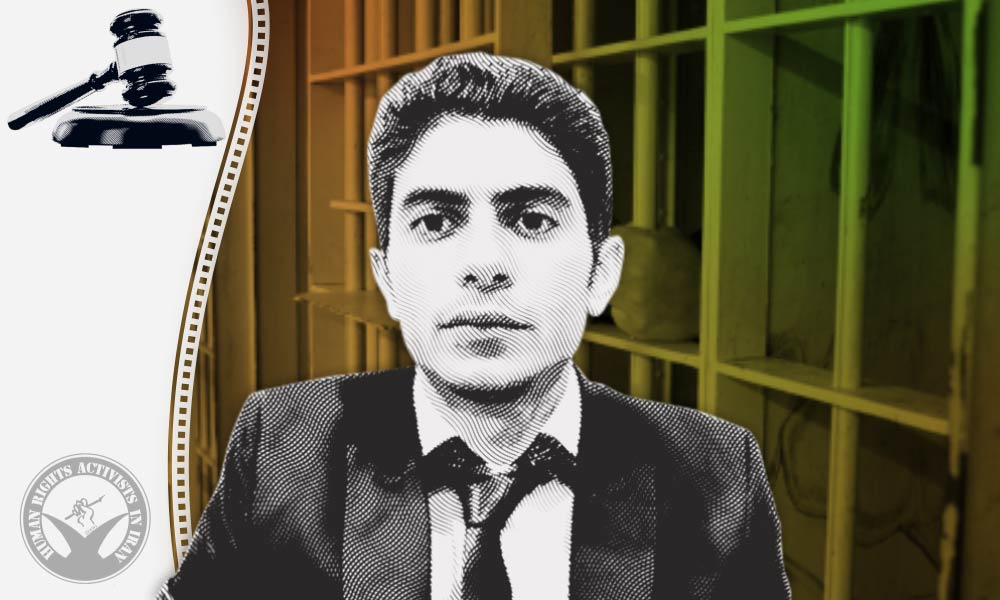
Filmmaker Nik Yousefi Arrested

On October 16, 2022, security forces arrested photographer and filmmaker Nik Yousefi and transferred him to an unidentified location.

According to HRANA, the news agency of Human Rights Activists, on Sunday, October 16, photographer and filmmaker Nik Yousefi was arrested.

Since the arrest, he was allowed to make just one short phone call to his father.
 
The reason for this arrest, his whereabouts and the charges are still unknown.

Attorney at Law Amir Mehdi-Pour Arrested in Tabriz

Recently, related to the nationwide protests, security forces arrested attorney-at-law Amir Mehdi-Pour in Tabriz. Mehdi-Pour is a member of the Human Rights Commission of the Bar Association in East Azerbaijan Province.

According to HRANA, the news agency of Human Rights Activists, attorney Amir Mehdi-Pour was arrested by security forces in Tabriz and transferred to an unidentified location.

In recent days, also two other attorneys Sina Yousefi and Ghasem Baadi were arrested in Tabriz. According to an informed source, Yousefi has been transferred from a detention facility in Tabriz to Evin Prison in Tehran.

Earlier, on Social media, Yousefi had revealed that over 1700 people were arrested during the nationwide protests in Tabriz.


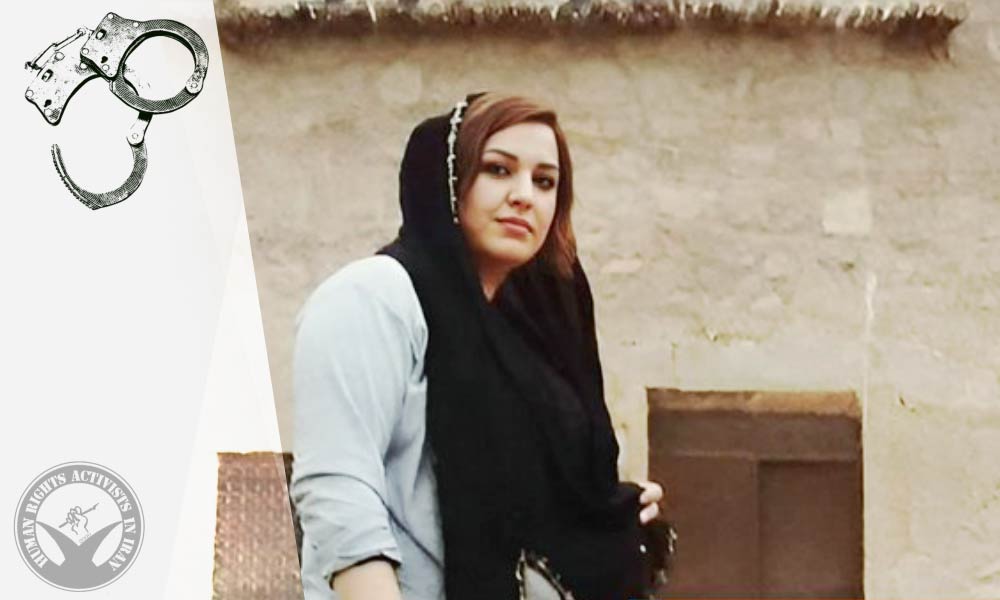
Filmmaker Mojgan Ilanlu Arrested

On October 18, 2022, security forces arrested documentary filmmaker Mojgan Ilanlu and took her to Evin courthouse.

Today, on social media, Ilanlu wrote that security forces took her to Evin Courthouse. Recently, she posted her pictures without hijab in protest against the compulsory hijab and to support the nationwide protests.

Since the outbreak of nationwide protests, thousands of people, including journalists, teachers, students and civil rights activists, have been arrested. For more details and statistics on the nationwide protest across Iran, read HRANA’s comprehensive report here.

Three Inmates Executed in Neyshabur and Zanjan Prisons

On October 13 and 15, 2022, three inmates convicted of murder and drug-related crimes were executed in Neyshabur and Zanjan Prisons.

According to HRANA, the news agency of Human Rights Activists, quoting Iran Human Rights Organization, on October 13 and 15, 2022, three inmates identified as Reza Gharelu, Ali Mohammad Saeedi and Sadegh Afkandeh (age 43) were executed in Neyshabur and Zanjan Prisons.

According to an informed source, Gharelu was convicted of killing one of his friends three years ago. Afkandeh was sentenced to death on drug-related charges four years ago. Mohammad Saeedi had been convicted of murder.

None of these executions has been reported by official sources and media outlets inside Iran so far.


Subscribe to Our Newsletter

Now is definitely not the time to stop reading!

Dozens of Protesters Including School Students Arrested in Ardabil

During the protests in Ardabil recently, dozens of protestors were arrested. HRANA has identified 29 individuals arrested.

Security forces also arrest many school students. According to an informed source, on October 16, over 250 school students were arrested and transferred to Ardabil Correctional Center. For the release of many students, the judicial authorities have granted 100 to 200 million tomans bails.

This source told HRANA that, last Wednesday, the local authorities forcefully took several school students to a planned pro-government rally. The students, however, resisted and chanted anti-regime slogans during the demonstration. In revenge, security forces attacked and beat many students. Many have been injured, of which two students were hospitalized.

Another source told HRANA that there are currently 200 protestors jailed in Ardabil Central Prison. One hundred fifty people have been released on bail.


Spreading Justice; Iran Protests Weapons Analysis

Iranian officials fail to use non-violent means before resorting to the use of force or firearms

Iranian officials fail to use non-violent means before resorting to the use of force or firearms

SPREADING JUSTICE– As nationwide protests continue across Iran, Spreading Justice continues to monitor the use of violence namely lethal force against protestors. Despite the claims of authorities, there is concrete evidence pointing to the use of excessive and lethal force against protestors.

The presence of the FARAJA force is prominent; indeed, these special units are much more visible in the current unrest than in previous instances. In addition to the FARAJA, the Imam Ali Security Battalions, affiliated with the Basij Forces, under the command of the IRGC ground forces are playing a key role in the suppression of unarmed protestors.

Spreading Justice has collected evidence which shows the use of lethal weapons by the above forces. In addition to anti-riot equipment such as tear gas, pepper spray, shockers, and batons, the repressive forces have used a variety of prohibited weapons against civilians. The report released today documents a series of reports analyzed by Spreading Justice pointing to the overwhelming conclusion that there has been ongoing use of lethal weapons against protestors

Download the full report in PDF version

Paintball Guns

The paintball gun, which can be bought and sold in the market, is designed as a weapon for playing or using in sport clubs. This gun, which is mainly made of aluminum, works with various gases, including CO2 gas, compressed air, or nitrogen.

The caliber of this weapon is 0.68, it has a range of approximately 45 meters, and it can hold up to 200 bullets per load and operate semi-automatically.

Paintball guns are not considered lethal weapons in general, however their use by law enforcement against protesters specially targeting of their face and upper body is prohibited. Several reports have been submitted to Spreading Justice, showing that FARAJA units use this weapon to target the faces of protesters, which in some cases have caused injury, especially to the eye. Spreading Justice has documented the dangerous use of this weapon in various cities including Tehran, Mashhad, Rasht, Karaj and Sanandaj.


 Shotguns

A shotgun is a type of gun that has a groove-less barrel and fires many spherical pallets at the target in each shot. This type of gun is usually used in hunting and sports and sometimes in war and for police forces. Shotguns range usually does not exceed 100 meters. Most two-barrel guns fall under this division of firearms. A shotgun cartridge usually has a cardboard or plastic casing called shotshell, and its size is expressed by a number that is sometimes called caliber in Farsi, analogously to bullet guns.

Shotguns usually exist in the form of long barreled or waist guns, but evidence found so far indicates that the only ones used in facing protesters are long-barreled types.

Shotguns have been systematically used in various cities by plain clothes or uniformed forces against protestors in recent protests, despite being prohibited and potentially its use being considered unlawful. OHCHR indicates that use of projectile weapons is unlawful under certain circumstances. The use of shotguns in recent protests against the protesters fails at least 3 of the requirements for the use of this weapon, in addition to having been used on unarmed peaceful protestors, shot guns have been used unlawfully because (1) multiple pallets were fired at the same time which means it cannot comply with the principles of necessity and proportionality. (2) in some cases, were used in a very short distance, (3) they were targeted at the face and neck of protestors.

According to the documents collected by the Spreading Justice, most of the shells used in the recent protests were 12mm pallets, which usually hold 9 bullets and can be deadly if used at less than 40 meters.

After studying the forensic documents and speaking to eyewitnesses, Spreading Justice confirms that the FARAJA forces used a shotgun was the weapon used to kill Mohammad-Javad Zahedi in the city of Sari.

Spreading Justice has talked to at least three doctors who have treated the injured in recent incidents. According to the testimony of these doctors, more than 80 patients were wounded by pallets from shotguns. It should be noted that this large number is based on the testimony of only three doctors in the cities of Tehran, Rasht and Karaj.

According to testimonies and reliable video documentation, the pallets did not only hit the lower body of the protestors, but they were found in various parts of the body including the face and torso. This shows that contrary to the statements of law enforcement officials, the forces present at the scene have used this weapon, which can be deadly, by firing indiscriminately at the protesters.

In addition to unbranded ammunition, Spreading Justice has analyzed pictures of used shotshells, which belong to the Maham company. Maham is a subsidiary of Iran’s Ministry of Defense.

Assault rifles

Based on reports received by Spreading Justice, the weapons of war used to suppress protestors were mainly one of the below:

  • Kalashnikova
  • Heckler & Koch G3
  • Steyr HS .50

 Spreading Justice has received information on the use of Styr HS .50, however has not been able to confirm its use and is in the process of examining and monitoring for additional evidence on the use of this weapon, therefore the details of use of this weapon is not discussed in this report and will be discussed in the future reports.

Kalashnikova (known as: Kalash or AK-47) is an assault rifle that operates with gas and is chambered for 7.62 x 39mm cartridge. The effective firing range for an AK-47 is between 300 to 400m and its maximum range is 2000m. The standard magazine capacities of this weapon are 30 or 75 rounds drum.

Another weapon that falls under this category is Heckler & Koch G3. This weapon has caliber of 7.62 and 51mm bullets. Its effective firing range is 200 to 400m and its standard magazine capacity is 30 as well as up to 100 round drum magazines.

Although these weapons are being used less than in previous instances, they were most documented in the massacre of Zahedan that came to be known as bloody Friday of Zahedan, and the use of Kalashnikova in the deadly attacks on Sanandaj.

 According to the opinion of the doctors consulted by Spreading Justice, the effects of this weapon can be seen on the bodies of some victims, including Omid Sarani and Matin Ghanbarzehi.

As mentioned, the death of about 90 Baloch protesters in the event of Black Friday in Zahedan are considered the most concrete evidence of the use of these weapons against the protesters.

Considering the extent of protests in 114 cities and 79 universities, Spreading Justice cannot consider the use of these weapons as dominant way of suppressing the protestors in recent protests.

Handguns

There are many types of handguns, but according to Spreading Justice in consultation with experts, the most common type available to the FARAJA forces is the German Sig Sauer, which is known as Zoaf in Iran.

This 9mm semi-automatic weapon is armed with direct gas pressure and its barrel is air-cooled. This weapon is used in short distances and its magazine usually holds 8 bullets.

There are reports of the use of revolvers and various Glock or Beretta by the security and military forces, however Spreading Justice has not been able to independently confirm their use in the recent protests, we continue to monitor and examine evidence and will update our future reports on the use of these lethal weapons in our future reports.

By examining the available evidence, Spreading Justice can confirm that this lethal weapon has been used by FARAJA uniformed officers in at least four locations in Zahedan, Karaj, Rasht, and Tehran.

However, from Spreading Justice examination of reports and evidence it is apparent that the use of handguns has not been in a systematic manner.

Spreading Justice continues its investigation and evidence gathering related to the use of weapons to suppress protestors. Official claims that the forces at the scene were not equipped with lethal weapons is false. Spreading Justice will continue its monitoring of the deployment of lethal force against protestors by FARAJA and other forces.


For media inquiries, please contact HRA Senior Advocacy Coordinator Skylar Thompson at [email protected]

43 Human Rights Organizations Urge UN Human Rights Council to Hold Special Session on Iran

On October 17, 2022, Human Rights Activists in Iran and 42 other human rights organizations issued a joint letter urging the UN Human Rights Council to hold a special session to address “the most serious crimes under international law and other gross human rights violations committed in Iran, including in the context of successive waves of protest crackdowns.”

The following is the full text of this letter:

UN Human Rights Council must hold a special session on Iran

We are writing to raise our deep concerns about the Iranian authorities’ mobilization of their well-honed machinery of repression to ruthlessly crackdown on current nationwide protests.

The United Nations Human Rights Council should act as a matter of urgency by holding a special session and — given the gravity of crimes under international law and other serious human rights violations committed in Iran and the prevailing systemic impunity — establish an independent, investigative, reporting and accountability mechanism.

The recent protests were sparked by outrage at the death in custody of Mahsa (Jina) Amini, a 22 year old woman from the Kurdish minority, on 16 September 2022 days after being arrested by the “morality” police for not complying with the country’s discriminatory and abusive compulsory veiling laws, which perpetuate violence against women and girls in Iran and strip them of their right to dignity and bodily autonomy. The focus of the protests has since quickly expanded to broader grievances and encompassed demands for fundamental political and social change towards protection and fulfilment of human rights.

Evidence gathered by a number of the undersigned organizations shows a harrowing pattern of Iranian security forces deliberately and unlawfully firing live ammunition and metal pellets, including birdshot, at protesters and bystanders including children. Undersigned organizations are documenting growing numbers of protesters and bystanders killed, with some already reporting over 200 deaths, including at least 23 identified children, in Sistan and Baluchistan, Kurdistan and other provinces throughout Iran, as well as hundreds of others injured to date in the ongoing crackdown. The actual numbers, though, are likely to be much higher and growing. Since 18 September 2022, over one thousand protesters, human rights defenders, civil society activists, journalists, university students and school children have been arbitrarily arrested and detained, some already charged with “acting against national security.” This cycle of deadly repression in the context of protests has become alarmingly familiar in recent years. During previous waves of mass protests including in December 2017-January 2018, November 2019, July 2021, November 2021 and May 2022, a number of our organizations documented similar widespread patterns of crimes under international law and other serious human rights violations, such as unlawful killings resulting from unwarranted use of force, including lethal force, mass arbitrary arrests and detention, enforced disappearances, torture and other ill-treatment, and sentencing individuals to lengthy prison terms and death following grossly unfair trials.

Without concerted collective action by the international community that goes beyond statements of condemnation and long-standing calls directed at the Iranian authorities to conduct investigations, countless more men, women and children risk being killed, maimed, tortured, sexually assaulted and thrown behind bars, and evidence of grave crimes risks disappearing. The Iranian authorities have repeatedly ignored the calls of the UN Secretary General, the UN High Commissioner for Human Rights, multiple UN Special Procedures, UN Member States and the UN General Assembly to cease the unlawful use of force, including lethal force, against protesters and bystanders and to effectively investigate and prosecute those responsible for unlawful killings, torture and other ill-treatment. Simply put, all avenues for accountability are closed at the domestic level.

This latest round of bloodshed in the context of protests in Iran is rooted in and fueled by this deep and longstanding pattern of systemic impunity for the most serious crimes under international law which, given the scale and severity of past and ongoing human rights violations, the UN Human Rights Council has not sufficiently addressed.

In this context, we urge the UN Human Rights Council to hold a special session as a matter of urgency. At that session, the Council should establish an independent mechanism with investigative, reporting and accountability functions to address the most serious crimes under international law and other gross human rights violations committed in Iran, including in the context of successive waves of protest crackdowns. The mechanism should conduct investigations into such crimes and violations with a view to pursuing accountability, in particular where violations may amount to the most serious crimes under international law. The mechanism should be mandated and adequately resourced to gather and preserve evidence, and to share it with national, regional and international courts and administrative bodies that may have jurisdiction over crimes. Its public reporting should include analysis of patterns of crimes and violations and the identification of perpetrators.

A mechanism with such functions is urgently needed to complement the mandate of the UN Special Rapporteur on the situation of human rights in Iran, given the gravity and scale of the crimes committed with absolute impunity in the country. The Special Rapporteur has underscored the urgency of “accountability with respect to long-standing emblematic events that have been met with persistent impunity, including the enforced disappearances and summary and arbitrary executions of 1988 and the protests of November 2019.”

In his statement to the UN Third Committee in October 2021 and January 2022 report, the Special Rapporteur has reflected on “the structural impediments for accountability” and the “lack of any progress or political will to conduct investigations, let alone ensure accountability.” The Special Rapporteur has stressed that within Iran’s current “system of governance, it is clear that obtaining accountability for human rights violations becomes arbitrary at best and impossible at worst” and emphasized that “it becomes imperative that the international community uses other existing channels, including in international fora … to seek accountability…. Without the involvement of the international community, such grave violations will continue.”

Many family members of human rights defenders have been threatened while the human rights defenders have been violently arrested and their houses raided.  Human rights defenders and victims’ relatives are echoing growing frustration at the international community’s failure to take meaningful action to address successive waves of protest killings in Iran. The father of Milan Haghigi, a 21-year-old man killed by security forces on 21 September, said: “People expect the UN to defend us and the protesters. I, too, can condemn [the Iranian authorities], the whole world can condemn them but to what end this condemnation?”  Meaningful action by the international community, in the form of the creation of an independent, investigative, reporting and accountability mechanism, is long overdue.


Signatories:


  1. Abdorrahman Boroumand Center for Human Rights in Iran
  2. The Advocates for Human Rights
  3. All Human Rights for All in Iran
  4. Amnesty International
  5. Article18
  6. Article 19
  7. Arseh Sevom
  8. Association for the human rights of the Azerbaijani people in Iran (AHRAZ)
  9. Association for Women’s Rights in Development (AWID)
  10. Baloch Activist Campaign
  11. Balochistan Human Rights Group (BHRG)
  12. Cairo Institute for Human Rights Studies
  13. Center for Human Rights in Iran
  14. Centre for Supporters of Human Rights
  15. CIVICUS
  16. Ensemble Contre la Peine de Mort
  17. FEMENA
  18. Freedom from Torture
  19. Front Line Defenders
  20. Global Centre for the Responsibility to Protect
  21. Gulf Center for Human Rights
  22. Haalvsh
  23. Hengaw Organization for Human Rights
  24. Human Rights Activists in Iran (HRA)
  25. Human Rights Watch
  26. Impact Iran
  27. International Commission of Jurists
  28. International Federation for Human Rights (FIDH)
  29. International Service for Human Rights (ISHR)
  30. Iran Human Rights
  31. Iran Human Rights Documentation Center (IHRDC)
  32. Justice for Iran
  33. Kurdistan Human Rights Association-Geneva (KMMK-G)
  34. Kurdistan Human Rights Network
  35. Kurdpa Human Rights Organisation
  36. League for the Defence of Human Rights in Iran
  37. Miaan Group
  38. Minority Rights Group International (MRG)
  39. Rasank
  40. Siamak Pouzand Foundation
  41. 6Rang (Iranian Lesbian and Transgender Network)
  42. Women’s International League for Peace and Freedom
  43. World Organisation against Torture (OMCT)

Ayatollah Abdolhamid Masoumi Tehrani Arrested

On Sunday, October 16, 2022, security forces arrested Abdolhamid Masoumi Tehrani at his house in Tehran. Masoumi Tehrani has been harassed by judicial and security authorities for his criticism and jurisprudential statements, which stand at variance with the regime-backed Islamic jurisprudence.

According to HRANA, the news agency of Human Rights Activists, on October 16, 2022, cleric Abdolhamid Masoumi Tehrani was at his house in Tehran.

An informed source told HRANA that six security agents raided his house and arrested him. They also searched the house and confiscated some of his personal belongings.

Since the outbreak of nationwide protests, thousands of people, including journalists, teachers, students and civil rights activists, have been arrested. For more details and statistics on the nationwide protest across Iran, read HRANA’s comprehensive report here.


Former Political Prisoner Zahra Zare Seraji Arrested

On Sunday, October 16, 2022, security forces arrested former political prisoner Zahra Zare Seraji in Varamin and transferred her to Ward 209 of Evin Prison.

According to HRANA, the news agency of Human Rights Activists, on October 16, 2022, former political prisoner Zahra Zare Seraji was arrested at her house in Varamin.

Seraji faced other arrests and convictions on a prior occasion. In 2018, Seraji was sentenced to eight years in prison on the charges of forming an illegal group, disseminating lies in cyberspace, and propaganda against the regime. Her husband, Morteza Nazari Sedhi was sentenced to 13 years for the same charges.

Since the outbreak of nationwide protests, thousands of people, including journalists, teachers, students and civil rights activists, have been arrested. For more details and statistics on the nationwide protest across Iran, read HRANA’s comprehensive report here.