Human Rights Activists News Agency (HRANA) – Since coming to the defense of their spiritual leader in what came to be known as the “Golestan Haftom” incident, the Gonabadi Dervish religious minority has faced unprecedented pressure from Iranian authorities.
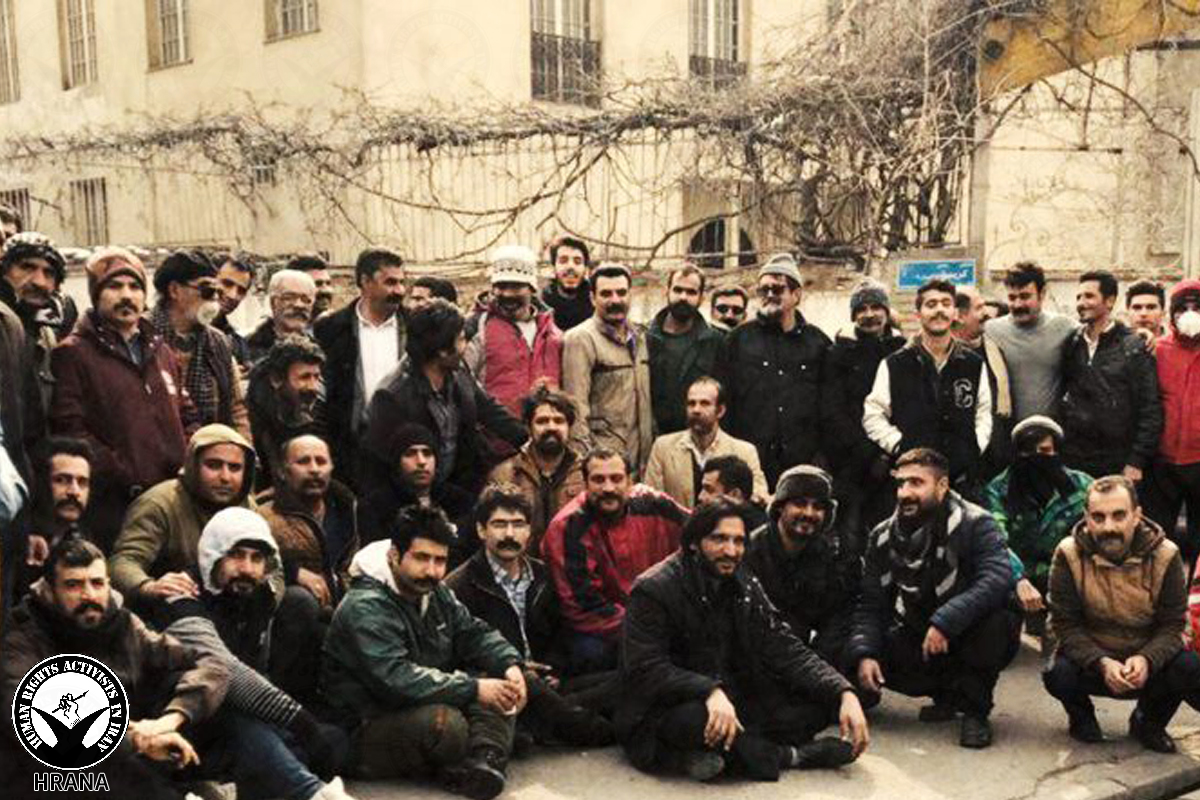
Around midnight on February 3, 2018, several hundred Gonabadi Dervishes gathered before the home of their spiritual leader Noor Ali Tabandeh, in a gesture of protection against heightened security monitoring of his activities (security forces had aggressively intervened in Dervish gatherings in the same spot less than two weeks earlier). Their February 3rd demonstration — on Golestan-e Haftom street in Tehran, hence the incident’s name — would fare no better and was soon violently disbanded by Iranian police and plainclothes forces of the Revolutionary Guard’s Basij faction.
While Iranian judiciary authorities and law enforcement initially announced that they had detained about 300 citizens in connection to Golestan Haftom, HRANA was able to confirm the identities of 382 arrestees. Among them were 11 women who were transferred to Qarchak Prison in Varamin after their arrests: Nazila Nouri, Shima Entesari, Sima Entesari, Sedigheh Safabakht, Shokofeh Yadollahi, Sepideh Moradi, Elham Ahmadi, Maryam Afrasiabi, Avisha Jalaledin, Masoumeh Barakoohi, and Shahnaz Kian Asl.
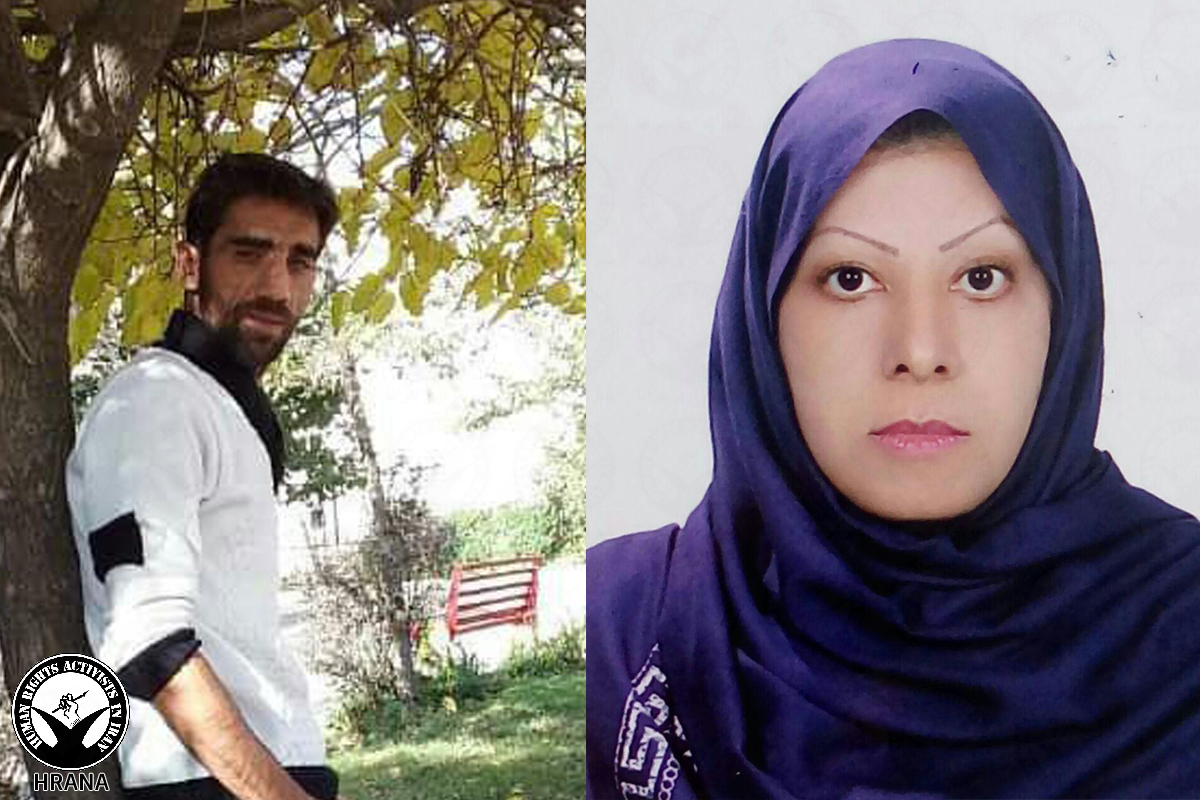
HRANA was able to obtain the verdicts of 202 of these detainees, as well as details on those who were brutalized by the Judiciary. 201 people were sentenced to prison terms, lashings, travel bans, exile sentences, and long-term bans on civic activity. Two more, Mohammad Raji and Mohammad Salas, were killed for their participation in Golestan Haftom.
On the night of March 3rd, police had contacted Mohammad Raji’s family, asking them to bring his photo and identifying documents. The next morning, police at Shapoor Criminal Investigation Department Base 10 told the family that Raji was in a coma. A few hours later, police followed up by phone to say he had died. Upon their arrival at the police station, officers announced his cause of death: he had been beaten to death by interrogators.
Mohammad Salas was accused of driving a bus that allegedly struck and killed three police officers on Pasdaran Street in Tehran. He exhausted all avenues of appealing his death sentence without success, and was executed in the morning of Monday, August 20, 2018 — though Salas’ children and his spouse Zaynab Taheri attest that he could not have been the driver of the bus, as he was already in custody three hours prior to the crash.
Tehran General Prosecutor Abbas Jafari Dolatabadi announced July 24th that 330 sentences had thus far been handed down in Dervish cases. He added: “In the cases of those 25 who refused to attend their court sessions in attempts to thwart trial proceedings, the court […] followed through with procedure. Their verdicts were delivered to them in person.”
Dervishes’ Rights Activists in Great Tehran Penitentiary penned an open letter to the prison’s director refusing to attend a trial that lacked transparency.
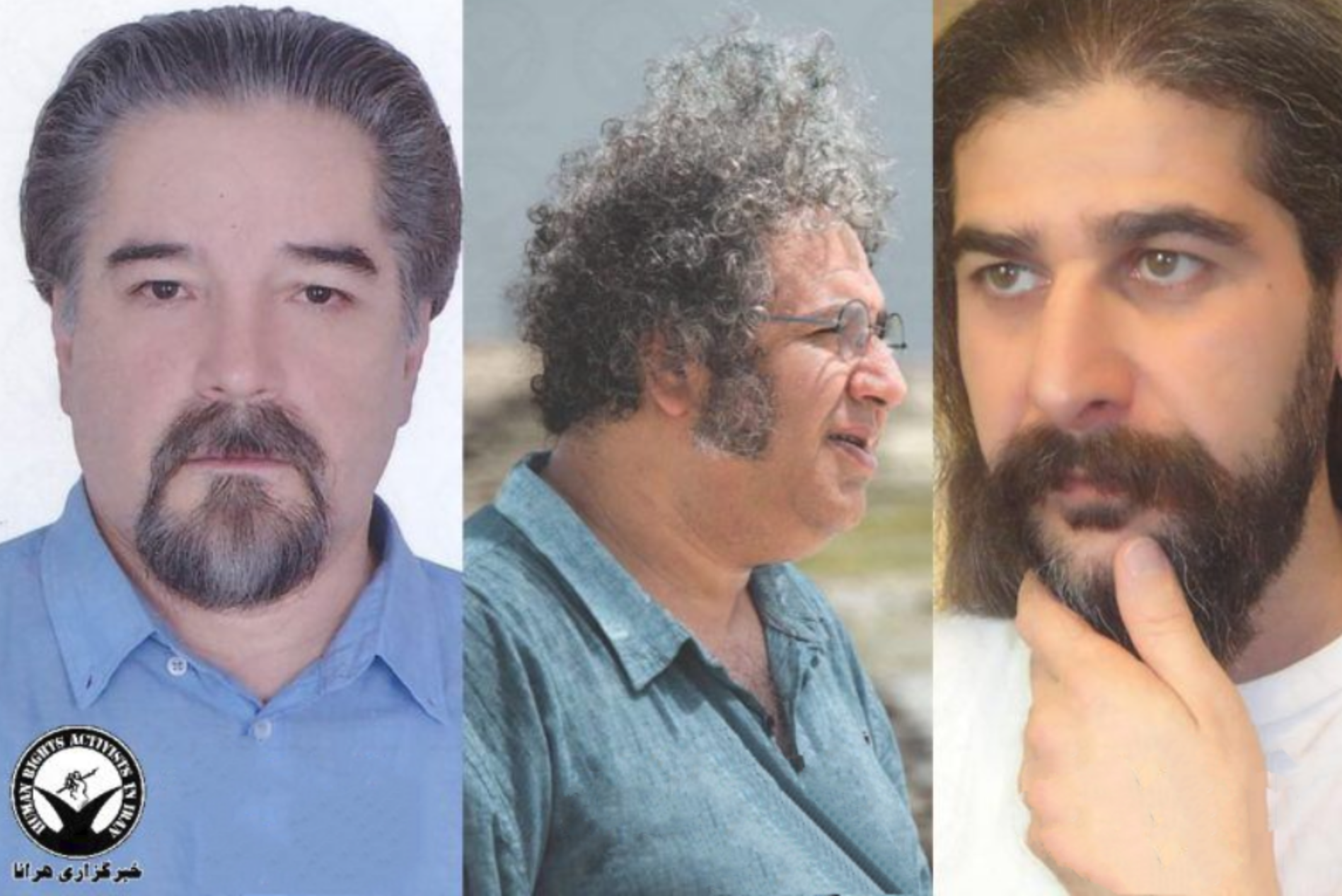
At least five of the convicted Dervishes currently detained in Great Tehran Penitentiary are former administrators and collaborators of the Majzooban-e-noor Dervish news site: Mostafa Abdi, Mohammad Sharifi Moghaddam, Saleh Moradi, Reza Entesari, and Sina Entesari.
Some Dervish prisoners who have been assaulted by authorities were denied medical care for their injuries and reported hostile and discriminatory treatment from authorities.
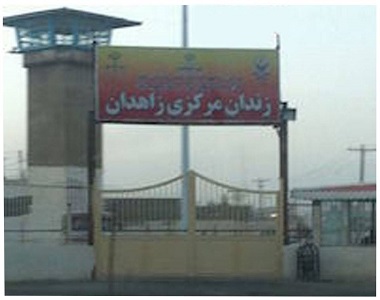
Prison regulations and conventions on prisoners’ rights stipulate that prisoners, as a safety precaution, be housed separately according to their crimes and beliefs. Authorities at Gharchak Prison and Great Tehran Penitentiary, however, house Dervishes [political prisoners] in a general ward alongside common criminals.
Below are the identities and convictions of 202 Golestan Dervishes:
1. Mohammad Yavar Salas, executed.
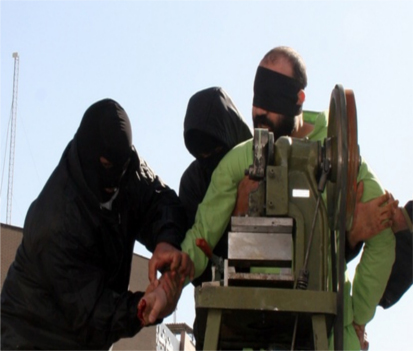
2. Mostafa Abdi, Majzooban-e-Noor administrator, sentenced to 26 years and 3 months in prison, 148 lashings, a 2-year ban on both civic activities and travel, and a 2-year exile sentence to Sistan & Sistan & Baluchestan Province.
3. Mehdi Mahdavifar and 4. Mostafa Mirmohammadi, each sentenced to 13 years and 6 months in prison, 144 lashings, a 2-year travel ban, and a 2-year exile sentence to Sistan & Baluchestan Province. Mahdavifar was also sentenced to a 2-year ban on civic activities.
5. Reza Rezai, sentenced to 13 years in prison, 148 lashings, and a 2-year exile sentence to Mirjaveh (Sistan & Baluchestan Province).
6. Mohammad Sharifi Moghaddam, Majzooban-e-Noor journalist, sentenced to 12 years in prison, 74 lashings, a 2-year travel ban, a 2-year exile to Borazjan (Bushehr Province), and a 2-year ban on civic activities.
7. Vahid Khamooshi, sentenced to 12 years in prison and a 2-year exile to Rayen (Kerman Province).
8. Bashir Riahi Ghaletaki, sentenced to 10 years and 6 months in prison, 148 lashings, a 2-year exile to Khash (Sistan & Baluchestan Province)[3] and a 2-year ban on civic activities.
9. Faramarz Mangari, sentenced to 10 years in prison, 74 lashings, and a 2-year exile sentence to Roudbar (Kerman Province).
10. Reza Yavari, sentenced to 9 years in prison, 74 lashings, and a 2-year exile to Taybad (Razavi Khorasan Province).
Sentenced to 7 years in prison and 74 lashings (plus a 2-year exile sentence for detainees No. 11 to 32):
11. Manouchehr Kokabi 12. Mansoor Farhoodmand 13. Moslem Norouzi 14. Morteza Shokri 15. Mahmood Barakoohi 16. Mohammad Karimaei 17. Mohammad Reza Darvishi 18. Alireza Lak 19. Alireza Azadravesh, 20. Ali Karimi 21. Ali Ghamari 22. Siamak Sohrabi 23. Saeed Soltanpour 24. Heydar Teymouri 25. Habib Ghanbari 26. Babak Moradi 27. Iraj Madhi 28. Ehsan Malekmohammadi 29. Ehsan Saffari 30. Rasoul Hoveyda 31. Mehrdad Rezai 32. Ramin Eshkoh 33. Mostafa Rahsepar 34. Masoud Alimadadi 35. Mohammad Reza Zehtab 36. Mohammad Reza Abolfathi 37. Mohammad Asad Zamani 38. Majid Rashidi 39. Majid AmirAhmadi 40. Hamid Reza AmirAhmadi 41. Jahangir Haghani 42. Armin Abolfathi 43. Arman Abolfathi 44. Amir Seyedi 45. Amir Salimi Chegini 46. Afshin Salimi Chegini 47. Abolfazl Babahosseini 48. Ebrahim Allahbakhshi Hafshejani 49. Nemat Kazemi 50. Saeed Khamooshi.
Sentenced to 7 years in prison, 74 lashings, and a 2-year ban on civic activities:
51. Morteza Bidchi Kangarloo 52. Mahmoud Baghyar 53. Mohammad Samadyar (Kangarloo was also sentenced to a 2-year exile in Sarbisheh, South Khorasan Province).
Sentenced to 7 years in prison, 74 lashings, and a 2-year ban on both civic activities and travel:
54. Morteza Sohrabpour 55. Sajjad Razmi 56. Reza Nematollahi 57. Hassan Abbasi 58. Hassan Shahreza 59. Hesam Moeini 60. Amin Soleymani 61. Mohsen Norouzi
62. Majid Moradi, sentenced to 7 years in prison and 75 lashings.
63. Ali Bahadori, sentenced to 7 years in prison, a 2-year ban on civic activities, and a 2-year exile to Mirjaveh.
64. Abdollah Esmaeili, sentenced to 7 years in prison and a 2-year ban on civic activities.
65. Samad Dadras and 66. Saleh Kamali Dehkordi were sentenced to 7 years in prison and a 2-year travel ban.
67. Khashayar Dehghan, a Ph.D. candidate in Electronics at Tehran University, sentenced to 7 years in prison, 74 lashings, and a 2-year in exile to Borazjan.
68. Saeed Karimaei and 69. Sekhavat Salimi, each sentenced to 7 years in prison, 74 lashings, a 2-year ban on civic activities, and a 2-year in exile, Karimaei to Nehbandan (South Khorasan Province) and Salimi to Nikshahr (Sistan & Baluchestan Province).
70. Saeed Doorandish 71. Saeed Sigarchi 72. Ahmad Barakouhi 73. Mojtaba Beiranvand 74. Behnoud Pour Rostami 75. Moghimi 76. Ahmad Iranikhah 77. Mohsen Abolhassani
The above were all sentenced to 7 years in prison and a 2-year exile sentence, Doorandish to Zabol (Sistan & Baluchestan Province), Sigarchi, Barakouhi, Beiranvand, and Pour Rostami to Sistan & Baluchestan Province, Moghimi to Zahak village (Sistan & Baluchestan Province) and Iranikhah and Abolhassani to Borazjan.
78. Rostam Sagvand 79. Behrouz Sadeghi Oliyaei and 80. Ardeshir Ashayeri, each sentenced to 7 years in prison, 74 lashings, a 2-year ban on civic activities, and a 2-year exile, Sagvand to Nehbandan and Sadeghi, Oliyaei, and Ashayeri to Saravan (Sistan & Baluchestan Province).
81. Akbar Beiranvand, sentenced to 7 years in prison, a 2-year ban on civic activities and a 2-year in exile in Zahak.
82. Abolfazl Sahraei, sentenced to 7 years in prison, 74 lashings, a 2-year ban on civic activities, and a 2-year exile to Sarbisheh (South Khorasan Province).
83. Saleh Moradi, a Majzooban-e-Noor administrator, sentenced to 7 years in prison, 74 lashings, and a 2-year in exile to Borazjan.
84. Reza Entesari and 85. Sina Entesari, Majzooban-e-Noor administrator, each sentenced to 7 years in prison, 74 lashings, a 2-year exile and 2-year ban on both civic activities and travel.
Each sentenced to 7 years in prison:
86. Younes Lak 87. Nima Azizi Tazangi 88. Nader Beiranvand 89. Mehran Asgharzadeh, 90. Mehdi Bakhtiari 91. Mostafa Armandoost 92. Masoud Marzoughi 93. Morteza Ghaderi Samani 94. Mohammad Reza Babazadeh Shayan 95. Mohammad Reza Rooein Esfandiari 96. Mohsen Ashtiani 97. Majid Karimi 98. Ghasem Hassanloo 99. Farhad Naeimi 100. Gholam Abbas Avazeh 101. Gholam Abbasi 102. Ali Asghar Shariat 103. Mohammad Reza Heidari 104. Reza Bavi 105. Hamid Amir Ahmadi 106. Bijan Soltani 107. Babak Taghian 108. Arash Moradi 109. Amir Astaraki 110. Omid Moghaddasi 111. Asghar Mohammadi 112. Gholam Abbas Hajatinia
113. Maryam Farsyabi and 114. Mehdi Eskandari, each sentenced to 6 years in prison and a 2-year travel ban.
115. Farhang Bouzari Kharrazi and 116. Amir Nouri, each sentenced to 6 years in prison, 74 lashings, and a 2-year travel ban.
117. Hossein Soleymani and 118. Asghar Ebrahimi Magham, each sentenced to 6 years in prison and a 2-year ban on civic activities.
119. Amin Hosseini and 120. Akbar Dadashi, each sentenced to 6 years in prison and 74 lashings.
121. Abolfazl Avazeh, sentenced to 6 years in prison, 74 lashings, and a 2-year exile to Mirjaveh.
Each sentenced to 6 years in prison:
122. Farham Farhang Kermani 123. Seyed Mehdi Fateminasab 124. Reza Farashi 125. Seyed Hossein Hashemi 126. Habib Gallehdari
127. Elham Ahmadi and 128. Sepideh Moradi, each sentenced to 5 years in prison and a 2-year ban on both civic activities and travel.
129. Mehdi Izadpanah and 130. Ali Barian, each sentenced to 5 years in prison and a 2-year exile to Sirjan (Kerman Province).
131. Hossein Arang 132. Shokoufeh Yadollahi 133. Seddigheh Safabakht, each sentenced to 5 years in prison and a 2-year ban on civic activities.
Each sentenced to 5 years in prison:
134. Nazila Nouri 135. Shima Entesari 136. Sima Entesari 137. Avisha Jalaleddin 138. Ali Mashallah Vafaei Fard 139. Shahab Bakhshian 140. Mohammad Dalvand 141. Hossein Arab Ameli 142. Asghar Samadyar.
Each sentenced to 3 years in prison:
143. Amir Bahador Jafari 144. Ghasem Zamani 145. Mohsen Azizi 146. Meysam Azizan
147. Mehrdad Eini, sentenced to 2 years in prison and a 2-year ban on both civic activities and travel.
148. Hamid Ashayeri, sentenced to 2 years in prison and a 2-year exile to Sistan & Baluchestan Province.
Each sentenced to 2 years in prison:
149. Esmaeil Norouzi 150. Ashkan Kazemi 151.Elyas Mohammadi 152. Omid Mahdavi 153. Seyed Jalaloddin Ghaznavi Bidgoli 154. Pouria Nouri 155. Hossein Jashn 156. Hossein Haj Mohammadi 157. Sajjad Baradaran 158. Abbas Beraghmadi 159. Ali Afshar Asli 160. Ali Bolboli 161. Ali Rashno 162. Ali Asghar Salari 163. Ali Reza Siasi 164. Kamaran Bahadori 165. Malek Rezaei 166. Mohammad Amir Ahmadi 167. Mohammad Alamdoost 168. Mohammad Ghasem Allahyari 169. Mousa Fazlipour.
170. Kasra Nouri, an M.S. student in Human Rights at Tehran University, sentenced to 1 year in prison, 74 lashings, a 2-year ban on both civic activities and travel, and a 2-year exile to Salas Babajani (Kermanshah Province).
171. Ali Ghannadzadeh, sentenced to 1 year and 4 months in prison.
Each sentenced to 1 year in prison:
172. Yaser Soleymani 173. Ebrahim Rezaei 174. Alborz Rostami 175. Hossein Kalhori 176. Ali Mohammad Shahi 177. Kia Nejad Hosseini 178. Majid Shaegh 179. Mohsen Parvin 180. Mohammad Nezam Eslami 181. Moslem Rezaei 182. Mehdi Imanzadeh 183. Mehdi Sadat 184. Ahmad Nabaei 185. Hashem Avazeh.
Each sentenced to 6 months in prison:
186. Nima Alieh 187. Mahmoud Taghpour 188. Ahmad Daraei 189. Esameil Abedini 190. Jamal Tehrani 191. Hossein Karimi 192. Shahram Shokri 193. Ali Karami 194. Emad Goodarzi 195. Farshad Sepahvand 196. Mostafa Mirzaei 197. Mehdi Moghaddam Alavian 198. Mehdi Nazari 199. Nader Yavari 200. Nourali Moghimi
201. Mostafa Beiranvand, sentenced to 4 months in prison.
202. Mohammad Ali Raji, sentenced to 91 days in prison.
Listed below are the identities of 180 Dervishes whose verdicts have yet to be confirmed:
1. Ebrahim Mohammadi 2.Abolfazl Salari 3. Abolghasem Nasiri Bafghi 4. Ehsan Alavi Badalchi 5.Ahmadreza Talebi 6. Esmaeil Samadyar 7. Asghar Ganji Panahi 8. Alborz Eskandari Sabzi 9. Omid Zamiri 10. Omid Ghasemi 11. Omid Hivadi 12. Amir Bahador Seifi 13. Amir Hossein Shaaban 14. Amir Labbaf 15. Amir Mousavian 16. Amin Hosseinpour 17. Amir Ramezani Sheshdeh 18. Amin Sarrafi 19. Ayoub Asadi 20. Aghabak Zamanipour 21. Borzou Dolatshahi 22. Borzou Mousavizadeh 23. Bahman Boloor 24. Bahman Azizi 25.Pouya Ayazi 26. Payam Noor 27.Peyman Rasouli 28. Taghi Moradi 29. Jafar Ahmadi 30. Jafar Roustaei Dareh Mianeh 31. Jafar Sohrabi 32. Jalal Modarresi 33. Jamshid Asgarian 34. Javad Khamis Abadi 35. Habibollah Rahdar 36. Hojattollah Zamani 37. Hassan Barghamdi 38. Hassan Parvin 39. Hassan Dehghani 40. Hassan Feizi Zadeh 41. Hossein Biranvand 42. Hossein Rezaei 43. Hossein Abedi 44.Hossein Asgari 45.Hossein Forootan 46.Hossein Fahimi 47.Hossein Ghadrkhani 48.Hamzeh Pourahmadi 49.Hamid Ansari Ramandi 50.Hamid Mohammadpour 51.Hamid Neemat Tavoosi 52.Heidar Esparjani 53.Ramin Yavari 54.Rahim Ebrahim Pourahmadi 55.Reza Parhizkar 56. Reza Soori 57.Rouhollah Nasiri 58.Sajjad Amir Ahmadi 59.Sajjad Kazemi 60.Saeed Zoghi 61. Saeed Ramezani Sheshdeh 62.Saeed Zangeneh 63.Saeed Sohrabi 64.Saeed Arab Halvaei 65. Saeed Kakavand 66.Saeed Goodarzi 67.Saeed Morad 68.Saeed Noroozi 69.Soleyman Rafighpour 70.Seyyed Ahmad Mousavi 71.Seyyed Amin Seyyedi 72.Yousef Esfehani 73.Seyyed Ali Mokabberi 74.Seyyed Mehdi Ashiani 75. Seyyed Milad Sadat Ardestani 76.Seyyed Noorali Mousavi 77. Seyyed Yousef Raeeszadeh 78.Shoaib Esmaeili 79.Shahb Akbari 80.Shahnaz Kian Asl 81.Sadegh Gheisari 82.Solat Hosseini 83.Abbas Amani Ali Abadi 84.Abbas Dehghan 85.Abbas Ghiasi 86.Abbas Valinia 87.Abdolsamad Kashefi 88.Ezzatollah Lotfalian 89.Ali Asghar Aramiyon 90.Ali Asghar Farrokhi 91.Ali Asghar Yekkeh Shenas 92.Ali Afshari 93.Ali Akbar Ataei 94.Ali Jamshidi 95.Ali Soltani Azad 96.Ali Suri 97. Ali Sadeghi 98.Ali Abidavi 99.Ali Kandi 100.Ali Mazyar 101. Ali Nezhad Sahebi 102.Ali Nashtoor 103.Ali Vafaei 104.Alireza Jahedi Darvish 105.Alireza Sayyah 106.Alireza Shakouri 107.Alireza Ghasemi 108.Ghaffar Fereydooni 109.Gholamreza Khani 110.Farzad Kazemi 111.Farhad Biranvand 112.Farhad Arab 113.Farhad Feizzadeh 114.Farhad Kavand 115.Fariborz Hemmati Diarjam 116.Firooz Rostami 117.Ghasem Pourali 118.Keramat Jeddi 119.Kourosh Alishahi 120.Kianoush Biranvand 121. Kianoush Abbasi 122.Mojtaba Shokri 123.Majid Zamiri 124.Mohsen Afrooz 125.Mohammad Asad Samani 126.Mohammad Bagher Moghimi 127.Mohammad Barakoohi 128.Mohammad Parhizkar 129.Mohammad Panahi Ghale Taki 130.Mohammad Hassan Edris Abadi 131.Mohammad Hassan Heydari 132.Mohammad Hossein Abolfathi 133.Mohammad Hossein Amir Ahmadi 134.Mohammad Davoodi 135.Yousef Sedigh Maram 136.Mohammad Raji 137.Mohammad Rajaei 138.Mohammad Reza Rajaei 139.Mohammad Sedighi 140.Mohammad Ali Ghannadzadeh 141. Mohammad Kamarei 142.Mohammad Medi Alie 143.Mohammad Nematollahi 144.Younes Ezzati 145.Mohammadreza Talebi 146.Mohammad Ali Karami Abad Shapoori 147.Mahmoud Farrokhi SaadAbadi 148.Morad Bagheri Heydari 149.Morteza Amin Zadeh 150.Masoud Siroosian 151.Moslem Bani Hashem 152.Mostafa Shirazian 153.Mazaher Pourahmadi 154.Mazaher Heydari 155.Masoumeh Barakoohi 156.Mehdi Mahdilou 157.Moein Pourrezagholi 158.Mansour Tabasi 159.Mansour Fouladi 160.Mehdi Razghandi 161. Mehdi Rouhbakhsh 162.Mehdi Fakhrolsadat 163.Mehdi Keivanlou 164.Mehdi Mardani 165.Mehdi Mofidi 166.Mehdi Nematollahi 167.Mehrdad Pirfalak 168.Mehrdad Shirazi 169.Mehrdad Goodarzi 170.Mehrdad Mosavvari 171.MirSadegh Hosseini 172.Milad Ostovarnavan 173.Milad Kakavand Nejad 174.Naser Fouladi 175.Hadi Asgharzadeh 176.Hadi Jangjoo 177.Hadi Dehnavi 178.Hadi Shahreza Gamasaei 179.Homayoun Dolatshahi 180.Yaser Akbari Aalam