Saga of the Iranshahr Girls: whereabouts of imprisoned activist still unknown

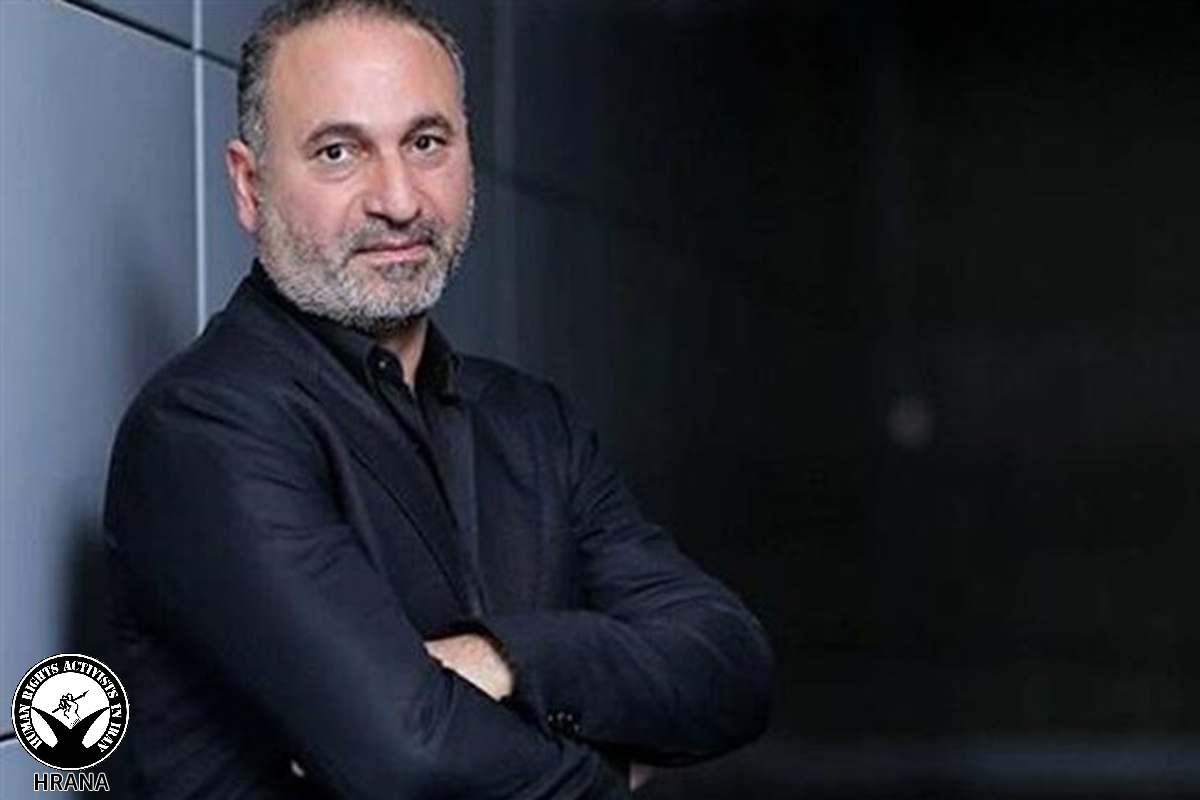
Human Rights Activists News Agency (HRANA) – The family of Abdollah Bozorgzadeh has been in the dark about his whereabouts for twenty days. The activist was arrested by plainclothes forces on June 17th after joining a peaceful gathering in support of the Iranshahr Girls.
The Iranshahr Girls are a group of 41 girls who have reputedly been raped in the southeastern city of Iranshahr. Their case attracted publicity after Sunni Imam Molavi Tayeb Molazehi spoke about them in his sermon at the end of Ramadan, in which he stated the girls had been raped by a group of men “of wealth and power”.
According to the Baluchi Activist Campaign, Bozorgzadeh spoke once with his family on the phone from a detention center run by the intelligence department of the Islamic Revolutionary Guard Corps (IRGC). He was then transferred to the quarantine section of Zahedan Prison and has not been heard from since.
A day after his arrest, Bozorgzadeh was seen in the corridors of Iranshahr’s Revolutionary Court where he said he had been tortured.
In the days that followed, the head of the Judiciary of Sistan & Baluchestan province was asked in a news interview about the reasons for the arrest. He responded that the activist had been “disrupting order”, adding that Bozorgzadeh’s brother was “among the enemies of the regime”.
A short while after, IRGC’s intelligence department published footage that showed Bozorgzadeh among a group of six male and female teenagers.
Social media has been buzzing in support of Bozorgadeh and his fellow protesters who were arrested for gathering to advocate for the Iranshahr Girls. Many Friday-prayer imams have also asked for his release.
After the names of the Iranshahr girls’ rapists were published on social media, it became evident that they had the support of the IRGC and security apparatuses.

Prisoner Executed on Murder Charges in Northwestern Iran

Human Rights Activists News Agency (HRANA) – Prisoner Shahram Mohammadi-Vahed, a prisoner in Ward 1 of Ardabil Central Prison, was executed on the morning of Sunday, August 26, 2018.

Mohammadi-Vahed had been detained on murder charges since 2015. He was reportedly transferred to solitary confinement on the eve of his execution.

According to Amnesty International’s annual report, Iran ranks first in the world in executions per capita.

An annual report published by the Center of Statistics at Human Rights Activists in Iran (HRAI) states that more than 60% of executions in Iran are not reported by the state or the Judiciary. These executions are referred to as “secret executions”.

According to registered data from 2,945 reports by the Statistics, Publications, and Achievements Division of HRAI, in the past year (from March 21, 2017, to March 18, 2018) at least 322 citizens were executed and 236 others were sentenced to death in Iran. Among these were the execution of four juvenile offenders and 23 public hangings.

Exclusive: Prosecutor Declines to Investigate Rape Allegations against Parliament Member

Human Rights Activists News Agency (HRANA)- An investigation into the rape of a 28-year-old woman by Iranian Parliament member Salman Khodadai was recently halted by the Prosecutor General who, citing “lack of jurisdiction,” has declined to examine the case further.

HRANA has reported extensively on multiple rape and sexual assault allegations against Khodadadi, a member of Iranian Parliament (aka Majlis) representing Malekan, northwestern Iran, who also chairs the Parliament’s Social Committee.

In her long ordeal to seek justice, the plaintiff, a Malekan resident, filed charges against Khodadadi with the Prosecutor General of Malekan County. The Prosecutor General has now issued the decision that it will not be prosecuting her case.

The young woman has contacted and filed complaints with several government bodies, including but not limited to the Parliament Member (MP) Conduct Supervision Committee, All-Party Womens’ Group, Iranian Parliament Security Office, Revolutionary Guard Intelligence Office of Malekan, Intelligence Office of Malekan, and the Justice Ministry and Prosecutor General of Malekan. Thus far none have replied to her inquiries, nor to her request for an investigation. In fact, not only is Salman Khodadadi still serving as MP and chair of the Iranian Parliament Social Committee, but his tenure as the head of the Tehran Boating Federation was also renewed in August for an additional four-year term.

The plaintiff has repeatedly contacted the Guardian Council (an appointed body which vets candidates for elections and ratifies laws passed by Parliament), who was initially responsive, promising to investigate and even assist in procuring her a lawyer. On subsequent contacts, however, she was rebuffed and told that she would have to find her own lawyer and pursue the case on her own through the Prosecutor’s office.

The reactions of the Guardian Council and Parliament Security Office raise concerns over these bodies’ ability to perform their functions without bias, as Khodadadi thus far remains immune to legal pursuit.

The stonewalling of the parliamentary security office and contradictions of the Guardian Council compelled the alleged victim to file a complaint with the General Prosecutor of Malekan, where she was interrogated for several hours by the Ministry of Intelligence and IRGC Intelligence agents. At the conclusion of her questioning, authorities agreed to launch an investigation on the condition that she refrain from speaking to the media. The Prosecutor agreed at that time to press charges against Khodadadi.

Despite all the promises and engagements secured through her multiple follow-ups, the Prosecutor’s office decided not to move forward, citing lack of jurisdiction.

The text of their decision reads:

“With regards to the accusation of rape, harassment, psychological abuse, threats, and insults which are the subject of the complaint filed by Ms….. daughter of …., the accused is nonetheless a Member of Parliament. Notwithstanding potential veracity of the charges, based on section 307 of the Criminal Procedure Code, an investigation into offenses committed by deputies is the jurisdiction of the Tehran Criminal Court. Consequently, this prosecution office recuses itself from prosecuting this case, in favor of the jurisdictional authority of the Tehran Criminal Court.”

Mehdi Ali Moradi
General and Revolutionary Prosecutor of Malekan

The plaintiff sought the assistance of other parliamentarians, but to no avail. The SMS screen captures below show her correspondence with various MPs. Offering only a glimpse into their communications, the content of the messages indicate the plaintiff’s repeated attempts to plead her case with officials.

The first screenshot shows parts of her conversation with Mahmoud Sadeghi, an outspoken reformist MP, in which he advises her to contact the MP Conduct Supervision Committee.

After HRANA published an audio file of a conversation between Khodadadi and one of his alleged sexual assault victims, state-run news agency Etemad Online followed up in interviews on July 24th with two prominent officials: Parvaneh Salahshoori, head of the All-Party Womens’ MP Group, and Jamali Nobandegani, spokesperson for the PM Conduct Supervision Committee. In the report of these interviews, both denied ever receiving complaints against Khodadadi and added that in presence of any incriminating evidence would file a formal complaint.

The alleged victim proceeded to follow up with Salahshoori herself, providing her with further case documentation. Upon receipt of the documents, Salahshoori promised to follow up with the case and submit a correction to her statements made with Etemad Online. When the plaintiff checked in with Salahshoori five days later, she replied simply that she was “no longer with the All-Party Womens’ Group.”

Excerpts of their exchanges are below.


The plaintiff repeatedly contacted Ali Mottahari and Masoud Pezeshkian, who are Parliament deputy speakers that preside over the MPs’ Conduct Supervision Committee per internal Parliament protocol. In their most recent response to her, they indicate that the Committee will not be intervening in the case, and advised her to resolve the issue directly with Salman Khodadadi, her alleged sexual aggressor. This effectively discouraged her from pursuing the matter further.

The plaintiff had also confronted Tehran MP and Etemad Daily managing director Elyas Hazrati, requesting that he reveal the sources of his publication’s aforementioned report in which heavyweight interviewees denied the existence of her claims.

The Guardian Council, which has frequently come under the fire of media and public opinion for allegations of corruption in its vetting of parliamentary candidates, has recently published a documentary in collaboration with Fars News Agency — which has strong ties to the IRGC — to justify their screening process. Entitled “Very Confidential,” the documentary cites factors for disqualifying candidates, including criminal records and charges of rape, and features interviews with Guardian Council members who insist that the Council conducts its candidate background checks with the utmost scrutiny.

Salman Khodadadi has several times run and been elected as an MP, successfully passing the vetting process, despite a record of charges against him that include illicit sexual relations and rape.

Narges Mohammadi Back in Evin Prison after Hospitalization

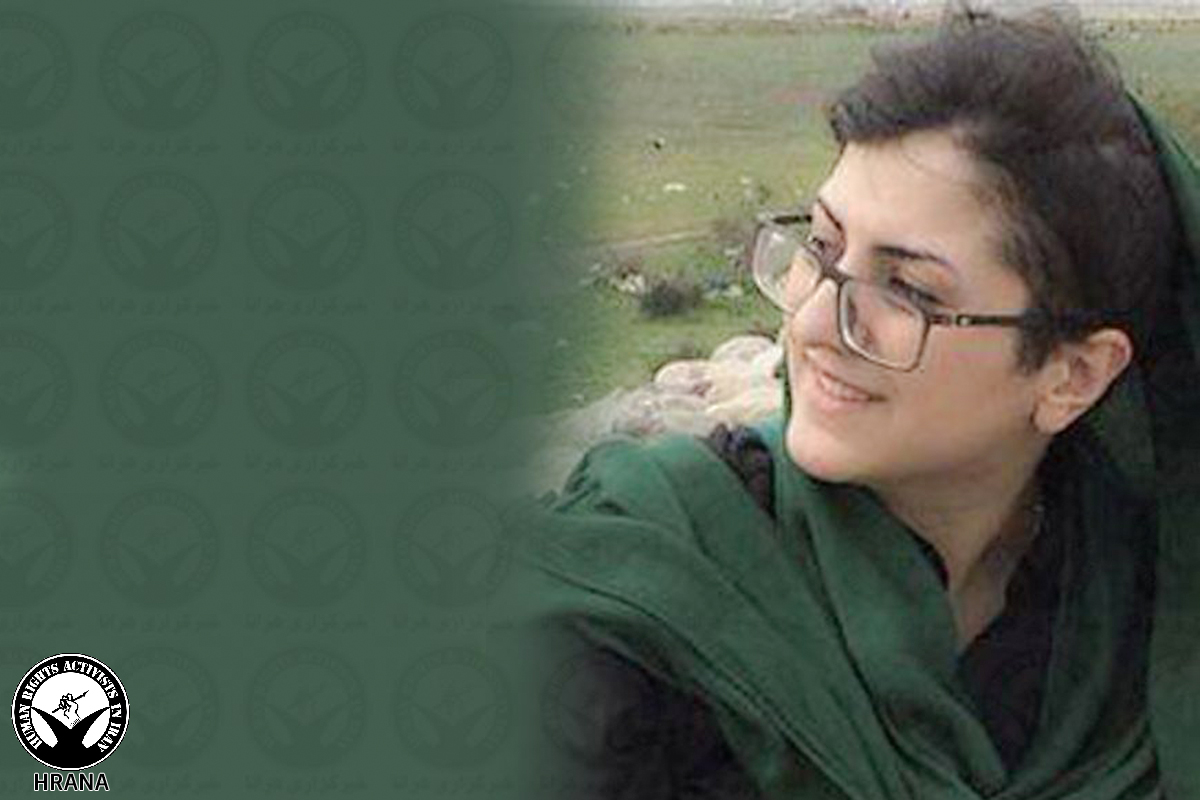
Human Rights Activists News Agency (HRANA) – Narges Mohammadi, imprisoned deputy head of Iran’s Center for Supporters of Human Rights who had been transferred to Imam Khomeini hospital on August 13th due to her grave health condition, has been sent back to Evin Prison.

Taqi Rahmani, Mohammadi’s husband, released a statement to announce his wife’s return to prison: “Narges needs sick leave to continue her treatment,” Rahmani wrote. “Yesterday, her children were waiting for their mother to call, and the call never came. She has the right to treatment.”

Mohammadi had previously been hospitalized on June 30th, and shortly after undergoing surgery was sent back to Evin on July 5th. On August 6th, prison authorities denied her transfer to see a neurological specialist outside the prison.

According to Mohammadi’s lawyer Mahmood Behzadirad, her requests for conditional medical release are consistently denied. Four years remain of the ten-year sentence she is currently serving.

Mohammadi was sentenced in Tehran’s Revolutionary Court in May 2016 to two concurrent imprisonments of ten and six years. Mohammadi reported that the trial judge displayed an openly hostile attitude toward her while endorsing the allegations of the Ministry of Intelligence. The ten-year sentence stemmed from a charge of “forming a society to disrupt national security,” for campaigning to end capital punishment in Iran. Her six-year sentence was for “organizing and colluding against national security” and “propaganda against the regime.”

Among the pieces of evidence used against her on the latter counts were her media interviews, participation in peaceful protests supporting prisoners on death row, her correspondence with fellow activists like Nobel Peace Laureate Shirin Ebadi, and her 2013 meeting with former European Union Foreign Policy Chief Catherine Ashton.

Branch 36 of Tehran’s Appeals Court confirmed Narges Mohammadi’s sentence in the Fall of 2016. In May 2017, Iran’s Supreme Court refused to appeal the decision.

Truck Drivers Begin Strikes in Mashhad and Isfahan

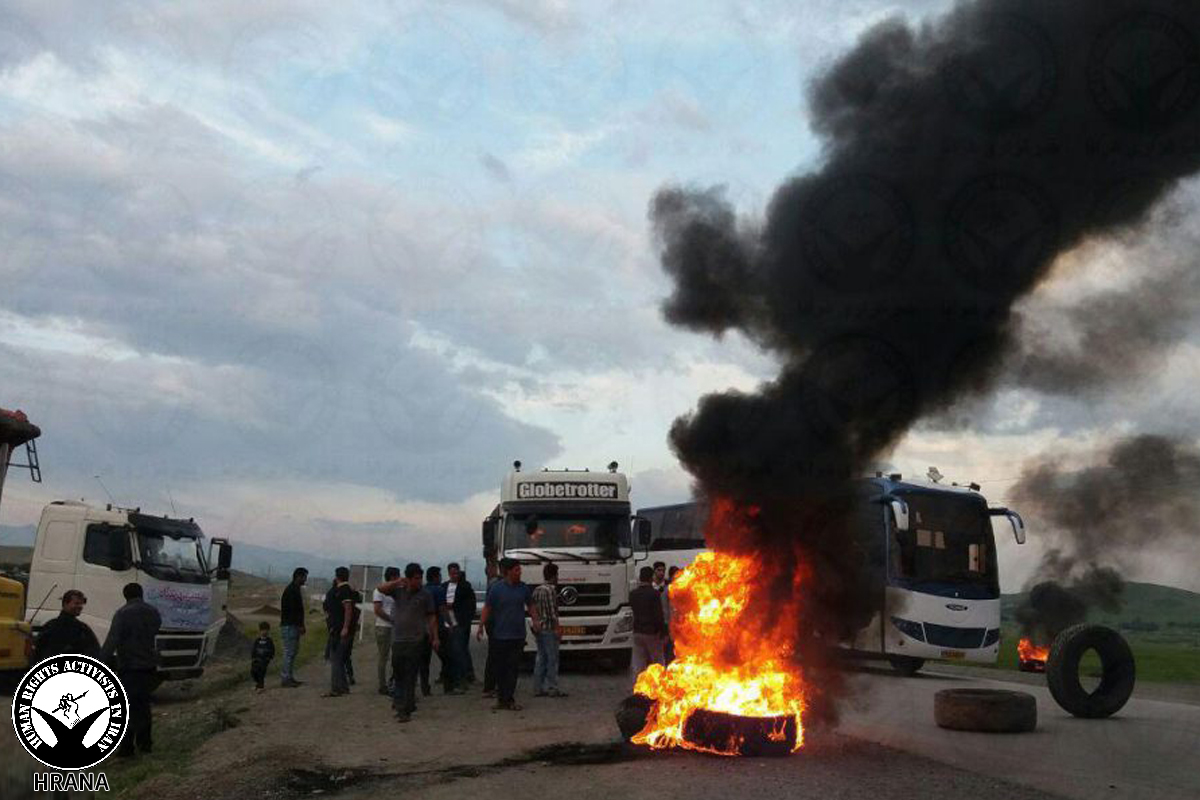
Human Rights Activists News Agency (HRANA) – A number of truck drivers have begun strikes in Iran’s second and third largest cities, Mashhad and Isfahan.

on August 25th, truck drivers who work for a department of the Mashhad municipality responsible for collecting dust and construction materials gathered in front of the department to make their demands. A number of truck drivers in the central city of Isfahan also stopped work and gathered on Shapur Street.

Lack of attention to their demands by authorities, severe livelihood problems, low wages and high repair costs are among the reasons behind the strikes.

Videos published on social media show truck drivers also striking in the southwestern city of Ahvaz. HRANA is in the process of confirming these reports.

HRANA had previously reported on the truck drivers’ strikes in the month of June and the reaction of authorities.

Subscribe to Our Newsletter

Now is definitely not the time to stop reading!

Protests by Steel and Sugarcane Workers Continue in Southwestern Iran

Human Rights Activists News Agency (HRANA) – Worker protests continued to rock the southwestern Iranian province of Khuzestan on August 25. Workers of the Iran National Steel Industrial Group (INSIG) in the provincial center of Ahvaz and those of the Haft Tapeh Sugarcane Agro-Business (HTSA) organized protest gatherings to push their demands.

HTSA workers started the eighth consecutive day of protests by gathering on the factory grounds, HRANA reported.

Speaking on the meeting that HTSA union and representatives had with authorities of Shush county and Khuzestan province, Esmayil Bakhshi, a representative of the workers, said: “I feel sorry for the Provincial Governor who sees us as the enemy. He wasn’t even willing to leave his office to see why the workers are on strike. When we ask for an independent workers’ council to be formed it is so that workers’ direct supervision on state managers would prevent such people from becoming managers and disrespecting workers.”

Nonpayment of wages, the outsourcing of some HTSA departments and other changes in the factory are the major issues expressed by the workers.

HRANA had previously reported on the HTSA strikes.

Protest March of Ahvaz Steelworkers

On August 25th, a group of INSIG workers in Ahvaz marched in front of the provincial governor’s office in the city and asked for their back wages to be paid and for the right to form a workers council.

The workers organized a protest march and chanted slogans including “Our country is full of thieves; nowhere in the world is like this”.

“INSIG wages and benefits have not been paid from March to July and our efforts to follow up have been useless,” one of the workers told the state-run news agency, IRNA. “INSIG has currently zero production. We have been promised that raw material necessary for production will be supplied before the end of the year [Persian calendar year, ending on March 21, 2019.] but there is no hope and no positive perspective. The authorities are not accepting responsibility for paying wages and sending the workers back to work.”

INSIG consists of a range of companies and employs about 4,000 workers who have not been paid for a few months. Their protests began on Saturday, August 18th asking for payment of four months of wages and the supplying of raw material.

January Protests: Roya Saghiri Transferred to Tabriz Prison to Serve Sentence

Human Rights Activists News Agency (HRANA) – On August 25, 2018, Roya Saghiri, a University of Tabriz student and one of those detained during the January protests, was transferred to Tabriz Prison to serve her sentence of twenty-three months’ discretionary imprisonment, ruled in Branch Two of the Tabriz Revolutionary Court.

On July 11, 2018, HRANA reported on the upholding of this sentence by the East Azerbaijan Appeals Court.

Branch Two of the Tabriz Revolutionary Court sentenced Saghiri, as well as Nariman Validokht, to eight months’ discretionary imprisonment for the charge of “Propaganda against the regime,” pursuant to Articles 500 and 514 of the Islamic Penal Code, passed in 1979, and Articles 134 and 215 of the same code passed in 2013. Saghiri’s sentence for that charge was relatively lenient on account of her clean criminal record but was compounded by an additional charge, against both Saghiri and Validokht, of “Insulting the Supreme Leader,” carrying a fifteen-month prison sentence.

In another case tried by Branch 103 of the Tabriz Criminal Court, presided by Judge Vatankhah, Saghiri was sentenced to a one-year suspended imprisonment term as well as ten lashings for the charges of “Disrupting the public peace through participation in an illegal gathering” and “Appearing in public without the Islamic veil by way of unveiling in the streets”.

A large number of participants in recent protests, referred to as the January protests, were detained and interrogated across the country. The protests resulted in the death of 25 individuals and the detention of around five thousand.

Of the January protests, Ministry of the Interior Rahmani Fazli said, “A number of protests took place in 100 Iranian cities; in forty of those cities, the protests turned violent.”

Some of the January Protest detainees were released on bail to await their trials while others were transferred to prison. The precise whereabouts and fates of a number of protestors are still unknown.

Evin Prosecutors Summon Azerbaijani Activist Jafar Rostamirad in Connection to Babak Fort Gathering

Human Rights Activists News Agency (HRANA) – Jafar Rostamirad, an Azerbaijani Turkic minority rights activist, has been summoned by Branch 7 of the Prosecutor’s Office, based in Tehran’s Evin Prison, for the last round of his defense statement. He has been given five days to go to the Prosecutor’s Office, a credible source told HRANA.
Rostamirad was arrested on July 2nd by plainclothes security forces in Tehran who did not present a warrant. His arrest was in connection with the Babak Fort gathering that occurred on the same day. After spending seven days in solitary confinement, he was sent to Ward 209 of Evin Prison and charged with “Propaganda against the regime”. He was released on bail on July 31st.
From the *Babak Fort arrests on July 2nd, Ebrahim Noori, an Azerbaijani Turkic minority rights activist, is the only one who remains in prison. He is held in Ward 209 of Evin Prison.
Rostamirad had previously been arrested on February 21, 2015, after taking part in a private meeting to commemorate International Mother Language Day.

*Babak Fort, a monument built during the pre-Islamic Sassanian period, is named after Babak Khorramdin, known for leading an uprising against the Abbasid caliphate in 893. In recent years, it has become a place of symbolic gatherings for Azerbaijani activists, especially during the annual commemorations in the first week of July.

Four Environmental Activists Die Fighting Marivan Forest Fire

Human Rights Activists News Agency (HRANA) – A forest fire claimed the lives of four environmental activists who were working to contain the flames searing through Marivan (western Iran) on Saturday, August 25, 2018.

Sharif Bajour and Omid Kohnepoushi, members of the Chya Green Association, and Mohammad Pazhouhi and Rahmat Hakiminia, members of the Marivan Department of Environment, died from smoke inhalation and severe burns.

Two others — Mokhtar Aminejad, 33, and Mohammad Moradveisi, 57 — were injured in the flames. Moradveisi was transferred to the city of Sanandaj by helicopter due to the severity of his burns.

Marivan County Governor Mohammad Sharifi said that the fire broke out near the villages of Selsi and Pileh in Marivan County due to the scorching temperatures the region had been experiencing the day before. Of those who were present when the flames swelled out of control, i.e. civilians, environmental activists, and forces from the Department of Environment, Mohammad Sharifi said: “Unfortunately on Saturday morning at 9, when gusts of wind exacerbated the blaze, four were engulfed and died, and two more were injured.”

Bajour was a member of the Board of Directors of the Chya Green Association and a well-known environmental activist who had reportedly been arrested and interrogated several times by security apparatuses in regards to his environmental activities.

Chya Green Association was among the most active NGOs orchestrating efforts to contain the fire. Within hours of the activists’ deaths, Marivan citizens took to the streets in front of Bou-Ali hospital where the bodies of the dead are being held.

Azerbaijani Activist Arrested and Transferred to Sarab Prison

Human Rights Activists News Agency (HRANA) – Seyed Jamal Moosavinejad, an Azerbaijani Turkic minority rights activist from the city of Sarab, was arrested by security forces on the morning of August 25th and taken to Sarab Prison to start his one-year sentence, a credible source told HRANA.
Last May, Moosavinejad was convicted of “Propagating against the regime in favor of partisan ethnic and separatist groups” which led to a suspended prison sentence of one year. Branch 26 of the East Azerbaijan Appeals Court, presided by Judge Mikayil Khoobyarpour, upheld the sentence.
The court cites the following activities as the reasoning behind Moosavinejad’s conviction: issuing statements on social media; reflecting anti-regime and ethnic activities in foreign media; respecting and kissing of a flag belonging to an alien country due to ethnic beliefs in contravention of the Islamic Republic of Iran; praising the Azerbaijani events of 1945 and praising their founder, Jafar Pishevari; confessing to engaging in ethnic activities on Telegram.
Moosavinejad had also been charged with “Insulting the Supreme Leader” but was acquitted of that count.
Seyed Jamal Moosavinejad was first arrested in February after security forces raided his house. His phone, laptop, books and papers were confiscated at the time. He was released on a four billion rial [apprximately $40,000 USD] bail. According to Moosavinejad, he was insulted and humiliated by security forces throughout the process of arrest, being charged, and the initial court and appeals hearings. Furthermore, he had previously been arrested in Sarab in the summer of 2012, together with several other citizens.