Political Prisoners Pen Condolences in Wake of Deadly Forest Fire

Human Rights Activists News Agency (HRANA) – Four political prisoners in Rajai Shahr Prison (a.k.a Gohardasht), Karaj, have written an open letter to express compassion over the deaths of four environmental activists who lost their battle with the forest fires of Marivan, located in Kurdistan in western Iran.

The deceased activists — Sharif Bajour and Omid Kohnepoushi, both members of Chya Green Society, and Mohammad Pazhouhi and Rahmat Hakiminia, members of Marivan Environmental Office — were fighting wildfires near the Iraqi border in Salasi and Pileh. Marivan’s county governor revealed their cause of death to be asphyxiation due to smoke inhalation.

Two other activists, Mokhtar Aminejad and Mohammad Moradveisi, were injured in the same fire.

Below is the full text of their letter, translated into English by HRANA:

It is not my lot to die a natural death;

Better for the holy grail than in blissful sleep,

And on truth’s command, I welcome that death

which releases freedom from chains of darkness

It was with great shock and sorrow that we heard the news that Sharif Bajour and the others had perished; grief engulfed us like flames. We struggle to reconcile with the sad reality that the chestnut oaks of Zagros Mountain (1) have lost a dear friend.

Sharif Bajour, so appropriately named (2), leaves the Zagros bereft. He was a true friend to the mountains, plains, and forests of Kurdistan. Had he lived anywhere else on earth [but here], his death would have roused the lament of a nation. If the state-run media shrouds his death in silence, he remains an eternal hero in the hearts of the people. His loss leaves a void in the heart of his nation, who has seldom known so noble and gentle a soul as his. His new and creative path of resistance is his legacy.

Bajour’s resistance involved guarding the chestnut oaks of Zagros with his body and soul, biking for the cause of peace on earth, and staging a hunger strike outside the media spotlight.

As political prisoners of Gohardasht prison, we express our condolences to the families of this respectable man, as well as to the families of the other Zagros fire victims, whose names we regrettably do not know. We extend our deep sympathy to his friends and comrades from the Chya Green Association, to all those who care about the environment, and to the people of Kurdistan. They have lost some of the most honorable men of their time. Much like the fire that took their lives, the loss of these beloved souls has burned our spirit.

Arash Sadeghi,
Loghman Moradi,
Zanyar Moradi,
Saeed Shirzad

—-

(1) Mountain range in western Iran and scene of the fatal forest fire
(2) Sharif means “honorable” in Arabic

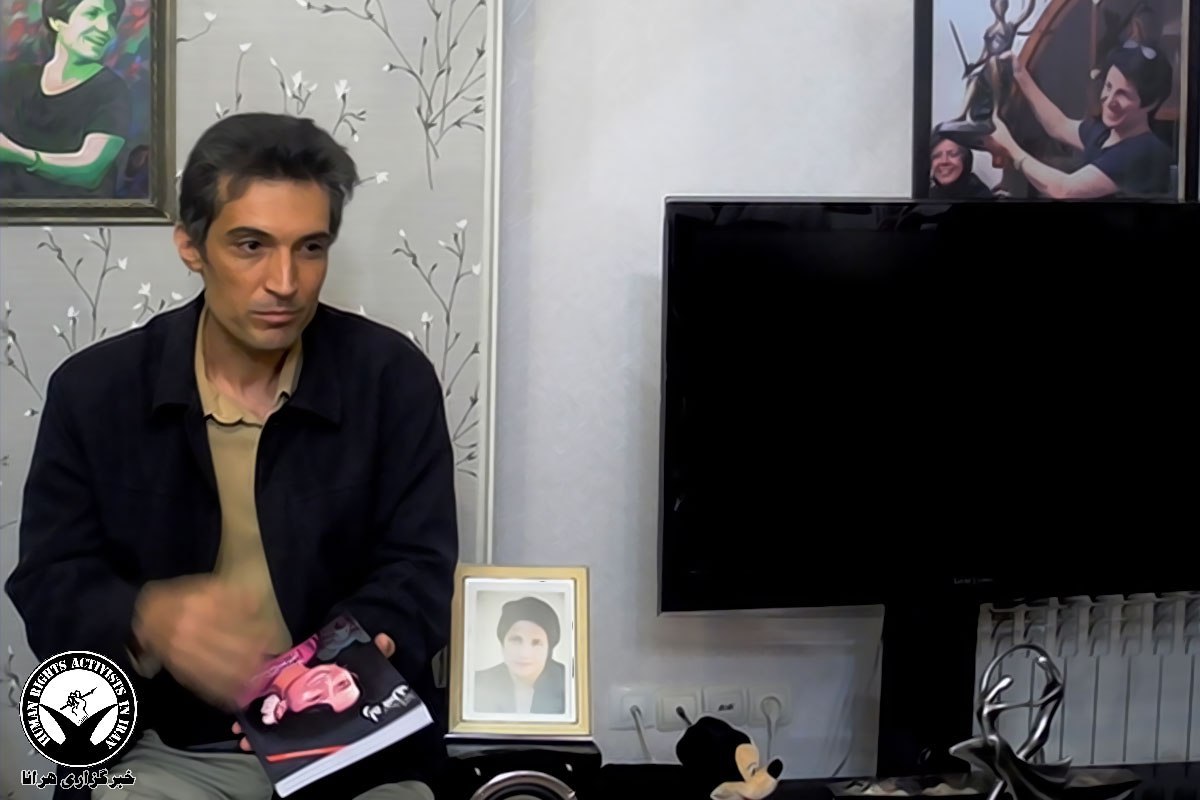
Suffering from Cancer: Arash Sadeghi’s Medical Report in Rajai Shahr Prison

Human Rights Activists News Agency (HRANA) – Rajai Shahr prisoner Arash Sadeghi, who despite severe physical symptoms was repeatedly denied medical treatment, has been diagnosed with bone cancer, a source ​close to the matter ​told HRANA.

Sadeghi, a civil rights activist, received his diagnosis after finally being transferred to a hospital last week for medical testing on a tumor in his arm. Hospital officials confirmed the tumor to be malignant, identifying​ it as chondrosarcoma.

Hospital oncologists recommended Sadeghi be immediately admitted to the hospital for further exams, biopsies, and pre-op procedures, HRANA’s source revealed. The source added, “The tumor is located in his right arm under the clavicle and scapula. Doctors have stated that the removal of the tumor and subsequent examinations will determine whether or not further surgeries or [post-op preventive] chemotherapy will be necessary.”

Chondrosarcoma is the most prominent malignant bone cancer in youth, affecting an estimated 100 patients per year in Iran. In this type of cancer, malignant tumors are composed of cartilage-producing cells that may arise spontaneously or from pre-existing benign tumors, most commonly in the pelvic, hip, and shoulder regions. Its cause is still unknown.

Pain and swelling are the primary symptoms of this type of bone cancer in its advanced stages. Unresponsive to radiotherapy and chemotherapy, ​chondrosarcoma​ ​​is most often treated with surgical excision of the tumor and its marginal cells. Patient prognosis for this specific type of cancer has improved dramatically in recent years.

On July 21, HRANA reported on Sadeghi’s transfer to a hospital in Tehran under heavy security control. Upon his arrival, hospital officials refused to admit him, stating the doctor was not available to see him; he returned to the prison without receiving medical attention.

Subsequently, Amnesty International issued a statement demanding immediate action be taken to attend to the medical needs of Arash Sadeghi, as he had been diagnosed with a potentially malignant tumor in his elbow.

Arash Sadeghi was sentenced to 19 years’ imprisonment by Tehran’s Revolutionary Court. In December 2016, Sadeghi staged a 72-day hunger strike to protest the continued imprisonment of his wife, Golrokh Iraee.

Baluchi plight laid bare in exiled prisoner letter

Human Rights Activists News Agency (HRANA) – Three Baluchi political prisoners exiled to the northwestern city of Ardabil wrote an open letter in critique of the Iranian authorities and to raise public awareness about the plight of their people.
From Ward 7 of Ardabil Central Prison, Mohammad Saber Malek Raisi, Shirahmad Shirani, and Noor Ahmad Hassanzehi wrote of dysfunctions plaguing the infrastructure of the Sistan and Baluchestan province, and of government inaction against the severe desiccation of Hamoun Lake.
Their letter concludes with a poem entitled “Friendship Is Our Long-Lasting Treasure,” which celebrates the unity among the different ethnicities of the Sistan and Baluchestan province.
Their letter is below, translated into English by HRANA:
Greetings, our dear Sistani peoples, especially those around Hirmand and Hamoun,
As exiled Baluchi political prisoners, we regard it as our duty to declare solidarity and express support to you, noble and kind fellows, through these troubles of our day. From the bottom of our hearts, we wish the best to you and to all the peoples of our province. We wish you emancipation from dictatorship.
How inconceivable it is to live this way! With border regions barren of water, electricity, gas, housing, employment, and of basic amenities like schools, roads, heating and cooling, toilets, and now, of the natural right to breathe; what is left to do but to survive, but to suffer? And for how long?
Clean air is the unconditional and vital right of all living beings. Despite this, some — who pursue personal and organizational profiteering, are guilty of mismanagement or carelessness, or persist in the mass theft of subterranean marine resources — have blighted this ancient erudite land with chaos and suffering. This birthplace of brave souls like Rostam, Sohrab, and Yaqub Leith; this place of Iranian linguistic and social renaissance.
How can we bear to see Sistan, the fertile crescent of ancient Iran, abandoned to a fate steered by those who caused this chaos, i.e. the regime and its agents?
The carelessness and profiteering of the regime’s authorities must cease its exploitation of the immense natural, cultural, and ethnic wealth of Sistan and Baluchestan, by ceasing the stripping of its precious gold and ore mines and the closing of its borders, the sole gateways to hope for the regions’ people in this era of poverty and destitution. Their job is not to gamble Sistani lives. You are the authorities! It’s your duty to heal the disorder you’ve caused.
What have you done all these years to restore Hamoun Lake and its wetlands? What have you done besides spend billions of rials on a border wall, fence, moats, towers, watchtowers, and other border controls? How much have you spent on the welfare of this region’s people? How much on the restoration of Hamoun Lake and wetlands, equal parts a cause and excuse for our insecurity? How will you restore hope and comfort to these poor and wronged Sistani farmers and fishermen? With lies, with promises?
You, our fellow Sistanis, people of our province, should know that we, the Baluchi people, irrespective of the regime and its schemes, will stand up to any abuse that violates your rights. We will condemn it. We will put our lives on the line for you.
Mohammad Saber Malek Raisi, Shirahmad Shirani, Noor Ahmad Hassanzehi
Exiled Baluchi political prisoners,
Ward 7 of Ardabil Central prison
August 30, 2018

Imprisoned Dervishes’ Sit-In Violently Raided; Transferred to Solitary Confinement

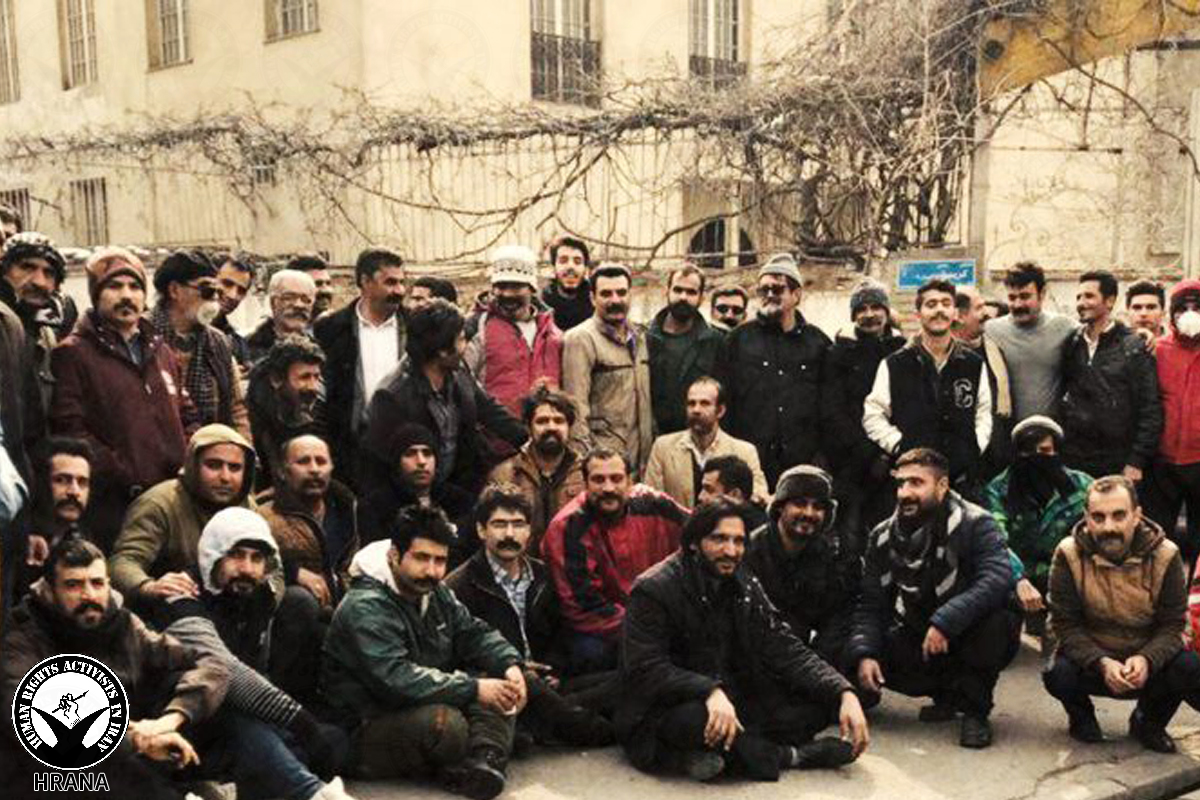
Human Rights Activists News Agency (HRANA)- On Wednesday, August 29, 2018, Great Tehran Penitentiary guards used batons, electrical shock, and tear gas to break up a sit-in of *Dervish prisoners that had been in effect in Ward 3 since June 13th.

The Twitter account of Majzooban Noor — who publishes a news feed on Dervishes, a religious minority — reported that prison officials filtered the other detainees out of the quarantine area before charging the Dervishes’ sit-in. They welded the gate of the prison yard, leaving a number of Dervishes surrounded. Guards used tear gas to keep at bay another group of Dervish prisoners who were attempting to break the siege.

A Dervish who took part in the sit-in explained in an audio file that “instead of heeding our ultimatum to release the female Dervish prisoners of Gharchak, they jarred us awake early in the morning and broke up the sit-in. The guards divided us into two groups, taking one to the prison hall and the other to the guard stand. One group of Dervishes broke a door to join the others. The guards countered by beating them severely. Our condition is troubling.”

Hours after the assault, all of the Dervishes imprisoned in Ward 3 were taken to solitary confinement cells. Shortly after, the following Ward 4 Dervishes protesting the attack on their Ward 3 comrades were also transferred to solitary confinement:

1. Ali Mohammad Shahi 2. Heydar Teymouri 3. Hassan Arab Ameri 4. Saeed Doorandish 5. Reza Yavari 6. Reza Sigarchi 7. Mohsen Azizi 8. Mehdi Keyvanloo 9. Mohammad Sharifi Moghaddam 10. Salehodin Moradi 11. Sina Entezari 12. Hadi Shahreza 13. Ahmad Iranikhah 14. Mehdi Mardani 15. Rassoul Hoveydah 16. Kianoosh Abbaszadeh 17. Mojtaba Biranvand 18. Abbas Dehghan

Dervishes in Ward 2 also protested the violence of the raid by tying their hands with a white cloth.

These events unfolded during a visit from Mostafa Mohebbi, Director General of Prisons of Tehran province, who had come to see the prison following reports of its poor conditions.

The sit-in was sparked by a violent attack on female Dervish prisoners of Gharchak Prison on June 13, 2018, in which they were assaulted with batons and shocked with electrical weapons before being dispersed among different wards. In protest, these female Dervishes declared a 16-day hunger strike, while male Dervishes organized the sit-in in a display of solidarity. HRANA previously published the identities of those who attacked the female Dervishes.

The crackdown against Dervishes intensified in late February 2018, when police forcibly disbanded a protest they had organized against ramped-up surveillance of their leader.

The February 2018 clash ended in the injury and arrest of a number of Dervishes. While Iranian Judiciary authorities estimated the number to be around 300, HRANA published the names of 324 and estimated the number to be considerably higher.

Human Rights Watch also tweeted about the February 2018 crackdown, and revealed in a recent report, “Since May 2018, revolutionary courts have sentenced at least 208 members of the religious minority to prison terms and other punishments in trials that violate their basic rights”.

—-

* There are various divisions among Dervishes in Iran. In this article, the term “Dervish” refers to Nematollahi Gonabadis, who in recent years have declared themselves followers of Twelver Shia Islam, the official state religion in Iran. On March 8th, Noor Ali Tabandeh, the spiritual leader of the Gonabadi Dervish faith, published a video stating that he is not permitted to leave his residence in Tehran.

Ebrahim Nouri’s Imprisonment begins in Evin’s Quarantine Ward

Human Rights Activists News Agency (HRANA) – Ebrahim Nouri, an Azerbaijani civil rights activist from Ahar, has entered the first days of a six-month prison sentence for a case opened against him in 2016.
After being arrested during a gathering at Babak Fort, he was denied the right to post bail and imprisoned in Ward 209 of Evin Prison on July 2, 2018. An informed source told HRANA that Nouri contacted his family from Ward 209 at that time, informing them of the $29,000 USD bail set for him.
In July, HRANA reported on Ebrahim Nouri’s arrest by security forces at the Babak Fort gathering.
In a press release on August 11, 2018, Amnesty International called the recent arrests of Azeri people “arbitrary” and unlawful, and demanded the immediate release of Ebrahim Nouri and all other individuals detained for their participation in an Azerbaijani Turkic cultural gathering.
Stemming from a 2016 arrest, Nouri was sentenced by Branch 1 of the Criminal Court of Ahar to his current sentence of 6 months’ imprisonment, on a charge of “Propaganda against the regime”. In February 2018, this sentence was confirmed by Branch 26 of the Appeals Court of East Azerbaijan Province, under the supervision of Mikaeil Khoubiarpour.
Nouri, a law student, has a record of being detained for civic activities, beginning in 2005 when he was arrested and interrogated by an IRGC Intelligence unit. In 2009 he was sentenced to ten months’ imprisonment, suspended over five years, on a charge of propaganda against the regime. He was arrested again by security forces on January 17, 2013, and released on a bail of approximately $24,000 USD five days later.

Subscribe to Our Newsletter

Now is definitely not the time to stop reading!

Azerbaijani Activist Hamid Saghati Released after Completing Prison Sentence

Human Rights Activists News Agency (HRANA) – On August 26, 2018, Azerbaijani activist Hamid Saghati was released from Tabriz Prison after serving four months.
In June of 2016, HRANA published a report on the arrest and detention of Hamid Saghati and five others in the city of Ardabil. An informed source confirmed to HRANA that Saghati was among a group of six sentenced in November of the same year.
The others charged in the case were sentenced as follows: Babak Avand and Esmaeil Fakhimi, four months’ imprisonment; Mehdi Amirinejad, two years’ imprisonment; and Habib Sasanian, nine years’ imprisonment.
In late June 2016, the Head of the East Azerbaijan Judiciary called the group “members of the six-member GAMU spying team”.

Zahedan Death Row Prisoner Now in Custody of the IRGC

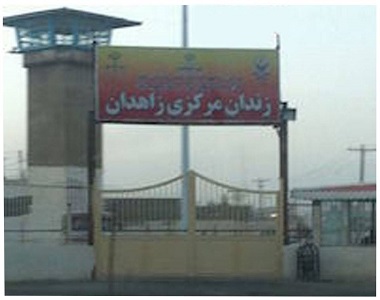
Human Rights Activist News Agency (HRANA) – Abubakr Rostami, a political prisoner on death row, was transferred from Ward 4 of Zahedan Central Prison to an IRGC detention center on August 28, 2018. To date, HRANA is unable to confirm the reason for his transfer.
A source close to Rostami told HRANA, “A few days ago, prison authorities told Rostami he was not to use the library or gym, then on Tuesday they transferred him outside.”
Rostami was among a group of political prisoners in Zahedan who addressed a letter to UN special rapporteur Javaid Rehman, imploring him to advocate for political prisoners’ rights.
Prior to this, in an open letter co-written by Bandeh Chakerzehi and Sajjad Baluch — the two arrested with him on September 16, 2015– Rostami proclaimed their innocence, stating the IRGC and Intelligence Agency exerted physical and mental torture on them on charges that were “bogus”.
In the letter, Rostami wrote of the trip to Pakistan he was planning in anticipation of making arrangements for continuing his studies [abroad]: “Due to border limitations, I was forced to travel through Pakistan to get to [another] foreign country, but I was arrested midway and handed over to the IRGC,” he wrote.
A second-year medical student at Zabol University of Medical Sciences, Rostami has spent the past three years in prison. In August 2017, along with Chakerzehi and Baluch who were on trial for the same case, he was sentenced to death by the Revolutionary Court of Zahedan on charges of “Moharebeh” (enmity against God) and “Acting Against National Security through Cooperation with Opposition Groups”.
No further details on their case or charges were available.
*Zahedan is a county in the Sistan and Baluchestan Province.

Concerns Mount over Fate of Tortured Kurdish Prisoner

Human Rights Activists News Agency (HRANA)- Mystery still shrouds the condition and fate of Farhad Abdollahpour, who was arrested on June 30, 2018, by IRGC Intelligence forces and has effectively been missing since July.
Abdollahpour’s family, from Oshnavieh in northwestern Iran, were able to visit him briefly after his arrest in the IRGC Intelligence Detention Center of Urmia. They reported seeing signs of torture on his body. Their subsequent inquiries into his current status and the reason behind his arrest have been left unanswered by Oshnavieh’s Judiciary and the IRGC Intelligence Office.
A source close to the Abdollahpour family told HRANA, “Farhad was arrested without a warrant. Their home was then searched. IRGC forces told the family that Abdollahpour had been reported for allegedly keeping weapons at home. They found none, though, and took Farhad away with them. His family was able to trace him to the IRGC Intelligence Detention Center. When they were granted a visit with him 20 days later, they were distraught by the state he was in, apparently the result of mistreatment and torture; it was so bad that he couldn’t even walk without support.”
A 20-day detention warrant for Abdollahpour has expired and has not been renewed by Oshnavieh court. Nevertheless, and despite their frequent follow-ups, Abollahpour’s family is still in the dark about his fate.

Abdollahpour’s brother, Hedayatollah Abdollahpour, is on death row.
The source added: “Yesterday, a plainclothes individual visited Abollahpour’s home and shared awful news about Farhad’s condition with his ageing mother, who fainted from the shock.”

Nine Prisoners on Hunger Strike in Iran

Human Rights Activists News Agency (HRANA) – In the last few weeks, a number of prisoners across the country have declared hunger strike. HRANA has prepared a bulletin on their cases, previously reported in detail.

Nasrin Sotoudeh
Lawyer and human rights activist

Nasrin Sotoudeh started a hunger strike on August 25th in protest to her arrest and the judicial pressures being placed on her family, relatives, and friends.
She published an open letter outlining her reasons for the strike.

Ramin Hossein Panahi
Political prisoner

Sentenced to death, Ramin Hossein Panahi was recently transferred to Karaj’s Rajai Shahr Prison and declared hunger strike on August 27th by sewing his lips together. He is protesting his sentence and multiple violations of his legal rights. His lawyers published a statement sharing the reasons behind the strike. According to them, his whereabouts have been unknown since his August 26th transfer out of Rajai Shahr.

Farhad Meysami
Civil rights activist

Farhad Meysami was arrested July 31st by security forces. He started a hunger strike August 1st, protesting his arrest and the constraints being placed on his choice of attorney. He was transferred from Evin’s Quarantine Ward to the General Ward on August 26th, where he is reportedly suffering from low blood pressure and drastic weight loss.

Namegh Deldel
Prisoner of conscience

Sunni prisoner Namegh Deldel from hall 21, Ward 7 of Rajai Shahr Prison has been suffering from an injury to his right leg. In protest of his restricted access to medical care, including the prison’s refusal to transfer him to an outside hospital, he has been on hunger strike for more than a month.

Farhad Ariai (Sahrapeyma)
Political prisoner

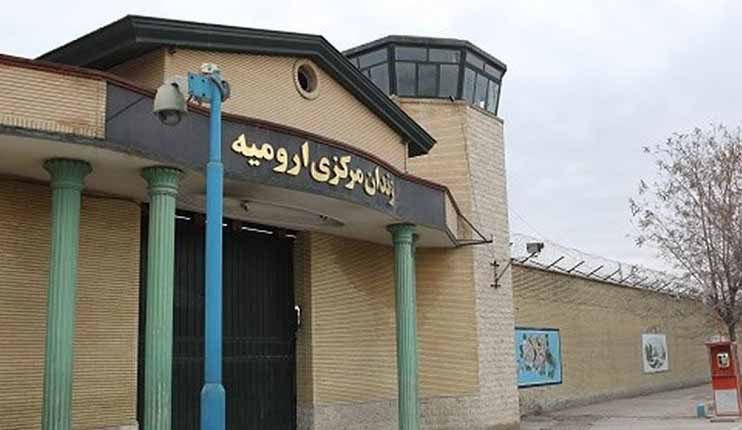
Farhad Ariai (Sahrapeyma), a political prisoner in the Workers’ Ward of Urmia Prison, is in the sixth year of his seven-year sentence. Eligible for early release per Article 134 on the serving of concurrent sentences, he declared hunger strike on August 15th when the court refused to review his request thereof. According to a credible source, Ariai was transferred to the quarantine ward immediately after starting his hunger strike.
Ariai also declared hunger strike last year when prison officials denied his request for furlough. In response to that strike, prison staff forcibly handcuffed and transferred him to the Workers’ Ward of the prison, where he remains to this day.

Seyed Ghassem Abasteh
Prisoner of conscience

Seyed Ghassem Abasteh, a Sunni prisoner in Karaj’s Rajai Shahr prison, started a hunger strike on July 17th to protest his inadequate medical care and the prison’s denial of his access to a clinic. Despite developing asthenia and severe weight loss as of the fifteenth day of his strike, prison authorities continue to ignore his pleas.

His poor health condition has been repeatedly reported on, and in March, he was diagnosed with thyroid cancer. His condition has deteriorated to the point that he struggles to speak and breathe.

Abasteh is married with two children. He was arrested in early 2010 and sent to solitary confinement in Urmia Prison, which is run by the Ministry of Intelligence. He spent eight months there before being transferred to Evin Prison, where he spent six months in the solitary cells of wards 240 and 209. After 14 months, he spent another 20 days in Ward 350 of Evin before finally being transferred to Rajai Shahr on April 8, 2012.

He faces charges such as “militant activity”, accused of backing Salafi groups. He denied such involvement, saying the charges are baseless.

He has been awaiting trial since his 2016 prison sentence from Judge Moghiseh was nullified. He has thus far spent eight years in prison without due process.

Saman Rahmani

Saman Rahmani, a prisoner in the Health Ward of Saqez Prison, is on the verge of losing his arms after suffering an injury, yet continues to be denied the rights of furlough and access to a clinic. He started a hunger strike on July 20th in protest.
“Rahmani was to be sent to Karaj’s Rajai Shahr prison for care, but prison authorities changed their minds,” a credible source told HRANA.

When authorities promised him medical care earlier this year, he stopped the hunger strike he had started in June for the same reasons.

Farshid Nasseri
Prisoner of conscience

Sunni prisoner Farshid Nasseri of Rajai Shahr started a hunger strike on June 16th to demand his right to furlough. Twenty-eight days later, his condition had severely deteriorated. He suffers from back and neck problems, in addition to psychological issues stemming from his years spent in prison.

Verya Saed Moochashmi

On August 19th, on orders from a Ward chief penalizing their refusal to end their hunger strike, five prisoners from Ward 3 of Rajai Shahr were beaten and sent to solitary confinement. They were reportedly striking to protest issues with their respective legal cases.

HRANA understands these prisoners to be Verya Saed Moochashmi, Hossein Esmaeili, Saeed Moradpour, Mojtaba Kounani, and Alireza Kounani. As of yesterday, August 27, 2018, Moochashmi is the sole among the group to continue the strike.

In 1998, Moochashmi, then 17, was sentenced to death and 80 lashings when he was convicted of aiding and abetting murder. He has so far served 21 years in prison.

Ahwazi Arab Activists Arrested in Southwestern Iran

Human Rights Activists News Agency (HRANA) – Three Ahwazi Arab activists from the city of Hamidiyeh, in the province of Khuzestan (southwestern Iran), were arrested by plainclothes forces on the morning of Monday August 27th and taken to an undisclosed location.
HRANA has confirmed the identities of two of the detainees as Hassan Beit Said, 26, and Ali Mazraeh, 27.
Hamidiyeh county consists of two districts and four villages and has a population of 48,935 people (based on a 2006 census).
At the same time, three prisoners who were detained on July 2, 2018, during widespread protests in Ahwaz (capital of the Khuzestan province) were transferred to Sheyban Prison by IRGC Intelligence forces following the completion of the interrogation process. HRANA has identified these three individuals as Seyed Ali Mousavi, 27, Mohammad Savari, 18, and Reza Savari, 26. All three are residents of Ahwaz’s Kouy-e Alawi district. The charges against them are still unknown.