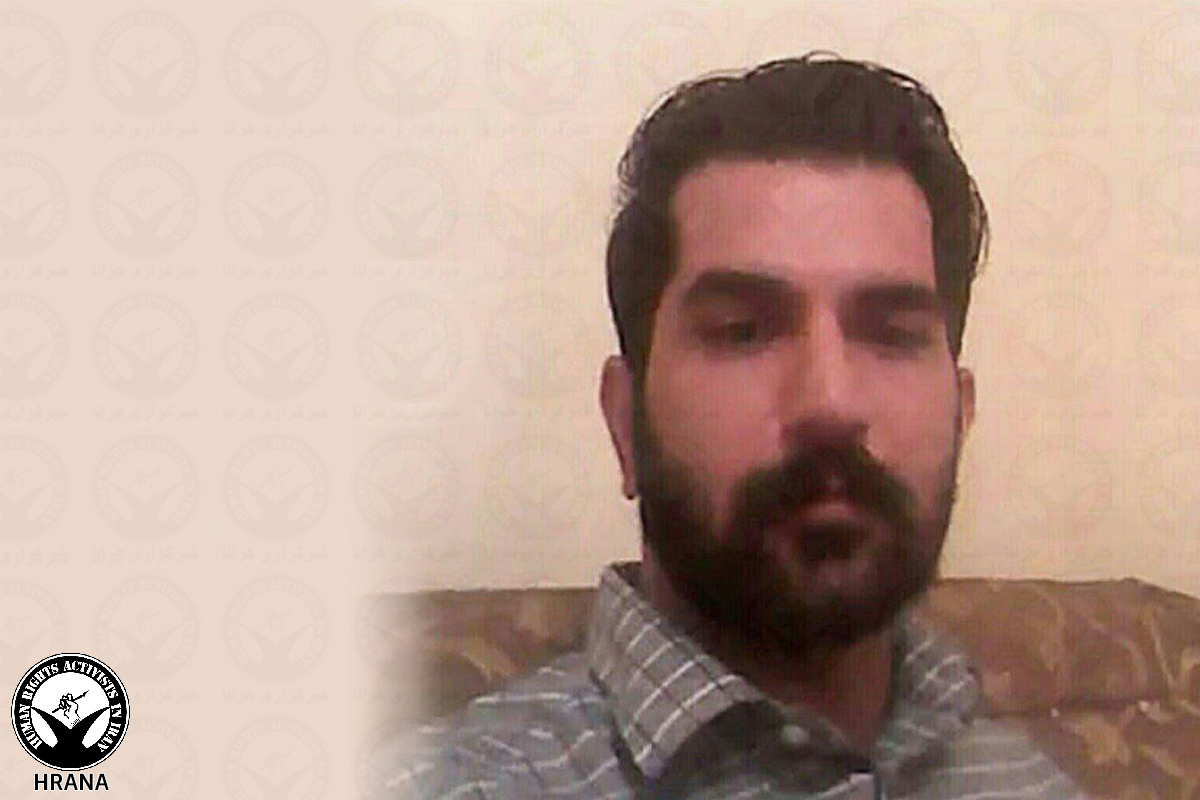
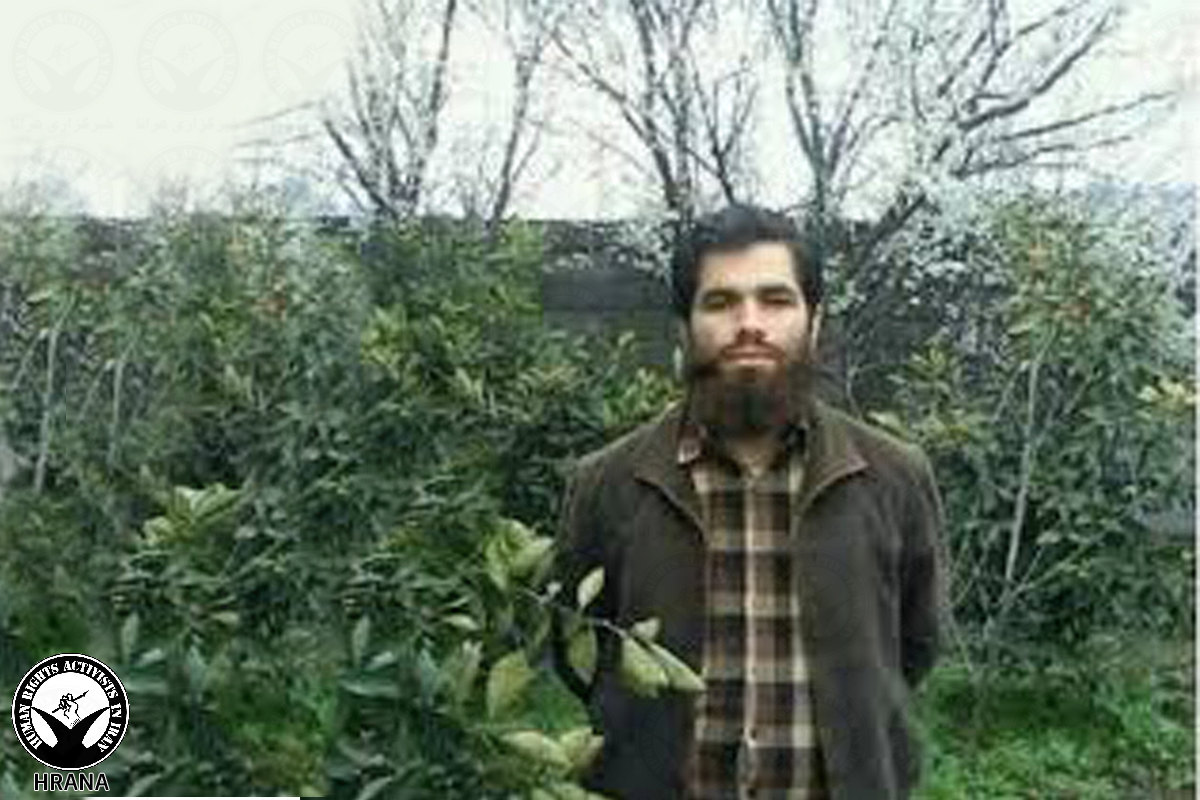
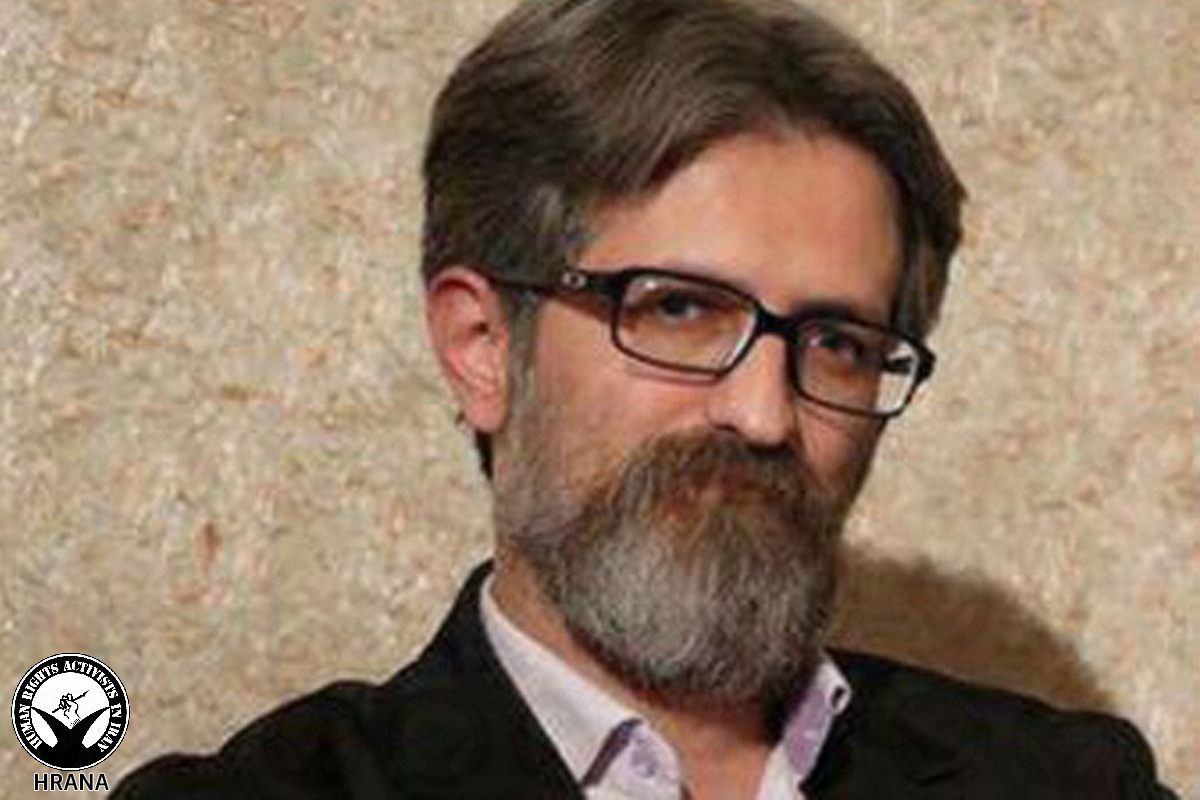
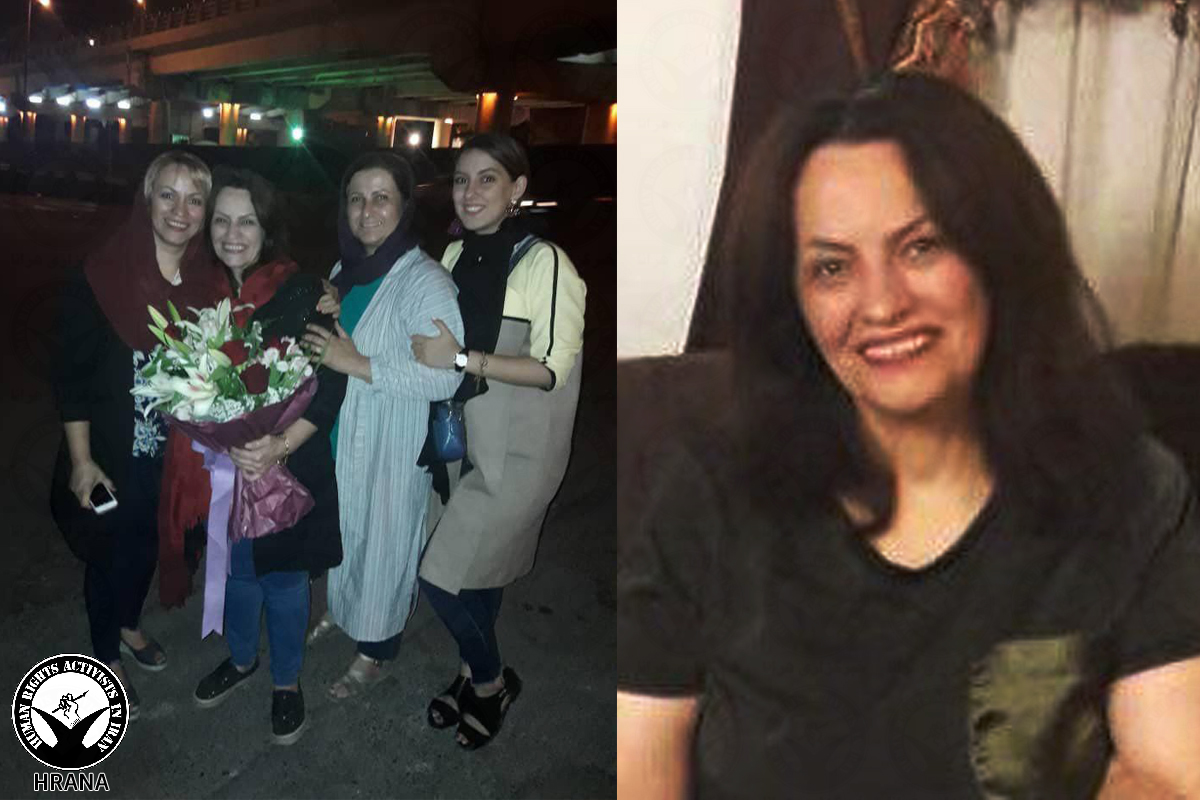
Dervish Woman Handed Prison Sentence on National Security Charges

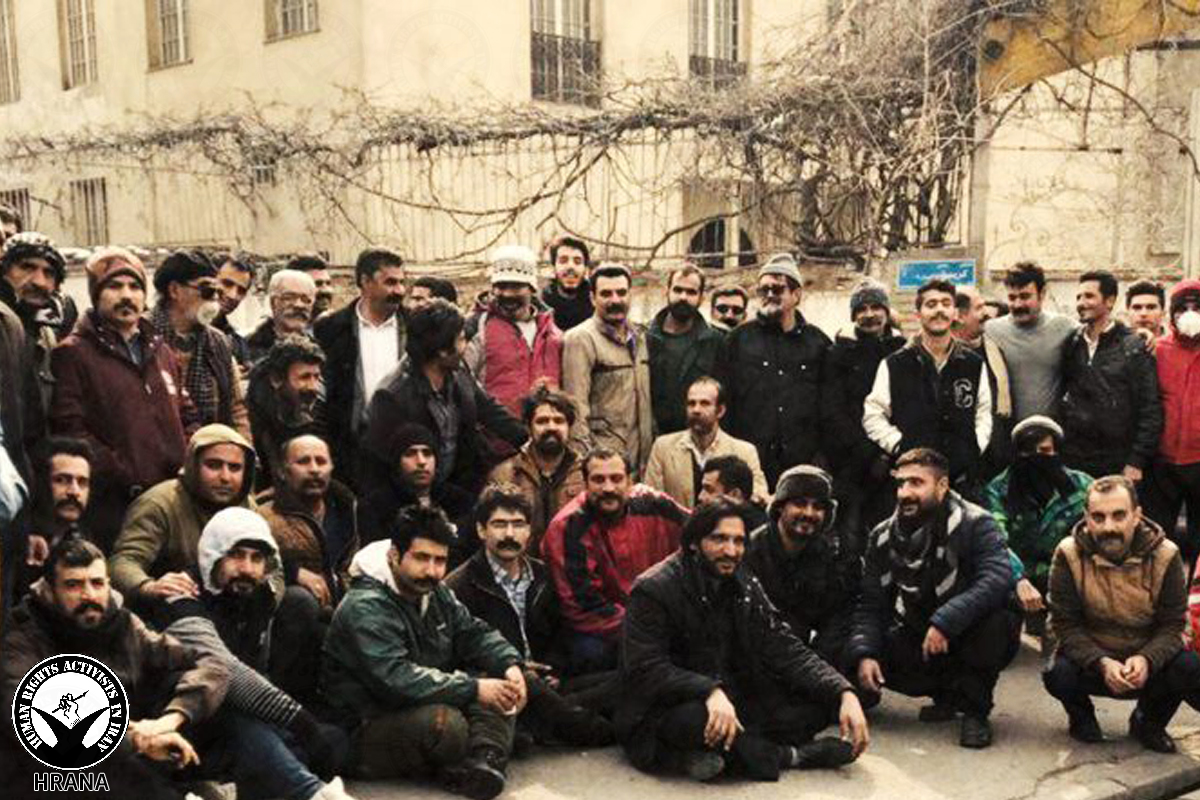
Human Rights Activists News Agency (HRANA) When 324 members of the Dervish Muslim minority [1] were arrested February 3, 2018, Sepideh Moradi was among them. According to Human Rights Watch, a sense of injustice over intensified government surveillance of their spiritual leader prompted Moradi and her comrades to organize a protest, which flagged them as threats in the eyes of authorities.

Sure enough, Dervish news agency Majzooban Noor reported that when a detained Moradi–in protest of a lack of due process and legal representation for Dervishes–refused to attend her trial on July 28th, she was sentenced in absentia by Judge Salavati and is now beginning a five-year sentence at Gharchak Varamin Prison [2] for “Collusion to Act against National Security.”

Salavati leaned on section 23 of the Islamic Penal Code to stiffen Moradi’s sentence with two-year bans on travel, membership in political groups and parties, and media or cyber activity. She had already been barred from pursuing her master’s degree in Computer Science on a prior charge.

“The accused is the daughter of Hamidreza Moradi, an extremist figure and one of the directors of the Majzooban Noor website,” her verdict read. “She was raised in a dogmatic Dervish family, and joined the Gonabadi Dervish sect under the influence of their deviant beliefs.”

Moradi and her fellow women Dervishes reportedly endured mistreatment and torture over the course of their interrogation and detention. At one point Moradi went on hunger strike to protest a violent raid conducted June 13th by the Special Guard Force of the prison. HRANA previously published the identities of these attackers.

She received medical care from an outside facility on July 25th after weeks of follow-ups; as of the date of this report, no further information was available on her health condition.

Tehran General Prosecutor Jafari Dolatabadi announced on July 24th that 330 sentences had thus far been handed down in Dervish cases. He added: “In the cases of those 25 who refused to attend their court sessions in attempts to thwart trial proceedings, the court […] followed through with procedure. Their verdicts were delivered in person.”

[1] There are various divisions among Dervishes in Iran; those featured in this article are Nematollahi Gonabadis who consider themselves followers of Twelver Shia Islam, the official state religion in Iran. According to Human Rights Watch, Noor Ali Tabandeh, spiritual leader of the Nematollahi Gonabadi Dervish faith, published a video on March 8th stating that he is not allowed to leave his residence in Tehran.

[2] For more information on deplorable conditions in Gharchak prison, please refer to pages 18 to 20 of the following document compiled by UK Home Office:
https://assets.publishing.service.gov.uk/government/uploads/system/uploads/attachment_data/file/565834/CIG-Iran-Prison-Conditions-v1-February-2016.pdf

Immoral treatment of Women Prisoners of Conscience by Iranian Authorities

Human Rights Activists News Agency (HRANA) – Fatemeh Mohammadi, 19, is a new Christian convert who was arrested in November 2017 and subsequently sentenced to six months in prison by the Revolutionary Court in Tehran. Ms. Mohammadi was recently released after serving her sentence in the women’s ward of Evin Prison. In an open letter, she talks about the pains and suffering she had to endure during the interrogation period. Ms. Mohammadi explains in her letter the ways she was insulted, mistreated, and felt unsafe due to her gender.

HRANA has received the full text of Fatemeh Mohammadi’s letter:

In all the interrogation sessions the interrogators asked me [whether I have had] sexual relations. In the second interrogation session, one of them said: “We have asked Haj Agha(1) to come and speak to you.” [I was blindfolded, but] from the speaking manner of Haj Agha, I believe he was a cleric. The first question he asked me was: “Have you ever had any relations with anyone?” “What kind of relations?” I replied. “Bad, immoral relations,” He said. I got very frustrated and said: “I have never been involved in any relationship; you are slandering me. What you are doing is not right or moral.” The man replied: “There is evidence that you have done so.” He was speaking in a calm and emotionless manner.  I told him while crying: “How could there be evidence when I haven’t done anything? I don’t know what type of evidence you have forged against me.”

In other questioning sessions, they asked me: “What were you and the other person doing exactly in your sexual relations?” No matter how much I insisted that I have never had a sexual relationship, they would not accept it. While asking these questions they instructed me: “Remove your blindfold, turn to us and answer our questions in detail.” I told them: “It is difficult for me to speak about such topics.” They responded: “Then write it down.” Without waiting for my reply, they placed interrogation papers in front of me. “Writing is even harder than speaking,” I said. They stood up next to me and kicked my chair so that I would get scared and give in. I was under duress until the last moment of interrogation to write down what they asked me to.

Another interrogator, whose voice was different than the previous interrogators and who was the only one who did not instruct me to remove my blindfold, asked his colleague to hand me the paper in order for me to write down an explanation. I could not take it anymore and started to scream. They kicked me out of the questioning room and returned me to solitary confinement. I have to point out that in all the interrogation sessions, an interrogator would always sit very close to me.

A few days before my arrest, one of my close friends asked me to read her favourite prayer poem to her. I sent her the poem as a voice file. This was one of my last chats. As a result, when the interrogators were inspecting my Telegram account, they found this chat very quickly, and played the audio file in the small room filled with interrogators. One of them laughed and imitated my reading of the poem. They all laughed at me. They called me by my first name in a very improper and offensive manner, laughing loudly each time. The sound of the laughter of one of them made me think he was choking. I was feeling very sick during that session, and felt an excruciating pain in my chest; I could barely breathe and started to cough incessantly.

They attempted to force me to [falsely] confess to illicit sexual relations with men. At times, they pursued a line of questioning that would lead them to that conclusion. Their entire objective was to make this accusation stick and force me to make up a story about sexual relations for them to read and enjoy. I could not imagine any other motivation for their actions, because sexual relations had nothing to do with my case.  

They had told Mr. Davood Souzanchi, who was also arrested as a new Christian convert: “Did you know that Fatemeh had illicit sexual relations?” And then they would tell me: “Did you know Davood has had illicit relations with women?”

These harassments were not limited to us. They stopped at nothing, even accusing my mother of sexual affairs. They mentioned [my mother] to Mr. Souzanchi as well. When my mother discovered this, she was extremely upset.

On the first night of my arrest, I was taken to Ward 209 of Evin Prison where the women prison guards forced me to undress completely while they watched me. I successfully resisted. They even took my elastic hair band, and as a result, my hair was unruly. When they were taking me for interrogation, I was forced to wear loose pants, an overcoat, a large headcover (2), a chador, slippers, and blindfolds. The headcover they had given me was too large for my head, and my hair kept sticking out in an unruly manner. When I exited the car, an interrogator yelled at me: “Tuck your hair back in. You are making me mad. You don’t want to see me angry.” However, the headcover was too large, and my hair kept falling out. The [interrogators] screamed at me repeatedly. It was frustrating to see them so sensitive about my hair sticking out of my headcover when they had asked me to remove my blindfold and stare at them while they asked me about illicit sexual relations. I was bewildered.

When the sleeves of my overcoat would pull up and my hands & arms were exposed, the interrogator would ask me to pull my sleeves down. Since I had delicate hands, he kept staring at them.

In another session, they asked me about Christianity’s view on relationships between men and women: “Did you know such and such person [from the Christian community] had relations with other members of the community?” They were constantly resorting to character assassination against the Christian community.  

When I was in prison, I launched a dry hunger strike, despite my weak physical condition, in order to object to the insults against me and my written request for a copy of the [Bible] being rejected. On the second day of my hunger strike, my heart was in poor condition. Upon my and my inmates’ insistence, the prison officials agreed to take me to the prison’s clinic. They decided to perform ECG (electrocardiography).  When I entered the room, a man came toward me, but I did not cooperate, because it was difficult for me to accept that a man was going to perform the test on me. The shift doctor, Mr. Mortazavi, argued with me and kicked me out of the clinic. He then wrote a false report depicting me as immoral and responsible for this ordeal. A woman agent signed the report despite witnessing the entire incident.

Another noteworthy point is that in Ward 209 the shower time is 30 minutes. If an inmate takes even one minute longer than that, a woman prison warden would open the shower door without warning and start arguing and staring at the prisoners. No matter how much I asked them to stop staring, they would continue. When I protested against this practice, they told me: “Since [the prison guards] are women, there is no problem.” They were oblivious to the fact that personal space should be respected regardless if a person is a man, woman, child, or blind.

Fatemeh Mohammadi

————————————————————

HRANA has previously reported that Fatemeh Mohammadi and Majid Reza (Davood) Souzanchi, two new Christian converts, were arrested in Tehran in November 2017 and taken to Evin Prison.

They were first tried in April 2018 by Branch 26 of the Revolutionary Court in Tehran presided by Judge Ahmadzadeh. In this court session, Fatemeh Mohammadi was sentenced to six months in prison on the charges of “Membership in evangelical groups”, “Engaging in Christian activities” and “Acting against national security through propagating against the regime”. Majid Reza Souzanchi, 34, was sentenced to five years in prison on the charges of “Membership in evangelical groups” and “Engaging in evangelical activities”.

A source close to these two individuals told HRANA: “Ms. Mohammadi was only accused of membership in evangelical groups and evangelicalism at the time of arraignment. However, during legal questioning, the investigator, Mr. Samad Hadipour, insulted Ms. Mohammadi’s beliefs, and she defended them in response. That is when Hadipour called her an insurgent against the regime and added the charge of ‘Acting against national security through propagating against the regime’ to her case.”

In April 2018, the second day of their trial was held in the presence of Hossein Taj, Mr. Souzanchi’s lawyer, and Ms. Shadi Halimi and Mr. Behzadi, Ms. Mohammadi’s lawyers. Mr. Souzanchi’s and Ms. Mohammadi’s sentences were issued to their families in May.

Since Ms. Mohammadi did not appeal her sentence, one fourth of her sentence was commuted according to the law. Considering the reduction in her sentence, Ms. Mohammadi spent a month and a half longer than her sentence in prison. Ms. Mohammadi was released from prison on May 13, 2018, the same day her sentence was issued.


1) Haj Agha is a term used to address a religious man especially one who has made the pilgrimage to Mecca.
2) The headcover referred to here, Maghna’a, is a triangular piece covering the hair, the neck and part of the chest.
3) There is a legal questioning/interrogation phase in the Islamic Republic’s legal process which is distinct from the interrogation of prisoners while they are in prison. The former is part of the legal system while the latter is led by self proclaimed “experts” of the Iranian regime’s security apparatus. To differentiate, we used “investigator” as the legal party and “interrogator” as the security agents who engage in interrogation during the detention period.

Two Sunni Prisoners in Critical Health Condition

HRANA News Agency – Abdul Rahman Sangani and Ghasem Abesteh, two Sunni prisoners of conscience in Rajai Shahr prison in Karaj, are facing severe health deterioration. However, they have been denied access to health services. Half of Mr. Sangani’s body is numb and his eye is damaged. Ghasem Abesteh who has been in prison since 9 years ago, has been informed that based on his medical tests, he has been diagnosed with thyroid cancer. Despite the confirmation of the prisoner’s condition of cancer, authorities in Rajai Shahr prison in Karaj have kept both of these people deprived of access to the necessary medical services.

According to the report of Human Rights Activists News Agency in Iran (HRANA), Ghasem Abesteh, Sunni prisoner in Rajai Shahr prison in Karaj who has been in jail for the past 9 years, has been diagnosed with thyroid cancer. Continue reading “Two Sunni Prisoners in Critical Health Condition”

Two Detained Christians Still Held in Evin Prison

HRANA News Agency – Majid Reza Souzanchi Kashani and Fatemeh Mohammadi, two Iranian Christians living in Tehran, are still in an unknown condition, after several months of detention.

According to the report of Human Rights Activists News Agency in Iran (HRANA), Majid Reza Souzanchi and Fatemeh Mohammadi, two Iranian Christians, who were arrested by the agents of Ministry of Intelligence on November 18, last year, are still being held in Evin Prison. Continue reading “Two Detained Christians Still Held in Evin Prison”

Suleiman Pirooti Suffers from Cancer in Rajai Shahr Prison in Karaj

HRANA News Agency – After being transferred to the hospital, Suleiman Pirooti, a Sunni prisoner of Rajai Shahr Prison in Karaj, has been diagnosed with cancer. The prisoner had been suffering from pain and had reported this to prison officials for a long time, but had not received medical treatment. In addition to cancer, this prisoner who has been deprived of health care has recently had two strokes in prison and suffers from other illnesses. His condition requires urgent medical treatment or medical leave, the issue that the prison authorities do not pay any attention to, while he has only 18 months of his imprisonment sentence left.

According to the report of Human Rights Activists News Agency in Iran (HRANA), while Suleiman Pirooti’s medical condition has been serious since a long time ago, the prison authorities did not take any action in this regard. Continue reading “Suleiman Pirooti Suffers from Cancer in Rajai Shahr Prison in Karaj”

Subscribe to Our Newsletter

Now is definitely not the time to stop reading!

At Least 300 Dervishes Arrested in a Police Operation

HRANA News Agency – Following the clashes between police forces and Dervishes in Tehran, Iran’s law enforcement spokesman announced the arrest of at least 300 Dervishes. Five others were killed in the clashes. NAJA has confirmed that three law enforcement officers and two Basijis were killed. The reports indicate that about 70 women have been arrested and were transferred to the Qarchak prison in Varamin. Many detained men have also been transferred to Evin Prison, although there is no information available on the fate of a large number of detainees.

According to the report of Human Rights Activists News Agency in Iran (HRANA), after arresting one of the Gonabadi dervishes, Nematullah Riahi, a group of Gonabadi dervishes gathered to protest. The protesting dervishes demanded Mr. Riahi’s unconditional release. Continue reading “At Least 300 Dervishes Arrested in a Police Operation”

Heavy Clashes between the Police and Gonabadi Dervishes

HRANA News Agency – The gathering of a number of Gonabadi dervishes in northern Tehran was dragged into clashes with police and violence. According to official statistics, at least three policemen were killed during the clashes and some others were wounded on both sides. On the other hand at least 60 Gonabadi protesters were arrested.

According to the report of Human Rights Activists News Agency in Iran (HRANA), after the arrest of one of the Gonabadi dervishes named “Nematullah Riahi”, a group of Gonabadi dervishes gathered in front of the police station. The protesting dervishes demanded Mr. Riahi’s unconditional release. Continue reading “Heavy Clashes between the Police and Gonabadi Dervishes”

Ali Amini, Remains in Detention for Being a Christian

HRANA News Agency – Ali Amini, a new Christian convert from Tabriz, was arrested several days before the New Year by the Tabriz Intelligence Office. After being interrogated, he was taken to the Tabriz Prison. After a month, he still remains in jail as a temporary detention.

According to the report of Human Rights Activists News Agency in Iran (HRANA), Ali Amini, a new Christian convert from Tabriz city, who had been arrested before the New Year, is still being held in Tabriz Central Prison. Continue reading “Ali Amini, Remains in Detention for Being a Christian”

Seven Death Row Sunni Prisoners Awaiting New Trial

HRANA News Agency – Seven Sunni prisoners in Rajai Shahr prison in Karaj who had formerly been sentenced to death by the Supreme Court, are still in a state of uncertainty on the eve of the ninth year of their imprisonment.

According to the report of Human Rights Activists News Agency in Iran (HRANA), seven Sunni prisoners, including Davoud Abdollahi, Kamran Sheikheh, Farhad Salimi, Anvar Khezri, Khosrow Besharat, Qasim Abesteh, and Ayoub Karimi, are detained since December 7, 2009 and were sentenced to death by judge Moghiseh of Branch no. 28 of the Revolutionary Court, in March of 2015. The sentences were not approved by Judge Razini in the Supreme Court; however, after eight years of imprisonment, they remain in a state of uncertainty. Continue reading “Seven Death Row Sunni Prisoners Awaiting New Trial”

Increasing Pressure on Sunni Prisoners in Rajai Shahr Prison

HRANA News Agency – A large group of Sunni prisoners who have been arrested and sentenced to imprisonment for religious beliefs and activities, are held at Rajai Shahr prison in Karaj. Recently, some of non-Iranian prisoners who have been accused of joining the ISIL were transferred to this prison and were added to the Sunni prisoners. The tension between these prisoners has led to increased pressure on both groups due to fundamental differences in their belief. It is speculated that prison authorities use the opposition of two groups to increase pressures on both of them.

According to the report of Human Rights Activists News Agency in Iran (HRANA), approximately 50 Sunni prisoners who had been convicted for non-violent activities, are being held at hall 21 in Rajai Shahr prison in Karaj. Continue reading “Increasing Pressure on Sunni Prisoners in Rajai Shahr Prison”