Day Twenty-One of the Protests: Islamic Republic’s Leader Acknowledges “Thousands Killed” as Internet Shutdown Continues

HRANA – On the twenty-first day of nationwide protests in Iran, despite the continued widespread internet blackout and intense security pressure, confirmed figures show that the total number of verified deaths has reached 3,308, with another 4,382 cases still under review. So far, 2,107 people with severe injuries have been identified, and the arrest of at least 24,266 individuals has been confirmed. On this day, the Leader of the Islamic Republic for the first time acknowledged that “several thousand people” had been killed during the protests. The release of new images from forensic medicine centers, an increase in mass arrests, and the intensification of international reactions were among today’s most significant developments.

On the twenty-first day of nationwide protests, while the widespread internet shutdown had exceeded 200 hours, international concerns and warnings over human rights violations continued to grow. At the same time, independent documentation efforts, including broad public calls for participation in recording evidence of human rights abuses, intensified.

Ongoing Communications Disruptions

The nationwide internet shutdown, which began on Thursday night, January 8, passed the 200-hour mark on the twenty-first day and continues. Although very limited and brief increases in connectivity were reported at certain points in recent hours, overall access to the global internet remains at only a few percent of normal levels.

The continuation of this situation has caused severe disruptions to citizens’ communications, independent information-sharing, and the transfer of information from inside the country. Families of those killed or detained are facing serious difficulties in following up on the status of their loved ones, and the process of collecting and verifying human rights information is encountering unprecedented delays and limitations.

Meanwhile, media outlets close to security institutions have reported the limited activation of messaging applications and what they refer to as the “national internet,” a measure that, according to these sources, aims to control communications and sever connections between networks outside the country and those inside. Nevertheless, the global internet is still reported to be cut off, and no specific timeline has been announced for the full restoration of connectivity.

International Reactions

At the international level, reactions to developments in Iran intensified on the twenty-first day. The U.S. president, in his latest remarks, stated that “the time has come to look for new leadership in Iran,” holding the Islamic Republic responsible for the country’s destruction. These comments followed his earlier remarks about the non-implementation of hundreds of death sentences in Iran.

In another development, the Argentine government designated the Quds Force of the Islamic Revolutionary Guard Corps (IRGC) as a terrorist organization and imposed sanctions on individuals linked to it. Additionally, the U.S. State Department announced financial rewards and relocation assistance for information related to the financial activities of the IRGC. The president of the European Parliament also stated that efforts to place the IRGC on the list of terrorist organizations would continue.

Government Reactions

Inside the country, Ali Khamenei, the Supreme Leader of the Islamic Republic, while acknowledging that “several thousand people” were killed during the protests, described protesters and their foreign supporters as “criminals” and threatened to confront what he called “domestic and international seditionists.”

At the same time, the Tehran prosecutor denied claims about the cancellation of protesters’ executions, stating that the judiciary’s response would be “decisive, swift, and deterrent.” He added that a large number of cases had resulted in indictments and been referred to court.

On the same day, law enforcement officials also reported widespread arrests, including more than 1,500 people detained in Gilan Province.

Statistics (as of the End of Day 21)

Based on case-by-case, verified data compiled by HRANA through the end of the twenty-first day of the protests:

• Recorded protests: 621 cases

• Confirmed fatalities: 3,308 people

Protesters: 3,097

Children under 18: 22

Military and government forces: 166

Non-protesting civilians: 23

• Deaths under investigation: 4,382 cases

• Severely injured: 2,107 people

• Arrested individuals: 24,266 people

• Broadcast forced confessions: 132 cases

Note: These figures are based solely on individually verified cases. Given the internet shutdown and severe communication restrictions, the actual human toll of the ongoing protests in Iran may be significantly higher than these numbers.

Conclusion

The twenty-first day of nationwide protests in Iran was marked by the continued internet blackout, mounting evidence of the scale of the crackdown, and an unprecedented acknowledgment by the Leader of the Islamic Republic of the extent of the fatalities. At the same time, escalating international reactions and solidarity gatherings abroad, alongside the government’s continued security and judicial approach, indicate that the crisis is still on an intensifying trajectory.
Sociologist Mostafa Mehraeen Faces Legal Action Over Open Letter to Supreme Leader

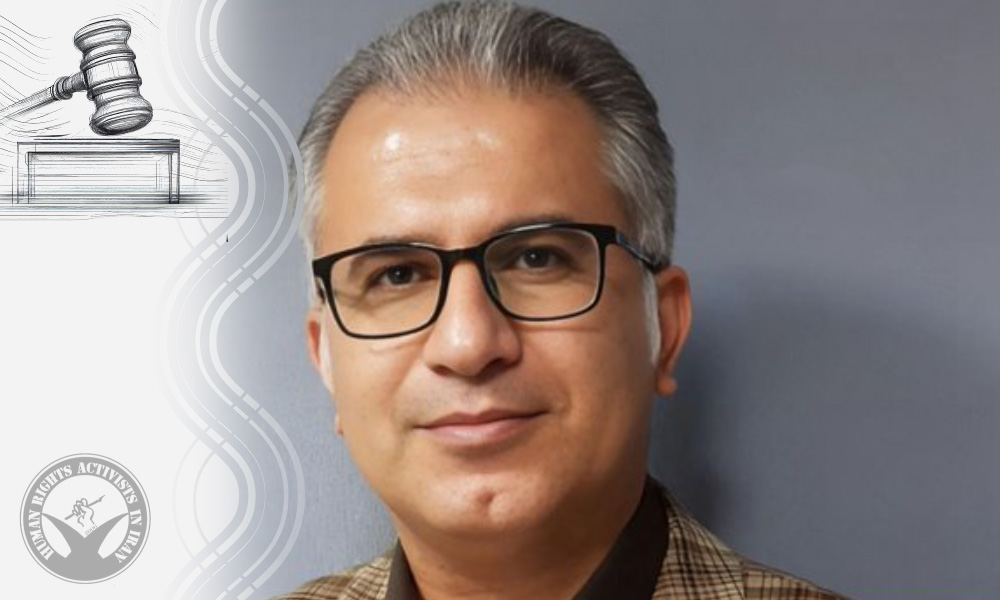
HRANA News Agency – A judicial case has been opened against Mostafa Mehraeen, a sociologist, at the Culture and Media Prosecutor’s Office in Iran.

According to HRANA, the news agency of Human Rights Activists in Iran, the case stems from an open letter Mehraeen published, addressing Ali Khamenei, the Supreme Leader of the Islamic Republic. The letter, which is now the basis for legal proceedings, is under review at Branch 9 of the Culture and Media Prosecutor’s Office.

In the letter, Mehraeen sharply criticized the Supreme Leader’s governance and proposed sweeping political reforms. His recommendations included the release of political prisoners, the dissolution of the Islamic Revolutionary Guard Corps (IRGC), the holding of a national referendum, amendments to the constitution, and the eventual resignation of the Supreme Leader.

Mostafa Mehraeen is an assistant professor of sociology at the Institute for Humanities and Cultural Studies. He holds a Ph.D. in the sociology of culture from Tarbiat Modares University and is known for his scholarly work on culture, art, and literature. Over the years, he has authored and translated numerous academic publications in these fields.

Fatemeh Mosanna and Hassan Sadeghi Released After Eight Years of Imprisonment

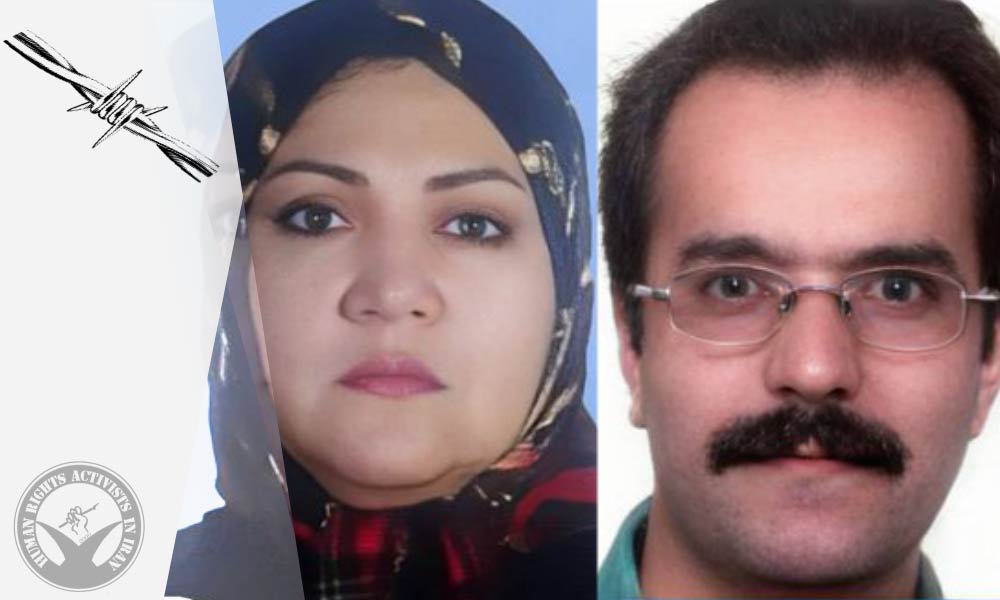
On July 12, 2023, political prisoners Fatemeh Mosanna and Hassan Sadeghi were finally released from Evin and Rajai Shahr Prison, marking the end of their grueling eight-year incarceration.

A reliable source close to the families of the couple revealed to HRANA that they had been granted amnesty under the “pardon and commutation” directive, following the proposal made by the head of the Judiciary in February 2023. This initiative aimed to pardon or reduce the sentences of select prisoners, acting in accordance with Article 110, paragraph 11 of Iran’s constitution. The proposal received approval from Ali Khamenei, Iran’s Supreme Leader.

The couple’s arrest took place on January 28, 2013, during the funeral of Sadeghi’s father. Their daughter and underage son were also apprehended and interrogated, but were subsequently released.

Following their trial at Branch 26 of Tehran’s Revolutionary Court, both Mosanna and Sadeghi were sentenced to 15 years in prison, with the additional penalty of having their personal property, business, and house seized. This verdict was upheld on appeal.

Mosanna’s own history with imprisonment dates back to 1980 when she was just 13 years old. Alongside her mother, she was arrested and imprisoned for three years. Tragically, during that time, her three brothers, Ali, Mostafa, and Morteza, as well as her brother’s wife, were executed in prison on charges of “enmity against God” and “advocating for The People’s Mujahedin Organization of Iran.”

Sadeghi also faced imprisonment in 1981, enduring a six-year sentence. He suffered severe beatings at the hands of prison agents, which have had lasting effects on his health.

Imprisoned Teacher Hashem Khastar Receives Additional Sentence for Activism

Hashem Khastar, a teacher and civil rights activist currently incarcerated in Vakilabad Prison, was sentenced to two years and six months by the Mashhad Revolutionary Court.

Khastar’s lawyer, Doostali Makki, received verbal notification of the court’s decision, which cited multiple charges including “insulting the Supreme Leader of Iran” and “propaganda against the regime” as the basis for the extended imprisonment.

Reliable sources close to Khastar’s family disclosed that the new sentence stems from his dissemination of 30 open letters and six voice messages from within the prison walls, further exacerbating the charges against him.

The ordeal began on August 11, 2019, when Khastar and 13 fellow civil rights activists were apprehended by security forces following the publication of an open letter demanding the resignation of Ali Khamenei. The initial ruling from the Mashhad Revolutionary Court sentenced Khastar to 16 years in prison, three years of exile in Nikshahr (located in Sistan and Baluchestan province), and a travel ban for three years. He faced a litany of charges, including “insulting both the former and current Supreme Leader of Iran,” “disturbing public opinion,” “collaboration with foreign media,” and “participation in unauthorized gatherings.”

Although the court of appeals reduced the three-year exile and travel ban, the prison sentence remained unchanged.

Ali Jahanian Arrested in Hamedan

On April 26, 2023, Ali Jahanian, a resident of Nahavand, was arrested after an appearance at the Ministry of Intelligence office in Hamedan. The agents transferred him to an undisclosed location.

According to HRANA, the news agency of Human Rights Activists, on April 26, 2023, Ali Jahanian was arrested in Hamedan.

An informed source close to Jahanian’s family told HRANA, “He was summoned by the Ministry of Intelligence and arrested at their office. His family’s frequent inquiries from judicial and security institutions about his whereabouts have remained unanswered.”

Jahanian, a poet and political activist, recently published a video on social media criticizing the Supreme Leader of Iran, Ali Khamenei.

The allegations against Jahanian are still unknown.


Subscribe to Our Newsletter

Now is definitely not the time to stop reading!

Lawyer Mohammad Najafi Sentenced to Three Years and Paying a Fine

The Criminal and Revolutionary Courts of Arak have sentenced lawyer Mohammad Najafi to a total of three years in prison and a fine for two parts of a legal case.

According to HRANA, the news agency of Human Rights Activists, Mohammad Najafi, an attorney at law, was sentenced to three years and paying a fine for a legal case opened against him while he was in prison.

Najafi stated that he was sentenced to two years in prison and a 15-million-toman fine by Branch 106 of the Arak Criminal Court for “spreading falsehood” and to one year in prison by Branch 2 of the Revolutionary Court for “propaganda against the regime”.

Najafi clarified that he did not attend the court and did not object to the verdict nor submit a plea of no contest for any part of the legal case. He stated that the reason for this legal case was due to his submission of a voice recording in prison showing support for the nationwide protests, which led to charges against his sister and brother as well.

Najafi has faced several other legal cases on prior occasions. In his last legal case, for the first part, he received three years in prison for insulting the Supreme Leader of Iran and four months for spreading falsehood. In December 2018, for the second part of this legal case, he was sentenced to 13 years in prison for “propaganda against the regime,” “insulting the Supreme Leader,” and “collaborating with hostile foreign countries by giving interviews with the Voice of America and Persian BBC.”

For the first part, he was pardoned and released from jail under a “pardon and commute” directive approved by Iran’s Supreme Leader. However, four days later, he was re-arrested and jailed in Arak Prison for the second part of this case.

In another legal case, Najafi received two years in prison and a fine for spreading falsehood to disturb public opinion after writing an open letter addressing Ali Khamenei, the Supreme Leader of Iran. This verdict was upheld on appeal. He was given this sentence while he had already been sentenced to one year in prison for the same charges in December 2018.

Furthermore, in February 2020, Najafi received six months in prison for attending and giving a speech at a ceremony in commemoration of Sattar Beheshti, a blogger who was tortured and killed in custody.

Ultimately, from all the above charges, Najafi received 10 years in prison for the charge of “collaboration with hostile foreign countries by giving interviews with the Voice of America and Persian BBC,” which was the charge with the severest punishment. This sentence was later reduced to four years and six months.


Civil Rights Activist Fatemeh Sepehri Sentenced to 18 Years in Prison

The Court of Appeals of Razavi Khorasan Province sentenced civil rights activist Fatemeh Sepehri to 18 years in prison.

According to HRANA, the news agency of Human Rights Activists, the 18-year sentence against civil rights activist Fatemeh Sepehri was upheld on appeal.

Earlier, the Mashhad Revolutionary Court Sepehri sentenced Sepehri to ten years for “collaboration with hostile foreign governments,” five years for “assembly and collusion against national security,” and one year for “propaganda against the regime.” This verdict has been upheld on appeal.

Applying Article 134 of the Islamic Penal Code, ten years in prison for the first charge will be enforceable.

It is worth noting that according to her brother, Asghar Sepehri, the judicial officials did not accept her lawyer’s power of attorney letter.

On September 21, 2022, security forces arrested Sepehri at her house in Mashhad and jailed her in Vakilabad Prison.

In another case, in January 2023, the Mashhad Revolutionary Court sentenced her to one year and a 20-million-tomans fine for “spreading falsehood, disturbing public opinions through social media activities and presence in media outside Iran.”

On prior occasions, as one of the signatories of a letter asking Ali Khamenei to resign, Sepehri faced other arrests and convictions.

Teacher Hamid Jafari Nasrabadi Sentenced to Three Years of Suspended Imprisonment

The Kashan Court of Appeals recently sentenced Hamid Jafari Nasrabadi to three years in prison. This sentence has been suspended for five years.

According to HRANA, the news agency of Human Rights Activists, quoting Iran Teachers’ Trade Association, the Kashan Court of Appeals upheld a three-year sentence against teacher Hamid Jafari Nasrabadi. This sentence has been suspended for five years.

Initially, the Kashan Criminal Court sentenced Nasrabadi to two years for “spreading falsehood” and one year for “contempt of the order.”

In the other part of his legal case, Nasrabadi was previously sentenced to 22 months and social deprivations.
According to this report, 15 months of this sentence was quashed by the Revolutionary Court in accordance with a recent directive to “pardon or commute” the sentences of some prisoners.

On October 19, 2022, security forces arrested Nasrabadi and jailed him in Kashan Prison.

Earlier, the head of the Judiciary proposed to pardon or commute the sentences of some prisoners as an enactment of Article 110, paragraph 11 of the constitution, which was approved by Ali Khamenei under some conditions which the legal case should meet.


Civil Rights Activist Farhad Meysami Set Free from Rajai Shahr Prison

On February 10, 2023, imprisoned civil rights activist Doctor Farhad Meysami was set free from Rajai Shahr Prison.

According to HRANA, the news agency of Human Rights Activists, civil rights activist Farhad Meysami was released from Rajai Shahr Prison in the fourth year of his sentence.

Details on his release are still unknown. He was likely, however, released under a recent pardon decree for some prisoners.

According to the sources close to Meysami, he had not requested any pardon, and during his entire incarceration, he did not have one day of furlough.
For several months, he has been severely restricting his food intake to demand the release of several prisoners, which has led to a lot of weight loss and endangered his health condition.

In recent days, dozens of prisoners, including political prisoners and those arrested at recent protests, were released. The exact number of released prisoners is still unknown. Earlier, the head of the Judiciary proposed the issuance of a pardon decree for some prisoners, including those arrested at recent protests, which was approved by Ali Khamenei under some conditions which the legal case should meet.

At Least 262 Prisoners Released from Prisons Across Iran

In two recent days, dozens of prisoners were released from different prisons across the country.

According to HRANA, the news agency of Human Rights Activists, following the issuance of a pardon decree, at least 262 prisoners and detainees were released from prison across the country.
 
Details on these releases are still unknown. They are, however, likely released under the recent pardon decree issued for some prisoners, including those arrested at protests.
Following the issuance of this pardon, the Chief Justice of Golestan Province announced that 435 convicts and 80 defendants were pardoned, of which 234 people had already been set free.
 
Earlier, the head of the Judiciary proposed the issuance of a pardon decree for some prisoners, including those arrested at recent protests, which was approved by Ali Khamenei under some conditions which the legal case should meet.