Amirhossein Rezaei, University of Tehran Student, Arrested in Arak

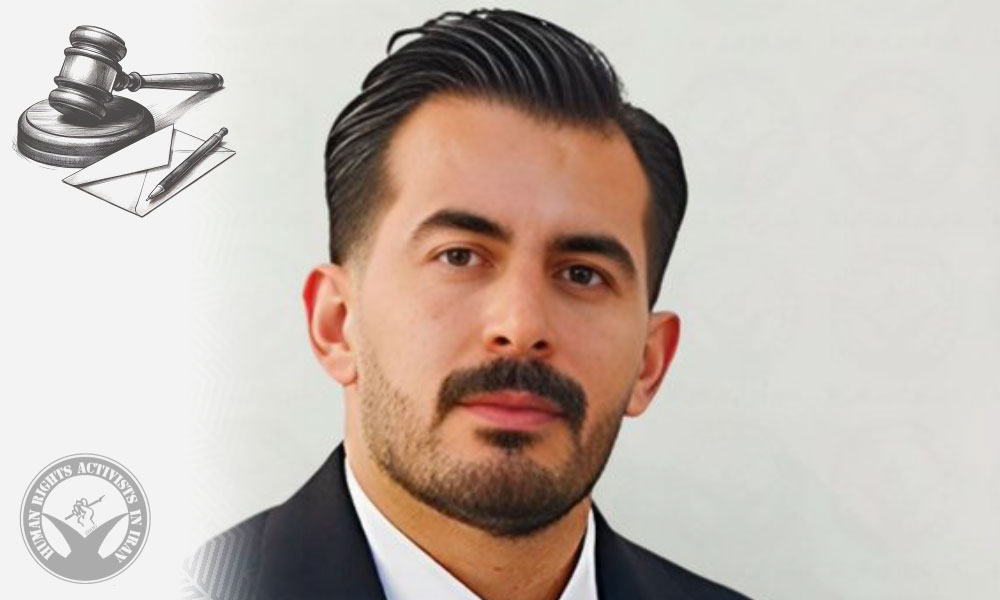
HRANA – Amirhossein Rezaei, a political science student at the University of Tehran and a journalist, was arrested by security forces in Arak on Wednesday, May 6, and transferred to an undisclosed location.

On the morning of Wednesday, May 6, security agents entered Mr. Rezaei’s family home in Arak, arrested him, and searched the residence. The agents also seized several personal items, including electronic devices and books belonging to the student.

Amirhossein Rezaei is a political science student at University of Tehran and a journalist. He had recently been dismissed from his job at the newspaper Donya-e-Eqtesad following a wave of staff layoffs and had returned to his family’s home in Arak.

At the time of this report, no information has been obtained regarding his place of detention, the charges against him, or his health condition.

Twenty Prisoners Executed on Murder and Drug-Related Charges

HRANA- Over the course of today and yesterday, at least twenty prisoners were executed in various prisons across Iran on charges related to murder and drug-related offenses.

The names of those executed yesterday are as follows:

On murder charges:

  • • Khaled Hosseini – Nowshahr Prison

  • • Mehdi Jafarian – Ardabil Prison

  • • Abbas Khordbin – Semnan Prison

  • • Shah Mirza Ghaedrahmati – Borujerd Prison

On drug-related charges:

  • • Rahman Najafi – Arak Prison

  • • Nezam Tajik, an Afghan national – Bandar Abbas Prison

  • • Younes Bagheri – Tabriz Prison

  • • Parsa Taghizadeh – Qazvin Prison

  • • Danial Abdi – Qom Prison

  • • Hamid Kariyabi – Naein Prison

Today, February 9, the death sentences of ten additional prisoners were carried out in various prisons:

On murder charges:

  • • Shayan Tojihi – Qaemshahr Prison

  • • Rouzbeh Amanatdoust – Quchan Prison

  • • Mohammad Zalitabar – Gorgan Prison

  • • Abedin Ahmadi – Neyshabur Prison

  • • Mohsen Rezaei – Dorud Prison

  • • Karim Javadi – Zanjan Prison

  • • Shahla Dowlatabadi – Kerman Prison

  • • Hooshang Shokouhi – Saveh Prison

On drug-related charges:

  • • Keyvan Akbari – Isfahan Prison

  • • Seyed Ali Kalami – Kashan Prison

As of the time of this report, the executions of these prisoners have not been officially announced by prison authorities or relevant institutions.

According to HRANA’s annual report, in 2025, at least 2,063 people were executed in Iran. Based on this data, the implementation of death sentences has increased by 119% compared to 2024. In many of these executions, due to secrecy, prisoners were denied even a final visit with their families.

Report on the Execution of at Least 26 Prisoners on Murder and Drug-Related Charges

HRANA – At least 26 prisoners were executed in the prisons of Arak, Naein, Tabriz, Bandar Abbas, Qazvin, Ardabil, Qom, Semnan, Borujerd, Sanandaj, Nowshahr, Lahijan, and Qaemshahr. These prisoners had previously been sentenced to death on charges related to drug-related offenses and murder.

The identities of the prisoners have been confirmed by HRANA as: Shahriar Farahani, Manoochehr Mehrabi, Nasser Hosseini, Behrouz Hazrati, Fardin Kalami, Mohammadali Moridan, Amin Nasiri, Sajjad Dousti, Peyman Shiri, Hekmat Daryaei, Mostafa Minavand, Shahab Karami, Nemat Mehraban, Azim Nourzad, Noushad Alipour, Shahrouz Hosseini, Yousef Eini, Meysam Rafiei, Jaber Mohammadi, Payam Nouri, Omid Hatami, Samir Ajamloo, Iman Nejati, Ghorban Rashidi, Kourosh Zamani, and Kianoush Rostami.

Based on information received by HRANA, today, Sunday, February 1, Shahriar Farahani was executed in Arak Prison, Manoochehr Mehrabi in Naein Prison, Nasser Hosseini in Qazvin Prison, Behrouz Hazrati in Ardabil Prison, Fardin Kalami in Qom Prison, Mohammadali Moridan in Borujerd Prison, Amin Nasiri in Sanandaj Prison, and Sajjad Dousti in Nowshahr Prison on murder charges.

Additionally, Peyman Shiri in Tabriz Prison, Hekmat Daryaei in Bandar Abbas Prison, and Mostafa Minavand in Semnan Prison were hanged on charges related to drug-related crimes.

Additionally, HRANA has received reports of executions carried out in recent months. From October to December of 2025, at least eight prisoners were executed in Qaemshahr Prison. Shahab Karami on October 6, Nemat Mehraban on October 20, Azim Nourzad on November 17, Noushad Alipour on December 1, and Shahrouz Hosseini on January 12 were executed on murder charges. Furthermore, Yousef Eini on November 2, Meysam Rafiei on December 15, and Jaber Mohammadi on December 29 were executed on charges related to drug-related offenses.

The death sentences of at least seven other prisoners were also carried out in Lahijan Prison. Ghorban Rashidi on  December 3, Kourosh Zamani on December 15, and Kianoush Rostami on December 31 were executed on charges related to drug-related crimes. Payam Nouri on October 29, Omid Hatami on November 12, Samir Ajamloo on November 19, and Iman Nejati on December 17 were sentenced to death and executed on murder charges.

As of the time of this report, the executions of these prisoners have not been officially announced by prison authorities or relevant institutions.

According to HRA’s annual report, at least 2,063 people were executed in Iran. Based on this report, the implementation of death sentences increased by 119% compared to 2024. In many of these executions, due to secrecy, prisoners were even deprived of the right to a final visit with their families.

Thirty-First Day Since the Start of the Protests; Continued Internet Blackout, First Court Hearing Held

HRANA – According to the latest aggregated data compiled by HRANA as of the end of the thirty-first day since the start of the protests, the total number of confirmed deaths has reached 6,221. Of these, 5,858 were protesters, 100 were children under the age of 18, 214 were forces affiliated with the government, and 49 were non-protester civilians. The number of deaths still under investigation has been reported as 17,091. The total number of arrests has reached 42,324. The number of severely injured individuals stands at 11,017, and 261 cases of forced confessions being broadcast have been recorded. Additionally, 11,026 people have been summoned to security institutions. The total number of recorded protest-related incidents is 656 across 201 cities in 31 provinces.

The main developments on the thirty-first day since the start of the protests included the continued policy of controlling communications and cracking down on alternative access tools, the continuation of both scattered and mass arrests, the holding of the first court hearing related to the protests in Malard, as well as pressure and threats against medical staff.

Continued Internet Disruptions and Shutdowns; Economic Losses and Security Crackdown on Starlink

Following the aftermath of the protests, the “digital blackout” and severe restrictions on internet access continue to be reported as one of the main axes of controlling and managing the public sphere. NetBlocks data indicate the continuation of a restricted, “whitelist-based” situation; such that even in cases where some networks have become “globally visible,” this does not mean a return to normal internet access, and public connectivity remains blocked or highly unstable. Within this framework, reports have emerged of entering the nineteenth day of a “complete internet shutdown,” alongside the formation of quota-based access mechanisms for certain groups. Among these, holders of commercial cards have reportedly been granted only limited and short-term access (approximately 20 minutes per day) at chambers of commerce and under supervision, a situation that effectively transforms the internet from a public service into a security-administrative privilege.

At the same time, the economic costs of this situation have been highlighted in official statements. According to remarks by the Minister of Communications, the internet shutdown has caused daily losses of hundreds of billions of tomans to the digital economy and several trillion tomans to the national economy. These figures, together with field reports of supply chain disruptions, stalled transactions, and reduced access to basic services, highlight the economic consequences of the communications shutdown policy.

In this regard, the Iranian Writers’ Association issued a statement referring to killings, widespread arrests, and overcrowded prisons, condemning the ongoing crackdown.

Security measures targeting alternative means of internet access have also intensified. Reports indicate the discovery and confiscation of dozens of Starlink devices, explicitly described as “anti-security goods,” demonstrating that information control is not limited to cutting off official networks and that alternative communication routes have also become targets of security policies.

Arrests and Crackdowns; First Court Hearing Related to the Protests in Malard

Aggregated reports from the days following the nationwide protests indicate that the wave of arrests and security crackdowns has continued across various cities, remaining scattered yet widespread. In some cases, the arrest of citizens has been reported in areas such as Zahedan, Torbat-e Jam, and Sabzevar, while in others, arrests have been documented in Gorgan, Dehgolan, Javanrud, Babol, and Lahijan. This geographic spread, alongside the large number of cases, points to the continuation of a pattern of “post-event cleansing” (arrests carried out after street protests subside) aimed at controlling social networks and local environments.

On a broader scale, reports have emerged of the arrest of 224 citizens, the majority of whom were detained in Qazvin. According to these reports, 219 individuals were arrested under the label of “leaders of the protests,” with additional cases reported in Qarchak and Shahroud. Alongside the arrests, there is also evidence of the detention of injured protesters, including reports indicating that some individuals were arrested while their medical treatment had not yet been completed, a pattern of conduct that violates the most fundamental human rights, including the right to medical care.

The holding of the “first court hearing related to the January protests” in Malard is regarded as the starting point of a broad series of trials. In this case, the subject of the court session was announced as the death of a FARJA (Law Enforcement Command) officer, and images from the hearing were also published. Mohammad Abbasi has been introduced as the primary defendant in the case. The conduct of the trial, including statements by the court-appointed lawyer made against the interests of the defendant, has prompted criticism from human rights organizations over the lack of fair trial standards. This case also involves another defendant.

Use of Schools as Suppression Bases; Expanded Security Presence in Public Spaces

Reports also shed light on the tools and spaces used for urban control. Among them is the publication of an image of a school in Arak (Imam Ali School), which is said to have been used as a base for suppressing protesters. The use of educational spaces for the deployment of forces and operational management, in addition to its direct impact on citizens’ safety, has secondary consequences such as fostering social fear, disrupting educational environments, and normalizing a security presence within public institutions.

Alongside these developments, field reports also point to restrictions on mourning practices and pressure on the families of those killed, including preventing the installation of banners and the holding of memorial ceremonies, as well as the removal or destruction of signs of mourning in public spaces. Taken together, these data indicate that the crackdown has not been limited to controlling the streets, but has extended to controlling narratives, collective memory, and even mourning rituals.

Crackdown on Medical Staff and the Arrest of Doctors; Securitizing Healthcare and Humanitarian Aid

Reports indicate that medical staff, particularly doctors and those who treated individuals injured during the protests, have been subjected to pressure and security crackdowns. In one case, Farhad Nadali, a physician at 5 Azar Hospital in Gorgan, was reportedly arrested by IRGC Intelligence for treating individuals injured in the protests and for opposing the deployment of armed forces inside the hospital. It has also been alleged that armed forces fired at protesters from the hospital rooftop, an allegation which, if confirmed, would point to the transformation of medical centers into components of the suppression apparatus.

In another case, the arrest of Babak Pouramin (an emergency medicine specialist) in Neyshabur was reported. He was reportedly arrested on January 19 and transferred to Vakilabad Prison in Mashhad, has had only limited contact with his family, and has been denied access to legal counsel. The same report also states that some doctors have been threatened with accusations such as “helping injured individuals escape from the hospital.”

Additionally, reports point to the arrest of Dr. Ameneh Soleimani in Ardabil and Ali Fakher, a retired nurse in Sirjan, for providing aid to injured protesters; the detention of members of Mr. Fakher’s family has also been mentioned. Taken together, these cases point to a troubling pattern: the securitization of healthcare, the criminalization of humanitarian assistance, and pressure on medical networks as a means of reducing support capacity for the injured and controlling the human consequences of the protests.

Official Statements; Protest-Related Damages in Gilan and the Government Spokesperson’s Position

Official authorities have attempted to focus attention on the damages caused by the protests. Among these, the estimated damages from the “recent incidents” in Gilan Province were announced to exceed 3 trillion tomans, with references to damage and fires affecting parts of Rasht’s bazaar. At the same time, the government spokesperson, Fatemeh Mohajerani, referred to “collective mourning” and the state’s responsibility toward those affected, while also stressing a distinction between “legitimate protesters” and “deviant currents.” Such formulaic statements have repeatedly been used by state institutions to justify their conduct in suppressing protesters.

Updated (Aggregated) Statistics as of the End of the Thirty-First Day Since the Start of the Protests

Number of recorded gatherings/protests: 656
Number of cities involved (no duplication): 201
Number of provinces involved (no duplication): 31
Total arrests: 42,324
Broadcasts of forced confessions: 261 cases
Summonses to security institutions: 11,026 cases
Severely injured individuals: 11,017
Confirmed deaths: 6,221

▪️ Protesters: 5,858
▪️ Children (under 18): 100
▪️ Government-affiliated forces: 214
▪️ Non-protesters / civilians: 49

Deaths under investigation: 17,091

Summary

The thirty-first day since the start of the protests passed amid the continued policy of controlling communications and cracking down on alternative access tools. At the same time, reports pointed to scattered yet widespread arrests, as well as pressure on the injured and their families. The first protest-related court hearing in Malard marks the consolidation of a judicial approach aimed at imposing severe penalties on protesters, drawing warnings from human rights groups regarding fair trial guarantees. Additionally, pressure on medical staff, the arrest of doctors and aid workers, and reports of public spaces such as schools being used as bases for suppression highlight new dimensions of the continued security crackdown in the aftermath of the protests.

At Least 17 Prisoners Executed in Iranian Prisons Over Two Days

HRANA – Over the past two days, HRANA has reported the execution of 17 prisoners in various prisons across Iran. This report provides details of these executions:

Saturday, December 20:

On this day, HRANA reported the executions of the following individuals:

Yashar Tehrani Moghadam, on a charge of murder, at Karaj Central Prison
Kian Papi, on a charge of murder, at Aligudarz Prison
Behzad Hosseini Rad, on a charge of murder, at Kermanshah Prison
Yarhossein Hassanvand, on a charge of murder, at Khorramabad Prison
Mohammad Javad Kalani, on a charge of murder, at Nahavand Prison
Hessam Nouzari, on a charge of murder, at Ardabil Prison
Moslem Salimi, on drug-related charges, at Hamedan Prison
One prisoner of unknown identity, on a charge of murder, at Dezful Prison

Sunday, December 21:

Fariborz Ghasemi, on a charge of murder, at Yasuj Prison
Reza Dastar, on drug-related charges, at Bandar Abbas Prison
Kazem Sourian, on a charge of murder, at Qom Prison
Vahid Pazouki, on drug-related charges, at Semnan Prison
Ali Mohammad Koushki, on a charge of murder, at Borujerd Prison
Amir Mohammad Jadidi, on a charge of murder, at Qazvin Prison
Fardin Khani, on a charge of murder, at Arak Prison

The death sentences of two other prisoners were also carried out on murder charges at Tabriz Prison. The identity of one of them has been confirmed by HRANA as Ebrahim Mashayekhi.

As of the time of this report, the executions of these prisoners have not been officially announced by prison authorities or relevant institutions.

From the beginning of this year until the end of November, 2025, the Iranian regime has executed 1,594 people, marking an unprecedented increase compared to previous years.

Subscribe to Our Newsletter

Now is definitely not the time to stop reading!

HRANA’s Report on the Execution of 31 Prisoners in Recent Days

HRANA – In recent days, authorities in several prisons across Iran have carried out the execution of dozens of inmates on drug-related and murder charges. The pace of executions this year has been unprecedented compared to previous years.

HRANA has documented the following executions in recent days:

Tuesday, November 11

Reza Geraei, on drug-related charges, in Behbahan Prison

Yaqub Dachi, 28, on murder charges, in Ilam Prison

Wednesday, November 12

Abbas Beigi, on murder charges, in Yasuj Prison

Saber Fallah, 33, on murder charges stemming from a street altercation, in Qom Prison

Thursday, November 13

Qomri Abbaszadeh, 29, and Iraj Aghaei, 30, on murder and drug-related charges respectively, in Sari Prison

Saturday, November 15

Nour Mohammad Rahmati, on drug-related charges, in Aligudarz Prison

Yar Morad Hassanvand, on murder charges, in Khorramabad Prison

Two prisoners executed in Dizelabad Prison in Kermanshah on murder charges; HRANA has confirmed the identity of one of them as Kamyar Fathi

Jaber Saki and Jahan Rasouli, on murder and drug-related charges respectively, in Dezful Prison

Sunday, November 16

Seyed Ali Hashemi of Karaj, on drug-related charges, in Salmas Prison

(First name unknown) Yeganeh, on drug-related charges, in Bam Prison

Habib Ezzati, on murder charges, in Sanandaj Prison

Mohammad Amin Safari, on murder charges, in Bukan Prison

Yasin Esfandiari, on drug-related charges, in Semnan Prison

An unidentified prisoner, on murder charges, in Nahavand Prison

Shokat Veisi (female), on drug-related charges, in Damghan Prison

Amin Shokarkhodaei, on murder charges, in Arak Prison

Mosib Khalavand, on drug-related charges, in Bandar Abbas Prison

Monday, November 17

Reza Kamayi, on murder charges, in Sepidar Prison of Ahvaz

Alireza Keshavarz, on murder charges, in Sabzevar Prison

Amir Farkhnezhad, on drug-related charges, in Zanjan Prison

Behzad Hasani, on murder charges, in Gorgan Prison

Two prisoners previously convicted on drug-related charges in Taybad Prison; HRANA has verified the identity of one of them as Javad Sattari

 Four prisoners were executed in Vakilabad Prison in Mashhad on drug-related charges. HRANA has confirmed the identities of two of them as Shamseddin (surname unknown), an Afghan national, and Alimardan Barani.

As of the time of this report, prison authorities and responsible institutions have not publicly announced these executions.

From the beginning of this year until the end of October, the Iranian regime has executed 1,286 people, marking an unprecedented increase compared to previous years.

Seventeen Prisoners Executed in Various Prisons

HRANA – In the continuing surge of executions across Iran, dozens of prisoners have been executed in various prisons in recent days.

According to HRANA, on Wednesday, November 5, a prisoner named Kiumars Gholami was executed in Gorgan Prison. Mr. Gholami had previously been arrested on murder charges and sentenced to death by a criminal court.

On Saturday, November 8, eight prisoners were executed in several prisons across the country:

In Khorramabad Prison, Yazdan Chegini was executed on murder charges.

Two prisoners were hanged in Kermanshah Prison on murder charges; HRANA has identified one of them as Yaroli Hajizadeh.

In Yasuj Prison, Peyman Ghasemi was executed for murder.

Tabriz Prison saw the execution of three prisoners, Omid Feyzi, Zahra Mirghafari (female), and Ehsan Amini, on drug-related charges.

In Nahavand Prison, Vali Karam-Dastar was executed for murder.

On Sunday, November 9, the wave of executions continued with more prisoners executed in different prisons across Iran:

Hamid Naderi in Andimeshk Prison for murder;

Mehran Hosseinpanah and Ahmad Sajjadi in Arak Prison on drug-related charges;

Abdollah Tajik and an Afghan national in Taybad Prison, both on drug-related charges;

Habib Namazi in Karaj Central Penitentiary for murder;

Two prisoners in Qom Prison on drug-related charges, one of whom HRANA identified only by the surname Beiranvand.

And lastly, today, November 10, Abbas Souri in Dorud Prison was executed on murder charges.

As of the time of this report, none of these executions have been announced by prison officials or relevant authorities.

From the beginning of this year until the end of October, the Iranian regime has executed 1,286 people, marking an unprecedented increase compared to previous years.

Judicial Case Filed Against Attorney Babak Eslami Farsani

HRANA – A judicial case has been opened against Babak Eslami Farsani, an attorney at law, in the Public and Revolutionary Prosecutor’s Office of Arak County.

Mr. Eslami Farsani announced earlier on Saturday, November 1, that he had been summoned to Branch 2 of the Arak Prosecutor’s Office on July 17, 2025, to defend himself against the charge of “propaganda against the regime.” He stated that the summons was issued in connection with his role as the legal representative of the family of Mehrshad Shahidi, one of those killed during the nationwide protests of 2022.

Mr. Eslami Farsani has not provided further details regarding the case.

Babak Eslami Farsani serves as the attorney for the family of Mehrshad Shahidi, who was killed during the 2022 protests in Arak.

Two Prisoners Executed in Arak Prison on Drug-Related Charges

HRANA– At dawn yesterday, Sunday, August 10, two prisoners were executed in Arak Prison. They had previously been sentenced to death on drug-related charges.

HRANA has identified one of the executed prisoners as Ahmadreza Torkashvand. The two had been arrested on charges related to drug offenses and later sentenced to death by the Revolutionary Court.

Further details, including the identity of the second executed prisoner, are under investigation by HRANA.

As of the time of this report, the executions have not been announced by prison officials or relevant authorities.

According to HRANA’s report, in 2024, over 52 percent of executed prisoners had been convicted on drug-related charges. Over the past ten years, individuals convicted of drug trafficking have accounted for 40 percent of all executions. Unfortunately, HRANA’s statistics show no progress in reducing executions for drug-related offenses.

Masoud Bakhtiari Arrested in Arak

HRANA – Masoud Bakhtiari, a resident of Arak, was arrested by the Cyber Police (FATA) in the city and taken to an undisclosed location.

According to HRANA, citing the Free Union of Iranian Workers, Mr. Bakhtiari—who was active in labor-related issues—was arrested in recent days by FATA officers without a judicial warrant. Following his arrest, he was transferred to an unknown location.

The reason for his arrest was reportedly the publication of posts criticizing the Friday Prayer Imam and local authorities in Arak, as well as raising labor issues and workers’ demands in a Telegram channel.

The report does not mention further details, including the exact time of arrest.

As of the time of this report, no information has been obtained about Mr. Bakhtiari’s whereabouts or the charges against him.

In 2024, a total of 2,783 Iranian citizens were arrested by security and judicial authorities due to their beliefs, opinions, or political and civil activities. Over the past decade, the number of such arrests has exceeded 56,000. The highest number of arrests occurred in 2022, during the nationwide protests, when HRANA documented 23,977 detentions.