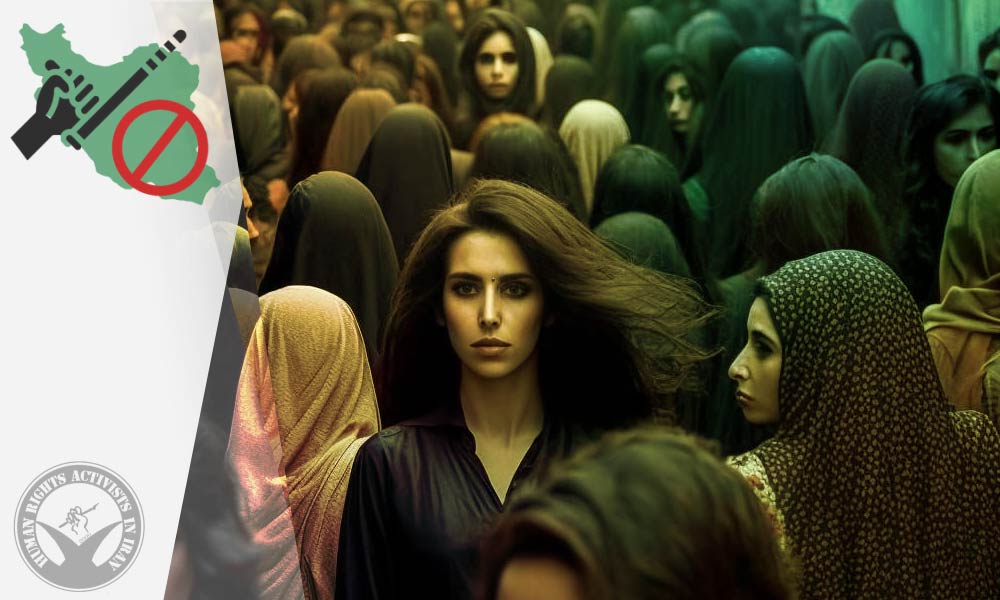
Hrana News Agency – Iranian state apparatuses have closed at least 458 businesses, including recreation centres, restaurants, hotels, and two shopping malls, since mid-March for allegedly failing to observe compulsory Hijab in their workplace. However, legal experts argue that these attacks on businesses and economic activities are not supported by any legal basis. Nonetheless, the parliament is aiming to enact a plan to put even more pressure on the private sector.
According to the Hrana news agency, from March 6, 1401, to April 4, 1402, hundreds of businesses including tourism centres, hotels, and restaurants were closed or received warnings for allegedly their staff or customers’ improper Hijab.”
During this period, at least 458 businesses were closed in an attempt to enforce the compulsory Hijab. Among these, 18 restaurants, 23 tourism and tour companies, and two clothing stores were closed. The nature of the rest business activities remained unspecified.
The closures have affected several high-profile businesses, including Nakhlestan Chah Arous in Abu Zeidabad, Ameri Hotel in Kashan, Bhargol clothing store in Behbahan, Metin Abad Desert Camp in Natanz, Deir Gachin Caravanserai in Qom, Nature Tourism Park in Yazd, and Puriagob Ecotourism Lodge in Khaf city. The gold and jewellery section of the Almas Karim Khan commercial complex in Tehran and the Persia commercial complex in Babolsar were also sealed for similar reasons.
Mazandaran province, with 338 closures, followed by Isfahan province with 41 closures, are the provinces most targeted by the regime’s “Hijab enforcement” action plan.
The police chief monitoring public places, Faraja, announced the launch of a plan to oversee improper Hijab, and Bijan Nobaveh, a member of the cultural commission of the parliament, announced drafting a plan to impose Hijab indirectly and in a more subtle way. According to this plan, women appearing in public without a proper Hijab will face fines ranging from five hundred thousand to three billion tomans, cancellation of driver’s licenses and passports, and a ban on using the internet.
However, legal experts argue that shutting down citizens’ businesses for breaking the Islamic dress code is unlawful. Hasan Berhani, a lawyer, published a note on the matter, stating: “Closing a business place is an attack against citizens. Most of these actions are illegal.”
Mohsen Haji Saeed, the head of tourist guide associations called the closure of recreation centres a crisis for the tourism industry.”
In recent times, there have been reports of women being denied services at entertainment and transportation venues for allegedly their improper Hijab. These venues include Eram Garden of Shiraz, Bostan Arch of Kermanshah, and Shiraz Metro.
In some cases, judicial officials punish citizens with prison sentences, flogging, social exclusions, and termination of employment for reasons related to Hijab. For example, three female employees were dismissed from their workplace in Qom. In another example, Maryam Bani Razi, a nurse living in Qom, was sentenced to more than eight months of imprisonment and 148 lashes.
In the past month, several officials have supported and asserted the pressures regarding the compulsory Hijab:
Hossein Ali Haji Deligani, a member of the Speaker’s Committee,
Ahmad Rastineh, the spokesman for the Cultural Committee of the Islamic Council,
Hossein Jalali, the Secretary of the Cultural Committee of the Council,
Mohammad Baqer Qalibaf, the Speaker of the Council,
Mehdi Bagheri, a member of the Judicial Committee of the Council,
Sadegh Jafari Chegani, the Public Prosecutor and the Revolution of Khuzestan,
the Chief of “Enjoining good and forbidding wrong headquarter”
Ministry of Culture and Islamic Guidance
The head of IRGC’s “Enjoining good and forbidding wrong” in Firuzkoh City,
the director of Tehran Seminary,
the president of Islamic Azad University,
the deputy of IRGC in Qom,
a number of Friday imams in different cities are among the people who, during speeches, have supported forcible dealings with citizens regarding “mandatory hijab”.
These mass business closures raise concerns over the impact on Iran’s private sector and tourism industry. While proponents argue that these measures are necessary to uphold Islamic rules, critics contend that these actions are flagrant examples of the infringement on personal freedom and an illegal attack on citizens’ economic well-being.
As the debate continues, it remains to be seen whether the proposed legislation will pass in parliament to reinforce compulsory hijab policies. Such developments could have significant implications for the country’s economy, tourism industry, and individual liberties.