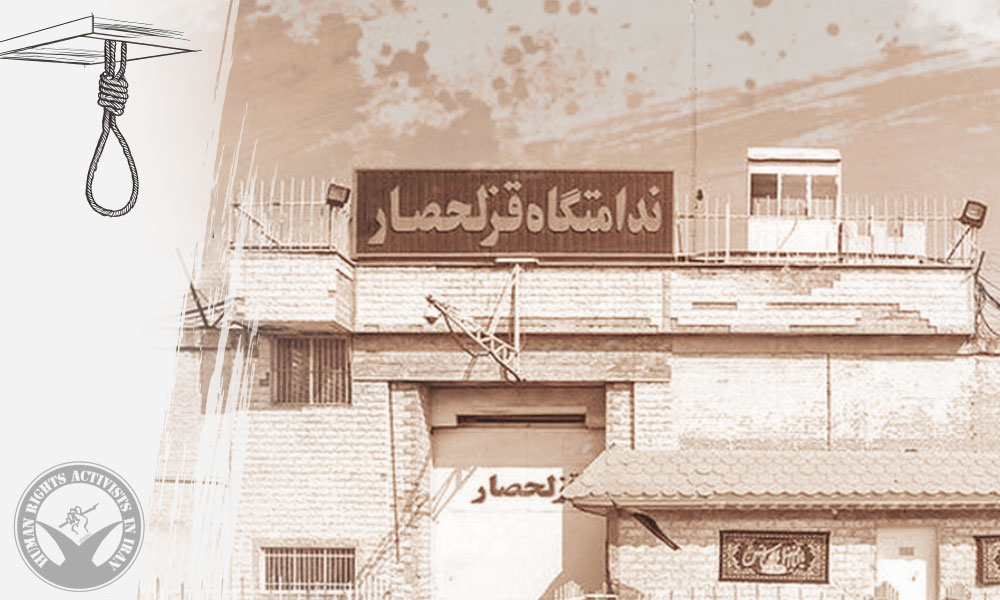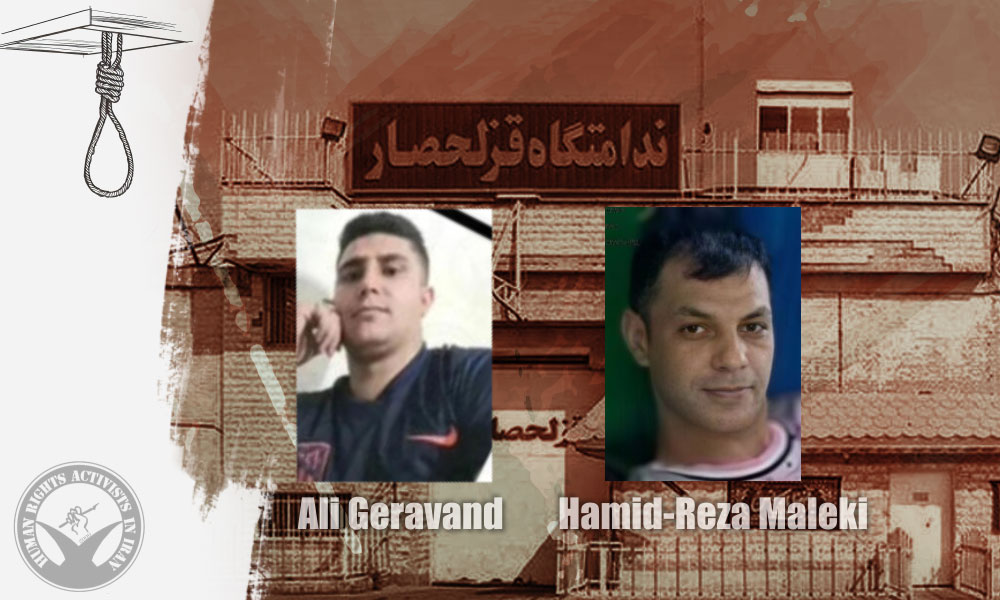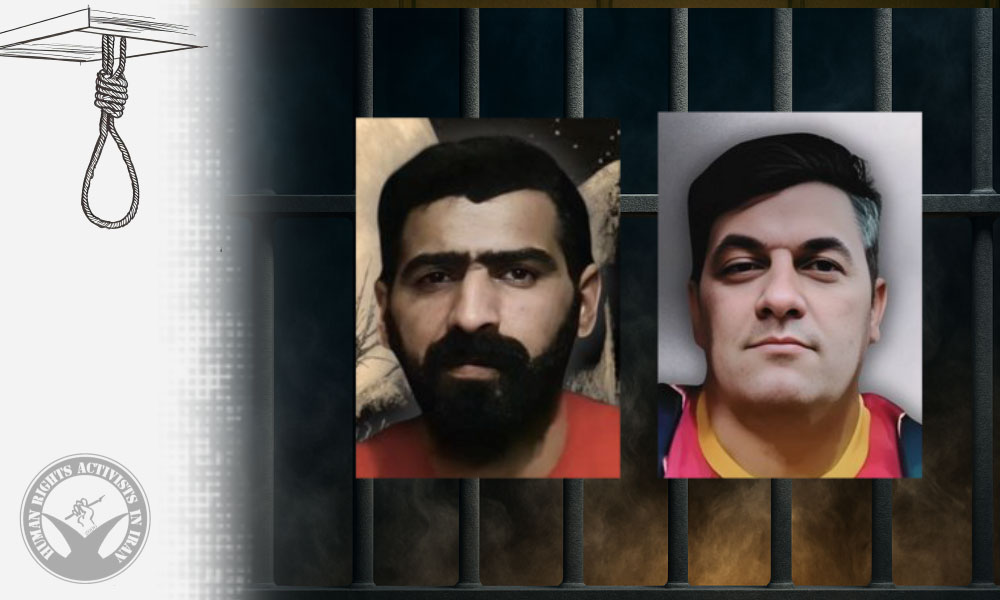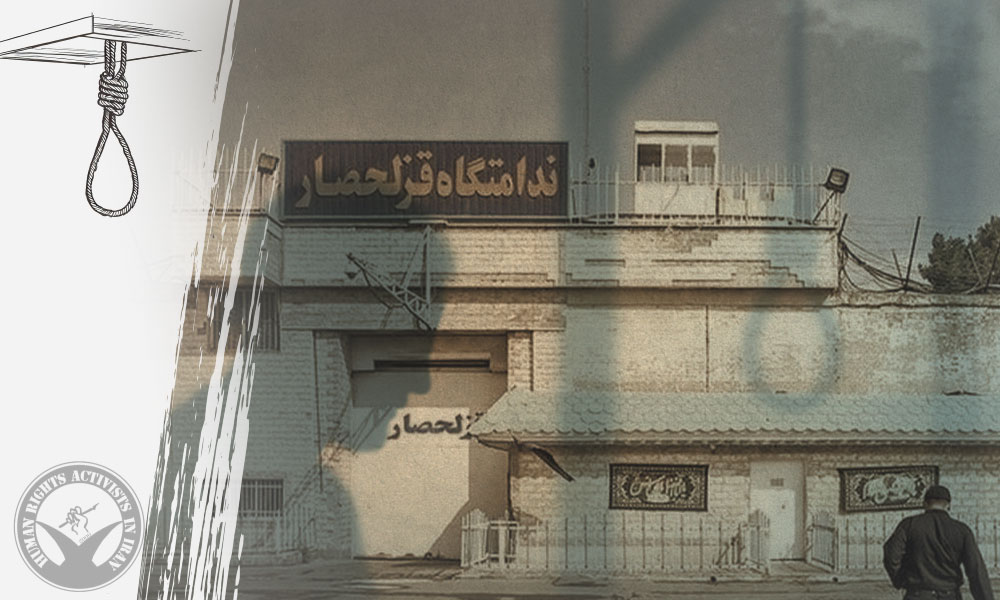
Behrooz Ehsani Eslamlou and Mehdi Hasani Executed

HRANA– On Sunday, July 27, the Judiciary’s Media Center announced the execution of Behrooz Ehsani Eslamlou and Mehdi Hasani, two political prisoners accused of baghi (armed rebellion). Their death sentences had previously been upheld by the Supreme Court of Iran.

Mizan described them as “operational members” of the Mojahedin-e Khalq Organization (MEK) and claimed they were involved in activities such as “establishing a safe house in Tehran, building and launching mortars, attacking public places, promoting the MEK’s agenda, damaging public property, and transmitting information and images to the group’s overseas contacts.”

Mehdi Hasani’s requests for retrial were rejected multiple times by the Supreme Court — the fourth and final rejection came recently. His third and second retrial requests were also denied earlier in the spring of 2025, with the first rejection occurring on February 23, 2025.

Similarly, Behrooz Ehsani Eslamlou’s retrial request was also rejected by Branch 39 of the Supreme Court in February 2025.

On January 26, 2025, Hasani and Ehsani Eslamlou, both sentenced to death, were transferred from Evin Prison to Ghezel Hesar Prison in Karaj under the pretext of medical treatment. Their executions were temporarily halted after their retrial requests were submitted and accepted for review by the Supreme Court.

In late September 2024, both men were tried at Branch 26 of the Tehran Revolutionary Court, presided over by Judge Iman Afshari. They were convicted of charges including baghi, moharebeh (enmity against God), efsad-e-fel-arz (corruption on Earth), collecting classified information, and collusion against national security. The court sentenced them to death, and the verdicts were later upheld by Iran’s highest judicial authority and communicated to their lawyers.

Their membership in the Mojahedin-e Khalq Organization was one of the primary bases for the charges.

Mehdi Hasani, aged around 48, was married and the father of two. He was arrested on September 9, 2022, while attempting to leave the country through Zanjan Province and was later transferred to Evin Prison. Behrooz Ehsani Eslamlou, 64 years old and a resident of Tehran, was arrested in December 2022 and also taken to Evin Prison.

Esmail Fekri Executed on Charges of Espionage

HRANA News Agency – On Monday, June 16, the Judiciary’s media center announced the execution of Esmail Fekri, a prisoner convicted of spying for Israel.

According to the state-affiliated Mizan News Agency, the execution was carried out at dawn on June 16, 2025. The Judiciary’s media outlet claimed that “after identifying a spy network linked to Israel in December 2023, Esmail Fekri was arrested on charges of intelligence cooperation and espionage for Israel, under the charges of ‘enmity against God’ (Moharebeh) and ‘spreading corruption on earth’ (efsad fel-arz).” Following the issuance of an indictment, court sessions were held with the presence of the defendant and his lawyer. The court found him guilty and sentenced him to death. The sentence was later upheld by the Supreme Court after a review of the appeal. The execution was carried out following legal procedures.

Esmail Fekri, who had been sentenced to death on charges of “espionage,” was transferred to Ghezel Hesar Prison in Karaj in late February 2025.

In 2024, according to 812 reports compiled by HRANA, the Iranian regime executed 930 individuals in its prisons—marking the highest number of executions in the past 12 years. Despite the scale of these executions, prison officials and other relevant authorities publicly acknowledged only 6% of them, highlighting the regime’s lack of transparency and accountability.

Three Prisoners Executed in Ghezel Hesar Prison

HRANA – At dawn today, Wednesday, June 11, the death sentences of three prisoners previously convicted of drug-related offenses were carried out in Ghezel Hesar Prison in Karaj.

HRANA has identified the individuals executed this morning as: Ardeshir Soltanabadi from Harsin, Masoud Naseri from Kermanshah, and Sajad Moradian from Nourabad.

According to information received by HRANA, the three had been arrested on drug-related charges and later sentenced to death by the Revolutionary Court.

As of the time of this report, prison officials and responsible authorities have not officially announced the executions.

According to HRANA’s statistics, Ghezel Hesar Prison in Karaj carried out the highest number of executions among all Iranian prisons, with 150 inmates hanged. This figure has nearly doubled compared to the previous year — a deeply alarming increase that underscores the escalating use of capital punishment in Iran.
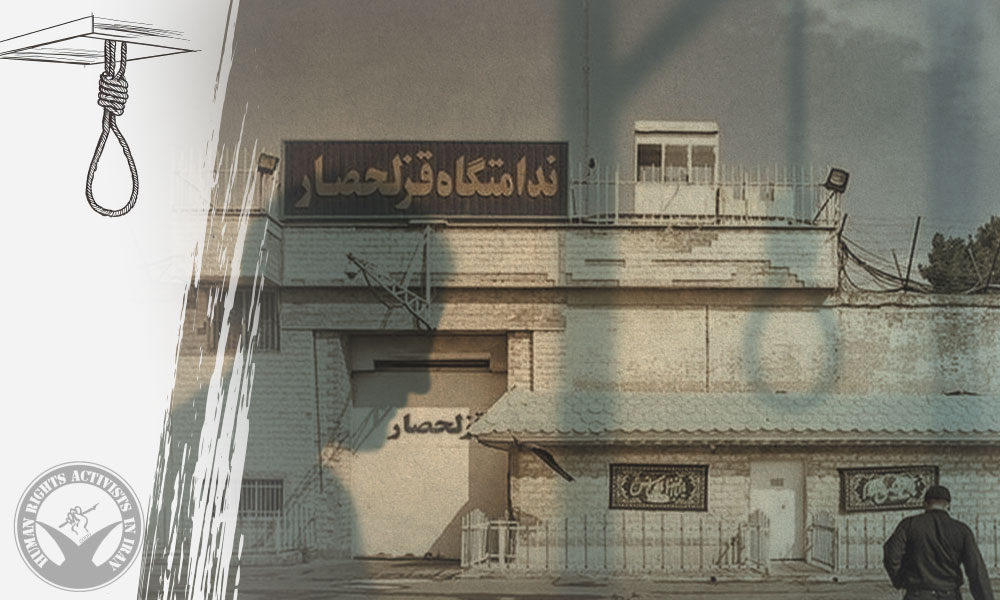
Nine Prisoners Executed in Ghezel Hesar Prison, Karaj

HRANA News Agency – With the identities of six additional individuals confirmed, the total number of prisoners executed at dawn on Monday in Ghezel Hesar Prison in Karaj has risen to nine.

According to HRANA, the news agency of Human Rights Activists in Iran, the executions took place at dawn on Monday, June 2.

Based on information received by HRANA, three of the nine prisoners were convicted on drug-related charges, five were convicted of murder, and one was sentenced to death for rape and murder.

HRANA has identified two of the three executed on drug charges as Ali Karami Nasr and Alireza Shahbazi. The identity of the third individual remains under investigation.

Three of the five executed for murder have been identified as Ali Abbas-Moghaddam, Sajad Nabizadeh, and Yasin Aghaei.

HRANA also confirmed the identity of the individual executed for rape and murder: Nazir Mohammad, an Afghan national.

Javan newspaper published details of the cases involving three of the executed men, including the Afghan national. The paper referred to him as “Shokrollah” and reported that in September 2013, he raped and murdered a young girl while her mother and brother were away. He reportedly entered the home, raped the girl, and suffocated her. He was arrested a few days later while attempting to flee the country via the Taybad border. He confessed during his trial and was ultimately sentenced to death.

In 2024, according to 812 reports compiled by HRANA, the Iranian regime executed 930 individuals in its prisons—marking the highest number of executions in the past 12 years. Despite the scale of these executions, prison officials and other relevant authorities publicly acknowledged only 6% of them, highlighting the regime’s lack of transparency and accountability.

Drug-Related Offenses: Three Prisoners Executed in Ghezel Hesar Prison, Karaj

HRANA News Agency –In the early hours of Monday morning, June 2, three prisoners convicted of drug-related offenses were executed in Ghezel Hesar Prison in Karaj.

HRANA, the news agency of Human Rights Activists in Iran, has confirmed the identities of two of the executed individuals as Ali Karami Nasr and Alireza Shahbazi, both from Kuhdasht. The identity of the third individual remains under investigation.

The three had previously been arrested on drug charges and sentenced to death by the Revolutionary Court.

As of the time of publication, neither prison authorities nor relevant state institutions have officially acknowledged the executions.

According to HRANA’s statistics, Ghezel Hesar Prison in Karaj carried out the highest number of executions among all Iranian prisons, with 150 inmates hanged. This figure has nearly doubled compared to the previous year — a deeply alarming increase that underscores the escalating use of capital punishment in Iran.

Subscribe to Our Newsletter

Now is definitely not the time to stop reading!

Monthly Report – May 2025: Human Rights Situation in Iran

HRANA News Agency  has compiled this monthly overview to highlight key human rights abuses reported across Iran in May. The execution of 157 individuals in May alone reflects a deeply alarming upward trend. If this pace continues, Iran is on track to record the highest number of executions in recent years.

Also concerning this month were the rise in arrests related to freedom of expression and belief, as well as the increase in casualties from indiscriminate shootings by military forces.

Executions

In May, HRANA reported the execution of 157 inmates across Iranian prisons—the highest monthly total since the beginning of the year. Among those executed were eight women, while the gender of three individuals remains unknown.

Most of the executions were carried out for murder (71 cases) and drug-related offenses (68 cases). Additionally, five individuals were executed on charges of rape, and three on non-political charges of corruption on earth. The charges against nine executed prisoners remain undisclosed, highlighting the Iranian regime’s lack of transparency in disseminating information.

Separately, on May 28, a prisoner named Pedram Madani was hanged in Ghezel Hesar Prison on charges of spying for Israel. A day before his execution, his mother released a video denouncing the legal proceedings in her son’s case as unjust.

Although public executions have decreased by approximately 90 percent over the past five years compared to the previous five-year period, the public hanging of a prisoner this month in Delfan Prison, Lorestan Province on May 27, indicates the Iranian judiciary’s continued insistence on such practices.

This Month, the Iranian judiciary sentenced twelve individuals to death. The most prominent cases included the Supreme Court’s upholding of the death sentence for political prisoner Mohammad-Amin Mahdavi Shayesteh, and the issuance of a death sentence for Gilan-based poet Peyman (Amin) Farah-Avar on charges of baghi (armed rebellion) and moharebeh (enmity against God). According to a source familiar with the case who spoke to HRANA, the charges against the poet stem from his protest-related activities and poems focused on social justice and civil rights.

Aside from these two cases, seven of the twelve individuals were sentenced to death on murder charges, while three others received death sentences on charges of spreading corruption on earth.

Freedom of Thought and Expression

According to reports received by HRANA, Iranian security agencies arrested 75 individuals in May for expressing their beliefs and opinions, bringing the total number of such arrests since the beginning of the year to 292. Twenty of these arrests were carried out solely for supporting the widespread truckers’ strike.

In addition, for similar reasons, four people were summoned by intelligence agencies, seven were summoned to court, and another seven stood trial. Security forces also searched the homes of four individuals.

In May, the Iranian judiciary sentenced twenty Iranian citizens to a total of 866 months in prison on charges indicative of violations of free expression. Of this total, 36 months were suspended sentences. In addition to the prison terms, the courts also issued sentences of ten lashes and twelve months of exile. One example is the sentencing of Taher Haji Ghorbani to 14 years and 2 months in prison on charges including insulting sacred beliefs, propaganda against the regime, and spreading false information.

As another example of violations against the right to freedom of expression, police and security forces of the regime prevented six peaceful gatherings from taking place during the month.

Women’s Rights

In May, seven more women were murdered, two of which are classified as so-called “honor killings.” Since the beginning of this year, HRANA has reported five such cases. Last year, that number reached 37—another indication of the lack of adequate legal protection for women in Iran.

Women’s rights activists were collectively sentenced to 31 months in prison during May.

Additionally, Masoumeh Soleimani, a world medalist in women’s wrestling, is now facing legal action for what authorities described as “encouraging women to remove their hijab.”

Workers’ Rights

May saw a 64% increase in labor protests, with 56 recorded gatherings compared to the previous month. More notably, the month witnessed 245 labor strikes across the country, particularly among truck drivers. Truckers across Iran launched a sweeping protest movement that began on May 22 and has now spread to at least 163 cities. Fueled by growing frustration over soaring operational costs, plummeting freight rates, deteriorating living conditions, and the government’s persistent disregard for their demands, drivers have staged widespread shutdowns by parking their trucks and halting services nationwide. For details, see HRANA’s report.

In this month, 21 workers lost their lives in workplace accidents, and 41 others were injured.

Although the International Labour Organization (ILO) does not rank Iran in terms of occupational safety due to insufficient data, an analysis based on statistics gathered by HRANA places Iran 97th out of 109 countries in terms of workplace accident fatalities—a notably low ranking. According to these figures, in the past year, roughly 9 out of every 100,000 workers in Iran died in workplace accidents.

Another example highlighting the lack of legal protection for workers was the dismissal of at least 40 employees from the Aria Steel Factory in Ardestan.

HRANA has also documented further labor rights violations, including unpaid wages for 4,315 workers, 180 cases of job suspension, one trial, and one court summons related to labor matters.

In May, guilds and unions held 160 protest gatherings—more than three times the number recorded in the previous month. One strike was also reported during this period. Also, security forces arrested seven individuals, including four teachers who were detained during a Labor Day protest in Tehran.

Other reported violations against guilds and unions include one case of a home search and one report of physical assault by police or security forces.

Children’s Rights

HRANA’s reports on violations of children’s rights over the past month include two cases of child suicide, four cases of child murder, two cases of sexual abuse, and three cases of domestic violence involving children. The most tragic incident occurred in the city of Mianeh, where a man killed his three children—aged 4, 7, and 10—before taking his own life.

In addition to these cases, the negligence of responsible institutions led to the death of one child and injuries to 13 others. HRANA also reported three cases of children being arrested by security forces.

Religious Minorities

This month, nine members of religious minorities faced a total of 672 months of imprisonment, fines, and other supplementary punishments—the highest recorded since the beginning of the current year. Among the harshest sentences was that of Rouya Sabet, a Baha’i citizen, who was sentenced to 25 years in prison. Two Christian converts, Mehdi Rahimi and Kia Nourinia, were each sentenced to 12 years in prison.

Additionally, six members of religious minorities were arrested this month, and three others were sent to prison to begin serving their sentences.

Other violations of religious minority rights reported by HRANA this month include: 19 home raids, 41 summonses by security agencies, one interrogation, and four cases of bans from economic activity.

Ethnic Rights

In May, according to HRANA’s reports, fourteen individuals were arrested by security forces for reasons related to ethnic rights activism. In five cases, the arrests were carried out arbitrarily and without a warrant.

Also this month, the five years and six months prison sentence of Vadood Asadi, an Azerbaijani-Turk activist currently held in Evin Prison, was fully upheld by Branch 11 of the Gilan Province Court of Appeals.

Other ethnic minority rights violations reported by HRANA this month include two home raids, two summonses by security agencies, and one case of interrogation.

Prisoners’ Rights

In Iran, prisoners’ rights are routinely violated, with widespread reports of unfair legal proceedings and prolonged legal uncertainty. In just the past month, documented violations include: two cases of assault, denial of medical care to seven prisoners, 54 cases of legal limbo, 28 instances where detainees’ families were kept uninformed about their condition or whereabouts, 31 transfers to solitary confinement, one case of denied access to legal counsel, one ban on phone calls, four forced relocations, and 10 cases of threats or coercion against inmates.

In protest against the violation of their rights, four prisoners went on hunger strike this month. Additionally, one case of suicide and one death due to illness and inadequate medical care were reported.

An example of prisoners’ rights violations was the denial of proper medical treatment to Ahmadreza Djalali (Jalali), a dual-national political prisoner sentenced to death, following a cardiac episode.

Kolbars and Fuel Carriers

In the past month, indiscriminate shootings by military and police forces claimed more civilian lives than the previous month. Eleven citizens—including five kolbars and three fuel carriers—were killed, and sixteen others, including two kolbars and one fuel carrier, were injured.

Also this month, a landmine left over from the Iran-Iraq war exploded in Marivan County, killing two conscripted soldiers. Two other border guard personnel, including one conscript, were injured.

Inhuman Punishment

In violation of the International Covenant on Civil and Political Rights (ICCPR), which strictly prohibits inhumane and degrading treatment, Iran’s judiciary issued sentences totaling 74 lashes this month.

Four Prisoners Executed in Ghezel Hesar Prison on Drug-Related Charges

At dawn today, four prisoners previously sentenced to death on drug-related charges were executed in Ghezel Hesar Prison in Karaj.

HRANA has identified the executed individuals as Abbas Lak, Hojjat Havasi, Majid Khalifeh, and Afshin Ezzati.

According to information received by HRANA, they had been arrested on drug-related charges and subsequently sentenced to death by Revolutionary Courts.

As of the time of this report, the executions have not been officially announced by prison authorities or relevant institutions.

According to HRANA’s statistics, Ghezel Hesar Prison in Karaj carried out the highest number of executions among all Iranian prisons, with 150 inmates hanged. This figure has nearly doubled compared to the previous year — a deeply alarming increase that underscores the escalating use of capital punishment in Iran.

Two Prisoners Executed in Ghezel Hesar Prison, Karaj

HRANA News Agency – Two prisoners who had previously been sentenced to death in separate murder cases were executed at dawn today in Ghezel Hesar Prison, Karaj.

HRANA has identified the individuals as Farman Kooshki, from Kuhdasht, and Yashar Jafari, from Tehran.

According to information obtained by HRANA, the two had been arrested in separate cases on murder charges and later sentenced to death by criminal courts.

As of the time of this report, the executions have not been officially announced by prison authorities or relevant institutions.

According to HRANA’s statistics, Ghezel Hesar Prison in Karaj carried out the highest number of executions among all Iranian prisons, with 150 inmates hanged. This figure has nearly doubled compared to the previous year — a deeply alarming increase that underscores the escalating use of capital punishment in Iran.

Prisoner Executed in Ghezel Hesar Prison, Karaj

HRANA News Agency – Today, Wednesday, May 14, the death sentence of a prisoner previously convicted on drug-related charges was carried out in Ghezel Hesar Prison in Karaj.

The individual hanged at dawn today has been identified by HRANA as Reza Miri.

According to information received by HRANA, Mr. Miri had been arrested on drug-related charges and was later sentenced to death by the Revolutionary Court.

As of the time of this report, the execution has not been officially announced by prison authorities or relevant institutions.

According to HRANA’s statistics, Ghezel Hesar Prison in Karaj carried out the highest number of executions among all Iranian prisons, with 150 inmates hanged. This figure has nearly doubled compared to the previous year — a deeply alarming increase that underscores the escalating use of capital punishment in Iran.

Two Prisoners Executed in Ghezel Hesar Prison

HRANA News Agency – On Monday, May 12, 2025, the death sentences of two prisoners previously convicted of murder in separate cases were carried out in Ghezel Hesar Prison in Karaj.

HRANA has confirmed the identities of the executed prisoners as Kourosh Jalili and Nasri Zar. HRANA has learned that both individuals had been arrested in separate murder cases and later sentenced to death by the criminal court.

As of the time of this report, prison officials and relevant authorities have not publicly confirmed the executions.

According to HRANA’s statistics, Ghezel Hesar Prison in Karaj carried out the highest number of executions among all Iranian prisons, with 150 inmates hanged. This figure has nearly doubled compared to the previous year — a deeply alarming increase that underscores the escalating use of capital punishment in Iran.