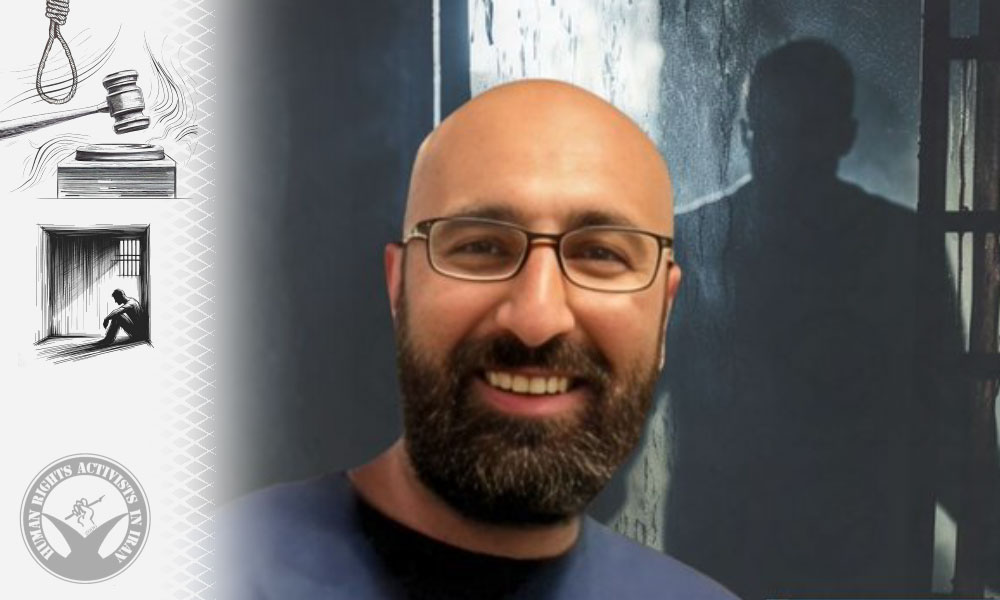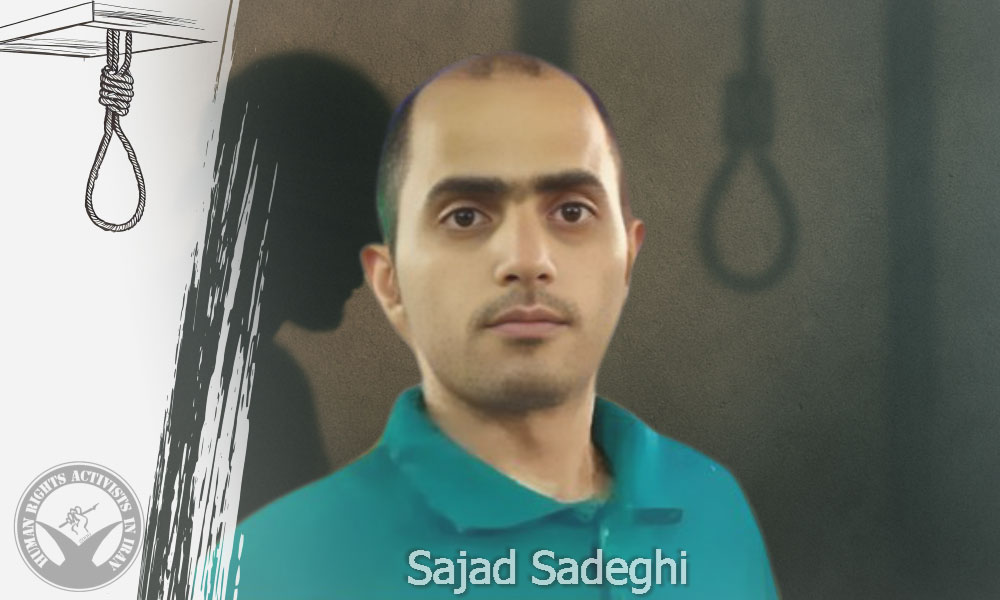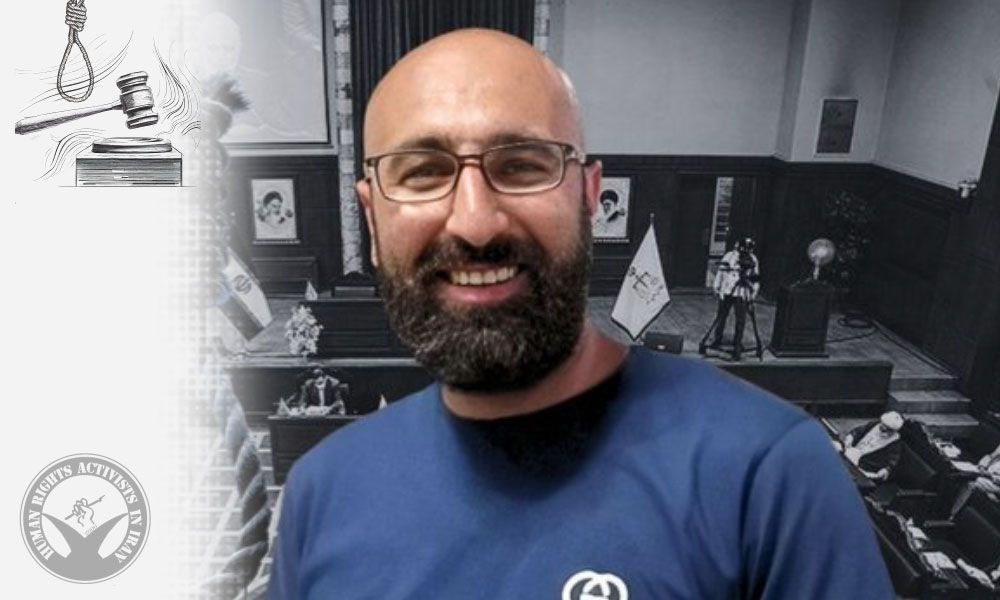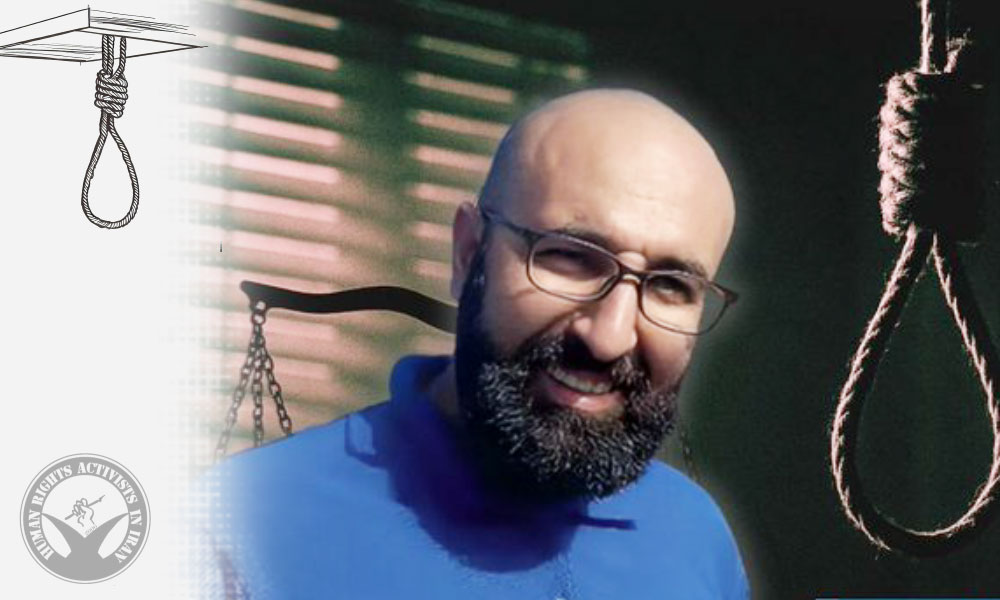
Political Prisoner Manoochehr Mehman-Navaz Re-Arrested and Returned to Prison

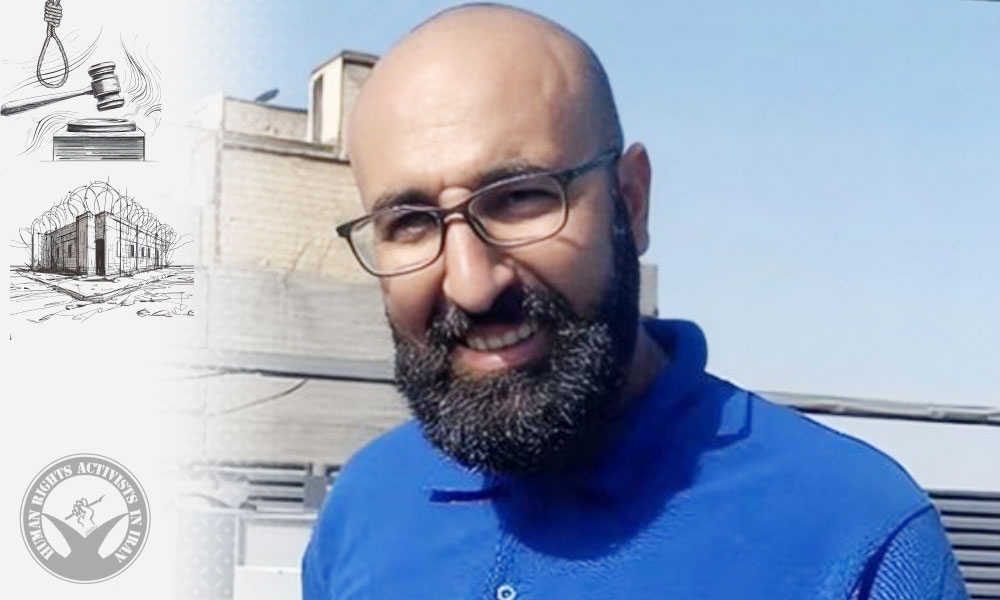
HRANA News Agency – Manouchehr Mehman-Navaz, a political prisoner who had been serving his sentence in an open prison arrangement, was arrested 16 days ago and transferred to Khurin Prison in Varamin.

Based on information received by HRANA, Mr. Mehman-Navaz, who had been serving his sentence outside of prison under an open prison system, was arrested at his private residence on Wednesday, April 16, and transferred to Khurin Prison in Varamin.

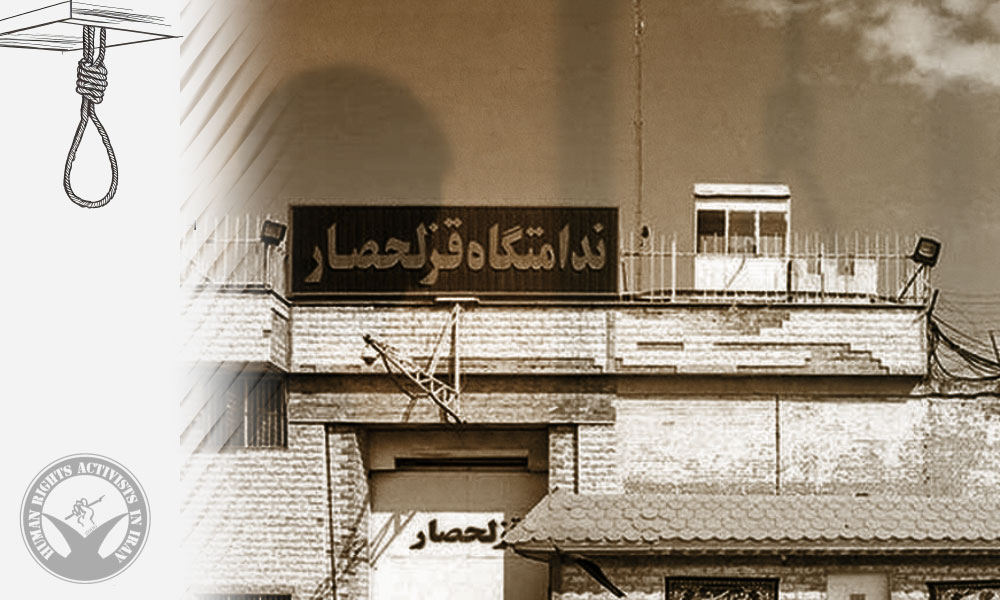
He had previously been released from Ghezel Hesar Prison in Karaj under the same open prison arrangement on November 19, 2023.

Mehman-Navaz was sentenced to five years in prison by Branch 29 of the Tehran Revolutionary Court, presided over by Judge Seyed Ali Mazloum, on charges of “assembly and collusion against internal national security” and “disrupting public order and security through causing commotion and unrest.”

In 2022, he had been sentenced to death by Branch 28 of the Tehran Revolutionary Court, presided over by Judge Mohammadreza Amouzad. However, that sentence was overturned following testimony from eyewitnesses. After submitting a request for a retrial, his case was re-examined in Branch 29 of the court.

This political prisoner was arrested during the 2022 nationwide protests and was tried in Branch 28 of the Tehran Revolutionary Court in November of that year.

The charges against him included arson of buildings with the intent to confront the Islamic government—an offense classified as moharebeh (waging war against God)—as well as “assembly and collusion against internal national security,” “disrupting public order and security through creating commotion and unrest,” and “participating in unlawful gatherings.”

Ghezel Hesar Prison: 11 Prisoners Await Execution in Solitary Confinement

HRANA News Agency – Yesterday, April 28, four prisoners at Ghezel Hesar Prison in Karaj, who had previously been sentenced to death on charges related to drug offenses and murder, were transferred to solitary confinement for the implementation of their sentences. With the addition of these individuals, the number of prisoners transferred to solitary confinement for execution in this prison over the past four days has risen to 11.

According to information received by HRANA, one of these prisoners had been sentenced to death for murder, while three others were sentenced for drug-related offenses. In total, four of the eleven prisoners, including two Afghan nationals, had been sentenced to death for murder, while the remaining seven had received death sentences for drug-related charges.

Further details, including the identities of these prisoners, are currently being investigated by HRANA.

According to data gathered by the Department of Statistics and Publication of Human Rights Activists, Ghezel Hesar Prison in Karaj witnessed the highest number of executions in 2024. For a comprehensive examination of the details and statistics surrounding the executions in Iran, refer to HRANA’s report.

At Least Five Prisoners Executed in Ghezel Hesar Prison, Karaj

HRANA News Agency – At dawn on Wednesday, April 23, 2025, the death sentences of at least five prisoners previously convicted on drug-related charges were carried out in Ghezel Hesar Prison in Karaj.

According to HRANA, the news agency of Human Rights Activists in Iran, the identities of the executed individuals have been confirmed as Salahuddin Amoudi, Mahmoud-Ali Naseri, Akbar Mousavi, Amanollah Barahouei, Abdollah Pashtooi.

Based on information received by HRANA, Pashtooi was convicted of Moharebeh (enmity against God) through armed robbery, while the remaining prisoners had been arrested in separate cases on drug-related charges and were later sentenced to death by the judiciary.

Earlier, HRANA had reported the transfer of 10 prisoners to solitary confinement in this prison in preparation for execution.

As of the time of this report, prison officials and responsible institutions have not publicly announced these executions.

According to data gathered by the Department of Statistics and Publication of Human Rights Activists, Ghezel Hesar Prison in Karaj witnessed the highest number of executions in 2024. For a comprehensive examination of the details and statistics surrounding the executions in Iran, refer to HRANA’s report.

Ten Death Row Inmates Facing Imminent Execution in Ghezel Hesar Prison

HRANA News Agency – On April 22, at least ten inmates sentenced to death were transferred to solitary confinement in Ghezel Hesar Prison in preparation for the execution of their sentences.

According to information received by HRANA, two of these prisoners had previously been sentenced to death on charges of murder. A third individual, an Afghan national, was sentenced to death for the charge of rape. The remaining seven inmates had received death sentences for drug-related offenses.

Further details, including the identities of these prisoners, are currently being investigated by HRANA.

According to data gathered by the Department of Statistics and Publication of Human Rights Activists, Ghezel Hesar Prison in Karaj witnessed the highest number of executions in 2024. For a comprehensive examination of the details and statistics surrounding the executions in Iran, refer to HRANA’s report.

Seven on Death Row Moved to Solitary in Ghezel Hesar Prison

HRANA News Agency – Yesterday, April 14, seven prisoners in Ghezel Hesar Prison in Karaj who had previously been sentenced to death on charges related to drug offenses and other non-political crimes were transferred to solitary confinement in preparation for the implementation of their sentences.

The transfer, which took place today, Monday, April 14, 2025, was for the purpose of carrying out their death sentences. Four of these individuals had previously been arrested on drug-related charges and were subsequently sentenced to death by the Revolutionary Court. The remaining prisoners were sentenced to death for other non-political crimes.

HRANA is investigating further details, including the identities of the prisoners.

According to data gathered by the Department of Statistics and Publication of Human Rights Activists, Ghezel Hesar Prison in Karaj witnessed the highest number of executions in 2024. For a comprehensive examination of the details and statistics surrounding the executions in Iran, refer to HRANA’s report.

Subscribe to Our Newsletter

Now is definitely not the time to stop reading!

Report on Four Death Row Prisoners; One Sentenced for Alleged Crimes Committed as a Minor

HRANA News Agency – Four prisoners, identified as Abdolrahim Ghanbarzahi Gorgij, Eido Shah-Bakhsh, Abdolghani Shahbakhsh, and Soleiman Shahbakhsh, who have been sentenced to death in a joint case, are currently held in Ghezel Hesar Prison in Karaj.

The death sentences of Eido, Abdolghani, and Soleiman Shahbakhsh have already been upheld by the Supreme Court, and the request for a retrial by Abdolrahim Ghanbarzahi Gorgij was recently rejected by the same authority. Ghanbarzahi Gorgij has been held in solitary confinement for over 45 days. Among them, Soleiman Shahbakhsh was under 18 years old when the judicial case was initiated.

On April 9, 2025, Branch 9 of the Supreme Court, presided over by Judge Ghasem Mazinani, officially rejected the retrial request submitted by death row prisoner Abdolrahim Ghanbarzahi Gorgij. The request had been formally filed on February 7, 2025. Prior to this, the Supreme Court had upheld the death sentences of the other three defendants—Eido, Abdolghani, and Soleiman Shahbakhsh—and referred their cases to the Tehran Security Prosecutor’s Office for enforcement.

Reza Salehiyeh, an attorney and human rights activist, stated: “Mr. Ghanbarzahi Gorgij was pressured by prison officials last February to sign a repentance letter. After he refused, saying he would not accept it under coercion, he was sent to solitary confinement as punishment. Prison officials claimed the move was due to a dispute with inmates convicted of common crimes. He has been held in isolation since late February, raising concerns about the imminent execution of his sentence.”

Soleiman Shahbakhsh, one of the defendants, was born in October 1996 and was under 18 at the time of the alleged events. Nevertheless, his minor status was not taken into consideration during the trial or in the sentencing process, despite Iranian domestic laws and international commitments requiring special judicial procedures for minors.

According to attorney Salehiyeh, the retrial request for Mr. Ghanbarzahi Gorgij faced significant delays, with only one opportunity for in-person follow-up at the Supreme Court’s Branch 9 office over several weeks. Despite the end of the Nowruz holidays, neither he nor other lawyers received a copy of the ruling until its official issuance on April 9.

Ghanbarzahi Gorgij’s family asserts that his case was handled with violations of fair trial principles and that the confessions used against him were obtained under torture and coercive interrogations. They demand an immediate halt to the execution process and a fair review of the case.

The case of the four prisoners was referred to the Tehran Security Prosecutor’s Office for enforcement in late October 2024, and judicial procedures had already moved into the sentence enforcement phase long before. The death sentences, issued on February 4, 2024, by Branch 28 of the Tehran Revolutionary Court presided over by Mohammadreza Amouzad Khalili, were based on charges of “baghi (armed rebellion) through membership in anti-regime groups” and “armed uprising.” These sentences were later upheld by Branch 32 of the Supreme Court.

In the initial stages of the trial, the individuals were also accused of participating in armed operations that resulted in the deaths of IRGC and police forces between 2007 and 2009. However, the preliminary court found some of these charges unsubstantiated and issued acquittals.

Since the first arrests in this case in 2012, the legal process has been marred by disruptions and prolonged uncertainty. Some defendants, including Eido and Abdolghani Shahbakhsh, were rearrested in 2016 after initially being acquitted by the Zahedan Revolutionary Court—a move reportedly triggered by security agencies objecting to the acquittals.

At Least Four Prisoners Executed in Ghezel Hesar Prison, Karaj

HRANA News Agency – At dawn yesterday, April 9, 2025, at least four prisoners previously sentenced to death on separate murder charges were executed by hanging in Ghezel Hesar Prison in Karaj.

The identities of three of them have been confirmed by HRANA as: Bahram Hodavand-Khani, a resident of Varamin; Salar Amir Jalali, a resident of Tehran; and Abolfazl Karimi, a resident of Karaj.

Based on information received by HRANA, the inmates had been arrested in separate cases on murder charges and later sentenced to death by the criminal court. Among them, Bahram had been on death row for 16 years.

On April 8, HRANA had reported the transfer of 10 inmates to solitary confinement in preparation for the execution of their death sentences. Three of them, who were sentenced to death for drug-related offenses, were returned to the ward after their executions were halted.

As of the time of this report, the execution of these prisoners has not been officially announced by prison authorities or relevant institutions.

According to data gathered by the Department of Statistics and Publication of Human Rights Activists, Ghezel Hesar Prison in Karaj witnessed the highest number of executions in 2024. For a comprehensive examination of the details and statistics surrounding the executions in Iran, refer to HRANA’s report.

Ten Prisoners Transferred to Solitary Confinement for Execution in Ghezel Hesar Prison

HRANA News Agency – On April 7, seven more prisoners sentenced to death on murder charges were transferred to solitary confinement in Ghezel Hesar Prison in Karaj in preparation for the implementation of their sentences. Including the three prisoners who had previously been moved, the total number of individuals transferred for execution in the prison has now reached ten.

These prisoners had been sentenced to death on charges related to drug offenses and murder, and their transfer was carried out for the purpose of enforcing the sentences.

Further details, including the identities of the prisoners, are currently under investigation by HRANA.

According to data gathered by the Department of Statistics and Publication of Human Rights Activists, Ghezel Hesar Prison in Karaj witnessed the highest number of executions in 2024. For a comprehensive examination of the details and statistics surrounding the executions in Iran, refer to HRANA’s report.

Esmail Fekri and Mohsen Langarneshin Transferred to Ghezel Hesar Prison; One Sentenced to Death

HRANA News Agency – Esmail Fekri, a prisoner sentenced to death on espionage charges, and Mohsen Langarneshin, another prisoner facing similar accusations, were transferred from Evin Prison to Ghezel Hesar Prison in Karaj on February 15.

Both prisoners are currently being held in the quarantine section of Unit Three at Ghezel Hesar. Fekri has been sentenced to death by the Revolutionary Court, while Langarneshin has been ordered to pay financial restitution and a monetary fine for the same charge.

A source close to the prisoners told HRANA:
“It is possible that Mohsen Langarneshin has additional sentences that have not yet been publicly disclosed.”

Before their transfer, the two detainees were held in Ward 4 of Evin Prison.

Details regarding their cases and backgrounds remain unclear. HRANA will provide updates as more information becomes available.

While espionage-related offenses are not inherently considered human rights violations, Iran has a longstanding pattern of using such allegations to target political opponents. The lack of transparency in these cases, particularly regarding evidence, legal proceedings, and access to defense rights, raises serious concerns about the legitimacy of the charges.

Prisoners accused of espionage in Iran often face severe restrictions and are deprived of fundamental rights. Past cases have revealed denial of legal representation, closed-door trials, and disproportionately harsh sentences imposed without due process.

At Least Three Prisoners Executed in Ghezel Hesar Prison

HRANA News Agency –Today, February 26, 2025, Ghezel Hesar Prison in Karaj witnessed the execution of at least three prisoners. Among them, two were sentenced to death in separate murder cases, while the third was executed on charges of moharebeh (enmity against God) through direct involvement in an armed robbery.

HRANA has identified two of the executed individuals as Mosayeb Azizi from Arak and Sajad Eghbali from Kuhdasht, Lorestan province. Both had previously been arrested in separate murder cases and sentenced to death by the judiciary.

The identity of the third executed prisoner has not yet been confirmed. However, he had been sentenced to death on charges of moharebeh through direct involvement in an armed robbery. The Judiciary’s media center has released details of his case.

According to Mizan News, in September 2022, police officers patrolling the area grew suspicious of two motorcyclists. When the suspects attempted to flee, officers opened fire, eventually stopping and arresting them. Weapons were discovered in their possession, and they later confessed to carrying out a series of “violent robberies.” One of the suspects was sentenced to death, and after the Supreme Court upheld the verdict, the execution was carried out this morning.

As of the time of this report, prison and judicial authorities have not publicly announced these executions.

Sajad Eghbali
Sajad Eghbali

According to data gathered by the Department of Statistics and Publication of Human Rights Activists, Ghezel Hesar Prison in Karaj witnessed the highest number of executions in 2024. For a comprehensive examination of the details and statistics surrounding the executions in Iran, refer to HRANA’s report.