Three Prisoners Executed in Ghezel Hesar Prison

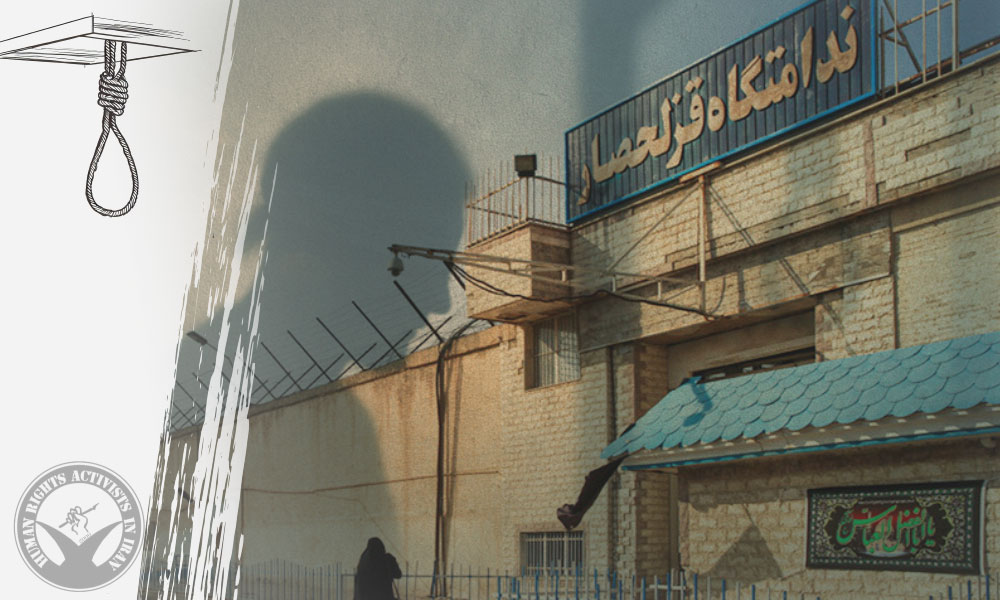
HRANA – At dawn today, September 3, the death sentences of three prisoners were carried out in Ghezel Hesar Prison. These prisoners had previously been sentenced to death in separate cases on charges related to drug offenses.

HRANA has identified one of the executed prisoners as 42-year-old Sajad Sadeghi from Kuhdasht.

Based on information obtained by HRANA, these prisoners had previously been arrested on drug-related charges and later sentenced to death by the Revolutionary Court. Yesterday, HRANA also reported that four death-row prisoners were executed in this facility.

As of the time of this report, the executions have not been announced by prison authorities or official institutions.

According to HRANA’s statistics, Ghezel Hesar Prison in Karaj carried out the highest number of executions among all Iranian prisons, with 150 inmates hanged. This figure has nearly doubled compared to the previous year – a deeply alarming increase that underscores the escalating use of capital punishment in Iran.

Execution of Four Prisoners in Ghezel Hesar Prison, Karaj

HRANA – Today, September 2, four prisoners were executed in Ghezel Hesar Prison.

HRANA has identified one of the executed prisoners as Hooman Geravand from Kuhdasht. He had previously been arrested on drug-related charges, sentenced to death, and spent 18 years in prison.

The identities of the three other prisoners are still under investigation. One of them had earlier been sentenced to death by the court on charges of membership in the “ISIS” group.

The two remaining prisoners were executed despite no details of their cases being released, and judicial authorities have yet to officially confirm their executions.

According to HRANA’s statistics, Ghezel Hesar Prison in Karaj carried out the highest number of executions among all Iranian prisons, with 150 inmates hanged. This figure has nearly doubled compared to the previous year — a deeply alarming increase that underscores the escalating use of capital punishment in Iran.

Ghezel Hesar Prison, Karaj: Eight Prisoners Transferred to Solitary Confinement for Execution

HRANA – Yesterday, eight prisoners in Ghezel Hesar Prison, Karaj, who had previously been sentenced to death on drug-related charges, were transferred to solitary confinement in preparation for the implementation of their sentences.

Based on information received by HRANA, these prisoners had been arrested on drug-related charges and later sentenced to death by Revolutionary Courts.

HRANA is currently working to confirm the identities of the prisoners.

It is noteworthy that simultaneously with their transfer, the execution of Soleiman Koushki—who had also been sentenced to death on similar charges—was carried out in this prison.

According to HRANA’s monthly report, 153 people were executed in Iran last month. With eight months having passed in the current year, the number of executions has reached 837, which, compared to 930 executions in the entire previous year, reflects a concerning rise.

Four Prisoners Executed in Ghezel Hesar Prison, Karaj

HRANA– At dawn today, Wednesday, August 27, the death sentences of four prisoners previously convicted on drug-related charges were carried out in Ghezel Hesar Prison, Karaj.

HRANA has confirmed the identities of two of the executed prisoners as Hossein Biabani and an individual identified only by the surname Yousefi, whose first name remains unknown.

Based on information received by HRANA, these prisoners had previously been arrested on drug-related charges and later sentenced to death by Revolutionary Courts.

Further details, including the identities of the two other executed prisoners, are under investigation by HRANA.

As of the time of this report, the executions have not been announced by prison authorities or official bodies.

According to HRANA’s statistics, Ghezel Hesar Prison in Karaj carried out the highest number of executions among all Iranian prisons, with 150 inmates hanged. This figure has nearly doubled compared to the previous year — a deeply alarming increase that underscores the escalating use of capital punishment in Iran.

Ghezel Hesar Prison: Three Prisoners Transferred to Solitary Confinement for Execution

HRANA– On the morning of Tuesday, August 26, three prisoners in Ghezel Hesar Prison, Karaj, who had previously been sentenced to death on charges related to drug offenses and murder, were transferred to solitary confinement in preparation for the execution of their sentences.

Their transfer was carried out for the implementation of their death sentences. Based on information received by HRANA, two of the prisoners had been sentenced to death on murder charges by criminal courts, while the third had been sentenced to death by the Revolutionary Court on drug-related charges.

Further details, including the identities of these prisoners, are still being investigated by HRANA.

According to HRANA’s statistics, Ghezel Hesar Prison in Karaj carried out the highest number of executions among all Iranian prisons, with 150 inmates hanged. This figure has nearly doubled compared to the previous year – a deeply alarming increase that underscores the escalating use of capital punishment in Iran.

Subscribe to Our Newsletter

Now is definitely not the time to stop reading!

Ghezel Hesar Prison: Six Prisoners Transferred to Solitary Confinement for Execution

HRANA – On the morning of Monday, August 25, six prisoners in Ghezel Hesar Prison in Karaj, all previously sentenced to death on drug-related charges, were transferred to solitary confinement in preparation for their executions.

According to information received by HRANA, the six prisoners had been arrested on drug charges and later sentenced to death by Revolutionary Courts. Their transfer marks the final step before the implementation of their sentences. Further details, including the prisoners’ identities, are still under investigation by HRANA.

HRANA’s statistics show that Ghezel Hesar Prison recorded the highest number of executions among all Iranian prisons, with 150 inmates hanged. This figure represents nearly double the executions carried out the previous year — a deeply alarming rise highlighting the escalating use of capital punishment in Iran.

For the second time, Babak Shahbazi’s request for retrial rejected by the Supreme Court

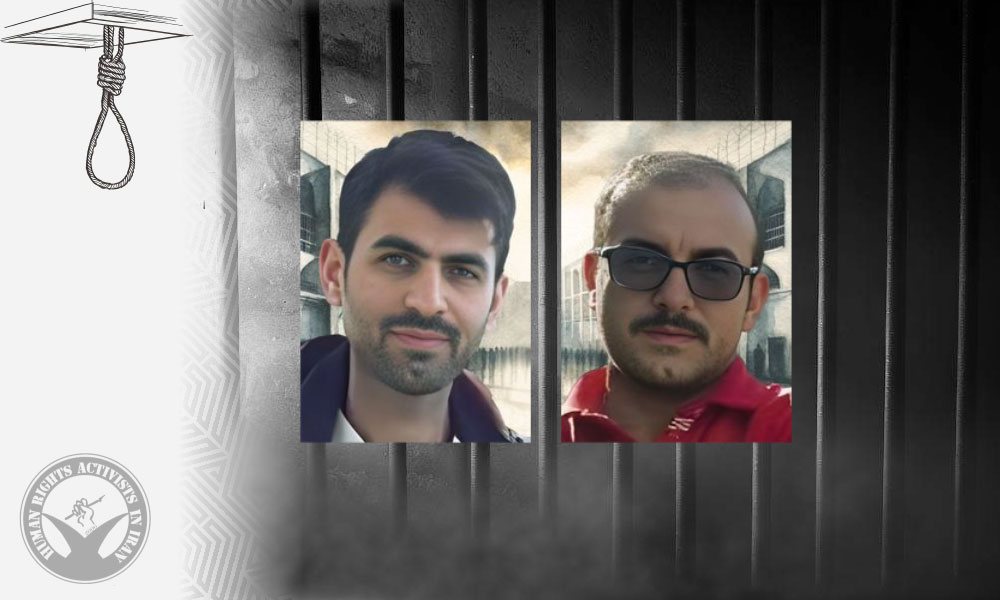
HRANA – Branch 9 of the Supreme Court has for the second time rejected the retrial request of Babak Shahbazi, a political prisoner sentenced to death and currently held in Ghezel Hesar Prison, Karaj.

Kian Shahbazi, Babak Shahbazi’s brother, confirmed in a statement yesterday that the retrial request had once again been dismissed by Branch 9 of the Supreme Court, under the authority of Judge Ghasem Mazinani.

Two days ago, after 12 days without any contact or information about his condition, Shahbazi was transferred to the public ward of Ghezel Hesar Prison. His family had previously voiced concern about the lack of information regarding his situation.

BBC Persian has previously reported that Babak Shahbazi’s death sentence was upheld by the Supreme Court.

Shahbazi was arrested on charges of espionage and sentenced to death, with prosecutors citing his attempt to send a message to the President of Ukraine as evidence for the charge.

He was initially arrested in December 2023 and transferred to Evin Prison. Following an Israeli airstrike on the facility, he, along with other political prisoners, was relocated to the Greater Tehran Penitentiary before later being moved to Ghezel Hesar Prison.

Death Sentence for Babak Shahbazi Upheld by Supreme Court

HRANA – The Supreme Court of Iran has upheld the death sentence of Babak Shahbazi, a political prisoner currently held in Tehran’s Greater Prison. Shahbazi was previously arrested on charges of espionage and sentenced to death.

According to HRANA, citing BBC Persian, Shahbazi was accused of spying for Israel. The Supreme Court has now confirmed the verdict. Authorities have issued an order for his transfer to Ghezel Hesar Prison in Karaj.

BBC Persian, quoting informed sources, reports that Shahbazi denied all charges throughout the judicial process. One of the accusations reportedly used to support the espionage charge was that he had sent a message to the President of Ukraine.

Shahbazi was arrested in January 2024 and initially detained in Evin Prison. He was later transferred to Tehran’s Greater Prison along with other political prisoners after an Israeli airstrike targeted Evin.

Monthly Report – July 2025: Human Rights Situation in Iran

HRANA– has compiled this monthly overview to highlight key human rights abuses reported across Iran in July.
Among the most serious human rights violations this month were the execution of two political prisoners, the issuance of death sentences for five others, threats and attacks against political prisoners in Ghezel Hesar Prison, and a rise in casualties from indiscriminate shootings by military and paramilitary forces.

Executions

In July, Iranian judicial authorities executed 103 individuals in prisons across the country. Among those executed was one woman and three Afghan nationals. The gender of 9 of the executed individuals remains unknown, reflecting the lack of transparency and information dissemination by the Iranian regime.

Notably, three of these executions were carried out in public. Since the beginning of 2025, the Iranian regime has conducted six public executions. While public executions had declined in recent years, this year has seen a relative increase in their implementation once again.

Among the most prominent cases was the execution of two political prisoners, Behrooz Ehsani Eslamlou and Mehdi Hasani, on July 27. Membership in the People’s Mojahedin Organization of Iran (PMOI/MEK) was among the charges brought against them.

Also in July, Iranian judicial authorities sentenced 25 individuals to death, including five detainees from the 2022 protests: Rezgar Beigzadeh Babamiri, Pejman Soltani, Ali (Soran) Ghasemi, Kaveh Salehi, and Teyfour Salimi Babamiri.

Prisoners’ Rights

Violations of prisoners’ rights showed an increase compared to the previous month. Eighty-five political prisoners remain in legal limbo. Sixteen political and ideological prisoners were denied adequate medical care. A clear example is the denial of medical treatment to political prisoner Motaleb Ahmadian, held in the Greater Tehran Prison, despite the possibility that he may be suffering from cancer. The fate and whereabouts of 53 political detainees remain unknown.

Thirty-eight political prisoners were sent to solitary confinement, including 17 in Ghezel Hesar Prison. Seventeen incidents of assaults on political prisoners were also reported. On July 27, more than 100 special forces officers from Ghezel Hesar Prison in Karaj, accompanied by Ministry of Intelligence agents, stormed the ward housing political prisoners. Dozens of inmates were beaten, phone lines were cut, and several prisoners were violently dragged in groups to solitary confinement.

According to HRANA reports, in total, 2,374 political and ideological prisoners are being held in poor conditions across Iran. In response to these conditions, 16 of them went on hunger strike this month.

Additionally, during this month, HRANA reported 91 instances of pressure and threats against political prisoners.

Kolbars and Fuel Carriers

This month, indiscriminate shootings by military and security forces resulted in the highest number of casualties since the beginning of the year, with sixteen killed and 28 injured. Among those killed were three kolbars and two fuel carriers. Additionally, five kolbars and three fuel carriers were injured.

In the most serious incident, on July 17, at a checkpoint in Khomein County, gunfire directed at a vehicle led to the death of four people, including a three-year-old girl. Moreover, landmine explosions left over from the Iran-Iraq war caused injuries and fatalities, including the deaths of two children aged 10 and 11 in Shush County.

Freedom of Thought and Expression

This month, security agencies arrested 141 individuals for expressing their beliefs and opinions. Additionally, one person was summoned to a security agency and eight others were summoned to court on similar charges. Authorities also carried out six home searches, held six trials, and blocked one peaceful gathering.

The Iranian judiciary issued 14 prison sentences totaling 620 months on charges that reflect clear violations of citizens’ right to freedom of expression. Additionally, a sentence of 30 lashes related to such charges was carried out.


Workers’ Rights

In July, HRANA reported 27 labor protests and 5 labor strikes. Data collected during the month indicates that 37,401 workers are owed back wages. A labor activist named Kamran Sakhtemangar was sentenced to three months in prison on the charge of “propaganda against the regime.”

Workplace incidents also claimed the lives of 26 workers and injured 54 others this month.

Additionally, guilds and unions held 17 protests, and two individuals were summoned to court.

Women’s Rights

In July, HRANA reported three cases of femicide and one case of rape. Additionally, in one incident, a woman was beaten by security forces. There was also a report of an acid attack against women: in one case, a young woman in Tehran was targeted by her brother due to a family dispute and lost vision in one of her eyes.

Children’s Rights

This month, a teenage girl named Ziba Pazireh died by suicide in the city of Dishmok, Kohgiluyeh and Boyer-Ahmad Province. HRANA also reported eight cases of child homicide and one case of sexual abuse. In one incident in Shahroud, a father attacked three children with a bladed weapon, resulting in the death of one and injuries to two others.

HRANA also reported two children injured in workplace incidents and the deaths of two children due to negligence by responsible authorities.

Religious Minorities

This month, six members of religious minority groups were arrested by security agencies. Additionally, there were two cases of summons to security institutions, three trials, two interrogations, one travel ban, and six cases of home searches reported.

In another development, the property of 22 Baha’i citizens in Isfahan was confiscated.

Ethnic Rights

In July, 42 activists and ethnic minority members were arrested by security agencies. Thirty of these arrests were carried out without a warrant. Additionally, five Azerbaijani-Turk activists were put on trial this month.

Inhuman Punishment

This month, the Iranian judiciary issued at least 174 flogging sentences. Additionally, on July 31, authorities carried out the amputation of the right-hand fingers of three prisoners convicted of theft in Urmia Prison. This form of punishment constitutes a clear violation of the International Covenant on Civil and Political Rights (ICCPR), which explicitly prohibits cruel, inhuman, and degrading treatment.

Four Prisoners Executed in Ghezel Hesar Prison

HRANA – On July 27, alongside the executions of political prisoners Behrooz Ehsani Eslamlou and Mehdi Hasani in Ghezel Hesar Prison in Karaj, two other inmates previously sentenced to death for murder were also executed.

HRANA has identified these two hanged prisoners as Saeed Kashani and Naser Nazari Tehrani.

According to information received by HRANA, Kashani and Nazari Tehrani had both been arrested on murder charges and sentenced to death by judicial authorities.

As of the time this report was compiled, the executions of these two individuals had not been officially announced by prison authorities or relevant institutions.

According to HRANA’s statistics, Ghezel Hesar Prison in Karaj carried out the highest number of executions among all Iranian prisons, with 150 inmates hanged. This figure has nearly doubled compared to the previous year — a deeply alarming increase that underscores the escalating use of capital punishment in Iran.