Lawyer Behnam Nezadi Sentenced to One Year in Prison and Two-Year Ban on Practicing Law

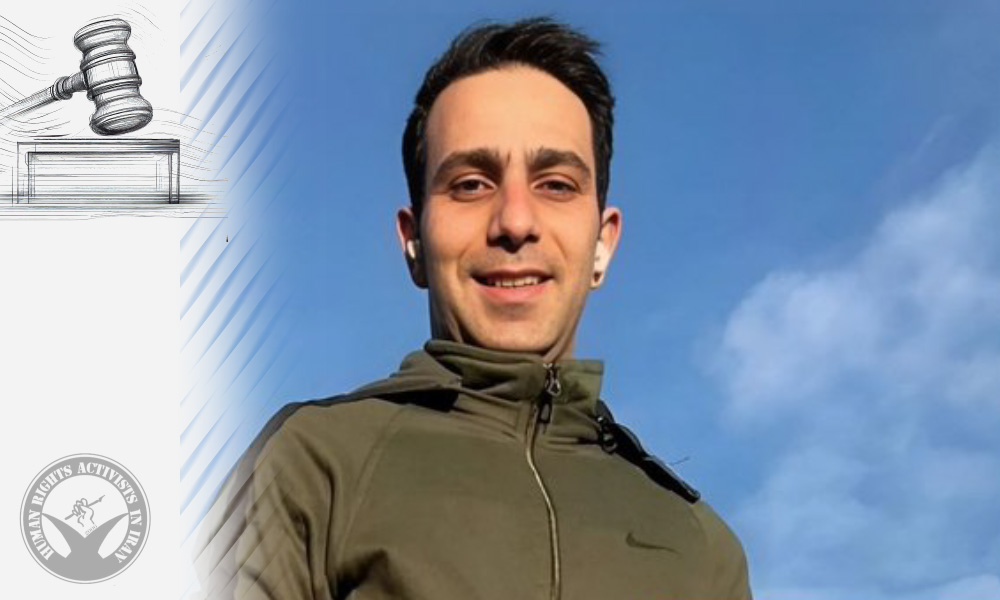
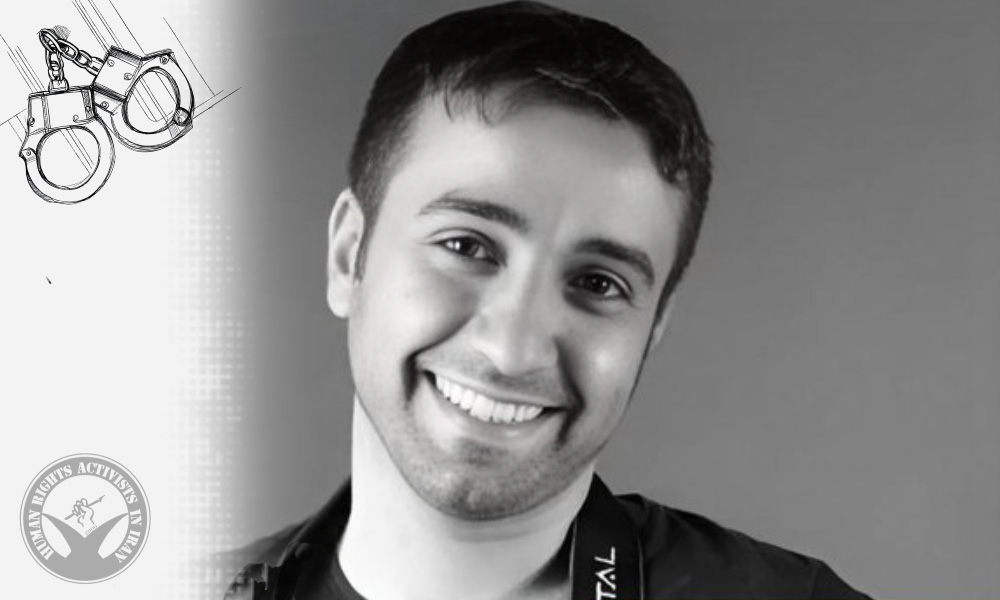
Behnam Nezadi, a member of the Central Bar Association, has been sentenced to one year in prison and a two-year ban on practicing law by Branch 2 of the Revolutionary Court in Arak.

According to HRANA, the news agency of Human Rights Activists in Iran, Mr. Nezadi was convicted on charges of “propaganda against the regime.” As an additional penalty, he has been prohibited from practicing law for two years.

Another part of Mr. Nezadi’s case, involving charges of “spreading falsehoods” and “disclosing confidential information,” is still pending review at the Criminal Court No. 2 in Arak, awaiting assignment to a branch.

Mr. Nezadi’s preliminary interrogation took place in late July at the Public and Revolutionary Prosecutor’s Office in District 23 of Tehran (special jurisdiction for interprovincial cases). During the session, he was charged with “propaganda against the regime,” “spreading falsehoods via cyberspace,” and “disclosing confidential investigative materials.” The authorities also cited actions such as “undermining the judiciary, eroding judges’ confidence, and attempting to overthrow the Islamic Republic” as examples of these allegations.

At the end of the interrogation, Mr. Nezadi was released on bail pending further proceedings. During the preliminary stages of the case, the investigating judge issued an order barring him from practicing law in Tehran.

Behnam Nezadi is the administrator of an Instagram page titled “Judicial Misconduct by Judges.” On this platform, he recently shared documents addressing the Disciplinary Prosecutor’s Office for Judges, arguing: “Filing complaints against judges is legally sanctioned, and encouraging people to seek legal recourse cannot be deemed a crime. Moreover, equating the judiciary as an institution with the entire regime is incorrect.”

Mr. Nezadi, a native of Arak and resident of Tehran, is a prominent lawyer and member of the Central Bar Association. His case is one of many highlighting the increasing restrictions imposed on lawyers and legal activists in Iran.

In 2023, the Department of Statistics and Publications of the Human Rights Activists in Iran (HRA) documented 2,380 cases in which citizens, including journalists and civil rights activists, faced legal and security consequences for exercising their freedom of expression and thought. These incidents resulted in the arrest of 3,130 individuals.

Prisoner Executed for Drug-Related Charges in Gorgan Prison

On Tuesday, November 26, 2024, a prisoner who had previously been sentenced to death on drug-related charges was executed in Gorgan Prison.

The identity of the executed prisoner has been confirmed by HRANA as Farhad Khosrawi Sadkharv, a resident of Sabzevar.

Based on HRANA’s findings, Mr. Khosrawi had been arrested on drug-related charges and subsequently sentenced to death by the Revolutionary Court.

As of the time of this report, the execution has not been officially announced by prison authorities or relevant officials.

According to latest HRANA’s annual report over between October 10, 2023, and October 8, 2024, at least 811 individuals were executed by hanging in Iran, rising to 23.06% compared to the same period last year. Of these executions, four were carried out in public. Many of the defendants were denied a fair trial.

Prisoner Executed in Karaj Central Prison for Drug-Related Offenses

On Tuesday, November 26, 2024, a prisoner previously sentenced to death for drug-related offenses was executed in Karaj Central Prison.

The prisoner has been identified by HRANA as Ehsan Basati Valiabad, a 31-year-old resident of Kuhdasht. HRANA has also reported that three other death-row inmates were executed in the same prison on the previous day.

According to HRANA’s findings, Mr. Basati was arrested in 2020 in Karaj on charges related to drug offenses and was subsequently sentenced to death by the Revolutionary Court. On Sunday, November 24, he was moved to solitary confinement in preparation for his execution.

As of this report, the execution has not been publicly announced by prison officials or other responsible authorities.
The reports from the Department of Statistics and Publication of Human Rights Activists for the year 2023 reveal a concerning prevalence of executions for drug offenses in Iran, constituting 56.4% of the total executions. For a comprehensive examination of the details and statistics surrounding the executions in Iran, refer to HRANA’s report.

Ali Teymouri Sentenced to One Year in Prison and Additional Restrictions

Ali Teymouri, a war veteran from the Iran-Iraq war, has been sentenced by Branch 2 of the Karaj Revolutionary Court to one year in prison, a two-year ban on membership in social groups, and a travel ban.

According to HRANA, the news agency of Human Rights Activists in Iran, Teymouri was convicted of “propaganda against the regime.” In addition to the prison sentence, he faces complementary punishments, including a two-year prohibition from participating in social groups and organizations and a ban on leaving the country.

The verdict also acquitted Teymouri of charges related to alleged connections with anti-regime groups.

Ali Teymouri was arrested on February 3, 2024, after appearing at the Public and Revolutionary Prosecutor’s Office in Eshtehard, Alborz Province. He was released two days later, on February 5, after posting bail.

Teymouri, a resident of Karaj, is a veteran injured during the Iran-Iraq war.

Revolutionary Court Sentences Student Activist Leila Hosseinzadeh to Prison

Leila Hosseinzadeh, a student activist, has been sentenced in absentia to prison by Branch 26 of Tehran’s Revolutionary Court, presided over by Judge Iman Afshari. The charges stem from her appearing unveiled at the University of Tehran during her thesis defense.

According to HRANA, the news agency of Human Rights Activists in Iran, Hosseinzadeh was convicted on charges of appearing in public without a hijab and “propaganda against the regime.” In a personal statement, she revealed that she was sentenced without prior notice and is unaware of the details. She added, “I have no expectations of appeal or any legal process. I’ll wait for the case to be referred to the enforcement office.”
Hosseinzadeh has faced several legal cases over the years. Most recently, a forensic medical commission confirmed her permanent inability to endure incarceration. As a result, her remaining five-year prison sentence from a 2019 case was converted to a fine of 100 million tomans, which she paid to conclude the case.
Leila Hosseinzadeh was first arrested during the 2017–2018 Iranian protests, detained for 16 days, and released on bail. On June 24, 2019, Branch 36 of Tehran’s Court of Appeals sentenced her to 30 months in prison for “assembly and collusion against national security” and an additional year for “propaganda against the regime,” along with a two-year travel ban. Charges included attending a birthday gathering for Mohammad Sharifi Moghadam, a Gonabadi Dervish imprisoned near Sharif University, and singing protest songs.

On July 28, 2019, she began serving her sentence but was released early due to a judicial directive.

In a separate case, Hosseinzadeh was sentenced in February 2021 to five years in prison and a two-year ban from online activities for “assembly and collusion with intent to act against national security” by Branch 28 of Tehran’s Revolutionary Court. The sentence was upheld by Branch 36 of the Appeals Court in December 2021.

She was arrested again on August 20, 2022, after being beaten by security forces outside her home. She was released on bail from Evin Prison on January 9, 2023.

Subscribe to Our Newsletter

Now is definitely not the time to stop reading!

Political Prisoners Mehran Hassan Zadeh and Hamid Abdollah Zadeh Sentenced to Death

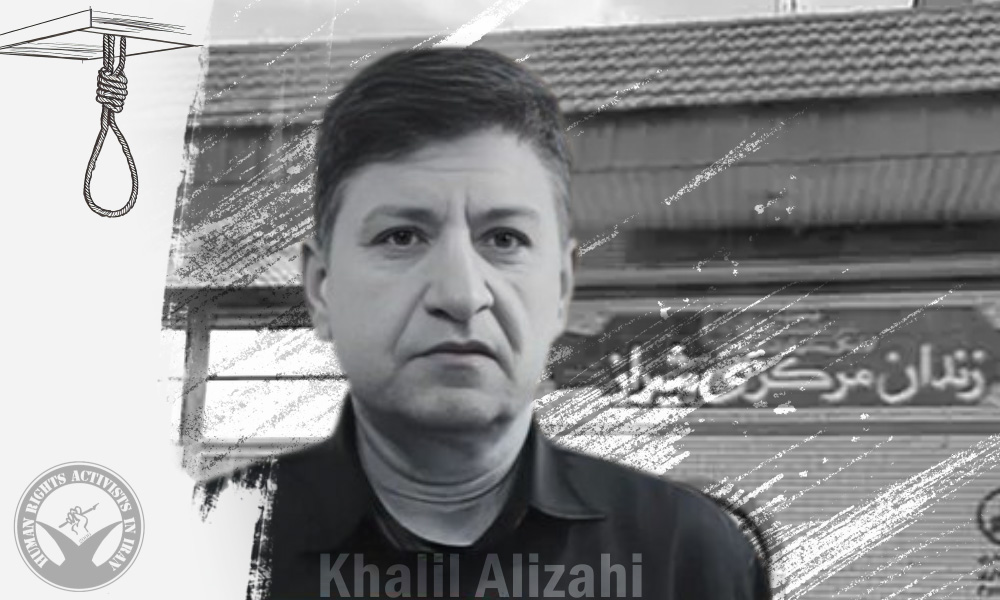
Mehran Hassan Zadeh and Hamid Abdollah Zadeh, political prisoners detained in Urmia Prison, have been sentenced to death in separate cases by Branch 2 of the Revolutionary Court in Urmia.

According to HRANA, the news agency of Human Rights Activists in Iran, Mehran Hassan Zadeh was convicted on charges of baghi (armed rebellion), while Hamid Abdollah Zadeh was sentenced to death on suspicion of membership in an opposition party.

A source close to their cases confirmed to HRANA: “In Mehran’s case, the authorities accused him of involvement in the killing of a Basij member, which led to the baghi charge and the issuance of a death sentence. He was notified of the verdict a month ago. Regarding Hamid Abdollah Zadeh, his death sentence was issued two months ago.”

Mehran Hassan Zadeh, a resident of Oshnavieh, was initially arrested during the 2022 nationwide protests. After a period in detention, he was released on bail. In a separate part of his case, Branch 101 of the Oshnavieh Criminal Court sentenced him to nine months in prison on charges of “assembly and collusion against national security.” He was subsequently re-arrested and transferred to Urmia Prison.

Hamid Abdollah Zadeh, a resident of Urmia, was arrested by security forces in the fall of 2022 and has remained in Urmia Prison since his detention.

Both individuals are currently held in the political ward of Urmia Prison.

Fereydoun Soltani Arrested in Takab

Today, November 22, 2024, Fereydoun Soltani was arrested by agents of the Ministry of Intelligence in the city of Takab, West Azerbaijan province, and transferred to an undisclosed location.

A source close to Soltani’s family confirmed the news to HRANA, stating: “Mr. Soltani was arrested today following his summons to the Ministry of Intelligence office in Takab and has been transferred to an unknown location.”

As of this report, no information has been disclosed about the reasons for his arrest or the charges against him.

Fereydoun Soltani, a native of Takab, resides in Tehran.

Three Prisoners Executed in Hamedan Prison for Drug-Related Charges

On November 21, three prisoners who had previously been sentenced to death for drug-related charges were executed in Hamedan Prison.

According to HRANA, the news agency of Human Rights Activists in Iran, the identities of the prisoners hanged at dawn on Thursday, November 21, 2024, have been confirmed as Arslan Habibi, Jabbar Keyfari, and Amir-Hossein Rostami.

HRANA’s information indicates that the three prisoners had been arrested on drug-related charges and subsequently sentenced to death by the judiciary.

As of the time of this report, the executions have not been officially announced by prison authorities or responsible institutions.

The reports from the Department of Statistics and Publication of Human Rights Activists for the year 2023 reveal a concerning prevalence of executions for drug offenses in Iran, constituting 56.4% of the total executions. For a comprehensive examination of the details and statistics surrounding the executions in Iran, refer to HRANA’s report.

Two Prisoners Executed in Gonbad-e Kavus Prison

At dawn on Tuesday, November 19, the death sentences of two prisoners previously convicted of murder were carried out in Gonbad-e Kavus Prison.

According to HRANA, the news agency of the Human Rights Activists in Iran, the identities of the prisoners executed on the morning of Tuesday were confirmed as Safa Hosseini from Gorgan and Soleiman Vaziri.

Both individuals had been arrested on murder charges and subsequently sentenced to death by judicial authorities.

As of the time of this report, the executions have not been publicly announced by prison officials or the responsible institutions.

According to the Department of Statistics and Publication of Human Rights Activists in Iran, in 2023, at least 767 citizens, including 21 women and 2 juvenile offenders, were executed. Of these, the executions of 7 individuals were carried out in public. Additionally, during this period, 172 others were sentenced to death, with 5 of them sentenced to public execution. It is worth noting that during the same period, the initial death sentences of 49 other individuals were also upheld by the Supreme Court.

Appeals Court Upholds Sentences for Four Defendants in Evin Prison Fire Case

The Tehran Provincial Appeals Court has upheld the sentences of Loqman Aminpour, Meysam Dehbanzadeh, Majid Roshannejad, and Reza Salmanzadeh, four defendants in the so-called Evin Prison fire case. Previously, Branch 1148 of the Tehran Criminal Court sentenced the group to a total of 33 years in prison and 518 lashes.

According to HRANA, the news agency of Human Rights Activists in Iran, the sentences were confirmed by the Appeals Court without a proper review of the case.

The original verdicts were issued on June 19, 2024, a day after the trial presided over by Judge Jabbar Javadi Rami. Aminpour, Dehbanzadeh, and Roshannejad were each sentenced to six years in prison and 74 lashes for “destruction of property,” an additional 16 months and 74 lashes for “disrupting prison order,” and another 16 months for “disobedience and resisting prison officials.” Salmanzadeh received five years in prison and 74 lashes for “destruction of property,” one year for “disrupting prison order,” and one year for “disobedience and resisting prison officials.”

A source close to one of the families told HRANA: “Despite objections filed by the defendants, neither they nor their lawyers were notified about the appeals process. The defense submissions prepared by their lawyers were ignored, and the sentences were upheld without any review in the Appeals Court.”

In addition to these four individuals, 36 other defendants in the Evin Prison fire case have also received prison sentences. HRANA is investigating the status of their appeals.

The prisoners are currently serving sentences from unrelated cases in the Greater Tehran and Ghezel Hesar prisons.

Following the fire on the night of Saturday, October 15, 2022, at Evin Prison, a case was opened against these prisoners based on a complaint from the Prisons Organization.

On the night of October 15, 2022, after tensions rose in Evin Prison, fire was seen above the prison, and sounds of gunfire and explosions were heard. Despite officials claiming to have controlled the fire and clashes, gunfire continued for several hours. As a result, several prisoners were injured and killed, and some were transferred out of the prison.