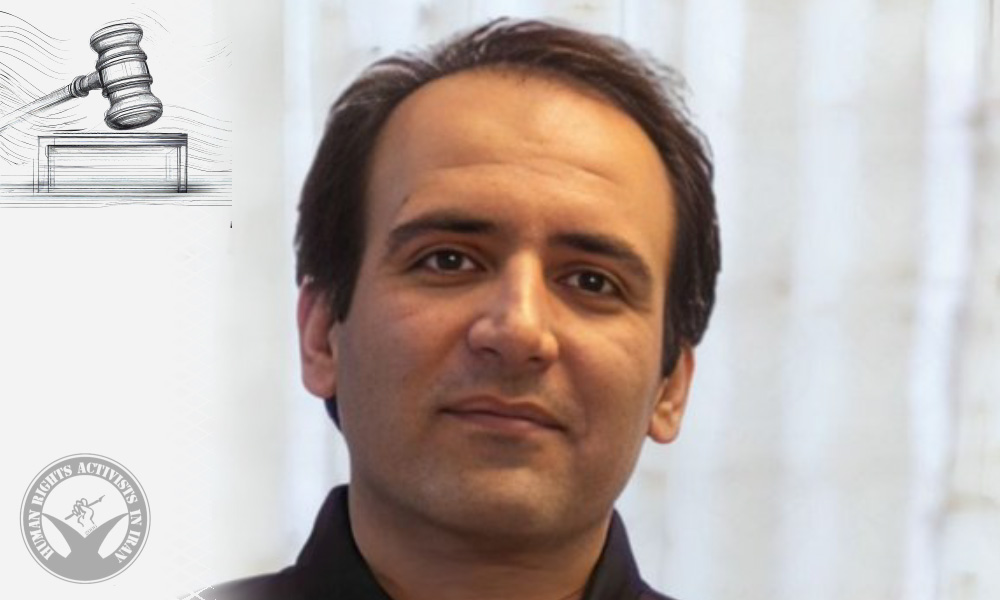
727 Days of Silence: The Ongoing Detention of Osman Mameh

Osman Mameh, a 55-year-old resident of Bukan, has been held in detention for 727 days without any clear explanation from authorities. The prolonged lack of communication about his condition has left his family and relatives deeply concerned.

A source close to Mameh’s family told HRANA: “Despite nearly two years since his arrest and continuous efforts by his family to seek answers from security and judicial authorities in cities such as Bukan, Urmia, Karaj, and Tehran, no clear information has been provided. Mr. Mameh has not been allowed any contact with his family since his detention, which has only intensified their fears. Security officials have merely stated that he is alive and that the family would have been informed if he had died.”

Mameh was arrested by security forces on November 18, 2022, in Bukan.

As of this report, no details have been disclosed about the reasons for his arrest, the location of his detention, or the charges brought against him.

Three Baha’i Citizens Arrested in Shiraz

On November 10, Vahid Masoumi, Rozita Eslami, and Elham Haghighatjou, Baha’i citizens residing in Shiraz, were arrested by security forces and transferred to The Ministry of Intelligence’s detention facility, known as “House No 100.”

According to reports received by HRANA, Mr. Masoumi was arrested by Intelligence Ministry agents while leaving his home and taken to the facility. During the arrest, the agents searched his vehicle and residence, seizing several personal belongings, including electronic devices, books, and family photos.

Ms. Eslami was also arrested at her residence following a search of the premises.

As of the time of this report, no information is available regarding the charges against the three detainees.

Baha’is are subjected to violations of their religious rights, comprising 82% of reports on infringements against religious minorities, according to HRA’s 2023 annual report.

The Baha’i faith is not recognized as a legitimate religion by Iranian authorities, leading to systematic and longstanding violations of the rights of Baha’is in the country. This includes the denial of their fundamental right to practice their religion, which constitutes a clear breach of both Article 18 of the Universal Declaration of Human Rights and Article 18 of the International Covenant on Civil and Political Rights. The United Nations covenant holds that every person has the right to freedom of religion, freedom of converting religion, as well as freedom of expression, individually or collectively; openly or secretly.

Ardabil Street Vendor Detained for 12 Days on Charges of “Disturbing Public Opinion”

Yousef Kari, a street vendor and Azerbaijani-Turk activist from Ardabil, has been held in Ardabil Prison for 12 days following his arrest on charges of “disturbing public opinion.”

A source close to his family confirmed to HRANA: “Mr. Kari was violently detained by police while working as a street vendor on October 29, 2024. Despite being charged by the Ardabil Prosecutor’s Office and the setting of a 5 billion rial bail, the presiding judge has refused to grant his release, leaving him in legal limbo.”

The source added, “During his arrest, Mr. Kari was subjected to physical violence, which he protested. In retaliation, security forces took him to a forensic medical examiner and pressured a psychiatrist to label him mentally unstable.”

Yousef Kari, previously dismissed from his job under security pressure, now earns a living as a street vendor in Ardabil. He has faced repeated harassment in the past due to his activism.

Two Prisoners Executed in Lakan Prison, Rasht

On November 7, 2024, the death sentences of two prisoners convicted of drug-related charges were carried out in Lakan Prison, Rasht.

One of the executed prisoners has been identified as Majid Jamali. The identity of the other prisoner, a woman, is still under investigation.

Based on information obtained by HRANA, the prisoners had been arrested on drug-related charges and sentenced to death by the judiciary.

As of the time of this report, prison authorities and relevant officials have not officially announced the executions.

According to latest HRANA’s annual report over between October 10, 2023, and October 8, 2024, at least 811 individuals were executed by hanging in Iran, rising to 23.06% compared to the same period last year. Of these executions, four were carried out in public. Many of the defendants were denied a fair trial.

Two Prisoners Executed in Zanjan Prison

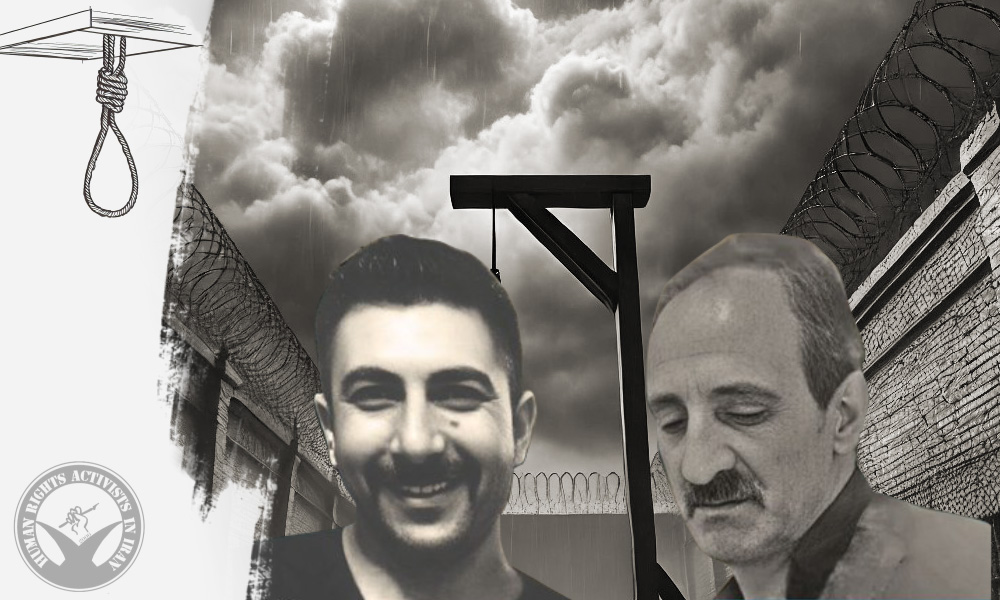
The death sentences of two prisoners, previously convicted of murder, were carried out in Zanjan Prison.

HRANA has identified these executed prisoners as Soleiman Abbaspour and Ezzat Seyedi.

According to information obtained by HRANA, Soleiman Abbaspour, who had been arrested on murder charges and sentenced to death by the judiciary, was executed at dawn on Saturday, November 2, 2024.

Likewise, Ezzat Seyedi, also convicted of murder and sentenced to death, was hanged at dawn on Thursday, November 7, 2024.

As of this report, the executions have not been officially announced by prison authorities or other relevant officials.

According to latest HRANA’s annual report over between October 10, 2023, and October 8, 2024, at least 811 individuals were executed by hanging in Iran, rising to 23.06% compared to the same period last year. Of these executions, four were carried out in public. Many of the defendants were denied a fair trial.

Subscribe to Our Newsletter

Now is definitely not the time to stop reading!

Imprisoned Attorney Mohammad Najafi Transferred to Hospital Following Critical Health Deterioration

On Tuesday, November 5, Mohammad Najafi, an attorney detained in Evin Prison and suffering from a heart condition, was urgently transferred to Loghman Hakim Hospital in Tehran due to a sudden worsening of his health.

According to HRANA, the news agency of Human Rights Activists, Najafi experienced a severe health incident while receiving a family visit. A source close to his family told HRANA, “During the visit, Najafi suddenly showed symptoms resembling a heart attack. He was immediately taken to the prison’s medical clinic. Given the critical nature of his condition, he was then transferred to an outside hospital, arriving at Loghman Hakim Hospital in Tehran under heavy restraints.”

Najafi was previously released from prison in 2019 after serving time in an earlier case but was re-arrested just four days later on different charges and taken to Arak Prison. In May 2023, he was transferred from Arak Prison to Evin Prison in Tehran.

Throughout his time in prison, Najafi has faced numerous charges, resulting in multiple sentences. He is currently detained in Ward 4 of Evin Prison. His longest sentence—10 years, later reduced to four years and six months—stems from a charge of “assisting a hostile government through interviews with foreign media.”

Najafi’s combined sentences now total over 21 years across various cases involving 14 separate charges, with no consolidation of these sentences applied to date. At least five new cases have been filed against him during his imprisonment, including one initiated by the warden of Arak Prison, which led to a four-month sentence. Another case involves charges for allegedly releasing audio recordings from within Arak Prison.

Three Prisoners Transferred to Solitary Cells for Imminent Execution in Ghezel Hesar Prison

Yesterday, November 4, three prisoners in Ghezel Hesar Prison in Karaj, previously sentenced to death for drug-related charges, were moved to solitary confinement in preparation for their execution.

The transfer of these prisoners, sentenced earlier for drug-related offenses, was carried out as part of preparations for their execution. One of the three prisoners is an Afghan national. Further details, including the identities of these inmates, are being investigated by HRANA.

According to data gathered by the Department of Statistics and Publication of Human Rights Activists, Ghezel Hesar Prison in Karaj witnessed the highest number of executions in 2023, with Zahedan Prison following closely behind. For a comprehensive examination of the details and statistics surrounding the executions in Iran, refer to HRANA’s report.

Two Prisoners Executed in Urmia Prison

On Monday, November 4, 2024, two prisoners previously convicted of murder in separate cases were executed in Urmia Prison, according to HRANA.

The two men, identified as Ali Momeni and Ramin Kazem Aliloo, had been moved to solitary confinement on Sunday, November 3, in preparation for their executions.

A third prisoner on death row, who is Ali Momeni’s brother, received a temporary reprieve from the victim’s family and was returned to the general prison ward.

At the time of this report, prison officials and relevant authorities have not officially confirmed these executions.

According to latest HRANA’s annual report over between October 10, 2023, and October 8, 2024, at least 811 individuals were executed by hanging in Iran, rising to 23.06% compared to the same period last year. Of these executions, four were carried out in public. Many of the defendants were denied a fair trial.

Gholamhossein Kalbi, Political Prisoner in His 24th Year of Life Sentence, Denied Medical Care Amid Deteriorating Health

Political prisoner Gholamhossein Kalbi is now in his 24th year of a life sentence at Sheiban Prison in Ahvaz. He suffers from multiple health conditions, yet has been denied specialized medical care and transfer to treatment centers.

As per HRANA’s information, Mr. Kalbi suffers from a hernia, ear and dental infections, and has recently contracted a fungal infection that has caused severe toe infections. Despite his worsening condition and repeated transfers to the prison infirmary, he has only received basic examinations and minimal medication due to limited medical resources. Kalbi urgently needs specialized medical care, which has yet to be approved.

According to a source close to the case, the Ministry of Intelligence, overseeing Kalbi’s file, recently rejected his request for transfer to a prison near his home in Mahshahr. “He is held in Sheiban’s security ward, where he lacks any area for exercise and lives in overcrowded conditions, with twice the capacity in his cell,” the source told HRANA.

Kalbi was arrested on January 8, 2001, along with Saeed Masouri, in Dezful, on charges of membership in the People’s Mojahedin Organization of Iran. In 2002, he was sentenced to death by the Tehran Revolutionary Court on charges of “enmity against God” (Moharebeh). His death sentence was later commuted to life imprisonment.

After his arrest, he spent 14 months in solitary confinement at the Ministry of Intelligence’s detention facility in Ahvaz before being transferred to Ward 209, and later to Ward 350 of Evin Prison. Following his sentencing, he was moved to Mahshahr Prison and later to Karun Prison in Ahvaz. After the closure of Karun Prison in February 2016, he was transferred along with other prisoners to Sheiban Prison.

In October 2016, his brother, the last remaining member of his family, suffered a stroke and passed away while en route to the prison for a face-to-face visit with him—a visit he had managed to secure after five years of effort. The judicial authorities denied Mr. Kalbi leave to attend his brother’s funeral.

The troubling case of Kalbi underscores a broader pattern of neglect within Iranian prisons. In 2023, the Department of Statistics of Human Rights Activists in Iran documented 1,390 instances of denial or neglect of medical care for prisoners, highlighting a systemic issue that urgently demands attention.

Three Prisoners Executed in Dastgerd Prison, Isfahan

Today, October 31, the death sentences of three prisoners, previously convicted on charges of murder and drug-related offenses, were carried out in Dastgerd Prison, Isfahan.

HRANA has confirmed the identities of the prisoners as Kourosh Salehian, Amir Jahandar, and Reza Bidabadi. Early this morning, Reza Bidabadi, sentenced to death on murder charges, was executed by hanging. Meanwhile, Salehian and Jahandar were executed on Monday, October 28, with Salehian convicted of murder and Jahandar on drug-related charges.

As of this report, prison officials and relevant authorities have yet to publicly confirm these executions.

According to latest HRANA’s annual report over between October 10, 2023, and October 8, 2024, at least 811 individuals were executed by hanging in Iran, rising to 23.06% compared to the same period last year. Of these executions, four were carried out in public. Many of the defendants were denied a fair trial.