HRANA – The year 1404 (Hijri calendar) paints a stark picture of ongoing human rights violations in Iran. The ongoing threat to freedom of thought and expression, bloody crackdown on peaceful protesters, increasing pressure on ethnic groups and religious minorities, the prosecution and harassment of human rights activists, the execution of juveniles, the issue of child labor, violations of women’s rights, and the poor conditions of detention centers and prisons are only some examples of the daily violations of human rights in Iran.
The comprehensive report by HRA’s Statistics and Documentation Center, presented below, outlines a deeply concerning human rights situation in Iran over the past year.
During this period (March 21, 2025 to March 20, 2026), a total of 78,907 citizens were arrested in Iran on ideological or political grounds, or in clear violation of fundamental human rights principles. Notably, 78,126 of these arrests were linked to cases involving freedom of thought and expression.
During the same period, the nationwide protests between December 2025 and February 2026 can be regarded as one of the most complex and multi-layered waves of unrest in the past two decades. These demonstrations differed markedly from previous protests in their geographical reach, the extent of repression, and the nature of the government’s response.
Taken together, these developments point to one of the most significant periods of repression in recent years, particularly in terms of the scale of arrests. However, due to internet shutdowns during the protests and subsequent restrictions, the actual number of arrests is likely higher than recorded, with some cases remaining outside statistical coverage due to limited access to information. For more details, refer to HRANA’s comprehensive report titled “Crimson Winter,” which documents the first fifty days after the start of Iran’s nationwide protests.
Freedom of Thought and Expression
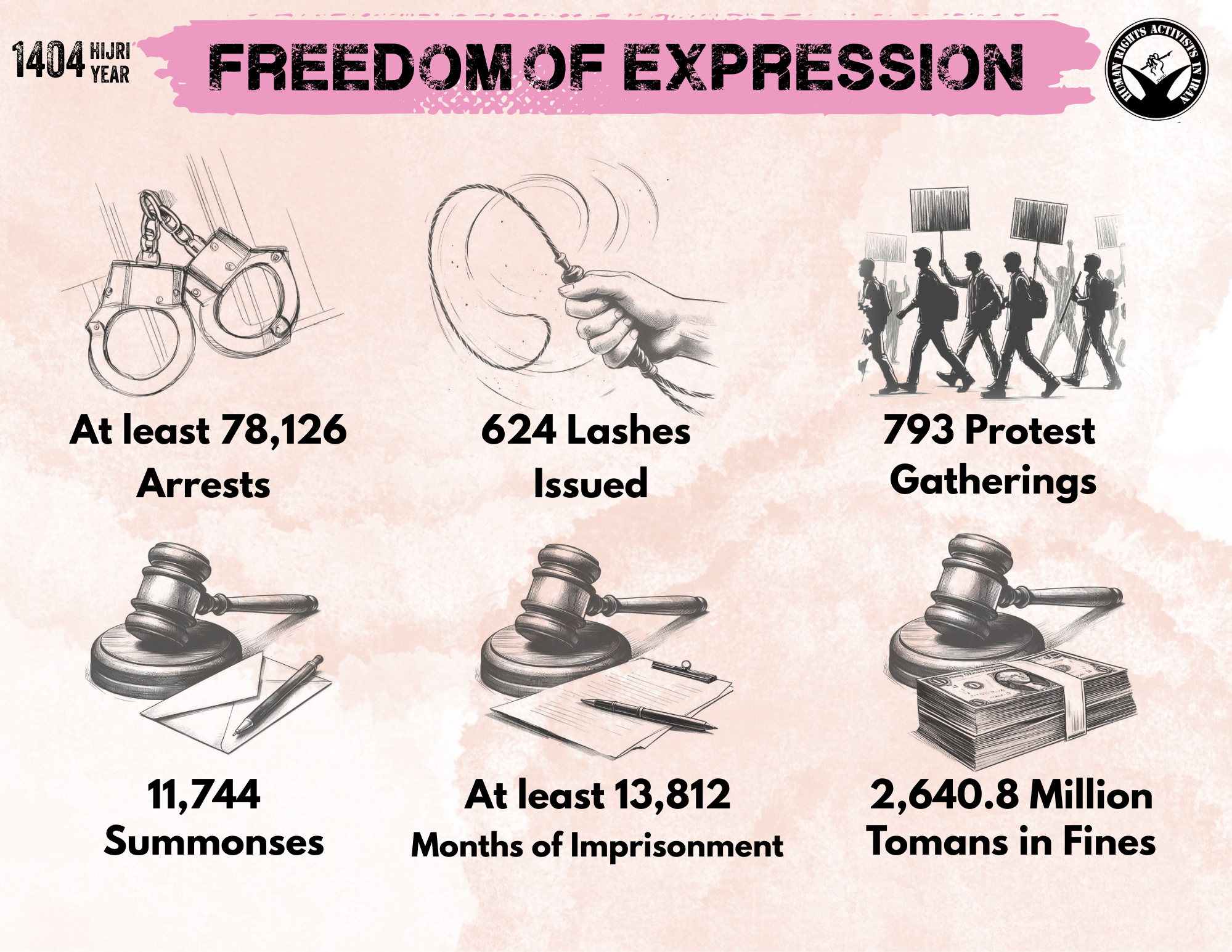
In 1404, at least 78,126 individuals were arrested for expressing their thoughts and opinions, of whom at least 228 were detained without a judicial warrant. Additionally, there were 250 cases of physical assault, 126 trials, 75 home searches, 15 instances of publications being declared criminal, 26 cases of internet filtering, 1 case of confiscation of a home and property, 793 protest gatherings, 11,744 summonses to security and judicial bodies, and 74 cases of prison sentences being carried out.
Over the past year, in violation of citizens’ right to freedom of expression, Iran’s judiciary issued a total of at least 13,812 months of imprisonment for 332 individuals. Of this amount, 13,173 months were discretionary prison sentences, and 639 months were suspended sentences. Notably, 1,693 months of these sentences were issued by appellate courts and 816 months by the Supreme Court.
In addition, 64 individuals were fined a total of 2,640.8 million tomans, 13 individuals were sentenced to 624 lashes, 13 individuals were sentenced to 492 months of exile, and 46 individuals were sentenced to deprivation of social rights.
Over the past year, Iran witnessed nationwide protests between December 2025 and February 2026, widely known as the January protests, which are considered one of the most widespread, complex, and multi-layered waves of unrest in the past two decades. These protests differed significantly from previous movements not only in terms of their geographical scope, intensity of violence, and scale of repression, but also in their underlying dynamics, the composition of participants, and the nature of the government’s response.
According to aggregated data from HRANA, during these protests, the number of confirmed fatalities reached 6,724 protesters, including 236 children. In addition to these confirmed figures, 11,744 cases remain under review, with the verification process still ongoing. Furthermore, at least 25,877 individuals sustained severe injuries, and the total number of arrests has been reported at 53,777.
Overall, 203 cities across all 31 provinces of the country witnessed protests on 682 occasions. In some cases, due to the heavy presence and strict control of security and military forces, protesters were unable to take to the streets, and demonstrations took other forms. Based on the 2016 census, the population of these 203 cities is estimated at 44,866,746—accounting for more than half of the country’s total population.
In addition to 627 instances of widespread street protests, 36 universities also became sites of student demonstrations, with 55 protest gatherings recorded across academic settings.
| Year | Number of Arrests | Arrests per Million People | Percentage Change Compared to Previous Year |
|---|---|---|---|
| 1400 | 1,419 | 16 | + %5,405 |
| 1401 | 28,647 | 32 | + %172,7 |
| 1402 | 2,496 | 38.6 | + %3,030 |
| 1403 | 1,300 | 14.2 | + %5,909 |
| 1404 | 78,126 | 845,4 | – |
Workers’ Rights
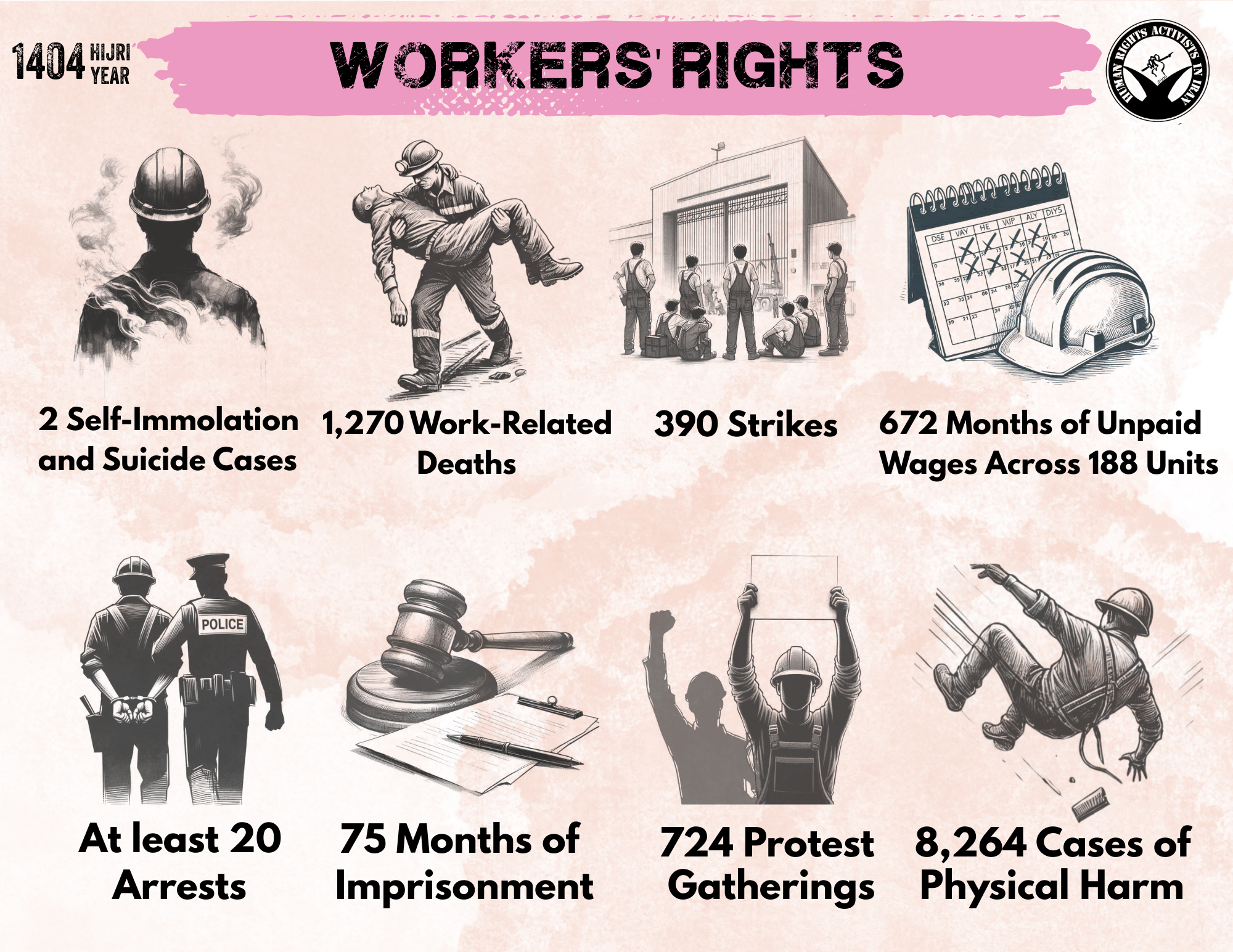
Over the past year, a total of 1,709 reports were recorded related to labor rights, based on which 20 individuals were arrested. Additionally, 2 workers or labor activists were sentenced to a combined 75 months of discretionary imprisonment and fines totaling 30 million tomans. It is also noteworthy that 9 summonses to security and judicial authorities, 5 interrogations, 2 trials, 2 cases of self-immolation, 724 protests, and 390 strikes were recorded.
In 1404, reports of delayed or unpaid wages amounted to at least 672 months across 188 industrial and service units. Additionally, there were 2,457 dismissals or layoffs, 658 cases of unemployment, 560 months without work insurance coverage, 9 factory closures, and 2,259 workers left in uncertain conditions.
Trade and Labor Unions
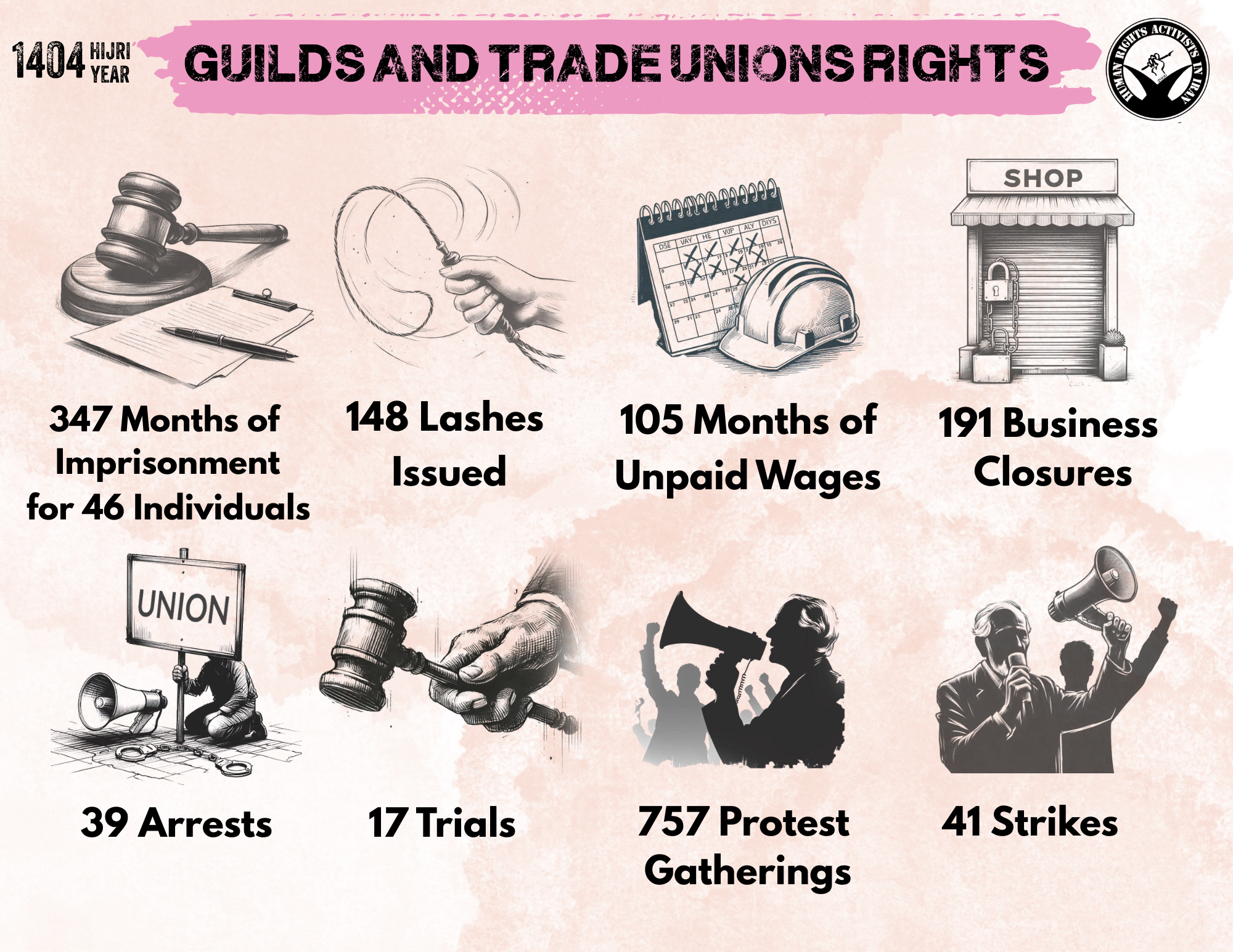
In 1404, a total of 914 reports related to trade and unions groups were recorded by HRA’s Statistics and Documentation Center. According to these reports, a total of 39 union activists were arrested. Additionally, there were 44 summonses to judicial and security authorities, 191 cases of business closures (sealed premises), 2 instances of physical assault, 1 license revocation, 17 trials in judicial bodies, 4 interrogations by security institutions, 18 dismissals or layoffs, 407 cases of forced retirement, 757 protests, at least 41 strikes, at least 105 months of delayed wages, 4 home searches, and 4 cases of prison sentences being carried out.
Furthermore, 46 individuals were sentenced to a total of 347 months of imprisonment, including 344 months of discretionary sentences and 3 months of suspended sentences. Of this total, 89 months were issued by appellate courts. In addition, 2 individuals were sentenced to 120 months of exile, 2 individuals to 148 lashes, and 27 individuals were fined a total of 359.1 million tomans.
Prisoners’ Rights
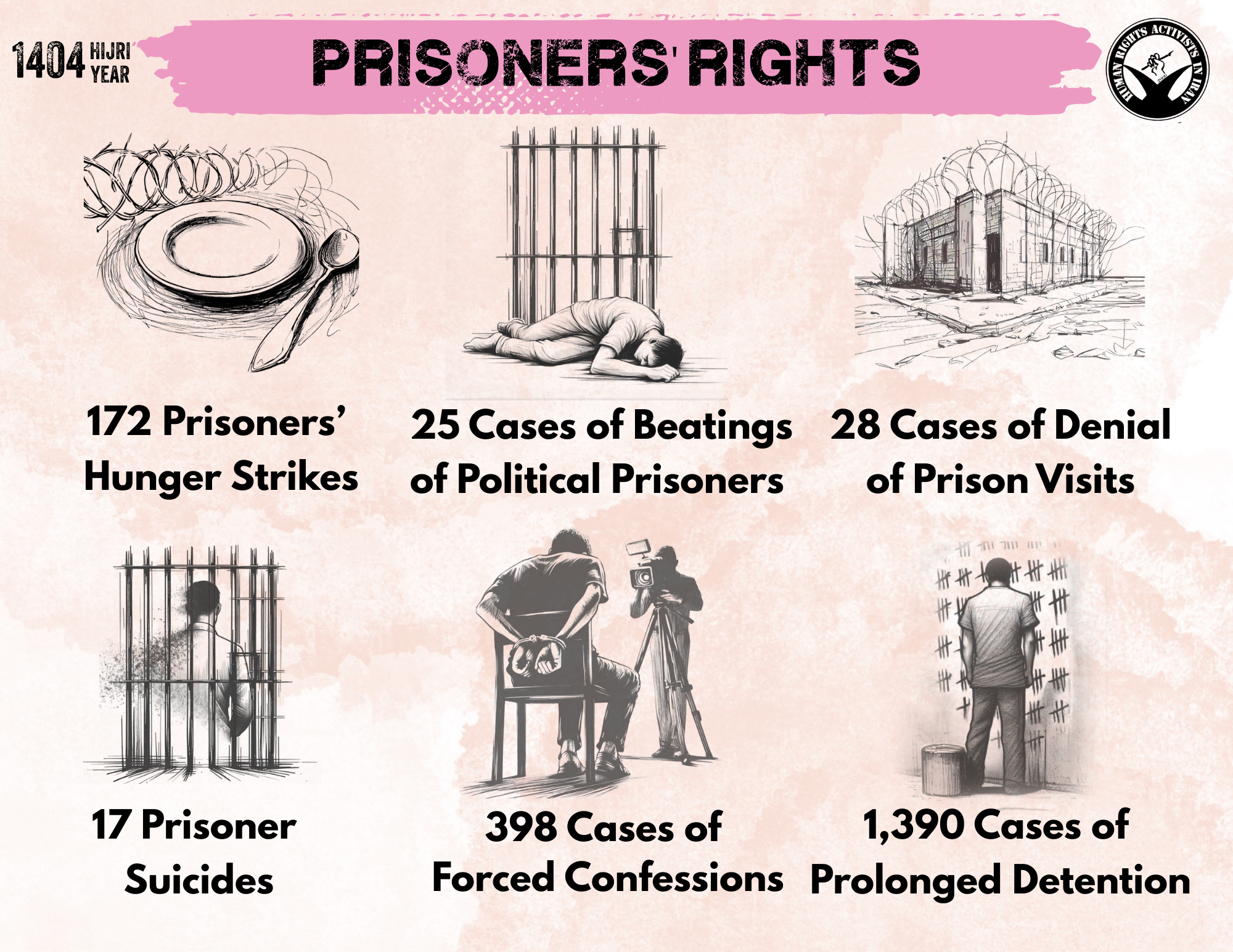
Regarding prisoners’ rights in 1404, documented violations included 25 cases of physical assault against prisoners, 182 instances of denial or lack of access to medical care for prisoners and detainees, 307 transfers to solitary confinement, and 172 hunger strikes by prisoners and detainees.
Additionally, there were 38 cases of forced transfers, 187 instances of threats and pressure against political and ideological prisoners, 28 cases of denial of visitation, 14 deaths due to illness, 17 suicides, and 4 cases of murder of prisoners.
Further violations included 108 cases of denial of access to legal counsel, 256 instances of deprivation of the right to phone contact, 14 cases of failure to separate prisoners based on charges, 2,520 cases of detention in inappropriate conditions, 398 instances of forced confessions, and 11 cases of denial of medical leave.
Moreover, 716 cases of enforced disappearance (lack of information on detainees’ whereabouts) and 1,390 cases of detainees being kept in uncertain or unresolved legal status were documented.
Executions
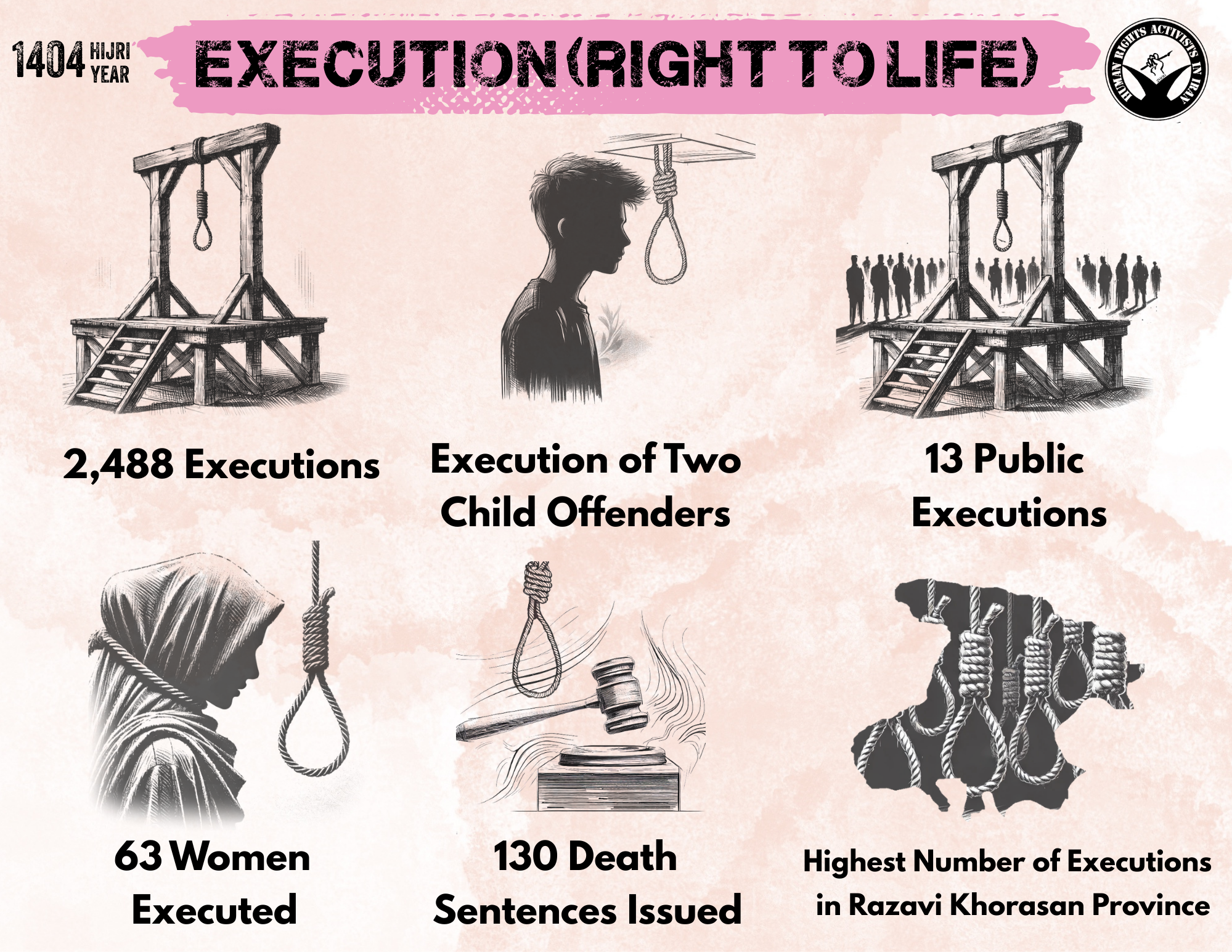
As in previous decades following the 1979 revolution, executions remain one of the most prominent manifestations of human rights violations in Iran. In 1404, at least 2,488 individuals were executed, including 63 women and 2 juvenile offenders. Of these, 13 executions were carried out in public.
During the same period, 130 individuals, including 10 women and 1 juvenile offender, were sentenced to death, of whom 4 were sentenced to public execution. It should also be noted that, within this timeframe, the initial death sentences of an additional 45 individuals were upheld by the Supreme Court.
| Year | Number of Executions | Executions per Million People | Percentage Change Compared to Previous Year |
|---|---|---|---|
| 1400 | 351 | 4.0 | + %608.8 |
| 1401 | 620 | 6.9 | + %301.2 |
| 1402 | 771 | 8.5 | + %222.6 |
| 1403 | 1069 | 12.0 | + %132.7 |
| 1404 | 2488 | 26.94 | – |
| Province | Population | Number of Executions | Execution Rate |
|---|---|---|---|
| Razavi Khorasan | 7,109,000 | 235 | 3.31 |
| Alborz | 3,028,000 | 200 | 6.61 |
| Isfahan | 5,429,000 | 178 | 3.28 |
| Fars | 5,136,000 | 149 | 2.9 |
| Lorestan | 1,792,000 | 130 | 7.26 |
| Khuzestan | 5,115,000 | 129 | 2.52 |
| Kerman | 3,413,000 | 101 | 2.96 |
| Hamedan | 1,769,000 | 98 | 5.54 |
| East Azerbaijan | 4,092,000 | 84 | 2.05 |
| South Khorasan | 845,000 | 79 | 9.35 |
| Markazi | 1,472,000 | 79 | 5.37 |
| Qom | 1,454,000 | 79 | 5.43 |
| Sistan and Baluchestan | 3,280,000 | 76 | 2.32 |
| Yazd | 1,314,000 | 75 | 5.71 |
| Gilan | 2,569,000 | 74 | 2.88 |
| Semnan | 787,000 | 72 | 9.15 |
| Mazandaran | 3,415,000 | 68 | 1.99 |
| West Azerbaijan | 3,529,000 | 65 | 1.84 |
| Kermanshah | 1,999,000 | 62 | 3.1 |
| Qazvin | 1,346,000 | 58 | 4.31 |
| Zanjan | 1,119,000 | 53 | 4.74 |
| Golestan | 2,016,000 | 51 | 2.53 |
| North Khorasan | 875,000 | 43 | 4.91 |
| Kohgiluyeh and Boyer-Ahmad | 759,000 | 43 | 5.67 |
| Bushehr | 1,277,000 | 41 | 3.21 |
| Hormozgan | 2,018,000 | 39 | 1.93 |
| Ilam | 597,000 | 29 | 4.86 |
| Kurdistan | 1,689,000 | 28 | 1.66 |
| Ardabil | 1,299,000 | 22 | 1.69 |
| Chaharmahal and Bakhtiari | 997,000 | 19 | 1.91 |
| Year | Number of Arrests | Arrests per Million People | Percentage Change Compared to Previous Year |
|---|---|---|---|
| 1400 | 358 | 4.05 | – %42.1 |
| 1401 | 242 | 4.73 | – %14.4 |
| 1402 | 371 | 4.09 | – %44.2 |
| 1403 | 332 | 3.63 | – %37.6 |
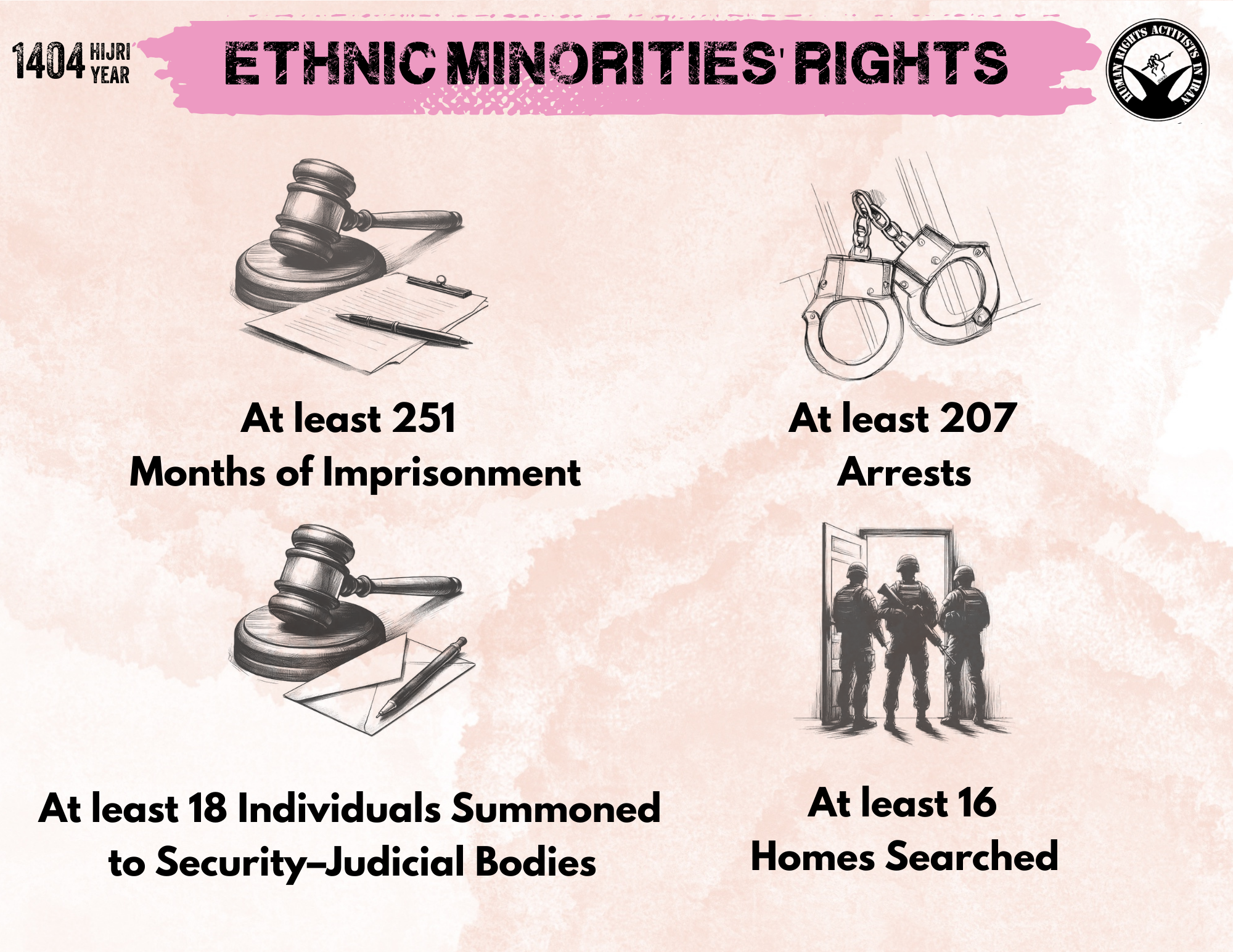
| 1404 | 207 | 2.24 | – |
Religious Minority Rights
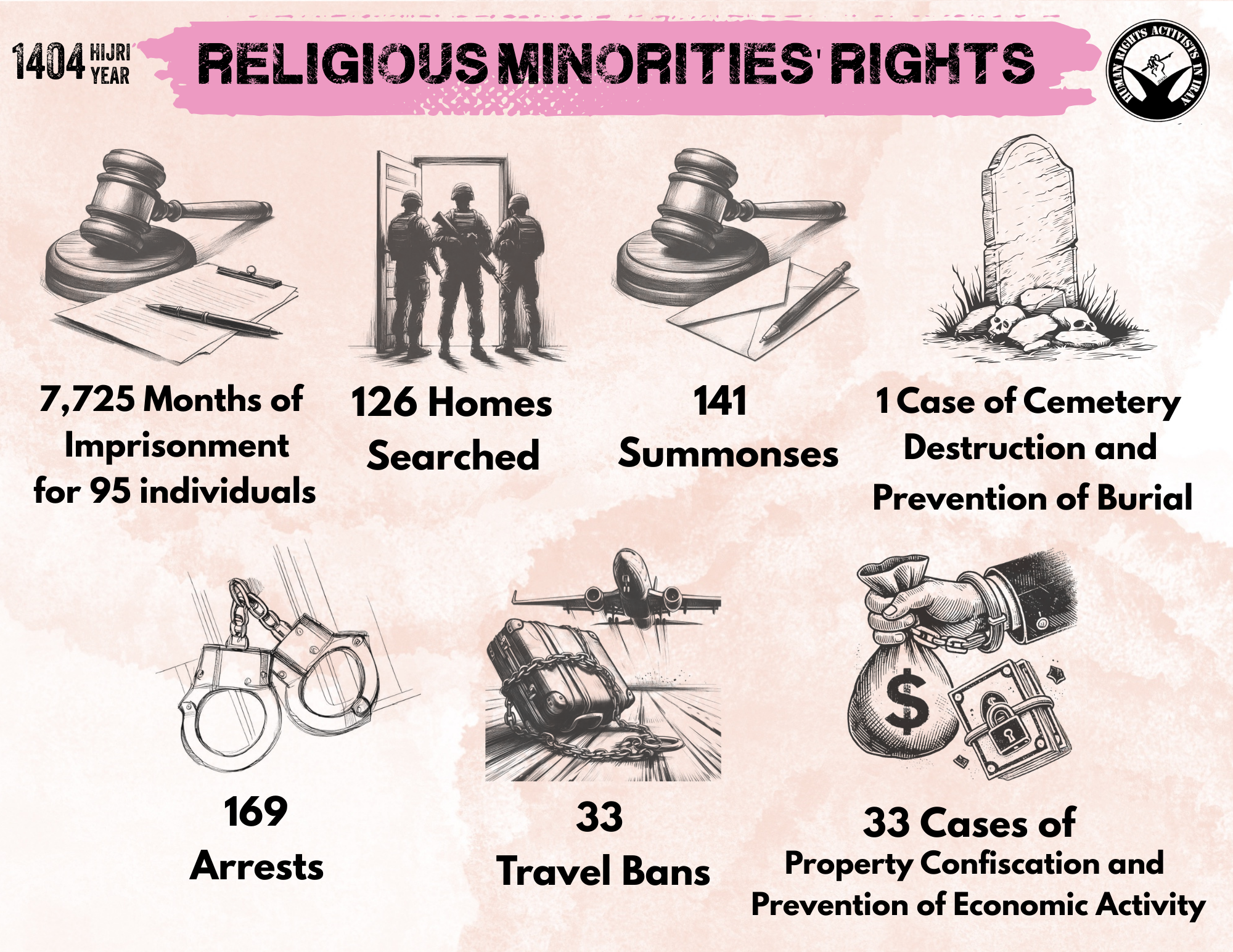
In 1404, a total of 190 reports on violations of religious minority rights in Iran were recorded, according to which 169 citizens were arrested. Additionally, a total of 6,927 months of discretionary imprisonment and 798 months of suspended sentences were issued for 95 individuals. Of this total, 3,837 months were handed down by lower courts and 3,888 months by appellate courts.
Furthermore, 26 individuals were fined a total of 4,739 million tomans, and 9 individuals were sentenced to 288 months of exile.
In addition, 141 summonses to judicial and security authorities, 37 trials, 51 interrogations, 1 case of cemetery destruction, 126 home searches, 33 travel bans, 40 cases of prison sentences being carried out, 33 cases of confiscation of homes and property, and 10 cases of prevention of economic activity were reported.
| Year | Number of Arrests | Arrests per Million People | Percentage Change Compared to Previous Year |
|---|---|---|---|
| 1400 | 67 | 0.76 | + %152.2 |
| 1401 | 175 | 1.95 | – %3.4 |
| 1402 | 148 | 1.63 | + %14.1 |
| 1403 | 124 | 1.35 | + %36.2 |
| 1404 | 169 | 1.83 | – |
| Judge Name | Court Branch | Number of Cases | Prison Sentences (Months) | Fine (Million Toman) |
|---|---|---|---|---|
| Sabzevari | Branch 2 of Revolutionary Court, Karaj | 8 | 80 | – |
| Abbasali Houzan | Branch 36 of the Court of Appeals, Tehran Province | 8 | 1002 | 910 |
| Ashkan Ramesh | Branch 1 of Revolutionary Court, Varamin | 5 | 495 | – |
| Abolghasem Salavati | Branch 15 of Revolutionary Court, Tehran | 5 | 660 | – |
| Hassan Fathnejad | Branch 3 of Revolutionary Court, Tabriz | 2 | 288 | 2000 |
Protests and Strikes
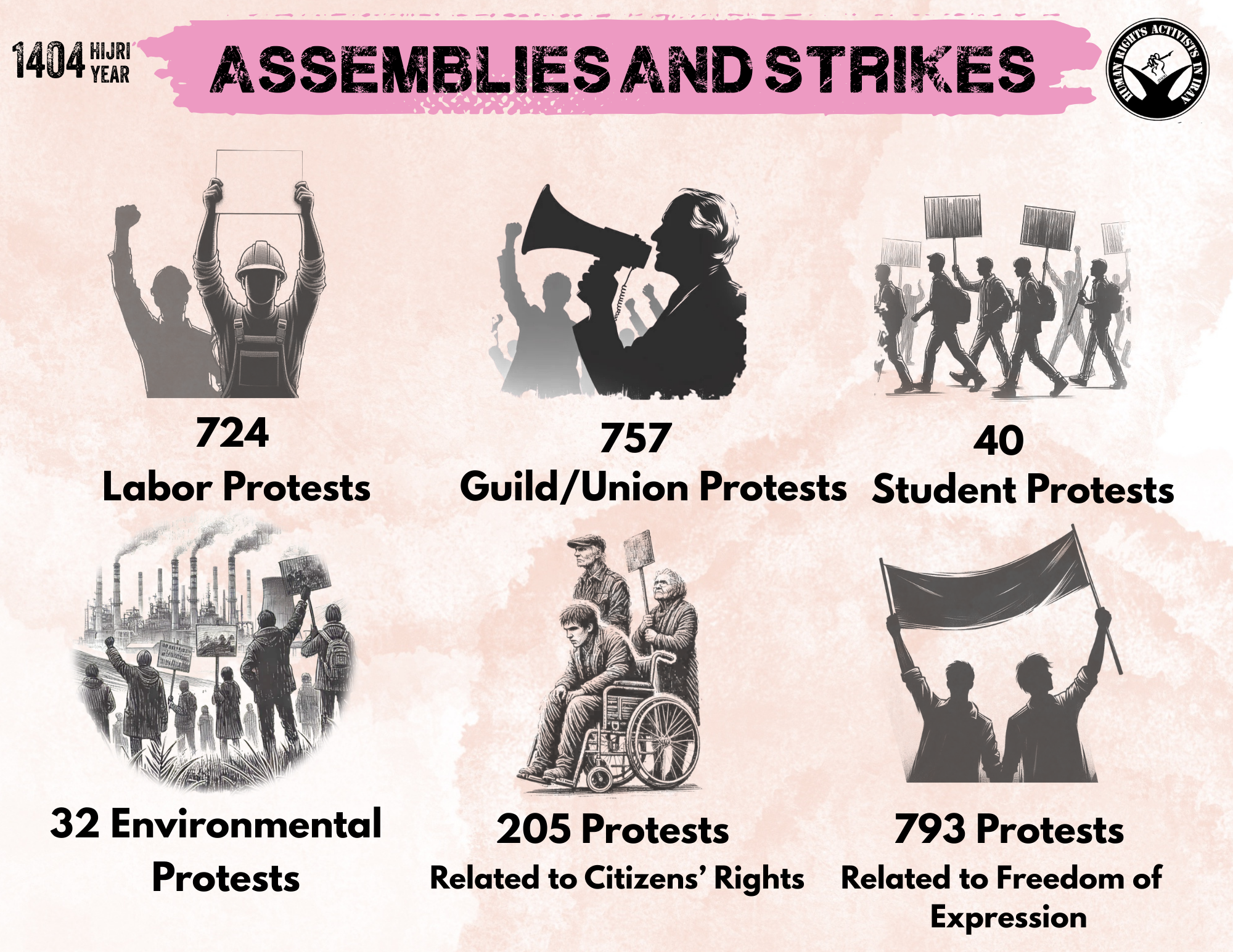
At least 2,551 protest gatherings took place across Iran. These included 724 labor protests, 757 guild and trade union gatherings, 793 protests related to freedom of thought and expression, 40 demonstrations concerning the right to education, and 32 related to environmental issues.
Additionally, 205 protest gatherings were held across all 31 provinces by citizens—many of them defrauded investors or individuals whose civil rights had been violated. Alongside these demonstrations, at least 41 union strikes and 390 labor strikes were also recorded.
Killing of Citizens
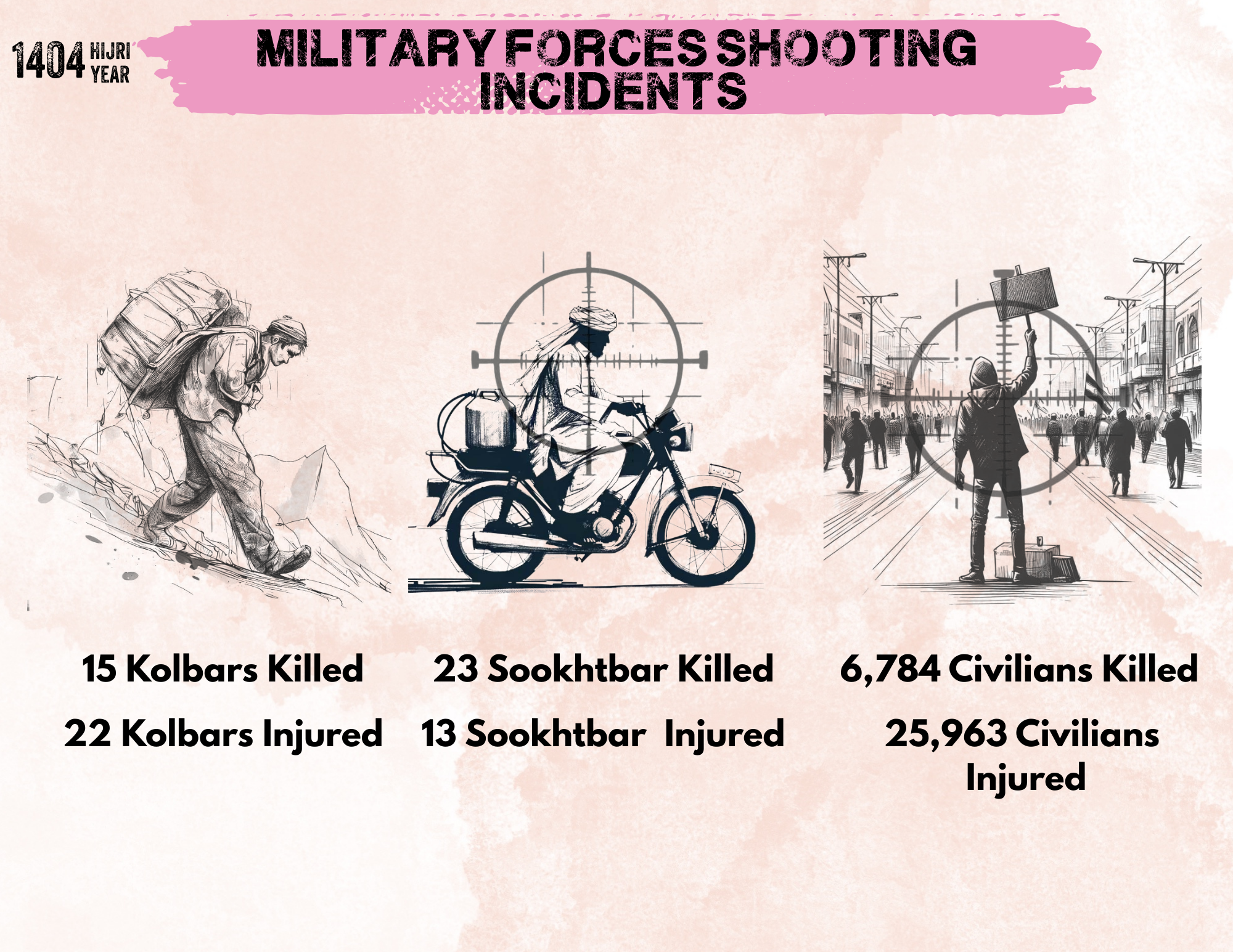
Throughout 1404, a total of 32,820 citizens were targeted by gunfire from military forces. Of these, 6,822 lost their lives, including 15 Kolbars (border porters), 23 Sookhtbars (fuel carriers), and 6,784 other citizens.
Additionally, 25,998 citizens were injured as a result of indiscriminate shootings by military personnel, including 22 Kolbars, 25,963 ordinary citizens, and 13 Sookhtbars.
It should also be noted that 8 other Kolbars were affected by environmental and geographical conditions, such as hypothermia, pursuit by military forces, and falls from height, resulting in 4 being injured and 4 losing their lives. Moreover, 84 Sookhtbars were involved in incidents during pursuits by military forces, of whom 76 were killed and 8 injured.
Furthermore, during the war involving the United States and Israel against Iran, which began on February 28, 2026 (9 Esfand 1404), an attack on the “Shajareh Tayyebeh” girls’ school in Minab resulted in the deaths of a number of students. According to reported figures, at least 168 people were killed and 95 others injured in this attack.
Since the onset of these hostilities, the number of civilian casualties has reached 1,369, including at least 207 children. Additionally, the status of 627 other individuals remains unclear, as it has not been determined whether they were civilians or military personnel.
Landmine and Explosion Victims
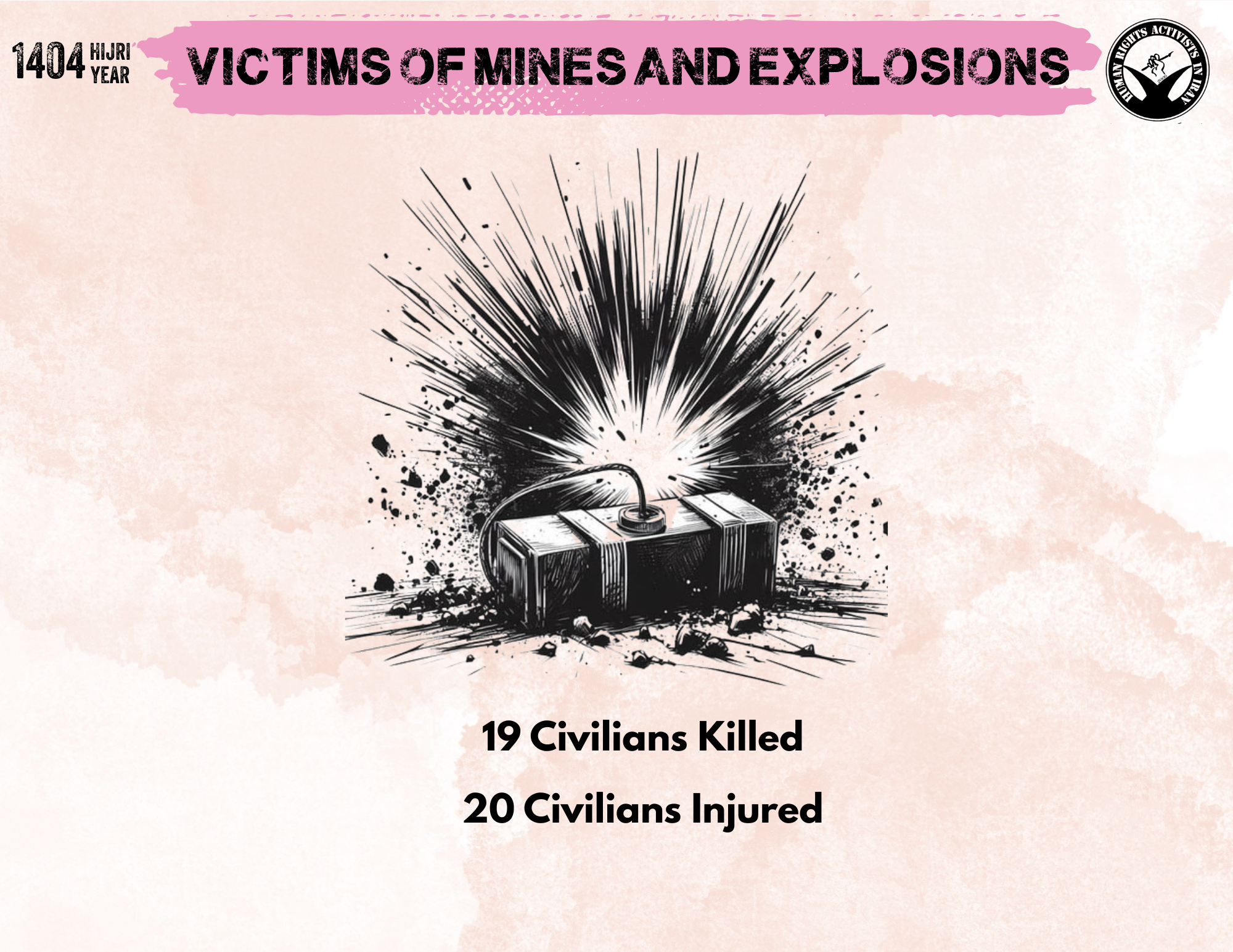
Landmines left over from past conflicts continue to threaten the lives of residents in border regions each year. The Iranian government also continues to produce and deploy anti-personnel mines and, contrary to international conventions, maintains that their use is the only effective way to secure the country’s long borders.
According to data from the past year, at least 19 citizens lost their lives due to landmine explosions in border areas, while 20 others were injured.
Flogging and Amputation Sentences
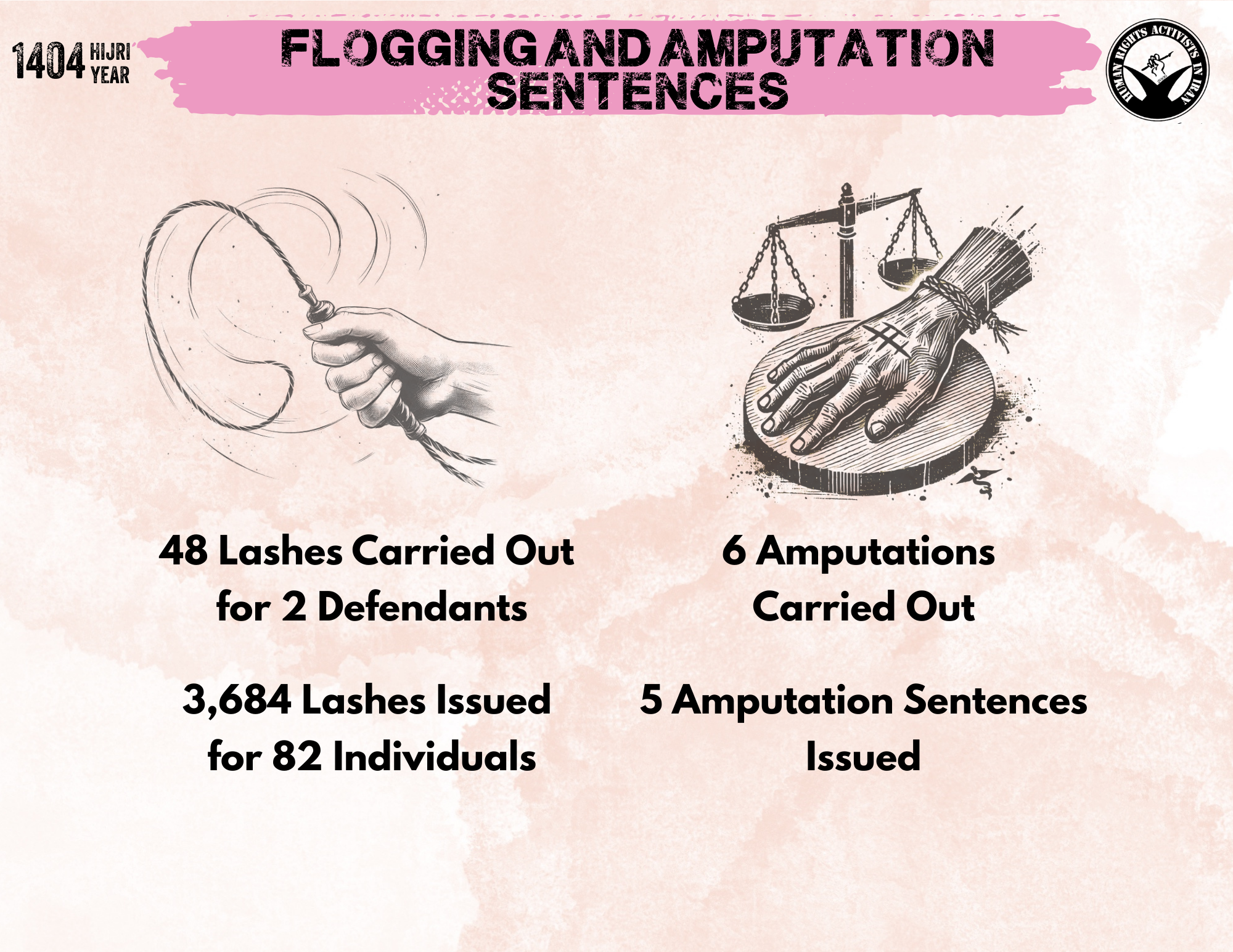
The International Covenant on Civil and Political Rights explicitly prohibits the use of degrading punishments that violate human dignity, such as flogging and amputation. Nevertheless, according to data collected in 1404, sentences of flogging were carried out for at least 2 defendants, who had been collectively sentenced by Iranian judicial authorities to 48 lashes.
In addition, the judiciary issued sentences totaling 3,684 lashes for at least 82 individuals. Furthermore, amputation sentences were carried out for 6 defendants who had been convicted by Iranian courts, while 5 others were also sentenced to amputation.
Arrests
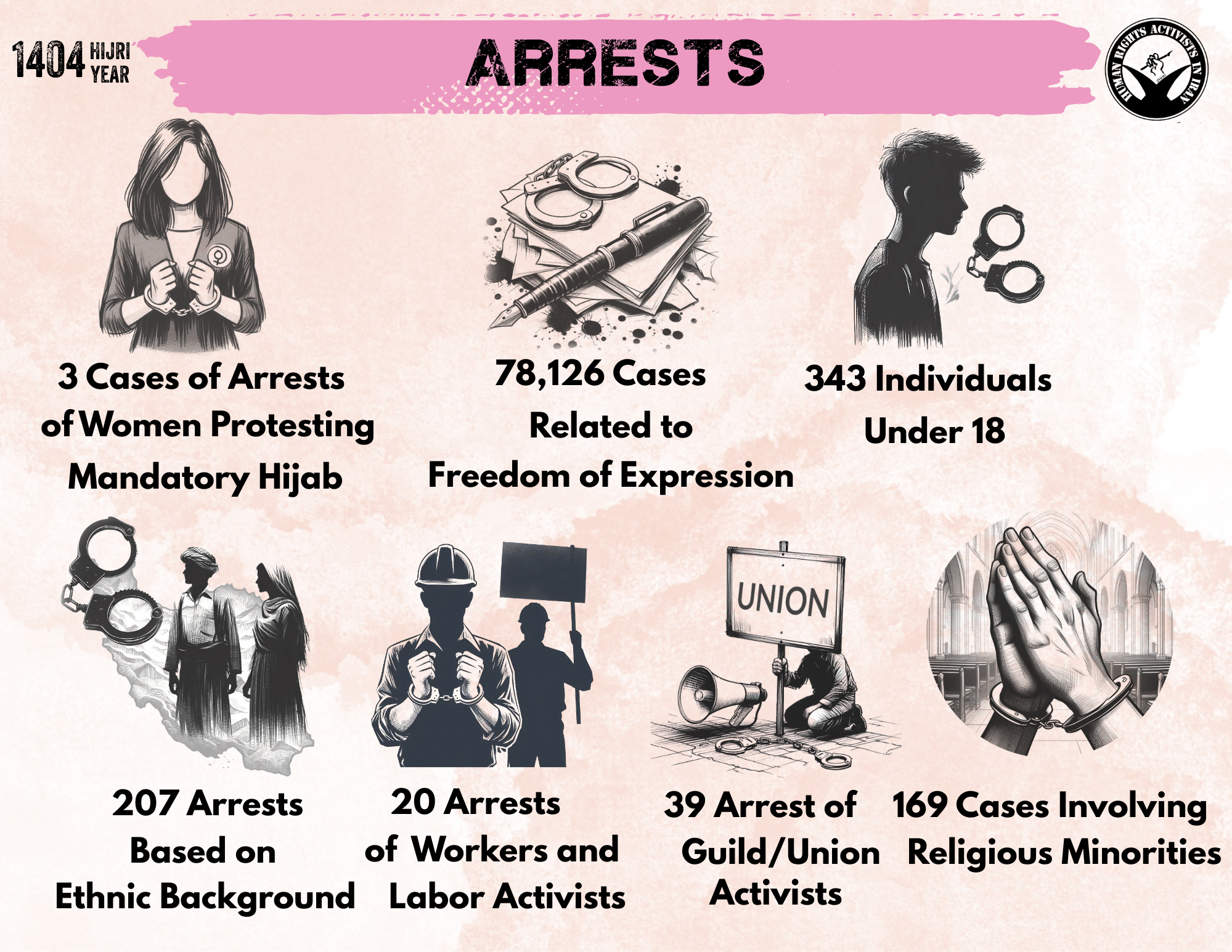
Over the past year, the arrest of 78,907 citizens in Iran represents a clear violation of the rights to freedom of expression, political freedom, and other fundamental human rights. Among these, 78,126 cases were directly related to the exercise of freedom of thought and expression.
Other notable cases include the arrest of 20 workers and labor activists, 343 individuals under the age of 18, 39 union activists, 169 members of religious minorities, and 207 individuals from ethnic minority backgrounds.
Regarding the latter group, although the charges against 234 individuals remain unclear, these arrests have been classified as violations of ethnic and national minority rights based on available indicators and the documented pattern of conduct by security institutions.
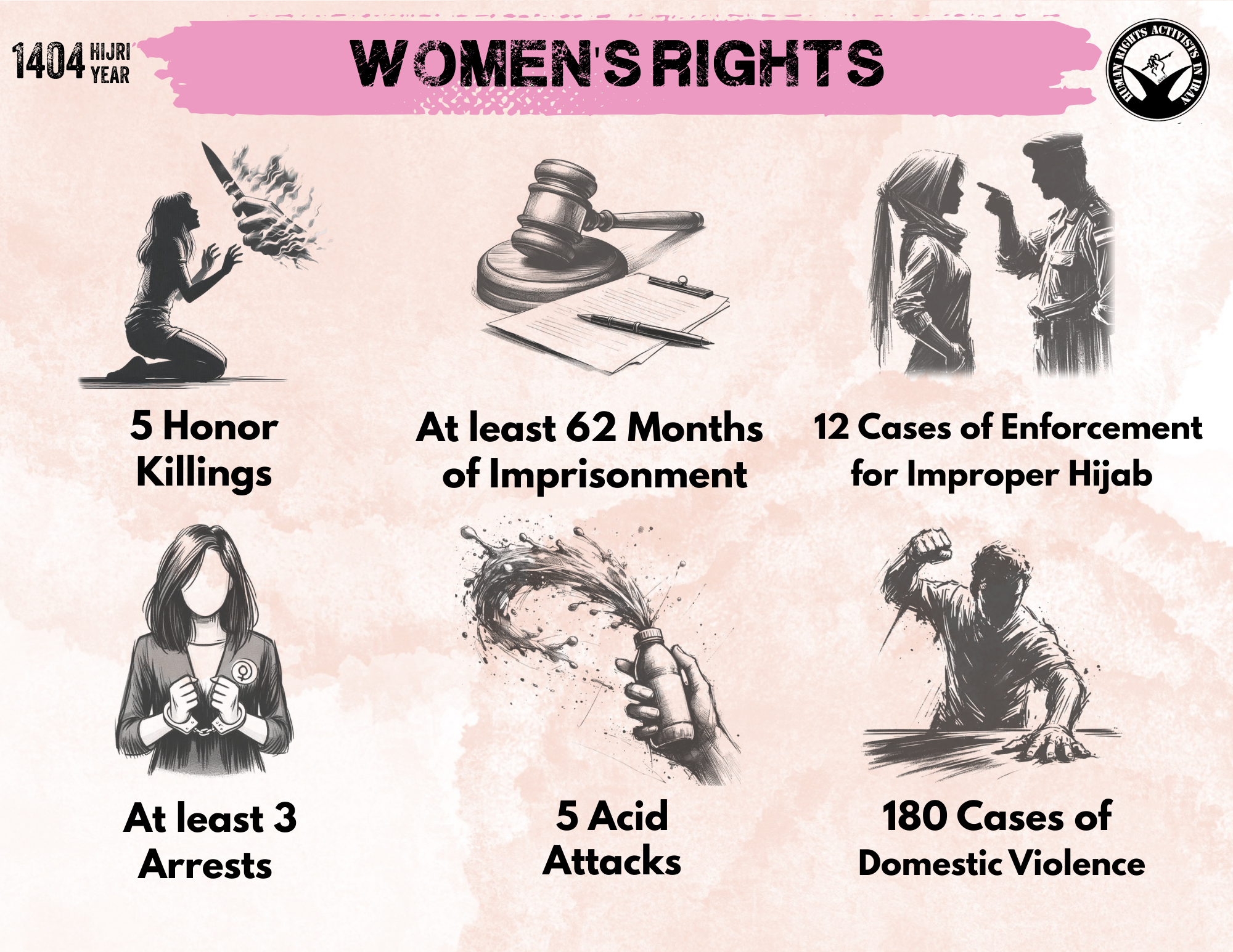
Additionally, at least 3 arrests were recorded for non-compliance with compulsory hijab and for women singing in public spaces.
| Year | Number of Arrests | Arrests per Million People | Percentage Change Compared to Previous Year |
|---|---|---|---|
| 1400 | 1884 | 21.3 | + %4,088 |
| 1401 | 29,950 | 33.4 | + %163.4 |
| 1402 | 3,864 | 42.7 | + %1,942 |
| 1403 | 2,491 | 27.2 | + %3,067 |
| 1404 | 78,907 | 847.5 | – |
Convictions
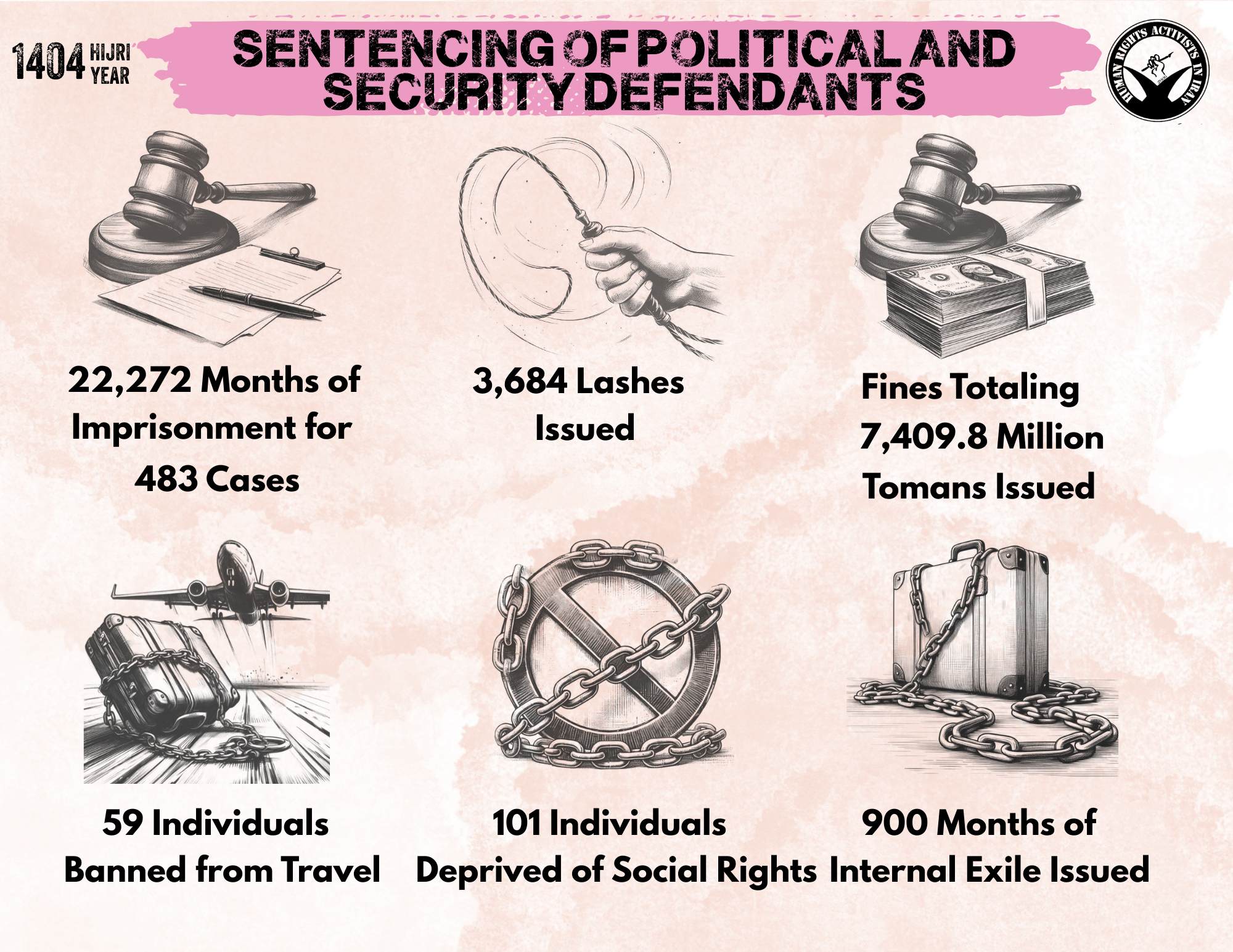
In 1404, judicial authorities across the country issued rulings in 483 cases, sentencing defendants in political or security-related cases to a total of 20,832 months of discretionary imprisonment and 1,440 months of suspended sentences. Of this total, 15,585 months were issued by lower courts, 5,847 months by appellate courts, and 840 months by the Supreme Court.
In addition, the judiciary imposed fines totaling 7,409.8 million tomans, as well as 3,684 lashes, 59 travel bans, 101 cases of deprivation of social rights, and 900 months of internal exile.
| Year | Number of individuals Convicted | Percentage Change Compared to Previous Year |
|---|---|---|
| 1400 | 310 | + %55.8 |
| 1401 | 1,075 | – %55 |
| 1402 | 843 | – %42.7 |
| 1403 | 744 | – %35 |
| 1404 | 483 | – |
| Year | Number of months of imprisonment | Percentage Change Compared to Previous Year |
|---|---|---|
| 1400 | 13,316 | + %67.2 |
| 1401 | 33,671 | – %33.8 |
| 1402 | 33,790 | – %34 |
| 1403 | 27,857 | – %20 |
| 1404 | 22,272 | – |
| Picture | Judge Name | Court Branch | Number of Cases | Prison Sentences (Months) | Fine (Million Toman) |
|---|---|---|---|---|---|
 | Iman Afshari | Branch 36 of Revolutionary Court, Tehran | 17 | 705 | 313.3 |
 | Ali Ansari | Branch 101 of Criminal Court No. 2, Oshnavieh | 15 | 326 | – |
 | Abbasali Houzan | Branch 36 of the Court of Appeals, Tehran Province | 13 | 1371 | 1110 |
| Ehsan Adibi Mehr | Branch 1 of Revolutionary Court, Ahvaz | 11 | 720 | – |
| Sabzevari | Branch 2 of Revolutionary Court, Karaj | 11 | 172 | – |
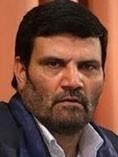 | Abolghasem Salavati | Branch 15 of Revolutionary Court, Tehran | 11 | 1296 | – |
| Yaser Guzali | Branch 1 of Revolutionary Court, Mahabad | 9 | 268 | – |
| Velaei | Branch 101 of Criminal Court No. 2, Miandoab | 9 | 27 | – |
| Ahad Siami | Branch 2 of Revolutionary Court, Mahabad | 6 | 720 | – |
| Ashkan Ramesh | Branch 1 of Revolutionary Court, Varamin | 5 | 495 | – |
In conclusion, it should be noted that the statistics presented in this report cannot be considered a complete reflection of the human rights situation in Iran. This is due to the fact that the Iranian government does not allow independent human rights organizations to operate freely or access necessary sources.
Therefore, these findings should be regarded as a minimum estimate of the human rights situation in Iran, based solely on data reported by civil institutions, including HRANA, and compiled and documented by the organization’s Statistics Center.
For further information, readers are encouraged to consult the organization’s 2025 annual report, which has been recently published.