Akbar Danesh Sararudi Arrested in Isfahan

On July 3, 2023, political activist Akbar Danesh Sararudi was arrested in Isfahan by security forces. He was subsequently taken to an undisclosed location.

The arrest of Sararudi is believed to have been carried out by the IRGC Intelligence unit, according to a reliable source close to his family. However, the specific reasons behind his arrest and the allegations against him remain unknown at this time.

Sararudi, a resident of Isfahan, has been involved in political activism.

Trial Begins for Hip-Hop Singer Toomaj Salehi at Isfahan Revolutionary Court

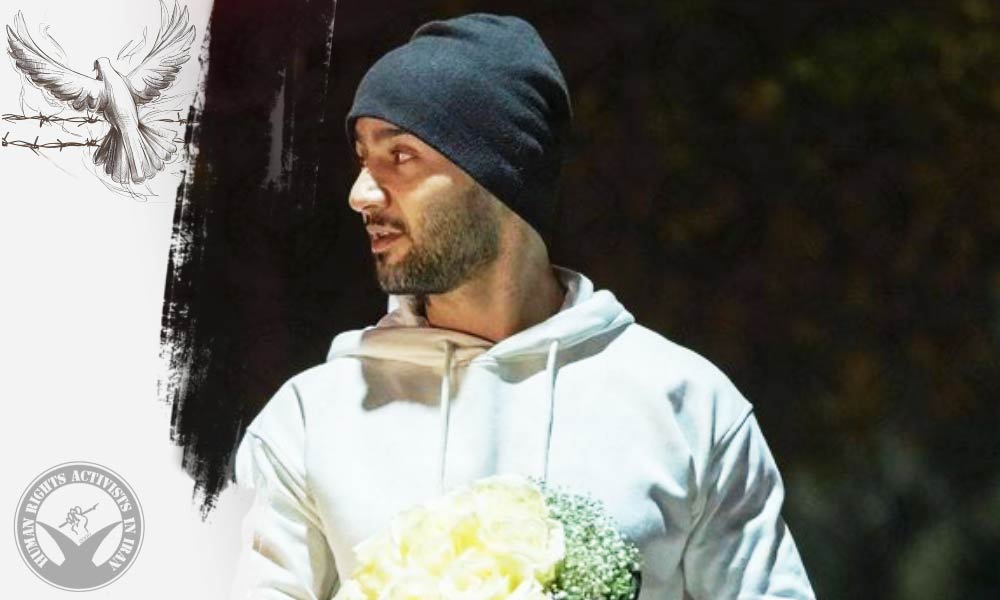
The Isfahan Revolutionary Court’s Branch 1 commenced the court session for the charges against Toomaj Salehi on July 2, 2023.

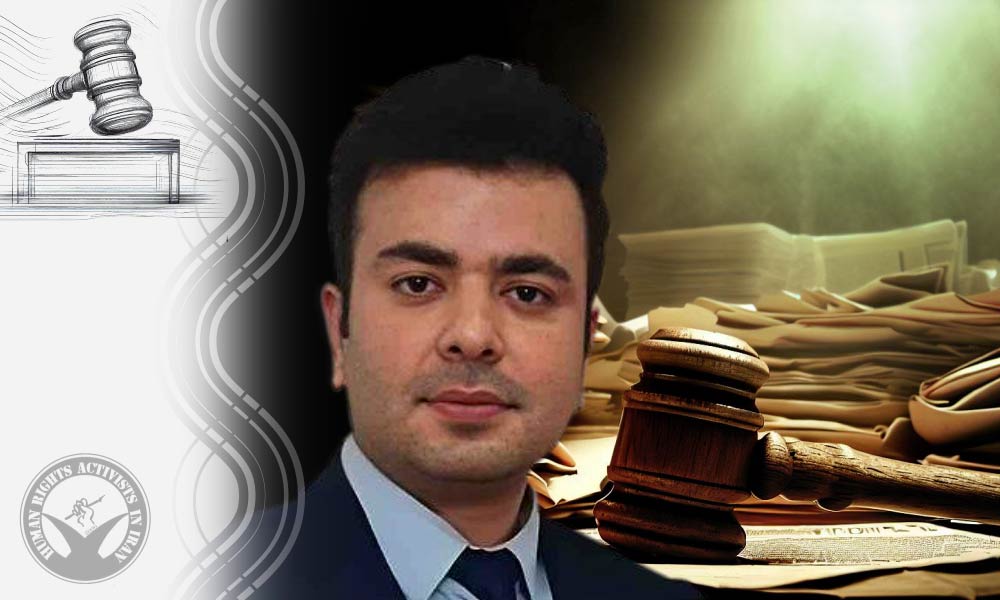
Presided over by Judge Morteza Barati, the court proceedings included the presence of Salehi’s attorney, Amir Raisian, who represented his client.

According to Raisian, who spoke to Shargh Newspaper, Salehi has been charged with “spreading corruption on earth,” “propaganda against the regime,” “inciting people to wage war,” and “insulting the Supreme Leader of Iran.”

A reliable source earlier revealed that Salehi sustained injuries to his right foot and eye as a result of beatings during the interrogation. He continues to suffer from these injuries.

In late October 2022, Salehi was arrested by security forces. Official media claimed that he was apprehended while attempting to leave the country illegally, a claim refuted by individuals close to Salehi.

The protest singer has a previous conviction in a separate legal case. On January 12, 2022, he was sentenced to a six-month prison term and fined. The imprisonment was suspended for one year.

Maryam Abbasi Nikoo Arrested in Shahi Shahr: Family Subjected to Violence

On June 26, 2023, Maryam Abbasi Nikoo was forcefully apprehended by IRGC Intelligence agents at her residence in Shahi Shahr, Isfahan Province. She was subsequently taken to a detention facility, following a violent arrest that involved the search of her home and physical assault on her husband.

According to a reliable source close to her family, who spoke to HRANA, Abbasi Nikoo was arrested at her home on Monday evening. During the arrest, IRGC Intelligence agents conducted a search, resulting in damage to their belongings and physical harm inflicted upon her husband.

It is worth noting that Abbasi Nikoo’s 17-year-old daughter, Bita Shafiee, had previously been detained by security forces for her involvement in protests against serial poison attacks on schools. Shafiee was later released.

Despite these developments, the specific reasons behind Abbasi Nikoo’s arrest and the charges against her remain undisclosed.

Baha’i Citizen Sara Sabet Rasekh Receives Eight-Year Prison Sentence

The Court of Appeals in Isfahan Province has handed down a verdict, sentencing Baha’i citizen Sara Sabet Rasekh to eight years in prison. Since February 7, 2023, Sabet has been serving her previous one-year sentence outside of prison with curfew tags.

The recent ruling states that Sabet will serve five years for charges of “blasphemy,” two years for “insulting the former and current Supreme Leader of Iran,” and one year for “propaganda against the regime.” Pursuant to Article 134 of the Islamic Penal Code, she will serve five years in prison for the first charge.
Sabet was arrested in November-December 2021 by security forces at his residence and released on bail after about one month.

Sabet was originally arrested in November-December 2021 at her residence by security forces. She was later released on bail after approximately one month.

In March-April 2022, the Isfahan Revolutionary Court initially sentenced Sabet to two years for “insulting the former and current Supreme Leader of Iran” and one year for “propaganda against the regime on the internet.” Subsequently, she received an additional one-year sentence for “insulting regime authorities and officials.” Currently, she is serving the latter sentence outside of prison under curfew, monitored by an electronic tag.

According to HRANA annual report, from the total human rights reports regarding the violation of religious minorities’ rights, 64.63% belonged to the violation of the rights of Baha’is.

According to unofficial sources, it is estimated that more than 300,000 Baha’is live in Iran, but the Iranian Constitution recognizes only Islam as the official religion, in addition to Christianity, Judaism, and Zoroastrianism. Bahai faith is not considered legitimate by the authorities, and the rights of Baha’is in Iran have been systematically violated for years.

The deprivation of the freedom to practice their religion is a breach of Article 18 of the Universal Declaration of Human Rights and Article 18 of the International Covenant on Civil and Political Rights. The United Nations covenant holds that every person has the right to freedom of religion, freedom of converting religion, as well as freedom of expression, individually or collectively; openly or secretly.


Tragic Incident Leaves Four Sukhtbars Dead and Two Injured in Military Forces Shooting

On June 13, 2023, a devastating incident unfolded in Isfahan Province as military forces opened fire on three vehicles, resulting in the loss of four lives and injuries to two individuals.

According to HRANA, the news agency of Human Rights Activists, quoting Rasank News, the military forces targeted the vehicles along the road connecting Jandaq to Khur in Isfahan Province. Tragically, the vehicles were engulfed in flames, claiming the lives of four Sukhtbars (Cross-Border Fuel Carriers) and leaving two others injured, who were subsequently hospitalized.

The two injured Sukhtbars have been identified as Senaollah Sargolzaie and Saeed Kubdani, both residents of Zahedan and only 20 years old. The report does not provide information regarding the identities of the four individuals who lost their lives in this incident.

According to HRANA annual report, in 2022, 845 people were shot by military forces. At least 571 of the victims lost their life. This includes 22 kolbars, 9 fuel carriers, and 540 civilians. 274 people were injured by military forces open fire, including 134 kolbars, 128 civilians, and 12 fuel carriers.


Subscribe to Our Newsletter

Now is definitely not the time to stop reading!

Mahmood Mehrabi Endures Prolonged Three-Month Detention in Dastgerd Prison

HRANA, Human Rights Activists News Agency – Mahmood Mehrabi remains detained in Dastgerd Prison, Isfahan, for over three months.

According to Mehrabi’s lawyer, who spoke to HRANA, “His legal case has currently been sent to the investigation office.” A reliable source close to his family disclosed that Mehrabi has been denied adequate medical care, despite his deteriorating health condition.
On February 1, 2023, security forces arrested Mehrabi in Isfahan. Although he was released on bail on March 16, 2023, he was re-arrested just a few hours later at his residence.

It’s important to note that Mehrabi has a history of previous arrests and convictions related to his activism.

Execution of Five Inmates in Shiraz, Isfahan, and Kashan

Five Inmates convicted of drug-related crimes were executed in Shiraz, Isfahan, and Kashan Prisons.

According to Haal Vsh, on June 1, 2023, Aghil Arab, age 27, was executed in Dastgerd Prison, Isfahan. On the same day, Nemat Arzani, 33, and Rasoul Sheikh Arpanahi, 27, were also executed in Kashan Prison.

Furthermore, the Iran Human Rights Organization reported the execution of two inmates in Adelabad Prison on May 24, 2023. The individuals have been identified as Ali Mohammad Zera’at, a father of a young child, and Esmaiel Nasiri.

All these executed prisoners have been convicted of drug-related crimes several years ago.

At the time of writing, no official sources or domestic media outlets within the country have reported on these executions.

In 2022, the Department of Statistics and Publication of Human Rights Activists in Iran registered 457 reports related to the death penalty. This included 92 death sentences, including the conviction of 6 people to public execution and 565 execution sentences were carried out, 2 of which have been carried out in public. Based on the announced identifications of some of the executed individuals, 501 were male and 11 were female. In addition, 5 juvenile offenders were executed in 2022, meaning they were under the age of 18 at the time they committed the crime.


Six Inmates Executed Across Different Prisons in Iran

Over the course of May 24 and 25, 2023, six inmates faced execution in various prisons located in Maragheh, Kerman, Jiroft, and Isfahan.

According to HRANA, the news agency of Human Rights Activists, on May 25, 2023, an inmate identified by his first name as Amir-Mehdi was executed publicly in a square in Maragheh, East Azerbaijan province. He was convicted of rape six years ago.

On the same day, Haal Vsh reported the executions of Nader Kalbali, 39, and Abdorasoul Jamshidi, 55, in Kerman Prison. Both individuals were sentenced to death for drug-related offenses.
Furthermore, Haal Vsh also reported that Mohammad Daraie, also known as Ahmad Golbacheh, aged 30 and a resident of Zahedan, was executed in Jiroft. Daraie had been convicted four years ago for drug-related crimes.

Lastly, according to the Iran Human Rights Organization, on May 24, Majid Jafari and Ali Tabib were executed in Dastgerd Prison, Isfahan. Jafari had been sentenced to death two years ago for drug-related crimes, while Tabib had received a conviction for murder three years ago.

Recent updates reveal that the number of executed individuals in Kerman prison has now reached six. Among them, three have been identified as Nader Kalbali, Abdorasoul Jamshidi, and Ali Shahriari. Additionally, in Jiroft Prison, another inmate named Mehdi Salari was executed alongside Mohammad Daraie.

In 2022, the Department of Statistics and Publication of Human Rights Activists in Iran registered 457 reports related to the death penalty. This included 92 death sentences, including the conviction of 6 people to public execution and 565 execution sentences were carried out, 2 of which have been carried out in public. Based on the announced identifications of some of the executed individuals, 501 were male and 11 were female. In addition, 5 juvenile offenders were executed in 2022, meaning they were under the age of 18 at the time they committed the crime.


Baha’i Enayatollah Naeimi Receives 15-Year Prison Sentence

Enayatollah Naeimi, a Baha’i citizen, has been sentenced to 15 years in prison, with 10 years to be enforced, by the Isfahan Revolutionary Court. He was also fined and subjected to social deprivation.

The verdict was issued by Judge Morteza Barai, who found Naeimi guilty of “forming groups to act against national security” for which he received 10 years, and “propaganda against the regime,” for which he received five years. The evidence presented for these charges included Naeimi’s involvement with the Baha’i group “Yaran e Iran” or “Friends of Iran,” as well as his association with Baha’i communities in Israel

Under Article 134 of the Islamic Penal Code, if the verdict is upheld on appeal, Naeimi will serve 10 years in prison for the first charge.
Naeimi was arrested by security forces on September 28, 2022, and his house, workplace, and garden in the Isfahan suburbs were searched. He was later released on bail from Isfahan Prison but now faces a lengthy prison sentence.

According to HRANA annual report, from the total human rights reports regarding the violation of religious minorities’ rights, 64.63% belonged to the violation of the rights of Baha’is.

According to unofficial sources, it is estimated that more than 300,000 Baha’is live in Iran, but the Iranian Constitution recognizes only Islam as the official religion, in addition to Christianity, Judaism, and Zoroastrianism. Baha’i faith is not considered legitimate by the authorities, and the rights of Baha’is in Iran have been systematically violated for years.

The deprivation of the freedom to practice their religion is a breach of Article 18 of the Universal Declaration of Human Rights and Article 18 of the International Covenant on Civil and Political Rights. The United Nations covenant holds that every person has the right to freedom of religion, freedom of converting religion, as well as freedom of expression, individually or collectively; openly or secretly.


Iran Protests: Supreme Court Upholds Death Sentences of Three Protesters

Branch 9 of the Iranian Supreme Court has confirmed the death sentences of three protestors who were arrested during the nationwide protests in 2022 in Isfahan. Saleh Mirhashemi, Majid Kazemi, and Saeed Yaghoubi were accused of enmity against God (Moharebeh) in a legal case known as “Khaneh e Isfahan (Isfahan House).”

According to HRANA, the news agency of Human Rights Activists, the Supreme Court of Iran upheld death sentences against three protests arrested during the nationwide protests of 2022.

Amir Kazemi, Majid Kazemi’s cousin, spoke to HRANA and shared details about the case: “Branch 9 of the Supreme Court, presided over by Judge Ghasem Mazinani, dismissed the appeal request and upheld the death sentences. The highest judicial authority in Iran upheld these verdicts without considering the errors and defects in this legal case.”

Kazemi added, “The death penalty for the three first-row defendants was upheld, despite judiciary officials’ promise to their families that they would be granted amnesty on Eid al-Fitr (Holiday of Breaking the Fast). Coerced confessions were the only evidence presented during the trial. There was no evidence proving the claim that warm weapons were discovered from the defendants.”

Earlier, in a phone call to his relative from prison, Majid Kazemi revealed that they were tortured and coerced into confessing.

Initially, Saleh Mirhashemi was sentenced to death for “Moharebeh through using a Colt gun,” “forming and running groups to act against national security,” and “assembly and collusion against national security.” He also received ten years for “membership and collaboration with Monafeghin.”

Majid Kazemi and Saeed Yaghoubi were sentenced to death for “Moharebeh through using warm weapons” and ten years in prison for “forming and running groups to act against national security” and “assembly and collusion against national security.”

The fourth-row defendant, Amir Nasr Azadani, was sentenced to 16 years for “assisting in enmity against God,” five years for “membership in illegal groups to act against national security,” and five years for “assembly and collusion against national security.”

The fifth-row defendant, Soheid Jahangiri, was sentenced to two years for “assembly and collusion against national security.” The sixth-row defendant, Jaber Mirhashemi, was acquitted of all charges.