
Heydar Ghorbani Sentenced to 11 Years in Prison

Labor activist Heydar Ghorbani was sentenced to 11 years in prison by the Second Branch of the Revolutionary Court of Shahriar County.

According to HRANA, the news agency of Human Rights Activists, quoting The Free Union of Iranian Workers, Ghorbani is from Kamyaran in Kurdistan Province.

Ghorbani is a construction worker and a member of the Free Trade Union of Iran.

According to the report, the labor activist was sentenced on charges of “membership in a group or population or a branch of a population formed within the country to disrupt the security of the country” and “propaganda against the Islamic Republic”.
 

Kolbar Injured from Landmine Explosion in Nowsud Border Area

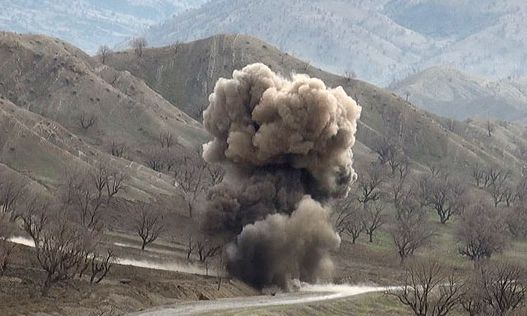
On Thursday, May 6th, a kolbar was injured in the leg after a landmine left over from the Iran-Iraq war exploded in the border area of Nowsud.

According to HRANA, the news agency of Human Rights Activists, quoting Kurdpa, the citizen has been identified as Nader Saberi, son of Mr. Barakhas, from Tilkuh village in Kamyaran.

Every year, landmines cause the death and injury of several compatriots in border areas. About 42,000 square kilometers of land in Iran is contaminated with leftover landmines and unexploded ordnance from the Iran-Iraq war.

The Iranian regime continues to produce and plant anti-personnel mines, and, contrary to international conventions, the regime believes that using these mines is the only effective way to secure the country’s long borders.

Accordingly, they have planted mines on border areas with Afghanistan, Pakistan, and Iraq. During the conflicts of the 1980s in Kurdistan, mines were planted in this region, as well.

Fighting Continues in Kurdistan

HRANA News Agency – Since the fighting between PJAK (Partiya Jiyana Azad a Kurdistane) and the Islamic Republic’s military forces began, the degree of violence seen in regions alongside Iran’s western and northwestern borders have been unprecedented in recent years.
According to a report by Human Rights Activists News Agency (HRANA), on July 13, 2011, the fighting broke out between PJAK and the Islamic Republic’s military forces.Although more than one week has past, the violent confrontation between two sides continues.During this time, a number of fighters on both sides of the conflict have been killed and wounded.
The mountainous regions of Shaho and kosalan have witnessed heavy fighting while the Iranian Revolutionary Guard Corps has maintained its heavy presence in these regions.
On Tuesday night, July 19, 2011, local residents reported that the two sides fought violently in a region called “hah Vari Sardasht” on a road between Kamyaran and Sarvabad.As a result, several individuals were killed.
Reports from Sardasht and Piran Shahr indicate hospitals and clinics in these two cities face shortage as the number of those injured increases.Meanwhile, several wounded patients were transferred to hospitals in Urmia.
One of the most important causalities of this fighting has been the amount of damage sustained to the environment and civilians’ residences.While evacuation of local residents from border towns have brought about the displacement of dozens of citizens in these areas, shelling of mountainous regions have caused forest fires and irreversible damage to the environment and rural farmland alongside the border.
Furthermore, nightly curfew imposed by the Islamic Republic’s military forces has disrupted lives and caused public discontent.