Sunni Death-Row Prisoner Khosrow Besharat Executed in Ghezel Hesar

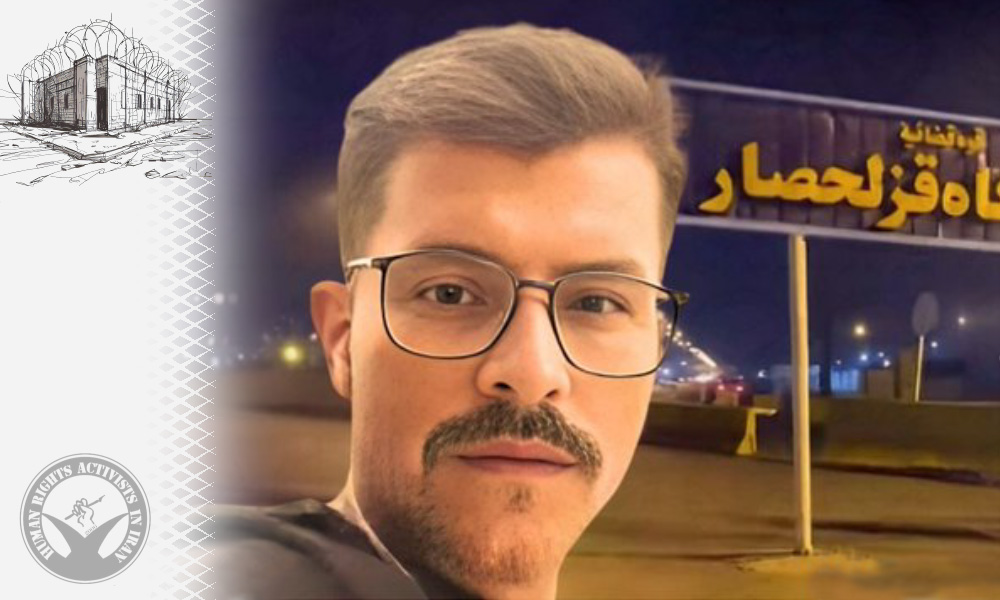
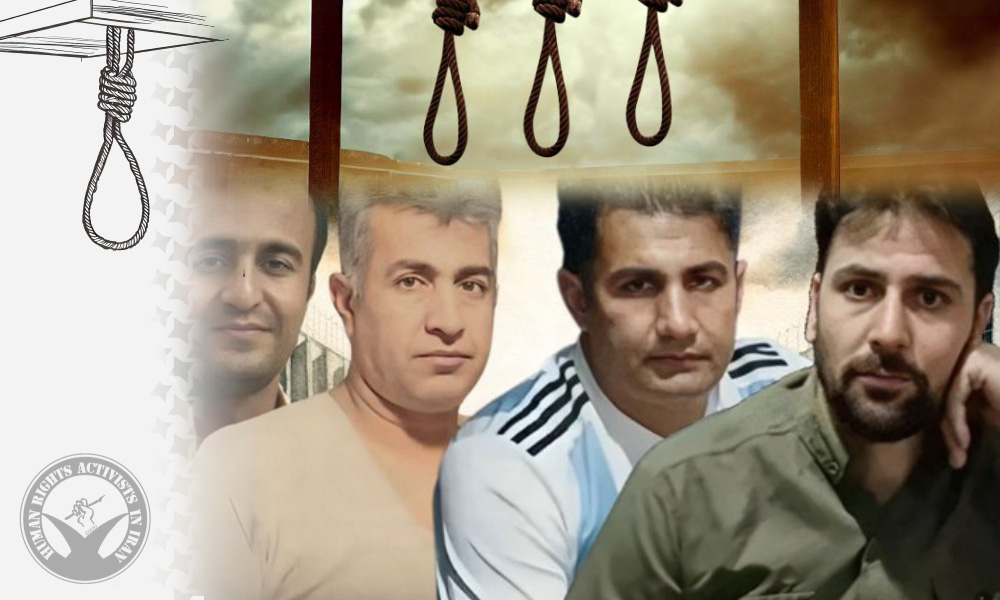
On May 15, 2024, Sunni prisoner Khosrow Besharat was executed in Ghezel Hesar Prison in Karaj after enduring over 14 years of imprisonment.

As reported by HRANA earlier, he was moved to solitary confinement 14 days ago to await his execution. On May 13, he had his final family visit.

In the same legal case, Ghasem Abasteh, Ayoub Karimi, Davoud Abdollahi, Farhad Salimi, and Anvar Khezri were also executed in the same prison. Khezri was executed today, May 15, 2024.

The case stems from the assassination of Abdolrahim Tina, the Imam of a mosque in Mahabad, in September 2008. In January and February 2010, Besharat and six other Sunni suspects were arrested in connection with the killing.

Initially sentenced to death by Branch 28 of the Tehran Revolutionary Court, presided over by Mohammad Moghiseh, Besharat’s sentence was initially overturned by the Supreme Court. The case was then reassigned to Branch 15 of the same court, presided over by Judge Salavati, who reinstated the death sentences for Besharat and six other defendants. The Supreme Court ultimately upheld their death sentences on February 3, 2020.

Political Prisoner Siamak Nasiri Sentenced to Imprisonment and Exile

The Appellate Court of Alborz province has reduced political prisoner Siamak Nasiri’s sentence from six years to three years and one month.

Branch 12 of the Appellate Court of Alborz province issued the verdict, sentencing Nasiri to three years and one month in prison, plus two years of exile in Ahvaz County, following his appeal.

Initially, the Karaj Revolutionary Court, presided over by Judge Musa Asef Al-Hosseini, had sentenced Nasiri to five years in prison for “inciting people to violence and waging war against national security,” along with an additional year for “propaganda against the regime.” He was also required to reside in Ahvaz for two years.

Nasiri was arrested by IRGC Intelligence in Karaj on August 28, 2023, and is currently being held in the Central Prison of Karaj.

Previously, a source informed HRANA that Nasiri was detained in December 2022 in Karaj, where he was held in the Ministry of Intelligence’s facility. He was later transferred to the Central Prison of Karaj and subsequently released under a general pardon and commutation directive.

Two Inmates Executed in Ghezel Hesar Prison for Drug Offenses

On May 1, 2024, Ghezel Hesar Prison in Karaj executed two inmates convicted of drug-related crimes.

The individuals were identified as Farzad Geravand and Majid Barati. HRANA reported on April 28 that the inmates had been moved to solitary confinement in preparation for their execution.

No official sources or domestic media outlets within the country have provided coverage of these executions at the time of writing.

According to data gathered by the Department of Statistics and Publication of Human Rights Activists, Ghezel Hesar Prison in Karaj witnessed the highest number of executions in 2023, with Zahedan Prison following closely behind. For a comprehensive examination of the details and statistics surrounding the executions in Iran, refer to HRANA’s report.


Execution of Three Inmates in Karaj

On April 25, 2024, three inmates, including a woman, were executed in Karaj for murder, according to Rokna.

The first inmate, a middle-aged man, allegedly killed his wife four years ago during a family dispute. The second inmate was executed in Ghezel Hesar Prison for fatally stabbing a young man during a street fight three years ago. Their identities were not disclosed in the report.

The third inmate, a woman identified only as Sahar, was convicted of killing her 70-year-old husband and stealing his gold in Tehran.

The Supreme Court confirmed the verdicts initially issued by the Tehran Criminal Court, leading to the executions.

In 2023, the Department of Statistics and Publication of Human Rights Activists in Iran registered the execution of 767 individuals. Out of these, 7 were carried out in public. Among the executed individuals whose genders were identified, 21 were female. Additionally, 2 juvenile offenders, defined as individuals under the age of 18 at the time of their alleged crimes, were also executed. For a comprehensive examination of the details and statistics surrounding the executions in Iran, refer to HRANA’s annual report.

Two Inmates Executed in Ghezel Hesar Prison for Drug Offenses

On April 21, 2024, officials at Ghezel Hesar Prison executed two inmates who had been convicted of drug offenses.

The two individuals were identified as Abdolbari Pashto, an Afghan national, and Alireza Pourshahbaz. They had previously received death sentences for drug-related crimes and were moved to solitary confinement a day prior to their executions.

At the time of writing, no official sources or domestic media outlets within the country have covered these executions.

According to data gathered by the Department of Statistics and Publication of Human Rights Activists, Ghezel Hesar Prison in Karaj witnessed the highest number of executions in 2023, with Zahedan Prison following closely behind. For a comprehensive examination of the details and statistics surrounding the executions in Iran, refer to HRANA’s report.


Subscribe to Our Newsletter

Now is definitely not the time to stop reading!

Sereen Curtis Arrested in Karaj on Allegations of Blasphemy

Sereen Curtis (Badiei), also known as “Sahzadeh Sereen,” was apprehended on March 25, 2024, by security forces in Karaj on suspicion of blasphemy, as reported by Mizan, the judiciary’s news agency.

The arrest of Curtis, who is purportedly a dual national, came in the wake of the dissemination of videos on social media platforms.

Mizan disclosed that Curtis was formally charged and remanded into custody.

Abolfazl Pour-Hosseini Sentenced to Four Years in Prison with Additional Penalties

The Revolutionary Court of Karaj has pronounced a four-year prison sentence on Abolfazl Pour-Hosseini, a member of the mystical group Erfan-e-Halgheh, alongside two years of exile, a fine, a prohibition from leaving the country, and other social restrictions.

This verdict, confirmed by a source close to Pour-Hosseini’s family, stems from charges of “propaganda against the regime” and “inciting people to act against national security.”

Pour-Hosseini was officially informed of this decision on March 17, 2024. Presently incarcerated in Karaj’s Central Prison, he faces further hardship as prison officials have imposed a three-month ban on family visits as a punitive measure.

The ordeal began on June 13, 2023, when Pour-Hosseini was apprehended by the IRGC’s intelligence in Karaj and confined to Ward 15 of the Central Prison of Karaj. Reports from HRANA suggest that his arrest was linked to the distribution of leaflets on behalf of Erfan-e-Halgheh.

In addition to his recent legal battles, Pour-Hosseini had previously been sentenced by the Revolutionary Court of Karaj to three years of imprisonment and two years of suspended imprisonment.

This is not Pour-Hosseini’s first brush with the authorities; he had been arrested in Qom for his participation in courses organized by the Erfan-e-Halgheh group.

Pour-Hosseini, aged 47 and a father of two daughters, resides in Karaj.

Data collected by the Department of Statistics and Publications of the Human Rights Activists in Iran (HRA) points to the involvement of IRGC Intelligence in 392 cases of human rights violations, including arbitrary arrests.

Concerns Rise Over Health of Political Prisoner Hamzeh Savari

Political prisoner Hamzeh Savari Laftah, currently serving a life sentence in Ghezel Hesar Prison, Karaj, is facing alarming health issues amidst inadequate medical care. Despite his urgent need for treatment outside the prison walls, authorities have repeatedly denied him access to essential medical attention.

According to a source close to Savari’s family, he has been enduring a painful baker’s cyst in his knee for five years, which has worsened over time, extending to his tendon due to the absence of proper medical intervention. Shockingly, prison officials, under orders from the prosecutor, have refused to transfer him to a hospital for necessary treatment.

Reports obtained by HRANA indicate that Savari has also been battling Varicose disease for eleven years, with a recurrence three years ago following a surgery nine years ago. Despite his persistent requests for medical assistance, he has been consistently denied access to treatment.

Arrested at the tender age of 16 on September 2, 2005, Savari was initially sentenced to death by the Ahvaz Revolutionary Court on charges of “spreading corruption on earth, enmity against God (moharebeh), and acting against national security.” However, his sentence was later commuted to life imprisonment.

The troubling case of Savari adds to a larger pattern of neglect within Iranian prisons. In 2023, the Department of Statistics of Human Rights Activists in Iran documented 1,390 instances of denial or neglect of medical care for prisoners, highlighting a systemic issue that demands urgent attention.

Execution of Two Afghan Nationals for Murder in Ghezel Hesar Prison

On March 11, 2024, Ghezel Hesar Prison, located in Karaj, carried out the execution of two death-row inmates convicted of murder. HRANA identified the individuals as Nour-Mohammad Tajik and Abdolbaset (last name unknown).

The hanged Afghan nationals had been transferred to solitary confinement on March 9 in preparation for the execution.

As of now, there is no official information or coverage from domestic media outlets in the country regarding these executions. The absence of official sources raises apprehensions about transparency and accountability in the execution process.

According to data gathered by the Department of Statistics and Publication of Human Rights Activists, Ghezel Hesar Prison in Karaj witnessed the highest number of executions in 2023, with Zahedan Prison following closely behind. For a comprehensive examination of the details and statistics surrounding the executions in Iran, refer to HRANA’s report.


Political Detainee Saman Yasin Moved to Psychiatric Hospital

Saman Seydi (Yasin), detained during the 2022 nationwide protests, was transferred from Ghezel Hesar prison in Karaj to Aminabad Psychiatric Hospital on March 5, 2024.

A source close to his family confirmed Seydi’s relocation to Aminabad Hospital. In a recent open letter addressed to the head of the Judiciary, Saman Yasin expressed his objection to his 18-month detention, stating a preference for a death sentence over being held in legal limbo.

Seydi has been temporarily moved to a hospital outside the prison environment. The Revolutionary Court of Tehran’s Branch 15, presided over by Judge Abolqasem Salavati, has taken charge of Seydi’s case. A recent court session was postponed due to the absence of the public defender. Frustrated by the prolonged detention and as a form of protest, Seydi injured himself by hitting his head on the wall.

Reza Shafa-Khah, Seydi’s legal representative, has condemned the extended detention, citing it as a violation of the law.

Arrested by security forces on October 2, 2022, during the nationwide Mahsa Amini Protests, Seydi faced convictions on various charges, including “enmity against God (Moharebeh)” and “assembly and collusion against national security,” resulting in a death sentence on October 29, 2023. However, the Supreme Court of Iran overturned this verdict, leading to the transfer of his case to another court branch for retrial.

Despite Seydi’s requests, he has not been granted representation from a private lawyer. On August 2, 2023, along with six other political prisoners, he was transferred from Rajai Shahr Prison, Karaj, to Evin Prison. On September 3, 2023, he was moved to Ghezel Hesar Prison, along with twelve other prisoners, without prior notice, and has since been held in the ward designated for prisoners with drug-related convictions.

On January 28 of this year, Seydi sustained injuries during an altercation between political prisoners and prison guards.