Eight Women Face Death Sentences in Iran in Political, Security-Related, and Protest Cases

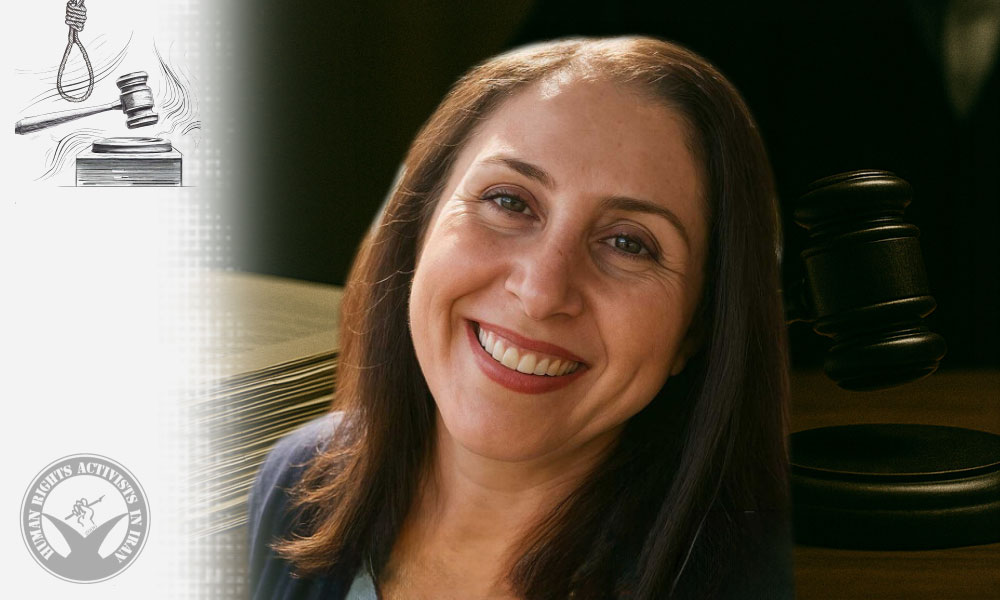
HRANA – At least eight imprisoned women are facing death sentences in various prisons across Iran. The sentences were issued in cases involving charges including “armed rebellion” (baghi), “enmity against God” (moharebeh), and “corruption on earth” (efsad-e fel-arz).

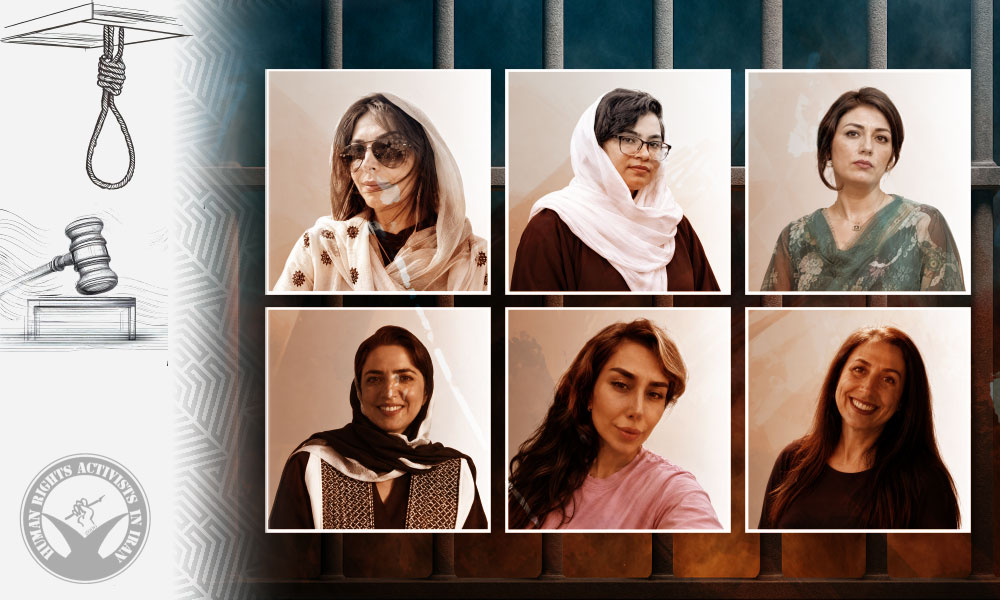
According to HRANA, a review of the judicial cases of imprisoned women shows that at least eight women in different parts of the country are facing death sentences.

These women include Pakhshan Azizi, Arghavan Fallahi, Zahra Shahbaz Tabari, Maryam Hodavand, Mahnaz Chardoli, Leila Abolhasani, Taraneh Rahimi, and Souda (Marzieh) Ebrahimi Shamsabadi.

Four of these women, Maryam Hodavand, Mahnaz Chardoli, Leila Abolhasani, and Taraneh Rahimi, have been sentenced to death in cases related to the protests of the January 2026. Souda (Marzieh) Ebrahimi Shamsabadi is also facing a death sentence in a case connected to security-related developments that occurred during the war. Pakhshan Azizi, Arghavan Fallahi, and Zahra Shahbaz Tabari have been sentenced to death in separate political and security-related cases.

These sentences were issued by various branches of the Revolutionary Courts in Tehran, Isfahan, Rasht, and Bandar Abbas. The judges who issued these sentences include Iman Afshari, Abolghasem Salavati, Vahid Hemmat-Nejad, Morteza Barati, Mohammadreza Tavakoli, Mohammad Ali Darvish-Goftar, and Judge Hajizadeh.

According to the latest available information, the death sentences of Pakhshan Azizi and Arghavan Fallahi have been upheld by the Supreme Court. Zahra Shahbaz Tabari, whose initial death sentence was overturned, has once again been sentenced to death by a parallel branch of the court. The death sentences in the cases of the other five women remain at the trial or appellate review stages.

The latest status and judicial proceedings in each of these prisoners’ cases are detailed below:

1. Pakhshan Azizi, held in Evin Prison, is one of the women sentenced to death in political and security-related cases. She was arrested in Tehran on August 4, 2023, and in August 2024, Branch 26 of the Tehran Revolutionary Court, presided over by Iman Afshari, sentenced her to death and four years in prison on the charge of “armed rebellion (baghi) through membership in groups opposed to the country.” Ms. Azizi’s death sentence was upheld by the Supreme Court in January 2025, and her requests for retrial have also been denied.
2. Arghavan Fallahi, another woman sentenced to death, is being held in Evin Prison. She was arrested in Tehran in February 2025, and her case was heard by Branch 15 of the Tehran Revolutionary Court, presided over by Judge Abolghasem Salavati. Ms. Fallahi was sentenced to death on the charge of “armed rebellion (baghi) through membership in groups opposed to the government and armed action.” The sentence against her was upheld by the Supreme Court in August 2026.
3. Zahra Shahbaz Tabari, 68, who is held in Lakan Prison in Rasht, is another woman sentenced to death in a political and security-related case. She was arrested at her home in Rasht in April 2025. Ms. Shahbaz Tabari was initially sentenced to death by Branch 1 of the Rasht Revolutionary Court, presided over by Judge Ahmad Darvish-Goftar, but the Supreme Court overturned the sentence. Her case was subsequently referred for retrial to Branch 2 of the Rasht Revolutionary Court, presided over by Mohammad Ali Darvish-Goftar. On April 14, 2026, the court again sentenced her to death on the charge of “armed rebellion (baghi) through membership and activity in an opposition group.”
4. Maryam Hodavand, 45 and a mother of two, is being held in Evin Prison. She was arrested in connection with the events of January 8, 2026, in Pakdasht, in a joint case involving three other defendants. Their case was heard by Branch 26 of the Tehran Revolutionary Court, presided over by Iman Afshari. Ms. Hedavand has been sentenced to death on charges including “participation in the killing of two Basij members,” “deliberately setting fire to a religious site,” “destruction of public property,” and “assembly and collusion against national security.” According to the latest available information, the sentence against her remains at the trial-court stage.
5. Mahnaz Chardoli, held in Qarchak Prison in Varamin, was prosecuted in a case related to the January 2026 protests in Tehran. She and Mehdi Nazer were tried in a joint case before Branch 15 of the Tehran Revolutionary Court, presided over by Judge Abolghasem Salavati. The charges against her include “attacking a mosque with a Molotov cocktail,” “participating in gatherings,” and “assembly and collusion.” According to available information, Ms. Chardoli has received an initial death sentence, but the status of the sentence before the Supreme Court has not yet been determined.
6. Leila Abolhasani, approximately 43 years old and the mother of two teenage daughters, is being held in Dowlatabad Prison in Isfahan. She was arrested on January 8, 2026, during protests in Shahin Shahr, Isfahan. Branch 5 of the Isfahan Revolutionary Court, presided over by Vahid Hemmat-Nejad, sentenced her to death on the charge of “enmity against God” (moharebeh). Following an appeal by her attorney, the case was referred to the Supreme Court for appellate review. A source close to her family previously told HRANA that the charge against Ms. Abolhasani stems from her presence at and filming of the scene of a fire at a store, while judicial authorities have accused her of involvement in setting the fire.
7. Taraneh Rahimi, another woman sentenced to death in connection with the January 2026 protests, is imprisoned in Dowlatabad Prison in Isfahan. She was arrested along with a number of protesters in Isfahan, and her case was heard as part of a case known as the “Isfahan Shohada Square” case. Branch 1 of the Isfahan Revolutionary Court, with Judges Morteza Barati and Mohammadreza Tavakoli presiding, sentenced Ms. Rahimi and nine other defendants to death and 11 years in prison each. The charges in the case include “enmity against God (moharebeh) through carrying a bladed weapon,” “destruction of public property,” “assembly and collusion,” and “propaganda activity against the regime.” Her sentence remains at the trial-court stage.
8. Souda (Marzieh) Ebrahimi Shamsabadi, 32, who is held in Bandar Abbas Prison, is the only woman on this list whose death sentence was issued in a case related to security developments during the war. She was arrested on March 29 by Ministry of Intelligence agents and was subsequently tried before the Bandar Abbas Revolutionary Court, presided over by Judge Hajizadeh. Ms. Ebrahimi Shamsabadi was sentenced to death on the charge of “corruption on earth” (efsad-e fel-arz), as well as charges including “insulting the Supreme Leader,” “media and propaganda activities contrary to national security,” “intelligence and security activities on behalf of hostile governments,” and “photographing a military site and sending the images to Persian-language media outlets based outside Iran.” The sentence against her remains at the initial trial stage.

Bita Hemmati and Varisheh Moradi: Death Sentences Overturned, Cases Remain Unresolved Pending Retrial

In addition to the eight women who, according to the latest available information, continue to face death sentences, the cases of Bita Hemmati and Varisheh Moradi are also noteworthy because both were previously sentenced to death and their judicial proceedings remain ongoing. The Supreme Court overturned both prisoners’ death sentences and referred their cases to parallel branches for retrial; however, the final outcomes of their cases remain undetermined.

Varisheh Moradi, who has been in detention since August 2023, was sentenced to death in late November 2024 by the Tehran Revolutionary Court, presided over by Judge Abolghasem Salavati, on the charge of “armed rebellion” (baghi). The Supreme Court overturned the sentence in late December 2025 and referred the case to a parallel branch for retrial. A retrial hearing in her case, which had been scheduled for July 2026 before Branch 15 of the Tehran Revolutionary Court, was canceled because Ms. Moradi did not appear. As of the time of this report, the final outcome of the retrial remains unknown.
Bita Hemmati, one of those arrested during the December 2025–January 2026 protests, was previously sentenced by Branch 26 of the Tehran Revolutionary Court, presided over by Iman Afshari, to death on the charge of “conducting operations on behalf of the hostile government of the United States and hostile groups,” and to five years in prison on the charge of “assembly and collusion against national security.” In June 2026, the Supreme Court overturned her death sentence and referred the case to a parallel branch for retrial. Ms. Hemmati, who was arrested in Tehran on January 9, 2026, is currently being held in the women’s ward of Evin Prison. HRANA’s investigations into the outcome of her retrial and her latest judicial status are ongoing.

Monthly Report – October 2025: Human Rights Situation in Iran

HRANA – This report reviews documented cases of human rights violations in Iran in October 2025, based on statistics compiled by HRANA, the news agency of Human Rights Activists in Iran. An unprecedented surge in executions, with 258 people executed this month, along with a new wave of arrests and home searches targeting Baha’is in Iran, and an increase in the arrest of children by security forces, were among the most significant human rights violations reported during this period.

Executions

In October, the Iranian regime executed 258 people, marking the highest number of executions since the beginning of this year. Among them, 220 were men and 7 were women.

Due to secret executions and the lack of reporting by state institutions and domestic media, the gender of 29 executed prisoners remains unknown.

Additionally, 10 of those executed were Afghan nationals, and two were juvenile offenders.

124 of the executed prisoners had been convicted of murder, and 122 on drug-related charges. Three individuals were executed on non-political “corruption on earth” (efsad-e fel-arz) charges, and one on the same charge with political grounds. Another significant point is the execution of six individuals on security-related charges, such as espionage. Also, one executed prisoner was convicted of rape.

During the same month, Iran’s judiciary also issued 11 new death sentences, including one for political activist Zahra Shahbaz Tabari, a 67-year-old woman, who was sentenced to death for alleged collaboration with anti-regime groups. Of the ten remaining individuals sentenced to death, seven were convicted of murder and three of enmity against God (moharebeh). Additionally, one individual was sentenced to public execution.

Prisoners’ Rights

In October, 16 political or religious prisoners were denied medical care. The most notable case was that of Motaleb Ahmadian, a political prisoner held in Evin Prison, who was deprived of medical treatment despite reporting in a recent letter that his pain and physical condition had worsened. In another case, delays in providing medical care led to the death of a non-political prisoner in Iranshahr Prison.

During this month, 103 prisoners went on hunger strike, the most significant being a six-day strike by inmates of Ghezel Hesar Prison in protest against the surge in executions.

HRANA also documented 49 cases of legal uncertainty for prisoners and detainees during October, along with 34 cases of punitive solitary confinement, two cases of prolonged solitary detention, and 30 instances in which families were denied information about the whereabouts or conditions of their detained relatives by security or judicial authorities.

Additionally, three cases of prisoner beatings and three forced confessions were reported. HRANA also recorded one case of suicide involving a female prisoner during October.

Kolbars and Fuel Carriers

In the past month, ten citizens were killed and six others injured as a result of indiscriminate shootings by military forces. These shootings claimed the lives of three kolbars (border porters) and injured one. Among fuel carriers (Sukhtbar), three were killed and four wounded. Additionally, one Kolbar in Baneh was injured by a landmine explosion.

Freedom of Thought and Expression

In the past month, Iran’s security apparatus arrested 55 individuals for expressing their opinions or exercising free speech. In this context, 25 people were summoned by security organizations, including six journalists from the Ham-Mihan newspaper, who were called in by the IRGC Intelligence Organization.

The homes of ten citizens were searched by security forces, the most notable case being the search of journalist Marzieh Rasouli’s home in Tehran.

In a clear violation of citizens’ freedom of expression, Iran’s judiciary sentenced 36 individuals to a total of 2,988 months in prison. Notable among these were Behfar Lalezari, sentenced to five years, and Shahin Zoghi Tabar, sentenced to ten years in prison.

In addition to prison terms, five people were sentenced to travel bans.
During the month, three prison sentences were carried out, eight court hearings were held, and nine individuals were subjected to social deprivations.

Additionally, citizens held eight protest gatherings, while one protest was prevented from taking place.

Workers’ Rights

In October, HRANA recorded 92 labor protests and 12 labor strikes across Iran. For participating in these protests, three workers from the Haft-Tappeh Sugarcane Company were summoned by the authorities.

According to HRANA’s reports, 45 workers lost their lives and 135 others were injured in workplace incidents resulting from non-compliance with occupational safety standards.

Trade associations and unions also held 102 protest gatherings and one strike by nurses, marking an increase compared to previous months.

In connection with these events, four individuals were arrested by security forces, and three others were summoned to court.

Additionally, 64 businesses were sealed for reasons such as “non-compliance with Islamic codes of conduct,” the most notable case being the closure of 16 establishments in Ahvaz.

Women’s Rights

In October, the murder of five women was reported. The most notable case was the killing of Zahra Ghaemi, a member of the Women’s Studies Group at the University of Tehran, who was murdered by her husband.

Children’s Rights

Regarding the rights and conditions of children in Iran, four cases of child arrests by security forces were reported.

HRANA also documented the arrest of children’s rights activist Hossein Mirbahari, and the closure of his organization, the Society for the Defense of the Rights of Working and Street Children, by security forces.

Additionally, the deaths of three children were reported as a result of neglect and official negligence. The deaths of three child laborers and the injury of five others were also reported.

Five other children were subjected to physical violence and corporal punishment, including the death of a 14-year-old student who suffered cardiac arrest after being forced to run as punishment.

The Iranian regime also executed two juvenile offenders, including Ali Aghajari, who was arrested five years ago at the age of 17 following a group altercation over farmland that resulted in one person’s death.

Additionally, the suicide of a 12-year-old child was reported in Shiraz.

Zahra Shahbaz Tabari, Political Prisoner from Rasht, Sentenced to Death

HRANA – Zahra Shahbaz Tabari, a 67-year-old political prisoner from Rasht, has been sentenced to death by Branch 1 of the city’s Revolutionary Court on the charge of “collaboration with anti-regime groups,” based on highly limited and unreliable evidence.

Her trial was held last week via video conference, during which Judge Ahmad Darvish issued the death verdict. According to her family, the entire judicial process was “symbolic and unlawful.”

Her child told HRANA: “The hearing lasted less than ten minutes. My mother had no meaningful access to an independent lawyer. The court-appointed attorney confirmed and signed the verdict without any defense. The whole trial was a show.” They added, “My mother has never had any connection with political or opposition groups; the charges against her are entirely fabricated.”

According to the family, Zahra Shahbaz Tabari was arrested on April 17, 2025, at her home by security agents and later transferred to Lakan Prison in Rasht. During the arrest, the agents searched her home and confiscated her and a family member’s mobile phones and laptop.

The family reports that the alleged evidence in the case is extremely limited and unreliable, including “a piece of fabric bearing the slogan ‘Woman, Resistance, Freedom’” and “an unpublished voice message,” with no proof of organizational or military links. Her child noted that authorities even attempted to accuse her of possessing weapons, claims the family described as “ridiculous and baseless,” particularly given her age and background.

Zahra Shahbaz Tabari is an electrical engineer, a member of the Iranian Engineering Organization, and a graduate of Isfahan University of Technology. She holds a master’s degree in Sustainable Energy from Borås University in Sweden. Her family stated that she was previously arrested for posting peaceful content on social media and was released after three months under electronic monitoring.

In a letter sent by her child to HRANA, they wrote: “She has been detained for about six months or more. The trial was virtual, and the judge announced the death sentence with a smile in a ten-minute session. The appointed lawyer also smiled upon hearing the verdict.” The letter describes severe due process violations and a lack of real evidence, calling the verdict “another example of human rights violations in the Islamic Republic.”

The family added that judicial authorities have accused Ms. Shahbaz Tabari of collaborating with the People’s Mojahedin Organization of Iran (MEK), and they have been given seven days to appeal the verdict. Her son’s letter concludes: “We will do everything we can,” calling on human rights organizations, media, and the public for urgent attention and action.