International Workers’ Day: A Year in Review of Iranian Workers’ Conditions

HRANA – May 1st marks International Workers’ Day, offering another opportunity to reflect on the condition of the country’s labor community and their numerous challenges, particularly regarding wages and salaries, unpaid wages, workplace safety, and the right to form labor unions.

According to a report by HRA’s Statistics and Documents Center, based on a review of labor-related reports published over the past 12 months (from May 1, 2025 to April 28, 2026), at least 5,019 workers were reported injured or killed in workplace incidents during this period by media outlets or organizations active in this field.

At least 586 workers lost their lives in workplace incidents during this period. Authorities and relevant institutions reported 284 deaths in 10 official reports, while independent organizations collected and updated 302 additional cases of worker fatalities that had not been mentioned in official statements.

At least 4,433 workers were also injured in workplace accidents. In 9 official reports or statements at national and provincial levels, authorities announced that 3,846 individuals had been injured. In addition, 587 other cases were documented and reported by civil or labor organizations.

Despite the significance of these figures, it should be noted that, due to the lack of transparency in reporting by responsible institutions and officials, the majority of workplace incidents go unreported in the media.

Most workers in Iran operate under conditions lacking job security and adequate insurance coverage. A shortage of inspectors and weak safety infrastructure have created serious challenges in the registration and prevention of occupational accidents.

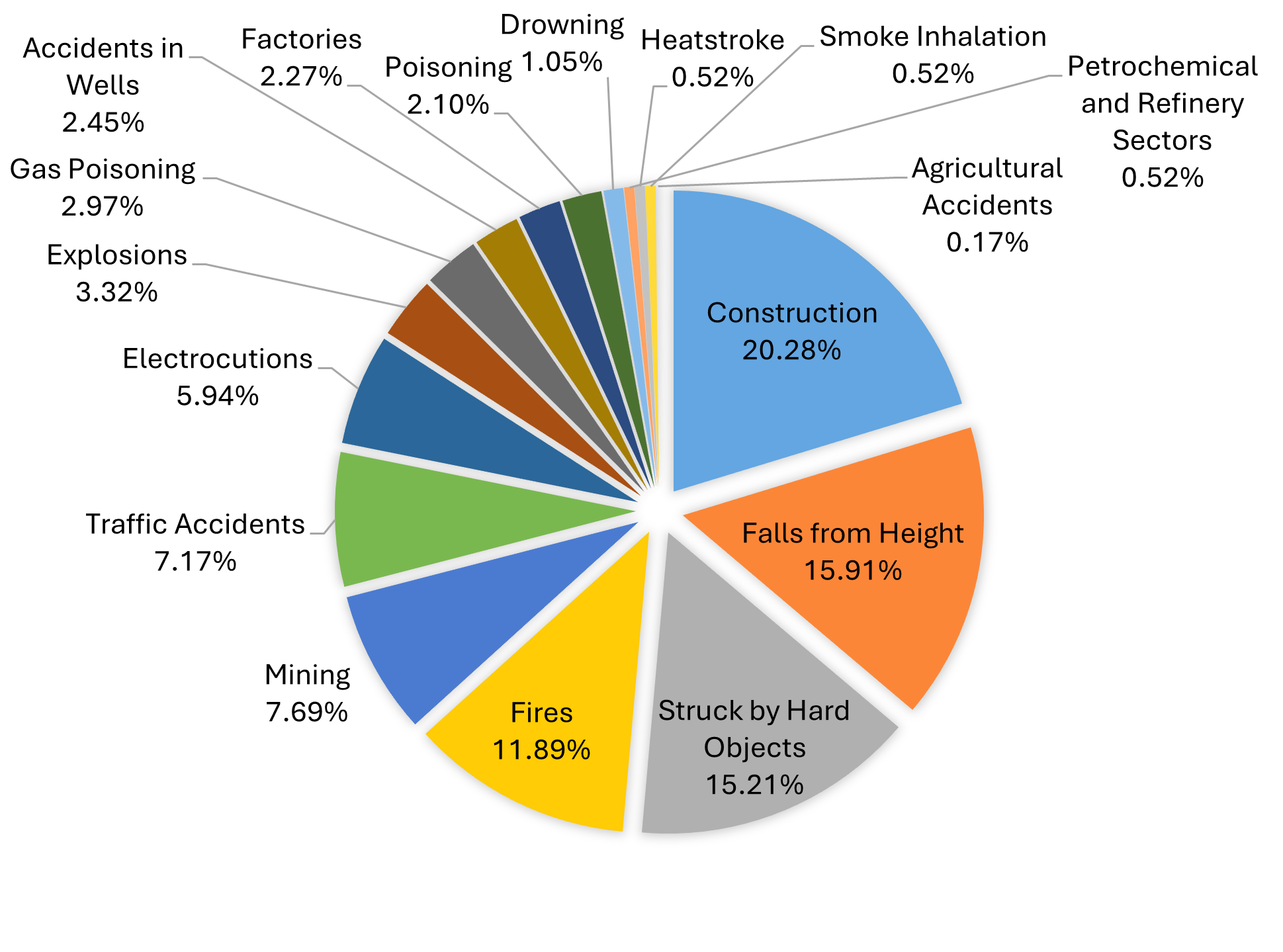
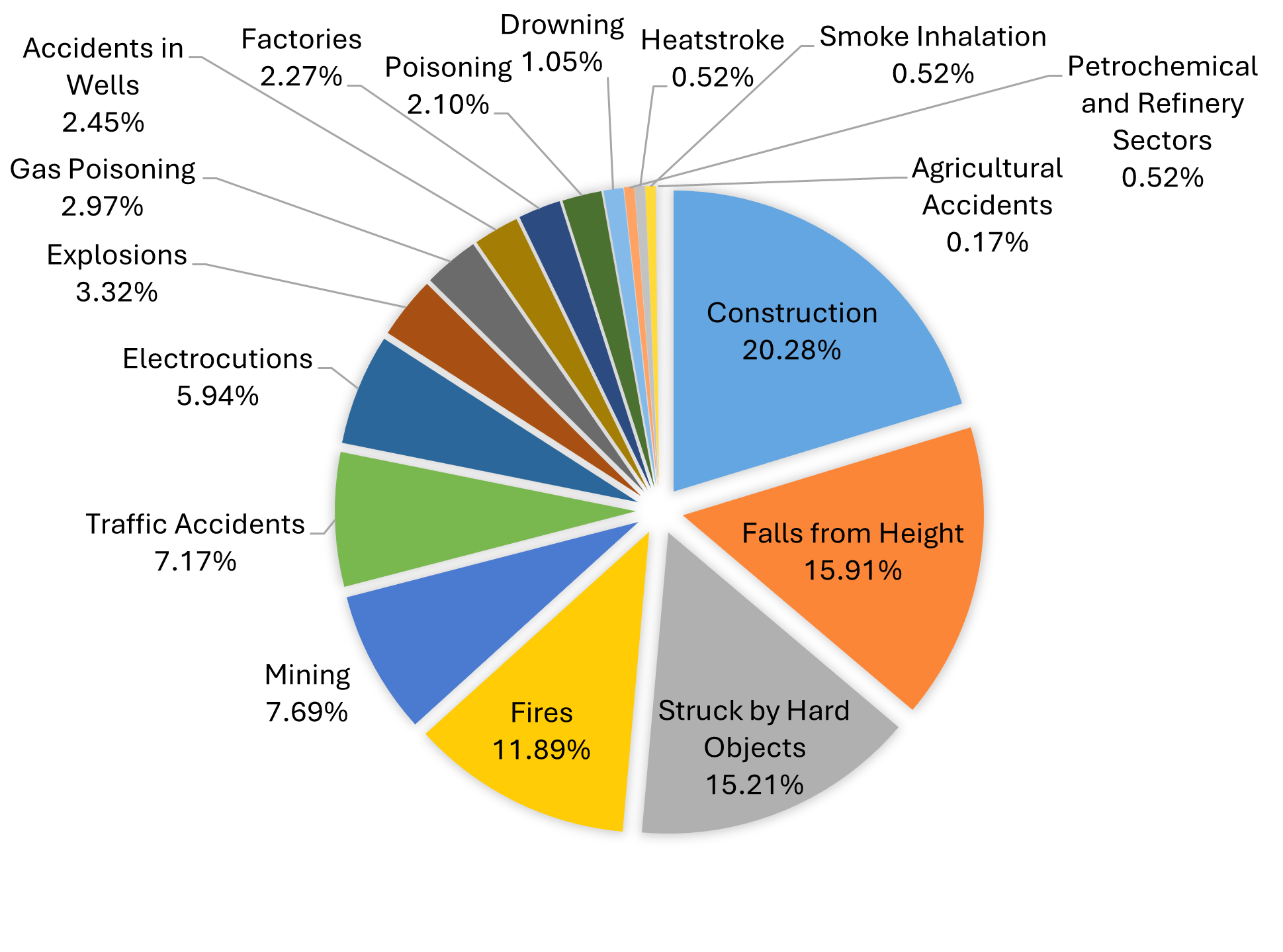
As shown in the chart below, based on the data collected by HRA’s Statistics And Documents Center, the causes of these incidents are distributed as follows: 20.28% construction-related accidents, 15.91% falls from height, 15.21% struck by hard objects, 11.89% fires, 7.69% mining incidents, 7.17% traffic accidents, 5.94% electrocutions, 3.32% explosions, 2.97% gas poisoning, 2.45% accidents in wells, 2.27% in factories, 2.10% poisoning, 1.05% drowning, 0.52% heatstroke, 0.52% smoke inhalation, 0.52% in petrochemical and refinery sectors, and 0.17% agricultural accidents.

Workplace Accident Categorization Chart

According to data compiled by HRA’s Statistics and Documents Center, at least 613 months of unpaid wages have been recorded across 119 industrial and service units.

Breakdown of Wage Arrears by Sectors
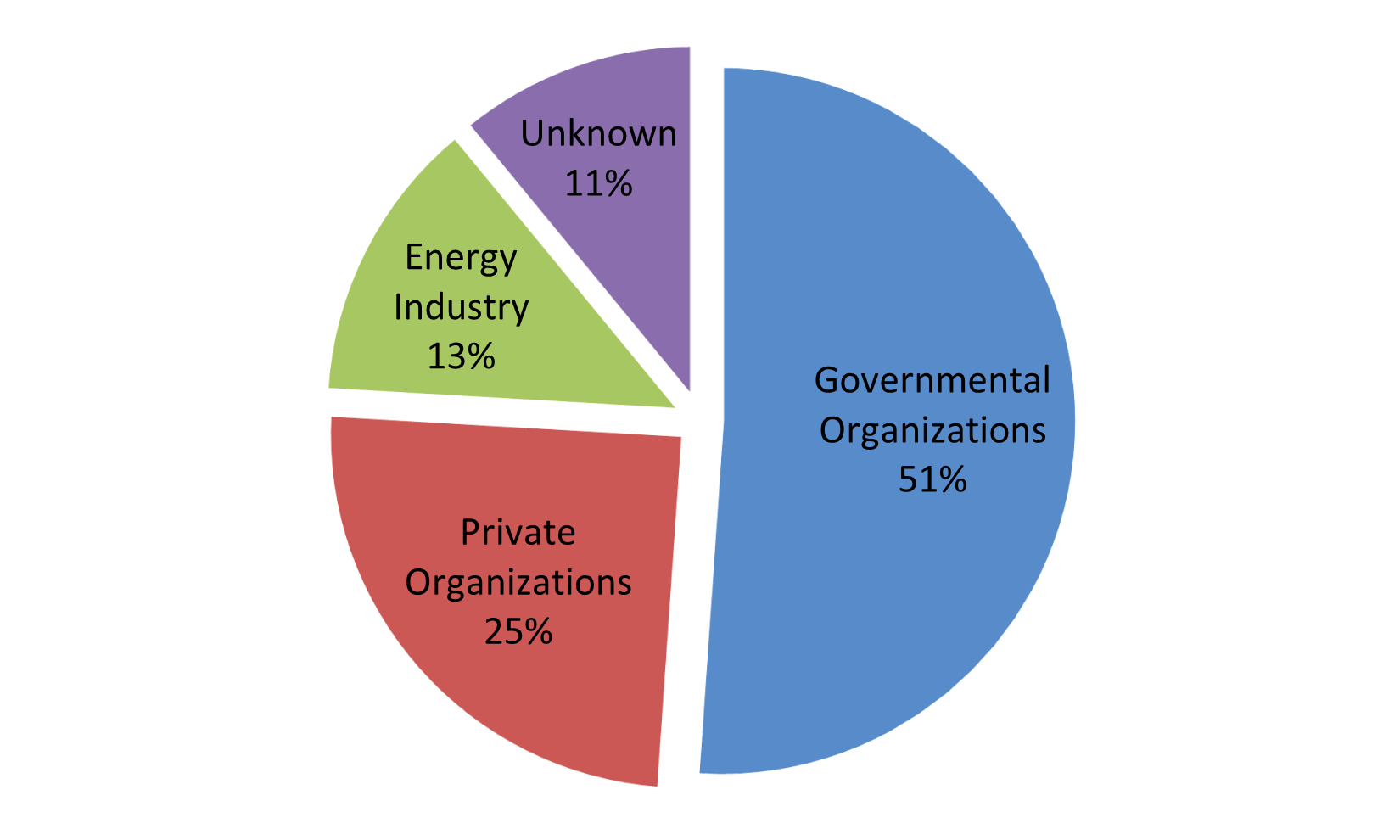
Based on reports collected by this organization’s statistics department, 51% of wage arrears are related to government entities, 25% to private sector organizations, 13% to the energy sector, and 11% remain unspecified.

Estimates indicate a high level of protest activity within the labor community; however, over the past year, only a portion of these protests, specifically 682 labor gatherings and 691 guild-related gatherings, have been reported by media outlets or civil society organizations. Compared to the previous year, guild-related gatherings decreased by 39.6%, while labor gatherings declined by 7.5%.

Among the most significant events in Iran over the past year were protests by workers of the Middle East Sugarcane Agro-Industry Company, the Karkheh Mianab Sugarcane Agro-Industry Company, railway technical and infrastructure workers, the National Iranian Steel Industrial Group, the Qalat Ghareh Oil Company, as well as guild-related protests by teachers, retirees, and Social Security pensioners.

Over the past 12 months, various cities across Iran have witnessed diverse forms of protest actions by workers. A wide range of workers have taken to the streets due to non-payment of their monthly wages and the neglect of their insurance-related demands. Some of these workers have gone on strike and protested after going as long as 30 months without receiving their pay. In total, 383 labor strikes and 39 guild-related strikes took place. Labor strikes decreased by 72.1%, while guild-related strikes declined by 43.4%.

Workers’ ability to organize in Iran to pursue their demands faces legal challenges and state repression. Repression, obstruction, and the refusal to recognize the rights of trade unions and independent labor organizations, along with the imprisonment and issuance of prison sentences for several labor activists, as well as restrictions on the right to protest, have contributed to the fragmentation and disorganization of some labor gatherings and protests.

In Iran, labor organizations do not exist in the conventional global sense, and independent groups such as the Syndicate of Workers of the Tehran and Suburbs Bus Company, the Haft Tappeh Sugarcane Workers’ Syndicate, the Coordinating Council of Teachers’ Union Organizations, and the Free Union of Iranian Workers face security and political charges.

Many workers have been arrested or sentenced on charges such as organizing peaceful gatherings and protesting low wages. Over the past 12 months, at least 10 workers and labor activists have been arrested. Among the most notable cases are the arrests of several workers from the Isfahan Steel Company and five workers from the Middle East Sugar Factory in Shush.

It is also worth noting that Sharifeh Mohammadi and Mehran Raouf are among the prominent labor activists currently imprisoned, alongside union activists such as Asghar Amirzadegan, Ahmad Alizadeh, and Mohammad Hassan Davoudi.

In addition, one can point to the sentencing of two labor activists to a total of 75 months of discretionary imprisonment and fines amounting to 30 million tomans, two cases of self-immolation, the trial of two individuals, the summoning of nine individuals to judicial and security authorities, the closure of 10 factories, 2,922 cases of dismissal and workforce reduction, 114,954 cases of unemployment, 839,953 instances of workers lacking insurance coverage, and 3,806 cases of employment uncertainty.

Furthermore, in the area of unions and union/guild activities, a total of 40 arrests of union activists, 317 months of discretionary imprisonment and 3 months of suspended sentences, 24 cases of deprivation of social rights, 148 lashes, fines totaling 359.1 million tomans, and 120 months of internal exile for 67 union activists were reported. Additionally, there was 1 case of travel ban, 16 trials in judicial authorities, 43 summonses to judicial-security bodies, 195 cases of business closures (sealings), 18 cases of dismissal and workforce reduction, at least 105 months of unpaid wages, 407 cases of forced retirement, 8 house searches, 4 sentence enforcements, 2 cases of physical assault, and 1 case of self-immolation.

Over the past year, teachers and education sector workers, both active and retired, across various cities and provinces in the country staged protest gatherings and strikes in response to the failure to address their demands. In total, 40 gatherings were recorded. Over the past year, 32 cases of arrest, 37 summonses, 16 trials in judicial authorities, 4 instances of sentence enforcement, 18 cases of dismissal, workforce reduction, and bans from teaching, as well as 7 cases of forced retirement among teachers, were documented.

Additionally, 64 teachers and activists in this field were sentenced to a total of 269 months of discretionary imprisonment and 3 months of suspended sentences, 74 lashes, 23 cases of deprivation of social rights, and fines amounting to 359.1 million tomans.

The head of the National Association of Union Organizations of Construction Workers reported a worsening state of uncertainty and deteriorating living conditions for this group due to wartime circumstances. Akbar Shokat stated: “The most important issue for construction workers is employment. Many of them work on a daily wage basis and rely on just a few days of work per week to cover their living expenses. However, under current conditions, even these limited opportunities have declined, and their livelihoods are facing serious challenges. Wartime conditions have led to the closure of many workshops, and rising prices—especially in the steel sector—have further reduced employment in this field.”

A workers’ representative in the Supreme Labor Council announced that the cost of a basic livelihood basket for a worker’s household this year has reached approximately 40 to 45 million tomans per month, while the minimum income of workers is around 15 million tomans. This highlights a significant gap between income and living expenses. According to Mohammadreza Tajik, to bridge this gap, the minimum wage would need to increase by 17 million tomans to reach around 31 million tomans. Even with a 100% wage increase, workers’ livelihood problems would not be fully resolved, and wage-setting should be based on preserving purchasing power rather than merely percentage increases.

The executive secretary of the Workers’ House in Rey, referring to the sharp rise in healthcare costs and deficiencies in the supplementary insurance of the Social Security Organization, stated that in recent months, increasing imposed and unlawful medical expenses have become a problem worse than the illness itself for many retirees and workers. Mohammadali Torkashvand added that the ability to pay for medical expenses has become impossible for many. He further noted that the “Obligation Plan” of the Social Security Organization, one of its core responsibilities, has not been properly implemented for years. If properly enforced, there would be no need for supplementary insurance, and many healthcare-related problems of retirees would be resolved.

The executive secretary of the Workers’ House in Qazvin stated that today, workers remain hungry despite working double shifts. Wages are not aligned with current inflation, and with daily price changes, 70 to 80 percent of workers’ income is spent on food. Eydali Karimi added that housing allowance is only 900,000 tomans, while in many cases, an entire worker’s salary is spent on rent. Workers and retirees are also under severe pressure from medical costs, with even a simple surgery now costing over 100 million tomans.

Ali Moghaddasi-Zadeh, head of the Coordinating Council of Islamic Labor Councils of South Khorasan, stated that in mining cities such as Tabas and Eastern Alborz, there are still no Social Security hospitals. According to him, this has forced mine workers, who earn very low wages, to bear heavy medical costs in public and private hospitals in the event of accidents. Moghaddasi-Zadeh identified the main cause of this situation as the “existing Social Security law,” explaining: “According to current regulations, a dedicated hospital will not be built until the number of insurance booklets reaches 100,000, whereas in Tabas alone, at least 11,000 workers and their families require insurance services.” He emphasized that this law must be revised so that workers can access Social Security healthcare services in their place of residence.

The prohibition of child labor and the provision of free education for children, the establishment of the highest safety standards in work environments, and the removal of discriminatory laws against women and migrant workers are among the key demands of the labor community.

Despite being described as the cheapest labor force in the country, Iranian women workers face worse employment conditions than men and receive fewer legal protections, rights, and benefits.

At the same time, women workers have less bargaining power compared to their male counterparts. Moreover, production and industrial units show less willingness to hire married women, and in some cases employ single women under commitments not to marry or become pregnant.

The situation of women workers in small workshops is significantly worse. Women make up half of the workforce in brick kilns, where they work under extremely harsh conditions.

In Iran, International Workers’ Day arrives at a time when the privatization of factories and state-owned companies continues without regard for the long-term interests of workers, a trend that has led to widespread labor protests.

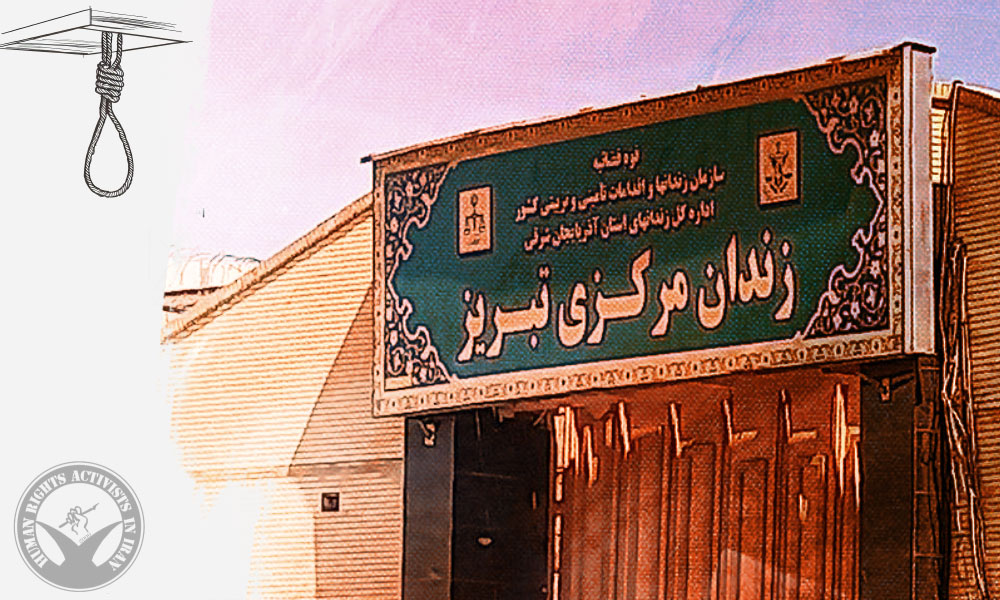
January Protests: Death Sentence of Sasan Azadvar Junaqani Upheld by Supreme Court

HRANA – The death sentence of Sasan Azadvar Junaqani, who was arrested during the January 2026 protests and is currently being held in one of the solitary confinement cells of Dastgerd Prison in Isfahan, has been upheld by the Supreme Court.

Based on information received by HRANA, his death sentence was upheld by the Supreme Court some time ago. Additionally, yesterday his family was summoned to the prison and met with him.
A family member, in an interview with an HRANA journalist, described the meeting as a “last visit,” adding: “Given that Azadvar is being held in solitary confinement, his family is deeply concerned about his condition.”

Sasan Azadvar Junaqani was arrested on January 1, 2026, during nationwide protests in Isfahan. He was later tried in March 2026 by Branch One of the Isfahan Revolutionary Court, presided over by Seyed Mahmoud Kazemzadeh, with advisor Mohammad Vakili.

On March 17, 2026, his verdict was issued. He was sentenced to death on charges of moharebeh, including:
(a) effectively inciting military forces to desert and refuse to carry out their duties during unrest with the intent to oppose the regime and overthrow the government;
(b) destruction of public property and disruption of public order.

He was also sentenced to 15 months in prison for “propaganda against the system,” 7 years in prison for “inciting or provoking people to engage in war and killing one another with the intent to disrupt national security,” including encouraging unrest in public and online spaces, 25 months in prison for insulting the Supreme Leader.

Sasan Azadvar Junaqani, 21, is a karate athlete and a resident of Isfahan.

It should be noted that following the onset of military conflict between the United States–Israel and Iran on February 28, 2026, the issuance and implementation of death sentences against prisoners facing political and security-related charges have intensified, driven by an expedited judicial process.

It should be noted that protests and strikes by shopkeepers and bazaar merchants began in Tehran on Sunday, December 28, 2025, and within two days spread beyond markets and commercial centers. With the participation of students, citizens, and various social groups, these protests became one of the largest protest movements of recent years. Following the crackdown by security and law enforcement forces, thousands were killed or injured, and tens of thousands were arrested or summoned by security agencies. For more information, readers may refer to HRANA’s comprehensive report titled “Crimson Winter,” documenting the first fifty days following the outbreak of Iran’s nationwide protests.

Three Prisoners Executed in Tabriz Prison

HRANA – The death sentences of three prisoners in Tabriz Prison, who had previously been convicted on charges related to drug offenses and murder, have been carried out.

According to a report by the Iran Human Rights Organization, on the morning of Sunday, April 19, 2026 , a woman named Hanifeh Avandi was executed in Tabriz Prison. She had previously been sentenced to death on a murder charge. Additionally, on the morning of Wednesday, April 22, 2026, two other prisoners, Akbar Molaei, 38, and Javad Abedi, 41, were executed in the same prison. They had been tried in a joint case on charges related to drug offenses.

The report further states that Hanifeh Avandi was forced into marriage at a young age under family pressure and, about five years ago, after a period of married life, killed her husband. A prison doctor, referring to her mental condition, stated that she had suffered from psychological issues during her imprisonment and had been under medical supervision. The doctor also emphasized that she had been in unfair circumstances and should not have been sentenced to death.

According to the report, Akbar Molaei and Javad Abedi were arrested about three years ago on charges of transporting and possessing four kilograms of narcotics (methamphetamine and heroin) and were sentenced to death by the Revolutionary Court of Tabriz. It has been reported that Akbar Molaei had a 7-year-old child.

According to HRA’s Annual Report, in 2025 at least 2,063 citizens, including 61 women and 2 juvenile offenders, were executed. Of these, the sentences of 11 individuals were carried out in public. During the same period, 172 other individuals were sentenced to death.

Legal Case Filed Against Lawyers Amir Raisian and Milad Panahipour Following Case Disclosure

HRANA – Following the disclosure of information about the case of Ehsan Hosseinipour, a detainee from the January 2026 protests who has been sentenced to death, a judicial case has been opened against Amir Raisian and Milad Panahipour, both attorneys, in Branch 3 of the Tehran Security Prosecutor’s Office.

According to Etemad, a judicial case has been filed against the two lawyers. Based on the report, this action came after the two attorneys posted on their Instagram pages in February of 2026, stating that “Branch 26 of the Revolutionary Court had prevented the chosen lawyer from accessing the case of Ehsan Hosseinipour.”

Mahmoud Behzadi-Rad, Amir Raisian’s lawyer, announced: “In Branch 3 of the Security Prosecutor’s Office, Mr. Raisian has been charged with spreading falsehoods for informing the public about Ehsan Hosseinipour’s case, and with propaganda against the regime for signing a protest statement by 49 attorneys in February.” He added that the public disclosure was intended to prevent the violation of the rights of a defendant facing the death penalty, and that signing the statement was within professional duties and in defense of the right to a fair trial for detainees.

Mostafa Nili, the lawyer for Milad Panahipour, also stated that his client faces similar charges, including spreading falsehoods and propaganda against the state.

According to the report, Messrs. Raisian and Panahipour were released on bail after appearing at Branch 3 of the Security Prosecutor’s Office and being formally charged, pending further proceedings. Despite the case being opened, they have still been denied access to their client’s case file.

It is worth noting that some time ago, Ehsan Hosseinipour Hesarloo, along with several other citizens, including Matin Mohammadi, Erfan Amiri, and Maryam Hodavand, was sentenced to death by Iman Afshari, judge of Branch 26 of the Tehran Revolutionary Court. These sentences were issued on charges including “participation in the killing of two Basij members,” “intentional arson of a religious site,” “destruction of public property,” and “assembly and collusion against national security.”

Baha’i Couple Still Detained Without Charges in Shiraz

HRANA – Nearly one month after the arrest of Romina Khazali and her husband, Behzad Yazdani, this Baha’i couple residing in Shiraz remains in a state of uncertainty in Adel-Abad Prison in the city. Ms. Khazali, who suffers from multiple medical conditions, has been deprived of access to her necessary medications.

A source close to the couple’s family, confirming the news, told HRANA: “Before her arrest, Ms. Khazali had undergone stomach surgery and also suffered from conditions such as severe migraines, eye pressure, and back pain. In a recent brief call with her family, she said that her essential medications have run out. However, the medications sent by her family have not been accepted by prison authorities, which has heightened concerns about her health. Romina Khazali is only allowed a 30-second phone call with her family per week. She still does not have access to a phone card and has not been allowed to purchase items from the prison store.”

The source further added: “No interrogation session has been held for these individuals so far, and they remain unaware of the charges against them and the reasons for their arrest.”

Behzad Yazdani was arrested on the evening of March 28, 2026, and his wife, Romina Khazali, was arrested on March 29, 2026, by IRGC intelligence agents at their home in Shiraz.

Romina Khazali, a painter, and Behzad Yazdani, a translator and editor, are a Baha’i couple living in Shiraz and the parents of two teenage children, a daughter and a son.

Subscribe to Our Newsletter

Now is definitely not the time to stop reading!

Four Individuals Arrested by the IRGC on Security Charges in Kurdistan

HRANA – In an official statement, IRGC announced the arrest of four individuals on security-related charges in Kurdistan Province. According to the statement, weapons, ammunition, and Starlink satellite equipment were seized from those detained.

According to Asr Iran, in a statement, the IRGC’s information base said: “The Hamzeh Seyyed al-Shohada Headquarters of the IRGC Ground Forces arrested these individuals, who are members of opposition groups, on April 267, 2026.” It added that “anti-security items such as Kalashnikov rifles, handguns, ammunition, grenades, fake identification documents, and Starlink satellite equipment were discovered and confiscated from them.”

The statement further claimed, without providing additional details such as the identities of the individuals, that the detainees intended to carry out “terrorist” actions.

January Protests: Report on the Latest Status of Ilya Ben-Rashid in Dastgerd Prison, Isfahan

HRANA – Ilya Ben-Rashid, one of those arrested during the January protests in Shahin Shahr, has been in detention for nearly 100 days and is currently being held in Dastgerd Prison in Isfahan. Recently, a court session was held to address the charges against him, including moharebeh (enmity against God), at the Isfahan Revolutionary Court.

An informed source confirmed to HRANA: “In early April, a court session reviewing Ilya’s charges was held via video conference at Branch 5 of the Isfahan Revolutionary Court. He faces charges including moharebeh through alleged involvement in the destruction of public property, assembly and collusion to commit crimes against national security, and propaganda against the regime. During the session, he defended himself against these accusations.”

The source added: “Ilya has lost both of his parents and, prior to his arrest, lived with his grandparents. Given their advanced age, pursuing his legal case has become difficult. Additionally, Ilya has been denied access to a lawyer of his choice.”

Mr. Ben-Rashid was arrested on January 22, 2026, in connection with the nationwide protests in Shahin Shahr, Isfahan. He was later formally charged on February 21, at Branch 2 of the Public and Revolutionary Prosecutor’s Office in Shahin Shahr.

Ilya Ben-Rashid is 22 years old and a resident of Shahin Shahr, Isfahan.

Political Prisoner Vahid Chavaran at Risk of Vision Loss Amid Lack of Medical Treatment in Prison

HRANA – Vahid Chavaran, a political prisoner, has been serving his sentence in exile in Zahedan Prison since May of 2025. Despite suffering from physical health issues, he has been deprived of proper medical care and family visits.

An informed source close to Chavaran’s family confirmed the situation to HRANA, stating: “Vahid is suffering from an eye condition in Zahedan Prison and, due to the lack of specialized medical care, he faces a serious risk of losing his eyesight. Doctors have emphasized the need to transfer him to a hospital for specialized treatment, but prison authorities have so far prevented this.”

According to the same source, in addition to being denied medical services, Vahid Chavaran has also been deprived of the right to family visits.

In May of last year, Vahid Chavaran was transferred from Ilam Prison to Zahedan Prison to serve his 12-year sentence in exile.

He had previously been sentenced by Branch 1 of the Ilam Revolutionary Court to 12 years of imprisonment in exile on charges including participation in moharebeh (enmity against God) through the use of a light automatic firearm, disruption of public order, and insulting the Supreme Leader.

Vahid Chavaran was arrested on June 23, 2023, while attempting to leave the country. He was later transferred to The Ministry of Intelligence’s detention facility in Ilam, and after the interrogation process, he was eventually moved to Ilam Prison.

Student Fariborz Kohanzad Arrested

HRANA – Fariborz Kohanzad, an undergraduate electrical engineering student at Sharif University of Technology, has been arrested by security forces and taken to an undisclosed location.

According to HRANA News Agency, citing the United Students Telegram channel, Mr. Kohanzad was arrested by security forces and transferred to an unknown location. As of the time of this report, no information is available regarding the reasons for his arrest or the charges brought against him.

The report does not provide further details, including the date or location of his arrest.

Fariborz Kohanzad has previously been arrested and faced judicial actions due to his activities.

World Day for Safety and Health at Work: One-Year Statistical Report on Workplace Accidents in Iran

HRANA – On the occasion of World Day for Safety and Health at Work, the Human Rights Activists in Iran have examined the situation of workplace accidents caused by unsafe environments or working conditions over the period from 3 May 2025 to 27 April 2026.

According to data compiled by the organization’s statistics department, during this period, at least 586 workers lost their lives and at least 4,424 workers were injured due to workplace accidents resulting from unsafe environments or working conditions.

In 2003, the International Labour Organization (ILO), after extensive review, designated April 28 as World Day for Safety and Health at Work. The aim is to raise awareness about occupational safety and health, with an emphasis on preventing workplace accidents and diseases. In effect, it is an international campaign highlighting the importance of improving workplace safety and its impact on reducing work-related fatalities. Accordingly, governments are required to develop systematic policies and programs to monitor and enforce compliance with occupational safety and health regulations. It is also noteworthy that since 1996, labor unions worldwide have marked this day as a global day of remembrance for workers killed or injured on the job.

According to HRA’s Statistics And Documents Center, based on reports published over the past 12 months, the deaths of at least 586 workers due to workplace accidents linked to unsafe conditions have been reported by media outlets or relevant organizations.

In addition, 4,424 cases of work-related injuries have been reported and compiled by the organization’s statistics department.

Among the most tragic and notable incidents of the past year are: the deaths of 9 workers in a fire at an industrial workshop in Borkhar, located in Isfahan province; the poisoning of 17 workers by carbon monoxide gas in a cold storage facility in Fariman, Razavi Khorasan Province; the death and injury of 13 workers in a fire at the Kaveh Methanol Petrochemical plant; and the death and injury of 3 miners following a coal mine collapse in Nahroudbar, located in Mazandaran Province.

Based on the data collected by HRA’s Statistics And Documents Center, the causes of these incidents are distributed as follows: 20.28% construction-related accidents, 15.91% falls from height, 15.21% struck by hard objects, 11.89% fires, 7.69% mining incidents, 7.17% traffic accidents, 5.94% electrocutions, 3.32% explosions, 2.97% gas poisoning, 2.45% accidents in wells, 2.27% in factories, 2.10% poisoning, 1.05% drowning, 0.52% heatstroke, 0.52% smoke inhalation, 0.52% in petrochemical and refinery sectors, and 0.17% agricultural accidents.

Workplace Accident Categorization ChartWorkplace Accident Categorization Chart