International Workers’ Day: A Year in Review of Iranian Workers’ Conditions

HRANA – May 1st marks International Workers’ Day, offering another opportunity to reflect on the condition of the country’s labor community and their numerous challenges, particularly regarding wages and salaries, unpaid wages, workplace safety, and the right to form labor unions.

According to a report by HRA’s Statistics and Documents Center, based on a review of labor-related reports published over the past 12 months (from May 1, 2025 to April 28, 2026), at least 5,019 workers were reported injured or killed in workplace incidents during this period by media outlets or organizations active in this field.

At least 586 workers lost their lives in workplace incidents during this period. Authorities and relevant institutions reported 284 deaths in 10 official reports, while independent organizations collected and updated 302 additional cases of worker fatalities that had not been mentioned in official statements.

At least 4,433 workers were also injured in workplace accidents. In 9 official reports or statements at national and provincial levels, authorities announced that 3,846 individuals had been injured. In addition, 587 other cases were documented and reported by civil or labor organizations.

Despite the significance of these figures, it should be noted that, due to the lack of transparency in reporting by responsible institutions and officials, the majority of workplace incidents go unreported in the media.

Most workers in Iran operate under conditions lacking job security and adequate insurance coverage. A shortage of inspectors and weak safety infrastructure have created serious challenges in the registration and prevention of occupational accidents.

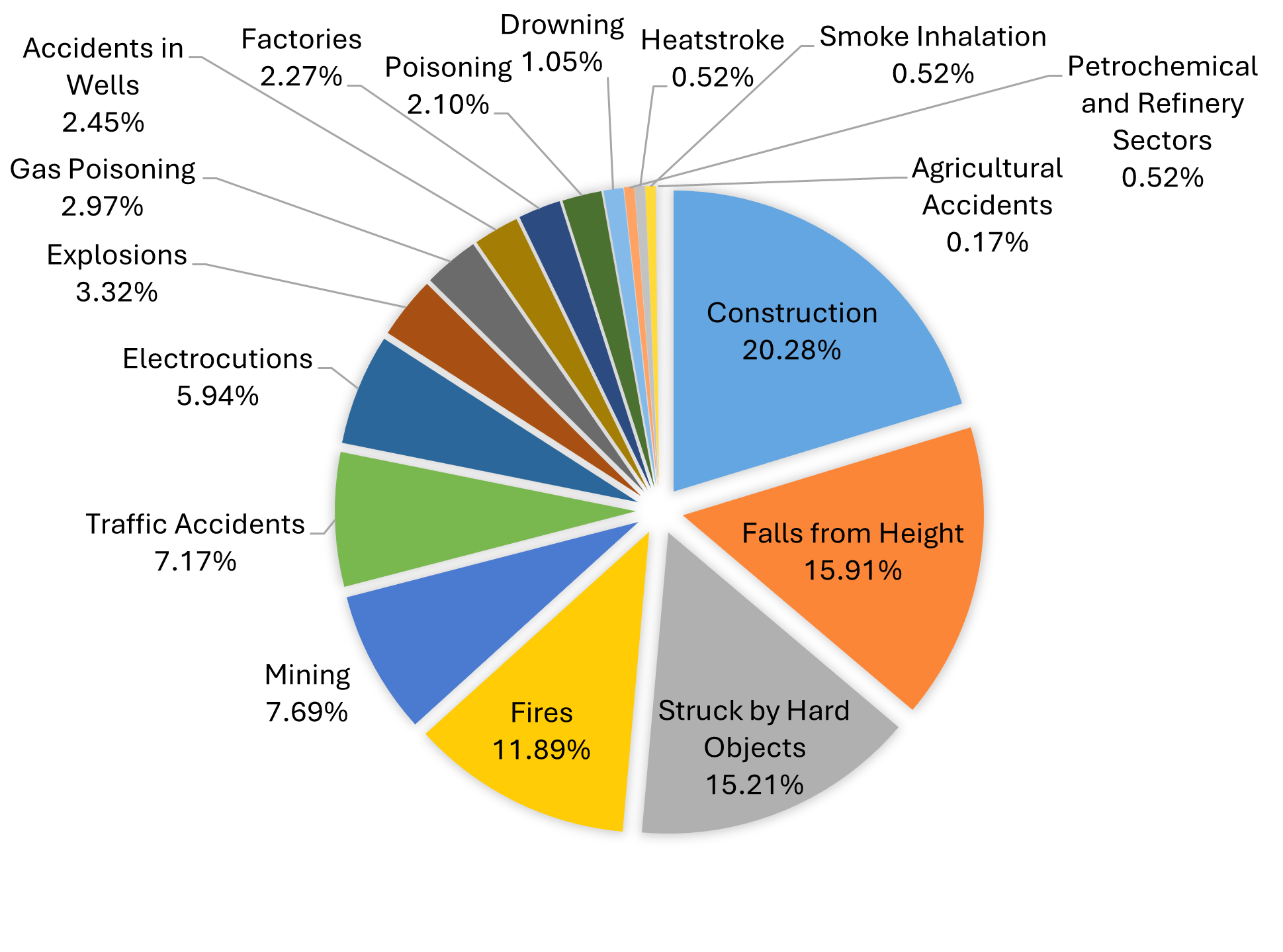
As shown in the chart below, based on the data collected by HRA’s Statistics And Documents Center, the causes of these incidents are distributed as follows: 20.28% construction-related accidents, 15.91% falls from height, 15.21% struck by hard objects, 11.89% fires, 7.69% mining incidents, 7.17% traffic accidents, 5.94% electrocutions, 3.32% explosions, 2.97% gas poisoning, 2.45% accidents in wells, 2.27% in factories, 2.10% poisoning, 1.05% drowning, 0.52% heatstroke, 0.52% smoke inhalation, 0.52% in petrochemical and refinery sectors, and 0.17% agricultural accidents.

Workplace Accident Categorization Chart

According to data compiled by HRA’s Statistics and Documents Center, at least 613 months of unpaid wages have been recorded across 119 industrial and service units.

Breakdown of Wage Arrears by Sectors
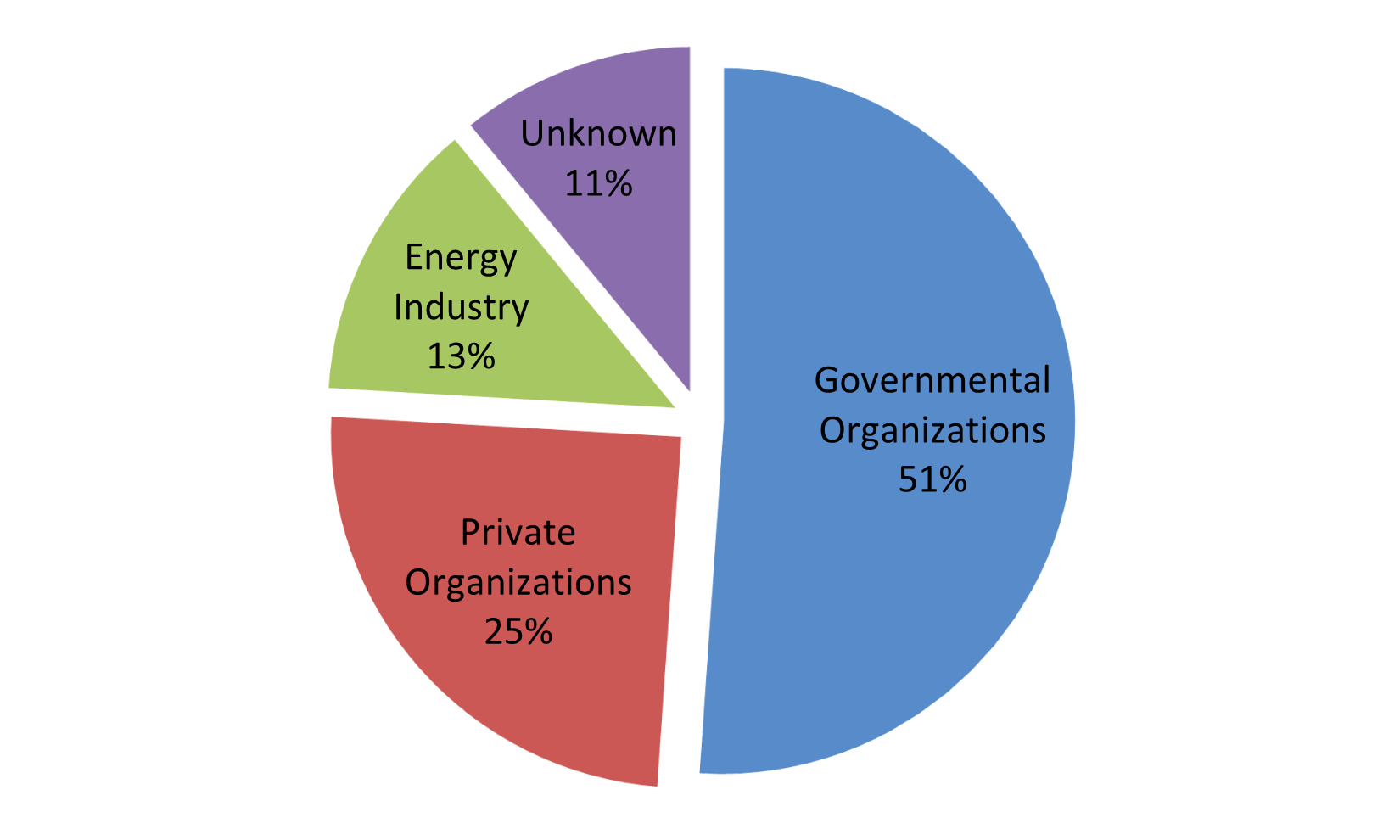
Based on reports collected by this organization’s statistics department, 51% of wage arrears are related to government entities, 25% to private sector organizations, 13% to the energy sector, and 11% remain unspecified.

Estimates indicate a high level of protest activity within the labor community; however, over the past year, only a portion of these protests, specifically 682 labor gatherings and 691 guild-related gatherings, have been reported by media outlets or civil society organizations. Compared to the previous year, guild-related gatherings decreased by 39.6%, while labor gatherings declined by 7.5%.

Among the most significant events in Iran over the past year were protests by workers of the Middle East Sugarcane Agro-Industry Company, the Karkheh Mianab Sugarcane Agro-Industry Company, railway technical and infrastructure workers, the National Iranian Steel Industrial Group, the Qalat Ghareh Oil Company, as well as guild-related protests by teachers, retirees, and Social Security pensioners.

Over the past 12 months, various cities across Iran have witnessed diverse forms of protest actions by workers. A wide range of workers have taken to the streets due to non-payment of their monthly wages and the neglect of their insurance-related demands. Some of these workers have gone on strike and protested after going as long as 30 months without receiving their pay. In total, 383 labor strikes and 39 guild-related strikes took place. Labor strikes decreased by 72.1%, while guild-related strikes declined by 43.4%.

Workers’ ability to organize in Iran to pursue their demands faces legal challenges and state repression. Repression, obstruction, and the refusal to recognize the rights of trade unions and independent labor organizations, along with the imprisonment and issuance of prison sentences for several labor activists, as well as restrictions on the right to protest, have contributed to the fragmentation and disorganization of some labor gatherings and protests.

In Iran, labor organizations do not exist in the conventional global sense, and independent groups such as the Syndicate of Workers of the Tehran and Suburbs Bus Company, the Haft Tappeh Sugarcane Workers’ Syndicate, the Coordinating Council of Teachers’ Union Organizations, and the Free Union of Iranian Workers face security and political charges.

Many workers have been arrested or sentenced on charges such as organizing peaceful gatherings and protesting low wages. Over the past 12 months, at least 10 workers and labor activists have been arrested. Among the most notable cases are the arrests of several workers from the Isfahan Steel Company and five workers from the Middle East Sugar Factory in Shush.

It is also worth noting that Sharifeh Mohammadi and Mehran Raouf are among the prominent labor activists currently imprisoned, alongside union activists such as Asghar Amirzadegan, Ahmad Alizadeh, and Mohammad Hassan Davoudi.

In addition, one can point to the sentencing of two labor activists to a total of 75 months of discretionary imprisonment and fines amounting to 30 million tomans, two cases of self-immolation, the trial of two individuals, the summoning of nine individuals to judicial and security authorities, the closure of 10 factories, 2,922 cases of dismissal and workforce reduction, 114,954 cases of unemployment, 839,953 instances of workers lacking insurance coverage, and 3,806 cases of employment uncertainty.

Furthermore, in the area of unions and union/guild activities, a total of 40 arrests of union activists, 317 months of discretionary imprisonment and 3 months of suspended sentences, 24 cases of deprivation of social rights, 148 lashes, fines totaling 359.1 million tomans, and 120 months of internal exile for 67 union activists were reported. Additionally, there was 1 case of travel ban, 16 trials in judicial authorities, 43 summonses to judicial-security bodies, 195 cases of business closures (sealings), 18 cases of dismissal and workforce reduction, at least 105 months of unpaid wages, 407 cases of forced retirement, 8 house searches, 4 sentence enforcements, 2 cases of physical assault, and 1 case of self-immolation.

Over the past year, teachers and education sector workers, both active and retired, across various cities and provinces in the country staged protest gatherings and strikes in response to the failure to address their demands. In total, 40 gatherings were recorded. Over the past year, 32 cases of arrest, 37 summonses, 16 trials in judicial authorities, 4 instances of sentence enforcement, 18 cases of dismissal, workforce reduction, and bans from teaching, as well as 7 cases of forced retirement among teachers, were documented.

Additionally, 64 teachers and activists in this field were sentenced to a total of 269 months of discretionary imprisonment and 3 months of suspended sentences, 74 lashes, 23 cases of deprivation of social rights, and fines amounting to 359.1 million tomans.

The head of the National Association of Union Organizations of Construction Workers reported a worsening state of uncertainty and deteriorating living conditions for this group due to wartime circumstances. Akbar Shokat stated: “The most important issue for construction workers is employment. Many of them work on a daily wage basis and rely on just a few days of work per week to cover their living expenses. However, under current conditions, even these limited opportunities have declined, and their livelihoods are facing serious challenges. Wartime conditions have led to the closure of many workshops, and rising prices—especially in the steel sector—have further reduced employment in this field.”

A workers’ representative in the Supreme Labor Council announced that the cost of a basic livelihood basket for a worker’s household this year has reached approximately 40 to 45 million tomans per month, while the minimum income of workers is around 15 million tomans. This highlights a significant gap between income and living expenses. According to Mohammadreza Tajik, to bridge this gap, the minimum wage would need to increase by 17 million tomans to reach around 31 million tomans. Even with a 100% wage increase, workers’ livelihood problems would not be fully resolved, and wage-setting should be based on preserving purchasing power rather than merely percentage increases.

The executive secretary of the Workers’ House in Rey, referring to the sharp rise in healthcare costs and deficiencies in the supplementary insurance of the Social Security Organization, stated that in recent months, increasing imposed and unlawful medical expenses have become a problem worse than the illness itself for many retirees and workers. Mohammadali Torkashvand added that the ability to pay for medical expenses has become impossible for many. He further noted that the “Obligation Plan” of the Social Security Organization, one of its core responsibilities, has not been properly implemented for years. If properly enforced, there would be no need for supplementary insurance, and many healthcare-related problems of retirees would be resolved.

The executive secretary of the Workers’ House in Qazvin stated that today, workers remain hungry despite working double shifts. Wages are not aligned with current inflation, and with daily price changes, 70 to 80 percent of workers’ income is spent on food. Eydali Karimi added that housing allowance is only 900,000 tomans, while in many cases, an entire worker’s salary is spent on rent. Workers and retirees are also under severe pressure from medical costs, with even a simple surgery now costing over 100 million tomans.

Ali Moghaddasi-Zadeh, head of the Coordinating Council of Islamic Labor Councils of South Khorasan, stated that in mining cities such as Tabas and Eastern Alborz, there are still no Social Security hospitals. According to him, this has forced mine workers, who earn very low wages, to bear heavy medical costs in public and private hospitals in the event of accidents. Moghaddasi-Zadeh identified the main cause of this situation as the “existing Social Security law,” explaining: “According to current regulations, a dedicated hospital will not be built until the number of insurance booklets reaches 100,000, whereas in Tabas alone, at least 11,000 workers and their families require insurance services.” He emphasized that this law must be revised so that workers can access Social Security healthcare services in their place of residence.

The prohibition of child labor and the provision of free education for children, the establishment of the highest safety standards in work environments, and the removal of discriminatory laws against women and migrant workers are among the key demands of the labor community.

Despite being described as the cheapest labor force in the country, Iranian women workers face worse employment conditions than men and receive fewer legal protections, rights, and benefits.

At the same time, women workers have less bargaining power compared to their male counterparts. Moreover, production and industrial units show less willingness to hire married women, and in some cases employ single women under commitments not to marry or become pregnant.

The situation of women workers in small workshops is significantly worse. Women make up half of the workforce in brick kilns, where they work under extremely harsh conditions.

In Iran, International Workers’ Day arrives at a time when the privatization of factories and state-owned companies continues without regard for the long-term interests of workers, a trend that has led to widespread labor protests.

A Statistical Analysis of the Iranian Workers’ Situation in the Last Year

In observance of International Workers’ Day, this report by Human Rights Activists in Iran (HRA) provides statistics on the condition of Iranian workers over the past year, highlighting their ongoing struggle with violations of labor rights and unionization, low wages, wage arrears, and workplace safety concerns.

Workplace Accidents

According to the Statistics and Publication Center of HRA, in the past twelve months (from May 1, 2023, to April 27, 2024), at least 9,879 workers have been killed or injured in workplace accidents based on reports made by either state media or workers’ rights organizations.

According to HRA’s Statistics and Publication Center, over the past twelve months (from May 1, 2023, to April 27, 2024), at least 9,879 workers have been killed or injured in workplace accidents as reported by either state media or workers’ rights organizations.

During this period, at least 1,680 workers died in work-related accidents, with 1,514 deaths reported by ten official sources and the remaining 166 deaths reported by independent organizations. These statistics are likely underestimations due to the lack of transparency from relevant institutions and their failure to release information to the public.

Additionally, 3,066 workers were injured at work, with 2,333 cases mentioned in six official reports or statements made by officials at the national or provincial level. Civil and labor rights associations reported the remaining 733 cases.

Here is a breakdown of the types of accidents:

   . 23.87% were due to falls from height
   . 19.71% were caused by fires
   . 9.58% were related to construction accidents
   . 7.59% involved impacts from hard objects
   . 7.59% occurred in factories
   . 6.69% were linked to well accidents
   . 6.51% involved electrocutions
   . 4.70% were related to vehicle accidents
   . 4.16% occurred in mines
   . 3.80% were due to gas poisoning
   . 2.53% happened in petrochemical plants and refineries
   . 1.08% were due to drownings
   . 0.90% were related to agricultural accidents
   . 0.90% were caused by poisonings
   . 0.18% were due to heat strokes
   . 0.18% were caused by frostbites

Wage Arrears (Withheld wages) 

According to statistics from HRA’s Statistics and Publication Center, at least 84,226 workers are owed wage arrears totaling more than 1,052 combined monthly payments.

As Figure below indicates, public sector companies and organizations account for 54% of these wage arrears. The private sector is responsible for 31%, while the energy sector accounts for 4%. The type of organizations responsible for the remaining 11% of wage arrears is unknown.

Unfortunately, many official reports do not specify the number of workers waiting for wage arrears, making it difficult to provide an accurate figure.

Peaceful Assembly and Association

During the reporting period, media and civil society organizations have documented 428 workers’ protests and 1,448 trade union protests, marking increases of 100.5% and 90% respectively compared to the previous year. A significant portion of labor protests likely goes unreported.

Major labor events in the country over the past year include the workers’ protests of Haft Tappeh Sugarcane Company and Railway Services & Technical Construction Engineering, Iran National Steel Industrial Group, Aghajari Oil and Gas Exploitation Company, teachers and educators, civil servant pensioners and the pensioners from the Social Security Organization, national telecommunication company.

Over the past 12 months, numerous cities across the country witnessed a variety of labor protests with demands ranging from addressing insurance issues to resolving wage arrears, which sometimes accumulate up to 30 months. A total of 97 labor strikes and 37 union strikes were reported, representing a decrease of 14% and 90.6% respectively.

Iranian workers’ efforts to organize and persist in their demands have been remarkable. However, the suppression of unionization attempts, the arrest and imprisonment of labor activists, and the denial of workers’ rights to protest have led to some labor protests being sporadic and disorganized.

In Iran, traditional labor unions do not exist. Workers’ efforts to form independent unions are suppressed through security crackdowns and politically motivated allegations against workers’ rights activists, as seen in the cases of the Syndicate of Workers of Tehran and Suburbs Bus Company, Haft Tappeh Sugarcane Syndicate, the Coordination Council of Iranian Teachers’ Trade Associations, and the Independent Iranian Workers Union (IIWU).

Many workers have been summoned, arrested, or convicted for peaceful activities such as protesting low wages. In the past 12 months, at least 51 workers and workers’ rights activists have been arrested. The most notable cases include the arrest of 32 protesting workers in two mines at the Aq-Darreh gold mines and several contractors working at the South Pars/North Dome gas-condensate field located in Bushehr.

Currently imprisoned workers’ rights activists include Reza Shahabi, Hassan Saeedi, Nahid Khodajoo, Othman Esmaeili, Anisha Asadollahi, Keyvan Mohtadi, Nasrin Javadi, Yadi Bahari, Mehran Raoof, and union activists Rasoul Bodaghi, Mohammad Sadeghi, and Asghar Amirzadegan.

Additionally, 26 workers and workers’ rights activists have been sentenced to a total of 460 months in prison, 86 months of suspended sentences, 1,258 lashes, and fines totaling 42.5 million tomans.

In the reporting period, 10 workers committed suicide, including one self-immolation. Additionally, 48 workers faced arraignment, 5 verdicts were enforced, and 2 activists’ residences were searched. Ten workers were summoned by security or judicial institutions. In the same period, 47 factories were closed, 2,514 workers were laid off, 3,188 workers lost their jobs involuntarily, and 2,272,461 workers lacked any labor insurance scheme. Furthermore, 3,996 workers were suspended from work due to factory closures or other reasons for which the employer was responsible.

Moreover, 26 trade union activists were arrested, and 66 were sentenced to a total of 1,495 months in prison, 18 months of suspended sentences, 72 lashes, 24 months of exile, and fines totaling 185,700 tomans. Additionally, 57 trade union activists were summoned by security or judicial authorities, 130 were laid off, and 13 were forced into retirement and 11 were banned from leaving the country. Wage arrears of 335 months affected 13,600 workers. Security forces searched two activists’ residences, 9 verdicts were enforced, and 14 suicides were reported. Public Security Police or other authorities closed 2,049 businesses.

Over the past 12 months, retired and working teachers and educators from dozens of cities across the country have continued their protests, strikes, and rallies. They have staged numerous actions to demand improvements to their working conditions. The report recorded 44 protest gatherings and 4 labor strikes by teachers. As a result of these protests, 21 people were arrested, 49 were summoned, and 36 were convicted. Additionally, 10,600 people faced at least 48 months of wage arrears. Sixty-one teachers were laid off or banned from teaching, and 9 were forced into early retirement. Furthermore, 64 teachers and teachers’ union activists were sentenced to a total of 1,495 months in prison, 18 months of suspended sentences, 24 cases of social deprivations, 72 lashes, and fines totaling 125.7 million tomans.

The Economic Situation

Referring to the disparity between workers’ wages and inflation, as well as the devaluation of the national currency, Saeed Mostafa-Neajd, Executive Secretary of Worker House (Khaneh Kargar) in East Azerbaijan Province, stated that “If workers’ wages are not reconsidered, they will turn to jobs like motorcycle delivery and garbage collecting instead of remaining in manufacturing jobs. Their concerns have shifted from housing and cars to basic sustenance, worrying about having enough to eat for tomorrow.

In response to the “10% reduction in workers’ salaries due to closing on Thursdays,” Mohammad Chakoshian, Deputy Minister of Cooperatives, Labour, and Social Welfare, stated, “This plan cannot be implemented as it goes against labor law to reduce wages. If such a violation occurs, it must be addressed and prevented.”

The ILNA news agency reported that, given the current economic situation in the country, workers earning just $3 per day cannot afford a simple meal. Despite a 35% increase in minimum wages, the purchasing power of workers’ households has been greatly diminished by high inflation and the devaluation of the currency. To buy a basic car like the Pride, a worker would need to save 19 months’ worth of wages without spending any money.

Davoud Mirzaie, Executive Secretary of Worker House (Khaneh Kargar) in Saveh blamed secret collusion between members of parliament and the government for the difficult living conditions faced by the workers and pensioners. He stated that instead of fulfilling their empty promises, they imposed different policies on the representatives of workers in the Supreme Labor Council.

“The government and its economic team, along with members of parliament, have made it more difficult to retire by raising the retirement age and extending the required work record for retirement. They have also effectively abolished the law regarding difficult and hazardous occupations. The Ministry of Cooperatives, Labour, and Social Welfare has made decisions worse than in previous years, suppressing labor rights once again, which will worsen the living conditions of millions of retired workers,” Mirzaie added.

Criticizing the reduction in real wages, a board member of Worker House in Qom Province stated that this decrease will further impoverish workers. The minimum wages were set without accounting for real inflation. “The worker’s representative was not treated fairly in Supreme Labor Council meetings, and the government unilaterally made decisions regarding the minimum wage. The worker community has been trapped in a dire situation due to the wrong and unwise decisions of some officials.”

According to Nader Moradi, a workers’ rights advocate, the monthly cost of living for a worker’s household is at least 30 million tomans. With their current wages, workers can barely survive, and their monthly income may only cover expenses for one week. Workers cannot afford the costs of adequate food, medical expenses, and education. In an interview with ILNA, Moradi warned about the Supreme Labor Council’s decision: “This level of disregard for the law is unprecedented. If wages this year do not keep pace with inflation, the subsistence crisis will worsen, leaving no way out.”

Referring to the challenging situation faced by female workers in Iran, Binazir Jalahi, a former official from the Ministry of Cooperatives, Labour, and Social Welfare, confirmed that labor laws for women are largely not enforced. She also highlighted gender wage discrimination, noting that women earn less than men for the same work and do not receive child and guardian allowances.

Regarding the cost of living, the latest report from the Statistical Center of Iran indicates that the average cost of housing in Tehran is 80 million tomans per square meter. This amount, as estimated by the Entekhab website, is equivalent to a full-time worker’s entire annual income.

Tasnim News Agency reported that a directive from the Ministry of Education, which prohibits teachers from retiring during the school year and has been affirmed by the court of Administrative Justice, faced objections from some teachers. In the teachers’ appeal, they argued that the directive infringes on their rights since the retirement dates of many teachers fall within the school year. Teachers have traditionally retired at any semester, and they further objected that the directive limiting retirement after the start of the school year violates the law and the ministry’s justifications of potential disruptions in students’ education stem from its own mismanagement.

Regarding this year’s minimum wages, an official from the Social Security Retired Center of Tehran stated, “Since the workers’ representatives did not sign the resolution and the minimum wage for this year was set against legal criteria and without workers’ agreement, workers have the right to file a complaint.” The official added, “A 22% increase in pensions is insufficient and will push many pensioners from the Social Security Organization into absolute poverty. Article 96 of the Social Security law clearly states that pensions should increase in line with the cost of living. Therefore, the Supreme Labor Council’s resolution should not be followed for increasing pensions.”


Prohibition of child labor and the provision of free education for children, the establishment of the highest level of safety standards in the workplace, and the elimination of discriminatory laws for women and migrant workers are other demands of the working community.

Despite being a part of the cheapest labor force in the country, women’s labor situation is worse than men, with fewer benefits, lower wages, and a lesser degree of legal protection. Even worse, women have less bargaining power in the workplace.

Employers in manufacturing industries are less willing to recruit married women, and in some cases, single women’s recruitment is conditioned on not getting married or pregnant. Female workers’ situation in small workshops is far worse. Women comprise half of the workers occupied at bricklaying, a laborious and onerous work.

The ongoing privatization of government-owned industrial sectors has further degraded work conditions, job security, and benefits, leading to an increase in workers’ protests and strikes.

As Iranian workers celebrate International Workers’ Day there is little prospect of improvement through domestic reform or remedy. Nonetheless, the State must uphold its international human rights obligations under both the ICCPR and the ICESCR, ensuring that workers and labor rights activists are free to peacefully assemble and associate without fear of reprisal.


For further inquiries please contact Skylar Thompson, Senior Advocacy Coordinator Human Rights Activists in Iran (HRA) at [email protected]

A Statistical Analysis of the Iranian Workers’ Situation in the Last Year

As International Workers’ Day approaches, Human Rights Activists in Iran (HRA) shed light on the dire situation of Iranian workers over the past year. The HRA provides statistics on workers’ most pressing issues, including the denial of labor rights and unionization, low wages, wage arrears, and workplace safety issues.

Workplace Accidents

Iran ranks 102nd in the world in terms of occupational safety. According to the Statistics and Publication Center of HRA, in the past twelve months (from May 1, 2022, to April 27, 2023), at least 3576 workers have been killed or injured based on 2314 reports of work accidents made by either state media or workers’ rights organizations.

During this period, 3,066 workers were injured at work, with 2,333 cases mentioned in six official reports or comments made by officials at the national or provincial level. Civil and labor rights associations reported the remaining 733 cases.

At least 510 workers lost their lives in work-related accidents, with 250 deaths reported by eight official sources and the remaining 260 deaths reported by independent organizations. However, it is important to note that these statistics are likely an underestimation due to the lack of transparency of relevant institutions and their failure to disseminate information to the public.

Inconsistencies in official statements also suggest that official figures should be viewed with skepticism. For example, the Iranian Legal Medicine Organization stated that “during the last 10 years (2008-2018), 15,997 workers lost their lives in work accidents, of which 230 were women.” Considering these figures, the average number of work-related fatal casualties should be significantly higher than the officially-announced death toll of 250.

Falling from tall heights is the leading cause of death in work-related incidents, accounting for 41.5% of workplace deaths over the past ten years, according to official reports.

Occupational Accident Classification Chart

In the past year, based on data gathered by HRA’s Statistics and Publication Center, workplace accidents, illustrated by Figure 1, occurred in the following sectors: construction (20%), fires (19%), wells (9%), falling from tall heights (9%), being struck by hard objects (8%), factories (8%), motor vehicles (8%), electrocutions (6%), mines (6%), suffocation (5%), and petrochemical, oil, and gas refineries (2%).

Wage Arrears (Withheld wages) 

According to statistics compiled by HRA’s Statistics and Publication Center, at least 14,232 workers are owed wage arrears amounting to more than 712 combined monthly payments.

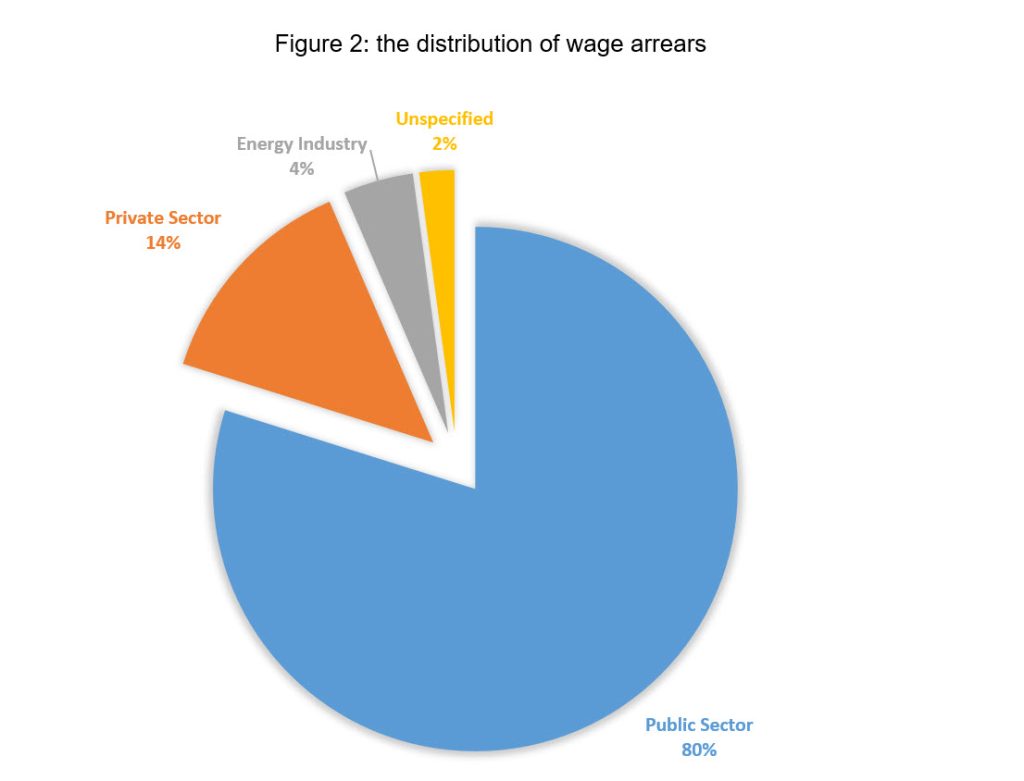
the distribution of wage arrears
As Figure 2 shows, public sector companies and organizations are responsible for 80% of these wage arrears. This figure is 14% for the private sector and 4% for the energy sector. The nature of the organizations responsible for 2% of these wage arrears remains unknown.
Unfortunately, many official reports fail to provide the number of workers awaiting wage arrears, which prevents the reporting of an accurate number.

Peaceful Assembly and Association

During the reporting period, a total of 1,616 reports on workers’ protest rallies and strikes were registered, indicating a decrease compared to previous years. This reduction can be partly attributed to the outbreak of nationwide protests sweeping across the country since September 17, 2022.

Media and civil society organizations have reported 225 workers’ protests and 772 trade union protests, which marks a 55% and 61% decrease, respectively, compared to the previous year.

Major labor events in the country over the past year include the workers’ protests of Haft Tappeh Sugarcane Company and Karun Agro-industry Company, farmers, teachers and educators, the pensioners from the Social Security Organization.

Over the past 12 months, numerous cities across the country witnessed a wide range of labour protests with various demands such as addressing insurance issues and wage arrears, the latter sometimes accumulating up to 30 months. In total, 113 labour strikes and 395 union strikes have been reported, showing a decrease of 70% and 50% respectively.

However, solidarity among workers to pursue their demands has been unprecedented. Suppression of any attempt toward unionization and forming independent labor organizations, the arrest and imprisonment of labor activists, and the denial of workers’ rights to protest are major reasons for making some workers’ protests sporadic and disorganized.

In Iran, there are no labor unions in the conventional sense. Workers’ efforts to form an independent workers union are suppressed by security and politically-tainted allegations against workers’ rights activists. This can be seen in the cases of the Syndicate of Workers of Tehran and Suburbs Bus Company, Haft Tappeh SugarCane Syndicate, the Coordination Council of Iranian Teachers’ Trade Associations, and the Independent Iranian Workers Union (IIWU).

Many workers have been summoned, arrested or convicted for peaceful activities such as protests against low wages, signing a petition in support of labour unions, posting photos of workers’ demonstrations on the internet or even receiving an invitation letter to attend world trade union meetings.

At least 49 workers and workers’ rights activists have been arrested in the past 12 months. The top three cases are the arrest of 16 protesting workers at Sungun copper mine in Varzeghan, 12 striking workers of the Tehran bus workers’ syndicate, and 7 protesting workers of Karun Cement Factory.

Many workers have been summoned, arrested or convicted for peaceful activities such as protests against low wages, signing a petition in support of labor unions, posting photos of workers’ demonstrations on the internet or even receiving an invitation letter to attend world trade union meetings. The most well-known imprisoned workers’ rights activists include Reza Shahabi, Keyvan Mohtadi, Nasrin Javadi, Arash Johari, Yadi Bahari, Mehran Raoof along with the trade union activists Mohammad Habibi, Jafar Ebrahimi, Rasoul Bodaghi, Esmail Abdi, Latif Roozikhah, and Mohammad-Reza Ramezanzadeh.

Additionally, 42 workers and workers’ rights activists have been sentenced to a combined total of 162 months imprisonment, 129 months of suspended imprisonment, a combined total of 510 lashes and paying a total fine of 51 million Tomans. In the reporting period, 6 workers committed self-immolation and 24 workers committed suicide. 21 were summoned by security or judicial institutions. 1,838 workers were subjected to layoffs; 4,228 involuntarily lost their jobs; 1,203,709 workers remain deprived of any labour insurance scheme; 2,783 workers were suspended from work due to factory closure or other reasons for which the employer is liable.

Moreover, 162 trade union activists were arrested. 34 trade union activists were sentenced to a combined total of 863 months imprisonment. 65 individuals were summoned by security or judicial authorities and 1,435 businesses were closed by Public Security Police or other authorities.

During the past 12 months, continuing their protests in the year before, retired and working teachers and educators from dozens of cities across the country staged numerous protests, strikes, and rallies to ask for their demands. 151 of their protest gatherings and 20 labour strikes have been recorded. Following these protests, 148 teachers were arrested, 55 were summoned, 38 were convicted. 11 protesting teachers were subjected to violence by police and security forces. 34 teachers and teachers union activists were sentenced to a combined total of 863 months in prison and a combined total fine of 40 million Tomans.

The Economic Situation

Hasan Habibi, a board member of the Supreme Center of Islamic Labor Councils informed the public about a sweeping wave of worker complaints regarding insufficient annual salaries. Workers are requesting repeal and re-adjustment with inflation. Habibi stated, “The annual salary increase enacted under the pressure of the government representatives at the Supreme Labor Council meeting is at variance with labor code. Although officially announced inflation was at least 50%, wages were only raised by 27% this year.”

Habibi also added, “It remains to be seen whether the court of Administrative Justice will compromise with the employers or rule in favor of workers. In the case of workplace safety and the repeal of petition 179, the complaints have gone nowhere. We hope their course of action will change this time.”

Nasrollah Daryabeigi, the Executive Secretary of the Workers’ House, which is the de facto national trade union center in Iran, pointed out that employers do not pay worker’s insurance in a timely manner, and 90% of workers currently have partial employment contracts.

The Executive Secretary of the Zanjan Workers’ House also asserted that the labor code, particularly Article 41, has been violated in the determination of annual wage increases. “While the government itself has set the poverty line at a monthly income of 14 million Tomans, it recognizes the minimum wage as half of this line,” he argues.

Faramarz Tofighi, the head of the Wage Committee at the Supreme Center of Islamic Labor Councils, pointed out that the delay in starting the work of this committee negatively affects workers’ living conditions. “The subsistence crisis has come to a head, and any increase in wages below one hundred percent never catches up with the livelihood expenses. To have a normal life, workers should earn two to three times more.”

Bahram Hasani-Nejad, a workers’ rights activist and the former head of the Chadormalu Mining Workers’ Association, clarifies that assuming the minimum standards for livelihood and basic needs, a household needs to earn 17 to 18 million monthly.

As many experts and workers’ rights activists have pointed out, the minimum wage, as announced by the Supreme Labor Council, falls lower than the actual inflation rate and consumption expenditure of households. This explains the increase in workers’ protests and their disempowerment to raise their voices.


Prohibition of child labor and the provision of free education for children, the establishment of the highest level of safety standards in the workplace, and the elimination of discriminatory laws for women and migrant workers are other demands of the working community.

Despite being a part of the cheapest labor force in the country, women’s labor situation is worse than men, with fewer benefits, lower wages, and a lesser degree of legal protection. Even worse, women have less bargaining power in the workplace.

Employers in manufacturing industries are less willing to recruit married women, and in some cases, single women’s recruitment is conditioned on not getting married or pregnant. Female workers’ situation in small workshops is far worse. Women comprise half of the workers occupied at bricklaying, a laborious and onerous work.

The ongoing privatization of government-owned industrial sectors has further degraded work conditions, job security, and benefits, leading to an increase in workers’ protests and strikes.

As Iranian workers celebrate International Workers’ Day there is little prospect of improvement through domestic reform or remedy. Nonetheless, the State must uphold its international human rights obligations under both the ICCPR and the ICESCR, ensuring that workers and labor rights activists are free to peacefully assemble and associate without fear of reprisal.


For further inquiries please contact Skylar Thompson, Senior Advocacy Coordinator Human Rights Activists in Iran (HRA) at [email protected]