January 2026 Protests: Mahsa Jamali Sentenced to Imprisonment

HRANA – Zahra (Mahsa) Jamali, arrested during the January 2026 protests and currently held in the women’s ward of Evin Prison, has been sentenced by the Revolutionary Court to six months of discretionary imprisonment.

Based on information received by HRANA, Ms. Jamali was sentenced by the Revolutionary Court to six months in prison. She is currently being held in the women’s ward of Evin Prison.

Zahra (Mahsa) Jamali was arrested during the nationwide protests and, on January 9, 2026, was transferred from Qarchak Prison in Varamin to the women’s ward of Evin Prison.

HRANA is still investigating further details regarding the charges brought against this prisoner.

It should be noted that protests and strikes by shopkeepers and bazaar merchants began in Tehran on Sunday, December 28, 2025, and within two days spread beyond markets and commercial centers. With the participation of students, citizens, and various social groups, these protests became one of the largest protest movements of recent years. Following the crackdown by security and law enforcement forces, thousands were killed or injured, and tens of thousands were arrested or summoned by security agencies. For more information, readers may refer to HRANA’s comprehensive report titled “Crimson Winter,” documenting the first fifty days following the outbreak of Iran’s nationwide protests.

January 2026 Protests: Shayan Moradi Motlagh Sentenced to Prison

HRANA – The prison sentence of Shayan Moradi Motlagh, arrested during the nationwide protests of January 2026, has been upheld in full by Branch 2 of the Khuzestan Province Court of Appeals. He had previously been sentenced in the initial trial by Branch 1 of the Izeh Revolutionary Court to two years imprisonment.

According to HRANA, the news agency of the Human Rights Activists in Iran (HRA), the sentence issued against Shayan Moradi Motlagh was affirmed by the appellate court.

Based on the ruling issued by Branch 2 of the Khuzestan Province Court of Appeals, Mr. Moradi Motlagh was sentenced to two years and one day in prison on the charge of “disrupting public order,” pursuant to the note to Article 286 of the Islamic Penal Code.

He had previously received the same sentence in the initial trial before Branch 1 of the Izeh Revolutionary Court.

Shayan Moradi Motlagh was temporarily released on bail of 1 billion tomans on 9 February 2026. He had been arrested on 19 January 2026 during the nationwide protests.

Pedram Cheraghzadeh Sentenced to 2 Years in Prison on Appeal

HRANA – Branch 16 of the Appeals Court of Khuzestan Province has sentenced Pedram Cheraghzadeh, one of those arrested during the nationwide protests of January 2026, to two years in prison. He had previously been sentenced in the lower court to two years’ imprisonment along with supplementary punishments.

Based on the ruling issued by Branch 16 of the Appeals Court of Khuzestan Province and communicated to his defense attorney, Hossein Ali Hatami, Pedram Cheraghzadeh was sentenced to two years in prison on the charge of “disrupting public order.” The supplementary punishments imposed in the initial verdict have been removed from his sentence.

Previously, during the trial court proceedings, Branch 1 of the Ahvaz Revolutionary Court had sentenced him to two years in prison on the charge of “disrupting public order,” citing the note to Article 286 of the Islamic Penal Code. The Revolutionary Court judge had also imposed supplementary punishments, including a two-year travel ban and one year of mandatory attendance at the Office for the Promotion of Virtue and Prevention of Vice. The specific actions forming the basis of the charges against this citizen remain unknown.

Pedram Cheraghzadeh was arrested during the nationwide protests on January 8, 2026. He was ultimately released on April 9, 2026, after posting bail of 2 billion tomans.

It should be noted that protests and strikes by shopkeepers and bazaar merchants began in Tehran on Sunday, December 28, 2025, and within two days spread beyond markets and commercial centers. With the participation of students, citizens, and various social groups, these protests became one of the largest protest movements of recent years. Following the crackdown by security and law enforcement forces, thousands were killed or injured, and tens of thousands were arrested or summoned by security agencies. For more information, readers may refer to HRANA’s comprehensive report titled “Crimson Winter,” documenting the first fifty days following the outbreak of Iran’s nationwide protests.

Poet Farnaz Jafarzadegan Sentenced to Electronic Monitoring and Travel Ban

HRANA – Farnaz Jafarzadegan, a poet based in Shiraz, has been sentenced by a judicial authority to imprisonment under electronic monitoring (electronic ankle bracelet) and a two-year ban on leaving the country.

Based on the issued verdict, Ms. Jafarzadegan was sentenced to imprisonment under an electronic monitoring system and a two-year travel ban due to activities including participation in a campaign opposing violence against women, appearing without the mandatory hijab, opposing compulsory hijab, and opposing the death penalty. The ruling also characterizes portions of her poetry, writings, and literary criticism as instances of “spreading falsehoods” and “disturbing public opinion,” including works that had previously been published with official authorization from the Ministry of Culture and Islamic Guidance.

Further details, including the length of her sentence under electronic monitoring, are currently being investigated by HRANA.

According to information received by HRANA, Farnaz Jafarzadegan was arrested at her home in Shiraz by security forces in the early hours of January 15, 2026. After being held in solitary confinement at an undisclosed location for five days, she was transferred to Adelabad Prison in Shiraz. She was ultimately released from the prison after approximately fifteen days upon posting bail.

This citizen has previously faced security and judicial actions due to her activities.

Six Prisoners Executed in Multiple Iranian Prisons

HRANA – The death sentences of four prisoners were carried out in Adelabad Prison in Shiraz, Khorramabad Prison, and Shirvan Prison. In addition, following the identification of two other prisoners, the number of people executed on Tuesday in Dastgerd Prison in Isfahan and Dizelabad Prison in Kermanshah has risen to four. These prisoners had previously been sentenced to death in separate cases on charges related to drug offenses and murder.

According to a report by the Iran Human Rights Organization, two prisoners were executed at dawn on Tuesday, June 9, 2026, in Adelabad Prison in Shiraz.

They were identified as Farhad Minaei, 40, from Borujerd, and Hossein Salehpour, from Shiraz.

According to the report, Mr. Salehpour had been arrested approximately four years ago, and Mr. Minaei about two years ago, in separate cases involving drug-related charges. They were subsequently sentenced to death by judicial authorities.

The report also states that the death sentence of another prisoner was carried out on June 1, 2026, in Shirvan Prison.

The prisoner was identified as Keramat Mansouri, 53, a father of four from Baghan village in Shirvan County.

According to the report, he had been arrested about five years ago on murder charges and was later sentenced to death by a judicial authority.

Number of Executions in Dastgerd Prison, Isfahan, Rises to Two

According to Iran Human Rights, on Tuesday, June 9, 2026, a prisoner identified as Reza Ghanbarlou, 45, from Rasht and the father of two children, was executed in Dastgerd Prison in Isfahan.

The report states that Mr. Ghanbarlou had been arrested approximately five years ago on drug-related charges and was subsequently sentenced to death by the Revolutionary Court.

HRANA had previously reported the execution of another prisoner, Rashid Ghanbarzehi, in the same prison on the same date.

Number of Executions in Dizelabad Prison, Kermanshah, Reaches Two

According to another report from Iran Human Rights, Dariush Ghobadi was executed at dawn on Tuesday, June 9, 2026, in Dizelabad Prison in Kermanshah.

Ghobadi had been accused of murdering four members of his family and one of his friends on October 17, 2023. He was subsequently sentenced to death by judicial authorities.

The execution of Abbas Zarei in the same prison on the same date had previously been reported.

Execution of a Prisoner in Khorramabad

According to Iran Human Rights, a prisoner was executed in Khorramabad Prison on May 14, 2026.

The prisoner was identified as Ahmadreza Torabi, 32, from Khorramabad.

According to the report, Mr. Torabi had been arrested approximately five years ago on a murder charge stemming from a street altercation and was later sentenced to death by judicial authorities.

At the time of writing this report, the executions of these prisoners had not been officially announced by prison authorities or the relevant responsible institutions.

According to HRA’s annual report, in 2025, there were reports of delayed or unpaid wages amounting to at least 638 months across 182 industrial and service units, 2,458 cases of dismissals or layoffs and 3,761 workers left in uncertain employment conditions.

Subscribe to Our Newsletter

Now is definitely not the time to stop reading!

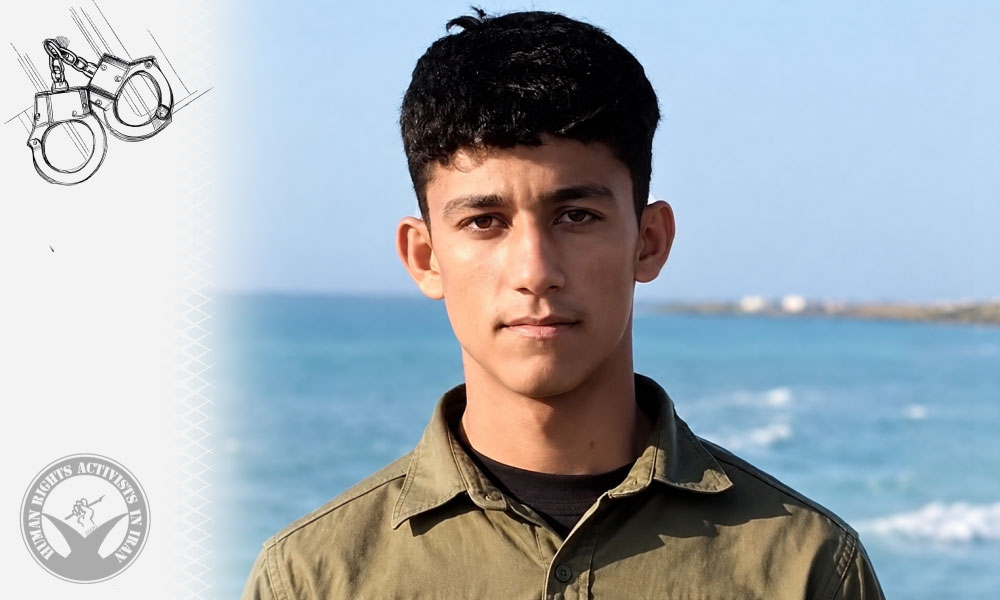
2026 Nationwide Protests: Ahmad Lajam Ourak Sentenced to Prison

HRANA – Ahmad Lajam Ourak, one of the individuals arrested during the 2026 nationwide protests in Izeh, has been sentenced on appeal to two years and one day in prison. The Khuzestan Province Court of Appeals upheld the original verdict but suspended one year of the sentence for a period of two years.

Based on a ruling issued by Branch 14 of the Khuzestan Province Court of Appeals and communicated to Hossein Ali Hatami, the attorney representing this citizen, Mr. Lajam Ourak was sentenced to two years and one day in prison on the charge of “disrupting public order”, pursuant to the note appended to Article 286 of the Islamic Penal Code. The court also suspended one year of the sentence for two years.

Mr. Lajam Ourak had previously been sentenced by the Revolutionary Court of Izeh to the same prison term on the same charge at the trial stage.

In this case, the charge of “disrupting public order” was brought under the note to Article 286 of the Islamic Penal Code. Under Iranian law, Article 286 primarily concerns the offense of “spreading corruption on earth” (efsad-e fel-arz). However, according to its note, if a defendant’s actions are deemed to have caused disorder or insecurity but are not considered sufficiently extensive to constitute efsad-e fel-arz, the death penalty is not applicable, and the court may instead impose a discretionary prison sentence of Grade Five or Six (up to five years’ imprisonment).

The use of this note instead of Article 618 of the Islamic Penal Code, which addresses ordinary public-order offenses and carries a maximum sentence of one year in prison, suggests that the case was treated as a security-related matter and that the court relied on the heavier penalties provided under the note to Article 286.

Ahmad Lajam Ourak, a conscript soldier, was arrested by security forces on January 8, 2026, during the nationwide protests. He was later released on February 14, 2026, after posting bail of 1.5 billion tomans.

It should be noted that protests and strikes by shopkeepers and bazaar merchants began in Tehran on Sunday, December 28, 2025, and within two days spread beyond markets and commercial centers. With the participation of students, citizens, and various social groups, these protests became one of the largest protest movements of recent years. Following the crackdown by security and law enforcement forces, thousands were killed or injured, and tens of thousands were arrested or summoned by security agencies. For more information, readers may refer to HRANA’s comprehensive report titled “Crimson Winter,” documenting the first fifty days following the outbreak of Iran’s nationwide protests.

January 2026 Protests: Pouria Amini Sentenced to 8 Years in Prison

HRANA – Pouria Amini, arrested during the nationwide protests of 2026, has been sentenced to eight years in prison by the Revolutionary Court of Gonabad.

Based on a verdict issued by the Revolutionary Court of Gonabad and formally communicated to this citizen, Mr. Amini was sentenced to five years in prison on the charge of “assembly and collusion against national security,” two years in prison for insulting the Supreme Leader, and one year in prison for “propaganda against the regime.”

This citizen was arrested by security forces on January 10, 2026. He was ultimately released from Gonabad Prison on April 9, 2026 after posting 30 billion rials in bail.

Pouria Amini is a former political prisoner residing in Mashhad.

It should be noted that protests and strikes by shopkeepers and bazaar merchants began in Tehran on Sunday, December 28, 2025, and within two days spread beyond markets and commercial centers. With the participation of students, citizens, and various social groups, these protests became one of the largest protest movements of recent years. Following the crackdown by security and law enforcement forces, thousands were killed or injured, and tens of thousands were arrested or summoned by security agencies. For more information, readers may refer to HRANA’s comprehensive report titled “Crimson Winter,” documenting the first fifty days following the outbreak of Iran’s nationwide protests.

Abdolaziz Omarzahi Arrested in Zahedan

HRANA – Molavi Abdolaziz Omarzahi, a Sunni cleric and former instructor at Darul Uloom Makki, a Sunni seminary in Zahedan, was arrested by security forces on the evening of Tuesday, June 9, and transferred to an undisclosed location.

According to Haal Vsh, Abdolaziz Omarzahi, a former instructor at Darul Uloom Makki in Zahedan, was arrested by security forces.

According to the report, agents of the Ministry of Intelligence arrested Mr. Omarzahi on Tuesday evening while he was on his way home after leaving Makki Mosque. He was detained on one of the streets of Zahedan.

As of the time of this report, no information has been released regarding his whereabouts, physical condition, or any charges that may have been brought against him.

Molavi Abdolaziz Omarzahi has previously faced arrest and judicial action in connection with his activities.

Prisoner Executed in Kermanshah Prison

HRANA  – At dawn on Tuesday, June 9, a prisoner who had previously been sentenced to death on a murder charge was executed in Kermanshah Prison.

According to a report by Kurdpa, a prisoner was executed in Kermanshah Prison. The identity of the prisoner, who was hanged at dawn on Tuesday, June 9, has been reported as Abbas Zarei, a 40-year-old married man, father of one child, and a resident of the village of Sarin in the Firouzabad District of Kermanshah County.

According to the report, Mr. Zarei had been charged with a murder that occurred eight years ago. He was arrested in 2024 and was subsequently sentenced to death by a criminal court.

As of the time of writing, prison authorities and the relevant official bodies have not publicly announced the execution of this prisoner.

According to HRA’s Annual Report, in 2025 at least 2,063 citizens, including 61 women and 2 juvenile offenders, were executed. Of these, the sentences of 11 individuals were carried out in public. During the same period, 172 other individuals were sentenced to death.

January 2026 Protests: Iman Shahpari and Arman Key Shams Sentenced to Prison

HRANA – Iman Shahpari and Arman Key Shams, detainees from the January 2026 protests who are currently imprisoned in Sheiban Prison in Ahvaz, have each been sentenced by the Khuzestan Province Court of Appeals to two years and one day in prison. One year of each sentence has been suspended for a period of four years.

According to HRANA, Iman Shahpari and Arman Key Shams, both detained during the 2026 nationwide protests, have been sentenced to imprisonment.

According to a ruling issued by the Khuzestan Province Court of Appeals and communicated to their attorney, Hossein Ali Hatami, Mr. Key Shams and Mr. Shahpari were each sentenced to two years and one day in prison on charges of disrupting public order, pursuant to the Note to Article 286 of the Islamic Penal Code. One year of each sentence has been suspended for four years.

The two defendants, who are being prosecuted in a joint case, had previously been sentenced by Branch 1 of the Ahvaz Revolutionary Court to two years and one day in prison on the same charge.

In this case, the charge of “disrupting public order” was brought under the Note to Article 286 of the Islamic Penal Code. Under Iran’s legal framework, Article 286 itself pertains to the offense of “spreading corruption on earth” (efsad-e fel-arz). However, its Note provides that if a defendant’s actions result in disorder or insecurity but are not deemed sufficiently extensive to constitute efsad-e fel-arz, the death penalty does not apply, and the court may instead impose a Grade 5 or Grade 6 discretionary prison sentence (up to five years’ imprisonment).

The reliance on this Note, rather than Article 618 of the Islamic Penal Code, which addresses ordinary public-order offenses and carries a maximum penalty of one year in prison, indicates that the case was handled through a security-oriented approach, with the court applying the more severe penalties available under the Note to Article 286.

These individuals were arrested on January 8, 2026, during the nationwide protests and were subsequently transferred to Sheiban Prison in Ahvaz.

It should be noted that protests and strikes by shopkeepers and bazaar merchants began in Tehran on Sunday, December 28, 2025, and within two days spread beyond markets and commercial centers. With the participation of students, citizens, and various social groups, these protests became one of the largest protest movements of recent years. Following the crackdown by security and law enforcement forces, thousands were killed or injured, and tens of thousands were arrested or summoned by security agencies. For more information, readers may refer to HRANA’s comprehensive report titled “Crimson Winter,” documenting the first fifty days following the outbreak of Iran’s nationwide protests.