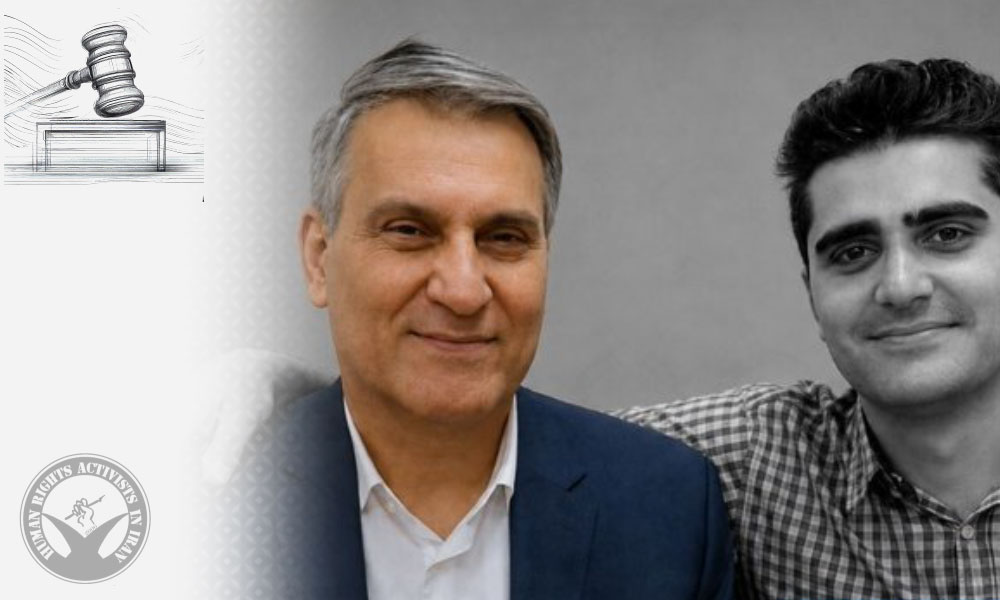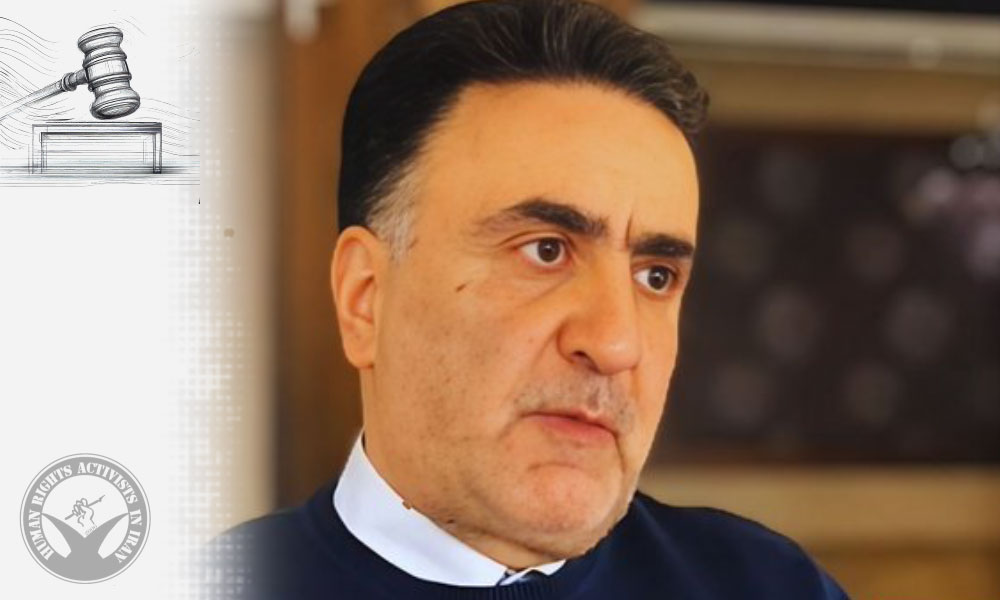
Sadegh Zibakalam Arrested

HRANA – Sadegh Zibakalam, a political analyst, was arrested today, Wednesday, by security forces. The Judiciary Media Center announced that his case is currently being reviewed by the Culture and Media Prosecutor’s Office.

According to Mizan News Agency, Sadegh Zibakalam was arrested this morning. According to the report, his arrest followed the filing of a new criminal complaint and the tightening of judicial supervision measures imposed on him. Mr. Zibakalam’s case is currently under review at the Culture and Media Prosecutor’s Office.

On June 7, 2026, the Tehran Prosecutor’s Office announced that a criminal complaint had been filed against Sadegh Zibakalam and that his judicial supervision measures had been intensified. At that time, authorities stated that the political analyst had violated a previous ban on media activity by participating in a new interview.

In May of this year, the Judiciary Media Center announced that indictments had been issued against Sadegh Zibakalam and the editor-in-chief of ANA News Agency. Mizan News Agency reported that, under a judicial decision, Mr. Zibakalam was prohibited from engaging in any media activity or producing content on social media for a period of three months.

In recent months, judicial pressure on political activists, journalists, media outlets, and academics has increased due to the publication of critical views or comments expressed in the media.

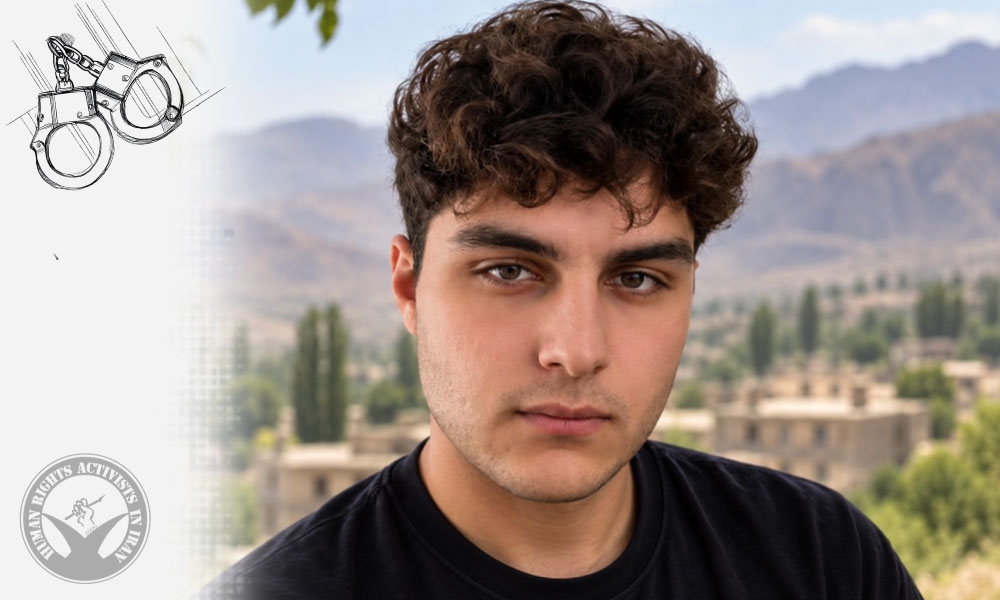
Pouya Esmaeili Arrested in Nowshahr

HRANA – Pouya Esmaeili, a resident of Nowshahr, was arrested by security forces in the city and transferred to an undisclosed location.

According to information received by HRANA, Pouya Esmaeili was arrested by security forces in Nowshahr on Tuesday, June 9, and transferred to an undisclosed location.

As of the time of this report, no information has been obtained regarding the reasons for his arrest, the charges against him, or his place of detention.

Pouya Esmaeili is an electrical engineer and a resident of Nowshahr County, Mazandaran province.

Iranian Judiciary Seizes Assets of More Than 200 People Over Alleged Cooperation with the Enemy

HRANA – The spokesperson for Iran’s judiciary announced that more than 200 assets belonging to individuals accused of “collaborating with the enemy” and acting against national security have been identified and seized.

According to HRANA, citing ISNA, the judiciary spokesperson stated that the judicial system is vigorously pursuing the identification and seizure of assets belonging to individuals whom he described as having “betrayed the homeland.”

Asghar Jahangir said that more than 200 assets linked to these individuals have so far been identified and confiscated. He stated: “The judiciary’s approach to confiscating the assets of those who betray their homeland and, by providing intelligence to the enemy, seek to impose war on our society is intended to serve as a deterrent.”

Jahangir further added that efforts to identify and seize additional assets belonging to the targeted individuals are ongoing and will continue until a final outcome is achieved.

The judiciary spokesperson did not provide details regarding the identities of those affected, the legal basis for the asset seizures, the number of cases involved, or the status of judicial proceedings against them.

Following the start of military attacks on Iran, Gholamhossein Mohseni Ejei, the head of the judiciary, announced that judicial orders had been issued to confiscate and seize assets connected to what he described as “elements collaborating with the enemy inside and outside the country.” He also threatened such individuals with execution, stating: “One of the prescribed punishments in such cases is execution, and following investigations, one of the legal punishments will be applied to those concerned.”

After the judiciary issued this directive, the “Saham” smart financial inquiry system was launched. Through this system, prosecutor’s offices and courts across the country can quickly and electronically identify citizens’ assets and property and take the necessary steps to seize them.

The judiciary has not disclosed further information about the implementation of these measures or the safeguards available to those whose assets have been targeted.

2026 Protests: Zahra Shahidi Sentenced to 2 Years in Prison

HRANA – Zahra Shahidi, one of those arrested during the nationwide protests of 2026 and currently held in Evin Prison, has been sentenced by a judicial authority to two years of imprisonment.

The judicial authority that issued the ruling recently sentenced Ms. Shahidi to two years in prison. The conviction has also resulted in the loss of her employment.

Further details regarding the verdict, including the charges brought against Zahra Shahidi and the issuing authority, are currently being investigated by HRANA.

On December 31, 2025, Ms. Shahidi was transferred to the women’s ward of Evin Prison. She was arrested by security forces on the street during the early days of the nationwide protests and spent several days in detention.

Zahra Shahidi is a 48-year-old woman and the head of her household.

Appeals Court Upholds Sentence Against Karim Esmaeilzadeh

HRANA – The sentence issued against Karim Esmaeilzadeh, an Azerbaijani-Turk activist, has been fully upheld by Branch 31 of the East Azerbaijan Province Court of Appeals. He had previously been sentenced by the lower court to one year in prison, a monetary fine, and the blocking of his social media accounts.

Based on the ruling issued by Branch 31 of the East Azerbaijan Province Court of Appeals, Mr. Esmaeilzadeh was convicted of “spreading falsehoods with the intent to disturb public opinion” and sentenced to one year of discretionary imprisonment, a fine of 50 million tomans, and the blocking of his social media accounts. This Azerbaijani-Turk activist had previously received the same sentence in the court of first instance.

On November 1, 2025, Esmaeilzadeh was released from Tabriz Prison after posting bail.

On October 18, 2025, Esmaeilzadeh was arrested after appearing at the Public and Revolutionary Prosecutor’s Office in Tabriz and was transferred to The Ministry of Intelligence’s detention facility in the city. He was later transferred to Tabriz Prison.

The activist had previously been summoned to the same court branch on October 15, 2025, on charges of spreading falsehoods and propaganda against the regime.

Karim Esmaeilzadeh, an Azerbaijani-Turk activist, had also been arrested by intelligence forces in Tabriz in March 2025 and was eventually released on bail. He has previously faced arrest and conviction on other occasions as well.

Subscribe to Our Newsletter

Now is definitely not the time to stop reading!

2026 Protests: Alireza Peighambari Sentenced to Death

HRANA  – Alireza Peighambari, a 26-year-old man detained during the nationwide protests of January 2026, has been sentenced to death by Branch 23 of the Tehran Revolutionary Court on the charge of moharebeh (“enmity against God”). Peighambari, who is currently held in Greater Tehran Penitentiary, is awaiting the outcome of a review by Branch 9 of the Supreme Court.

According to HRANA, Alireza Peighambari, one of the individuals arrested during the January nationwide protests, has been sentenced to death.

Based on information received by HRANA, Mr. Peighambari, 26, was sentenced to death by Branch 23 of the Tehran Revolutionary Court on the charge of moharebeh. His case is currently being reviewed by Branch 9 of the Supreme Court.

Alireza Peighambari was arrested by security forces on January 9, 2026, during the nationwide protests. He was subsequently released on bail in March-April 2026.

The defendant was first tried before Branch 23 of the Tehran Revolutionary Court in May 2026.

A second hearing on the charges against Mr. Peighambari was then held in early June 2026 before the same branch. Following the conclusion of the hearing, he was taken into custody and transferred to Greater Tehran Penitentiary.

A source familiar with the matter confirmed the news to HRANA and stated: “Alireza did not participate in the protest gatherings. In fact, after leaving his workplace, he arrived in the area during the commotion caused by the protests and unintentionally found himself caught in the crowd.”

Report on the Execution of Six Prisoners in Various Prisons

HRANA – The death sentences of six prisoners previously convicted on drug-related offenses and murder charges have been carried out in the prisons of Khorramabad, Lakan (Rasht), and Dastgerd (Isfahan).

According to HRANA, citing the Iran Human Rights, a prisoner was executed at dawn on Saturday, June 6, 2026, in Lakan Prison in Rasht. The prisoner has been identified as Siavash Afrashteh, a 27-year-old resident of Rasht.

According to the report, Mr. Afrashteh was arrested approximately three years ago on drug-related charges and was subsequently sentenced to death by the judiciary.

In a separate report, four prisoners were executed in Dastgerd Prison in Isfahan.

The prisoners have been identified as Mohammad-Ghasem Abdevand, 33; Rahim Ghanbari, 38, both from Masjed Soleyman; Farrokh Amjadi, 46, from Khomeinishahr and the father of two children; and Reza Pedram Asivand, 31, from Junaqan County.

According to the report, dated June 3, 2026, the executions of Abdevand, Ghanbari, and Amjadi were carried out. Abdevand and Ghanbari had been arrested approximately two years earlier in a joint case, while Amjadi had been arrested about four years ago, all on drug-related charges and later sentenced to death by judicial authorities. On May 5, 2026, Reza Pedram Asivand was also executed in the same prison after previously being arrested and sentenced to death on similar charges.

In another report, at dawn on Saturday, June 6, 2026, a prisoner identified as Noormorad Fallahnejad, a father of three from Khorramabad, was executed in the city’s prison.

The report states that Mr. Fallahnejad had been arrested approximately four years and eight months ago on a murder charge and was subsequently sentenced to death by the judiciary.

As of the time of publication, the executions of these prisoners had not been officially announced by prison authorities or the relevant state institutions.

January 2026 Protests: Arman Soleimani Sentenced to Two Years by Appeals Court

HRANA – The conviction of Arman Soleimani, a detainee from the nationwide protests of January 2026 who is currently imprisoned in Sheiban Prison in Ahvaz, has been upheld in full by the Khuzestan Province Court of Appeals. He had previously been sentenced by the Revolutionary Court of Izeh to two years in prison.

Based on the ruling issued by the Khuzestan Province Court of Appeals, Mr. Soleimani was sentenced to two years and one day in prison on the charge of “disrupting public order,” pursuant to the Note to Article 286 of the Islamic Penal Code.

He had previously received the same sentence at the trial stage from Branch 1 of the Revolutionary Court of Izeh.

Arman Soleimani was arrested on January 8, 2026, during the nationwide protests and was subsequently transferred to Sheiban Prison in Ahvaz.

It should be noted that protests and strikes by shopkeepers and bazaar merchants began in Tehran on Sunday, December 28, 2025, and within two days spread beyond markets and commercial centers. With the participation of students, citizens, and various social groups, these protests became one of the largest protest movements of recent years. Following the crackdown by security and law enforcement forces, thousands were killed or injured, and tens of thousands were arrested or summoned by security agencies. For more information, readers may refer to HRANA’s comprehensive report titled “Crimson Winter,” documenting the first fifty days following the outbreak of Iran’s nationwide protests.

Three Attorneys Sentenced to Prison and Additional Punishments

HRANA – Nazanin Salari, Mahmoud Taravat Rouy, and Masoud Ahmadian, three defense attorneys, have each been sentenced by Branch 1 of the Revolutionary Court of Shiraz to three years in prison and a two-year ban on leaving the country.

According to HRANA, citing Emtedad, three defense attorneys in Shiraz have been sentenced to imprisonment and supplementary punishments.

A recent ruling issued by Branch 1 of the Revolutionary Court of Shiraz found Nazanin Salari, Mahmoud Taravat Rouy, and Masoud Ahmadian guilty. Under the verdict, each attorney was sentenced to two years in prison on charges of “assembly and collusion with the intent to commit crimes against national security,” and one year in prison for “propaganda activities against the regime.” As an additional punishment, they were also sentenced to a two-year travel ban accompanied by the invalidation of their passports.

The court acquitted the three attorneys of the charge of cooperating with a hostile government.

The report further states: “While the head of Branch 1 of the Revolutionary Court of Shiraz had been handling the case during previous hearings, the case was suddenly reassigned to one of the court’s associate judges during the final session. Despite existing procedural flaws, the associate judge took the defendants’ final defense statements and subsequently issued the conviction ruling.”

According to the report, the judicial case against these attorneys stems from their participation in seminars on children’s and women’s rights, their advocacy for legal reforms concerning domestic violence, and other efforts aimed at combating violence against women and child marriage.

The trial session addressing the charges against these attorneys was held on January 6, 2026, at Branch 1 of the Revolutionary Court of Shiraz.

The ruling is related to a case opened against them in 2020 on the aforementioned charges. In 2022, during proceedings before the same branch of the Revolutionary Court, the case was returned to the prosecutor’s office due to deficiencies in the investigation and ambiguities in the indictment. A new court session was subsequently held on May 31, 2023, before the same branch. The case was later referred back to the prosecutor’s office once again for further investigation.

The three attorneys were first summoned in connection with this case in November 2020 by the Ministry of Intelligence. Summonses and interrogations continued for more than ten sessions without formal charges being presented. Ultimately, in the summer of 2021, they were summoned to the Shiraz Prosecutor’s Office, formally charged, and released on bail of 1 billion tomans each.

The attorneys are additionally facing charges before Branch 112 of the Criminal Court, including encouraging immodesty and appearing in public without the mandatory hijab.

3,121 Prosecuted, 2,406 Held Under Iran’s Espionage Law

HRANA – The spokesperson for Iran’s judiciary announced that 3,121 individuals across the country have been subjected to legal prosecution on charges including “operational actions in favor of Israel, security-related offenses, collaboration with Israel, media and propaganda activities benefiting Israel, and possession or trade of communication equipment, including Starlink.” According to him, 2,406 of these individuals have been arrested and remain in detention.

According to HRANA, citing ILNA, the judiciary spokesperson provided details regarding judicial measures taken under the framework of the “Law on Intensifying Punishment for Espionage and Collaboration with Israel.”

Asghar Jahangir stated: “In this regard, a total of 3,121 individuals have come under judicial prosecution. Of these, 2,406 have been arrested and remain in detention. So far, 1,000 indictments have been issued against these individuals.”

He added that these citizens were identified and arrested by the IRGC Intelligence Organization, the Ministry of Intelligence, and the Law Enforcement Command (FARAJA). He further explained: “Twenty percent of these individuals are being prosecuted for operational actions in favor of Israel, while 22% face charges related to security, economic, military, and financial activities. Approximately 7% have been charged with collaboration and assistance to Israel, 43% with cooperation in political, cultural, media, and propaganda activities benefiting Israel, and 7% with possession or buying and selling electronic equipment, including Starlink.”

Jahangir also referred to judicial measures aimed at identifying and seizing the assets of individuals he described as “affiliated with the enemy.” He said that the assets of hundreds of such individuals have so far been identified and confiscated. According to him, these assets will be formally expropriated following judicial proceedings and the issuance of court rulings.

Earlier, Judiciary Chief Gholamhossein Mohseni Ejei announced the issuance of judicial orders to seize the assets of individuals described as “collaborators with the enemy” and warned that such individuals could face the death penalty. Subsequently, an online system for checking citizens’ assets was launched, enabling judicial authorities to identify and seize property. Since then, numerous reports have been published regarding the confiscation of assets belonging to a number of citizens.