Execution of Two Prisoners in Ahvaz and Qom

HRANA – Two prisoners previously sentenced to death on charges related to drug offenses and murder were executed in Sepidar Prison in Ahvaz and Qom Prison.

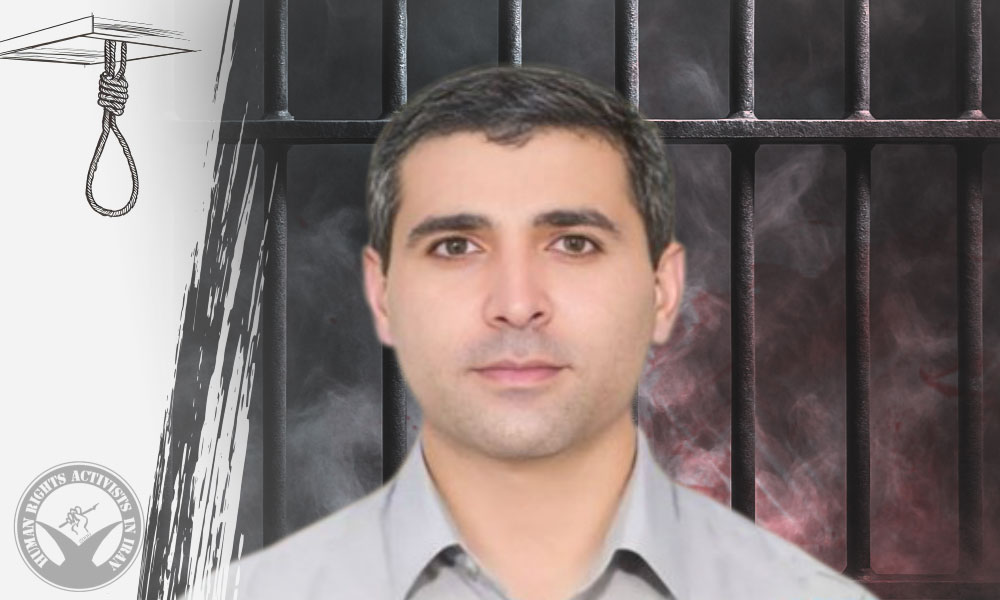
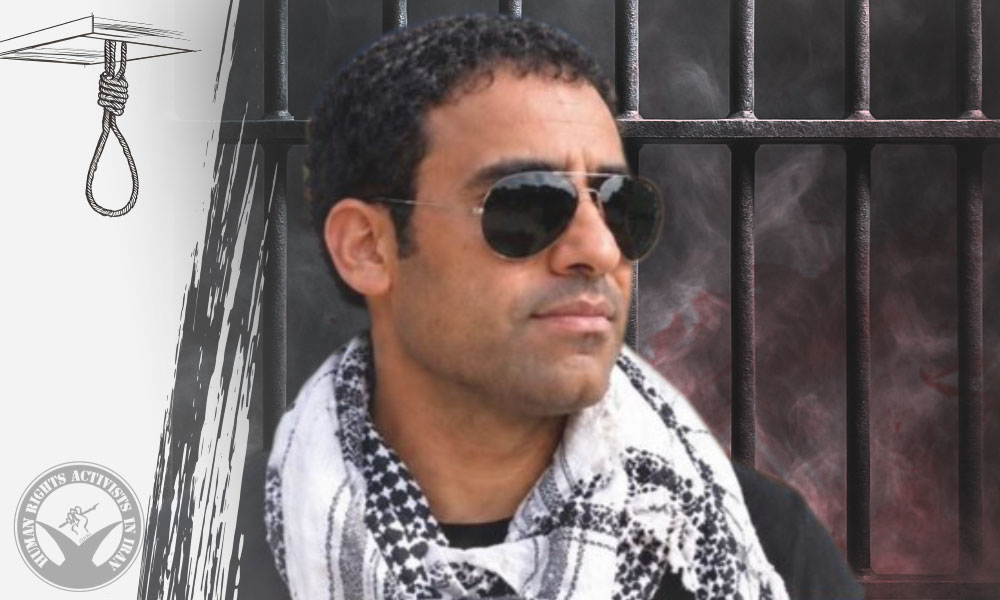
According to HRANA, citing the Iran Human Rights Organization, two prisoners were executed in Sepidar Prison in Ahvaz and Qom Prison. The prisoners have been identified as Saman Rashidi, 32, from Izeh, and Vahid Salimi, 28, from Pakdasht, Tehran.

According to the report, Mr. Rashidi was arrested five years ago on a murder charge and was subsequently sentenced to death by the judiciary. His execution was carried out on Tuesday, June 23, 2026, at Sepidar Prison in Ahvaz.

Mr. Salimi was executed on Monday, June 16, 2026, in Qom Prison. He had been arrested two years earlier on charges related to drug offenses and was sentenced to death by the Revolutionary Court.

As of the time of this report, prison authorities and the relevant institutions have not officially announced the executions.

According to HRA’s Annual Report, in 2025 at least 2,063 citizens, including 61 women and 2 juvenile offenders, were executed. Of these, the sentences of 11 individuals were carried out in public. During the same period, 172 other individuals were sentenced to death.

Nazem Barihi’s Life Sentence Reduced to 25 Years

HRANA – The life sentence of political prisoner Nazem Barihi, currently imprisoned in Arak Prison, has been reduced to 25 years in prison following the implementation of a special amnesty. The prisoner has spent more than two decades behind bars.

According to information received by HRANA, Mr. Barihi’s life sentence was commuted to 25 years of imprisonment as part of a special amnesty.

On January 27, 2026, Mr. Barihiwas transferred from Sheiban Prison in Ahvaz to Arak Prison. Previously sentenced to life imprisonment, he has spent more than two decades incarcerated in Karoon Prison, Sheiban Prison in Ahvaz, and Arak Prison.

Born in 1986, Nazem Barihi was arrested by security forces in October 2005. Shortly thereafter, Branch One of the Ahvaz Revolutionary Court sentenced him to life imprisonment on charges of “acting against national security, moharebeh (enmity against God), and corruption on earth.”

It should be noted that HRANA previously examined the latest conditions of prisoners who have spent more than two decades behind bars in its series “More Than Two Decades in Prison.” This political prisoner is among those who, in addition to enduring various deprivations, have spent the last twenty years in prison.

Mojahed Savari Arrested in Ahvaz

HRANA – Mojahid Savari, a resident of Ahvaz, was arrested by intelligence agents in the city on June 22, 2026, and transferred to an undisclosed location.

Mr. Savari was arrested in the early hours of Monday, June 22, 2026, by intelligence agents at his home in Ahvaz. Four days after his arrest, no information has been obtained regarding his whereabouts.

As of the time of this report, the reasons for his arrest and the charges brought against him remain unknown.

Mojahed Savari, 37, is the father of four children. He resides in the Mandali neighborhood of Ahvaz. After being dismissed from Golestan Hospital in Ahvaz, he began working as a taxi service driver and was earning a living through this job prior to his arrest.

Life Sentences of Three Political Prisoners Held in Sheiban Prison, Ahvaz Reduced to 25 Years

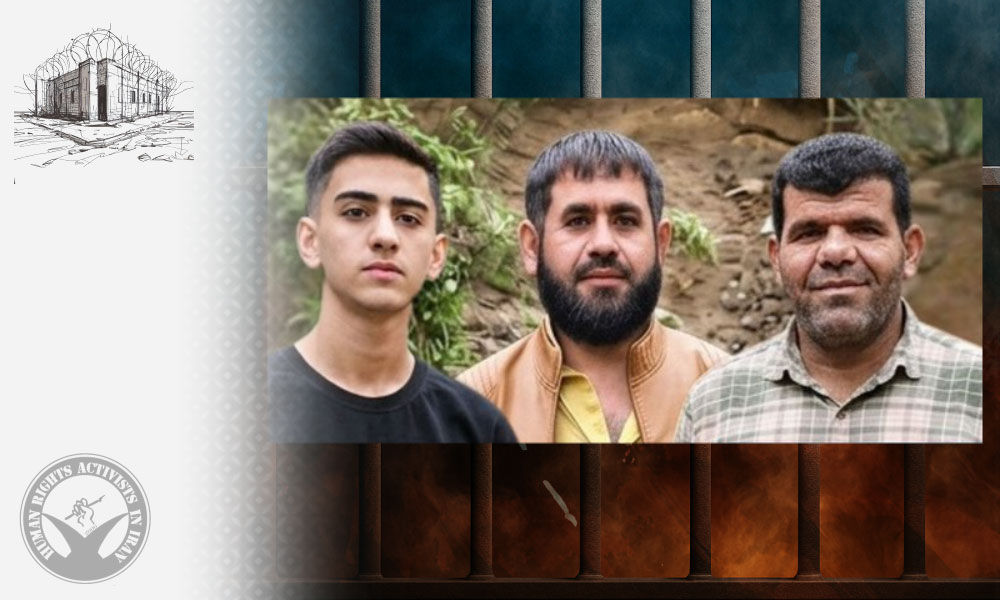
HRANA – Following the implementation of a pardon granted on a special occasion, the life sentences of political prisoners Yahya Naseri (Navaseri), Zohair Halichi (Abdul-Zahra Halichi), and Abdolemam Zaeri, who are held in Sheiban Prison in Ahvaz, have been reduced to 25 years’ imprisonment. These prisoners have been incarcerated for more than two decades.

According to HRANA, the sentences of three political prisoners have been reduced to 25 years in prison. Based on information received by HRANA, the life sentences of Messrs. Naseri, Halichi, and Zaeri were commuted to 25-year prison terms following the implementation of a special pardon.
These prisoners had previously been sentenced to life imprisonment and have spent more than two decades serving their sentences.

Yahya Naseri (Navaseri), Abdul-Zahra Halichi (Zohair Halichi), and Abdolemam Zaeri were arrested by security forces in October 2005. Shortly thereafter, Branch One of the Ahvaz Revolutionary Court sentenced each of them to life imprisonment on charges of ‘acting against national security,’ moharebeh (enmity against God), and efsad-e fel-arz (corruption on earth).

HRANA had previously examined the latest situation of prisoners who have spent more than two decades behind bars in its series ‘More Than Two Decades in Prison.‘ These men are among the prisoners who, in addition to various deprivations, have spent the past twenty years in prison.

Kokab Badaghi Pegah Sentenced to One Year in Prison

HRANA – Kokab Badaghi Pegah, a teacher residing in Izeh, Khuzestan province, has been sentenced to one year in prison by Branch 101 of the Criminal Court Two of Ahvaz.

According to a report by HRANA, citing the Coordinating Council of Iranian Teachers’ Trade Associations, Kokab Badaghi Pegah has been sentenced to imprisonment. Based on the report, Ms. Badaghi Pegah was sentenced by Branch 101 of the Criminal Court Two of Ahvaz to one year of discretionary imprisonment on the charge of “propaganda against the regime.”

In January 2026, Badaghi Pegah was summoned to the Intelligence Department of Izeh after receiving an official notice. At the same time, security forces searched her home and confiscated some of her personal belongings.

In December 2025, Branch 20 of the Khuzestan Province Court of Appeals acquitted Ms. Badaghi Pegah of the charges in a separate case. She had previously been sentenced to six years in prison by the Ahvaz Revolutionary Court in the initial stage of those proceedings.

In September 2025, Ms. Badaghi Pegah was also sentenced to a three-month suspension from public service by the Appeals Board for Administrative Violations of the Khuzestan Province Department of Education.

Kokab Badaghi Pegah, a labor rights activist among teachers in Khuzestan Province, has previously faced judicial actions due to her activities.

Subscribe to Our Newsletter

Now is definitely not the time to stop reading!

January 2026 Protests: Iman Shahpari and Arman Key Shams Sentenced to Prison

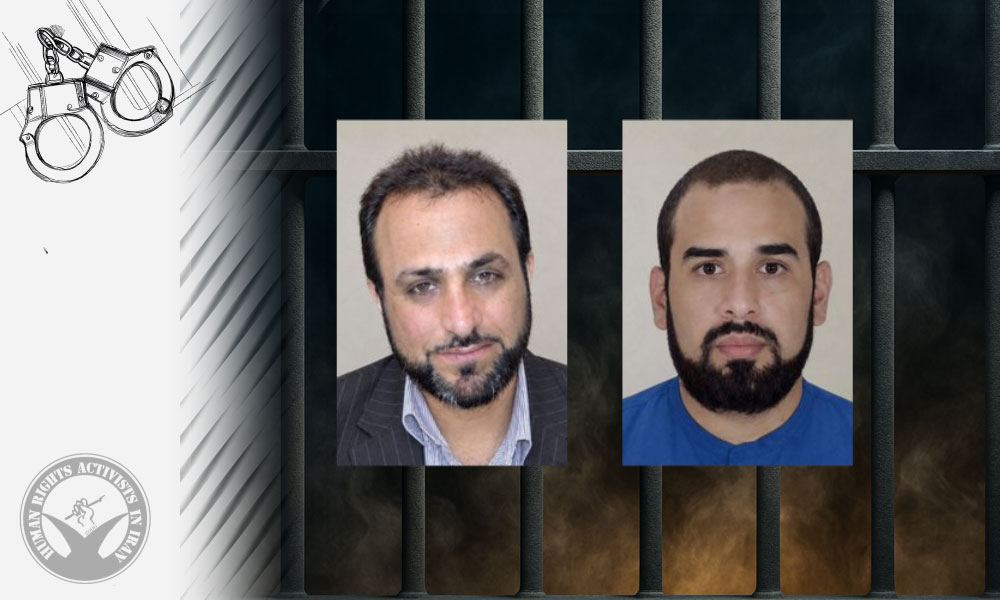
HRANA – Iman Shahpari and Arman Key Shams, detainees from the January 2026 protests who are currently imprisoned in Sheiban Prison in Ahvaz, have each been sentenced by the Khuzestan Province Court of Appeals to two years and one day in prison. One year of each sentence has been suspended for a period of four years.

According to HRANA, Iman Shahpari and Arman Key Shams, both detained during the 2026 nationwide protests, have been sentenced to imprisonment.

According to a ruling issued by the Khuzestan Province Court of Appeals and communicated to their attorney, Hossein Ali Hatami, Mr. Key Shams and Mr. Shahpari were each sentenced to two years and one day in prison on charges of disrupting public order, pursuant to the Note to Article 286 of the Islamic Penal Code. One year of each sentence has been suspended for four years.

The two defendants, who are being prosecuted in a joint case, had previously been sentenced by Branch 1 of the Ahvaz Revolutionary Court to two years and one day in prison on the same charge.

In this case, the charge of “disrupting public order” was brought under the Note to Article 286 of the Islamic Penal Code. Under Iran’s legal framework, Article 286 itself pertains to the offense of “spreading corruption on earth” (efsad-e fel-arz). However, its Note provides that if a defendant’s actions result in disorder or insecurity but are not deemed sufficiently extensive to constitute efsad-e fel-arz, the death penalty does not apply, and the court may instead impose a Grade 5 or Grade 6 discretionary prison sentence (up to five years’ imprisonment).

The reliance on this Note, rather than Article 618 of the Islamic Penal Code, which addresses ordinary public-order offenses and carries a maximum penalty of one year in prison, indicates that the case was handled through a security-oriented approach, with the court applying the more severe penalties available under the Note to Article 286.

These individuals were arrested on January 8, 2026, during the nationwide protests and were subsequently transferred to Sheiban Prison in Ahvaz.

It should be noted that protests and strikes by shopkeepers and bazaar merchants began in Tehran on Sunday, December 28, 2025, and within two days spread beyond markets and commercial centers. With the participation of students, citizens, and various social groups, these protests became one of the largest protest movements of recent years. Following the crackdown by security and law enforcement forces, thousands were killed or injured, and tens of thousands were arrested or summoned by security agencies. For more information, readers may refer to HRANA’s comprehensive report titled “Crimson Winter,” documenting the first fifty days following the outbreak of Iran’s nationwide protests.

Inmate Executed in Sepidar Prison, Ahvaz

HRANA – At dawn on Saturday, June 6, 2026, the death sentence of an inmate previously convicted of murder was carried out in Sepidar Prison, Ahvaz.

According to HRANA, at dawn on Saturday, June 6, 2026, an inmate was executed in Sepidar Prison, Ahvaz. The identity of the prisoner has been confirmed as Mohammad Abiyat, 27 years old.

According to information received by HRANA, Mr. Abiyat was arrested approximately three years ago following a dispute and altercation that resulted in a fatality. He was subsequently sentenced to death by a criminal court, and the sentence was later upheld by the Supreme Court.

At the time of writing, the execution has not been officially announced by prison authorities or the relevant institutions.

According to HRA’s Annual Report, in 2025 at least 2,063 citizens, including 61 women and 2 juvenile offenders, were executed. Of these, the sentences of 11 individuals were carried out in public. During the same period, 172 other individuals were sentenced to death.

Mohammad Asadi Sentenced to Two Years in Prison on Appeal

HRANA – Branch 16 of the Khuzestan Province Court of Appeals has sentenced political prisoner Mohammad Asadi, who is currently held in Sheiban Prison in Ahvaz, to two years in prison. In the initial trial, he had been sentenced to two years of imprisonment along with supplementary punishments.

Based on the ruling issued by Branch 16 of the Khuzestan Province Court of Appeals, Mohammad Asadi was sentenced to two years in prison on the charge of “disrupting public order.” The supplementary punishments imposed in the initial ruling were removed from his sentence.

Previously, during the initial stage of proceedings, Branch 1 of the Ahvaz Revolutionary Court had sentenced him to two years in prison on the same charge. The Revolutionary Court judge had also imposed supplementary punishments, including a two-year travel ban and one year of mandatory attendance at the Office for the Promotion of Virtue and Prevention of Vice. The specific acts forming the basis of the charges against this political prisoner remain unknown.

Mohammad Asadi was arrested on January 14, 2026, and is currently being held in Sheiban Prison, Ahvaz.

Appeals Court Sentences Mohammad Hosseini Chamani to More Than 30 Months in Prison

HRANA – Branch 18 of the Khuzestan Province Court of Appeals has sentenced political prisoner Mohammad Hosseini Chamani, currently held in Sheiban Prison in Ahvaz, to two years, six months, and two days in prison. In the initial trial, he had been sentenced to four years in prison along with supplementary punishments.

According to HRANA, Branch 18 of the Khuzestan Province Court of Appeals has reduced the initial sentence issued against Mohammad Hosseini Chamani.

Under the appellate ruling, Mr. Hosseini Chamani was sentenced to 15 months and one day in prison on the charge of “disrupting public order” and to an additional 15 months and one day in prison for “insulting the Supreme Leader.” The supplementary punishments imposed at the trial stage were also removed from his sentence.

No information is available regarding the specific acts that formed the basis of the charges against this political prisoner.

Previously, during the initial trial, Branch 1 of the Ahvaz Revolutionary Court had sentenced him to two years in prison for “disrupting public order” and two years in prison for “insulting the Supreme Leader.” The Revolutionary Court judge had also imposed supplementary punishments, including a two-year travel ban and one year of mandatory attendance at the Office for the Promotion of Virtue and Prevention of Vice.

Mohammad Hosseini Chamani was arrested on January 8, 2026, and is currently being held in Sheiban Prison in Ahvaz.

January 2026 Protests: Rostam Shahpari Talkh Abi and Iman Shahpari Nia Sentenced to Prison

HRANA – The convictions of Rostam Shahpari Talkh Abi and Iman Shahpari Nia, who were arrested during the January 2026 protests, have been fully upheld by the Khuzestan Province Court of Appeals. In a joint case, Branch 1 of the Ahvaz Revolutionary Court had previously sentenced each of them to two years in prison along with supplementary punishments.

Based on a ruling recently issued by Branch 14 of the Khuzestan Province Court of Appeals, Mr. Shahpari Talkh Abi and Mr. Shahpari Nia were each sentenced, on the charge of “disrupting public order,” to two years in prison, a two-year ban on leaving the country, and one year of mandatory attendance at the Headquarters for the Promotion of Virtue and Prevention of Vice. The court cited the note to Article 286 of the Islamic Penal Code as the basis for the sentence.

The initial verdict in their case had been issued by Branch 1 of the Ahvaz Revolutionary Court on the same charge.

In this case, the charge of “disrupting public order” was brought under the note to Article 286 of the Islamic Penal Code. Under Iran’s legal framework, Article 286 itself pertains to the offense of “spreading corruption on earth” (efsad-e fel-arz). However, according to its accompanying note, if a defendant’s actions are deemed to have caused disorder or insecurity but are not considered sufficiently extensive to constitute efsad-e fel-arz, the death penalty is not applied, and the defendant may instead be sentenced to a Grade 5 or Grade 6 discretionary prison term (up to five years’ imprisonment).

The reliance on this note rather than Article 618 of the Islamic Penal Code, which addresses ordinary public-order offenses and carries a maximum sentence of one year in prison, indicates that the case was handled through a security-oriented approach, with the court relying on the more severe penalties provided under the note to Article 286.

Rostam Shahpari Talkh Abi and Iman Shahpari Nia were arrested on January 9, 2026, during the nationwide protests and were subsequently transferred to Sheiban Prison in Ahvaz.