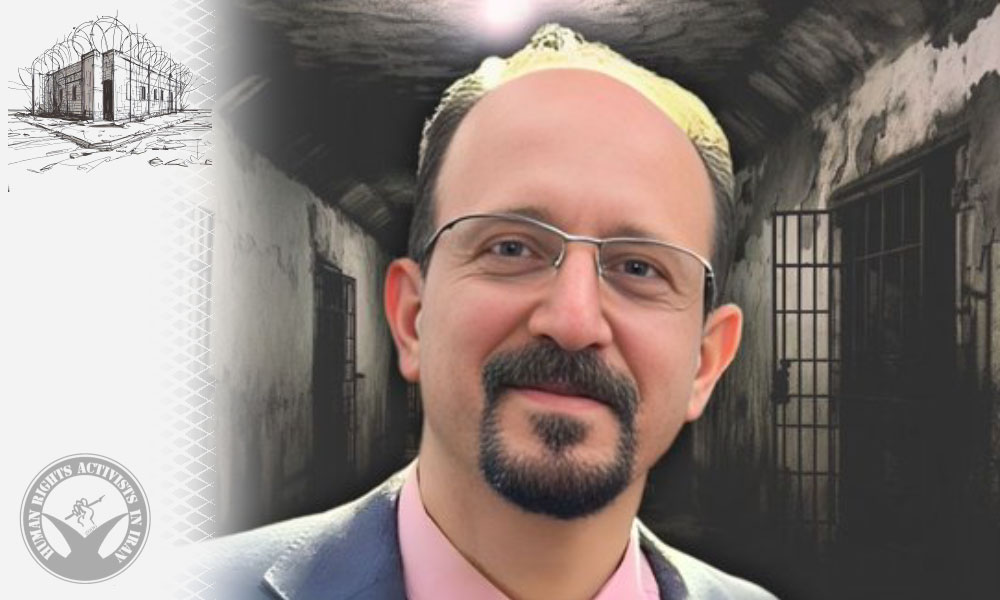
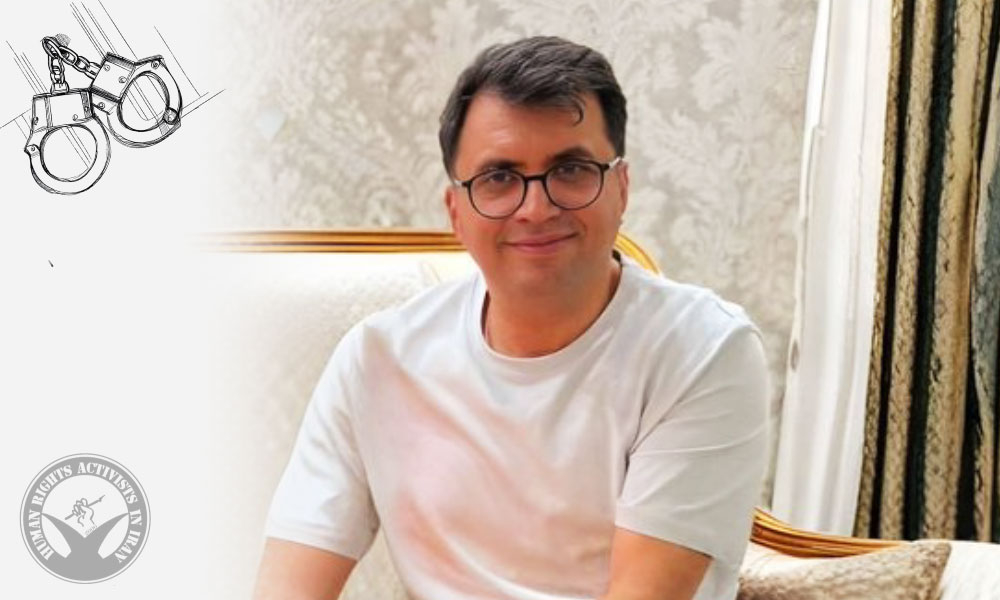
More than Two Decades Behind Bars, Prisoner Profiles – No. 8: Afshin Baymani

HRANA – Numerous political and religious prisoners in Iran have spent more than two decades in detention. To ensure their stories are not lost amid the constant churn of daily news, HRANA publishes a series of reports dedicated to them. Each report reviews the prisoner’s case history, prison conditions, access to basic rights, and urgent needs.

This report examines the current situation of Afshin Baymani after over two decades in prison.


Information Sheet

• Name: Afshin Baymani

• Year of Arrest: 2000 (1379 in the Iranian calendar)

• Stated Charge: “Moharebeh [enmity against God] through collaboration with the People’s Mojahedin Organization of Iran (PMOI/MEK)”

• Initial Sentence: Death penalty

• Current Sentence: Life imprisonment (commuted with one degree of reduction)

• Places of Detention:
After his conviction, Baymani spent years in various wards of Rajai Shahr Prison in Karaj. In August 2023, he was transferred from there to Ward 10 (Section 8) of Evin Prison, without respect for the principle of separation of crimes. In September of the same year, again without separation of crimes and with violence, he was transferred from Evin to the security ward (Unit 3) of Ghezel Hesar Prison in Karaj. In November 2023, he was granted medical furlough from Ghezel Hesar for treatment and care. However, after about one month—despite incomplete treatment—he was rearrested at his residence by police forces on the orders of the Head of Enforcement of Verdicts of Karaj Revolutionary Court and transferred to Asadabad Prison in Mobarakeh, Isfahan, where he was held in the health ward. In January 2024, he was once again transferred from Asadabad to Ghezel Hesar Prison, where he remains to this day.

• Leave / Access: No furlough has been reported in recent years; access to family and lawyer has been limited.

• Current Status: Still serving a life sentence despite legal changes that could allow for review or reduction.

Case Background and Judicial Process

Afshin Baymani was arrested on September 5, 2000, on charges of “Moharebeh through collaboration with the PMOI” and allegedly assisting his brother, Mehdi Baymani, a member of the PMOI, to escape. He was sentenced to death by the Tehran Revolutionary Court, and this ruling was upheld on appeal. After six years, his sentence was commuted to life imprisonment. While this change prevented his execution, it placed him in the category of indefinite imprisonment, which in practice can last for decades and significantly restricts access to review mechanisms.

Key Points in the Judicial Process

• Severe Security Charge: The “Moharebeh” charge is among the most serious in Iran’s political-security cases, with broad legal and practical consequences.

• Sentence Conversion: His initial death sentence and subsequent commutation to life highlight both the severity of the charge and later judicial interventions, though without resolving potential injustices in due process.

• Continued Imprisonment Despite Legal Changes: Legal reforms allowing retrials, sentence reductions, or conditional release in such cases have not been applied to Baymani.

Detention Conditions and Transfers

Throughout his imprisonment, Baymani has been repeatedly transferred between prisons and wards, including Rajai Shahr, Evin, Ghezel Hesar, and Asadabad Prison. Transfers were often violent and carried out without regard to the separation of crimes. He has repeatedly protested mistreatment, lack of medical care, and inhumane conditions, including hunger strikes in 2011 and 2018.

Observations on Prison Standards

• Frequent Transfers: Repeated relocations disrupted family contact, legal representation, and medical treatment.

• Solitary Confinement as Punishment: Baymani has been held in solitary on numerous occasions, sometimes for weeks, in violation of international standards that require solitary to be rare and tightly controlled.

• Violence in Prison: Reports document multiple instances of physical and verbal abuse by prison authorities, including beatings during transfers and threats during hunger strikes.

• Denial of Medical Care: Despite suffering from heart disease, blocked arteries, chest pain, hypertension, diabetes, kidney stones, and requiring angiography and mitral valve surgery, he has repeatedly been denied hospital access. This deliberate deprivation violates the right to health and, in some cases, the right to life, and is often used as a form of pressure.

Access to Family, Lawyer, and Leave

In recent years, Baymani has not been granted furlough. Reports indicate limited access to both family and lawyer, restricting not only his well-being but also his ability to pursue legal remedies.

Potential Legal Pathways (General Recommendations)

1. Retrial: Exploring new evidence or procedural flaws.

2. Sentence Reduction or Commutation: If legal grounds allow.

3. Conditional Release / Suspension of Sentence: Based on duration served, conduct, and medical condition.

4. Addressing Rights Violations: Including access to medical care, protection from abuse, family visits, and legal counsel.

5. International Documentation and Advocacy: If domestic channels remain blocked.

Timeline Summary

• 2000 (1379): Arrest; charged with Moharebeh through collaboration with the PMOI

• Initial Sentence: Death penalty commuted to life imprisonment

• 2000s–2020s: Years spent in Rajai Shahr Prison; repeated transfers

• 2011–2016: Several hunger strikes, solitary confinements, violent transfers reported

• 2018: 57-day hunger strike in protest of denial of medical leave and new case fabrication

• 2023–2024: Transfers between Evin, Ghezel Hesar, and Asadabad Prisons; medical furlough cut short; violent rearrest; chest injury during prison violence in February 2024

• Present: Serving life sentence in Ghezel Hesar, without medical access, furlough, or consistent family contact

Conclusion and Importance of Review

Despite legal changes enabling retrials, reductions, or release for those convicted of Moharebeh, Afshin Baymani remains in prison. His case highlights the broader plight of long-term political-security prisoners in Iran, underlining the need for both domestic and international mechanisms to review and reduce such sentences. His situation emphasizes denial of fundamental rights during imprisonment—furlough, visits, legal access—and the urgent necessity of sustained advocacy.

Urgent Needs:

Regular, equal access to lawyer and family

Independent medical evaluation, particularly after reports of violence and long-term health conditions

Legal review for retrial, sentence reduction, or release under current laws

Enforcement of prison regulations on visits, contact, and furlough

Access to adequate healthcare and treatment


About this Series

This report is part of HRANA’s “More than Two Decades Behind Bars” series, aimed at continuously documenting long-term prisoner cases and reminding society of the collective responsibility to make their struggles visible and pursue their rights.

Following Protest Gathering; 11 Citizens Arrested in Behbahan

HRANA – On Sunday, September 28, eleven job-seeking citizens from the village of Barzion in Bahmai County were arrested by Ministry of Intelligence agents following a protest gathering. After their arrest, these citizens were transferred to Behbahan Prison, Khuzestan province.

According to information obtained by HRANA, the eleven arrested citizens are: Ali Moradi, Abolfazl Jamali, Asad Fathi, Gholam Emami, Salman Ja’fari, Mohammad Ahmadi, Mohammadreza Bahrami, Mehdi Fathi, Morteza Atoon, Hamzeh Atoon, and Mohammad Mohammadpour.

They were arrested after holding a protest in front of the Maroun Dam and Power Plant Operating Company building. Residents of the area are demanding the opportunity to participate in the company’s employment test. Reports indicate that the arrest of some protesters was accompanied by violence from security forces.

Residents of the area had also gathered in front of the Maroun Dam and Power Plant Operating Company building in Behbahan on Saturday, September 27.

These citizens, who are mostly local youths, had previously told HRANA that they are barred from participating in the employment test due to the location of the Maroun Dam and Power Plant Operating Company in Khuzestan Province. They stressed that they have repeatedly raised the issue through local and provincial authorities but have received no response so far.

Execution of Four Prisoners in Adelabad Prison of Shiraz

HRANA – At dawn on Sunday, September 28, the death sentences of four prisoners were carried out in Adelabad Prison of Shiraz.

The identities of two of these prisoners, Esmail Rahimitabar and Ghodrat Dehghani, have been confirmed by HRANA. Iran Human Rights has also confirmed the identities of two others as Mehran Sahraei and Manouchehr Shahbazi.

According to information obtained by HRANA, Mr. Rahimitabar had previously been arrested on a murder charge and later sentenced to death by the Criminal Court. The other three prisoners had been arrested and sentenced to death on charges related to drug offenses.

As of the time of this report, the executions of these prisoners have not been announced by prison officials or relevant institutions.

According to HRANA’s statistics, in 2024, Adelabad Prison in Shiraz witnessed the execution of 92 inmates – an 88% increase compared to the previous year. This sharp rise places Adelabad as the second deadliest prison in Iran after Ghezel Hesar Prison in Karaj.

Reza Kooshki-Nejad Arrested

HRANA – Reza Kooshki-Nejad has been arrested.

On Sunday, September 28, 2025, his brother, Hossein Kooshki-Nejad, announced in a public post that Reza had been arrested. This citizen had previously reported on social media that a legal case had been opened against him.

As of the time of this report, no information is available regarding the reasons for his arrest, the charges against him, or his place of detention.

Reza Kooshki-Nejad, a resident of Lorestan, was previously arrested and convicted for his activities. He is also among those detained during the 2022 nationwide protests.
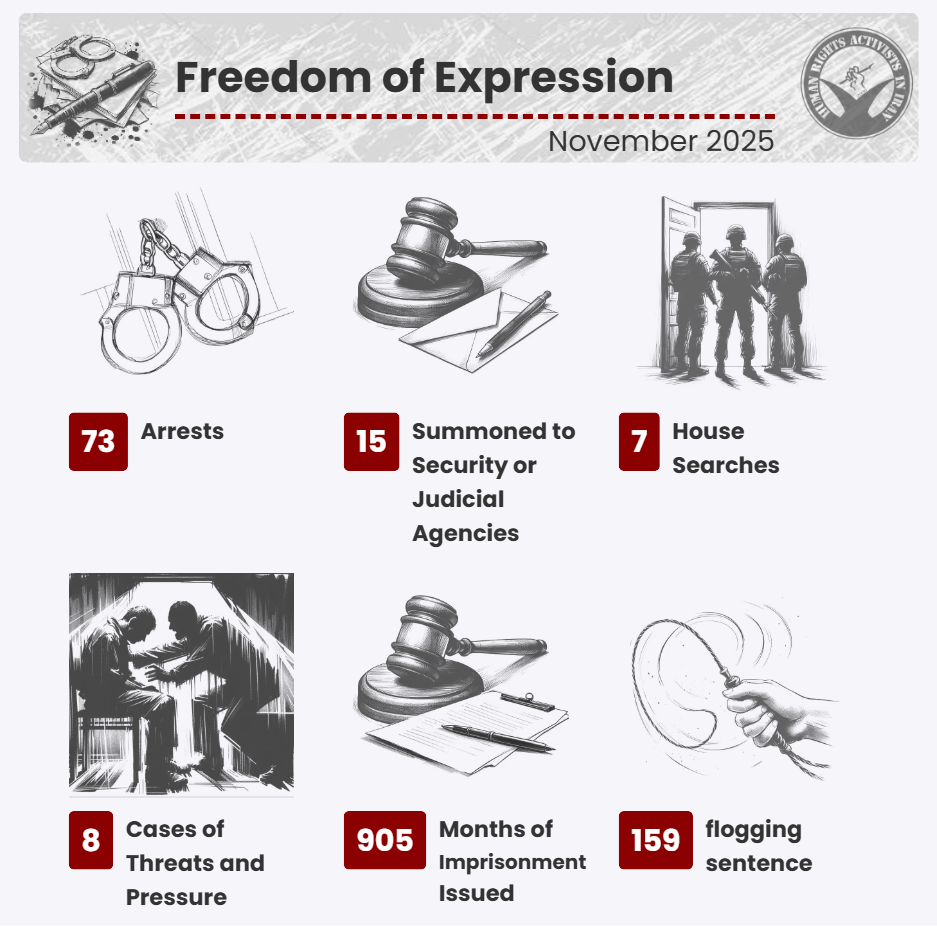
In 2024, a total of 2,783 Iranian citizens were arrested by security and judicial authorities due to their beliefs, opinions, or political and civil activities. Over the past decade, the number of such arrests has exceeded 56,000. The highest number of arrests occurred in 2022, during the nationwide protests, when HRANA documented 23,977 detentions.

Marivan: Mohammad Hooshmand Sentenced to One Year in Prison

HRANA – Mohammad Hooshmand, a resident of Marivan County, has been sentenced to one year in prison by the Revolutionary Court of this city.

According quoting Kurdpa, the ruling was handed down by the Marivan Revolutionary Court and communicated to Mr. Houshmand on September 23, 2025. Based on the verdict, he was convicted on the charge of membership in anti-regime groups and sentenced to one year in prison.

On May 16, 2025, Mr. Hooshmand was arrested by IRGC Intelligence forces in Marivan without a judicial warrant and transferred to Shahramfar Detention Center in Sanandaj. He was eventually released on bail on June 18, 2025.

Mohammad Hooshmand is a resident of Daretfi village in Marivan County.

Subscribe to Our Newsletter

Now is definitely not the time to stop reading!

Execution of a Prisoner in Nahavand Prison

HRANA – At dawn on Wednesday, September 24, a prisoner previously sentenced to death on a murder charge was executed in Nahavand Prison.

HRANA has confirmed the identity of the prisoner as Bijan Soleimani. Based on information received by HRANA, Mr. Soleimani had previously been arrested on a murder charge and later sentenced to death by a criminal court.

As of the time of this report, the execution has not been announced by prison authorities or judicial officials.

In 2024, according to 812 reports compiled by HRANA, the Iranian regime executed 930 individuals in its prisons—marking the highest number of executions in the past 12 years. Despite the scale of these executions, prison officials and other relevant authorities publicly acknowledged only 6% of them, highlighting the regime’s lack of transparency and accountability.

Atash Shakarami Sentenced to 38 Lashes

HRANA – Atash Shakarami has been sentenced by the Lorestan Province Court of Appeals to receive 38 lashes.

Ms. Shakarami announced in a public statement that her conviction was recently confirmed in full by the Court of Appeals. She had previously been sentenced by Branch 106 of the Khorramabad Criminal Court (Second Class) to 38 lashes on the charge of “spreading falsehoods.”

Without mentioning specifics of the charges, Ms. Shakarami stated that the case was opened following a private complaint.

Atash Shakarami, who has a prior record of arrest, is the aunt of Nika Shakarami, one of those killed during the 2022 nationwide protests.

The International Covenant on Civil and Political Rights (ICCPR) strictly prohibits inhumane and degrading punishments such as flogging and amputation.

Naseh Lahijani Sentenced to 10 Years in Prison

HRANA – Naseh Lahijani, a resident of Piranshahr, has been sentenced to 10 years and one day in prison by the Mahabad Revolutionary Court.

According to HRANA, quoting Kurdpa, the sentence was recently issued by Branch 1 of the Mahabad Revolutionary Court and communicated to Mr. Lahijani. Based on the ruling, he was convicted on the charge of membership and collaboration with an opposition party and sentenced to 10 years and one day in prison.

About five months ago, after returning to Iran, Lahijani was arrested in the city of Sardasht by security forces. Following interrogation, he was transferred to Mahabad Prison.

During his detention, this citizen was denied access to a lawyer. He is now serving his sentence in Mahabad Prison.

Naseh Lahijani is from the village of “Hamzeh Abad” in Piranshahr County.

HRANA’s report shows that in 2024, Iranian regime courts—both primary and appeals courts—issued a total of 33,574 months of prison sentences (equivalent to 2,797 years) against Iranian citizens for their political and civil activities. This total represents more than a 1.5-fold increase compared to the previous five-year period.

Karaj Court Sentences Four to Death and Prison on Espionage Charges

HRANA – The head of Alborz Province’s Judiciary has announced the preliminary verdict issued for four defendants in a case related to espionage charges. According to this ruling, two of the defendants were sentenced to execution and imprisonment, while the other two received prison sentences.

According to Mizan, the head of Alborz Province’s Judiciary stated that two men from Karaj and a couple from Isfahan were tried by Branch 3 of the Karaj Revolutionary Court. Based on the preliminary ruling, two of the defendants were sentenced to execution and imprisonment, while the other two received prison terms. The total prison sentences imposed amount to more than 26 years. The ruling was issued on charges including “enmity against God (moharebeh),” “collaboration with hostile groups and the Zionist regime,” “assembly and collusion against national security,” “membership in a criminal group with the aim of disrupting national security,” and “propaganda against the regime.”

Hossein Fazeli-Harikandi alleged that the defendants had received training in manufacturing explosive projectiles, launchers, and firing techniques, and were tasked with attacking “one of the country’s important military centers” in late May of this year.

He further claimed that they were instructed to document their actions through photos and videos, though he provided no evidence or indication of transparent judicial procedures to support these assertions.

Reiterating security-related allegations, Fazeli-Harikandi accused the three men and one woman of links to the People’s Mojahedin Organization of Iran (MEK) and Mossad, asserting that they had been recruited online through intermediaries in neighboring countries. Without offering proof, he also accused them of sending coordinates of sensitive locations and setting fire to public sites.

The head of Alborz Province’s Judiciary did not reveal the defendants’ identities or clarify the conditions under which they were interrogated and made to confess.

Fazeli-Harikandi emphasized that the verdict is preliminary, and if appealed, the case will be referred to the Supreme Court for review.

The trial was held in mid-September at Branch 3 of the Karaj Revolutionary Court. The defendants had been arrested about one month before Israel’s military strike on Iran.

Qarchak Varamin Prison: Repeated Deaths Caused by Lack of Medical Care and Treatment Facilities

HRANA – Repeated Deaths in Qarchak Varamin Prison Amid Medical Neglect and Lack of Treatment Facilities

Systematic violations of prisoners’ rights in Qarchak Varamin Prison, particularly the denial of medical care, continue to result in fatalities. Inadequate access to health services and delays in transferring prisoners to hospitals remain among the most critical issues, repeatedly leading to preventable deaths.

In the most recent case, Somayeh Rashidi, a political detainee, died yesterday after prison doctors misdiagnosed her condition and failed to transfer her to a hospital in time. On Tuesday, September 16, she was eventually taken to Mofatteh Hospital in Varamin after her health deteriorated. By then, her level of consciousness was critically low, and doctors described her condition as beyond recovery.

Less than a week earlier, on Friday, September 19, Jamileh Azizi, a prisoner convicted of financial charges, also died following medical neglect. She was taken to the prison infirmary with symptoms of a heart attack. Despite clear warning signs, doctors dismissed her condition and sent her back to her ward, where she soon died in Moshar 2.

Today, HRANA also confirmed the death of Sudabeh Asadi, another prisoner held on financial charges, further underscoring the lethal consequences of medical deprivation in this facility.

A former staff member of Qarchak told HRANA:

“One of the prison’s most serious problems is poor medical care. The infirmary doesn’t even have a blood pressure monitor. Oxygen tanks are often empty, the ECG machine is broken, and no defibrillator is available. Transfers to hospitals face complicated procedures and are frequently blocked.”

He continued:

“Medical diagnoses are often incorrect, and prisoners are regularly accused of faking illness. Medicine is in short supply—sometimes a single bottle of syrup is given to all prisoners with a common cold. Because of overcrowding, each prisoner is allowed only one infirmary visit per month. Even basic equipment such as stretchers and wheelchairs is missing, severely limiting urgent care.”

A prisoner recently told family members about the behavior of medical staff:

“When we go to the infirmary, not only are we not properly examined, but we’re insulted with comments like, ‘You’re not dead yet,’ ‘Why do you keep coming here?’ and ‘I wish you’d die sooner.’”

According to HRANA’s information, several political prisoners—including Raheleh Rahemipour, Parvin Mirasan, Maryam Akbari Monfared, Marziyeh Farsi, and Shiva Esmaeili—suffer from multiple health problems. The number of non-political prisoners facing similar conditions remains unknown, though investigations are ongoing.

Qarchak Varamin Prison holds at least 1,000 inmates. A former employee told HRANA:

“The prison has at least 11 wards. Political prisoners are held in quarantine, financial prisoners and sick detainees in Moshar 2, and foreign nationals are housed among other prisoners depending on their charges.”

Additional concerns include frequent power and water outages, lack of cooling systems that contribute to widespread skin diseases, broken bathroom facilities that force inmates to queue for long periods, and failed ventilation that worsens already poor hygiene.

Food quality is another major issue. A relative of one inmate explained:

“Meals for prisoners convicted of general crimes are both smaller and of lower quality than those for others. If chicken is on the menu, they only get a few shredded scraps floating in broth—no real pieces of chicken in the stew.”

Following Israeli strikes on Evin Prison, HRANA reported the large-scale transfer of female political prisoners from Evin to Qarchak. Since then, those placed in Ward 11 (formerly the quarantine ward) have faced severe overcrowding, lack of ventilation, shortages of essential items, and discriminatory treatment by officials—conditions that families continue to raise concerns about, but which remain unresolved.