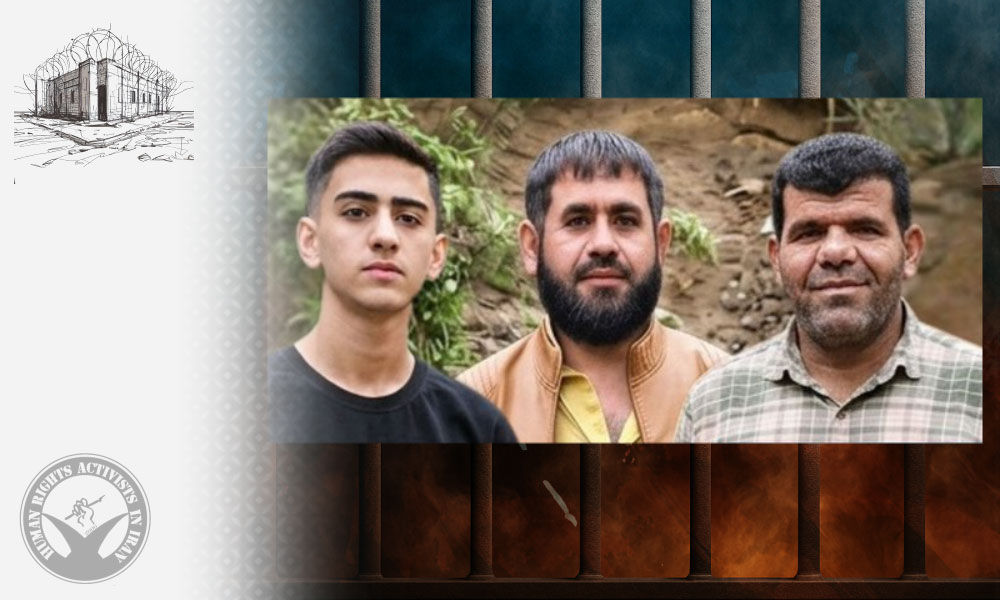
Life Sentences of Three Political Prisoners Held in Sheiban Prison, Ahvaz Reduced to 25 Years

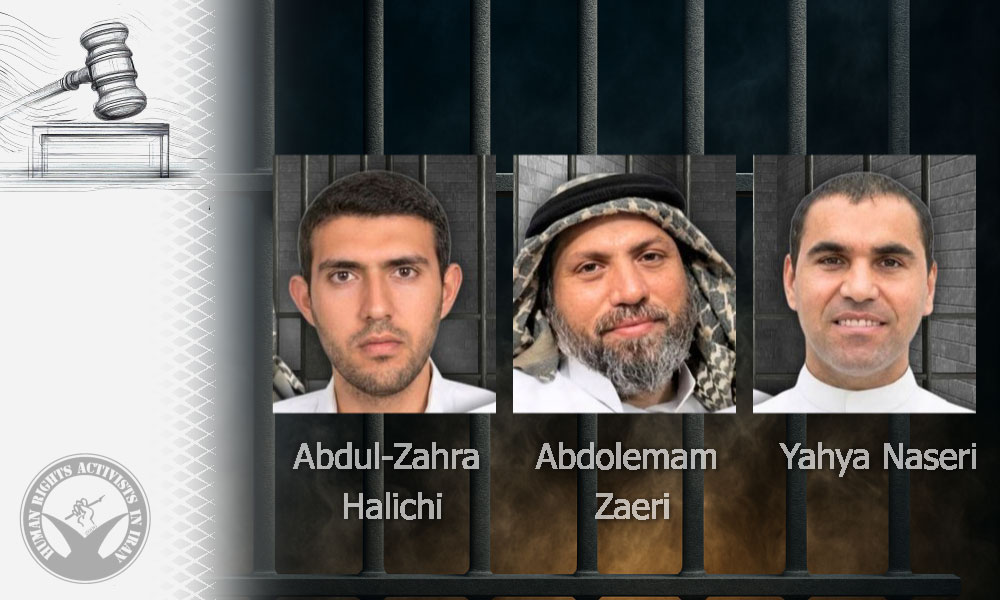
HRANA – Following the implementation of a pardon granted on a special occasion, the life sentences of political prisoners Yahya Naseri (Navaseri), Zohair Halichi (Abdul-Zahra Halichi), and Abdolemam Zaeri, who are held in Sheiban Prison in Ahvaz, have been reduced to 25 years’ imprisonment. These prisoners have been incarcerated for more than two decades.

According to HRANA, the sentences of three political prisoners have been reduced to 25 years in prison. Based on information received by HRANA, the life sentences of Messrs. Naseri, Halichi, and Zaeri were commuted to 25-year prison terms following the implementation of a special pardon.
These prisoners had previously been sentenced to life imprisonment and have spent more than two decades serving their sentences.

Yahya Naseri (Navaseri), Abdul-Zahra Halichi (Zohair Halichi), and Abdolemam Zaeri were arrested by security forces in October 2005. Shortly thereafter, Branch One of the Ahvaz Revolutionary Court sentenced each of them to life imprisonment on charges of ‘acting against national security,’ moharebeh (enmity against God), and efsad-e fel-arz (corruption on earth).

HRANA had previously examined the latest situation of prisoners who have spent more than two decades behind bars in its series ‘More Than Two Decades in Prison.‘ These men are among the prisoners who, in addition to various deprivations, have spent the past twenty years in prison.

January 2026 Protests: Iman Shahpari and Arman Key Shams Sentenced to Prison

HRANA – Iman Shahpari and Arman Key Shams, detainees from the January 2026 protests who are currently imprisoned in Sheiban Prison in Ahvaz, have each been sentenced by the Khuzestan Province Court of Appeals to two years and one day in prison. One year of each sentence has been suspended for a period of four years.

According to HRANA, Iman Shahpari and Arman Key Shams, both detained during the 2026 nationwide protests, have been sentenced to imprisonment.

According to a ruling issued by the Khuzestan Province Court of Appeals and communicated to their attorney, Hossein Ali Hatami, Mr. Key Shams and Mr. Shahpari were each sentenced to two years and one day in prison on charges of disrupting public order, pursuant to the Note to Article 286 of the Islamic Penal Code. One year of each sentence has been suspended for four years.

The two defendants, who are being prosecuted in a joint case, had previously been sentenced by Branch 1 of the Ahvaz Revolutionary Court to two years and one day in prison on the same charge.

In this case, the charge of “disrupting public order” was brought under the Note to Article 286 of the Islamic Penal Code. Under Iran’s legal framework, Article 286 itself pertains to the offense of “spreading corruption on earth” (efsad-e fel-arz). However, its Note provides that if a defendant’s actions result in disorder or insecurity but are not deemed sufficiently extensive to constitute efsad-e fel-arz, the death penalty does not apply, and the court may instead impose a Grade 5 or Grade 6 discretionary prison sentence (up to five years’ imprisonment).

The reliance on this Note, rather than Article 618 of the Islamic Penal Code, which addresses ordinary public-order offenses and carries a maximum penalty of one year in prison, indicates that the case was handled through a security-oriented approach, with the court applying the more severe penalties available under the Note to Article 286.

These individuals were arrested on January 8, 2026, during the nationwide protests and were subsequently transferred to Sheiban Prison in Ahvaz.

It should be noted that protests and strikes by shopkeepers and bazaar merchants began in Tehran on Sunday, December 28, 2025, and within two days spread beyond markets and commercial centers. With the participation of students, citizens, and various social groups, these protests became one of the largest protest movements of recent years. Following the crackdown by security and law enforcement forces, thousands were killed or injured, and tens of thousands were arrested or summoned by security agencies. For more information, readers may refer to HRANA’s comprehensive report titled “Crimson Winter,” documenting the first fifty days following the outbreak of Iran’s nationwide protests.

January 2026 Protests: Arman Soleimani Sentenced to Two Years by Appeals Court

HRANA – The conviction of Arman Soleimani, a detainee from the nationwide protests of January 2026 who is currently imprisoned in Sheiban Prison in Ahvaz, has been upheld in full by the Khuzestan Province Court of Appeals. He had previously been sentenced by the Revolutionary Court of Izeh to two years in prison.

Based on the ruling issued by the Khuzestan Province Court of Appeals, Mr. Soleimani was sentenced to two years and one day in prison on the charge of “disrupting public order,” pursuant to the Note to Article 286 of the Islamic Penal Code.

He had previously received the same sentence at the trial stage from Branch 1 of the Revolutionary Court of Izeh.

Arman Soleimani was arrested on January 8, 2026, during the nationwide protests and was subsequently transferred to Sheiban Prison in Ahvaz.

It should be noted that protests and strikes by shopkeepers and bazaar merchants began in Tehran on Sunday, December 28, 2025, and within two days spread beyond markets and commercial centers. With the participation of students, citizens, and various social groups, these protests became one of the largest protest movements of recent years. Following the crackdown by security and law enforcement forces, thousands were killed or injured, and tens of thousands were arrested or summoned by security agencies. For more information, readers may refer to HRANA’s comprehensive report titled “Crimson Winter,” documenting the first fifty days following the outbreak of Iran’s nationwide protests.

Mohammad Asadi Sentenced to Two Years in Prison on Appeal

HRANA – Branch 16 of the Khuzestan Province Court of Appeals has sentenced political prisoner Mohammad Asadi, who is currently held in Sheiban Prison in Ahvaz, to two years in prison. In the initial trial, he had been sentenced to two years of imprisonment along with supplementary punishments.

Based on the ruling issued by Branch 16 of the Khuzestan Province Court of Appeals, Mohammad Asadi was sentenced to two years in prison on the charge of “disrupting public order.” The supplementary punishments imposed in the initial ruling were removed from his sentence.

Previously, during the initial stage of proceedings, Branch 1 of the Ahvaz Revolutionary Court had sentenced him to two years in prison on the same charge. The Revolutionary Court judge had also imposed supplementary punishments, including a two-year travel ban and one year of mandatory attendance at the Office for the Promotion of Virtue and Prevention of Vice. The specific acts forming the basis of the charges against this political prisoner remain unknown.

Mohammad Asadi was arrested on January 14, 2026, and is currently being held in Sheiban Prison, Ahvaz.

Appeals Court Sentences Mohammad Hosseini Chamani to More Than 30 Months in Prison

HRANA – Branch 18 of the Khuzestan Province Court of Appeals has sentenced political prisoner Mohammad Hosseini Chamani, currently held in Sheiban Prison in Ahvaz, to two years, six months, and two days in prison. In the initial trial, he had been sentenced to four years in prison along with supplementary punishments.

According to HRANA, Branch 18 of the Khuzestan Province Court of Appeals has reduced the initial sentence issued against Mohammad Hosseini Chamani.

Under the appellate ruling, Mr. Hosseini Chamani was sentenced to 15 months and one day in prison on the charge of “disrupting public order” and to an additional 15 months and one day in prison for “insulting the Supreme Leader.” The supplementary punishments imposed at the trial stage were also removed from his sentence.

No information is available regarding the specific acts that formed the basis of the charges against this political prisoner.

Previously, during the initial trial, Branch 1 of the Ahvaz Revolutionary Court had sentenced him to two years in prison for “disrupting public order” and two years in prison for “insulting the Supreme Leader.” The Revolutionary Court judge had also imposed supplementary punishments, including a two-year travel ban and one year of mandatory attendance at the Office for the Promotion of Virtue and Prevention of Vice.

Mohammad Hosseini Chamani was arrested on January 8, 2026, and is currently being held in Sheiban Prison in Ahvaz.

Subscribe to Our Newsletter

Now is definitely not the time to stop reading!

Mahmoud Talkh Abi Sentenced to 5 Years in Prison on Appeal

HRANA – The five-year prison sentence of Mahmoud Talkh Abi, one of those arrested during the nationwide protests of 2026 and currently held in Sheiban Prison in Ahvaz, has been upheld in full by Branch 16 of the Khuzestan Province Court of Appeals.

Based on a ruling issued by Branch 16 of the Khuzestan Province Court of Appeals, Mr. Talkh Abi was sentenced to five years in prison on the charge of “disrupting public order,” pursuant to the Note to Article 286 of the Islamic Penal Code.

Previously, at the trial stage, Branch 1 of the Ahvaz Revolutionary Court had sentenced him to five years in prison, a two-year ban on leaving the country, and two years of mandatory attendance at the Office for the Promotion of Virtue and Prevention of Vice in connection with this charge. The supplementary punishments were overturned during the appeals process.

Mahmoud Talkh Abi was arrested on December 30, 2025, in connection with the nationwide protests and is currently being held in Sheiban Prison in Ahvaz.

In this case, the charge of “disrupting public order” was brought under the Note to Article 286 of the Islamic Penal Code. Under Iran’s legal framework, Article 286 itself pertains to the offense of “corruption on earth” (efsad-e fel-arz). However, according to its Note, if a defendant’s actions are deemed to have caused disorder or insecurity but are not considered sufficiently extensive to meet the threshold of “corruption on earth,” the death penalty is not applied, and the court may instead impose a Grade Five or Grade Six discretionary prison sentence (up to five years’ imprisonment). The court’s reliance on this Note rather than Article 618 of the Islamic Penal Code—which addresses ordinary public-order offenses and carries a maximum sentence of one year in prison—indicates that the case was handled through a security-oriented approach, with the harsher penalties provided under the Note to Article 286 serving as the basis for the sentence.

Hojat Al-Mohammadi Sentenced to 21 Years in Prison

HRANA – Hojat Al-Mohammadi, a political prisoner held in Sheiban Prison in Ahvaz, has been sentenced to 21 years in prison by the Revolutionary Court of Ahvaz.

Based on information received by HRANA, Mr. Al-Mohammadi was sentenced to 21 years in prison by Branch 3 of the Ahvaz Revolutionary Court. The verdict was formally communicated to him in prison last week.

His trial session was held in this branch in December of 2025. During the hearing, Mr. Al-Mohammadi and Mohammad Tahmasebi, who were tried jointly in this case, defended themselves against charges including “propaganda against the regime,” “disrupting public order,” and “cooperation with anti-regime groups.”

Mr. Al-Mohammadi was arrested at his home in Izeh on September 16, 2024, by several security agents. After the completion of interrogations, he was transferred from The Ministry of Intelligence’s detention facility in Ahvaz to Ward 5 of Sheiban Prison.

Hojat Al-Mohammadi, 40 years old, is the father of a young child and a resident of Izeh County. He has previously faced arrest and conviction due to his activities.

Ruhollah Korki, Political Prisoner, Sentenced to Death

HRANA – Ruhollah Korki, a political prisoner held in Sheiban Prison in Ahvaz, has been sentenced to death.

Based on information received by HRANA, Ruhollah Korki was sentenced to death. Some time ago, the indictment against this citizen was issued on charges including “publishing and disclosing confidential documents,” “cooperation with the Mojahedin-e Khalq Organization (MEK),” “spying for Israel and exchanging military and security information,” “insulting sanctities and officials,” and “acting against national security.” The case had been referred to Ahvaz Criminal Court Two.

Mr. Korki was transferred to Sheiban Prison in Ahvaz on October 2, 2025. He had previously been arrested by security forces in Andimeshk on August 5, 2025.

It should be noted that Ruhollah Korki is the brother of Amin Korki, one of those arrested during the nationwide protests of December 2017–January 2018. Amin Korki died under unclear circumstances in March 2018 after being rearrested.

Ruhollah Korki, aged approximately 47, is married and originally from Andimeshk County.

Sunni Prisoner Ali Soveidi Transferred to Hospital Following Deteriorating Health

HRANA- Ali Soveidi, a Sunni prisoner held in Ward 8 of Sheiban Prison in Ahvaz, was transferred from prison to a hospital due to his deteriorating physical condition.

A source close to Mr. Soveidi’s family, confirming the news, told HRANA:
“This Sunni prisoner suffers from several illnesses, including kidney problems, diabetes, and high blood lipids. On Sunday, April 19, he lost consciousness in prison due to a drop in blood pressure and was subsequently transferred to a hospital. However, prison authorities have not allowed his family to visit him and have not even disclosed the name of the hospital to which he was transferred. Since then, his family has remained unaware of his condition. The lack of information about his health has increased the concern of his family and relatives.”

Mr. Soveidi was arrested on October 3, 2018, in the village of Hajiyeh, a district of Dasht-e Azadegan County. He is currently being held in Ward 8 of Sheiban Prison in Ahvaz.

Ali Soveidi had previously been arrested by the Intelligence Office last year and was released from prison in May 2018 on bail.

Nationwide Protests: Nima Hassankhani Sentenced to Imprisonment and Other Penalties

HRANA – Nima Hassankhani, one of those arrested during recent nationwide protests, has been sentenced by Branch One of the Ahvaz Revolutionary Court to two years of imprisonment, a two-year travel ban, and one year of mandatory attendance at the Headquarters for the Promotion of Virtue and Prevention of Vice.

Based on the ruling issued by Branch One of the Ahvaz Revolutionary Court, Mr. Hassankhani was sentenced to two years in prison, a two-year ban on leaving the country, and one year of mandatory presence at the Headquarters for the Promotion of Virtue and Prevention of Vice on charges of “propaganda against the regime” and “disrupting public order and peace through participation in protests.”

Hossein-Ali Hatami, an attorney-at-law, told HRANA that in Nima Hassankhani’s case, upon formally declaring his representation, he has not only objected to the detention order but has also filed an appeal request.

Nima Hassankhani, a bodybuilding athlete and a shopkeeper in the city of Izeh, was arrested on February 7, 2026, during protests in the city and was subsequently transferred to Sheiban Prison in Ahvaz.

It should be noted that gatherings and strikes by shopkeepers and bazaar merchants began on Sunday, December 28, 2025, in Tehran. After two days, the protests expanded beyond markets and commercial centers. With the participation of students, citizens, and various social groups, these demonstrations became one of the most widespread protests in recent years. Following the crackdown by security and law enforcement forces, thousands were killed or injured, and tens of thousands were arrested or summoned by security institutions. For more information about these protests, refer to HRANA’s comprehensive report.