
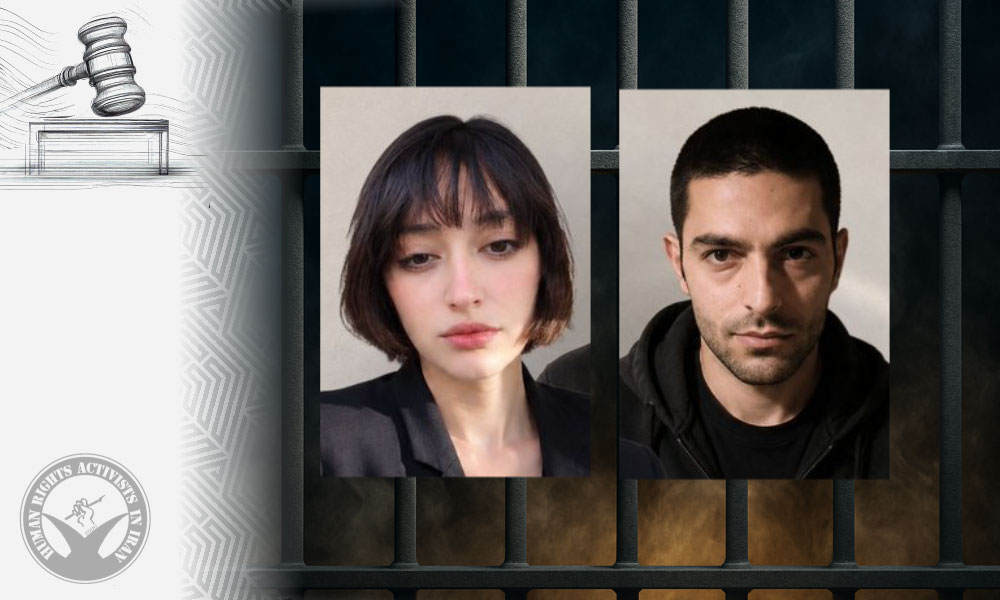
Attorney Elham Zeraatpisheh Arrested in Shiraz

HRANA – Elham Zeraatpisheh, a lawyer, was arrested yesterday in Shiraz and transferred to an undisclosed location.

The arrest took place on Monday, May 4, 2026, in the vicinity of the Shiraz Prosecutor’s Office for the Enforcement of Judgments. As of the time of this report, no information is available regarding her place of detention, the reasons for her arrest, or the charges brought against her.

Elham Zeraatpisheh is an attorney and a member of the Fars Province Bar Association. She has previously faced judicial actions and arrest due to her professional activities.

Three Christian Citizens Arrested in Yazd

HRANA – The prosecutor of Yazd announced the arrest of three Christian citizens in the province on charges described as “forming a house church group and promoting Christianity.”

According to Fars News Agency, the public and revolutionary prosecutor of Yazd Province referred to these individuals as “key members of a Christian proselytizing network” and stated that they were arrested by security forces.

Mehdi Hassanpour further claimed that these citizens “established connections with Christian missionary organizations and entities linked to Israel, and subsequently formed a group in the form of a house church. They encouraged several family members and friends, both in person and online, to convert to Christianity.” He also alleged that some individuals connected to the case had insulted religious sanctities and “prayed for Israel’s victory.”

The report does not provide further details, including the identities of those arrested or their place of detention.

These actions against Christian converts in Iran occur despite Article 18 of the Universal Declaration of Human Rights and Article 18 of the International Covenant on Civil and Political Rights, both of which affirm every individual’s right to freedom of religion, including the right to change one’s religion and to express it individually or collectively, publicly or privately.

Attorney-at-Law Astareh Ansari Arrested in Shiraz

HRANA – Astareh (Maryam) Ansari, an attorney-at-law, was arrested last night at her home in Shiraz and transferred to an undisclosed location.

She was arrested on the evening of Sunday, May 3, 2026, at her private residence in Shiraz by security agents. No information is currently available regarding the reasons for her arrest or her whereabouts.

Astareh (Maryam) Ansari, a practicing lawyer, had previously been arrested during the 2022 protests.

January Protests: Ebrahim Dowlatabadi-Nejad Executed

HRANA – Ebrahim Dowlatabadi-Nejad, one of those arrested in connection with the January 2026 protests in Mashhad, was executed at dawn yesterday alongside two other protesters in Vakilabad Prison in the city. Earlier today, HRANA had reported the executions of Mehdi Rasouli and Mohammadreza Miri.

According to Mizan News Agency, the Judiciary’s media center, the death sentence of Ebrahim Dowlatabadi-Nejad was carried out at dawn yesterday after being upheld by the Supreme Court. He had been arrested in connection with protest events on January 8 and 9, 2026 in the Tabarsi area of Mashhad.

This prisoner had been sentenced to death and confiscation of property on charges including “acting against national security,” “leading and organizing protest gatherings,” “inciting and encouraging individuals to participate in protests,” and “destruction of public property.”

In outlining the charges, the Judiciary cited his presence during protests in the Tabarsi area on January 8 and 9, his alleged role in directing crowds, blocking roads, setting fires, damaging public and private property, and online activities calling for protests. However, no independent information has been published regarding the judicial process or details of his case.

Early this morning, HRANA reported for the first time that Mehdi Rasouli, 25, and Mohammadreza Miri, 21, were also executed at dawn yesterday in Vakilabad Prison in Mashhad. Their death sentences had previously been issued in connection with the killing of a Basij member. Their bodies were ultimately buried under security measures in a village near Kashmar.

HRANA had previously published a detailed report examining the process of issuing and carrying out death sentences in political and security-related cases amid the onset of military tensions and an intensified security atmosphere. The report, focusing on political and security prisoners, particularly those detained during the January 2026 protests, highlighted that in some cases, the handling of these cases had proceeded at a pace exceeding usual procedures, with a shortened time span between arrest, sentencing, and execution. It also provided a list of names and descriptions of these cases.

It should be noted that protests and strikes by shopkeepers and bazaar merchants began in Tehran on Sunday, December 28, 2025, and within two days spread beyond markets and commercial centers. With the participation of students, citizens, and various social groups, these protests became one of the largest protest movements of recent years. Following the crackdown by security and law enforcement forces, thousands were killed or injured, and tens of thousands were arrested or summoned by security agencies. For more information, readers may refer to HRANA’s comprehensive report titled “Crimson Winter,” documenting the first fifty days following the outbreak of Iran’s nationwide protests.
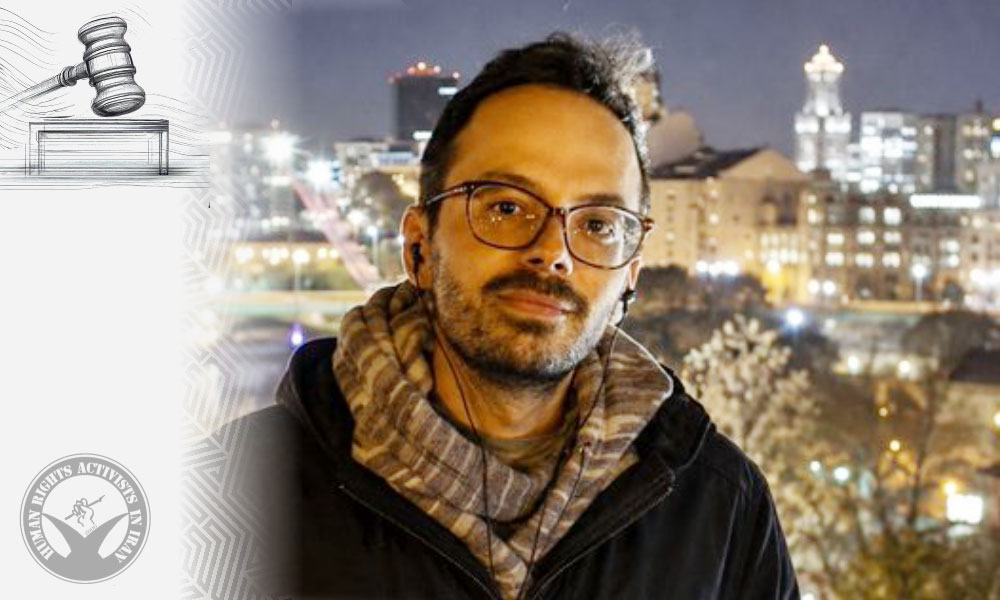
Behzad Rasouli Sentenced to Eight Years in Prison on Charge of Alleged Membership in an Opposition Party

HRANA – Behzad Rasouli, a detained citizen currently held in Saqqez Prison, has been sentenced by the Revolutionary Court of this city to eight years of discretionary imprisonment.

According to Kolbar News, Behzad Rasouli was sentenced by Branch 1 of the Saqqez Revolutionary Court, presided over by Judge Javad Ghaffari. Based on the verdict, Mr. Rasouli was sentenced to eight years in prison on charges of alleged membership in an opposition party. He is currently serving his sentence in Saqqez Prison.

Behzad Rasouli, a 42-year-old resident of Saqqez who had returned to Iran after leaving Iraq, was arrested on Saturday, July 26, 2025, during a trip to Isfahan by government forces.

Following his arrest, he was initially transferred to The Ministry of Intelligence’s detention facility in Saqqez, and after three months, he was moved to the quarantine ward of Saqqez Prison.

Subscribe to Our Newsletter

Now is definitely not the time to stop reading!

January Protests: Mehdi Rasouli and Mohammadreza Miri Executed

HRANA – Mehdi Rasouli and Mohammadreza Miri, two prisoners connected to the January protests, were executed at dawn yesterday, May 3, in Vakilabad Prison in Mashhad. The two had previously been sentenced to death in a case related to the killing of a Basij member.

According to HRANA, at dawn on Sunday, May 3, 2026, the death sentences of Mehdi Rasouli, 25, and Mohammadreza Miri, 21, were carried out in Vakilabad Prison, Mashhad.

A source familiar with Mehdi Rasouli’s case told HRANA:
“A video showing the beating of a Basij member during the January protests in Mashhad was found on Mehdi Rasouli’s mobile phone. Security agencies claimed that the attacker was Mehdi Rasouli and another individual, and that the Basij member seen in the video died as a result of the beating.”

The source added:
“Mr. Rasouli had questioned the validity of these claims, but had told his relatives that due to severe beatings and torture, he was forced to accept the charges. These coerced confessions became the main evidence against him in the case.”

According to this source, security agencies had pressured his family and relatives into silence by promising that his sentence would be reduced if they remained quiet. Due to the family’s silence and lack of public information dissemination, these two prisoners had remained unknown to human rights groups.

On Saturday, at around 3:00 PM, Mehdi Rasouli informed his family in a phone call that he was being transferred to solitary confinement. This morning, the families of the two prisoners were informed of the execution of their sons, and their bodies were handed over to the families at around 10:00 AM.

Yesterday afternoon, Mehdi Rasouli’s body was buried under security measures in a village near Kashmar. The execution of the two prisoners has also been confirmed by Marzieh Mohseni, a legal expert.

It should be noted that protests and strikes by shopkeepers and bazaar merchants began in Tehran on Sunday, December 28, 2025, and within two days spread beyond markets and commercial centers. With the participation of students, citizens, and various social groups, these protests became one of the largest protest movements of recent years. Following the crackdown by security and law enforcement forces, thousands were killed or injured, and tens of thousands were arrested or summoned by security agencies. For more information, readers may refer to HRANA’s comprehensive report titled “Crimson Winter,” documenting the first fifty days following the outbreak of Iran’s nationwide protests.

Political Prisoner Mehrab Abdollahzadeh Exectued

HRANA – The death sentence of Mehrab Abdollahzadeh, a political prisoner, was carried out at dawn today, Sunday, May 3. He had previously been sentenced to death on the charge of “corruption on earth through participation in the intentional killing of a Basij member” during the 2022 protests.

According to Mizan, the Judiciary announced in a statement that after the completion of legal proceedings and confirmation of the verdict by the Supreme Court, the execution was carried out at dawn on Sunday, May 3. Mr. Abdollahzadeh had been sentenced to death on the charge of “corruption on earth” through “participation in the intentional killing” of a Basij member named Seyed Abbas Fatemiyeh during the 2022 protests.

The Judiciary’s media center stated that the defendant had confessed to being present at the protests and participating in an attack on security forces. According to the verdict, he and two others, wearing masks, allegedly killed the Basij officer by inflicting multiple blows. The court deemed the charge of “corruption on earth” proven and sentenced Mehrab Abdollahzadeh to death. The two other defendants, due to being under 18 years old, were sentenced to imprisonment and detention in a juvenile correctional facility.

However, relatives of the political prisoner had previously told Kurdpa News Agency: “Mr. Abdollahzadeh was subjected to severe physical and psychological torture during detention to extract forced confessions. Review of CCTV footage shows that Mehrab was not present at the scene of the killing, and these recordings were in the possession of security forces. Furthermore, there was no evidence placing him at the time and location of the incident.”

His death sentence was upheld in December of 2025 by Branch 9 of the Supreme Court and was later formally communicated to him in prison. Abdollahzadeh had previously been tried by Branch 2 of the Revolutionary Court of Urmia on the charge of “corruption on earth” through “participation in the intentional killing” of a Basij member. In November 2023, the court sentenced him to death on that charge.

Mehrab (Mehran) Abdollahzadeh, a resident of Oshnavieh, was arrested during the 2022 protests and released on bail some time later. In another part of his case, he had been sentenced by Branch 101 of the Criminal Court Two of Oshnavieh County to nine months in prison on the charge of “assembly and collusion.” He was eventually re-arrested and transferred to Urmia Prison.

In recent weeks, amid heightened security conditions linked to military tensions, the issuance and implementation of death sentences in political and security-related cases have accelerated significantly. In a recent comprehensive report, HRANA examined the situation of political and security prisoners, particularly those detained during the January 2026 protests, and documented this trend and the details of related cases.

Yaghoub Karimpour and Naser Bakrzadeh Executed

HRANA – The death sentences of Yaghoub Karimpour, a follower of the Yarsan faith, and Naser Bakrzadeh, a political prisoner, were carried out at dawn today, Saturday, May 2. They had previously been sentenced to death on charges of “espionage and intelligence cooperation with Israel.”

According to Mizan News Agency, in an official statement, the Judiciary announced that after the completion of legal proceedings and confirmation of their sentences by the Supreme Court, the two prisoners were executed early this morning. Yaghoub Karimpour had been sentenced to death on charges of “intelligence cooperation and espionage in favor of Israel,” while Naser Bakrzadeh was sentenced on charges of “corruption on earth through cooperation with Mossad.”

The Judiciary’s media center listed the alleged charges against them as “sending information and images of military locations,” “sabotage operations,” “manufacturing sound bombs,” “gathering intelligence from sensitive centers,” and “field cooperation with Mossad officers.” However, a significant portion of the case evidence was reportedly based on confessions attributed to the defendants, and no independent information has been published regarding how these confessions were obtained.

HRANA had previously reported that Karimpour, a follower of the Yarsan faith, and Bakrzadeh, a political prisoner, were being held in Urmia Prison.

Karimpour’s death sentence was upheld in February by Branch 9 of the Supreme Court. The country’s highest judicial authority also confirmed Bakrzadeh’s death sentence for the third time, and this decision was formally communicated to him at the Urmia Prison sentence enforcement office on April 25 this year.

Karimpour was arrested by security forces in Miandoab in June of 2025 and transferred to The Ministry of Intelligence’s detention facility in Urmia. During his detention, he was denied access to a lawyer and family visits. A knowledgeable source had previously told HRANA that Karimpour was subjected to security pressure for about two months in order to extract forced confessions. Aged approximately 41, he was married and held a law degree from Maragheh University.

Naser Bakrzadeh was also arrested in January 2024 and, after a period of detention in an IRGC Intelligence detention facility in Urmia, was transferred to Urmia Prison. He had previously been sentenced to death multiple times by the Revolutionary Court of Urmia on charges of “spying for Israel,” but those verdicts were overturned twice by the Supreme Court and sent back for retrial. Ultimately, in February 2026 , he was sentenced to death for the third time by Branch 2 of the Revolutionary Court of Urmia. According to an informed source, the handling of his case was accompanied by denial of contact and visitation with his family.

In recent weeks, amid an intensified security atmosphere following military tensions, the issuance and implementation of death sentences in political and security-related cases have accelerated significantly. In a recent comprehensive report, HRANA examined the situation of political and security prisoners, particularly those arrested during the January 2026 protests, documenting this trend and providing details of related cases.

Monthly Report – April 2026: Human Rights Situation in Iran

HRANA – This monthly report by HRANA provides a statistical summary of human rights violations in Iran during April. The increase in executions of prisoners on political and security-related charges, along with the widespread arrests of citizens for exercising freedom of expression and opinion, were among the most alarming human rights concerns during this month.

Executions

In April, the executions of 22 individuals, including one woman, were reported. A notable point was the execution of 14 prisoners on political and security-related charges. Six of these prisoners had been sentenced to death on murder charges, and two on charges related to drug offenses. Twelve of the executed political-security prisoners had been charged with “spreading corruption on earth,” while two others were accused of espionage.

In a separate report, HRANA has listed the names of these executed political-security prisoners, as well as prisoners currently at imminent risk of execution.

The regime’s judiciary also issued 13 death sentences. Two of those sentenced to death were women. Additionally, two of the thirteen individuals were sentenced to public execution.

Freedom of Thought and Expression

The mass and widespread arrest of individuals for exercising freedom of expression and opinion also continued this month, with HRANA reporting the arrest of 3,701 people. According to reports, many of these individuals were arrested on charges such as sending information to foreign media outlets.

Additionally, 134 individuals were collectively sentenced to a total of 6,068 months in prison on charges considered violations of freedom of expression. The assets of 633 people were also confiscated based on similar charges. In this connection, sentences totaling 74 lashes were also issued.

Prisoners’ Rights

Regarding prisoners’ rights, HRANA recorded 42 cases of forced confessions from detainees during this month. In addition, three cases of physical torture of prisoners and one case of psychological torture were reported. The suspicious death of a detainee named Hossein Ghavi, a disabled citizen, in the IRGC Intelligence detention center in Ahvaz was also reported.

Other reported violations of prisoners’ rights during this month included: 43 cases of detention without legal clarification of status, 25 cases in which families were kept uninformed about detained or imprisoned relatives, 2 cases of prisoner transfers to solitary confinement, 7 cases of denial of access to legal counsel, 10 cases of bans on contact, and 9 cases of denial of fresh air or outdoor time. Additionally, two hunger strikes were reported.

Kolbars and Fuel Carriers

During this month, the country’s military forces killed 18 citizens through shootings. In one case, indiscriminate gunfire at a moving vehicle
in Dashtiari County resulted in the deaths of three passengers inside the car.

Workers’ Rights

In April, five labor protest gatherings were reported. Various reports also indicated widespread workforce reductions, including the dismissal of 2,092 workers.

During this month, workplace accidents also claimed the lives of 9 workers and injured 40 others.

Trade unions and guilds also held five protest gatherings. Three cases of business closures ordered by authorities and two arrests were also reported.

Children’s Rights

Regarding workers’ rights, the arrest of two 17-year-old teenagers in Chabahar by security forces was reported.

Religious Minorities

During this month, three Baha’i citizens in Kerman were sent to prison to serve their sentences. Additionally, five members of religious minorities, including Angha Siavashi, a Baha’i citizen, were arrested by security forces. Four house searches and two court summonses were also reported.

Ethnic Rights

Regarding violations of the rights of ethnic minorities, five arrests were reported, including two carried out without the presentation of judicial warrants, as well as one summons to security institutions.

Post-War Unemployment: 2,000 Workers Laid Off in Rasht, 135,000 Jobs Lost Nationwide

HRANA – Iran’s labor market, due to the consequences of war, has faced a significant rise in unemployment and workforce reductions. In Rasht alone, at least 2,000 workers have lost their jobs over the past one to two months. Nationwide, the loss of approximately 135,000 jobs, the exit of nearly one million people from the labor market, and the registration of at least 191,000 unemployment insurance claims all point to a deepening employment crisis and increasing pressure on workers’ livelihoods.

According to ILNA, at least 2,000 workers in Rasht have become unemployed. Based on this report, labor sources in Rasht County have reported an increasing trend of layoffs in production, industrial, and service units in the region. According to these sources, over the past one to two months, at least 2,000 workers have lost their jobs. Among these cases are approximately 490 workers at the “Pink” company, 500 at “Paya Modern,” 190 at “Gilara,” and 55 at a poultry unit.

Additionally, layoffs, albeit on a smaller scale, have also been reported in other units, including “Darougar Rasht” and “.” According to labor sources, shortages of raw materials and reduced financial resources due to declining sales are among the main reasons cited for these layoffs. Many workers have reportedly referred to the labor office to apply for unemployment benefits.

At a joint meeting of labor and employer organizations, participants highlighted the widespread impact of the war on the labor market.

Based on a report by ILNA, statements made during the meeting indicate that approximately 135,000 jobs have been directly lost during the war. Even prior to the recent military attacks, following the 12-day war, nearly one million people had exited the labor market, of whom only about 300,000 have returned to formal employment. It has also been reported that around 200,000 new applicants have been added to those seeking unemployment insurance.

According to HRA’s annual report, in 2025, there were reports of delayed or unpaid wages amounting to at least 638 months across 182 industrial and service units, 2,458 cases of dismissals or layoffs and 3,761 workers left in uncertain employment conditions.