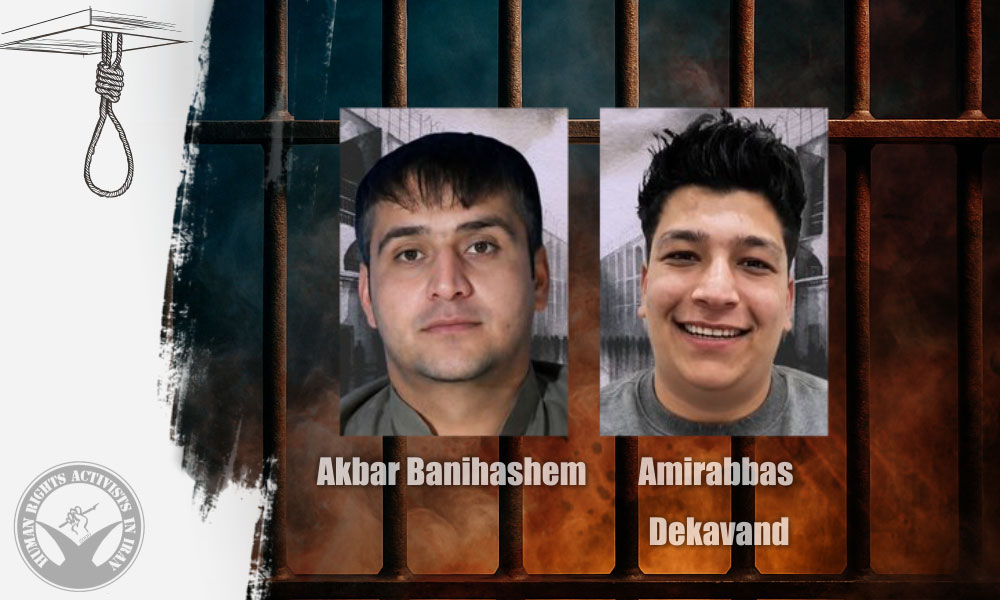
Execution of 14 Prisoners on Murder and Drug-Related Charges

Amid ongoing concerns over the lack of judicial transparency and widespread internet disruptions in Iran, at least 14 prisoners were executed in various prisons across the country in the last four days. These prisoners had previously been sentenced to death on charges related to drug offenses and murder.

Based on information received by HRANA, Rastin Noorian was executed on Tuesday in Behbahan Prison on a charge of murder. On the same day, Farshid Darabi in Sari Prison and Changiz Ghafoori in Bukan Prison were also executed on murder charges. In addition, Amirali Haghighat-Doost was hanged on Tuesday in Gonabad Prison on charges related to drug offenses. On Wednesday, Houshang Maleki in Ferdows Prison, Touraj Rashidi in Esfarayen Prison, Shaho Safari in Sanandaj Prison, and Jalal Papi in Nowshahr Prison were all executed on murder charges. Two other prisoners were executed in Rasht Prison on murder charges; the identity of one of them, Ashkan Kalehri, has been confirmed by HRANA.

On Monday, Iman Zamani was executed in Quchan Prison on charges related to drug offenses. Additionally, on Wednesday, Momen Abdi-Pour was executed in Mahshahr Prison on a charge of murder. Meanwhile, today, Thursday, January 22, Abdullah Panjshiri, an Afghan national, was executed in Taybad Prison on charges related to drug offenses. Nariman Sohrabi was also executed in Bojnord Prison on a murder charge.

Further details, including the identity of one of the prisoners executed in Rasht Prison, are still under investigation by HRANA.

As of the time of this report, these executions have not been officially announced by prison authorities or relevant institutions.

According to HRA’s annual report, at least 2,063 people were executed in Iran during the one-year period from January 1, 2025, to January 1, 2026. This represents a 119% increase in executions compared to 2024. In many of these cases, due to secrecy, prisoners were denied even the right to a final visit with their families.

Nationwide Protests: Report on the Arrest of 11 Citizens, Including a Teenager, in Various Cities

HRANA – In recent days, the arrest of 11 citizens, including Mohammad Hadi Jafarpoor, a lawyer in Shiraz; Ghazal Ghandari, a 16-year-old teenager in Yasuj; and Erfan Movasati, a student activist, was reported in connection with the nationwide protests.

In addition, there has been no information about the current status of Arman Shapouri, a teacher from Izeh, despite more than three weeks having passed since his arrest. Furthermore, Ajvan Khazrian in Sardasht and Sediq Yousef-Pour in Saqqez were arrested by security forces. On the other hand, Hossein Amiri, Yadi Sarmasti, Milad Mirzabeygi, Payam Mirzabeygi, and Sina Mirzabeygi have been detained for more than two weeks in the cities of Dehgolan and Ilam, and no information has yet been obtained about their current condition.

Based on information received by HRANA, Mr. Jafarpoor was arrested three days ago in Shiraz. Ghazal Ghandari, a 16-year-old teenager, was arrested by security forces in Yasuj on January 20. Erfan Movasati, secretary of the Islamic Association of Students at the Faculty of Dentistry, was also arrested on January 11. These citizens were transferred to undisclosed locations after their arrest.

Kurdpa News Agency also published reports on the arrest of two citizens named Ajvan Khazrian in Sardasht and Sediq Yousef-Pour in Saqqez. Mr. Yousef-Pour was arrested on Wednesday, Bahman 1, and Mr. Khazrian on January 20, without the presentation of a judicial warrant. These individuals were transferred to undisclosed locations following their arrest.

In another report, Kurdpa News Agency reported the continued detention and lack of information regarding five citizens named Hossein Amiri and Yadi Sarmasti in Dehgolan, and Milad Mirzabeygi, Payam Mirzabeygi, and Sina Mirzabeygi in Ilam.

According to the report, these citizens have been detained for more than two weeks, and no information has so far been obtained about their current status. Despite follow-ups by their families with judicial authorities, the relevant officials have refused to provide clear answers regarding their fate, a matter that has intensified the concerns of their families and relatives.

Meanwhile, the Teachers’ Union channel reported the arrest of Arman Shapouri, a teacher from Izeh, in that city.

The report states that Mr. Shapouri was arrested on December 30, during the nationwide protests in Izeh. Since then, this teacher has had no contact with his family, and no information has been obtained about his current condition or place of detention, raising serious concerns among his family.

As of the time of this report, no information has been obtained regarding the charges brought against these individuals.

Mohammad Hadi Jafarpoor, a lawyer, has previously faced judicial actions due to his professional activities.

It is worth noting that gatherings and strikes by shopkeepers and bazaar merchants began in Tehran on Sunday, December 28, and after two days spread beyond markets and commercial centers. With the participation of students, citizens, and various social groups, these protests turned into one of the most widespread demonstrations in recent years. For more information, readers can refer to HRANA’s detailed report on the twenty-fifth day of the protests, published last night.

Nationwide Protests: At Least 40 Citizens Arrested and Judicial Cases Opened Against 125 Others

HRANA – During the recent nationwide protests, 33 individuals in Kerman were arrested on charges of being “active leaders affiliated with monarchist groups on Instagram and Telegram,” and judicial cases have been opened against 125 others. Additionally, seven citizens were arrested in Abadan and Tehran. At the same time, videos containing forced confessions by these citizens have been released, though the conditions under which they were recorded remain unclear.

According to Tasnim News Agency, 33 citizens, described as “active leaders affiliated with monarchist groups on Instagram and Telegram,” who had issued calls on January 6, 2026, were arrested.

It is also claimed that these individuals had formed 50 groups and teams in Kerman, Rafsanjan, and Sirjan, and that judicial cases have been opened against 125 people linked to these groups.

Iran’s state broadcaster (IRIB) also released a video report announcing the arrest of at least two citizens in Abadan and five citizens in Tehran. The report alleged that these individuals had set fire to police stations in Tehran’s Vanak district and in Abadan.

Simultaneously, videos of forced confessions by these citizens have been published, although it is unclear under what conditions they were recorded.

These reports do not mention the place of detention or the identities of those arrested.

It is worth noting that gatherings and strikes by shopkeepers and bazaar merchants began in Tehran on Sunday, December 28, 2025. After two days, the protests spread beyond bazaars and commercial centers. With the participation of students, citizens, and various social groups, these demonstrations became one of the most widespread protests of recent years. For more information, readers can refer to HRANA’s detailed report on the twenty-fourth day of the protests, which was published last night.

Day Twenty-Five of Protests: Continued Internet Blackout and Officials’ Narrative-Building on the Death Toll

HRANA – On the twenty-fifth day of nationwide protests in Iran, according to aggregated data compiled by HRANA, the number of confirmed fatalities has reached 4,902, while the number of deaths still under review stands at 9,387. Additionally, at least 7,389 people have sustained severe injuries, and the total number of arrests has risen to 26,541. These figures are recorded amid the continued widespread internet shutdown, while at the same time the government, by releasing limited and selective statistics, is attempting to solidify its official narrative regarding the scale of the killings.

Developments on the twenty-fifth day are largely related to narrative-building around recent events, the government’s efforts to present statistics, and shifts in diplomacy. However, the security atmosphere continues to dominate cities, and international pressure has increased.

Disruption of Communications: “Indefinite Time” as Official Policy

On the twenty-fifth day, Iranian officials expressed new positions regarding the internet. The Secretary of the Supreme National Security Council announced that the timing of the internet’s return is unspecified, a statement that contradicted earlier positions, in which vague promises of a “gradual restoration” had been made. This stance effectively transforms the internet shutdown from a “temporary measure” into an open-ended and indefinite situation.

Under these conditions, the limited and selective access provided to certain institutions or specific users should not be considered a sign of the internet’s return, but rather part of a controlled access model. This situation has severely disrupted independent documentation of the protests, follow-up on the conditions of detainees and those killed, and even communication among families. According to observers, it has become a key crisis-management tool for the authorities.

Security Atmosphere: Consolidation of Government Control Over Cities Without the Expansion of Open Protests

Field reports from various cities indicate that although the level of public gatherings has declined compared to the initial weeks, the presence of security and law enforcement forces remains extensive and highly visible. Street-level controls, motorcycle patrols, and the presence of plainclothes forces in urban areas persist, with restrictions intensifying during the evening hours.

This situation should be assessed less as a sign of the protests having fully subsided and more as the result of a combination of factors such as severe repression, mass arrests, and communication shutdowns. At the same time, reports point to the persistence of social discontent across different segments of society, discontent that, in the absence of the ability to organize and communicate, is less likely to manifest in coordinated demonstrations.

Discrepancies Between Officials’ Claims and Figures Derived from Independent Reports

One of the main developments on the twenty-fifth day was the government’s presentation of its official narrative regarding the scale of the killings and recent violence. The head of the Legal Medicine Organization announced what was described as a “final report,” stating that 3,117 people had been killed in the “recent incidents,” and emphasized that the victims included women, children, the elderly, and bystanders. In the same remarks, the causes of death were attributed to a range of weapons, including live ammunition, hunting firearms, pellet guns, and even bladed weapons, while primary responsibility for the violence was placed on “terrorist elements” and forces allegedly trained abroad.

At the same time, security officials rejected higher figures reported by foreign media, including claims of 12,000 to 20,000 deaths, describing them as the result of a “misinterpretation of the forensic case-numbering system.” They stressed that delays in releasing official statistics were due to the need to carefully distinguish between civilians, security forces, and armed individuals. Alongside casualty figures, government officials also presented extensive statistics on damage to infrastructure, as well as government, religious, and educational facilities, in an effort to shift the dominant narrative from the killing of protesters to the “scale of destruction and organized violence.” This narrative, however, has been met with widespread skepticism and criticism amid the continued internet shutdown and restricted access to independent information.

International Reactions: Continued Condemnations and Escalating Political Pressure

At the international level, reactions to the crackdown on protests in Iran continued on the twenty-fifth day. Members of the European Parliament once again condemned the internet shutdown and the killing of protesters, stressing the need for more concrete actions. At the same time, discussions emerged in international forums regarding more targeted sanctions and holding those responsible for the crackdown accountable.

In the United States, statements by senior officials, including the country’s president, received widespread attention. Referring to the crackdown on protests in Iran, he spoke of widespread shootings of civilians and the possibility of mass executions. These remarks were rejected by officials of the Islamic Republic, but they contributed to heightened verbal and political tensions at the international level.

Government Response: Widespread Denial, Downplaying of Figures, and Continuation of a Security-Oriented Approach

In response to these pressures, the government’s reaction on the twenty-fifth day focused on denial, minimizing casualty figures, and reproducing a security-based narrative. Officials continued to describe protesters using labels such as “rioters” and “foreign agents,” placing responsibility for the killings on what they called “imposed insecurity.”

The government’s security and judicial approach has not only failed to be scaled back, but in the absence of widespread public protests, efforts have instead been made to institutionalize repression and violence and turn them into routine practices.

Updated Statistics (Aggregated)

Based on aggregated data recorded up to the end of Day 25:

• Number of recorded gatherings/protests: 633

• Number of cities involved (non-duplicated): 192

• Number of provinces involved (non-duplicated): 31

• Confirmed deaths: 4,902

Protesters: 4,622

Children (under 18): 40

Government/affiliated forces (military and civilian): 201

Non-protesters/civilians: 39

• Deaths under investigation: 9,387

• Seriously injured: 7,389

• Total arrests: 26,541

• Broadcast forced confessions: 181 cases

Summary

On the twenty-fifth day of nationwide protests, the internet shutdown continued, and this time officials adopted a different stance, stating that the timing of reconnection was unspecified. On the same day, officials released their own death toll figures in an effort to challenge statistics reported by independent sources. Meanwhile, international pressure persisted, and the government sought to maintain political and media control of the situation by downplaying the numbers and emphasizing a security-oriented narrative.

12 Prisoners Executed in Multiple Prisons on Drug-Related and Murder Charges

HRANA – Amid nationwide protests in Iran, along with widespread internet shutdowns and severe restrictions on the flow of information, at least 12 prisoners were executed today, Wednesday, January 21, 2026, in multiple prisons. These prisoners had previously been sentenced to death on charges related to drug-related crimes and murder.

Based on information received by HRANA, Musa Sadri was executed in Shiraz Prison and Kiarash Dinari in Malayer Prison on charges related to drug offenses.

Also, Vali Karam Souri in Khorramabad Prison, Avat Amiri in Mahabad Prison, Sultan Morad Sharafinia in Sabzevar Prison, Siavash Arabi in Kashmar Prison, Nabiollah Kaabi in Bushehr Prison, Jabbar Ganji in Chabahar Prison, Jamshid Khanzadeh in Shahrekord Prison, Saeed Javan in Damghan Prison, and two other prisoners, one of whom has been identified by HRANA as Afshin Mohammadi, in Shiraz Prison were executed on murder charges.

As of the time of writing this report, these executions have not been officially announced by prison authorities or relevant institutions.

The continued large-scale implementation of death sentences under conditions of internet shutdowns and severe restrictions on information has intensified concerns about the lack of judicial transparency, prisoners’ denial of access to fair trials, and the increased risk of violations of the right to life. Human rights organizations have repeatedly warned that carrying out such punishments in a securitized and opaque environment increases the likelihood of serious human rights violations.

According to HRA’s annual report on the human rights situation in Iran, at least 2,063 people were executed in Iran during the one-year period from January 1, 2025, to January 1, 2026. Based on this report, executions increased by 119% compared to 2024. In many of these cases, due to secrecy, prisoners were even denied the right to a final visit with their families.

Subscribe to Our Newsletter

Now is definitely not the time to stop reading!

Arrest of 169 People in Various Cities Across Iran

HRANA – Media outlets close to security institutions have reported the arrest of seven protesters, including one woman, in the cities of Qom, Talesh, Sabzevar, and Shahreza. At the same time, videos of the “confessions” of two of these citizens have been released, though it is unclear under what conditions these recordings were made. Meanwhile, 162 protesting citizens were arrested by security forces in the cities of Shiraz, Marvdasht, Kovar, Kazerun, Nourabad, Pasargad, Abadeh, Fasa, Darab, and Neyriz.

According to the state broadcaster (IRIB), a female protester was arrested during the protests in Qom. In this report, she is accused of setting fire to a mosque in the city.

Separately, Young Journalists Club, quoting the police commander of Talesh, claimed that a 30-year-old citizen who allegedly set fire to a bank in the city was arrested. At the same time, Fars News Agency reported the arrest of one individual in Sabzevar.

Tasnim News Agency also announced that four citizens were arrested by security forces in the city of Shahreza. According to this outlet, the detainees were accused of setting fire to a mosque and, after case files were formed, were referred to judicial authorities for legal proceedings.

In these reports, videos of the “confessions” of two of the detainees were published, although it remains unclear under what circumstances they were recorded.

In another report, the state broadcaster announced the arrest of 162 citizens by security forces in the cities of Shiraz, Marvdasht, Kovar, Kazerun, Nourabad, Pasargad, Abadeh, Fasa, Darab, and Neyriz.

This report has accused the detained individuals of damaging banks and government centers and property, including municipal buildings.

These reports do not mention the identities of the detainees or their place of detention.

It should be noted that gatherings and strikes by shopkeepers and bazaar merchants began in Tehran on Sunday, December 28, and after two days spread beyond markets and commercial centers. With the participation of students, citizens, and various social groups, these protests became one of the most widespread demonstrations in recent years. For more information, readers can refer to HRANA’s detailed report on the twenty-fourth day of protests, published last night.

Four Prisoners Executed on Charges of Murder and Drug Offenses

HRANA – Amid nationwide protests in Iran, widespread internet shutdowns, and severe restrictions on the flow of information, at least four prisoners were executed on Tuesday, January 20, in Borazjan, Ilam, Khaf, and Birjand prisons. These prisoners had previously been sentenced to death on charges related to drug-related crimes and murder.

Based on information received by HRANA, Mikaeil Bahari was executed in Borazjan Prison and Kamran Ghiasvand in Ilam Prison on charges of murder. Foroud Sagvand, a native of Lorestan, was executed in Khaf Prison, and Mardan Saeedi was executed in Birjand Prison, both on charges related to drug offenses.

It should be noted that earlier yesterday, the death sentences of at least four other prisoners were also carried out in Ahvaz, Jiroft, Yazd, and Bam prisons.

As of the time of this report, these executions have not been officially announced by prison authorities or relevant institutions.

The continuation of widespread executions under conditions of internet shutdowns and severe restrictions on information has intensified concerns about the lack of judicial transparency, prisoners’ lack of access to fair trials, and the increased risk of violations of the right to life. Human rights organizations have repeatedly warned that carrying out such punishments in a security-driven and non-transparent environment increases the likelihood of serious human rights violations.

According to the annual report on the human rights situation in Iran, published by the Statistics, Publications, and Documentation Unit of the Human Rights Activists in Iran, at least 2,063 people were executed in Iran during the one-year period from January 1, 2025 to January 1, 2026. Based on this data, executions increased by 119% compared to 2024. In many of these cases, due to secrecy, prisoners were even denied the right to a final visit with their families.

Day Twenty-Four of the Protests: Continued Communications Blackout and International Warnings of Crimes Against Humanity

HRANA – On the twenty-fourth day of nationwide protests, according to aggregated data compiled by HRANA, the number of confirmed deaths has reached 4,519, while the number of deaths still under investigation stands at 9,049. At least 5,811 people have sustained serious injuries during the protests, and the total number of arrests has risen to 26,314. These figures, amid a communications blackout, security pressure on families, and restricted access to information, likely reflect only a portion of the reality on the ground.

At the same time, developments such as the release of an unprecedented statement by physicians and forensic medicine specialists regarding the alarming treatment of those injured and killed during the protests, the announcement of an emergency session of the United Nations Human Rights Council, and warnings by the body’s Special Rapporteur about the potential commission of crimes against humanity all indicate that Iran’s human rights crisis has entered a new and deeper phase.

Nationwide protests in Iran continued into their twenty-fourth day under conditions of widespread internet shutdowns and severe communication restrictions, while judicial and security pressures on media outlets, public figures, and protesting citizens intensified. On that day, the announcement of an emergency session of the United Nations Human Rights Council signaled the scale and severity of the human rights crisis in Iran.

Disruption of communications and uncertainty over the timing of restored internet access

On the twenty-fourth day of protests, widespread internet shutdowns and disruptions continued. According to data from global traffic monitoring organizations, Iran is experiencing one of the lowest levels of international internet connectivity in the world. This blackout, now entering one of the longest periods of nationwide communications disruption in recent years, has become a key tool for controlling public space, suppressing the flow of information, and limiting independent documentation of the protests.

While there have been reports of brief and extremely limited internet connections for some users, these instances appear less indicative of a sustained restoration of access and more reflective of shifts in how restrictions are being enforced. At the same time, there are indications of the government’s efforts to implement selective internet access and expand the use of a domestic network (intranet), a move that, if enforced, would further restrict citizens’ free access to the global internet and independent platforms.

Statements by government officials have added to the existing ambiguity. On the one hand, promises have been made regarding the restoration of internet access in the coming days; on the other, the head of the Digital Transformation Commission of the Iran Computer Trade Organization has stated that even if general connectivity is restored, reconnecting foreign platforms will not be possible. These positions indicate that the government’s communications policy is aimed less at returning to the previous status quo and more at managing access in a controlled manner.

The consequences of this situation extend beyond the media and information sphere. Internet shutdowns have seriously disrupted economic activities, online services, family communications, access to medical and emergency services, and the ability to track the status of detainees and the injured. According to human rights organizations, these conditions have increased the risk of enforced disappearances, pressure on families, and the concealment of the true scale of the crackdown.

Escalating Pressure on the Media: Charges Brought Against Two Publications Following the Suspension of Hammihan

As part of ongoing efforts to control the media narrative surrounding the protests, the Tehran Prosecutor’s Office announced that criminal cases have been filed against two additional media outlets. This move came just one day after the suspension of Hammihan newspaper, whose editor-in-chief stated that the ban was imposed due to the publication of reports on violations of medical privacy during the protests.

According to the prosecutor’s statement, the new cases have been opened on charges of “spreading false news” related to the nationwide protests. These actions are taking place amid internet shutdowns and widespread restrictions that have severely curtailed the ability of independent media to operate freely, effectively allowing the government’s official narrative to dominate the domestic public sphere. Observers view the simultaneous suspension of media outlets and the internet blackout as evidence of intensified information control and an effort to prevent the dissemination of on-the-ground reporting about the suppression of protests.

Statement by Physicians and Forensic Specialists: Warning of Systematic Violations of Medical and Autopsy Standards

On the twenty-fourth day, a group of medical doctors, paramedics, and forensic medicine specialists released an analytical statement examining publicly available images and videos of those injured and killed during the protests. The statement points to serious and alarming patterns indicating violations of fundamental principles of medicine, forensic practice, and medical neutrality.

The report cites evidence suggesting that some of the deceased had undergone medical intervention prior to death. The presence of equipment such as angiocatheter lines, urinary catheters, breathing tubes, and cardiac monitoring devices on bodies found outside medical settings strengthens the possibility that some injured individuals died after treatment had begun or were removed from medical facilities without confirmation of death.

Other sections of the statement refer to cases in which gunshot-wounded individuals were abandoned without triage or treatment, extensive abdominal incisions carried out outside recognized forensic protocols, signs of severe physical violence, mutilation, decapitation, and the collective relocation of bodies. There are also reports of evidence consistent with exposure to toxic chemical substances and severe thermal destruction of remains, factors that severely limit the possibility of conducting independent forensic examinations.

The signatories emphasized that although the report faces methodological limitations due to the lack of direct access to bodies and medical records, the overall findings are consistent with patterns of systematic mistreatment in mass casualties and serious human rights violations, and could serve as a basis for future independent investigations.

Heightened Security Atmosphere: Widespread Presence of Forces and Mass Arrests

Field reports received from various cities across the country indicate the persistence of a heavy security atmosphere. A widespread presence of law enforcement, security forces, Basij units, and plainclothes agents has been reported in public spaces, high-traffic areas, and at city entry and exit points. Checkpoints, motorcycle patrols, and on-the-ground controls have increased noticeably. This situation becomes particularly intense after nightfall, contributing to an atmosphere of deterrence and fear in urban areas.

At the same time, large-scale arrests continue across multiple provinces. According to HRANA reports, at least dozens of citizens have been arrested in provinces including Qazvin, Fars, Razavi Khorasan, Ilam, Semnan, and Kerman. In some cases, security agencies have labeled detainees as “protest leaders” or accused them of serious charges such as killing security personnel. The release of official or semi-official arrest figures, beyond their operational function, also serves as a warning and intimidation tactic aimed at suppressing protests through social pressure.

Judicial Action Against Public Figures: Cases Filed Against Athletes, Artists, and Business Owners

The Tehran Prosecutor’s Office has announced that judicial cases have been opened against 15 athletes and actors, 10 signatories of a statement by the Iranian House of Cinema, and 60 business units for supporting the nationwide protests. According to the statement, the assets of some of these individuals have also been seized.

These measures are part of a broader pattern of judicial action against well-known figures and cultural activists and are assessed as an effort to increase the social and economic costs of supporting the protests. At the same time, the failure to disclose the names of the accused and detailed information about the cases has added to the legal ambiguity surrounding these actions.

International Reactions: Escalating Political and Diplomatic Pressure

At the international level, reactions to the suppression of protests in Iran have continued and intensified. The European Parliament, strongly condemning the use of violence against protesters and the internet shutdown, has called for accountability from Iranian authorities, with some lawmakers emphasizing the need to tighten sanctions and diplomatic restrictions.

It has also been reported that several European airlines have suspended or halted their flights to Iran, and the European Union Aviation Safety Agency has advised airlines to avoid Iranian airspace. These decisions reflect growing concerns over the country’s security situation and the political consequences of recent developments.

Emergency Session of the UN Human Rights Council and Warning of Crimes Against Humanity

The United Nations Human Rights Council has announced that it will hold a special emergency session on Friday to address the human rights situation in Iran. The stated aim of the session is to examine violence against protesters, communications shutdowns, and other serious human rights violations.

In this context, the UN Special Rapporteur on the human rights situation in Iran has stated that existing evidence, including images and videos showing direct gunfire at unarmed civilians, raises the need to examine the possible commission of crimes against humanity. She described the internet shutdown as one of the main obstacles to independent investigations and called for unrestricted access by international bodies to information and evidence.

Evidence Pointing to the Military’s Role in the Crackdown

In recent days, uncertainty and speculation regarding the role of the military in the ongoing events have increased. The announcement of the identity of the first army casualty during the recent protests, along with the lack of transparent explanation regarding his mission, has raised questions about the level of the military’s involvement in confronting the protests. Although officials have not confirmed a direct role for the army in street-level repression, certain statements and field evidence have fueled these speculations.

Government Responses: Emphasis on a Security and Judicial Approach

On the twenty-fourth day of the protests, government officials’ responses became increasingly focused on controlling the narrative, managing international repercussions, and intensifying domestic judicial action. While no nationwide official casualty figures have been released, scattered remarks by some local officials have created cracks in the official narrative.

In this context, the deputy for security and law enforcement affairs of the Razavi Khorasan Governor’s Office stated that “around 400 people” had been killed in Mashhad (a remark that were first published by pro-government media and later removed). These statements were immediately followed by efforts to discredit them, with the deceased largely described as “martyrs” or as victims of “rioters.” The rapid removal of these remarks from official media outlets is seen as a sign of the authorities’ sensitivity to the publication of any uncontrolled casualty figures.

On the security front, military and law enforcement officials continue to emphasize a narrative of “confronting organized and terrorist riots.” At the same time, some official statements have attempted to deny or downplay the use of live ammunition by government forces—a position that contradicts extensive medical evidence, published videos, and field reports documenting direct gunfire against unarmed protesters.

Overall, the government’s responses on the twenty-fourth day were focused less on transparent accountability regarding casualties and the handling of protesters, and more on information control, deterrent judicial measures, and managing political and international consequences.

Updated Statistics

Based on aggregated data recorded up to the end of the twenty-third day of protests:

• Number of recorded gatherings/protests: 629

• Number of cities involved (non-duplicated): 188

• Number of provinces involved (non-duplicated): 31

• Confirmed deaths: 4,519

Protesters: 4,251

Children (under 18): 33

Government/affiliated forces (military and civilian): 197

Non-protesters/civilians: 38

• Deaths under investigation: 9,049

• Seriously injured: 5,811

• Total arrests: 26,314

• Broadcast forced confessions: 167 cases

Note: Given the widespread internet shutdowns, the pervasive security environment, and restricted access to information, the actual figures are likely significantly higher. The data presented above is based exclusively on individually verified cases.

Summary

The twenty-fourth day of nationwide protests passed amid the continued internet blackout, intensified pressure on media outlets and public figures, and growing alarming reports regarding the treatment of the injured and the deceased. At the same time, international reactions and the convening of an emergency session of the United Nations Human Rights Council increasingly placed Iran’s human rights crisis at the center of global attention.

Reports of the Arrest of at Least 186 Citizens During Nationwide Protests

HRANA – IRGC Intelligence in Qazvin Province announced the arrest of 166 citizens under the label of “leaders” of the protests. In Fars Province, at least 18 protesting citizens were arrested. Meanwhile, a number of protesters in Mashhad were detained on charges of killing a security force member. Several citizens were also arrested in Ilam Province, where the provincial Intelligence Organization reported the arrest of one citizen on charges of killing the police commander of Holilan County.

According to  Tasnim News Agency, a number of protesting citizens were arrested in Mashhad. The report, without specifying the identities or number of those detained, claims that these arrests were carried out on charges related to the killing of Farajollah Shoushtari during the nationwide protests in Mashhad.

Separately, the state broadcaster IRIB reported that the IRGC Intelligence in Qazvin Province had arrested 166 protesting citizens. These arrests were carried out under the designation of “agents of the main protest leaders.”

Mehr News Agency also reported the arrest of a woman in the city of Sabzevar. At the same time, a video of her forced confession was released, though it remains unclear under what conditions it was recorded.

Daneshjoo News Agency likewise aired a video reporting the arrest of a number of citizens in Fars Province. At least 18 individuals can be seen in the footage. Simultaneously, videos containing forced confessions from some of these citizens were also published.

IRIB further announced that several citizens who protested on January 8 in the cities of Sarableh, Asmanabad, Holeylan, Arkavaz-e Malekshahi, and Abdanan were arrested. The media outlet claimed that these individuals were responsible for damaging public and government property, banks, setting fire to the Friday prayer leader’s office and the main mosque of Sarableh, blocking roads, armed intimidation, and threatening shopkeepers in these cities.

In the same report, the Ilam Province Intelligence announced the arrest of one citizen on charges of killing the police commander of Holeylan County. In addition, it was claimed that several citizens in Darreh Shahr County were arrested under accusations of “links to group elements and ethnic separatists.”

None of these reports provided information regarding the identities or places of detention of the arrested citizens.

It should be noted that gatherings and strikes by shopkeepers and bazaar merchants began in Tehran on Sunday, December 28. After two days, the scope of these actions expanded beyond bazaars and commercial centers. With the participation of students, citizens, and various social groups, these protests became one of the most widespread demonstrations in recent years. For more information, readers may refer to HRANA’s detailed report on the twenty-third day of protests, published last night.

Execution of 22 Prisoners on Murder and Drug-Related Charges

HRANA – At the same time as nationwide protests in Iran, and amid widespread internet disruptions and severe restrictions on the flow of information, the death sentences of at least 22 prisoners, previously convicted on charges of murder and drug-related offenses, were carried out in various prisons across the country.

Based on information received by HRANA, at dawn on Monday, January 19, these individuals were executed on murder charges:

Navid Jabbari in Neyshapur Prison,
Alireza Barani in Dorud Prison,
Kimia Khani in Isfahan Prison,
Kabir Akhlaghi in Gorgan Prison,
Kiarash Langaroudi in Zanjan Prison,
Bahram Hassanpour in Saveh Prison,
Faramarz Amoozad in Nowshahr Prison

Additionally, Goodarz Barzegar in Kashan Prison and Iman Niri in Kerman Prison were hanged yesterday morning on charges related to drug offenses.

Meanwhile, at dawn today, Tuesday, January 20, the execution sentences of Rastin Majidi in Ahvaz Prison and Sirus Meshkini in Jiroft Prison on murder charges, as well as Mobin Golmohammadi in Yazd Prison and Nader Aini in Bam Prison on drug-related charges, were carried out.

Execution of 9 Other Prisoners

According to Iran Human Rights Organization, on December 31, five prisoners were executed in Shiraz Prison. The identities of those executed were reported as Saeed Partovi, 24, Ali Partovi, Arash Shamsi, 28 and from Fasa, Nasser Mirzaei, 32, and Sohrab Imani, from Shiraz. According to the report, Saeed and Ali Partovi, who were cousins, had been arrested about two years ago on charges of murdering a police officer in Shiraz and were sentenced to death. The death sentences of the other prisoners were also issued by criminal courts on murder charges.

Separately, on January 18, Kian Manouchehri, 22, from Ardakan, was executed in Yazd Prison. In addition, the death sentence of Khosrow Alishahi, 25, from Tehran, was carried out on January 4 in Qom Prison. Furthermore, Seyed Mohammad Attari, 37, and Moharram Sarchemi, 59, a father of four, both from Tabriz, were executed on January 13 in separate cases on murder charges in Tabriz Prison.

As of the time of this report, the executions of these prisoners have not been officially announced by prison authorities or relevant institutions.

The continued large-scale implementation of death sentences amid internet shutdowns and severe restrictions on information has intensified concerns over the lack of judicial transparency, prisoners’ denial of access to fair trials, and the heightened risk of violations of the right to life. Human rights organizations have repeatedly warned that carrying out these punishments in a highly securitized and non-transparent environment increases the likelihood of serious human rights violations.

According to HRA’s annual report, at least 2,063 people were executed in Iran during the one-year period from January 1, 2025 to January 1, 2026. Based on this data, executions increased by 119% compared to 2024. In many of these cases, due to secrecy, prisoners were even denied the right to a final visit with their families.