Prisoner Executed in Aligudarz Prison

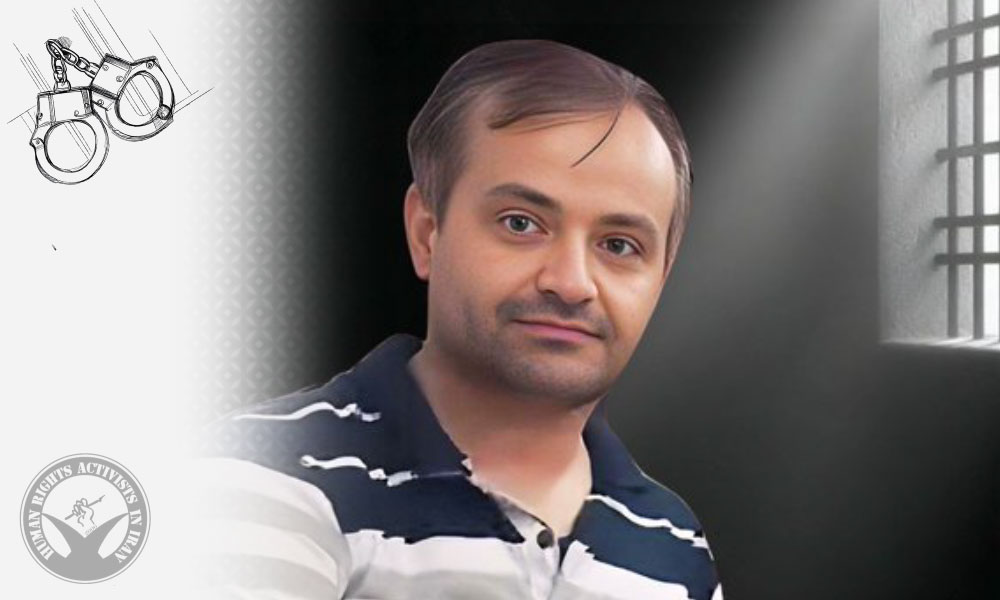
HRANA – At dawn on Tuesday, September 16, the death sentence of a prisoner previously convicted of murder was carried out in Aligudarz Prison, Lorestan Province.

HRANA, the news agency of Human Rights Activists in Iran, has confirmed the identity of the executed prisoner as Hojjat Goodarzi.

According to information obtained by HRANA, Mr. Goodarzi had been arrested on charges of murder and subsequently sentenced to death by a criminal court.

As of the time of this publication, neither prison authorities nor official judicial bodies have announced the execution.

In 2024, according to 812 reports compiled by HRANA, the Iranian regime executed 930 individuals in its prisons—marking the highest number of executions in the past 12 years. Despite the scale of these executions, prison officials and other relevant authorities publicly acknowledged only 6% of them, highlighting the regime’s lack of transparency and accountability.

More than Two Decades Behind Bars, Introducing Prisoners – No. 2: Hamzeh Sawari

HRANA – A large number of political prisoners and the prisoners of conscience have spent more than two decades of their lives in Iran’s prisons. To ensure their names are not forgotten amid daily news cycles, HRANA is publishing a series introducing these prisoners and their conditions. Each report reviews their judicial case, detention situation, access rights, and urgent needs.

In this report, HRANA, the news agency of Human Rights Activists in Iran, examines the latest situation of Hamzeh Sawari Laftah after two decades of imprisonment.


Information Summary

• Name: Hamzeh Savari Leftah

• Year of Arrest: 2005 (1384 SH)

• Charges Announced: “Corruption on Earth (efsad fel-arz), moharebeh (enmity against God), and acting against national security”

• Initial Sentence:
Death penalty

• Current Sentence:
Life imprisonment (reduced by one degree)

• Places of Detention:
Three months in Sheiban Prison (Ahvaz), eight years in Karun Prison (Ahvaz), transferred to Rajai Shahr Prison (Karaj) until 2023, held in Ward 8 of Evin Prison in August 2023, transferred to Ghezel Hesar Prison (Karaj) in September 2023 where he remains.

• Leave/Access:
No furlough reported in recent years; limited access to family and lawyer.

• Current Status:
Still serving a life sentence despite legal changes that could allow for review or reduction.

Case History and Judicial Process

On September 2, 2005, at the age of just sixteen, Hamzeh Sawari was arrested by security forces. He was sentenced to death by the Ahvaz Revolutionary Court on charges of “corruption on Earth, moharebeh, and acting against national security.” The sentence was later commuted to life imprisonment. While this change prevented the implementation of the death penalty, it placed him among those condemned to indefinite imprisonment – effectively a punishment that can last for decades and severely limits the possibility of judicial review.

Key points in the process:

• Heavy security charge: The label of “moharebeh” is among the most severe accusations in Iran’s political-security cases, carrying extensive judicial and executive consequences.

• Sentence reduction: The initial death penalty, later converted to life imprisonment, illustrates both the severity of the charges and the possibility of judicial intervention, but does not necessarily mean injustices in the process were remedied.

• Ongoing imprisonment despite legal changes: Although legal reforms could allow for retrial, reduced sentences, or conditional release, Sawari remains in prison.

Detention Conditions and Transfers

Throughout his imprisonment, Hamzeh Savari has been held in multiple prisons: eight years in Karun Prison (Ahvaz), three months in Sheiban Prison (Ahvaz), then transferred to Rajai Shahr Prison (Karaj). In 2014, he was held in Hall 12 of Rajai Shahr, and in 2017 he was violently moved to Ward 10 (Unit 4) of the same prison.

In August 2023, he was transferred to Ward 8 of Evin Prison, but after one month, he was moved to the security unit (Ward 3) of Ghezel Hesar Prison (Karaj). He staged a hunger strike in protest of these transfers and spent some time in solitary confinement. He has remained in Ghezel Hesar since then.

Observations Related to Detention Standards

• Frequent transfers: Repeated relocations between wards and prisons disrupt access to family, legal counsel, and medical care.

• Solitary confinement as punishment: After arrest, Sawari spent nine months in solitary confinement in The Ministry of Intelligence’s detention facilities in Ahvaz and Shiraz. He was repeatedly placed in solitary confinement during his years in Karun Prison. He was again sent to solitary in 2017 after protesting his transfer to Ward 10 of Rajai Shahr, in September 2023 after objecting to being moved from Evin to Ghezel Hesar, and once more in August 2025. Such practices conflict with international standards, where solitary confinement must be exceptional, limited, and supervised.

• Exposure to violence in prison: Reports document physical and verbal abuse during his eight years in Karun Prison. In August 2017, he was beaten after being moved from Hall 12 to Ward 10 of Rajai Shahr. In September 2023, he was subjected to violence during his forced transfer from Evin to Ghezel Hesar. In August 2025, following his protest against the transfer of political prisoner Saeed Masouri to Zahedan Prison and the executions of Behrouz Ehsani Eslamloo and Mehdi Hassani, he and several other prisoners were beaten by Ghezel Hesar’s special guard unit. These incidents underscore the need for independent documentation and legal follow-up.

• Deprivation of medical care: Despite suffering from heart disease, lung inflammation, a torn cruciate ligament in his right knee with severe Baker’s cyst, chronic stomach pain, cervical arthritis, and needing spinal surgery, Sawari has been consistently denied hospital transfers and specialist treatment. Denying prisoners access to medical care constitutes inhuman treatment and violates both the right to health and the right to life, often used as a tool of pressure and suppression.

Access to Family, Lawyer, and Leave

In recent years, Sawari has not been granted furlough, and his access to family and lawyer remains limited. These restrictions not only harm his social and psychological well-being but also undermine his ability to mount an effective defense and pursue retrial options.

Potential Legal Avenues (General Recommendations)

1. Retrial (E’adeye Dadrasi): Assessing new evidence or substantive/procedural flaws.

2. Sentence reduction/commutation: If legal grounds are available.

3. Conditional release/suspension: Evaluating eligibility based on time served, conduct, and health.

4. Pursuing rights violations during imprisonment: Including denial of medical care, exposure to violence, lack of visitation, and restricted access to legal counsel.

5. International documentation and advocacy: Turning to human rights mechanisms if domestic remedies are blocked.

Timeline Summary

• 2005 (1384): Arrested at age 16 on charges of “corruption on Earth, moharebeh, and acting against national security.”

• Initial Sentence: Death penalty, later commuted to life imprisonment.

• Post-conviction: Eight years in Karun Prison.

• 2014 (1393): Held in Hall 12 of Rajai Shahr Prison (Karaj).

• 2017 (1396): Beaten; transferred to Ward 10 of Rajai Shahr.

• August 2023 (Mordad 1402): Transferred to Ward 8 of Evin Prison.

• September 2023 (Shahrivar 1402): Violently transferred to Ghezel Hesar; solitary confinement.

• August 2025 (Mordad 1404): Beaten and placed in solitary again in Ghezel Hesar.

• Recent years: No furlough, denied medical care, restricted family and lawyer visits.

• Current status: Life sentence continues despite legal reforms that could allow for review.

Conclusion and Importance of Review

Despite legal changes enabling retrial, reduced sentences, or conditional release for those convicted of moharebeh, Hamzeh Sowari remains imprisoned. His case exemplifies the situation of long-term political-security prisoners in Iran whose cases require urgent review.

It highlights both the denial of fundamental rights during imprisonment (furlough, visits, legal counsel) and the necessity of using all possible domestic and international legal mechanisms to reduce sentences and secure release.

Urgent Needs

Regular and non-discriminatory access to family and lawyer.

Independent medical evaluation in cases of alleged abuse or long-term conditions.

Examination of the possibility of retrial or other mechanisms for reducing/suspending the sentence under updated laws.

Enforcement of prison regulations regarding contact, visitation, and furlough.

Access to adequate medical care and treatment.

About this Series

This report is part of the “More than Two Decades behind Bars” series, which aims to document the cases of long-term prisoners and to highlight the collective responsibility to ensure their visibility and pursue their rights.

Execution of Two Prisoners in Dastgerd Prison, Isfahan

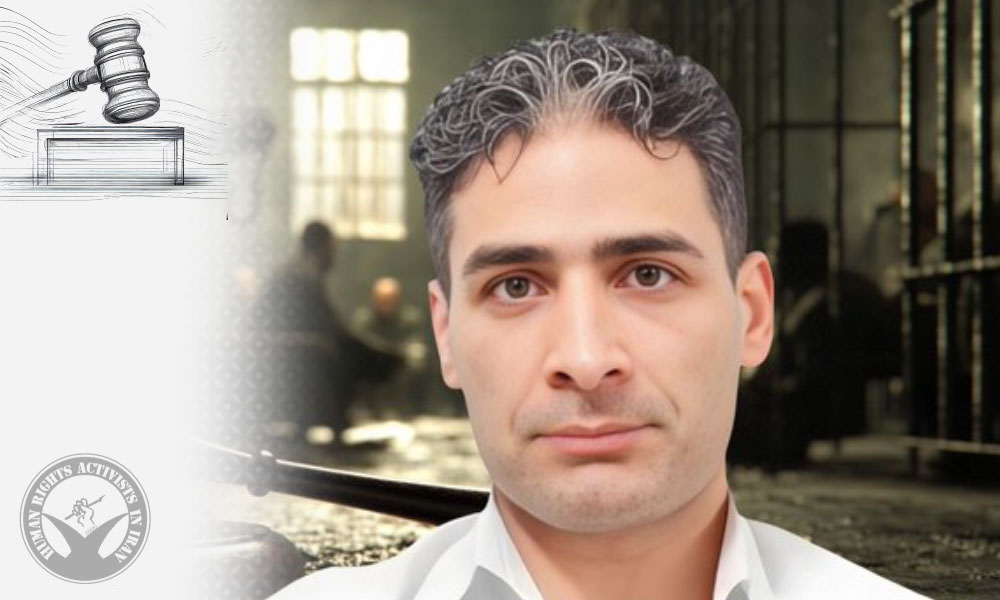
HRANA – At dawn on Tuesday, September 16, two prisoners who had previously been sentenced to death on charges related to drug offenses were executed in Dastgerd Prison, Isfahan.

HRANA has confirmed the identity of one of the prisoners who was hanged at dawn on Tuesday, as Noormohammad Chegali.

According to information received by HRANA, these prisoners had earlier been arrested on charges related to drug offenses and subsequently sentenced to death by the Revolutionary Court.

As of the time of this report, the executions of these prisoners have not been announced by prison authorities or official sources.

According to HRANA’s statistics, in 2024, 61 inmates were hanged in Dastgerd Prison in Isfahan – a 74% increase compared to the previous year. This sharp rise reflects a disturbing escalation in executions at this facility.

Lawyer Abolfazl Ranjbari Held Without Charge for Over Four Months in Tabriz Prison

Abolfazl Ranjbari, a lawyer, has been in detention for more than four months and remains held in an uncertain state in Tabriz Prison.

According to HRANA, Abolfazl Ranjbari has now been detained for 138 days. A source close to the prisoner’s family told HRANA: “After two months of interrogation and being held in The Ministry of Intelligence’s detention facility in Tabriz, Mr. Ranjbari was transferred to the quarantine ward of Tabriz Prison. He is now held in Ward 5, known as the secure ward (‘Health Ward’), without a clear status. So far, no opportunity has been given for him to post bail. Mr. Ranjbari has also been denied contact and visits with his family and relatives.”

His case, after being reviewed by the Tabriz Public and Revolutionary Prosecutor’s Office, has been sent to the city’s court for trial.

Abolfazl Ranjbari, lawyer and writer, was arrested by security forces in Tabriz on May 4 of this year.

More than Two Decades Behind Bars, Prisoner Profiles – No. 1: Saeed Shah-Ghaleh

HRANA – A large number of political prisoners and the prisoners of conscience have spent more than two decades of their lives in Iran’s prisons. To ensure their names are not forgotten amid daily news cycles, HRANA is publishing a series introducing these prisoners and their conditions. Each report reviews their judicial case, detention situation, access rights, and urgent needs.

In this report, HRANA, the news agency of Human Rights Activists in Iran, examines the latest situation of Saeed Shah Ghaleh after two decades of imprisonment.

Information Card

• Name: Saeed Shah-Ghaleh

• Year of Arrest: 2000

• Stated Charge: “Moharebeh (enmity against God) through cooperation with the People’s Mojahedin Organization of Iran (PMOI)”

• Initial Sentence: Death penalty

• Current Sentence: Life imprisonment (reduced by one degree)

• Places of Detention: Ward 350 of Evin Prison (until 2008); Ward 240 (temporary solitary, 2008); Mahshahr Prison (from 2008); transferred from Bushehr Prison to Ward 4 of Qom Prison (since 2022 to present)

• Leave/Access: No furlough reported in recent years; access to family and lawyer reported as limited

• Current Status: Still serving a life sentence despite legal changes that could enable review or reduction of his case

Case History and Judicial Process

Saeed Shah-Ghalehwas arrested in 2000 and sentenced to death by a criminal court on the charge of “Moharebeh through cooperation with the PMOI.” His sentence was later commuted to life imprisonment. While this spared him from execution, it effectively placed him among those serving indefinite terms, making legal review or reduction of his sentence extremely difficult.

Key points in the case:

• Heavy security charge: The label of Moharebeh is one of the gravest charges in Iran’s political-security cases, with severe judicial and practical consequences.

• Commuted sentence: The shift from a death sentence to life imprisonment reflects both the weight of the charge and later judicial intervention, but does not necessarily resolve underlying injustices in the proceedings.

• Continued imprisonment despite legal changes: Even though legal reforms allow for retrial, sentence reduction, or parole in some Moharebeh cases, Shahghaleh remains incarcerated.

Detention Conditions and Transfers

Throughout his imprisonment, Shah-Ghaleh has been held in multiple facilities. He was initially kept in Ward 350 of Evin Prison. In 2008, he was beaten by prison guards and transferred to solitary confinement in Ward 240 for a period. Later that year, he was moved to Mahshahr Prison. After making a coerced confession in 2022 to severing ties with the PMOI, he was transferred from Bushehr Prison to Ward 4 of Qom Prison, where he remains.

Observations on Detention Standards

• Frequent transfers: Moving prisoners between facilities disrupts family visits, legal access, and healthcare.

• Solitary confinement as punishment: His transfer to Ward 240 in 2008 shows solitary was used punitively, in contrast to international standards that limit it to exceptional cases.

• Exposure to violence: Reports document that he was beaten in 2008 and subjected to psychological pressure that led to his forced confession in 2022. Such incidents highlight the urgent need for independent documentation and legal accountability.

Access to Family, Lawyer, and Furlough

In recent years, Shah-Ghaleh has not been granted furlough. His access to his family and lawyer has been restricted, limiting not only his social and psychological well-being but also his ability to mount an effective legal defense or pursue retrial.

Potential Legal Avenues (General Recommendations)

1. Retrial: Examine new evidence or substantive/procedural flaws in the verdict.

2. Sentence reduction/commutation: Pursue legal grounds for mitigation.

3. Parole or suspension of sentence: Assess eligibility based on time served, good conduct, or health conditions.

4. Addressing prison rights violations: Including access to healthcare, prohibition of violence, regular visitation rights, and continuous access to legal counsel.

International advocacy and documentation: Where domestic remedies are blocked, use international human rights mechanisms.

Timeline Summary

• 2000: Arrested; charged with “Moharebeh through cooperation with PMOI.”

• Initial Sentence: Death penalty → commuted to life imprisonment.

• Until 2008: Held in Ward 350, Evin Prison.

• 2008: Reported beating; transferred to solitary in Ward 240; later sent to Mahshahr Prison.

• 2022: Transferred from Bushehr Prison to Ward 4, Qom Prison.

• Recent years: No furlough; limited access to family and lawyer.

• Present: Still serving life sentence despite legal reforms that could allow review.

Conclusion and Importance of Review

Despite legal reforms that provide for retrials, mitigation, or release in Moharebeh cases, Mr. Shah-Ghaleh remains imprisoned. His case exemplifies the plight of long-term political-security prisoners in Iran and underscores the importance of pursuing all legal avenues – domestic and international – for review and reduction of such sentences.

Urgent Needs

• Regular and non-discriminatory access to lawyer and family

• Independent medical evaluation in light of reports of beatings and long-term effects

• Review of possibilities for retrial or other mechanisms for reduction/suspension of sentence under current laws

• Guarantee of compliance with prison regulations on calls, visits, and furlough

About This Series

This report is part of the “Two Decades Behind Bars” series, which aims to document the cases of long-term prisoners and to highlight the collective responsibility to ensure their visibility and pursue their rights.

Subscribe to Our Newsletter

Now is definitely not the time to stop reading!

Prisoner Executed on Drug-Related Charges in Semnan Prison

HRANA – On Wednesday, September 17, the death sentence of a prisoner previously convicted on drug-related charges was carried out in Semnan Prison.

HRANA has identified him as Mohsen Yeganeh. Based on information obtained by HRANA, Mr. Yeganeh had previously been arrested on drug-related charges and subsequently sentenced to death by the Revolutionary Court.

As of the time of this report, the execution of this prisoner has not been announced by prison authorities or official institutions.

According to HRANA’s report, in 2024, over 52 percent of executed prisoners had been convicted on drug-related charges. Over the past ten years, individuals convicted of drug trafficking have accounted for 40 percent of all executions. Unfortunately, HRANA’s statistics show no progress in reducing executions for drug-related offenses.

Number of Executions in Ghezel Hesar Prison Rises to Four

HRANA- Today, September 17, alongside the execution of political prisoner Babak Shahbazi in Ghezel Hesar Prison in Karaj, three other prisoners previously sentenced to death on drug-related charges were also hanged.

HRANA has identified the executed prisoners as Rahman Sarlak, Majid Hosseini, and Ali Esmaeili. According to information received by HRANA, the three had earlier been arrested on drug-related charges and sentenced to death by the judiciary.

As of the time of this report, the executions of these three prisoners have not been officially announced by prison authorities or state institutions. The Judiciary’s Media Center had earlier this morning reported the execution of Babak Shahbazi.

According to HRANA’s statistics, Ghezel Hesar Prison in Karaj carried out the highest number of executions among all Iranian prisons, with 150 inmates hanged. This figure has nearly doubled compared to the previous year — a deeply alarming increase that underscores the escalating use of capital punishment in Iran.

Security Forces Arrest Two 16-Year-Olds in Oshnavieh

HRANA – Early this morning, two 16-year-old teenagers, identified as Diyar Gargul and Alan Tabnak, were arrested by security forces in Oshnavieh and taken to an undisclosed location.

According to Kurdpa, the arrests took place on Wednesday morning, September 17. Security agents reportedly raided the family homes of the teenagers without presenting a judicial warrant and detained them.

So far, no information has been made available regarding the reasons for their arrest or their current whereabouts.

Arbitrary arrests, transferring detainees to undisclosed locations, and leaving families in the dark about the fate of their loved ones are routine practices of the Iranian regime’s security agencies, such as the Ministry of Intelligence and the IRGC Intelligence Unit. This pattern of behavior stands in clear violation of the United Nations Standard Minimum Rules for the Treatment of Prisoners, known as the Nelson Mandela Rules.

Two Prisoners Executed in Kashmar and Gonabad Prisons

On Sunday and today, two prisoners were hanged in Kashmar and Gonabad prisons on drug-related charges.

According to Haal Vsh, on Sunday, September 14, Reza Sarani, 51, a father of two from Zabol, was executed in Kashmar Prison.

The outlet also reported the execution of another prisoner, Parviz Yousef-Zahi, 27, single, originally from Zahedan and a resident of Sari, who was executed in Gonabad Prison.

Both prisoners had been arrested five years ago in separate cases on drug-related charges and sentenced to death by the judiciary.

As of this report’s publication, the executions have not been officially announced by prison authorities or state institutions.

According to HRANA’s report, in 2024, over 52 percent of executed prisoners had been convicted on drug-related charges. Over the past ten years, individuals convicted of drug trafficking have accounted for 40 percent of all executions. Unfortunately, HRANA’s statistics show no progress in reducing executions for drug-related offenses.

Judiciary Announces Execution of Babak Shahbazi

HRANA – This morning, Wednesday, the Judiciary’s Media Center announced the execution of Babak Shahbazi on charges of “espionage and intelligence cooperation with Israel.” Shahbazi had been transferred to solitary confinement in Ghezel Hesar Prison in Karaj yesterday.

The Judiciary’s Media Center stated that the execution took place this morning, Wednesday, September 17, 2025, after the Supreme Court upheld the ruling. The report claimed that “Babak Shahbazi worked as a contractor in the design and installation of industrial cooling systems with companies affiliated with telecommunications, military, and security institutions. He was accused of intelligence and security cooperation with Israel and of exchanging information with individuals affiliated with that country. Ultimately, he was sentenced to death on charges of corruption on earth through moharebeh (enmity against God).”

The Judiciary’s news agency also named Esmail Fekri as one of Shahbazi’s associates. He was arrested on similar “espionage” charges and was executed in the same prison on June 16, 2025.

Yesterday, Shahbazi’s brother announced that the political prisoner had been transferred to solitary confinement in Ghezel Hesar Prison. He added that the family, along with relatives, staged a sit-in outside the prison.

Shahbazi’s request for a retrial was recently rejected by the Supreme Court for the third time. His brother had earlier reported that the Ninth Branch of the Supreme Court, presided over by Judge Ghasem Mazinani, had also denied the second retrial request.

On August 19, after 12 days during which his family had no information about his whereabouts, Shahbazi was transferred to the public ward of Ghezel Hesar Prison. His relatives had previously expressed deep concern over being left in the dark about his condition.

BBC Persian had earlier reported that Shahbazi’s death sentence had been confirmed by the Supreme Court for the first time.

Shahbazi was arrested on charges of espionage and sentenced to death. One of the accusations against him included sending a message to the President of Ukraine.

He was detained in January 2024 and initially held in Evin Prison. Following an Israeli airstrike on Evin, he, along with other political prisoners, was transferred to the Greater Tehran Prison before being moved again to Ghezel Hesar.