Mahvash Seydal Begins Hunger Strike in Evin Prison

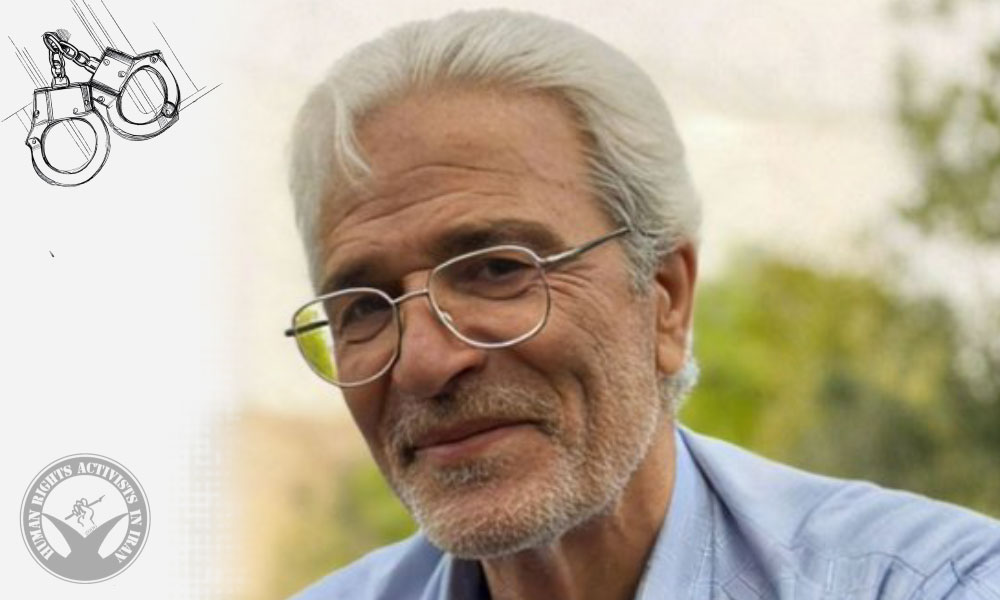
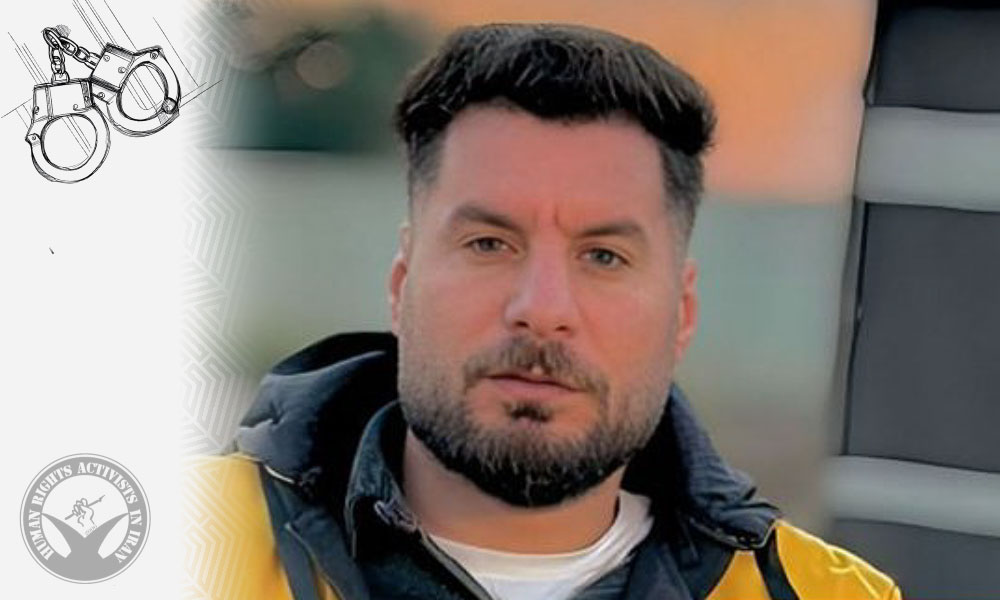
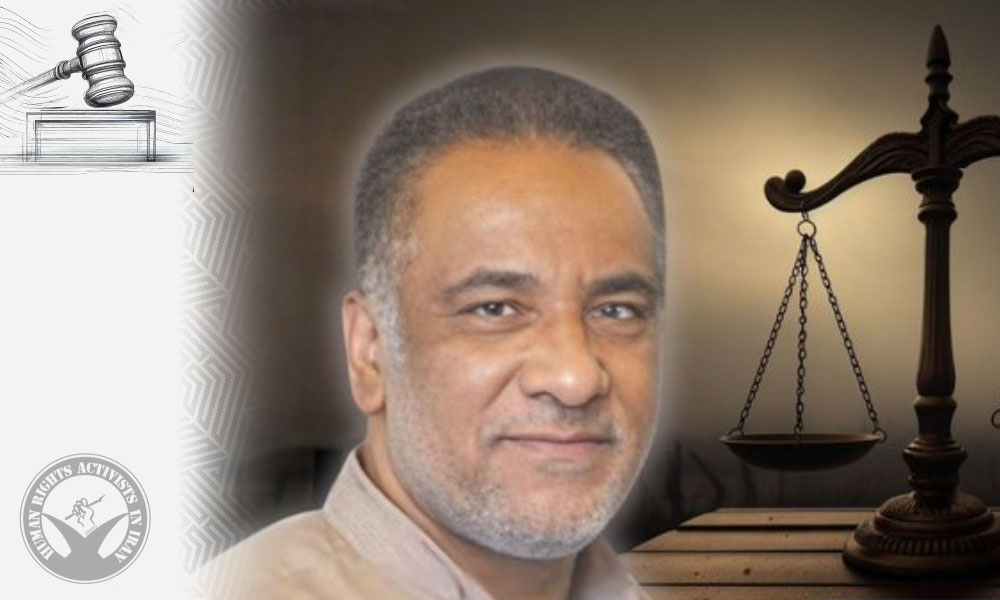
HRANA News Agency – Mahvash (Sayeh) Seydal, a political prisoner and holder of a PhD in international law, has gone on hunger and medication strike in protest against inadequate medical care.

According to HRANA, the news agency of Human Rights Activists in Iran, Seydal, currently held in Evin Prison, began her strike due to what she describes as the authorities’ failure to provide proper medical attention.

On March 10, 2025, Seydal was formally charged in Branch 3 of the Evin Prosecutor’s Office in connection with a new case opened during her incarceration, facing accusations of property damage and disturbing public order.

She had been granted furlough on February 3, 2025. During that time, she posted on Instagram that upon reporting to Branch 1 of the Sentence Enforcement Office at Evin Prosecutor’s Office, she was physically assaulted and insulted by a security officer for refusing to wear a chador. Seydal stated that when she attempted to file a complaint, the prosecutor refused to register it.

Seydal was first arrested on October 6, 2024, by security forces and transferred to the women’s ward of Evin Prison.

Following a new conviction, her previously suspended sentence was converted into an enforceable one. She was prosecuted in Branch 26 of the Tehran Revolutionary Court on charges including “spreading falsehoods” and was sentenced to two years in prison and paying a fine. One of the charges related to her reposting news about the wave of poisonings targeting schoolgirls.

In November 2023, the same court under Judge Iman Afshari had previously sentenced her to one year in prison and a fine for “spreading falsehoods with the intent to disturb public opinion,” though the prison sentence had been suspended for five years.

Seydal was initially arrested on June 21, 2023, along with several other Clubhouse activists in Tehran, reportedly due to her activity on the platform. She was released on bail from The Ministry of Intelligence’s detention facility (Ward 209 of Evin Prison) on July 23, 2023.

HRANA’s data from the past decade shows that during this ten-year period, over 2,050 political prisoners and prisoners of conscience in Iran prisons have been forced to go on hunger strike in protest of various abuses—including prolonged detention, being held in legal limbo, unfair trials, poor prison conditions, and being held in solitary confinement or alongside inmates convicted of violent crimes.

Two Prisoners Executed in Ghezel Hesar Prison, Karaj

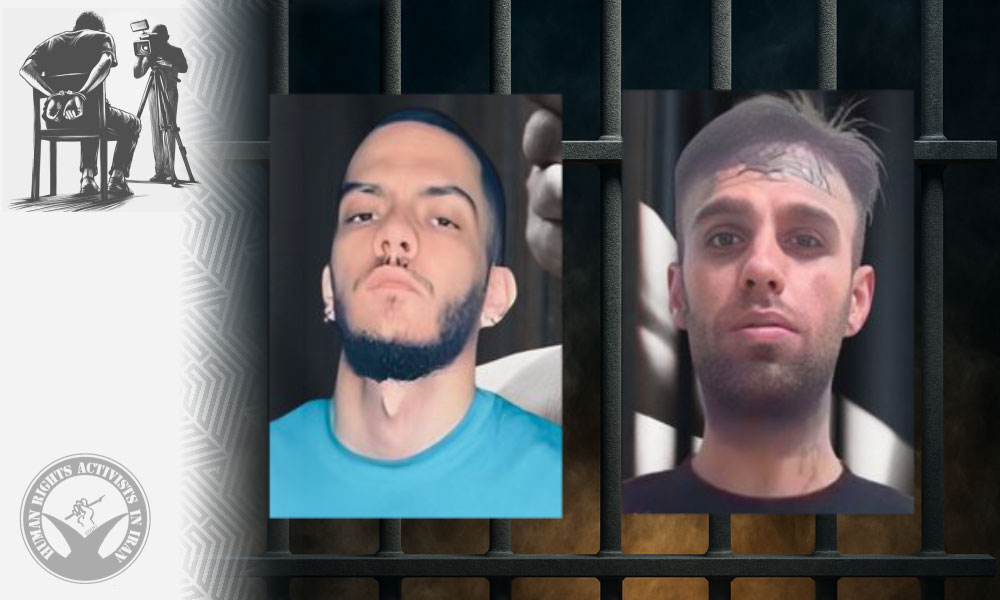
HRANA News Agency – Two prisoners who had previously been sentenced to death in separate murder cases were executed at dawn today in Ghezel Hesar Prison, Karaj.

HRANA has identified the individuals as Farman Kooshki, from Kuhdasht, and Yashar Jafari, from Tehran.

According to information obtained by HRANA, the two had been arrested in separate cases on murder charges and later sentenced to death by criminal courts.

As of the time of this report, the executions have not been officially announced by prison authorities or relevant institutions.

According to HRANA’s statistics, Ghezel Hesar Prison in Karaj carried out the highest number of executions among all Iranian prisons, with 150 inmates hanged. This figure has nearly doubled compared to the previous year — a deeply alarming increase that underscores the escalating use of capital punishment in Iran.

Execution of Nine Prisoners, Including Three Women, in Birjand and Kahnuj Prisons

HRANA News Agency – Nine prisoners, including three women who had previously been sentenced to death on drug-related charges, were executed in Birjand and Kahnuj prisons.

According to HRANA, citing Haal Vsh, at dawn on Monday, May 26, 2025, at least eight prisoners — including three women — were executed in Birjand Prison, South Khorasan province.

One of the individuals has been identified as Hamid Shirzayi, also known as Amanollah, 39 years old, father of 10 children, originally from Zahedan and residing in Gorgan.

Mr. Shirzayi had reportedly informed his family in a phone call on Sunday, May 25, of his transfer to solitary confinement. He was arrested in 2019 on drug-related charges and later sentenced to death by the Birjand Revolutionary Court.

Additionally, according to the Baloch Activists Campaign, on Sunday, May 25, a prisoner identified as Mahmoud Shirvani was hanged in Kahnuj Prison, Kerman province.

The identities and charges of the other executed prisoners have not been mentioned in the reports.

As of the time of this report, prison officials and relevant authorities have not officially announced the executions. According to HRANA reports, in 2024, only 6% of executions were announced by official bodies or domestic media outlets.

In 2024, Iranian prisons witnessed the execution of 930 inmates. According to HRANA’s data, the number of executions carried out by the Iranian regime’s judiciary has risen steadily over the past five years. The percentage of executions related to drug charges has also increased year after year.

Prisoner Executed in Nahavand Prison

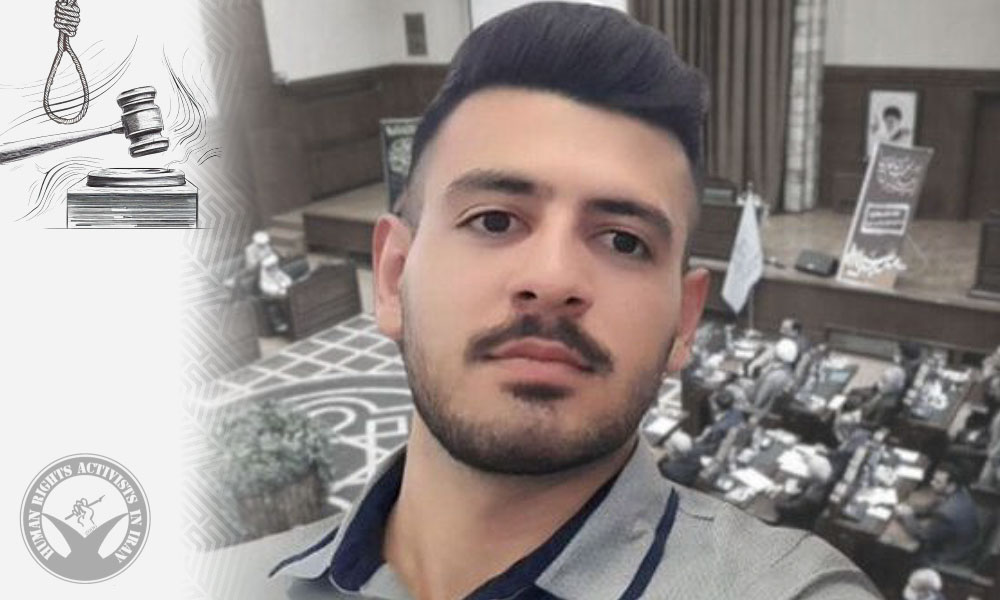
HRANA News Agency – At dawn on Saturday, May 24, a prisoner previously sentenced to death for murder was executed in Nahavand Prison, Hamadan province.

According to HRANA, the news agency of Human Rights Activists in Iran, the identity of the executed individual has been confirmed as Tahmas (Tahmasb) Jahanian. Jahanian had been arrested on murder charges and was later sentenced to death by the criminal court.

As of the time of this report, prison authorities and relevant institutions have not officially announced the execution.

In 2024, according to 812 reports compiled by HRANA, the Iranian regime executed 930 individuals in its prisons—marking the highest number of executions in the past 12 years. Despite the scale of these executions, prison officials and other relevant authorities publicly acknowledged only 6% of them, highlighting the regime’s lack of transparency and accountability.

Three Baha’i Women Sentenced to Prison by Kerman Appeals Court

HRANA News Agency – The Kerman Province Court of Appeals has sentenced three Baha’i citizens from Rafsanjan — Elna Naeimi, Didar Ahmadi, and Boshra Mostafavi — to a total of one year in prison.

They were tried on May 14, 2025, on the charge of “propaganda in favor of anti-regime groups.”

Previously, Branch 3 of the Rafsanjan Criminal Court had acquitted them due to lack of evidence, but the prosecutor challenged the ruling, leading to the appeal.

These women were initially arrested on June 7, 2020, after security agents searched their homes. They were later released on a temporary basis.

HRANA’s compiled reports show that in 2024 alone, the Iranian regime’s judiciary sentenced 82 members of religious minorities to nearly 400 years in prison on charges solely related to their religious beliefs and sharing those beliefs. This alarming figure highlights the regime’s relentless persecution of religious communities through its judicial system.

Subscribe to Our Newsletter

Now is definitely not the time to stop reading!

Homes of Six Baha’i Citizens Raided in Yazd

HRANA News Agency – On the evening of Thursday, May 22, security forces raided the homes of six Baha’i citizens in Yazd.

According to HRANA, the news agency of Human Rights Activists in Iran, agents from the Yazd branch of the Ministry of Intelligence conducted the coordinated raids on Thursday evening. Security forces searched the homes of Ramin Jiveh, Jamal Ghadirzadeh, and Ghodrat Mirzaei, and later targeted the residences of Manouchehr Sobhani, Farrokh Shadpour, and Taraz Amiri. During the raids, agents confiscated personal belongings including Baha’i religious books, mobile phones, and laptops.

It is worth noting that Jamal Ghadirzadeh is currently facing legal proceedings related to his Baha’i faith and activities.

Over the past decade, the Iranian Bahá’í community has been disproportionately targeted by Iran’s security forces and judiciary—more than any other minority group. In the past three years, an average of 72 percent of the reports on religious rights violations collected by HRANA have documented the Iranian regime’s repression of the Bahá’í community.

Mahsa Zarei Arrested by Security Forces in Kermanshah

HRANA News Agency – On Sunday, May 25, security forces arrested Mahsa Zarei, a 33-year-old resident of Kermanshah, at her home and transferred her to an undisclosed location.

According to HRANA, citing Kolbar News, Ms. Zarei was detained without the presentation of a judicial warrant. During the arrest, agents also searched her home.

As of the time of this report, the reasons for her arrest, her whereabouts, and the charges against her remain unknown.

Arbitrary arrests, transferring detainees to undisclosed locations, and leaving families in the dark about the fate of their loved ones are routine practices of the Iranian regime’s security agencies, such as the Ministry of Intelligence and the IRGC Intelligence Unit. This pattern of behavior stands in clear violation of the United Nations Standard Minimum Rules for the Treatment of Prisoners, known as the Nelson Mandela Rules.

Drug-Related Offense: Prisoner Executed in Zanjan Prison

HRANA News Agency – At dawn on Saturday, May 24, a prisoner previously sentenced to death on drug-related charges was executed in Zanjan Prison.

According to HRANA, the news agency of Human Rights Activists in Iran, the identity of the executed prisoner has been confirmed as Homayoun Amjad.

Authorities had arrested Mr. Amjad earlier on charges related to drug offenses, and he was subsequently sentenced to death by the judiciary.

As of the time of this report, prison officials and relevant authorities have not publicly announced the execution.

According to HRANA’s report, in 2024, over 52 percent of executed prisoners had been convicted on drug-related charges. Over the past ten years, individuals convicted of drug trafficking have accounted for 40 percent of all executions. Unfortunately, HRANA’s statistics show no progress in reducing executions for drug-related offenses.

Christian Converts Sentenced to 24 Years in Prison by Tabriz Revolutionary Court

HRANA News Agency – The Tabriz Revolutionary Court has sentenced Christian converts Mehdi Rahimi and Kia Nourinia to a total of 24 years in prison, over two billion tomans in fines, and 30 years of deprivation of social rights.

Judge Hassan Fath-Nejad of Branch 3 issued the verdict in absentia on April 16, 2025, without summoning the defendants or allowing them to present a defense. The court sentenced both Rahimi, 49, and Nourinia, 56, to 12 years in prison each. As additional punishments, the court imposed fines of one billion tomans on each and banned them from social rights for 15 years.

The court attributed 10 years of each sentence to the charge of “promoting deviant beliefs of Zionist Christianity in opposition to the Islamic Republic of Iran,” and the remaining two years to “smuggling prohibited goods,” referring to Christian religious books. Authorities also ordered them to pay a fine equivalent to ten times the value of the seized materials.

On November 3, 2024, agents from The Ministry of Intelligence raided Rahimi’s home in Tabriz, seizing roughly 5,000 Christian books and pamphlets, along with two computer hard drives. That same day, intelligence agents also searched Nourinia’s residence, confiscating two mobile phones, a tablet, and Christian literature.

Rahimi and Nourinia are both Christian converts residing in Tabriz.

Five Prisoners Executed in Yazd Prison

HRANA News Agency – On Wednesday, May 21, the death sentences of five prisoners previously convicted on charges related to drug offenses and murder were carried out in Yazd Prison.

Their identities have been confirmed by HRANA as: Nourweis Achkizahi from Zabol, Javad Rezaei, Reza Beigi, Vali Shahrbabaki, and Mohammadreza Dehghan Dehnouri, 38 years old.

Based on information obtained by HRANA, Mr. Achkizehi had been arrested six years ago and Mr. Beigi at an earlier date, both on drug-related charges, and were sentenced to death. Mr. Rezaei and Mr. Shahrbabaki had been detained five years ago, and Mr. Dehghan Dehnouri earlier, all on murder charges in separate cases, and were also sentenced to death.

As of the time of this report, the execution of these individuals has not been officially announced by prison authorities or relevant institutions.

In 2024, according to 812 reports compiled by HRANA, the Iranian regime executed 930 individuals in its prisons—marking the highest number of executions in the past 12 years. Despite the scale of these executions, prison officials and other relevant authorities publicly acknowledged only 6% of them, highlighting the regime’s lack of transparency and accountability.