Behrad Azargan, Baha’i Musician, Sentenced to 11 Years in Prison

Behrad Azargan, a Baha’i musician residing in Tehran, has been sentenced by the Revolutionary Court of Tehran to 11 years in prison, in addition to the confiscation of his seized belongings.

According to HRANA, the news agency of Human Rights Activists in Iran, Branch 15 of the Tehran Revolutionary Court, presided over by Judge Salavati, sentenced Azargan to five years in prison for “engaging in educational or promotional activities against Sharia of Islam” through affiliation with a sect or similar group, four years for “membership in anti-regime groups,” and two years for “spreading false information.” Additionally, the court ordered the confiscation of items seized from his home and imposed a two-year ban on his use of social media and travel abroad.

The court session addressing Azargan’s case was held on October 6.

Azargan’s home was raided on July 3 by security agents, who seized several personal items, including his phone and laptop.

He was subsequently detained on August 4 after appearing at the Third Branch of the Security Prosecutor’s Office to defend himself against charges of anti-regime propaganda. He was later released on bail from Evin Prison.

Finger Amputation Sentences Executed on Two Prisoners in Urmia Prison

On October 30, two prisoners convicted of theft had their sentences of finger amputation carried out in Urmia Prison.

According to HRANA, the news agency of Human Rights Activists in Iran, brothers Shahab and Mehrdad Teimouri were each sentenced by Branch 1 of the Juvenile Court in West Azerbaijan Province to the amputation of four fingers on their right hands, as well as restitution of stolen goods. After being transferred to solitary confinement in preparation, the prisoners were taken to the execution unit in Urmia Prison, where the sentences were executed. They were then transported to Imam Khomeini Hospital in Urmia for medical care.

The Teimouri brothers were initially arrested in 2019 on theft charges and later sentenced to finger amputation by the court. This ruling was upheld in April 2020 by Branch 24 of the Supreme Court, presided over by Judge Mohammad Karami, who confirmed the Teimouri brothers’ sentences but overturned a similar sentence for a co-defendant, Ebrahim Khatibi, ultimately sentencing him to 20 years in prison.

In part of his defense, which HRANA obtained, Mehrdad Teimouri stated, “I admit to theft. I am a thief, but not as recorded by the police. In 2015, I was forced to confess to 11 thefts… I had debts to other victims, which led me to this theft.”

A source close to the case told HRANA, “The initial trial was held on July 24, 2019, in Branch 1 of the Juvenile Court in Urmia, where all three defendants were sentenced to amputation. Following appeals filed by their court-appointed attorneys, the case was referred to the Supreme Court, which confirmed the Teimouri brothers’ sentences in April 2020 and overturned Ebrahim Khatibi’s sentence.”

Due to the involvement of the Juvenile Court, it appears the defendants may have been under 18 at the time of their trial. However, with no official statements and limited access to court records, HRANA continues its independent investigation to confirm this information.

Shahab and Mehrdad Teimouri are from Sarpol-e Zahab and currently reside in Malard, Karaj.

Amputation as a legal punishment violates fundamental principles of human dignity, and the International Covenant on Civil and Political Rights explicitly prohibits inhumane or degrading punishments.

Execution of Two Prisoners in Zanjan Prison

At dawn on October 27, two prisoners convicted of murder in separate cases were executed in Zanjan Prison.

HRANA has identified the prisoners as Taher Ganj Khanlou, a military officer from Zarrinabad in Zanjan Province, and Mohammadreza Nemati, a resident of Tarom. Both had been arrested on individual murder charges and later sentenced to death by judicial authorities.

As of this report, prison officials and relevant institutions have not issued an official statement regarding the executions.

According to latest HRANA’s annual report over between October 10, 2023, and October 8, 2024, at least 811 individuals were executed by hanging in Iran, rising to 23.06% compared to the same period last year. Of these executions, four were carried out in public. Many of the defendants were denied a fair trial.

Political Prisoner Arezoo Azarm-Sefat Serving Sentence in Evin Prison

Political prisoner Arezoo Azarm-Sefat is currently serving a three-year, nine-month sentence in Evin Prison, where she was transferred on August 26.

Originally sentenced to five years on suspicion of collaborating with an opposition political group, her sentence was reduced to three years and nine months after she submitted a plea of no contest.

Azarm-Sefat was initially arrested by security forces on May 1. After undergoing interrogation in the Ministry of Intelligence’s detention facility, known as Ward 209 of Evin Prison, she was released on bail on May 20 before returning to prison to begin her sentence.

Eight Prisoners Transferred to Solitary Confinement for Imminent Execution in Ghezel Hesar Prison

Yesterday, October 28, eight prisoners in Ghezel Hesar Prison in Karaj, previously sentenced to death on drug-related charges, were moved to solitary confinement in preparation for their executions.

According to HRANA, the news agency of Human Rights Activists in Iran, these prisoners were transferred to solitary as part of the process to carry out their sentences. HRANA is actively investigating further details, including the identities of the prisoners, and will report as more information becomes available.

According to data gathered by the Department of Statistics and Publication of Human Rights Activists, Ghezel Hesar Prison in Karaj witnessed the highest number of executions in 2023, with Zahedan Prison following closely behind. For a comprehensive examination of the details and statistics surrounding the executions in Iran, refer to HRANA’s report.

Subscribe to Our Newsletter

Now is definitely not the time to stop reading!

Iranian-German Dual Citizen Jamshid Sharmahd Executed

Today, October 29, Jamshid Sharmahd, an Iranian-German dual citizen previously convicted of “spreading corruption on earth,” was executed, as reported by Mizan, the judiciary’s news agency. The report did not specify where the execution took place but stated that it was carried out at dawn.

In March 2023, Tehran’s Revolutionary Court sentenced Sharmahd to death on charges that included “spreading corruption on earth through planning and directing terrorist actions.” The Supreme Court upheld this sentence in April 2023. Sharmahd’s trial was conducted in Branch 15 of Tehran’s Revolutionary Court, presided over by Judge Abolqasem Salavati, with proceedings taking place in both civil and criminal courts.

Previously, official reports, citing a security source, announced the Ministry of Intelligence’s arrest of an individual allegedly connected to a political group. Without identifying Sharmahd by name, the source referred to the individual as “Masmatos,” reportedly the second-in-command of the “Thunder” (Tondar) group. Shortly afterward, the Ministry of Intelligence confirmed Sharmahd’s arrest, describing him as a key member of Tondar.

Sharmahd’s daughter, Ghazaleh, had stated that the family’s chosen lawyer was denied access to the case, her father was held in solitary confinement, and he had been forced to sign documents under duress.

In 2006, Fereydoun (Faroud) Fouladvand, the founder of the Kingdom Assembly of Iran, disappeared along with two associates in Hakkari Province, Turkey. Following this, Sharmahd claimed partial leadership of the group, although Rosita Montazeri, the then-spokesperson for the Assembly, disputed his leadership role.

Born in 1955, Jamshid Sharmahd held dual Iranian-German citizenship and resided in the United States.

Nayeb Askari Sentenced to 15 Years in Prison and Heavy Fine After Death Sentence Overturned

Nayeb Askari, a political prisoner detained in Urmia Prison, has been re-sentenced by Branch 2 of the Urmia Revolutionary Court to 15 years in prison and a fine of 900 million tomans, following the Supreme Court’s decision to overturn his prior death sentence and refer his case for retrial.

This updated sentence was issued last week by Branch 2 of the Urmia Revolutionary Court. According to HRANA’s sources, the fine was imposed on Askari as compensation for alleged damage to government property.

Initially, on April 15, 2023, Askari was sentenced to death in absentia and without legal representation by Branch 2 on charges of “enmity against God (moharebeh).” After he appealed, the court downgraded the charge from “moharebeh” to “armed rebellion (baghi)” but re-issued a death sentence in late October 2023.

Askari’s alleged membership in a Kurdish opposition party was cited as evidence supporting the charges in his case.

Arrested by IRGC intelligence agents on March 27, 2021, in Urmia, Askari was later moved to a detention facility and, on June 17, 2021, to Urmia Prison.

HRANA’s source reveals another ongoing case accusing Askari of the murder of IRGC member Mostafa Soltani. In 2013-2014, Soltani was injured during a clash with a political opposition party member, passing away six years later from COVID-19. Soltani’s family claims alleged Askari’s involvement in the altercation caused the sustained injury leading to his eventual death.

A new case, opened on July 12, 2021, based on a complaint from the Urmia Prison head, resulted in a three-month imprisonment extension and 50 lashes for “disrupting prison order.”

According to HRA’s annual report, in 2023, Urmia Prison officials executed 29 inmates, positioning this facility as the sixth highest in terms of executions among the ranked prisons.

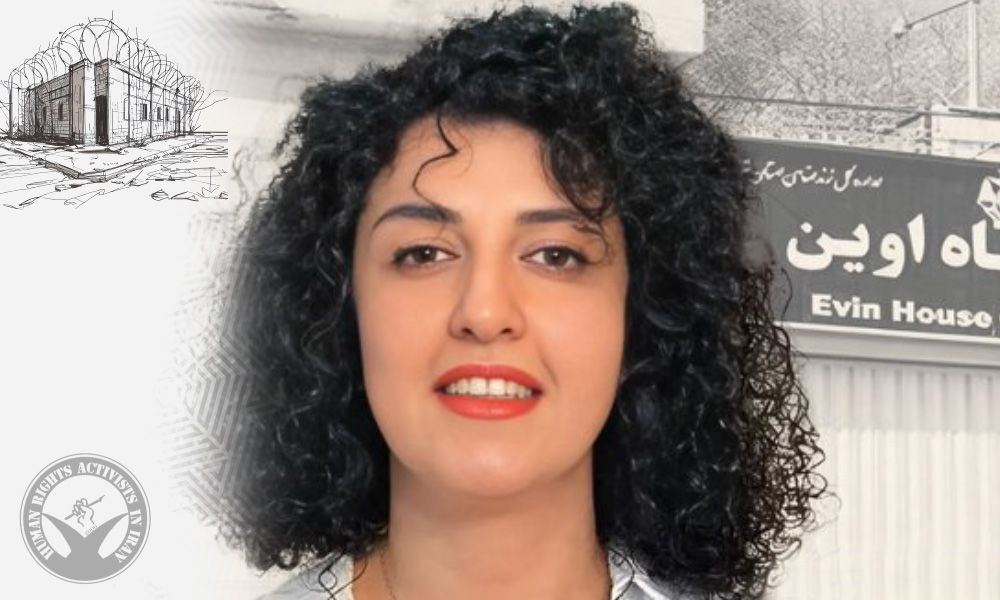
Narges Mohammadi Transferred from Evin Prison to Hospital

Narges Mohammadi, Nobel Peace Prize laureate and human rights activist, has been transferred from Evin Prison to a hospital.

Her husband, Taghi Rahmani, announced this news yesterday, stating that, after nearly nine weeks of delay by authorities in addressing her medical needs, Narges Mohammadi has finally been transferred from Evin Prison to a hospital.

Ms. Mohammadi suffers from heart disease, a breast mass, and chronic back pain. She had repeatedly been denied transfer to medical centers for angiography and health evaluations.

Narges Mohammadi, a Nobel Peace Prize laureate who has faced multiple convictions, was sentenced in January of this year by Branch 26 of the Tehran Revolutionary Court, presided over by Judge Iman Afshari, to fifteen months in prison, two years exile from Tehran and neighboring provinces, a two-year travel ban, a two-year ban on membership in social-political groups, and a two-year ban on using a smartphone for propaganda against the regime.

In October 2020, Mohammadi was released from Zanjan Prison after serving about five and a half years. Shortly after, regarding a case opened against her during her imprisonment, she was sentenced by a Criminal Court in Tehran to thirty months in prison, eighty lashes, and two fines.

In November 2021, during a memorial ceremony for the second anniversary of the death of Ebrahim Ketabdar, one of the victims of the November 2019 protests, she was arrested by security forces in Karaj. Subsequently, Ms. Mohammadi was sentenced by Branch 26 of the Tehran Revolutionary Court to eight years in prison, seventy-four lashes, two years of exile, and other social deprivations.

In October 2022, regarding another case opened against her during her imprisonment, she was sentenced by Branch 26 of the Tehran Revolutionary Court to one year and three months in prison along with other additional punishments. In August of last year, she was also sentenced to one year in prison by the Tehran Revolutionary Court.

In 2023, the Nobel Peace Prize was awarded to Narges Mohammadi by the Norwegian Nobel Committee “for her courageous fight for freedom and human rights over three decades.”

Four Prisoners Executed in Dezful and Maragheh Prisons

The death sentences of four prisoners previously convicted on charges related to drug offenses and murder were carried out in Dezful and Maragheh prisons, according to the Iran Human Rights Organization.

The identities of these individuals are reported as follows: Khaled Chenari, 30 years old; Abolnabi Kalani, 26 years old; Soleiman Maleki-Nejad, 35 years old; and Hassan Dorostkar.

The report states that Khaled Chenari and Abolnabi Kalani were arrested three years ago on murder charges in a joint case and were sentenced to death by the judiciary. Their executions took place on Sunday, October 27, at Dezful Prison. Before their transfer to Dezful Prison, these two inmates had been held in Ramhormoz Prison.

On Wednesday, October 23, Soleiman Maleki-Nejad, who was arrested roughly three years ago on drug-related charges and subsequently sentenced to death, was executed in Maragheh Prison.

Hassan Dorostkar was executed in Maragheh Prison on Monday, October 21. He had been arrested four years ago on murder charges and sentenced to death by the judiciary.

At the time of this report, prison authorities and responsible organizations have not publicly announced these executions.

According to latest HRANA’s annual report over between October 10, 2023, and October 8, 2024, at least 811 individuals were executed by hanging in Iran, rising to 23.06% compared to the same period last year. Of these executions, four were carried out in public. Many of the defendants were denied a fair trial.

Vadood Asadi Sentenced to Four Years in Prison

Azerbaijani-Turk activist Vadood Asadi has been sentenced to four years in prison by Tehran’s Revolutionary Court on charges of “assembly and collusion to disrupt national security.” This sentence was issued by Branch 15 of the Revolutionary Court, presided over by Judge Salavati, and was recently communicated to Mr. Asadi.

In a separate case, the Rasht Revolutionary Court previously sentenced Mr. Asadi to five years and six months in prison. This verdict was based on charges of “propaganda against the regime, membership in anti-regime groups, and insulting the Supreme Leader.”  Most recently, on October 27, an appeal session for his Rasht sentence was held.

Mr. Asadi was initially detained by security forces in Rasht in February 2024. He was transferred to Evin Prison in March and subsequently released on bail a few days later. His court hearing, conducted alongside fellow activist Salar Taher Afshar, was held on May 21, 2024.

Vadood Asadi, an Azerbaijani-Turk activist, has previously faced judicial actions due to his activism.