Jailed Conscript Soldier Akbar Hosseini Still in Detention in Tabriz Prison  

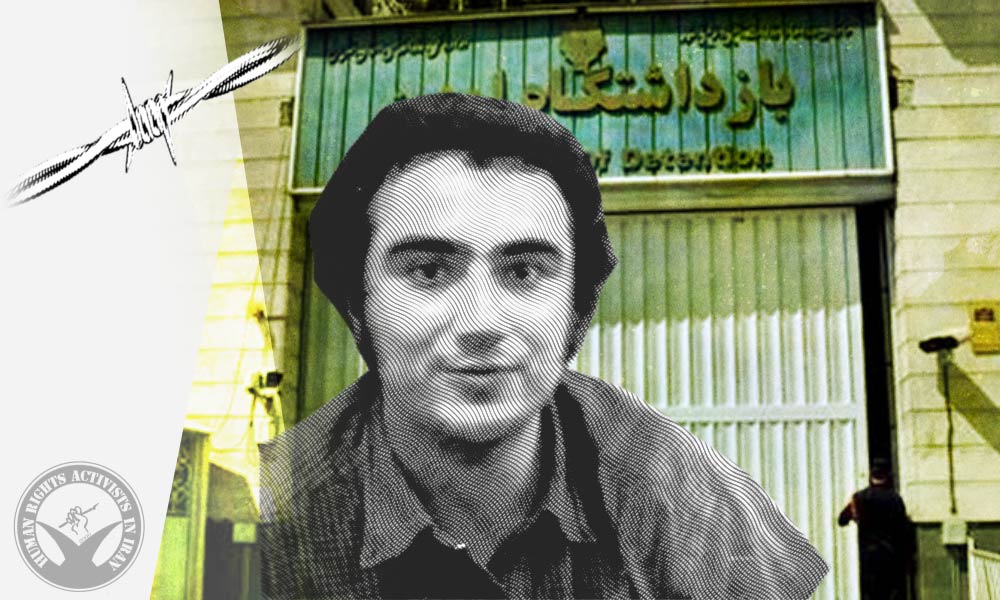
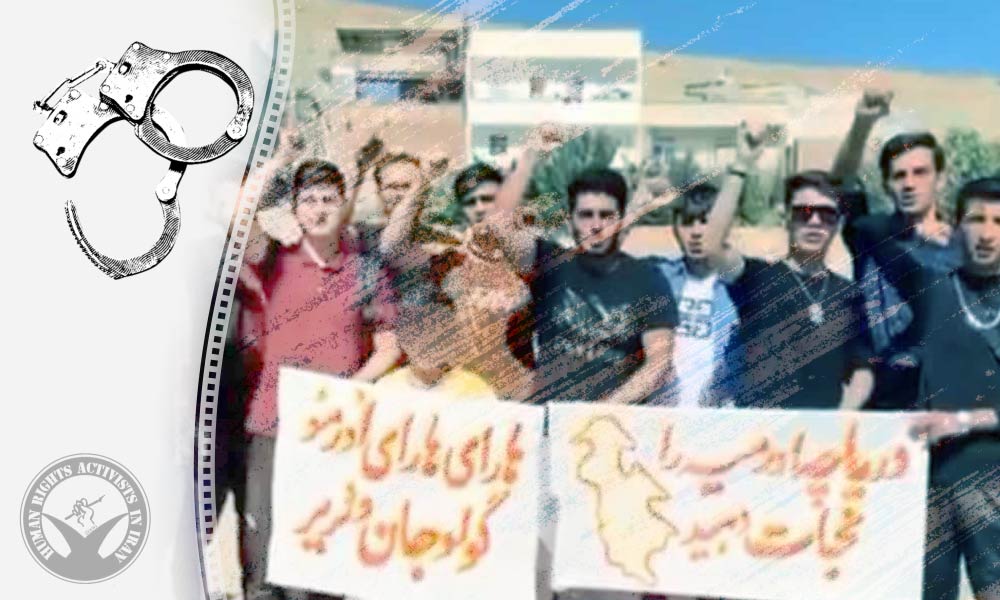
According to HRANA, the news agency of Human Rights Activists, the conscript soldier, Mir-Akbar Hosseini is still detained in Ward 6 of Tabriz Prison.

Reportedly, he is still in detention since he is unable to afford bail.

According to an informed source, Hosseini has been accused of “propaganda against the regime” due to his activities on social media.

Mir-Akbar Hosseini has other arrests and convictions on his rap sheet due to his civil activities. On January 5, 2022, following his support of the Mothers whose children were killed by the regime during the nationwide 2019 protests, he was arrested by Branch 1 of the Military Court in East Azerbaijan Province. He was sentenced to 9 months in prison on the charge of “membership in groups hostile to the regime” and 4 months on the charge of “propaganda against the regime.” On April 19, 2021, he was released on probation. 

According to an informed source, during detention, Hosseini was held in solitary confinement and was tortured to make confessions.


British-American National Morad Tahbaz on Eight Day of Hunger Strike   

British-American national Morad Tahbaz who has been jailed for his activities as an environmentalist is still on a hunger strike after eight days. Earlier, his family was informed that he had been sent to an unidentified location.

According to HRANA, the news agency of Human Rights Activists, on Sunday, March 27, 2022, after eight days, the detained British-American national is still on hunger strike.

Mr Tahbaz was released from Evin Prison on furlough on March 16, 2022. According to his family, the Iranian regime made a deal to allow him to go back to the U.K. along with Nazanin Zaghari-Ratcliffe and Anoosheh Ashoori. Similarly, on March 16, 2022, British Foreign Secretary, Liz Truss was optimistic that “Morad Tahbaz has also been released from prison on furlough, as a result of tenacious and creative British diplomacy.” Nonetheless, two days later, while Mr. Tahbaz was on furlough, the security forces arrested and sent him back to Evin prison.

Morad Tahbaz has been in prison since 2018. Along with seven other defendants of a legal case known as the case of environmentalists, he was convicted by Branch 15 of the Revolutionary Court. The court sentenced Morad Tahbaz and Niloofar Bayani each to 10 years in prison, Taher Ghadirian and Houman Jokar each to 8 years, Amir-Hossein Khaleghi, Sam Rajabi and Sepideh Kashani each to 6 years, and Aborlreza Koohpayeh to 4 years in prison. Morad Tahbaz was charged with “collaboration and receiving money from the US government.”


The Latest Update on Political Prisoner Ahmad Yazdanipour’s Condition

Political Prisoner Ahmad Yazdanipour is currently serving his sentence in Evin Prison. He has been in prison since February 2021. He suffers from Steroid-resistant asthma and for that reason, according to his doctor, he should not be kept in confined spaces.

According to HRANA, the news agency of Human Rights Activists, Political Prisoner Ahmad Yazdanipour is serving his sentence in Evin prison. This imprisonment endangers his health since he is suffering from steroid-resistant asthma.

An informed source told HRANA that “Mr. Ahmad Yazdanipour’s disease has worsened in recent years as his lungs are seriously damaged. According to his doctor, continuing his imprisonment can pose life-threatening risks for him.”

On February 21, 2020,  Ahmad Yazdanipour was arrested by IRGC’s intelligence agents in Tehran and transferred to Evin prison. One day after the arrest, intelligence agents raided and searched his house and confiscated some of his personal belongings such as books and manuscripts. They also arrested his daughter, Forouzan Yazdanipour, who is a graduate student at Tehran University. On March 18, 2020, she was released on bail of 500 million tomans from Evin Prison and later the charges were dropped.

On April 6, 2020, Ahmad Yazdanipour was released on bail of 500 million tomans as well. After a while, the Revolutionary Court of Tehran sentenced him to three years and nine months on the charge of “assembly and collusion to act against national security.”

On January 26, 2021, after the appearance at Evin’s Enforcement of Judgments Unit, he was arrested and sent to Evin for his sentencing.

Ahmad Yazdanipour, age about 63, was a political prisoner in the 1980s. He lost his job due to the pressures from the Ministry of Intelligence for his non-violent civil activities. In recent years, he was researching the Quran and Iran’s history.


Five Citizens Sentenced to a Total of 13 Years in Prison in Oshnavieh

The Revolutionary Court of Oshnavieh sentenced Rahman Aasadi, Farhad Maroufi, Obeid Anvari, Ribwar Charakdari, and Jalal Ghaderzadeh to a total of 13 years in prison.

According to HRANA, the news agency of Human Rights Activists, quoting Kurdpa, five residents of Oshnavieh County were sentenced by the Revolutionary Court.

According to this verdict, issued on Saturday, March 26, Rahman Asadi was sentenced to 4 years, Farhad Maroufi and Jalal Ghaderzadeh each to 3 years, Obeid Anvari to 2 years, Ribwar Charakdari to 1 year in prison. These individuals have been charged with “membership and collaboration with a political opposition party.”

On August 2, 2021, security forces arrested the above-mentioned and they were subsequently released on bail over the next two months.

Ribwar Charakdari is a resident of Oshnavieh city and the rest are the residents of the village Aliabad in Oshnavieh County.

One Kolbar Killed in Direct Shooting by Iran’s Military

On Friday, March 25, 2022, the military forces killed a kolbar (Cross Border Carrier) through direct shooting at the border areas of Baneh County, located in Kurdistan Province.

According to HRANA, the news agency of Human Rights Activists, quoting Kordpa, a kolbar was shot dead by military forces.

He has been identified as Rostam Khezri, age 25, married and a resident of Oshnavieh.

Reportedly, the military forces opened fire against him without any warning.

According to HRANA’s annual report, during the period of March 21 of 2021, and March 16 of 2022, a total of 203 citizens were shot by the regime’s military forces. In these incidents, 91 people were shot dead including 26 Kolbars (Cross Border Carriers), 13 Sukhtbar (Fuel Border Carriers), and 52 other civilians. 112 people were injured, of the injured, 82 people were Kolbars, 12 Sukhtbar, and 18 other civilians.

Additionally, 34 Kolbars were affected by climate and geographic factors such as frostbite and falling from heights. In these accidents, 21 Kolbars were injured and 13 ultimately died.


Subscribe to Our Newsletter

Now is definitely not the time to stop reading!

Khosro Sadeghi Boroujeni Denied Phone Calls in Prison As a Punishment for Celebrating Nowruz

Evin prison officials denied imprisoned writer and journalist Khosro Sadeghi Boroujeni the right to make telephone calls in prison as he was serving time for celebrating Nowruz. This punitive measure was taken in violation of prison rules, which could be referred to the Prison Disciplinary Council.

According to HRANA, the news agency of Human Rights Activists, the Evin prison officials denied Khosro Sadeghi Boroujeni of making telephone calls in violation of prison rules and as a punishment for celebrating Nowruz.

According to an informed source, since last Tuesday, March 22, he was denied his rights on the pretext of participating in and making a speech at a Nowruz celebration held by the prisoners.

HRANA has been informed that Hamzeh Darvish, the Sunni prisoner in Lakan Prison, has also been denied the right to make phone calls.

Khosro Sadeghi Boroujeni was arrested and interrogated after he was summoned to the Branch 2 of Evin’s prosecutor’s office on May 8, 2019. He was later temporarily released from Evin Prison on a bail amount of 300 million tomans.

Boroujeni’s trial was on July 28, 2019. According to the verdict ordered by the Branch 28 of the Revolutionary Court of Tehran, which was presided over by judge Mohammad Moghiseh, Boroujeni was sentenced to five years imprisonment on a charge of “assembly and collusion with an intention to commit a crime against the national security”, one year imprisonment for the charge of “propaganda against the regime”,  and two years imprisonment on a charge of “insulting the founder of the Islamic Republic”, adding up to a total of eight years. This sentence was later reduced to seven years after the charge of “propaganda against the regime” was dropped upon appeal.

Boroujeni has been conducting research on neoliberalism and the political economy of Iran and has written several articles on these subjects in recent years. His essay “Critique of Neoliberalism” was published by H&S Media Publishing Company in the UK. His other book, “Globalization and Inequality”, was published by Porsesh Publishing Company in 2011.

Hashim Khoran Sentenced to Imprisonment

Branch 1 of the Revolutionary Court of Oshnavieh sentenced Hashim Khoran to 2 years and six months in prison. Hashim Khoran is a resident of the village Alyan located in Oshnavieh County, West Azerbaijan Province. Recently, another resident of this village Mehran Soleimanpour was also sentenced to one year and six months in prison.

According to HRANA, the news agency of Human Rights Activists, quoting Kurdpa, Hashim Khoran, a resident of the village Alyan located in Oshnavieh County was sentenced to two and a half years in prison on the charge of “collaboration with a political opposition party.”

His trial was held on March 25, 2022.

On June 24, 2021, security forces arrested Mr. Khoran without showing an arrest warrant. They transferred him to a detention center and subsequently relocated him to Urmia prison after completing the interrogation. The security forces searched his house at the time of the arrest and confiscated some of his belongings.

On July 28, 2021, Mr. Khoran was released on a bail amount of 500 million tomans. He was denied access to a lawyer and family visitation during the arrest.

37 Human Rights Organizations Ask for the Renewal of the Mandate of the UN Special Rapporteur on the Situation of Human Rights in Iran

Human Rights Activists in Iran (HRAI) has joined other human rights organizations to urge countries for supporting the renewal of the mandate of the United Nations (UN) Special Rapporteur on the Situation of Human rights in Iran.

Below is the full text of the letter, and the list of signatories:

TO: Member states of the United Nations Human Rights Council

Your Excellency,

We, the undersigned Iranian and international human rights organisations, call on your country to support the renewal of the mandate of the United Nations (UN) Special Rapporteur on the situation of human rights in Iran at the 49th session of the Human Rights Council (HRC). We also urge your government to use this opportunity to voice concern at the situation of human rights in Iran, and to answer the Special Rapporteur’s appeal for “the international community to call for accountability with respect to long-standing emblematic events that have been met with persistent impunity” at this session.

The renewal of this mandate is essential in light of the persistence of a pattern of serious human rights violations and international crimes committed by Iranian authorities, as extensively documented by civil society monitors and by the Special Rapporteur.

At this session, the Council is yet again being presented with evidence of gross violations of the right to life, including through the use of the death penalty against child offenders in violation of the absolute prohibition on the use of the death penalty against persons who were under the age of 18 at the time of the crime and through its use for offences not meeting the threshold of “most serious crimes” under international law. Throughout the past year, authorities executed men and women sentenced to death in grossly unfair trials managed by a deeply flawed judicial system that according to the Special Rapporteur “acts as a repressive organ instead of an independent body towards which individuals seek recourse”.


The Council is also being presented with evidence of the continued unlawful use of lethal force by law enforcement and other state agents against protesters, bystanders and border couriers, leading to scores of killings and hundreds of serious injuries including blinding. Since the renewal of the mandate last year, there have been multiple suspicious deaths in custody following credible allegations of torture and denial of health care. Consistent with entrenched patterns of impunity, none of these violations have been investigated or punished.

In the past year, human rights defenders, including labour rights defenders, bereaved relatives of those killed by security forces seeking justice, as well as lawyers and journalists have continued to be judicially harassed and arbitrarily detained. Dual and foreign nationals remained arbitrarily detained “as a means to put pressure on foreign Governments.” Iranian authorities also banned additional media outlets and social media platforms and imposed local Internet shutdowns during protests, further curtailing the right to freedom of expression.


As highlighted in the report of the Special Rapporteur, discrimination in law and practice remains pervasive and perpetuates violence against women and girls; persons belonging to ethnic or linguistic minorities, including Ahwazi Arabs, Azerbaijani Turks, Baluchis, Kurds and Turkmen; persons belonging to religious or belief minorities, including Baha’is, Christian converts, the Yarsan (Ahl-e Haq), Sunni Muslims, atheist beliefs and non -believers , as well as lesbian, gay, bisexual, transgender and intersex (LGBTI) people.


These long-standing patters of human rights violations have been facilitated by what the Special Rapporteur describes as “institutional impunity” due to “the absence of a system for accountability for violations of human rights“, within a system where “obtaining accountability for human rights violations becomes arbitrary at best and impossible at worst.”

In such a context, the mandate of the Special Rapporteur on the situation of human rights in Iran is more than ever critical to monitor, document and report to this Council on steps taken by Iran to uphold its human rights obligations or of its failure to take such measures. It is essential to engage with Iranian authorities on issues of concern, and to make potentially life-saving urgent appeals and other communications.

The mandate draws the attention of this Council to the voices of survivors, victims and their families, and its expert findings and recommendations steer and inform the efforts of UN bodies and member states to encourage Iran’s authorities to undertake long overdue human rights reforms and hold them to account for human rights violations.

For these reasons, we urge your government to support the renewal of the mandate of the UN Special Rapporteur on the situation of human rights in Iran at this session and to press Iran to give the expert unfettered access to the country. We also call on your government to voice concern at the dire situation of human rights in Iran, and to send a strong message to the Iranian authorities that the cycle of impunity must be broken.


Abdorrahman Boroumand Center for Human Rights in Iran (ABC)

The Advocates for Human Rights

African Center for Democracy and Human Rights Studies (ACDHRS)

All Human Rights for All in Iran

Amnesty International

Arseh Sevom

Article 18

ARTICLE 19

Association for the Human Rights of the Azerbaijani people in Iran (AHRAZ)

Balochistan Human Rights Group

Cairo Institute for Human Rights Studies (CIHRS)

Center for Human Rights in Iran

Centre for Supporters of Human Rights

Child Rights International Network (CRIN)

CIVICUS – World Alliance for Citizen Participation

Committee to Protect Journalists (CPJ)

Conectas Direitos Humanos

Ensemble Contre la Peine de Mort (ECPM)

Freedom from Torture

Human Rights Activists in Iran (HRA)

Human Rights Watch

Impact Iran

International Commission of Jurists

International Federation for Human Rights (FIDH)

International Service for Human Rights (ISHR)

Iran Human Rights

Iran Human Rights Documentation Center (IHRDC)

Justice for Iran

Kurdistan Human Rights Association – Geneva (KMMK-G)

Kurdistan Human Rights Network (KHRN)

Minority Rights Group International

OutRight Action International

Siamak Pourzand Foundation (SPF)

United for Iran

World Coalition Against the Death Penalty

World Organization Against Torture (OMCT)

6Rang – Iranian Lesbian & Transgender Network


Mehran Soleimanpour Sentenced to One Year and Six Months in Prison

The Branch 1 of the Revolutionary Court of Oshnavieh sentenced Mehran Soleimanpour to one year and six months in prison. On June 24, 2021, he was arrested in Oshnavieh and released after about one month on bail.  

According to HRANA, the news agency of Human Rights Activists, quoting Kurdpa News Agency, Mehran Soleimanpour was sentenced to one year and six months in prison on the charge of “collaboration with a political opposition party.”

Mehran Soleimanpour is a resident of the village Alyan located in Oshnavieh County, West Azerbaijan Province.

Four Citizens Injured in Direct Unrestrained Shooting by Military Forces

On Tuesday, March 22, 2022, in Sabzevar County, military forces opened fire on a vehicle, which led to the death of two members of a family and the injury of two others. 

According to HRANA, the news agency of Human Rights Activists, quoting Hal Vash news site, on Tuesday, March 22, 2022, two members of a family were killed and two others injured in direct shooting by military forces.

One of the two individuals has been identified as Abdollah Alizehi, a resident of Zahedan. His father, Pirmohammad Alizehi has been injured in this incident. The identities of two other victims are unknown so far.

According to HRANA’s annual report, during the period of March 21 of 2021, and March 16 of 2022, a total of 203 citizens were shot by the regime’s military forces. In these incidents, 91 people were shot dead including 26 Kolbars (Cross Border Carriers), 13 Sukhtbar (Fuel Border Carriers), and 52 other civilians. 112 people were injured, of the injured, 82 people were Kolbars, 12 Sukhtbar, and 18 other civilians.

Additionally, 34 Kolbars were affected by climate and geographic factors such as frostbite and falling from heights. In these accidents, 21 Kolbars were injured and 13 ultimately died.