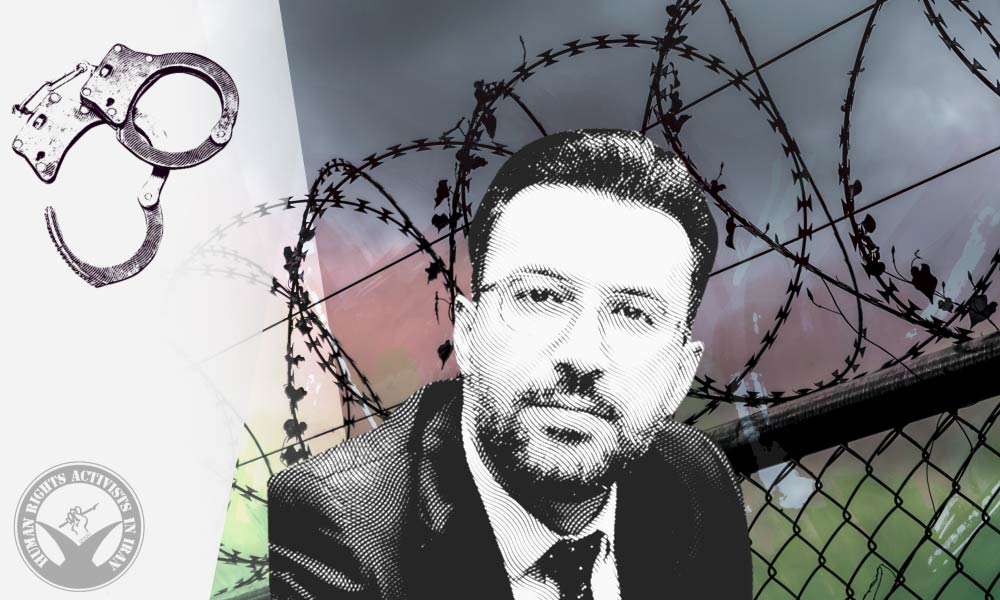
Reza Khandan Mahabadi Returned to Evin Prison after Furlough

On Tuesday, April 5, 2022, Reza Khandan Mahabadi, prisoner of conscience, writer and member of the Iranian Writers Association (IWA) returned to prison after a furlough. On December 21, 2021, following the worsening of his Covid-19 symptoms, Khandan was hospitalized and after four days, he was granted a medical furlough.

According to HRANA, the news agency of Human Rights Activists, on Tuesday, April 5, 2022, Reza Khandan Mahabadi went back to Evin prison at the end of his furlough.

On December 21, Reza Khandan Mahabadi was dispatched from Evin Prison to a hospital outside the prison after his COVID-19 symptoms became worse. On December 25, 2021, through the formal request of his lawyer and family, he was granted a medical furlough.

Earlier, he and another IWA’s member, Baktash Abtin, tested positive for Covid-19. On January 8, Baktash Abtin died at the hospital due to his worsening conditions and the prison’s medical negligence.

Mahabadi was sentenced on May 15, 2019, by Branch 28 of the Revolutionary Court, headed by Judge Mohammad Moghayeseh. His sentence included one year in prison on the charge of “propaganda against the regime” and five years on the charge of “assembly and collusion with the intention of acting against national security”. On September 26, 2020, he was arrested and sent to Evin Prison to serve his sentence.

Mahabadi’s career as a writer kicked off in 1978 with the publication of his book “Local Children”. Some of his publications include “Nothing Comes Out of the Sack, ExceptWhat Was In It”, a seven-volume story collection called “My Favorite Stories”, a collection of research titled “Razi War”, and the 19-volume fiction collection “Encyclopedia of Iranian Legends and Fairy Tales” (co-author Ali Ashraf Darvishian).

Political Prisoner at Urmia Prison Mehdi Sane-Farshi Goes on Hunger Strike

On Monday, April 4, 2022, political prisoner Mehdi Sane-Farshi went on hunger strike in Urmia Prison.

According to HRANA, the news agency of Human Rights Activists, Mehdi Sane-Farshi, imprisoned in Urmia prison, went on hunger strike in protest against increasing pressure on political prisoners and confiscating his personal belongings in prison.

On August 17, 2020, Mehdi Saneh-Farshi who had been back from Turkey to visit his mother was arrested by Intelligence agents and transferred to a detention centre under the Ministry of Intelligence’s control. On September 11, 2020, he was transferred to Urmia Prison after the interrogation ended.

On November 12, 2020, the Revolutionary Court of Urmia sentenced Sane-Farshito to 5 years and 6 months in prison on the charges of “collaboration with one of anti-regime groups and propaganda against the regime.” This verdict was upheld by Branch 1 of the Court of Appeals of West Azerbaijan Province.

Mehdi Saneh-Farshi, age 44, is currently held in Urmia prison in the political prisoners’ ward.

Amin Ansarifar and Arman Ansarifar Sentenced to Imprisonment and Not Allowed to Leave the Country

Branch 1 of the Revolutionary Court of Mahshahr sentenced Amin Ansarifar and Arman Ansarifar each to three years imprisonment and five years ban from leaving the country. Amin and Arman Ansarifar are the father and brother of Farzad Ansarifar who was killed by regime forces during the 2019 nationwide protests.

According to HRANA, the news agency of Human Rights Activists, Amin Ansarifar and Arman Ansarifar were sentenced to three months in prison and five years ban from leaving the country by Branch 1 of the Revolutionary Court of Mahshahr.

The Court session had been held on March 14, 2022, via a video conference with their lawyer, Fereshteh Tabanian. Two days after the court session, they were released on bail of 150 million tomans.

On February 19, 2022, Amin Ansarifar was summoned by Behbahan’s Public and Revolutionary Court and arrested when he appeared. The next day, his son, Arman was arrested by security forces at his home in Behbahan city. According to an informed source, Arman has been charged with “propaganda against the regime” and his father with “promotion of anti-regime groups and political parties.” They have been denied family visitation since the arrest.

During the protests of November 2019 in Behbahan City, security forces used live ammunition against protestors, leading to the death of several protestors including Mehrdad Dashinia, Mahmood Dashtinia, Farzad Ansarifar, Mohammad-Hossein Ghanavati,  and Mohammad Hashamdar.

Five Citizens Including a Minor Arrested in Piranshahr

Last Sunday, April 3, 2022, the security forces arrested five citizens, including a 17 years old female teen in Piranshahr. They were transferred to a detention center for interrogation.

According to HRANA, the news agency of Human Rights Activists, quoting Kurdpa, the five individuals identified as Parisa Sepahi, age 17, Kooyar Eliasi, age 18, Erfan Zolfinia, age 18, Yousef Heshrati, age 22 and Mansour Kani-Rashi, age 32, were arrested in Piranshahr County by security forces.

Reportedly, the security forces did not show any warrant during the arrest.

The reason for these arrests and the charges are still unknown.

14 Businesses Closed for Serving Food During Ramadan

The Public Security Police of the Law Enforcement Force of the Islamic Republic of Iran (NAJA) announced the closure of 14 restaurants and snack bars for serving food during the holy month of Ramadan in Lorestan Province. Moreover, three citizens were arrested for breaking the mandatory fasting rules, as eating and drinking in public during Ramadan is forbidden.

According to HRANA, the news agency of Human Rights Activists, quoting IRIB News Agency, in Lorestan Province 14 businesses were shut down due to serving food during Ramadan.

The Head of Public Security Police of NAJA, Ahmadreza Ahmadian stated:

“Following an action plan to surveil businesses during the month of Ramadan, 14 businesses were closed due to breaking the fasting rules and serving food to people. Also, 124 businesses received warning notice for failure to observe Ramadan rules.”

Additionally, three citizens were arrested for eating and drinking in public.

Earlier, Mohammad-Jafar Montazeri, Prosecutor-General of Iran in a letter asked the chief commander of police for preventive measures against those who break the rules of Ramadan and do not respect Sharia laws.

Eating and drinking during the month of Ramadan have not been explicitly criminalized in Iranian laws. Based on Article 638 of the Islamic Penal Code, however, committing an act that the Islamic jurisprudence considers Haram (forbidden) can be subject to a penalty of either ten days to two months imprisonment or flogging for up to 74 lashes.

Subscribe to Our Newsletter

Now is definitely not the time to stop reading!

Four Women’s Rights Activists Summoned for Sentencing

Four women’s rights activists, Nahid Shaghaghi, Akram Nasirian, Maryam Mohammadi and Asrin Darkaleh were summoned by the Judgement Enforcement Unit of Evin courthouse for sentencing. According to the summons letter, they have to appear at the court within 30 days.

According to HRANA, the news agency of Human Rights Activists, Four women’s rights activists, Akram Nasirian, Maryam Mohammadi and Asrin Darkaleh have been summoned for sentencing.

Akram Nasirian on April 29, 2019, Nahid Shaghaghi on May 15, 2019, Maryam Mohammadi on July 8, 2019, and Asrin Darkaleh on July 28, 2019, were arrested by security forces. They all were released on bail from May to August.

Subsequently, Branch 24 of the Revolutionary Court of Tehran, headed by Judge Iman Afshari, sentenced each of these activists to 3 years in prison on the charge of “assembly and collusion against national security”, 6 months on the charge of “propaganda against the regime” and 8 months on the charge of “removing Hijab in public”. Per Article 134 of the Islamic Penal Code, the severest punishment of three years sentence on the first count was enforceable for each.

The sentencing was later reduced on appeal to two years and three months each.

These four activists are members of “Voice of Iranian Women”, striving for women’s empowerment and raising the voice of Iranian women.

Penalty and Imprisonment for Three Residents of Oshnavieh County

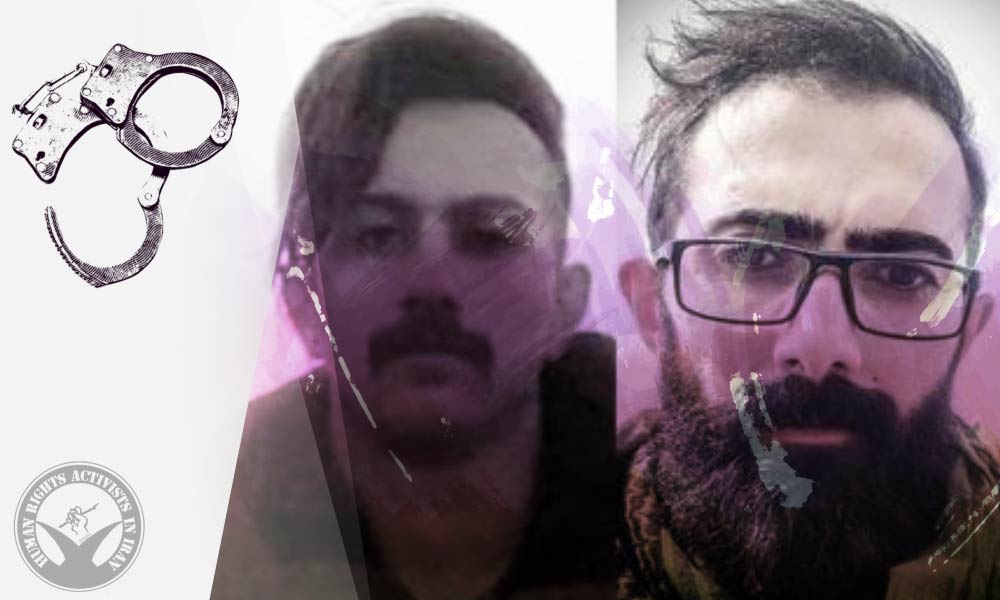
The Criminal Court of Oshnavieh sentenced three citizens of Oshnavieh County, Ayoub Musa, age 26, Hawre (Mehran) Kharazm, age 20, and Siamand Kharazm, age 27, to imprisonment and penalty payments.

According to HRANA, the news agency of Human Rights Activists, quoting Kurpda News Outlet, Ayoub Musa, Hawre Kharazm and Siamand Kharazm, all residents of Oshnavieh were sentenced to pay fines and imprisonment.

According to the verdict issued by Branch 101 of the Criminal Court of Oshnavieh, Ayoub Musa has been sentenced to 8 years in prison and a fine for the amount of nine million tomans on the charges of “collaboration with an anti-regime party and carrying the illegal gun.” Hawre and Siamand have been sentenced each to 6 months in prison on the charge of “collaboration with an anti-regime party.”

On January 7, 2022, without showing any arrest warrant, security forces arrested Ayoub Musa and Hawre Kharazm and transferred them to a detention centre in Urmia and after a while from there to Oshnavieh prison. Siamand Kharazm was also arrested on January 24, 2022, and sent to Oshnavieh prison. During the next month, they were released on bail until the end of the legal proceedings.

Jamshid Sharmahd Made a Phone Call to His Family after Seven Months Detention

After seven months of deprivation of having a phone call, Iranian-German national Jamshid Sharmahd was allowed to make a phone call to his family. Despite suffering from respiratory problems and blood pressure disorder due to long incarceration, he has been denied any adequate medical treatment. He has been detained for about 600 days and undergone interrogations routinely.

According to HRANA, the news agency of Human Rights Activists, Iranian-German national Jamshid Sharmahd was allowed to make a phone call to his family after seven months.

On her personal page on social media, Ghazaleh Sharmahd informed about his father’s phone call. According to her, Mr  Sharmahd is held in a solitary confinement cell and interrogated on a regular basis. He also suffers from blood pressure disorder. He has missed his teeth and only two teeth have been left. He also has problems walking due to being held for long in a confined space. He does not receive his medicine in a sufficient quantity or on time.

On March 6, 2022, the third court session of the Tehran’s Revolutionary Court headed by Judge Salavati, was held. The first and second court sessions had been held on February 6 and 20 of 2022.

On August 1, 2020, in a written statement, the Ministry of Intelligence announced his apprehension and claimed that he is one of the leaders of the anti-regime group known as Tondar group. In 2006, Sharmahd had claimed to be the leader of one of the Royal Association’s branches after Frood Fooladvand, founder of the Royal Association, abducted and disappeared in Turkey.

HRANA Recap: This Week’s Protests in Iran

According to HRANA, the news agency of Human Rights Activists, several protests took place this week in Iran. Read our recap below for details and videos from these protests.

Saturday, March 26

A number of farmers gathered before the Ministry of Agriculture Jihad in Isfahan city. According to these protestors, unlike promises, the enactments of the ministry have not yet been put into practice in order to address farmers’ issues.

In Mazandaran province, a group of environmentalists and ranchmen protested against setting up a petrochemical factory in the protected habitat Miankaleh. Reportedly, although any construction in this protected habitat is legally forbidden, the project was recently inaugurated in the presence of the Minister of Interior.

In reaction to the launch of this project, the head of the Department of Environment stated that no construction project is allowed without the approval of The Department of Environment.

Wednesday, March 30

A group of the residents of some villages in Natanz County located in Isfahan Province protested against mining activities in the region, which have brought about damaging impacts on the environment and species of wildlife. In an open letter to the head of the Department of Environment, they asked to address this issue.

Iranian LGBTQIA Activists Asked for Ending Discrimination against Gender Minorities in Medical Centers

In an open letter addressing the medical community of Iran, a number of LGBTQIA activists asked for ending discrimination against gender minorities for having access to medical care.

According to HRANA, the news agency of Human Rights Activists, a number of Iran’s independent LGBTQIA activists protested against discrimination and lack of access to medical care for gender minorities.  

In this letter, they asserted that everyone should be entitled to access to medical records regardless of sexual orientation, gender identity and gender expression. Nonetheless, for LGBTIA+ community, the experience is not favorable. In the letter, twelve examples of harassment and discrimination including harassment of male homosexuals in forensic centers were counted. The stigmatization of female homosexuals/ bisexuals by obstetricians and gynecologists, and the harassment of transgender individuals by forensic centers for receiving sex reassignment certificates were also noted.