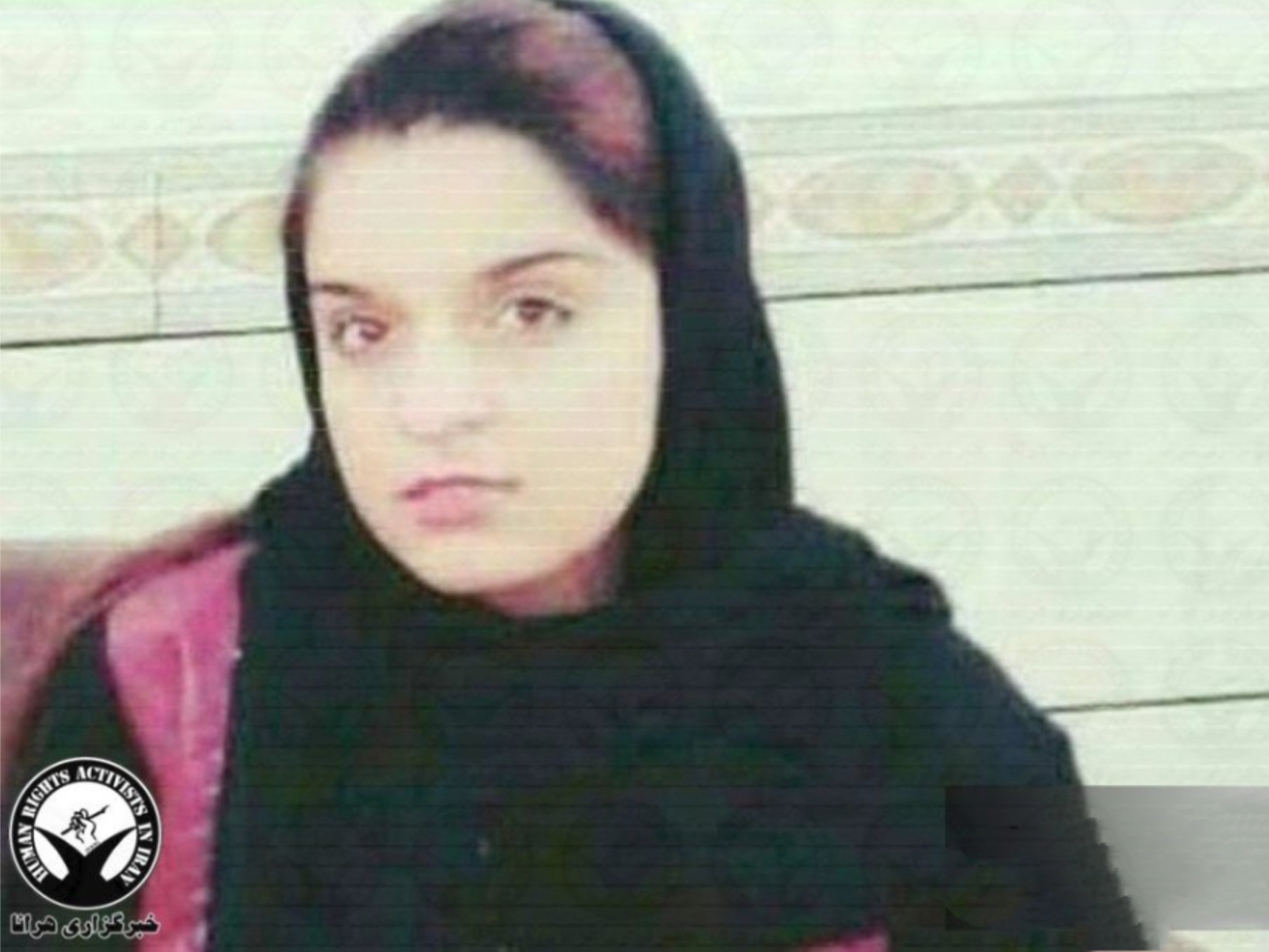
Authorities Raid Home of Detained Baha’i Citizen Noora Pourmoradian, Arrest her Parents

Human Rights Activist News Agency (HRANA) – The aggression against Baha’is in Iran was still palpable Thursday, September 27th when Shiraz-based Security forces raided the home of Shirazi Baha’i prisoner of conscience Noora Pourmoradian, seizing her personal belongings and temporarily detaining her mother and father.

Claiming that the search was necessary to the completion of Noora’s case, security forces threatened the Pourmoradian family with “severe consequences” if they leaked photo evidence or publicly disclosed information about the incident.

“To intimidate them, they handcuffed Mr. Saeid Pourmoradian (Noora’s father) and took him into the car, menacing him [about what would happen] if he didn’t keep quiet,” a close source told HRANA.

On Sunday, September 16, 2018, HRANA reported on Noora Pourmoradian’s arrest and transfer to a Shiraz Intelligence Detention Center known as Plaque 100. Four other Shirazi Baha’is were arrested the same day: Elaheh Samizadeh, Ehsan Mahbub-Rahvafa, and married couple Navid Bazmandegan and Bahareh Ghaderi.
 
In recent weeks, HRANA reported on the arrest of several Baha’i citizens by security forces in the cities of Shiraz and Karaj, so many instances of increasing pressures on this religious minority community from judicial and security institutions. In recent weeks, HRANA reported on the arrest of eight Baha’i residents of Baharestan, a newly-built city about 18 miles south of Isfahan: Saham Armin, Afshin Bolbolan, Anush Rayneh, Milad Davardan, Farhang Sahba, Bahareh Zeini (Sobhanian), Sepideh Rouhani and Fuzhan Rashidi. Meanwhile, six Baha’i residents of Karaj were arrested and transferred to Evin Prison: Hooman Khoshnam, Payam Shabani, Peyman Maanavi, Maryam Ghaffaramanesh, Jamileh Pakrou, and Kianoush Salmanzadeh.

Iranian Baha’i citizens are systematically deprived of religious freedoms, while according to Article 18 of the Universal Declaration of Human Rights and Article 18 of the International Covenant on Civil and Political Rights, everyone is entitled to freedom of religion and belief, and the right to adopt and manifest the religion of their choice, be it individually, in groups, in public, or in private.
 
Based on unofficial sources, more than 300,000 Baha’is live in Iran. Iran’s Constitution, however, only recognizes Islam, Christianity, Judaism, and Zoroastrianism, and does not acknowledge the Baha’i faith as an official religion. Consequently, the rights of Baha’is are systematically violated in Iran.

Baha’i Student Shaghayegh Shoghi Expelled from University for Religious Beliefs

Human Rights Activists News Agency (HRANA) – In her sixth semester of study at the Isfahan University of Technology, Baha’i student Shaghayegh Shoghi has been expelled for her religious beliefs.

While Shoghi is among the few Baha’i students to have made it past the systemic barriers blocking most Baha’i students from enrolling in the first place, she has been denied the right to continue to the culmination of her degree.

In the past two weeks, the following four Baha’i students have been expelled from their universities, denied the right to obtain degrees they have earned, or prohibited from furthering their studies:  Anahita Horr and Shaghayegh Zabihi Amrie, associate’s students of architectural drafting at Rasam non-profit University in Karaj on the western outskirts of Tehran; Nikan Shaydan Shidi, third-semester student of industrial mold-making at Tehran Technical University; and Misagh Aghsani, student at Payame Noor University in the northwestern city of Urmia.

Throughout the month of September, HRANA reported on 58 Baha’i students who were rendered ineligible to apply to college when their results on the 2018 National University Entrance Exam, known as “Konkur,” were flagged “deficiency on file” on the National Organization for Educational Testing website. 
 
In direct violation of the law, Baha’is are prevented from pursuing degrees or employment in government offices, per under-the-table directives from the Supreme Council of the Cultural Revolution. Every year, a new cohort of Baha’is is barred in this way from the university enrollment process.

UN special rapporteurs on the situation of human rights in Iran have continuously protested against the Iranian authorities’ anti-Baha’i policies and practices – in particular barring Baha’i students from university education – and deemed these practices as instances of the Iranian authorities violating their international commitments.

Baha’i citizens of Iran are systematically deprived of religious freedoms, while according to Article 18 of the Universal Declaration of Human Rights and Article 18 of the International Covenant on Civil and Political Rights, all people are entitled to freedom of religion, belief, and changes thereof, as well as the right to express and practice those beliefs as individuals or collectives, in public or in private.

Though unofficial sources estimate the Baha’i population of Iran at more than 300,000, Iran’s Constitution officially recognizes only Islam, Christianity, Judaism, and Zoroastrianism, and does not acknowledge the Baha’i faith as an official religion. As a result, the rights of Baha’is in Iran are systematically violated.

Fifth Baha’i Karaj Resident Detained

Human Rights Activists News Agency (HRANA) – The crackdown on Iran’s Baha’i community continued September 24th with the arrest of Payam Shabani, a Baha’i resident of Karaj, a northwest suburb of Tehran.

Shabani became the latest Baha’i citizen to be arrested by authorities at his home in Karaj, bringing to five the total number of Baha’i Karaj resident arrested so far. On September 16th, HRANA reported on the arrest and transfer to Evin Prison of Peyman Maanavi, Maryam Ghaffaramanesh, Jamileh Pakrou, and Kianoush Salmanzadeh.

A close source told HRANA that “Maryam Ghaffarmanesh, Jamileh Pakrou, and Kianoush Salmanzadeh – participants in an environmental education session led by Ghaffarmanesh and hosted in the private residence of Ramin Sedghi – were arrested when intelligence agents showed up demanding their cell phones and pressing them to fill out personal information forms.”

The source said that after the search of Sedghi’s personal property, including his hard drive, pamphlets, and religious materials, agents moved on to search Pakrou’s residence. Ghaffarmanesh, Pakrou, and Salmanzadeh were then transferred to Evin Prison. Ghaffarmanesh’s family learned of her bail some 20 hours later, on a call with her from ward 209 of the prison.

Baha’i citizens in various cities of the country in recent weeks have faced increasing pressure from the Iranian judiciary and security establishment. In recent weeks, HRANA also reported on the arrests of Baha’i citizens by security forces in the central cities of Shiraz and Isfahan.

In Shiraz, HRANA reported on the September 15th and 16th arrests of Baha’i residents Sudabeh Haghighat, Noora Pourmoradian, Elaheh Samizadeh, Ehsan Mahbub-Rahvafa, and married couple Navid Bazmandegan and Bahareh Ghaderi.

HRANA also reported on the arrest of eight Baha’i residents of Baharestan, a newly-built city about 18 miles south of Isfahan, on September 23rd and 24th: Saham Armin, Afshin Bolbolan, Anush Rayneh, Milad Davardan, Farhang Sahba, Bahareh Zeini (Sobhanian), Sepideh Rouhani and Fuzhan Rashidi.

Iranian Baha’i citizens are systematically deprived of religious freedoms, while according to Article 18 of the Universal Declaration of Human Rights and Article 18 of the International Covenant on Civil and Political Rights, everyone is entitled to freedom of religion and belief, and the right to adopt and manifest the religion of their choice, be it individually, in groups, in public, or in private.

Based on unofficial sources, more than 300,000 Baha’is live in Iran. Iran’s Constitution, however, only recognizes Islam, Christianity, Judaism, and Zoroastrianism, and does not acknowledge the Baha’i faith as an official religion. Consequently, the rights of Baha’is are systematically violated in Iran.

Zahedan Court Considers Case File Deficiencies of 3 Death Row Prisoners

Human Rights Activists News Agency (HRANA) – Judge Mashhadi presided over two lengthy court sessions September 24th and 25th in order to resolve deficiencies in the case files of Zahedan prisoners Abubakr Rostami, Sajjad Baloch and Bandeh Chakerzehi (Chakeri), who were issued death sentences in August 2017 from Branch One of Zahedan’s Revolutionary Court.
In the initial trial, all three were charged with “acting against national security by collaborating with anti-regime groups” and “Moharebeh” (enmity against God).
An informed source told HRANA that authorities at the court sessions, which lasted more than five hours each, pored over evidence submitted against the prisoners by the Islamic Revolutionary Guard Corps (IRGC). So far, the evidence submitted is not anticipated to adequately support their convictions. “Barring any more reliable documentation to substantiate the claims of the IRGC representative, including documentation of the location of their arrest, it is looking more likely that they could be acquitted of the Moharebeh charge,” the source said.
When the last court session drew to a close, the three prisoners were transferred back to Zahedan Prison and told that the court’s decision–or request for further information–would be forwarded to them in the prison.
On August 30, 2018, HRANA reported on the transfer of death row prisoner Abubakr Rostami back to the general ward. He had been sent August 28th from Zahedan’s Ward 4 to the Detention Center of the Intelligence Office of the IRGC for unknown reasons.
Earlier, Baluch, Chakerzehi, and Rostami proclaimed their innocence in an open letter, saying that the accusations against them were baseless, and relating physical and psychological tortures they had experienced at the hands of the IRGC. All three were arrested December 13, 2017, in Pakistan.
In the aforementioned letter, Rostami wrote of his trip to Pakistan, which was planned amid arrangements for a study abroad: “Due to border limitations, I was forced to travel through Pakistan to get to [another] foreign country, but I was arrested midway and handed over to the IRGC,” he wrote.
A second-year medical student at Zabol University of Medical Sciences, Rostami has spent the past three years in prison.

Mahin-Taj Ahmadpour Ends Hunger Strike after 16 Days

Human Rights Activists News Agency (HRANA) – On Tuesday, September 25, 2018, political prisoner Mahin-Taj Ahmadpour agreed to end her 16-day hunger strike in exchange for verbal commitments from prison authorities to meet her demands for medical treatment.

Authorities at Nashtaroud Prison of Tonekabon, where Ahmadpour is being held, had previously dismissed her requests for more adequate anemia treatment. A source close to Ahmadpour told HRANA that the authorities have now pivoted, making promises to approve a hospital transfer and medication deliveries from her family. “In addition, they asked her to put in a request for conditional release, and promised to facilitate the processing of the request.”

Ahmadpour had lost 8 pounds by the 10th day of her strike when HRANA reported on prison authorities’ failure to address her deteriorating physical health.

Sentenced to 10 months in prison for her participation in the January protests, Ahmadpour began starving herself September 10th to protest her restricted access to resources, such as medical care and the telephone, and to revolt against prison authorities who reportedly threatened to open new charges against her as a form of coercion or harassment.

Per her treatment plan for anemia, Ahmadpour should receive seven units of blood every month. An informed source told HRANA that monthly blood infusions were also recommended for her as a preventative measure against leukemia. In the face of her diagnosis and supporting medical documentation, however, prison authorities had until now denied Ahmadpour’s requests for outside medication and refused to clear her for a medical transfer.

Mahin-Taj Ahmadpour is a 46-year-old resident of Tonekabon. A peddler by trade, she was arrested along with 14 other residents during widespread rallies that took place in January 2018 across Iran, known as the January Protests. The Revolutionary Court of Tonekabon sentenced eight of these arrestees to 28 months’ imprisonment, divided among the defendants. Branch 101 of Criminal Court No. 2 of Tonekabon, presided over by Judge Ebrahimi, also sentenced six of the arrestees to 24 collective months of prison time.

Ahmadpour was first sentenced May 2, 2018, in Branch 101 of Tonekabon Criminal Court No. 2 to serve a six-month prison sentence on a charge of “disrupting the public peace through participation in an illegal gathering.” On August 11, 2018, Tonekabon’s Revolutionary Court compounded the sentence with four months’ imprisonment for “propaganda against the regime.” As evidence against her, the court cited a combination of law enforcement reports and images and video taken during the January protests in Tonekabon.

Subscribe to Our Newsletter

Now is definitely not the time to stop reading!

Azerbaijani Activist Abbas Lasani Tried in Absentia

Human Rights Activists News Agency (HRANA) – On Monday, September 24th, Azerbaijani activist and former political prisoner Abbas Lasani was notified by text message that he has been sentenced in absentia.
On September 16, 2018, HRANA reported on Lasani’s response to his summons via SMS from Branch 2 of Tabriz Revolutionary Court. “Even ignoring the suspect intent of this summons, their delay in sending it, and the timing of the hearing on [the eve of the Muharram holidays]– it’s impossible to ignore that the summons is illegitimate, arriving by text message with no official hard copy,” Lasani had said. “Appropriate preparations can’t be made in these circumstances.”
Abbas Lasani was among a group of four Azerbaijani (Turk) activists residing in Ardebil arrested by Intelligence agents July 2, 2018, a few days before an annual gathering at Babak Fort, a site that has acquired symbolic importance for Azerbaijani rallies in recent years.
Lasani was presumably arrested for sharing a video in which he encouraged people to attend the gathering. He was released on bail of approximately $3,500 USD (500 million IRR) on July 11, 2018.
Lasani was among the first of more than 80 Azerbaijani activists arrested throughout Ardabil, West Azerbaijan, and East Azerbaijan provinces at the time of the Babak Fort gathering.
In a press release on August 11, 2018, Amnesty International called the arrests of Azerbaijani (Turk) people “arbitrary” and unlawful, and demanded the immediate release of all individuals detained for their participation in an Azerbaijani Turkic cultural gathering.

In Wake of Ahvaz Parade Attack, a Sweep of Arrests Sows Community Unease

Human Rights Activists News Agency (HRANA)- Four days after the September 22nd armed attack on an Ahvaz military parade that left several civilians wounded, Iran’s Ministry of Intelligence has announced that it has 22 suspects in custody, backing its announcement with a video recording of blindfolded, unidentified detainees facing a wall.

Local sources have countered this official report, estimating the tally of those detained so far to be closer to 300. The majority of these arrests have taken place in the cities of Ahvaz, Khorramshahr, Susangerd, and Abadan, all located in Khuzestan province. HRANA is working to independently confirm the total number of arrests and the identities of those detained.

Security measures now loom large over the Arab-majority neighborhoods south of Khuzestan, local sources say, while the families of those detained have been unable to obtain any indication from authorities on the status or location of their loved ones.

Many of the recent arrestees have a previous track record with police, pointing to the possibility that security forces are attempting to pluck clues from past offenders about a recent incident.

Despite the urgency to hold the assailants accountable for wounding and killing civilians, including women and children, Iran’s security establishment is marred by a history of questionable investigative methods, raising public concern that innocent scapegoats may be subject to coercive interrogations in order to be impugned for the attacks. Iranian Minister of Intelligence Mahmoud Alavi has already made the public claim that “the terrorists who opened fire on the crowd have been killed,” adding, “Every single person behind the attack […] will be identified, and the majority of them have already been apprehended.”

On the day of the attack, a military parade in Ahvaz commemorating the Iran-Iraq war was interrupted when gunmen suddenly opened fire on soldiers and spectators. That day, Mojtaba Zolnour, a member of the Iranian parliamentary committee for national security and foreign affairs, announced that 29 had died and 57 were wounded. Iran-based media agencies published a list of victims that included several civilians, including a 4-year-old child.

Both Al-Ahwaz National Resistance group and ISIS (Daesh) have claimed responsibility for the attack.

Nationalist-Religious Activist Reza Aghakhani Denied Conditional Release

Human Rights Activists News Agency (HRANA)- Despite his eligibility for conditional release for already having served a third of his sentence, authorities have said “no” to Evin Prisoner Reza Aghakhani, a nationalist-religious activist.

An informed source told HRANA, “The assistant prosecutor of the prison cited an objection from the interrogator as the reason for the negative response, despite the fact that his wife recently just had a kidney transplant and his child is dealing with a physical disability.”

Aghakhani was sentenced to three years in prison by Branch 15 of the Revolutionary Court on a charge of “acting against national security.” In its processing of the case, Branch 35 of the Supreme Court did not assent the charges. They were nonetheless confirmed later in Branch 54 of Appeals Court.

Aghakhani was previously detained for 45 days in May 2013 and served a few years in prison in the eighties for his political activities. Along with some of his fellow prisoners, Aghakhani previously went on hunger strike for three days in protest of human rights violations across the country.

Narges Mohammadi Released on 3-Day Furlough

Human Rights Activists News Agency (HRANA) – Deputy of the Defenders of Human Rights Center Narges Mohammadi was released on a three-day furlough on September 26, 2018. Reporting the news of her furlough to HRANA, Mohammadi’s spouse Taghi Rahmani shared that Mohammadi will need long-term medical furlough to get adequate care for her illness.

Prior to Mohammadi’s furlough release, her mother Ozra Bazargan wrote to the Prosecutor of Tehran with the request that her daughter is granted a furlough to visit her ailing father. From June 30th – July 5th of this year, Mohammadi was released from prison to get back surgery at an outside hospital. On August 6th, prison authorities prevented Mohammadi from being transferred out of Evin Prison to see a neurologist, only to approve her transfer to Imam Khomeini Hospital when she fell into critical condition one week later.

Mohammadi’s attorney Mohamoud Behzadirad previously commented on the status of his client’s case file, stating “it has been six years and four months since my client was detained, and around three years and eight months remain of her sentence. She is eligible for conditional release, but the request for that release has yet to be approved.”

In May 2016, Narges Mohammadi was sentenced by the Revolutionary Court of Tehran to sixteen years of imprisonment, ten years of which was for her role in the Step-by-Step Campaign to Abolish Death Penalty in Iran (LAGAM). The court considered her collaboration with this peaceful campaign to be an example of “gathering with intent to disrupt national security.”

According to Narges Mohammadi, her trial judge treated her with bias and hostility, openly defending the charges levied against her by officials from the Ministry of Intelligence and accusing her of trying to “warp divine law” for her demonstrations of dissent against capital punishment.

The additional six years of Narges Mohammadi’s imprisonment were issued in connection to her peaceful human rights activism, which translated in court to charges of “gathering and conspiring against national security” and “propaganda against the regime.” Her offenses included giving media interviews about human rights violations, her participation in peaceful gatherings to support the families of prisoners on death row, her contact with other human rights defenders (including Nobel Peace Prize laureate Shirin Ebadi), her participation in peaceful protests to condemn acid attacks against women, and her 2014* meeting with Catherine Ashton.

In Autumn of 2016, Branch 36 of the Tehran Appeals Court upheld Narges Mohammadi’s prison sentence. In May 2017, her request for a retrial was reportedly rejected by Iran’s Supreme Court.

Two Teachers Imprisoned at Evin Pen Statement of Support for Farhad Meysami

Human Rights Activists News Agency (HRANA) – Mahmoud Beheshti Langroudi and Esmail Abdi, two teachers imprisoned at Evin, have demanded in a letter to Judicial authorities that their ward mate Farhad Meysami–who is now in the 54th day of his hunger strike–be transferred to an outside treatment facility to avert an impending health crisis.

Meysami has dropped 30 pounds since he started starving himself on August 1st to protest both his detention and authorities’ refusal to appoint the lawyer of his choosing. In addition to his 18-year history of ulcerative colitis, Meysami experienced a steep drop in blood pressure on Saturday, September 8th, prompting the prison doctor to recommend more aggressive treatment. Notwithstanding the doctor’s orders, prison authorities refuse to clear his transfer to a different facility for treatment.

In a letter, Langroudi and Abdi, two imprisoned teachers held with Meysami in Ward 8 of Evin Prison, urge authorities to approve Meysami’s transfer to a medical treatment facility, to “prevent a possible calamity from occurring.”

The full text of their letter, translated into English by HRANA, is below:

“In the name of the God of wisdom and life,

Fifty days have passed since Dr. Farhad Meysami, civil activist and political prisoner, declared his hunger strike. His strike was a response to unjust legal proceedings, and authorities’ hindrance of his effective defense by refusing him the right to choose an attorney. He is now in a critically weakened condition. It is said that the doctors at Evin Prison insisted he be hospitalized, yet judicial authorities refuse to issue the order to have him transferred to a prison more materially equipped to treat him.

Because this civil activist suffers from ulcerative colitis and has lost 30 pounds over the course of his hunger strike, his blood pressure, pulse, and other vital signs have dipped into gravely abnormal ranges. As of last week he stopped accepting intravenous treatment, leaving us more concerned than ever that a calamitous outcome might be imminent.

We, the undersigned, thus put on guard the relevant judicial authorities, that they express their agreement to transfer Dr. Meysami to a proper hospital without delay, to prevent a possible calamity from occurring.

His ward-mates, Mahmoud Beheshti Langroudi and Esmail Abdi”