Christian Converts Sentenced to 24 Years in Prison by Tabriz Revolutionary Court

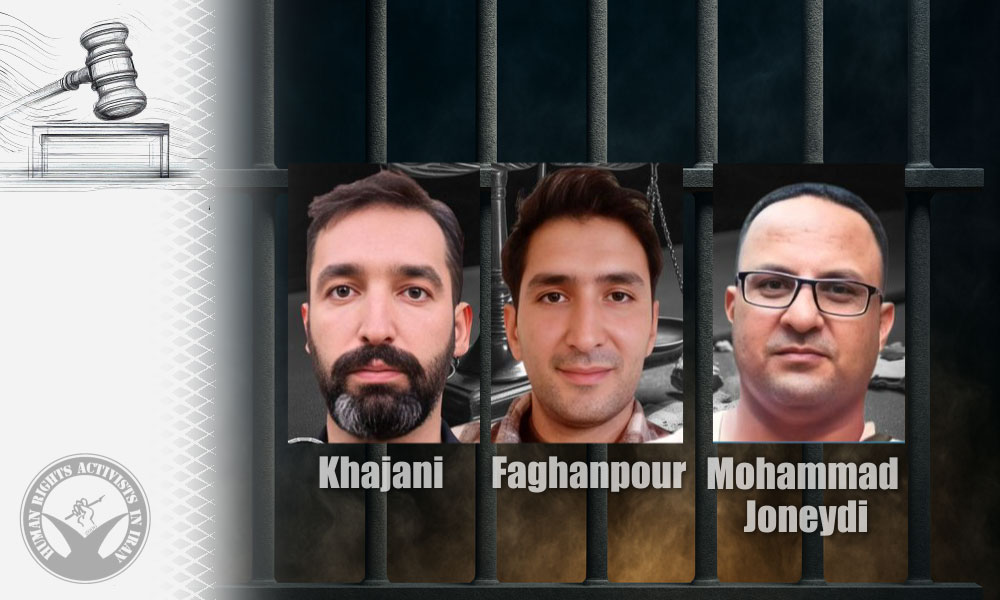
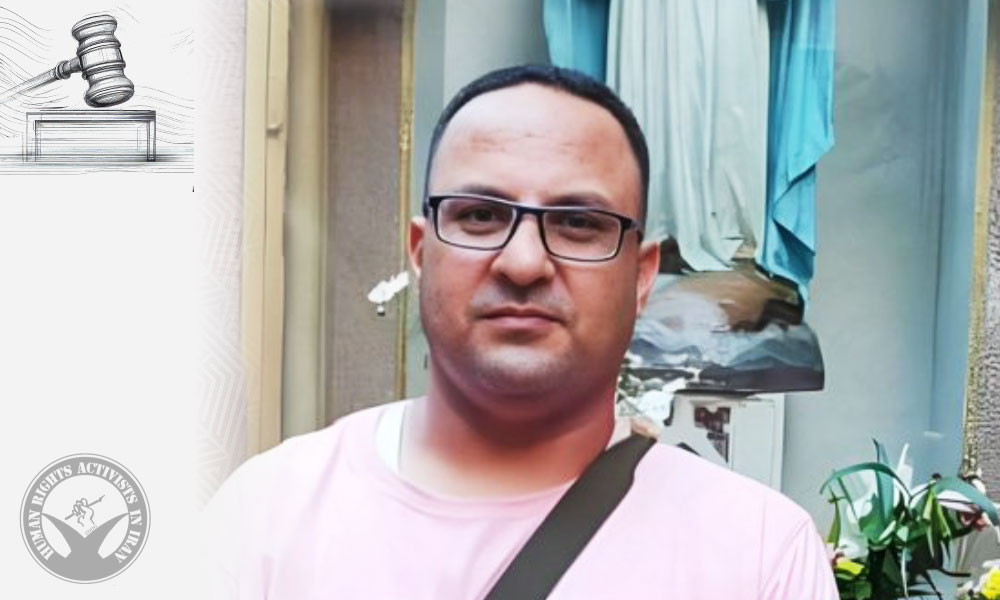
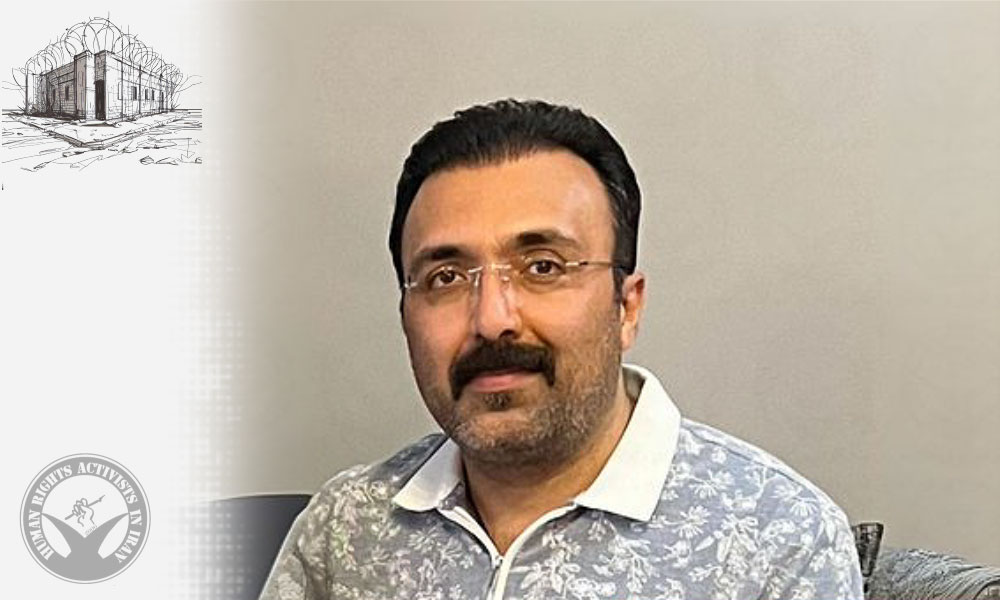
HRANA News Agency – The Tabriz Revolutionary Court has sentenced Christian converts Mehdi Rahimi and Kia Nourinia to a total of 24 years in prison, over two billion tomans in fines, and 30 years of deprivation of social rights.

Judge Hassan Fath-Nejad of Branch 3 issued the verdict in absentia on April 16, 2025, without summoning the defendants or allowing them to present a defense. The court sentenced both Rahimi, 49, and Nourinia, 56, to 12 years in prison each. As additional punishments, the court imposed fines of one billion tomans on each and banned them from social rights for 15 years.

The court attributed 10 years of each sentence to the charge of “promoting deviant beliefs of Zionist Christianity in opposition to the Islamic Republic of Iran,” and the remaining two years to “smuggling prohibited goods,” referring to Christian religious books. Authorities also ordered them to pay a fine equivalent to ten times the value of the seized materials.

On November 3, 2024, agents from The Ministry of Intelligence raided Rahimi’s home in Tabriz, seizing roughly 5,000 Christian books and pamphlets, along with two computer hard drives. That same day, intelligence agents also searched Nourinia’s residence, confiscating two mobile phones, a tablet, and Christian literature.

Rahimi and Nourinia are both Christian converts residing in Tabriz.

Four Months of Uncertainty: Christian Convert Aida Najaflou Held in Evin Prison

HRANA News Agency – Aida Najaflou, a Christian convert, remains in legal limbo nearly four months after her arrest, currently held in Evin Prison under temporary detention.

A source close to her family told HRANA: “Ms. Najaflou has been held in Evin Prison without resolution for almost four months. A bail of 11 billion tomans (approximately 130,000 dollars) has been set for her temporary release, but her family is unable to afford it.”

The source added: “She is the mother of two children, one of whom is ill and facing serious care issues in her absence. Before her arrest, she underwent spinal disc surgery and suffers from ongoing spinal problems that require continuous medical attention. The lack of proper care in prison has worsened her condition.”

On April 13, 2025, Aida Najaflou was transferred from Ward 209—The Ministry of Intelligence’s detention facility—to the women’s ward of Evin Prison. She was initially arrested by security forces in February 2025.

As of this report, the reasons for her arrest and the charges against her remain unknown.

Based on about 180 reports compiled by HRANA over the past decade, 11% of all victims of religious minority rights violations by Iran’s security-judicial apparatus were Christians—particularly Christian converts. In 2024 alone, Christians made up over 9% of those targeted.

Special Clerical Court in Urmia Sentences Two Sunni Clerics to Prison

HRANA News Agency –Hassan Khezri and Salam Mahmoudian, two Sunni clerics from Sardasht, have each been sentenced to two years in prison and a monetary fine by the Special Clerical Court in Urmia. The prison sentences were suspended.

According to a report by HRANA, quoting Kurdpa, the Special Clerical Court in Urmia issued the verdicts against the two clerics, sentencing each to two years in prison and paying a fine. The prison terms have been suspended.

The report does not specify the charges brought against Khezri and Mahmoudian.

Salam Mahmoudian is the Friday prayer leader of Boyuran-e Sofla (lower Boyuran) village, and Hassan Khezri is the Friday prayer leader of Boyuran-e Olya (upper Boyuran), both located in Sardasht County. The two were previously summoned to the Urmia Special Clerical Court in July of 2024.

HRANA’s compiled reports show that in 2024 alone, the Iranian regime’s judiciary sentenced 82 members of religious minorities to nearly 400 years in prison on charges solely related to their religious beliefs and sharing those beliefs. This alarming figure highlights the regime’s relentless persecution of religious communities through its judicial system.

Report on the Arrest of 9 Supporters of the “Yamani” Movement in Kashmar

HRANA News Agency – Hassan Davoudi, Hossein Davoudi, Ali Davoudi, Kazem Ghavidel, Hadi Aghaei, and four women—supporters of the “Yamani” movement—have been in detention by security forces in the city of Kashmar for the past 10 days. However, no information has yet been obtained regarding their place of detention.

A source with knowledge of the case has requested that the identities of the detained women not be disclosed.

According to information obtained by HRANA, these individuals were arrested on April 26, 2025, at their residences in Kashmar. As of now, their whereabouts remain unknown, and the authorities have refused to provide any information to their families.

Each year, individuals in Iran are arrested solely for claiming a connection with the Hidden Imam of Shia Islam. The “Yamani” movement, led by a figure named Ahmad al-Hasan Yamani, is known for making claims related to the Mahdist belief system.

Iran’s security apparatus—particularly the Ministry of Intelligence—has dedicated divisions for targeting religious minorities, spiritual movements, and ideological groups that fall outside the ideological framework of the Islamic Republic.

Report on the Arrest of Reyhaneh and Rasoul Darat, Supporters of the “Yamani” Movement

HRANA News Agency – Reyhaneh Darat and her brother Rasoul Darat, two residents of Torbat-e Heydarieh and supporters of the “Yamani” movement, have been arrested by security forces. While Rasoul Darat is currently being held in The Ministry of Intelligence’s detention facility in the city, the whereabouts of Reyhaneh Darat remain unknown.

A source close to the family confirmed the news to HRANA, stating:
“On the evening of Monday, April 28, agents from the Ministry of Intelligence raided a ceremony being held in Torbat-e Heydarieh, Razavi Khorasan province, to mark the birth anniversary of the Prophet Muhammad’s daughter. Around 20 women and girls, all supporters of the Yamani movement, were present. Among them, Reyhaneh Darat was arrested by security forces. Later that night, her family went to the Ministry of Intelligence office to follow up on her case. During this effort, her brother Rasoul Darat was also arrested by Intelligence agents.”

According to HRANA’s findings, Rasoul Darat is currently being held in The Ministry of Intelligence’s detention facility in Torbat-e Heydarieh. However, the location of Reyhaneh Darat, 20, remains unknown, and authorities have refused to provide her family with any information.

Rasoul Darat has previously been arrested and convicted for his religious activities.

In Iran, individuals are routinely detained for making claims of association with the Shi’a messianic figure, the Hidden Twelfth Imam. One such movement, known as the Yamani current and led by Ahmad al-Hasan Yamani, advocates beliefs centered on Mahdism.

The Iranian security establishment—particularly the Ministry of Intelligence—maintains dedicated units focused on monitoring and suppressing religious groups, mystical orders, and ideological movements that fall outside the state’s sanctioned ideological boundaries.

Subscribe to Our Newsletter

Now is definitely not the time to stop reading!

Appeals Court; 3 Christian Converts Sentenced to Over 41 Years in Prison and Other Punishments

HRANA News Agency – Branch 36 of the Tehran Province Court of Appeals has upheld the convictions of Mehran Shamlooei, Abbas Soori, and Narges Nasri, Christian converts residing in Tehran.

On April 22, 2025, Branch 36 of the Tehran Appeals Court upheld the lower court’s ruling. In the first instance, Branch 26 of the Tehran Revolutionary Court had sentenced the three to a total of 41 years and 8 months of imprisonment, 41 years of deprivation of social rights, and a total fine of 910 million tomans.

Details of individual sentences:

  • Abbas Soori received 10 years in prison for “propaganda against Islamic law,” a 15-year ban from social rights, a 330-million-toman fine, and 5 years in prison for “membership in anti-regime groups.” As additional punishment, the court banned him from leaving the country, living in Tehran Province or neighboring provinces, and joining political or social groups for two years.

  • Mehran Shamlooei received 8 years in prison for “propaganda against Islamic law,” a 250-million-toman fine, an 11-year ban from social rights, and 2 years and 8 months in prison for “membership in anti-government groups.”

  • Narges Nasri was sentenced to 10 years in prison for “propaganda against Islamic law due to extensive and impactful contact with foreign entities” (with one degree of sentence enhancement), a 15-year ban from social rights, a 330-million-toman fine, 5 years in prison for “membership in anti-government groups,” and 1 year in prison for “propaganda against the regime.” Additionally, the court banned her for two years from leaving the country, residing in Tehran Province or neighboring provinces, and joining political or social groups.

The trial for their case took place on February 13, 2025, at the mentioned court branch.

Security forces arrested Mehran Shamlooei, Abbas Soori, and Narges Nasri on November 1, 2024, for establishing a house church in Tehran. They transferred them to the Ministry of Intelligence’s detention facility, known as Ward 209 of Evin Prison. Authorities later released them from Evin on December 1, 2024, after posting bail.

Narges Nasri, aged about 38, along with Mehran Shamlooei, aged 43, and Abbas Soori, are all residents of Tehran.

Summons and Arrest of a Sunni Cleric in Kermanshah

HRANA News Agency – Yesterday, April 23, Ayat Gholami, a Sunni cleric, was arrested after being summoned to and appearing before the Special Clergy Court in Kermanshah.

According to HRANA, quoting Kurdpa, Ayat Gholami was taken into custody following his appearance at the Special Clergy Court in Kermanshah. As of now, no information has been released regarding the reasons for his arrest, his place of detention, or the charges brought against him.

Ayat Gholami is the former imam of a mosque in Kermanshah and a teacher at a religious school.

Maryam Zabihi, a Baha’i Citizen from Qaemshahr, Receives 10 Months in Prison

HRANA News Agency – Maryam Zabihi, a Baha’i citizen residing in Qaemshahr, has been sentenced to 10 months in prison by the Criminal Court of this city.

Based on a verdict issued by Branch 104 of the Second Criminal Court of Qaemshahr, Mazandaran provinceو this Baha’i citizen was sentenced to 10 months in prison on the charge of “educational activities contrary to and disruptive of Islamic Sharia.” The court session addressing Ms. Zabihi’s charges was held on April 16, 2025, and the verdict was issued the same day.

Holding examination sessions for students of the unofficial Baha’i university of Iran at her private residence was cited as the basis for the charge against Ms. Zabihi.

On Monday, February 12, 2024, Maryam Zabihi’s home was searched by security forces. Officers confiscated all electronic devices, textbooks, laptops, and tablets belonging to five young Baha’is who were guests at her residence.

After Baha’is in Iran were barred from attending public universities due to their religious beliefs, the Baha’i Institute for Higher Education (BIHE) was established by the Iranian Baha’i community in 1987. This unofficial university, operating under highly restricted conditions with the help of volunteer professors, provides opportunities for Baha’i citizens to pursue higher education. Over the years, many professors and administrators associated with this educational system have faced judicial and security pressures.

According to the Department of Statistics and Publications of the Human Rights Activists in Iran (HRA), between January 1, 2024, and December 20, 2024, a total of 157 reports were recorded in the category of religious and faith-based minority rights. Among these, Baha’is accounted for 67.54% of the reports, ranking as the most observed group in human rights monitoring.

The Baha’i faith is not recognized as a legitimate religion by Iranian authorities, leading to systematic and longstanding violations of the rights of Baha’is in the country. This includes the denial of their fundamental right to practice their religion, which constitutes a clear breach of both Article 18 of the Universal Declaration of Human Rights and Article 18 of the International Covenant on Civil and Political Rights. The United Nations covenant holds that every person has the right to freedom of religion, freedom of converting religion, as well as freedom of expression, individually or collectively; openly or secretly.

Christian Convert Parvin Ghadiani Held in Legal Limbo for Three Months

HRANA News Agency – Parvin Ghadiani, a Christian convert, has been in custody for approximately three months after being arrested by security forces. She is currently being held in a state of uncertainty in Kachouei Prison in Karaj.

According to HRANA, the news agency of Human Rights Activists in Iran, Ghadiani remains in detention.

HRANA has learned that she was arrested by security forces in January of last year. Following her interrogation at one of Karaj’s security detention centers, she was transferred to Kachouei Prison.

A source familiar with Ghadiani’s situation confirmed to HRANA: “The reason for her arrest has been cited as proselytizing Christianity.”

Notably, while Christianity is officially recognized as a minority religion in Iran, security agencies view the conversion of Muslims to Christianity as a highly sensitive matter and respond with severe crackdowns on those involved in religious activism.

The persecution of Christian converts in Iran persists despite Article 18 of both the Universal Declaration of Human Rights and the International Covenant on Civil and Political Rights, which affirm every individual’s right to freedom of religion, including the right to change their faith and to practice it openly or privately, alone or in community with others.

Five Political-Security Prisoners Executed in Vakilabad Prison in Mashhad

HRANA News Agency – At dawn on Tuesday, April 8, five political-security prisoners—Farhad Shakeri, Abdolhakim Azim Gorgij, Abdolrahman Gorgij, Taj Mohammad Khormali, and Malek-Ali Fadaie-Nasab—were executed in Vakilabad Prison in Mashhad.

Family members of two of the executed prisoners confirmed the news in conversations with HRANA, stating: “At dawn today, Tuesday, April 8, the death sentences of five individuals—including Farhad Shakeri, Abdolhakim Azim Gorgij, Abdolrahman Gorgij, Taj Mohammad Khormali, and Malek-Ali Fadaei-Nasab—were carried out in Mashhad Prison.”

Four of the executed individuals were Sunni Muslims, while Malek-Ali Fadaie-Nasab was the only Shia among them. All five had been sentenced to death in a joint case on charges of baghi (armed rebellion).

According to the families—who are still waiting outside Mashhad Prison to receive the bodies of their loved ones—the executions were carried out without prior notice and without allowing a final visit with family members. One family member told HRANA: “The families were only informed of the executions through phone calls.”

The case involved 12 defendants—11 of whom were Sunni and one (Malek-Ali Fadaie-Nasab) Shia. These individuals were arrested in 2015 by the Ministry of Intelligence and transferred to Vakilabad Prison about a year later.

In 2019, Branch 1 of the Revolutionary Court of Mashhad, presided over by Judge Mahmoud Davoodabadi, sentenced nine of the defendants—including Malek-Ali Fadaei-Nasab, Hamid Rastbala, Farhad Shakeri, Kabir Sa’adat Jahani, Mohammad-Ali Arayesh, Isa Eid-Mohammadi, Abdolhakim Azim Gorgij, Abdolrahman Gorgij, and Taj Mohammad Khormali—to death on charges of baghi through alleged membership in the Salafi groups “Hizb al-Furqan” and “National Solidarity Front of Iranian Sunnis.” (Jebhe Hambastegi Melli Ahlesunnat Iran)

Three other defendants—Mohammadreza Sheikh-Ahmadi, Abdolbaset Avarsan, and Morteza Fakoori—were each sentenced to 15 years in prison for baghi through alleged affiliation with the Salafi-Takfiri group ISIS.

In December 31, 2020, the death sentences of Hamid Rast-Bala, Kabir Sa’adat Jahani, and Mohammad-Ali Arayesh were carried out.

Following a partial reversal of the verdicts by the Supreme Court, the case was sent back for review. In August 2023, Branch 4 of the Revolutionary Court of Mashhad, presided over by Judge Ahmadian Salami, re-sentenced six of the defendants—including Farhad Shakeri, Abdolhakim Azim Gorgij, Abdolrahman Gorgij, Taj Mohammad Khormali, Malek-Ali Fadaie-Nasab, and Isa Eid-Mohammadi—to death. The sentences were upheld by the Supreme Court in August 2024.

A source close to the families of the executed prisoners had previously informed HRANA that “this case is riddled with fundamental flaws, and there is insufficient evidence to justify convicting these individuals of the charges brought against them. The use of pepper spray against one of the prisoners is just one example of the torture they were subjected to—torture that has left lasting marks on their bodies even after years.”