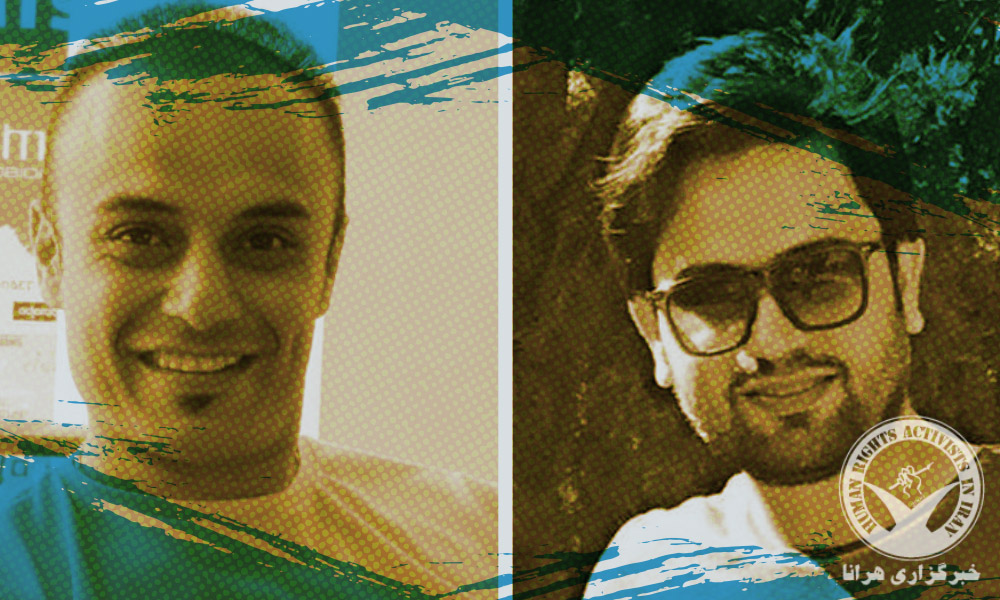
Christian Convert Hamed Ashouri Sent to Karaj Central Prison

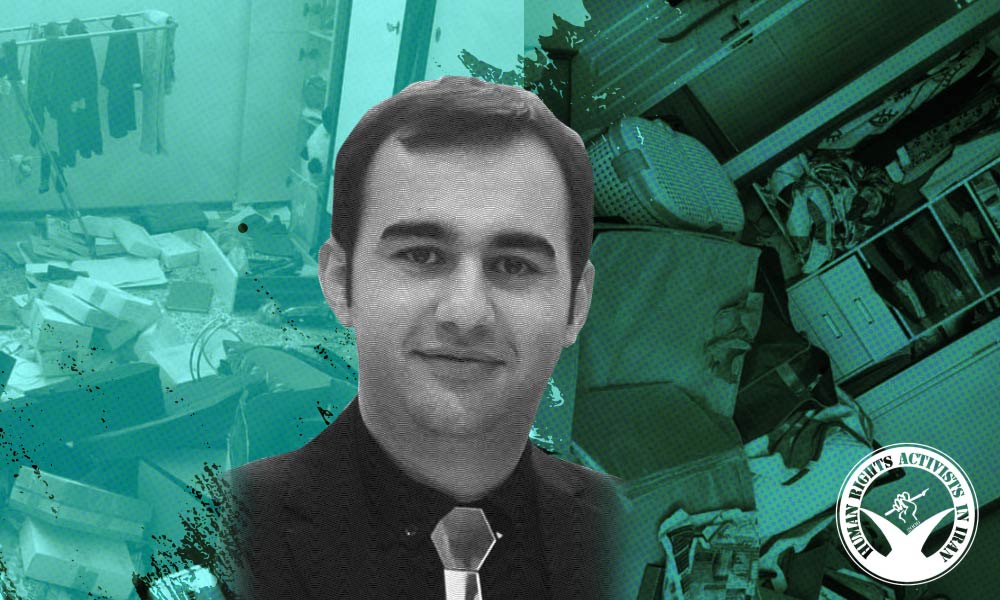
On Tuesday, July 27, Christian convert Hamed Ashouri was sent to Karaj Central Prison to endure his sentence.

According to HRANA, the news agency of Human Rights Activists, quoting the website Article 18, the Court of Appeals upheld Ashouri’s ten-month prison sentence the previous day.

Hamed Ashouri had been arrested by security forces in Fardis city in Karaj, in March 2017, and transferred to Ghezel Hesar Prison in Karaj for interrogation. He was temporarily released after ten days. It is alleged that security forces raided Mr. Ashouri’s home while he was in custody.

A hearing on the charges against this citizen was held in February 2020 in Branch 4 of the Revolutionary Court of Karaj. Finally, in April of this year, Mr. Ashouri was sentenced to 10 months in prison on charges of propaganda against the regime.

Despite the fact that Christians are recognized as a religious minority under Iranian law, security forces nevertheless pursue the issue of Muslims converting to Christianity with particular sensitivity.

The Iranian regime targets Christian converts despite Article 18 of the Universal Declaration of Human Rights and Article 18 of the International Covenant on Civil and Political Rights, which state that every individual has the right to freedom of religion and belief and freedom to express it openly or secretly.

Sufi Prisoner Hossein Mohammadi Executed in Zanjan Prison on Charge of Murder

On Sunday, July 18, a prisoner who had previously been sentenced to death for murder was executed in Zanjan Prison.

According to HRANA, the news agency of Human Rights Activists, quoting the Iran Human Rights (IHR), the Sufi prisoner has been identified as 58-year-old Hossein Mohammadi.

According to this report, Mohammadi was arrested about 9 years ago on murder charges and was being held in prison up until his execution yesterday.

Iran ranks first in the world in citizen executions per capita, according to international organizations. The Statistics and Publication Center of the Human Rights Activists in Iran (HRA) reported that between January 1 and December 20 of 2020, at least 236 citizens were executed.One of these citizens was executed publicly, and two were juvenile offenders. An additional 95 citizens were sentenced to death.

According to the same report, more than 72% of executions in Iran are not reported by the government or the judiciary, which human rights organizations call “secret” executions.

The execution of Mohammadi has not been announced by Iranian media or official sources as of this writing.

Christian Convert Nasser Navard Gol-Tapeh Denied Conditional Release from Evin Prison

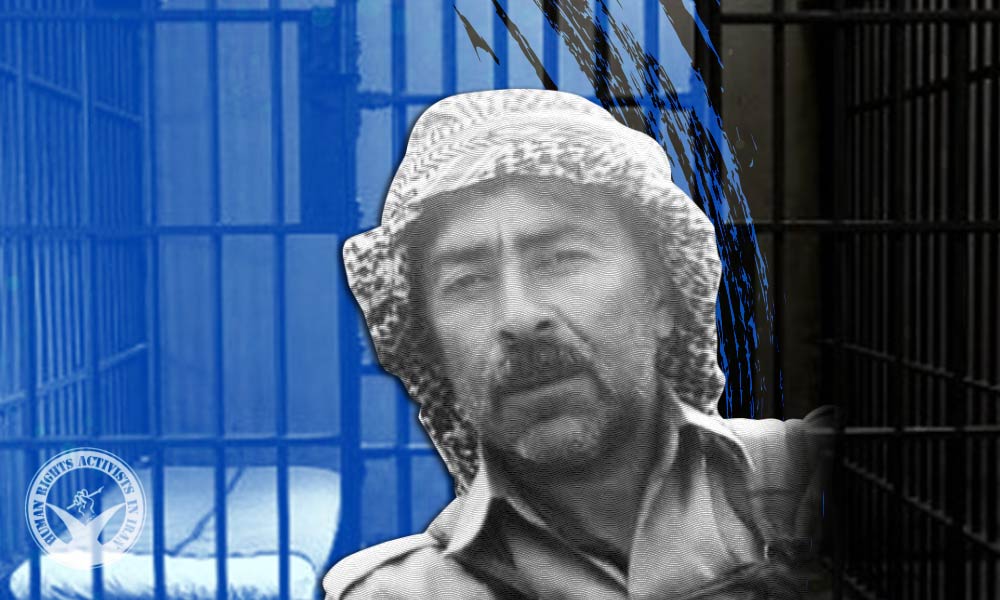
On June 22, Christian convert Nasser Navard Gol-Tapeh’s request for conditional release from Evin Prison was rejected.

According to HRANA, the news agency of Human Rights Activists, quoting the news website Article 18, the rejection of the request for parole was given to Navard Gol-Tapeh without the provision of any specific reason.

In September 2020, the Supreme Court rejected Navard Gol-Tapeh’s request for a retrial. Navard Gol-Tapeh has been in Evin Prison for the past three years and six months without leave.

Navard Gol Tappeh was arrested in a private gathering in July 2016 and later was sentenced by the Revolutionary Court of Tehran to 10 years in prison on charges of “acting against national security by forming and running an illegal organization of a house church”. The verdict was later approved by the Court of Appeals.

Although Christians are recognized as a religious minority under Iranian law, security services nevertheless pursue the issue of Muslims converting to Christianity with particular sensitivity and deal harshly with activists in this field.

The Iranian regime targets Christian converts despite Article 18 of the Universal Declaration of Human Rights and Article 18 of the International Covenant on Civil and Political Rights, which states that every individual has the right to freedom of religion and the freedom to express their religious beliefs.

Baha’i Citizen Sina Kamali Sarvestani Released from Adelabad Prison on Bail

On Sunday, July 11, Sina Kamali Sarvestani, a Baha’i citizen, was released on bail from Adelabad Prison in Shiraz.

According to HRANA, the news agency of Human Rights Activists, still no information is available on the reasons for his arrest and the charges against him as of this writing.

Kamali Sarvestani was arrested by security forces on June 14 and was first transferred to the IRGC Intelligence Detention Center and later to Adelabad Prison in Shiraz, where he was held for nearly a month. He has been released on bail temporarily until the end of his trial.

According to unofficial sources, more than 300,000 Baha’is live in Iran, but the Iranian constitution recognizes only Islam, Christianity, Judaism, and Zoroastrianism. Because their faith is not considered legitimate by authorities, the rights of Baha’is in Iran have been systematically violated for years.

This deprivation of the freedom to practice their religion is a violation of Article 18 of the Universal Declaration of Human Rights, and Article 18 of the International Covenant on Civil and Political Rights. The United Nations covenant holds that every person has the right to freedom of religion, freedom of converting religion, as well as freedom of expression, individually or collectively; openly or secretly.

Family Expresses Growing Concern Over Condition of Baha’i Citizen Sina Kamali in Adelabad Prison

Baha’i citizen Sina Kamali Sarvestani is still being held in Adelabad Prison in Shiraz 24 days after his arrest, and his family has expressed growing concern over his condition.

According to HRANA, the news agency of Humen Rights Activists, Kamali Sarvestani informed his family during his last phone call on July 4 that he is in a very unfavorable mental condition. Kamali Sarvestani expressed that that he is anxious, in need of consultation, and worried that he will be sent back to the IRGC’s intelligence detention center.

Kamali Sarvestani’s family delivered the medications he needs to the prison following the call, but do not know if they were ever given to him. Kamali Sarvestani’s poor condition and the lack of transparency about the delivery of the drugs, coupled with recent cancellations of visit time by the authorities have raised concern among his family.

According to unofficial sources, more than 300,000 Baha’is live in Iran, but the Iranian constitution recognizes only Islam, Christianity, Judaism, and Zoroastrianism. Because their faith is not considered legitimate by authorities, the rights of Baha’is in Iran have been systematically violated for years.

This deprivation of the freedom to practice their religion is a violation of Article 18 of the Universal Declaration of Human Rights, and Article 18 of the International Covenant on Civil and Political Rights. The United Nations covenant holds that every person has the right to freedom of religion, freedom of converting religion, as well as freedom of expression, individually or collectively; openly or secretly.

Despite his family’s inquiries, officials have still given no reason for Kamali Sarvestani’s arrest or the charges against him.

Subscribe to Our Newsletter

Now is definitely not the time to stop reading!

University of Tehran Reverses Expulsion of Imprisoned Gonabadi Dervish Student Kasra Nouri

On July 5, the University of Tehran reversed its decision to expel Gonabadi Dervish graduate student Kasra Nouri .

According to HRANA, the news agency of Human Rights Activists, Nouri had previously been expelled from the University of Tehran for “truancy”, or, missing class while serving out a sentence in Adelabad Prison.

This expulsion violated the Constitution and the International Convention on Cultural and Social Rights, which holds that students must be allowed to continue their education following the completion of a prison sentence.

After repeated follow-ups by Shokufeh Yadollahi, Kasra Nouri’s mother, a letter was received from the University of Tehran canceling the expulsion of the imprisoned Gonabadi Dervish. According to the letter, Nouri will be permitted to continue his studies after he has endured the entirety of his sentence.

Farshid Yadollahi, Kasra Nouri’s lawyer had previously mentioned that Mr. Nouri’s expulsion from the university was against the constitution and the International Convention on Cultural and Social Rights and emphasized that, “When Kasra Nouri went to prison, the family informed the university, meaning everyone knew he was in prison.”

Dorsa Dehghani Released on Bail; Sina Kamali Sarvestani Still in Detention

Baha’i citizen Dorsa Dehghani was released on bail on Thursday, July 1st, while  Sina Kamali Sarvestani, another Baha’i resident of Shiraz, is still being held in an undisclosed location after 17 days of detention.

According to HRANA, the news agency of Human Rights Activists, these citizens were arrested separately on June 14 by IRGC intelligence agents.

According to unofficial sources, more than 300,000 Baha’is live in Iran, but the Iranian constitution recognizes only Islam, Christianity, Judaism, and Zoroastrianism.

Because their faith is not considered legitimate by authorities, the rights of Baha’is in Iran have been systematically violated for years.

This deprivation of the freedom to practice their religion is a violation of Article 18 of the Universal Declaration of Human Rights, and Article 18 of the International Covenant on Civil and Political Rights.

The United Nations covenant holds that every person has the right to freedom of religion, freedom of converting religion, as well as freedom of expression, individually or collectively; openly or secretly.

Three Christian Converts Sentenced to a Total of 15 Years in Prison and a Fine

Amin Khaki, Milad Goodarzi, and Alireza Nourmohammadi were sentenced by the Fourth Branch of the Revolutionary Court of Karaj to five years each in prison and a fine of 40 million tomans.

According to HRANA, the news agency of Human Rights Activists, quoting the website Article 18 , the three christian converts were sentenced for “Propaganda and educational activities contrary to the holy Sharia of Islam”.

The citizens had been released on bail of 250 million tomans each in November 2020 after being summoned to judicial authorities and filing a case.

Despite the fact that Christians are recognized as a religious minority under Iranian law, the security services nevertheless pursue the issue of Muslims converting to Christianity with particular sensitivity and deal harshly with activists in this field.

The Iranian regime targets Christian converts despite Article 18 of the Universal Declaration of Human Rights and Article 18 of the International Covenant on Civil and Political Rights, which state that every individual has the right to freedom of religion and belief and freedom to express it openly or secretly.

Eight Year Prison Sentence Upheld for Baha’i Citizen and Women’s Motocross Champion Shahrzad Nazifi

After approving an appeal hearing, Branch 26 of the Revolutionary Court of Tehran upheld an eight year prison sentence for Baha’i citizen and women’s motocross champion Shahrzad Nazifi.

According to HRANA, the news agency of Human Rights Activists, Nazifi was previously sentenced in absentia to eight years in prison, 4 hours of community service a day for 3 months, and a 2-year ban on leaving the country.

Nazifi was arrested on charges of “managing illegal groups and factions with the aim of disrupting the security of the country” and “bad motives and internal desire to destroy the religious system”.

Unofficial sources estimate that more than 300,000 Baha’is live in Iran, but the Iranian constitution recognizes only Islam, Christianity, Judaism, and Zoroastrianism. Because their faith is not considered legitimate by authorities, the rights of Baha’is in Iran have been systematically violated for years.

The deprivation of the freedom to practice their religion is a violation of Article 18 of the Universal Declaration of Human Rights, and Article 18 of the International Covenant on Civil and Political Rights. The United Nations covenant holds that every person has the right to freedom of religion, freedom of converting religion, as well as freedom of expression, individually or collectively; openly or secretly.

Baha’i Citizens Sina Kamali and Dorsa Dehghani Still in Detention in Shiraz

After 14 days, Baha’i citizens Dorsa Dehghani and Sina Kamali Sarvestani are still in detention in an unknown location in Shiraz.

According to HRANA, the news agency of Human Rights Activists, the citizens were arrested separately on June 15 by IRGC intelligence agents.

A source close to their families said that Dehghani and Sarvestani have made a brief calls and spoken with their families but are being interrogated under psychological and physical pressure. The lack of accountability of the security agencies about their condition and whereabouts has caused increasing concern from their families.

Darsa Dehghani was treated for a medical problem before his detention, but he has not had access to his medications since being arrested.

According to unofficial sources, more than 300,000 Baha’is live in Iran, but the Iranian constitution recognizes only Islam, Christianity, Judaism, and Zoroastrianism. Because their faith is not considered legitimate by authorities, the rights of Baha’is in Iran have been systematically violated for years.

This deprivation of the freedom to practice their religion is a violation of Article 18 of the Universal Declaration of Human Rights, and Article 18 of the International Covenant on Civil and Political Rights. The United Nations covenant holds that every person has the right to freedom of religion, freedom of converting religion, as well as freedom of expression, individually or collectively; openly or secretly.