Iran: An Overview of Human Rights Abuses September – October 2018

Human Rights Activist News Agency (HRANA) – The following is an overview of human rights violations in Iran between September 23rd and October 22, 2018, per information compiled and verified by the Statistics, Publications, and Achievements Division of Human Rights Activists in Iran (HRAI).

Domestic restrictions in Iran on independent human rights reporting make it difficult to capture the full extent of these issues on the ground. The following overview draws on the work of HRANA reporters, as well as a network of independent and verifiable sources, including other human rights associations operating outside Iran’s borders.

Summary

Human rights violations continued all across the country over the past month, and included, but were not limited to: executions, child abuse, mass arrests, violation of prisoners’ rights, violation of freedom of expression, labor abuses, and unchecked environmental pollution.

Death Penalty

Capital punishment remains the most egregious violation of human rights in Iran. On October 10th — the World Day against the Death Penalty — the Center of Statistics at HRAI published its annual report to sensitize the public about the situation of the death penalty in Iran. The report provides statistics about executions carried out in this country between October 10, 2017, and October 9, 2018.

More than 25 citizens, including a juvenile offender, were executed in the last month (between September 23rd and October 22, 2018). More than 20 individuals, including a juvenile offender, were sentenced to death. Four people were executed in public.

HRANA was able to identify or gather details about death row prisoners, including a former member of the Islamic Revolutionary Guard Corps (IRGC), Arsalan Khodkam, the ex-spouse of Leila Tajik, Hedayat Abdollahpour and three individuals convicted of financial crimes. New details on the executions of Zanyar Moradi, Loghman Moradi, and Ramin Hossein Panahi were also reported during this period.

Freedom of Thought and Expression

Freedoms of thought and expression were also widely restricted over the past 30 days.

Arrests: Arrestees in this category included a Shiraz city council member, Ahmad Alinejad and his wife, at least 20 residents of Kohgiluyeh and Boyer-Ahmad province, writer and Mashad resident Abbas Vahedian, Zahra Majd in Isfahan, and six individuals involved in the Freedom Movement of Iran, arrested in Nain (near Isfahan).

Convictions: Leila Mir-Ghaffari was sentenced to 2 years in prison, Ejlal Ghavami to 8 months, Hassan Abbasi to 35 months (five 7-months prison terms), an Arak resident to 1 year and 30 lashings, Hamidreza Amini to 11 years. Women who protested this past August were sentenced from 6 months to 1 year in prison, Mohammad Mahdavifar was sentenced to 4 years and 6 months, a dual-nationality defendant faces 8 years and 6 months in prison, Soheil Arabi faces 3 years in prison, 3 years in exile, and a fine; the prison sentence of Abdolreza Ghanbari was increased to 15 years, Alireza Moeinian was sentenced to 8 months in prison; a new 6-month sentence extended the prison term of Saeed Shirzad through 2020; six Arak residents arrested amid the January protests were collectively sentenced to a total of 6 years in prison and 444 lashings, and a group of political activists in Kohgiluyeh and Boyer-Ahmad province were sentenced to exile and prison terms ranging from 8 to 18 years.

Eleven civil activists, including Mohammad Najafi, Ali Bagheri, and Abbas Safari were sentenced to 3 years in prison and 74 lashings. Behzad Ali Bakhshi, Mohammad Yaghoubi, Yousef Shirilard, Neda Yousefi, Davoud Rahimi, Massoud Ajlou and Mohammad Torabi were sentenced to 1 year in prison and 74 lashings, suspended over five years. Kian Sadeghi faces 3 years in prison and 74 lashings, suspended over five years. Morteza Nazari was sentenced to a total of 13 years in prison, 2 years of exile, and a fine; Zahra Zare Seraji, on the same convictions, to 8 years in prison and a fine. Their co-defendants Ali Kabirmehr and Ali Bazazadeh were both sentenced to 13 years in prison and exile.

Summons: Hamid Farrokhnezhad, Parastoo Salehi, a number of reformist political activists, Tehran city council member Kazem Imanzadeh, Hossein Ahmadi Niaz, and Mohammad Najafi were all summoned by courts and the Ministry of Intelligence.

Censorship: The weekly magazines “Nabze Bazaar” and “Paytakht Kohan,” as well as the website “EntekhabKhabar,” were convicted in press court. Courts also issued indictments for the Chief Executive Officers of “Shargh” and “Shahrvand” newspapers for their reporting on sexual tourism. The National Front of Iran was prevented from holding its Central Council meeting in Tehran, a journalist was beaten by Qazvin municipal agents, and a Kurdish student was barred from education, presumably for his political affiliations.

Prisoners’ Rights
Prisoners are rarely protected from cruel and unusual punishments, and their rights to proper nutrition, hygiene, and medical treatment are systematically violated. A few of these victims are detailed below by category of violation.

Raids and beatings: Prison agents punched Arash Sadeghi on his cancer surgery site; Urmia prison authorities attacked political prisoners and injured them severely, inciting them to hunger strike by the dozens; another Urmia prisoner was assaulted; a prisoner was beaten and injured by Rajai Shahr Prison personnel; Bandar Abbas Prison authorities broke an inmate’s fingers; an Urmia prisoner suffered a TBI after a beating by authorities; and prisoners were forcefully undressed and beaten in Zahedan Prison.

Withholding of medical treatment: A prisoner died after being denied medical care in Zahedan Prison. Farhad Meysami, Arash Sadeghi, and a prisoner in Sanandaj were also denied medical treatment.

Going without: Dozens of Gachsaran prisoners launched protests and hunger strikes in opposition to prison conditions. Six Gonabadi Dervish prisoners continued in an ongoing hunger strike. Reza Sigarchi, also in an act of protest, refused food and medicine in Great Tehran Penitentiary, while 8 Gonabadi Dervishes at the same penitentiary and 8 Baha’i prisoners of Karaj disappeared off of the administrative radar for 30 days. Houshmand Alipour was denied access to an attorney. Three prisoners in the Women’s Ward of Evin Prison were blocked from receiving visits, and the fate of sequestered labor activist and Sanandaj resident Zanyar Dabbaghian was still unknown.

Three prisoners attempted suicide in Zahedan, Urmia, and Saravan prisons. Local sources consistently impute prisoner suicides and suicide attempts to the violence and oppression of prison life.

Religious and Ethnic Minorities

Religious and ethnic minorities remained under threat and consistent judicial pressures this past month.

Baha’is: Eight Baha’i citizens were arrested in Baharestan (near Isfahan), four were arrested in Karaj, one of whom had his business forcibly shut down, and three were arrested in Shiraz.
[Some of these arrests reflect coordinated or group arrests, and linked articles will reflect that information overlap].
A Baha’i resident of Yazd who had been blocked from pursuing education was fired from work for their faith, and the parents of a Baha’i prisoner were temporarily detained following a search of the prisoner’s home.

Sunnis: Five Sunni scholars were sequestered for hours in the Zahedan-Khash road patrol office. Three Baluchi citizens, who are scholars of the Ghalamouei seminary, were arrested in Sirik County (southern Iran). Sunni scholars expressed outcry over the public statements of a soccer player they alleged to be disparaging of Sunni sanctities.

Six members of the Yamani Religious Group in Izeh County were also arrested, presumably for their beliefs.

Ethnic minorities: Arab citizens were arrested, and are still being arrested en masse in wake of the Ahvaz Parade Attack. HRANA is still in the process of confirming the identifies of the arrestees, which according to local reports number into the hundreds. Other arrests suspected to be ethnically discriminatory include Nasim Sadeghi, Mohammad Abdolmohammad-Zadeh, Mojtaba Parvin, Ebrahim Divazi, as well as residents of Ilam, Ahvaz, Marivan, Urmia, Sanandaj, Kermanshah, Saqqez, Pevah, Oshnavieh, and Sardasht.

News emerged on the convictions of Abbas Lasani, Kiumars Eslami, Eghbal Ahmadpour, Keyvan Olyali, Hossein Ali Mohammadi Alvar, as well as defendants in Sanandaj, Urmia, Kamyaran, and two detainees of the Afrin battles in Syria. Turkic activist Javad Ahmadi Yekanli was summoned by county security police in the city of Khoy.

Children’s Rights

Children are among the most vulnerable to human rights abuses in Iran. Over the past month, four wrongful child deaths were reported in the cities of Tehran, Falavarjan (Isfahan Province), Qaem Shahr (Mazandaran province) and (Isfahan Province).

The national director of Iran’s social emergency hotline said that 30% of reports called into the center are flagging some form of “domestic violence,” 30% of which turn out to be child abuse cases. Of this 30%, 50% were related to educational negligence, 30% to physical abuse, 15% to psychological abuse, and 4% to sexual abuse of children.

Maryam Sedighi, deputy director of the social welfare department of Alborz Province, said that 12% of “123” social emergency calls made in Alborz — i.e. an average of 40 calls per month — are child abuse reports.

Reports indicate the rape of a young girl by her father in Tehran; a boxing coach accused of raping his teenage student; a father pouring boiling water over his 7-year-old daughter in Genaveh, Bushehr Province; and a teacher using corporal punishment on a pupil in Kazeroon, Fars Province.

Three juvenile suicides were also reported: one student in Rigan County, Kerman Province, and two teenage girls, aged 14 and 16, in the cities of Abadan and Sanandaj.

The Iranian education system allocates fewer and fewer resources to its pupils, and educational facilities across the country — particularly in rural or underprivileged areas — can be found in varying states of wear and disrepair. One pupil in Razan, Hamadan province was injured in the chest, neck, and shoulders when he was caught in falling debris of a school wall that suddenly collapsed. The Razan director of education said that he is currently stable, but will require surgery.

Elementary-school student Donya Veisi of Garmash village, Kurdistan Province, fell victim to her own school’s disrepair when one of the walls surrounding her school yard collapsed, killing her. Later — amid allegations that Donya had in fact been raped and killed — the Kurdistan Prosecutor verbally engaged to investigate the matter.

Women

The question of women’s rights at sporting events gained heightened public attention this past month when, under pressure from FIFA to permit their entry into stadiums, a select number of Iranian women (most of them family members of players and federation employees) were finally allowed to witness a kickoff in person (Iran vs. Bolivia). Authorities’ exclusive selection criteria were highly criticized.

Meanwhile, Shiraz-based activist Maryam Azad was arrested by security forces at a Tehran Airport as she was leaving the country for Turkey.

The managing director of the office of forensic medicine in Kohkiluyeh and Boyer-Ahmad province indicated that, of the 429 domestic violence crimes recorded in his office over the past 6 months, 404 were incidents of violence by husbands against their wives.

Additional cases of violence against women included a man’s murder of his ex-wife when he failed to meet “mehrieh” obligations [a type of alimony settlement], and the circumstances surrounding one woman’s decision to set herself on fire in Mashad.

Two women, long hounded by the judiciary for participating in a rally on International Women’s Day, were recently acquitted of their charges.

Laborers and Guilds

This past month was rythmed by strikes, sit-ins, and rallies organized by guilds and employees across sectors who demanded more secure working conditions.

Commercial Transport: This past month, truck drivers in Iran went on a nationwide strike for the third time [in 12 months]. Over the course of their 20-day strike, at least 261 striking drivers in 19 different provinces were arrested and threatened with heavy sentences, including the death penalty. Strikers’ demands did make significant headway: after years of guild activism, the High Council of Transportation Coordination approved a new freight transport measurement rate known as the tonne-kilometre (tkm) method, which was among the most pressing demands of truck drivers. Despite this partial victory, the fates of the 261 detained protesters are still unknown.

Education: Six Educator-Activists who participated in demonstrations May 10th were sentenced to 9 months in prison and 74 lashings. Also reported was the conviction of schoolteacher and University of Tehran student Ruhollah Mardani, who was arrested earlier this year in connection to nationwide protests. Five teachers were summoned by the Bureau of Public Places in Saqqez.

Following a call to strike by the Coordinating Council of Teachers Syndicates in Iran (CCTSI), Iranian teachers staged sit-ins [on October 14th and 15th] to demand more liveable salaries and justice for their persecuted colleagues. Strike activity was recorded across the provinces of Kerman, Lorestan, Khuzestan, Kermanshah, Isfahan, Kurdistan, Alborz, Hamadan, Fars, Zanjan, Qom, Mazandaran, Tehran, North Khorasan, Ilam, East and West Azerbaijan, Kohgiluyeh and Boyer-Ahmad, Bushehr, Gilan and Hormozgan.

Merchants: Merchants went on strike against the many interconnected symptoms of Iran’s current recession, including unstable exchange rates, inflation, rising prices, and unemployment. Merchant strikes went on for two consecutive days in the cities of Karaj, Shahreza, Shahriar, Shiraz, Kermanshah, Tabriz and Sarab.

Two street vendors were reportedly beaten by municipal agents in Qazvin and Gorgan.

Health and Environment:

Five environmental activists arrested 8 months ago have been indicted with charges of “corruption on earth,” which can carry the death penalty.

Intelligence agents halted a group of environmental journalists, including Javad Heydarian, before they could board a flight to Germany for work. Their passports were confiscated.

Public concern over pollution and waste issues is ballooning, and [many citizens are critical of the government’s inaction in face of myriad threats to the public health].

According to the World Health Organization (WHO) and the Iranian Ministry of the Interior, Iranians surpass the worldwide average of daily waste production (300 grams) by a whopping 400 grams every day.

The head of the Environmental Protection Agency of Miandoab (West Azerbaijan Province) announced that contamination of the Zarrinehroud River from the city’s sugar factory, coupled with poor ecological management of the river and its dam system, has caused thousands of fish to die in the river.

High levels of air pollution were reported this month in the cities of Kerman, Mahshahr, Ramshir, Rigan, and the provinces of Sistan and Baluchestan and Kerman.

Cultural Rights and Censorship

A number of photographers from Shiraz faced persecution for their instagram activity this month [which was cited as “improper”].

Two cultural directors from Sistan and Baluchestan province were summoned to the Intelligence office for attempting to host a peaceful community celebration.

Pending content modifications and the resolution of charges against the Home Video Entertainment Network, the Ministry of Culture and Islamic Guidance banned distribution of the network’s TV series “13 Shomali” (Northern 13), which previously aired on Saturdays.

Military and Law-Enforcement Power Abuses

Several citizens were killed as a result of power abuses and negligence by security forces this past month.

Police car chases, inappropriate shootings by border authorities, and authorities’ failure to warn civilians of road barriers led to 2 civilian injuries and 5 civilian deaths in Iranshahr (Sistan and Baluchestan Province), Jask (Hormozgan Province) and Azadshahr (Golestan Province) and Razavi Khorasan.

Security forces reportedly assaulted fuel vendors in Saravan (Sistan and Baluchestan Province).

More than a dozen “Kulbars” [laborers who make their living carrying goods across border areas] were wounded and killed across the country, namely in Sardasht (West Azerbaijan Province), Piranshahr (West Azarbaijan Province), Urmia (West Azerbaijan Province) Nowsud (Kermanshah Province), Marivan and Baneh (Kurdistan Province) and Ilam (Ilam province).

A prisoner in Urmia was sentenced to hand amputation, and a robbery convict was dealt 74 lashes in public in the Zeberkhan Rural District (Nishapur County, Razavi Khorasan Province).

__________________________________________________________________________

The above-cited reports are only a few examples of dismally more widespread trends. Their mention in this overview by no means implies their significance over those incidents which went unreported, due to tight restrictions on investigative journalists on the ground.

Among available reports of human rights abuses, however, some are more oft-cited due to their sensitive nature or predominating presence in public opinion. It bears mention that all human rights abuses are worthy of the news coverage and social media activism that has come to the aid of so relatively few. Bearing in mind their roles as public opinion influencers, social media activists and human rights reporters must be wary not to underlie existing human rights abuses with unintentional discrimination in their reporting.
Kept Apart for 9 Years: a Mother Wishes her Daughter “Happy Birthday” from Evin Prison

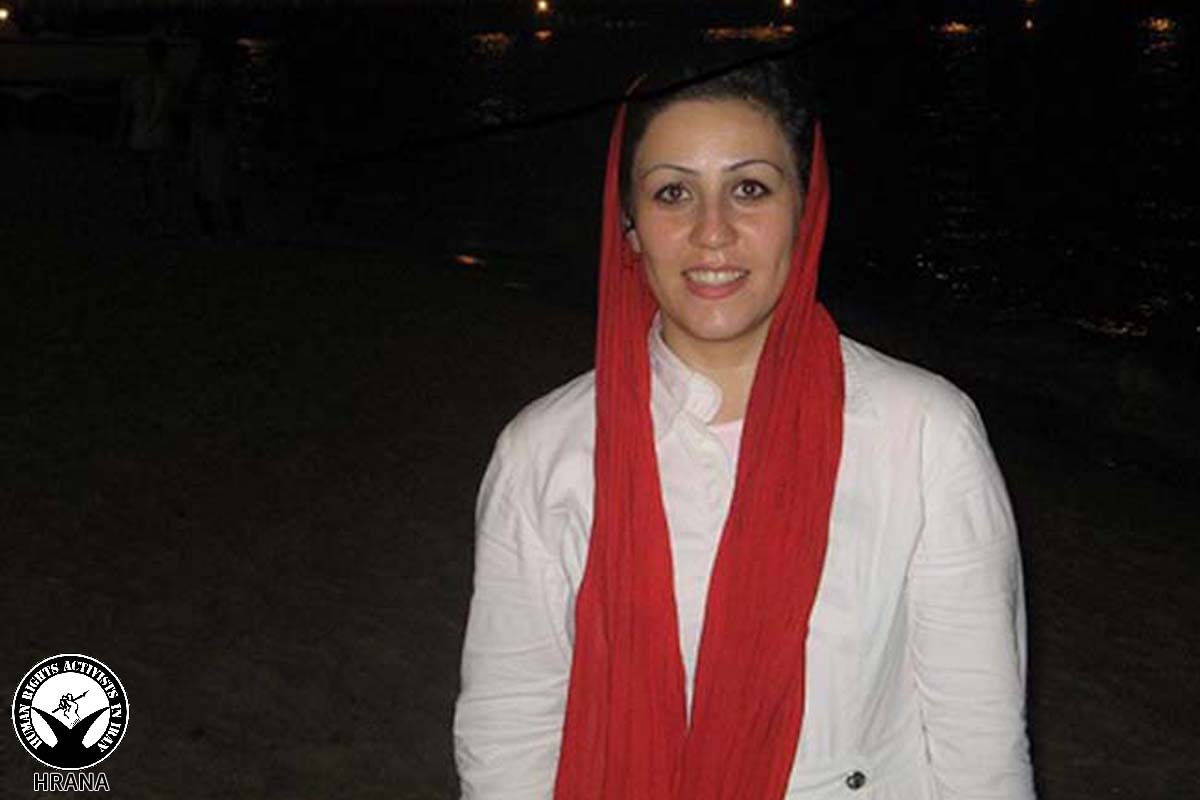
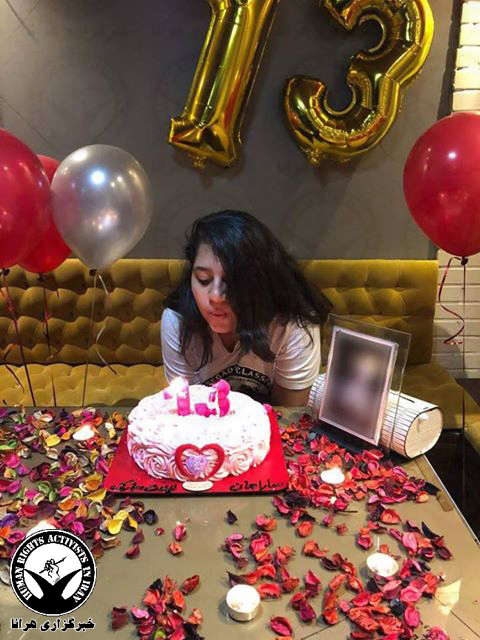
Human Rights Activists News Agency (HRANA) – Evin political prisoner Maryam Akbari Monfared wished her daughter a happy 13th birthday in letter she wrote from behind bars, where she has spent every one of her daughter’s birthdays for the past nine years.

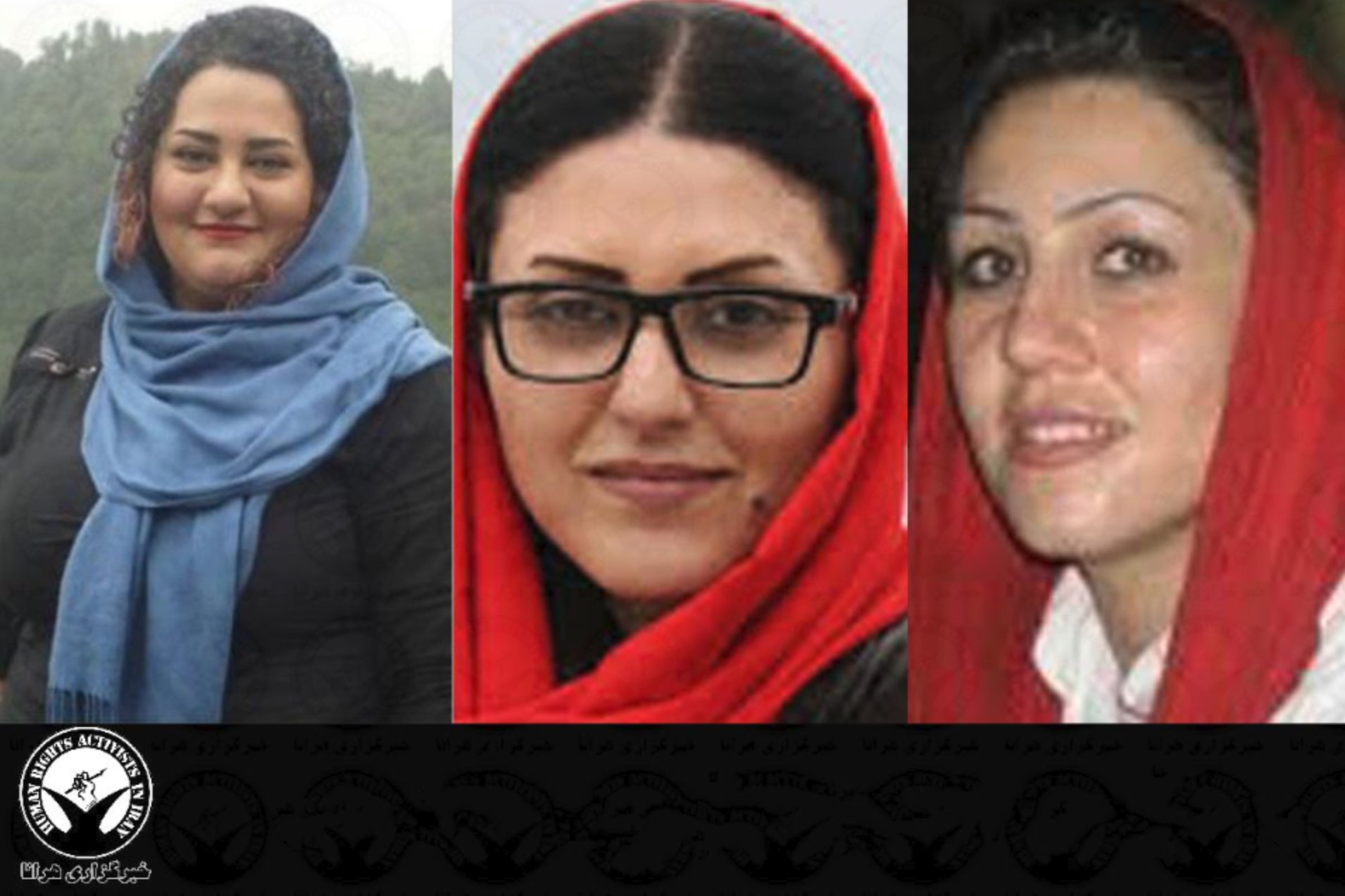
Monfared, along with fellow prisoners of conscience Golrokh Ebrahimi Iraee and Atena Daemi, was recently punished with a three-week ban on family visits per verbal orders from the director of the Evin Prison Women’s Ward. All three were told they were being disciplined for protesting authorities’ attempts to unlawfully interrogate them this past September.

The full letter of Monafred’s letter to her daughter, translated into English by HRANA, is below:

In the middle of a cold, rainy December night, they tore you from my arms. You were only three and a half years old, and you had your arms locked around my neck. You were in a deep, angelic sleep.

Nine years have passed since then. All these years, I have celebrated your birthday in the prison visiting room. All my cellmates have shared in my joy. Every year, I prepared for your birthday days ahead of time, as best I could. I have watched you grow from the other side of the visiting room glass, and I drew lines on the concrete for every year that you grew.

While I was in prison you started school, and then you were no longer a little girl. And now, this year, you’re turning 13. We spoke about our wishes a week ago on the phone: you asked me whether you could come for a visit the following week, on your birthday. “Why wouldn’t you?!” I replied. “Of course you can!” Little did I know that our rare joys were being watched with malice from afar.

Before you arrived Wednesday, the Ward Director Ms. Abdolhamidi told me I’d been banned from visits for three weeks. When you came, you jumped into my arms and told me, ‘Mom, it’s my birthday next week! I’ll come to visit you and it will just be you and me.’”

It was more than I could bear to tell you that our visit next week would be canceled. My heart burned with anger and loathing for [the authorities], who would rob even the smile off your face. Flames of rage are still burning inside me.

Tomorrow is your birthday. I’ve been talking to my friends about it all day. I close my eyes and travel back in time to Iran Hospital, October 8th, 2005.

It is 6 a.m., and I am sitting in the hospital lobby. It is 10 days past your due date, but looking back now, it seems you were stalling your arrival in this world, that you foresaw that you would be targeted by the storms of life. But finally, you came, and your very first cries at 12 p.m. brought a smile to my face. I still feel your beautiful face and your first cry, and sense the sweet feeling of taking you into my arms for the first time.

I opened my eyes and there you were, a beautiful doll in a pistachio-green blanket with snowflakes on it. The delight of breastfeeding you, the joy of when you first opened your eyes; the first steps you took towards a beautiful life and future, and the music of your first word.

My dear Nazanin: I was not with you on your 13th birthday. I know that by now you understand why we’re apart. I know that you’ve suffered a lot these past nine years. Yet, we have promised each other to smile until smiles light the faces of all of Iran’s children. We promised each other to cherish our brief visits, for all of the times that we miss being together. We have pledged together to vanquish a monster.

My dear Sara: our future is bright. I hope for the daybreak whose first morning rays will be freedom, when I will tousle your hair and embrace you without the pain and the stress of knowing our visit could end the next moment. Let us laugh until daybreak […]

Maryam Akbari Monfared
October 6, 2018
Evin Prison Women’s Ward

****
Maryam Akbari Monfared was arrested December 2009 during protests following Iran’s contentious election cycle of that year. In June 2010, Judge Salavati of Revolutionary Court Branch 15 sentenced her to 15 years in prison on the charge of “moharebeh” (enmity against God), on the premise that she was a member of the People’s Mujahedin of Iran (MEK). Monfared denied the charge.

Two of Monfared’s brothers were executed in 1981 and 1984 for membership in the MEK after being convicted in revolutionary courts. A younger brother and sister were also executed in 1988 as part of a mass execution of political prisoners.

Governance by Deprivation in Evin Prison: 3 in Women’s Ward Denied Visits for 3 Weeks

Human Rights Activist News Agency (HRANA) – On October 2nd, Evin authorities punished three prisoners with a 3-week ban on visitation.

The head of the Evin Women’s Ward dictated the disciplinary measure to prisoners Maryam Akbari Monfared, Golrokh Iraee, and Atena Daemi, reportedly after the three chanted slogans and got involved in a verbal altercation last September in the prison’s visitation room when they had resisted authorities’ attempts to unlawfully interrogate them. The prison’s disciplinary council condemned them to the three-week ban in absentia.

A source told HRANA that Monfared, Iraee, and Daemi got a “no” when they asked to be shown the ban order in writing. The warden offered the pretext that authorities were acting on a verbal order from Prison Chief Chaharmahali and the prosecutors.

Akbari Monfared is a mother of three daughters, two of whom are currently in college and one of whom is school-age. Though her visitation hours were recently slated to change in accordance with her children’s academic schedules, Prosecution Representative Rostami put a stop to the change. She hasn’t had a furlough day in all of her nine years in prison.

Daemi and Iraee got their own backlash from authorities when the prison chief ordered their bodies to be searched multiple times without cause, presumably in reprisal for their public reaction to the September 8th executions of political prisoners Hossein Panahi, Zanyar Moradi, and Loghman Moradi.

Court Convenes on Recent Charges Against Leila Mir-Ghaffari

Human Rights Activist News Agency (HRANA) – Branch 26 of Tehran’s Revolutionary Court convened today, October 6th to read civil activist Leila Mir-Ghaffari her most recent charges: insulting the supreme leader and rebelling against authorities. Her attorney Mohammad Hossein Aghasi was present at the session, which was presided by Judge Ahmadzadeh.

Aghasi told HRANA that Mir-Ghaffari’s new charges are in connection to an altercation she had with security guards in front of the Revolutionary Court. “Ms. Mir-Ghaffari explained herself in court [today]. I was asked to have her defense submitted to the court within a week.”

Mir-Ghaffari was detained just three days earlier for defending a group known as the Girls of Enghelab Street who famously demonstrated against mandatory veiling for women. Morality Court ordered her to pay a fine of 3,200,000 tomans [approximately $800 USD], and she was released on bail the next day.

On June 13, 2018, Mir-Ghaffari was among a group of civil rights activists summoned to appeals court to review their charges of 91 days’ imprisonment and 74 lashes apiece. Judge Farshid Dehghani presided over their preliminary trial on February 9, 2016 in Tehran Criminal Court No. 2, Branch 1060.

Mir-Ghaffari and 17 other civil activists were arrested November 2016 for staging a peaceful gathering across from Evin Prison. Authorities sent the women protestors to Gharchak Prison and the men to Evin. Charged with disrupting the public peace, they were eventually released on bail of 50,000,000 tomans [approximately $12,000 USD]. Her co-arrestees were Reza Mak’iyan (Malak), Hashem Zaynali, Simin Ayvazzadeh, Ehsan Khaybar, Abdulazim Aruji, Mohsen Haseli, Mohsen Shojaie, Azam Najafi, Parvin Soleymani, Sharmin Yamani, Sala Saie, Arshiya Rahmati, Mas’ud Hamidi, Ali Babaie, Ismaeil Husayni, Farideh Tusi, and Zahra Mudarreszadeh.

Iranian Authorities Execute Three Prisoners, Slate Four More for Gallows

Human Rights Activist News Agency (HRANA) – State-run news agencies in Iran have yet to confirm the executions of three prisoners this morning, October 2nd, in Urmia: Salman Khan Alilou, Hassan Hajilou, and Zeinab Sekaanvand. Sekaanvand was executed for a crime she had allegedly committed as a minor.

Yesterday, Amnesty International released a statement expressing concern about Sekaanvand’s transfer to a solitary confinement cell, the protocol for prisoners whose death sentence is imminent. “The authorities must immediately quash Zeinab Sekaanvand’s conviction and grant her a fair retrial without recourse to the death penalty, and in accordance with principles of juvenile justice,” the statement read.

Sekaanvand, born June 22, 1994, was 17 when she was detained March 1, 2012, on accusations of killing her husband. Branch 2 of Urmia Criminal Court issued her a death sentence, which was confirmed in Branch 8 of the Supreme Court. Married in March of 2009 at the age of 15, Sekaanvand reportedly endured physical violence at the hands of her husband.

Having spent two years in Khoy Prison since her initial arrest, Sekaanvand was transferred to the Women’s Ward of Urmia prison after being issued the death sentence. Prison authorities would later approve her marriage to a fellow Urmia prisoner. She delivered a stillborn baby on Friday, October 1, [2016].

Yesterday, HRANA reported on the transfer of at least four prisoners — all of whom were reportedly charged with first-degree murder — to solitary cells in various detention centers across Urmia in preparation for their executions.

The same day, two more prisoners — Mousa Nomani from Ward 3-4 and Changiz Irani from the Psychotherapy Ward — were granted execution stays of one month and fifteen days, respectively, to attempt to obtain pardon from the families of their victims, which would exempt them from capital punishment.

According to Amnesty International’s annual report, Iran ranks first in the world in executions per capita. An annual report published by the Center of Statistics at Human Rights Activists in Iran (HRAI) states that more than 60% of executions in Iran are not reported by the state or the Judiciary. These executions are referred to as “secret executions.”

According to registered data from 2,945 reports by the Statistics, Publications, and Achievements Division of HRAI, in the past year (from March 21, 2017, to March 18, 2018) at least 322 citizens were executed and 236 others were sentenced to death in Iran. Among these were the executions of four juvenile offenders and 23 public hangings.

Subscribe to Our Newsletter

Now is definitely not the time to stop reading!

Civil Rights Activist Mehrnaz Haghighi Conditionally Released

Human Rights Activists News Agency (HRANA) – Mehrnaz Haghighi, a civil rights activist and doctor from Bandar Abbas on the Persian Gulf coast, was conditionally released on Monday, October 1st after meeting a minimum detention requirement for previous time spent in custody.

HRANA reported September 22nd on Haghighi’s transfer to Bandar Abbas Prison to serve her six-month sentence for “propaganda against the regime.”

Haghighi was first arrested by intelligence agents in her home on February 19, 2017. For a week after her arrest, she was held in solitary confinement in the city’s intelligence office before being transferred to the Women’s Ward of Bandar Abbas Prison. She was sent to Ward 209 of Evin Prison on April 12, 2017, where she stayed until being released on bail May 28th, 2017.

No Word on Trial Date for Bahraini Citizen and Evin Prisoner Ruqayya Haji Mashallah

Human Rights Activist News Agency (HRANA)- Ruqayya Haji Mashallah, a 37-year-old citizen of Bahrain, was detained on April 20, 2018 by security forces in Mashhad. In custody ever since, she has only been able to speak to her family in Bahrain twice since her arrest.

An informed source told HRANA that Haji-Mashallah’s annual pilgrimage to the Shrine of the Eighth Shi’i Imam, located in Mashhad, has brought her under the suspicion of the Islamic Revolutionary Guard Corps (IRGC). “IRGC Intelligence claims that Ms. Haji-Mashallah has been tasked by the Bahraini government with identifying supporters of Issa Ghasem, a Bahraini opposition leader,” the source said.

Immediately after her April arrest, Haji-Mashallah was held in solitary confinement at an IRGC detention center for 12 days. She was then transferred to Evin’s Ward 2A, also under IRGC jurisdiction. Two months of interrogations later, she was taken to Evin’s general Women’s Ward, where she has remained since.

Severed diplomatic relations between Iran and Bahrain have prevented Haji-Mashallah from contacting her husband and three children with the prison telephone. “Since June 27th, when she was transferred to the Women’s Ward at Evin, she has been taken only twice to the IRGC Ward so that she can contact her Bahraini husband and children using the internet. Her husband has traveled to Iran once to visit her,” the source added.

Judge Salavati is presiding over Haji-Mashallah’s case file. As of the date of this report, her court date has not been set.

Update: Women’s Rights Activist Rezvaneh Mohammadi Transferred to Evin Prison

UPDATE:

Rezvaneh Mohammadi was released on bail on Saturday October 20, 2018.

Human Rights Activists News Agency (HRANA) – On Saturday, September 29th, women’s rights activist Rezvaneh Mohammadi was transferred to the Women’s Ward of Evin Prison at the end of her interrogation. She had been in custody in an undisclosed location since her arrest by security forces September 3rd.

Mohammadi is among a group of women’s and civil rights activists who in recent months have been pursued with renewed fervor by authorities. Najmeh Vahedi, Hoda Amid, and Maryam Azad, also women’s rights activists, have all been detained for unknown reasons during this period.

Vahedi and Amid had reportedly held educational training workshops for women inquiring about their rights in marriage contracts. Previously, in a brief interview with HRANA, Vahedi’s brother Reza said, “In a one-minute phone conversation with my sister on Tuesday, September 4th, she was only able to tell us that she didn’t know her charges or why she had been arrested. We keep inquiring [with authorities], and are getting anxious because it’s been 11 days and we still don’t know what’s going on.”

More than 750 domestic and foreign civil activists issued a statement over the weekend in protest of the increasing pressures on Iranian women’s rights activists, demanding their immediate and unconditional release.

Human Rights Watch issued a statement on September 5th of this year asking Iranian authorities to stop the repression of human rights defenders like Hoda Amid and Najmeh Vahedi and to immediately release those who are in custody for peaceful expressions of dissent.

Amnesty International also voiced their opposition to this civil crackdown last month, demanding that affected prisoners be immediately released and that defendants not be limited to a list of regime-designated attorneys.

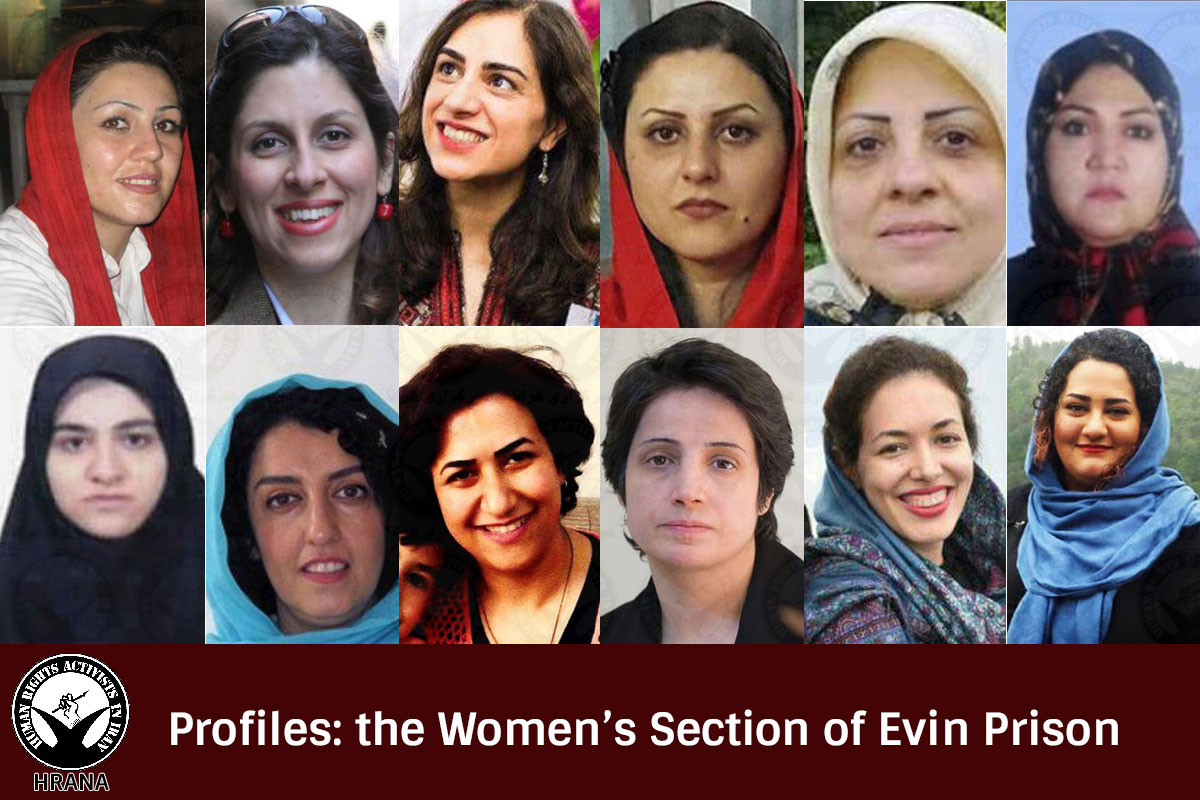
Profiles: the Women’s Section of Evin Prison

Human Rights Activists News Agency (HRANA) – The 17 prisoners held on political or security-related charges in the Women’s Ward of Tehran’s Evin Prison live with deplorable conditions, compromised hygiene, and paltry nutrition. The following is a brief exposé of their quality of life, followed by a snapshot of their individual case files.

Many of these prisoners are mothers pained by the distance from their children, a pain that is only exacerbated by the prison chief’s refusal to grant them access to the phone on days of the week that their children are home from school. While the prisoners were granted permission from prosecutors to open the Saturday-to-Wednesday phone schedule to any day of the week, the chief, who goes by “Chaharmahali,” has refused to loosen up the former protocol.

In another blatant disregard of court orders, prison authorities refuse to send prisoners to outside medical clinics even when prosecutors and deputy prosecutors order or grant permission for the transfers. Prison authorities justify their refusal by saying that the prison clinic has its own doctors, or will recruit them as necessary; yet prisoners needing help from a psychologist, eye doctor, or internal specialist wait months to be seen.

These women are effectively hindered from providing even the most basic care to themselves, as clinic authorities refuse to distribute basic medicine or first aid kits to inmates. Many–insulted by the stipulations from Khani, the clinic head, that they take all of their nightly medication in one supervised sitting–have quit their medications in protest, and are experiencing aggravated symptoms as a result.

Evin Prison dentistry operates in less-than-sterile conditions and exposes patients to remarkably high risk for infections. Cavity fillings are expensive there, putting patients out as much as 20 million rials (approximately $114 USD) or preventing them, for lack of means, from getting the fillings they need. Many of the Evin women have trouble footing the bill, as the now-unemployed breadwinners of their households or as the wives of men who are also behind bars.

Prison food rations are growing more pitiful by the day. Forty-day rations of dry food items that are distributed to prisoners are depleted without fail within half that time. In the last six months, meat and vegetables have been cut from the prisoners’ diets.

Hygiene and cleaning items are also in short supply. Most prisoners run out, and those who can’t afford the pricey prison shop simply do without.

Deputy prosecutor Rostami oversees political and security prisoners and recently took up his position in Evin’s prosecutorial office. While he has verbally engaged to welcome prisoner families into his office on Sundays and Tuesdays, complaints from these families suggest that he is chronically unavailable, impassive to their requests, and generally unaccountable. Complaints lead nowhere, families say; requests for furlough or conditional release are routinely ignored.

Prison authorities rarely visit the Women Section, and tend to either lose or ignore any letters from its inmates.

Who are the women of Evin Prison’s Women’s Ward?

1- Maryam Akbari Monfared (born 1975)

Convicted of enmity against god, gathering and colluding against national security and propagating against the regime through working with the Mujahedin-e Khalq (MEK), Monfared is serving a suspended sentence of 15 years.

Monfared was arrested December 31, 2009, following a widespread Ashura demonstration during the holy month of Muharram. She was tried the following May and sentenced by Branch 15 of Tehran’s Revolutionary Court, presided by Judge Salavati. She denied the accusations against her.

Monfared has been shuffled around different penitentiaries over the course of her imprisonment, inducing the solitary cells of Ward 209, the Methadone Ward, the Women’s Ward, Rajai Shahr Prison, and Qarchak Prison in Varamin. After writing several letters to clerics, prison authorities, and Ahmad Shaheed, then the United Nations Special Rapporteur on the Situation of Human Rights in Iran, she was returned to Evin’s Women’s Ward and has remained there since.

Two of Maryam’s brothers were executed in 1981 and 1984 for their connections to the MEK. Another younger brother and a sister were also executed during the 1988 massacre.

Maryam, a mother of two, has been barred from conditional release and has not received a single day of furlough since she began her sentence in 2009.

2- Zahra Zahtabchi (born 1969)

Zahra Zahtabchi was issued a 10-year suspended sentence for Baqi (violation) and enmity against god through support of the MEK.
Zahtabchi was arrested with her husband and daughter on October 16, 2013. She came to Evin’s Women’s Ward after spending 14 months in the solitary cells of Ward 209. On December 8, 2014, Branch 15 of the Revolutionary Courts sentenced her to 12 years in prison. The sentence was reduced to 10 years in appeals court.

Her two daughters are Narges, 22 and Mina, 15.

In 2016, three years after her arrest, she went on furlough for three days.

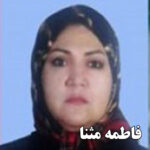
3- Fatemeh Mosana (born 1967)

Fatemeh Mosana was sentenced to 15 years for Baqi and enmity against god through support of the MEK in Branch 26 of Tehran’s Revolutionary Court, headed by Judge Ahmadzadeh. Her husband Hassan Sadeghi received the same sentence.

Mosana, Sadeghi, and their child were arrested January 28, 2013, by Intelligence Ministry forces. The child was released after six weeks.

Mosana spent 75 days in the solitary cells of Ward 209 before her transfer to the Women’s Ward.

On January 13, 2014, she was temporarily released on bail. Some of her family’s property, including Sadeghi’s shop and their personal house, was seized by the authorities.

On September 30, 2015, she was re-arrested and taken to the Women’s Ward. She has two children who currently live with their ailing grandmothers.

Mosana, who suffers from ulcerative colitis and severe nervous migraines, has never been granted furlough.

4- Narges Mohammadi (born 1972)

Narges Mohammadi is serving a 16-year sentence, compounded by a six-year sentence on a previous case.

Narges was first arrested in 2002 and then released on bail after a week. For that case, she received a one-year sentence.

In May 2010, she was arrested and held for weeks in the solitary cells of Evin’s Ward 209 before being released on a bail of 1 billion rials. In 2011, she was convicted of gathering and collusion against national security and propaganda against the regime, which carried a sentence of 11 years in prison. The sentence was later reduced to six years in appeals court.

She started serving her sentence in 2012, which began with one month in solitary confinement and four months in exile in Zanjan. She was released due to health conditions before being re-arrested in 2015 to resume her sentence. At that point, authorities opened up a new case file against her, convicting her anew of gathering and collusion, and of propaganda against the regime, with the additional charge of establishing LEGAM, a campaign to abolish the death penalty. Collectively her charges earned her 16 years in prison, but by Article 134 of Islamic Penal Code, she should only serve 10 [i.e. the sentence corresponding to the heaviest among her multiple charges].

She has two children, and on the prosecutor’s orders is barred from having contact with her husband.

She suffers from pulmonary embolism and was granted a three-day furlough on September 29th.

5- Reyhaneh Haj Ebrahim Dabagh

Born in 1982, Reyhaneh Haj Ebrahim Dabagh is serving a 15-year exile imprisonment sentence, ruled by Judge Salavati in Branch 15 of the Revolutionary Court on charges of enmity against god through support of the MEK, gathering and colluding, and propaganda against the regime.

Ebrahim Dabagh has been in prison since early 2010. She suffers from ulcerative colitis and has served exile time in Qarchak and Rajai Shahr prisons. Her husband Ahmad Daneshpour and her father-in-law Mohsen Daneshpour are awaiting trial in Evin’s Section 350. They are both said to have been sentenced to capital punishment.

After seven years in prison, Ebrahim Dabagh went on furlough for the first time in December 2016, and was briefly freed on bail. On August 15, 2018, she was sent back to Women’s Ward to serve the rest of her sentence.

6- Azita Rafizadeh (born 1980)

As part of a 2011 crackdown on the Baha’i academic community, security agents raided the homes of managers and professors at the Baha’i Institute of Higher Education (BIHE), including Azita Rafizadeh’s. In the raid, her religious books, personal writings, and electronic devices were confiscated.

Rafizadeh was sentenced in 2014 to four years in prison on charges of acting against national security and membership in “the illegal Baha’i organization.” Her husband Peyman Kooshkbaghi was sentenced to five years in prison at the same time.

She presented hersef to Evin’s prosecutors in 2015 to begin her sentence. On February 28, 2018, her husband was detained without reason in Evin’s section 8 while trying to arrange a visit with her. Rafizade and Kooshkbaghi have a 10-year-old son name Bashir who in absence of his parents has been trusted to the care of another family.

7- Nazanin Zaghari-Ratcliffe (born 1979)

Zaghari-Ratcliffe is serving a five-year suspended sentence on charges of gathering and collusion against national security.

Zaghari-Ratcliffe was arrested at the airport while visiting Iran on holiday in 2016. After a day in IRGC’s detention center, she was transferred to Kerman prison, and two months later to Tehran, where Judge Salavati issued her prison sentence in July of that year. A few months later, she was sent to the Women’s Ward.

On August 23rd, she was granted a three-day furlough after two and a half years in prison. She has a four-year-old daughter.

8- Aras Amiri (born in 1986)

A student of London’s Kingston University, Amiri was arrested by Intelligence Ministry forces on March 14, 2018, and released two months later after posting a 5000 million rial bail. On September 7, 2018, she was summoned and subsequently arrested by Evin prosecutors, after which she was sent to the prison’s Women’s Ward. She has denied the “gathering and collusion against national security” accusations against her and is still awaiting trial.

9- Golrokh Ebrahimi Irayi (born 1980)

Irayi was sentenced to six years in prison, which was reduced to 2.5 years based on amnesty and Article 134 of Islamic Penal Code. She was convicted of insulting the sacred and gathering and collusion against the regime. Earlier this year, she was exiled to Varamin’s Qarchak prison, and was brought back to Evin after going on hunger strike.

On September 6, 2014, Golrokh was arrested along with her husband, Arash Sadeghi. She spent two days in an IRGC safe house and then 20 days in the solitary cells of Evin’s Section 2A, which is under IRGC jurisdiction. She was released on a bail of 800 million rials.

Judge Salavati sentenced her to six year in prison while she was undergoing surgery in the hospital.

On October 24, 2016, the IRGC arrested her without a warrant. Her husband Arash Sadeghi was also arrested and sentenced to 19 years in prison. He is currently in Karaj’s Rajai Shahr prison and has undergone operations for cancer.

Arash and Golrokh have been forbidden from seeing each other for the past 8 months.

10- Nasrin Sotoudeh (born 1963)

According to Sotoudeh’s lawyer, she has been sentenced to five years in prison for espionage (a charge that does not figure on her charge sheet), a complaint from Kashan prosecutorial interrogators, and an arrest order from Branch Two of Evin’s interrogators. She currently awaits trial.

Sotoudeh was first arrested September 2010 and sentenced to 11 year in prison, a 20-year ban from the bar association, and 20-year travel ban. Appeals court reduced these sentences to six years in prison and a 10-year ban from the bar. She was in Evin prison from 2010 to 2013 on charges of “acting against national security.” Upon her release, lawyer’s court banned her from the bar for three years, which she protested in 2014 by organizing a sit-in in front of the Bar Association. Because of her sit-in, her attorney privileges were reinstated.

On June 13th of this year she was arrested in her home and taken to Evin prison. Her husband Reza Khandan is being held in Evin’s Section Four. Two of her children, Mehrave and Nima, are currently in the care of family friends.

11- Negin Ghadamian (born 1983)

Ghadamian was sentenced to a five-year suspended sentence on a conviction of against national security through membership in “the illegal Baha’i organization.”

On May 24, 2011, Negin was arrested by security forces and released on a bail of 500 million rials. In February 2013, along with eight other Baha’i citizens, she was convicted in absentia of working with the Baha’i Institute for Higher Education and sentenced to five years in prison by Judge Moghise. On December 16, 2017, she was arrested at the airport and sent to the Women’s Ward of Evin prison to serve her sentence.

12 – Masoumeh (Mino) Ghasemzade Malakshah (born 1976)

Malakshah and her ex-husband, Amir-Mehdi Tabasi were arrested in 2011 by the Intelligence Ministry agents. Both were detained and later released on bail on espionage charges after travelling to the Israeli embassy in Turkey and applying for residency in Israel. Both Malakshah and Tabasi were sentenced to 10 years, a sentence which was confirmed in appeals court in 2017.
Malakshah was taken to the Women’s Ward of Evin prison. Tabasi is detained in a different ward of same prison.

13- Ruqayya Haji Mashallah (born 1981)

Mashallah is awaiting trial on charges that are currently unclear.

Of Iranian origin, Mashallah is a citizen of Bahrain. She was arrested in May 2018 in Mashhad and taken to Evin’s Women’s Ward on June 27th of the same year. Her Bahraini husband has only been able to meet with her once since her arrest. She a mother to three children.

14- Leila Tajik (born 1973)

Tajik was arrested by IRGC’s Intelligence Department on September 5, 2017. She was taken to the Women’s Ward earlier this year after spending seven months in an IRGC safe house. Her husband, who is said to be a retired employee of IRGC’s Intelligence Department, is also under arrest. She awaits trial on charges of espionage.

Tajik and her spouse have two children aged 16 and 19.

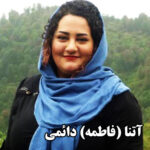
15 – Atena (Fateme) Daemi (born 1988)

Daemi was arrested on October 21, 2014.

On May 15, 2015, Judge Moghise of Branch 28 of the Revolutionary Court sentenced her to 14 year in prison on charges of collusion and gathering against national security, propaganda against the regime, and insulting the Supreme Leader. Her sentence was reduced to five years with application of Article 134 of Islamic Penal Code.

After her arrest and before her trial, she spent 86 days in the solitary cells of Section 2-A. On February 15, 2016, she was released on a bail of 5500 million rials. Her sentenced was reduced to seven years in appeals court in August of 2016.

Daemi was arrested in her father’s house that November, and cases against her two sisters and one of her brother-in-laws immediately followed. She went on hunger strike for 54 days until the charges against them were dropped. So far she has been acquitted of two case files that have been opened against her.

In January of this year, she was taken to Varamin’s Qarchak prison after being assaulted. On May 9th, she was taken back to Evin’s Women’s Ward. She has thus far been denied furlough and has yet to request parole.

16- Elham Barmaki (born 1968)

On December 28, 2011, Barmarki was arrested on the street and spent three months in the solitary cells of Section 209. She was then released on bail and was later acquitted.

On July 23, 2012, she was arrested again, this time spending 14 months Section 209 solitary cells. On September 29, 2013, she was transferred to the Women’s Ward.

In Branch 28 of the Revolutionary Court, headed by Judge Moghise, Barmaki was sentenced to 10 years in prison and fines of 25,000 Euros, 70,000 USD, and 400 million rials. She has two children, Amir-Parviz and Anita, who both live abroad. She was released once on furlough in March 2017 for the Persian New Year. Her request for parole has been rejected.

17 – Sotoudeh Fazeli (born 1953)

Fazeli was arrested in early 2011 by the Intelligence Ministry. She spent 31 days in Evin’s Section 209 before being released on bail in 2011. Branch 15 of the Revolutionary Court, headed by Judge Salavati, sentenced her to three years in prison on charges of “enmity against god by supporting the MEK.” She has been held in the Women’s Ward since June 29, 2016.

Fazeli suffers from eye and muscle problems, among other health conditions. She was released on a short furlough in 2016. Her requests for parole have been repeatedly rejected.

Since the beginning of the new Persian calendar year in 2018, 15 new prisoners have entered the Women’s Ward, including Zahra Zare, Negar Zarei, Mandana Azarmah, Akram Gholami, Aliyah Eghdamdoost, Akram Mirsane, Raha Fasayi, Parisa Rahmati, Batool Ezati and Arefe Aziz. A number of these women have been already released.

66-year-old Cancer Patient Denied Parole

Human Rights Activist News Agency (HRANA) – Authorities at Evin Prison in Tehran have denied parole to Sotoodeh Fazeli, a 66-year-old political prisoner suffering from thalassemia, cancer, and a family history scarred by merciless judicial directives.

Two of Fazeli’s sons, Peyman and Pooya, are in the Albania-based camp of the People’s Mojahedin Organization of Iran, also known as Mojahedine Khalq (MEK). When MEK was based in Iraq’s Ashraf camp, Sotoodeh attempted to visit her sons for the first time in many years, but was arrested before traveling there. “She hasn’t seen then in 18 years,” a close source told HRANA.

According to the above source, Fazeli was arrested in early 2011 by the Intelligence Ministry and spent 31 days in Evin’s Section 209 before being released on bail that spring.

According to the source, Judge Salavati tried Sotoodeh, but she was never formally sentenced. Nevertheless, on June 29, 2016, she was arrested and sent to the Evin Women’s Ward, where she learned she had been sentenced to three years in prison despite having never been convicted.

After a brief release on furlough in July of 2017, Fazeli was returned to the prison in May 2018 despite her old age and the advancement of her disease. Her recent request for conditional release has been denied.

When Fazeli’s mother late Masoome Haj Abdolrahim Khabbaz requested a meeting with her daughter in the last days of her life, her family made great efforts to facilitate the visit. But Sootodeh’s hopes to be granted a hospital visit with her ailing mother, even for a few hours and in handcuffs, was denied by the Prosecutor’s office.

While Iranian legislation, including a ruling (or fatwa) from Iran’s Supreme Leader Ayatollah Khamenei, supports conditional release of prisoners over 55 years of age, requests from eligible detainees are often denied in practice.

Fazeli’s brother Seyed Shamseddin Fazeli was arrested in 1982 at the age of 20. His family learned of his execution when he was already dead, after he had spent three years in prison without ever being sentenced in court.

Fazeli, who is now retired, worked for 30 years as a school teacher.