Imprisoned Civil Rights Activist Farhad Meysami on Hunger Strike

Human Rights Activist News Agency (HRANA)- Farhad Meysami, who was arrested and transferred to Ward 209 of Evin Prison on July 31, 2018, has been on hunger strike since August 1st. He faces charges of “Collusion and conspiracy to threaten national security”, “Disseminating propaganda against the regime,” and “Insulting the hijab, an essential sacrament of Islam” from Branch 7 of Evin Court.

Reza Khandan, husband of Nasrin Sotoudeh, the human rights lawyer who was previously imprisoned on similar charges, related Mr Mesyami’s case updates to HRANA.

“Farhad Meysami [declared his strike] when he contacted his mother, which was 20 days into his detention,” Mr Khandan said, explaining that news hadn’t spread earlier because Mr Meysami was being held in solitary confinement. In the same phone conversation, according to Mr Khandan, Mr Meysami said he was anticipating a transfer to the prison’s general ward in three days.

Reading from the interrogation sheet intended to elucidate his charges, Mr Meysami cited accusations of “provoking women to appear without hijab in the street”. Mr Khandan conjectures that Mr Meysami’s charges actually stem from his possession of pin-back buttons reading “I protest mandatory Hijab”.

“Farhad Meysami’s mother was extremely worried following the news of his hunger strike and intimated that she wanted to start a hunger strike as well,” Mr Khandan added. “But some friends and I dissuaded her, given her age and her need to take medications on a daily basis.”

Earlier, Arash Keikhosravi — who has been detained in the Great Tehran Penitentiary for the past four days — told HRANA that “on Sunday, August 12th, Mr Meysami’s mother and I went to Branch 7 of Evin court to follow up on his case and to see how he was doing. I planned to register as his lawyer, but the officials at the branch told me that section 48 of the Criminal Procedure Code bars me from doing so.”

Section 48 of the recently-amended Criminal Procedure Code states that those accused of national-security crimes must choose their lawyer from a list approved by the Iranian judiciary. Human Rights Organizations have argued that this new policy gives further license to infringe on the rights of defendants.

Mr Keikhosravi also said that “Mr Meysami’s mother went to see the case investigator after receiving a phone call in which she could hear the sounds of her son’s interrogation and torture.”

The investigator reportedly denied that the call had come from Evin authorities, promising her a phone call from her son to alleviate some of her worries and assure her of his wellbeing.

Latest Report on Baha’is Detained in Shiraz

Human Rights Activists News Agency (HRANA) – On Friday, August 17, 2018, security forces detained a number of Baha’i residents of Shiraz and transferred them to the Detention Center of the Intelligence Office of Shiraz (No. 100). Dorna Isma’ili, Negar Mithaghiyan, and Hooman Isma’ili were released later that day. Pezhman Shahriyari, Mahboob Habibi, and Koroush Rowhani remain in custody.

On Friday, HRANA issued two reports about the seizure and detention of Baha’is via Intelligence Office No. 100. In the hours following HRANA’s report, news networks affiliated with Iranian security agencies buzzed with accounts of unexplained and coordinated arrests of at least 40 Baha’i residents of Shiraz. As of the date of this publication, HRANA has not been able to confirm their reports and continues to investigate.

Baha’is in Iran do not have freedom of religion. This systematic repression is in violation of Article 18 of the Universal Declaration of Human Rights as well as Article 18 of the International Covenant on Civil and Political Rights. These documents assert the rights of every individual to freedom of religion, religious conversion, and expression of their religious belief as individuals or groups, publicly or privately.

Unofficial reports indicate that there are over three hundred thousand Baha’is living in Iran. Meanwhile, the Iranian constitution only recognizes Islam, Christianity, Judaism, and Zoroastrianism as permissible religions, effectively rendering the Baha’i faith illegal. This loophole allows the Iranian government to systematically violate the rights of Baha’is with impunity.

Appeals Court Issues Verdict of Fines and Lashing for Three Azerbaijani Activists

Human Rights Activists News Agency (HRANA) – On August 5, 2018, Branch 11 of the Appeals Court of Ardabil reached a verdict on the cases of three Azerbaijani activists, calling for fines of 21 million rials each (approximately $500 USD each), 70 lashes, and a four-month suspended imprisonment sentence.
On charges of “disturbing the public peace,” activists Baytullah Barzegar, Sina Ghorbani Irshadi, and Siyamak Ghardashi were issued their original verdict on January 30, 2018, from Branch 101 of the No. 2 Criminal Court of Meshginshahr. Branch 11 of the Appeals Court of Ardabil rejected the activists’ initial three requests for appeal, remaining firm on their sentence of three million rials (with the threat of 70 lashes for recidivism) and 18 million rials (with the threat of 4 months’ imprisonment for recidivism). Per the original verdict, their sentence was to be suspended for a probationary period of 3 years.
Last July, HRANA covered Baytullah Barzegar’s defense proceedings, as well as those of other activists arrested in conjunction with a demonstration held on International Mother Language Day. Barzegar has been taken into police custody on multiple occasions, including a 2015 Meshginshahr imprisonment for his participation in public protests against the state-sponsored television series Fitileh, which was widely believed to portray Azerbaijani peoples in a derogatory light.

From left to right: Azerbaijani activists Baytullah Barzegar, Sina Ghorbani Irshadi and Siyamak Ghardashi

Three Sunni Prisoners Transferred to Rajai Shahr Prison

Human Rights Activists News Agency (HRANA) – Three Sunni prisoners in Urmia Central Prison were transferred to Rajai Shahr Prison in Karaj in the evening hours of Sunday, August 19, 2018.

Prisoners Anvar Khezri, Khosro Besharat, and Kamran Sheikheh, according to an inside source, faced transfer in connection to charges of “Moharebeh” (enmity against God) brought by the Tehran Revolutionary Court. Khezri, Sheikheh, and Besharat were originally transferred to Urmia for trial in September of last year and had been held in Urmia Central Prison since then.

Last month, HRANA reporters testified to the state of uncertainty surrounding the verdict on the mens’ charges of aiding and abetting murder. Khezri, Besharat, and Sheikheh have been sentenced to 10 years in prison. Sheikheh has been sentenced to death.

These three men, along with inmates Davood Abdollahi, Farhad Salimi, Ghasem Abesteh, and Ayub Karimi, spent 6 years in prison before being sentenced to death in March 2016 by Judge Moghiseh of Tehran’s Revolutionary Court, branch 28. Judge Razini of Iran’s Supreme Court later reversed the sentence.

Following the reversal of their sentence, security forces charged the three Sunni men with “acting against national security”, “propaganda against the regime”, “membership in Salafist groups”, “spreading corruption on earth” and the aforementioned Moharebeh. Authorities have yet to elaborate on these allegations.

Inside sources related to HRANA that the defendants deny any history of violence, and believe the charges are a pretext for persecuting them for their religious beliefs and practices, including attending meetings and distributing Sunni literature. Khezri, Besharat, and Sheikheh have reportedly endured mental and physical torture over the course of their interrogations.

HRANA previously reported on Khezri’s poor bill of health, including respiratory problems caused by torture. In the same report, doctors who examined Khezri stated his symptoms were caused by “a heavy blow” to his chest.

The three men have thus far been denied the right to appoint lawyers of their choice or defend themselves in the court.

Despite the efforts of their state-appointed lawyer Mahmoud Alizadeh-Tabataba’i, these seven prisoners will soon have spent nine years in a state of legal suspension, one that has caused severe mental and psychological strain for both them and their families.

The prisoners have attempted in various ways to push their case forward, including staging a hunger strike and requesting clarification of their charges and verdict.

Iranian Authorities Detain Lawyers and Civil Rights Activists

Human Rights Activists News Agency (HRANA) – A number of lawyers and civil rights activists who had gathered in front of the Iranian Parliament building to protest both the Caspian Sea Agreement and the Guardian Council’s vetting process were arrested last Saturday, August 18th.

Mohammad Nourizad was among a group of detainees that were released a few hours later. Among three lawyers taken into custody, one — Masoud Javadieh — posted bail and was released the following day. Lawyers Ghasem Shole-Saadi and Arash Keykhosravi were transferred to the Great Tehran Penitentiary after being charged at Branch 5 of the Evin prosecutor’s office.

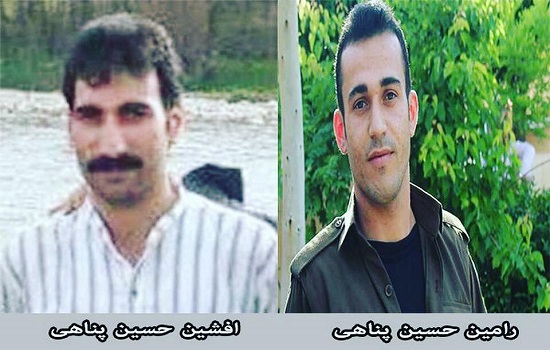
Mr Nourizad, a 66-year-old Iranian director, screenwriter, and journalist, had been taken into custody earlier this year in connection to his visits with the family of political prisoner Ramin Hossein Panahi, who is currently serving a prison sentence in Sanandaj Central Prison. Previously considered a religious radical, Nourizad joined with critics of the Islamic regime in the early 2000s and has continued in recent years to meet with the families of political detainees.

Upon his release on Saturday, Nourizad noted to reporters that Shole-Saadi had been interrogated for sharing a video, and conjectured that officials were building a case against him for that reason. In the video in question, Shole-Saadi can be heard voicing support of the late Iranian prime minister Mohammad Mossadegh, whose efforts to nationalize Iran’s oil industry were thwarted more than 70 years ago. In the recording, Shole-Saadi vows to appear before the Iranian Parliament building in protest of the Guardian Council’s vetting process.

Notably, Ghasem Shole-Saadi previously served two terms in the Islamic Consultative Assembly and was convicted of “insulting the leadership of the Islamic Republic” via a letter he notoriously published in 2002. He has been imprisoned several times on charges from the Revolutionary Court for “propaganda against the regime”.

Subscribe to Our Newsletter

Now is definitely not the time to stop reading!

“In The Name of the Non-Existent Justice” A letter from alleged juvenile offender after 21 years in prison

Human Rights Activists News Agency (HRANA) – Verya Saed Moochashmi has been detained in Karaj’s notorious Rajai Shahr Prison since he was 17. Convicted of aiding and abetting murder in 1998, he was sentenced to the death penalty and 80 lashes. This marks his 21st year behind bars.

In a letter obtained by HRANA, Mr Moochashmi remembers the incident that led to his conviction, stating that the murder was the unintended escalation of a clash initiated by an individual by the name of Shahram Jalali. Per an agreement with the victim’s family to pay damages (known as “blood money”) in exchange for a death row pardon, Mr Jalili had already paid half of the requested sum when he was executed in 2002. Esmaeil Hosseini, the other co-defendant, was released after serving three years and six months of his ten-year prison sentence.

The full text of Mr Moochashmi’s letter is below, translated into English:

In The Name of Non-Existent Justice

Behind prison bars from the age of 17 to now, the age of 40…Where is the justice?

I, Verya Saed Moochashmi, am a prisoner in Karaj’s Rajai Shahr Prison. When I was 14, to help my ageing father and my family, I left behind my city, my studies, and my home and came to Tehran. In 1998, I had been working as a laborer in Imam Khomeini International Airport for three years and I was about to turn 17 when I was convicted of aiding and abetting murder and sentenced to death and 80 lashes.

Yet in the skirmish that led to the murder of Mohammad Emami (the victim), the fighting and the killing were the work of Shahram Jalali — son of Jamal, born in Rabat Karim — and also another individual named Esmaeil Hosseini, who was convicted and sentenced to 10 years in prison but was freed after three years and six months. The principal defendant, Shahram Jalali, was executed in 2002 with the consent of the victim’s guardians, after having paid half of the blood money commensurate with the murder of a Muslim. I was innocent from the beginning, young and naive, illiterate, subject to the testimonies of my co-defendants which were totally baseless. The judge knows it, and yet I have been left in prison for 21 years.

Meanwhile not only have I lost my youth and my family, but I’ve also attempted suicide multiple times, documentation of which can be found in Imam Khomeini hospital.

All the while, the victim’s family has neglected the case and my situation in prison. Based on my requests and pursuant to Article 429, they’ve been repeatedly summoned but have refused to answer. Finally, in 2017, the assistant prosecutor, Mr Allahyari, summoned my family and me to post a bail of 2.2 billion rials [about $21,000 USD].

My family (of which only my brother remains) have done all they can to gather the money and post the bail. But a different assistant prosecutor has been named in the meantime, and the woman who now heads the department takes issue with Mr Allahyari’s terms and insulted my brother, calling him “backwards and worthless to society.” She said the process for the posting of bail and its payment now have to start anew.

A year has passed since then, and it’s now been 21 years since I’ve been in prison. Based on a law passed in 2013, minors can’t be sentenced to death, but I keep being punished and my case keeps getting ignored. As I approach 40, I am left with only one choice: declare a hunger strike to restore my rights and defend them until death. I want word to spread of the injustice that has been done to me; and for everyone to see their negligence of my case and the inconsiderate attitude of the new assistant prosecutor of the Branch 1, and how she has obstructed the process.

Is Article 429 not the law of the land? Have I not tried to have it followed four different times? How can a change of judge and assistant prosecutor (who get transferred among branches) mean a change in law? Where is the justice?

Who is going to be responsible for the waste of 21 years of my life? Is all this talk of justice a mere propaganda campaign, designed to deceive the media and public opinion?

Does the “principle of justice” serve merely to disparage and verbally abuse prisoners’ families, and for judges levelling insults at them, enforcing arbitrary sentences at their whim?

Verya Saed Moochashmi
Karaj’s Rajai Shahr Prison
August 17, 2018

Iranian Authorities Detain Writer Nader Faturehchi

Human Rights Activists News Agency (HRANA) – Writer, translator, and journalist Nader Faturehchi was arrested on the morning of Sunday, August 19, 2018, after he was unable to post the bail set for him during a preliminary hearing.

The hearing took place at Branch 3 of the Court of Precinct 31 of Tehran, where Faturehchi was summoned on defamation charges brought by Mohammad Imami, an investor for the celebrated Shahrzad television series, who himself has been accused of embezzling money from the Ministry of Culture.

Nader’s brother Shahrokh Faturehchi confirmed that the writer will be kept in custody as he did not have the means to post bail.

HRANA had previously reported on Mr Faturehchi’s court summons on April 4th, following a charge pursuant to Imami’s complaint. Branch 3 of Precinct 31 processes information technology and computer-related crimes.

Prior to his detention, Mr Faturehchi posted a note in response to his summons:

“A serious battle with corruption has begun. I’m going to court, coerced to ‘explain myself’ on accounts from someone charged with embezzling funds from the Employees’ Fund of the Ministry of Culture.”

Nader Faturehchi, born in 1977 in Tehran, explores political, artistic, social, and philosophical themes in his writing. He began his journalism career in the Sobh-e Emrooz newspaper and has previously worked with newspapers such as Sharq, Bahar, Aftab-e Emrooz, Dowran-e Emrooz, Bonyan, Towse’e and Sarmayeh. He also collaborates with the Porsesh Institute as a lecturer.

Sanandaj Central Prisoners Attempt Suicide

Human Rights Activists News Agency (HRANA) – Independently from one another, five prisoners held at Sanandaj Central Prison attempted suicide yesterday, resulting in one death and four hospitalizations.

The five prisoners attempted to take their own lives by ingesting pills and by hanging. One died, three were taken to the prison clinic, and one was admitted to an outside hospital. There is no evidence to suggest that their actions were coordinated or shared a common motive.

The deceased prisoner was identified as Iqbal Khusravi, 36, held at ward 6 of Sanandaj Central Prison. He was serving an eight-year sentence for drug-related crimes. The identities of the other prisoners have not been released.

A source at the prison stated, “At about 12:30 pm, Iqbal Khusravi consumed pills in an attempt to take his own life, which led to a cardiac arrest. In spite of the efforts of clinic officials, he passed away.”

He continued, “Some claims, so far unsubstantiated, have connected the suicide attempts to family problems and mistreatment of the prisoners by the presiding judge. These mistreatments included insults and verbal abuse and were extended to the family members of the prisoners.”

Last year, HRANA published a number of reports on the poor conditions of Sanandaj Prison and the mistreatment of the prisoners and their families by prison officials.

Imprisoned Kurdish Author Beaten at the End of his Hunger Strike

Human Rights Activists News Agency (HRANA) – On Friday, August 17th, political prisoner Ali Badrkhani’s transfer between the wards of Urmia Central Prison (OCP) quickly devolved into admission at the prison’s medical clinic.
Badrkhani had agreed to end a seven-day hunger strike in exchange for a transfer from solitary confinement back to OCP’s labor ward. A group of about ten violent offenders accosted Badrkhani during the transfer as prison officials stood by and goaded the attackers.
One week earlier, Badrkhani had declared the hunger strike in protest to his transfer to the labor ward, a measure he alleged was disproportionate to his criminal charges, and where he said he experienced harassment at the hands of prison officials. In immediate response to the hunger strike, OCP officials transferred Badrkhani to solitary confinement, where he remained for one week until reaching an agreement with the OCP warden and the judge presiding over his case.
Per the terms of their agreement, Badrkhani was being transferred back to the labor ward when a group of about ten violent offenders intercepted Badrkhani and beat him, bruising his face and injuring his shoulder with a sharp object. He was sent to OCP’s medical clinic for treatment.
The attackers were led by labor ward manager Merhali Farhang, who managed the OCP’s political prisoner ward from 2010 to 2016. During his tenure, Farhang reportedly secured the transfer of several violent prisoners to his ward, in order to intimidate and exert pressure on the inmates under his supervision. Several violent altercations between political prisoners and violent offenders have been attributed to Farhang’s management.
Ali Badrkhani was arrested in the winter of 2015 and released on bail within a few months. Upon his release, he was barred from completing the last semester of his Master’s Degree at the University of Tehran. On March 16, 2017, he was convicted of threatening national security and sentenced to a three-year prison term by Branch 1 of the Revolutionary Court of Urmia. He was taken to Ward 3-4 of the OCP to serve his three-year sentence the following spring.
Ali Badrkhani, a.k.a. Shwan, is a Kurdish author who holds dual citizenship of Iran and Iraq. His works include Turkey, Democracy, and the Kurds, Deliberate Discourse, Refugee of Love and Kurdish Folk Tales.

Increase in Arrests of Baha’i Citizens in Shiraz

Human Rights Activists News Agency (HRANA) – On Friday, August 17, 2018, Baha’i citizens Pezhman Shahriari, Dorna Esmaili, Hooman Esmaili, Kourosh Rouhani, Negar Misaghian and Mahboob Habibi were arrested by security forces and transferred to the Intelligence Ministry’s detention center in the city of Shiraz.

An informed source told HRANA: “Negar Misaghian and Dorna Esmaili were released hours after [their arrest].”

Unconfirmed reports from sources close to the security apparatus say at least 40 Baha’i citizens in Shiraz were arrested today, during a planned operation. HRANA is in the process of investigating this claim.

Baha’i citizens of Iran are systematically deprived of religious freedoms, while according to Article 18 of the Universal Declaration of Human Rights and Article 18 of the International Covenant on Civil and Political Rights, all people are entitled to freedom of religion, belief, and changes thereof, as well as the right to express and practice those beliefs as individuals or collectives, in public or in private.

Though unofficial sources estimate the Baha’i population of Iran at more than 300,000, Iran’s Constitution officially recognizes only Islam, Christianity, Judaism, and Zoroastrianism, and does not acknowledge the Baha’i faith as an official religion. As a result, the rights of Baha’is in Iran are systematically violated.