Political Prisoners Face Overcrowding and Unsafe Conditions After Transfer from Evin to Greater Tehran Penitentiary

HRANA News Agency – Following Israeli airstrikes on June 23 that directly targeted Evin Prison, Iranian authorities have initiated the mass transfer of inmates to other prisons across Tehran Province. Most political prisoners from Ward 4 of Evin have been moved to the Greater Tehran Penitentiary, where they now face harsh and deteriorating conditions, including extreme overcrowding, lack of access to clean drinking water, and the absence of separation between inmates by the nature of their charges.

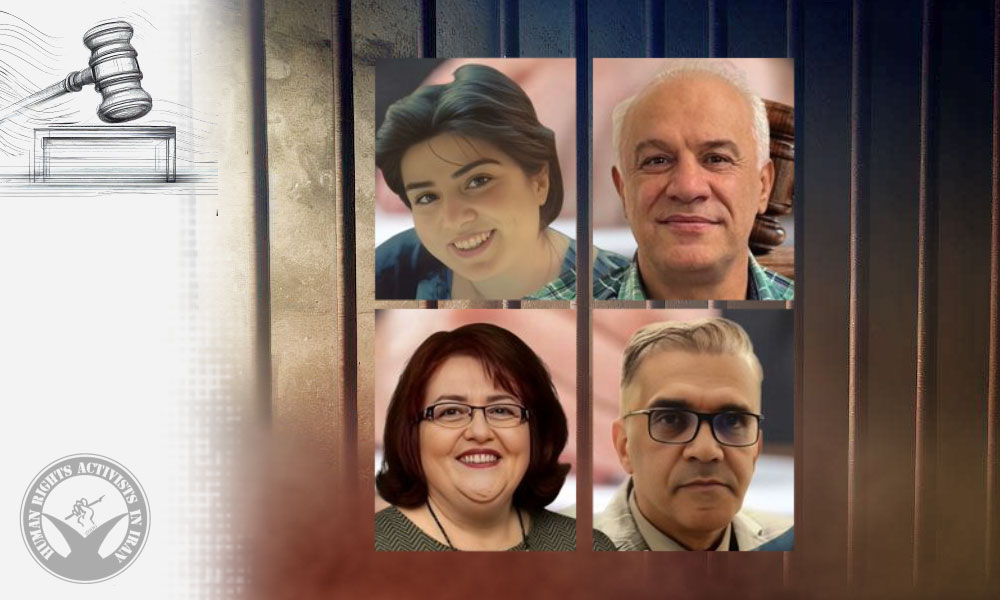
HRANA has learned that political prisoners including Morteza Parvin, Abdolaziz Azimi Ghadim, Mahmoud Ojaghlou, Taher Naghavi, Mehdi Mahmoudian, Abolfazl Ghadiani, Mohammad Bagher Bakhtiar, and Hossein Shanbehzadeh are among those transferred.

A source close to Taher Naghavi reported that he is being held in a hall with at least 120 inmates—despite the space being designed for no more than 40 people—and is not separated from those convicted of non-political offenses.

Additional reports highlight the facility’s inadequate water supply. Inmates have described the available water as too salty to drink. According to a source close to Morteza Parvin, he and Mahmoud Ojaghlou were moved late Monday night without being allowed to bring any of their personal belongings.

Family members have also confirmed these developments. Ahmad Ghadiani and Alireza Bakhtiar, sons of Abolfazl Ghadiani and Mohammad Bagher Bakhtiar, respectively, shared on social media that their fathers had been transferred. Alireza noted that many inmates now sleep on the floor and that only one bottle of mineral water is provided for every four political prisoners.

Fatemeh Alvandi, the mother of Mehdi Mahmoudian, told Emtedad News Agency that the detention conditions are extremely poor. She reported overcrowded quarters, unsanitary facilities, and a lack of basic necessities. According to her, her son and others lacked even food containers upon arrival, and the lack of hygiene products is now threatening inmates’ health.

Abbas Shanbehzadeh confirmed that his brother, Hossein, was also among those moved from Ward 4 of Evin to the Greater Tehran Penitentiary.

UN Special Rapporteur on the situation of human rights in Iran, Mai Sato, has expressed concern about the treatment of these transferred inmates. She also noted receiving reports of arbitrary arrests and expedited trials lacking due process, particularly since the onset of the Israeli strikes.

The June 23 airstrikes struck Evin’s entrance gate and the judiciary building within the prison compound. Several conscripted soldiers were reportedly killed or injured, along with some prison staff and inmate workers who were gardening at the time. Following the attack, Iran’s Prisons Organization confirmed the transfer of Evin inmates to other facilities in the province.

Israel’s Strike on Evin Prison: Damage to Infrastructure, Widespread Transfers, and Mounting Concerns

HRANA News Agency — On June 23, during airstrikes by the Israeli Air Force on Tehran, Evin Prison was directly targeted. The attack took place during family visitation hours, resulting in the deaths and injuries of several administrative staff, conscripted soldiers, and prison personnel. Significant damage was also inflicted on key prison infrastructure, including the administrative building, entrance gate, infirmary, central kitchen, and visitation hall.

According to HRANA, the extent of the destruction has forced the evacuation of the prison. Beyond the immediate casualties and physical destruction, the assault has triggered a humanitarian and psychological crisis for the families of the prisoners. At the time of this report, calls for the immediate release of political prisoners and for transparent information about the fate and whereabouts of those transferred remain unanswered.

Destruction and Damage

Reports from various sources, including eyewitness accounts, indicate widespread destruction in several parts of the prison:
● The entrance gate, the court building, and the prison infirmary were completely destroyed.
● The visitation hall and central kitchen were also destroyed during the attack.
● Windows in Ward 4 and the women’s ward were shattered, and parts of their walls collapsed.
● The prison infirmary sustained serious damage, disrupting medical services.
● According to an official report by Fars News Agency, Dr. Seyed Davood Shirvani Boroujeni, one of the prison’s infirmary doctors, was killed in the attack.

Security Situation and Reactions
Following the attack, a state of emergency was declared at the prison:

● Telephone lines in most wards were cut or limited.
● Visitations and outdoor time for prisoners were suspended.
● The judiciary spokesperson confirmed the attack occurred during visitation and stated that some staff and family members were also casualties.
● Official reports stated that bomb disposal teams successfully neutralized two unexploded missiles in the prison area.

Prisoner Transfers and Family Concerns

In response to the extensive destruction, the Prisons Organization initiated the emergency relocation of inmates to other facilities within Tehran Province, including Greater Tehran Prison and Qarchak Prison in Varamin. According to the organization, the transfers began in the early hours following the strike and have since been completed. However, many families report being left in the dark about the exact whereabouts of their loved ones.

In an open letter, one political prisoner described the ordeal as “the worst day of my life,” adding: “Evin Prison essentially ceased functioning. The longstanding desire of the security apparatus to evacuate Evin was realized through Israeli missiles.” The prisoner also highlighted a more than 24-hour communication blackout with the women’s ward, confirming that inmates from Wards 4 and 8 were transferred to Greater Tehran Prison, while female prisoners were moved to Qarchak. The absence of official documentation and continued lack of contact have fueled severe anxiety and uncertainty among the prisoners’ families.

Doctor’s Death and Official Visit to the Injured

Following the attack, Abbas Masjedi, head of the National Forensic Medicine Organization, visited the wounded. At the same time, it was announced that Dr. Davood Shirvani Boroujeni, a member of the prison’s medical staff, was killed during the attack.

Human Rights Implications

Evin Prison, with its long-standing history of holding political and ideological prisoners, has long been a focus of human rights scrutiny. The direct attack on the facility — especially at a time when many of its inmates were financial offenders or low-risk prisoners — has sparked serious concerns over violations of human rights standards and the laws of war. According to witness accounts, several conscripted soldiers, guards, and even staff family members were killed in the strike. One witness described the scene: “All the conscripts at the gate were completely obliterated… and we, the prisoners and their families, were hugging them.”

Israeli Strike Hits Evin Prison: Facility Damaged, Visits Suspended, Widespread Concern Grows

HRANA News Agency – During today’s Israeli airstrikes on Tehran, Evin Prison was directly targeted. According to received reports, the prison’s main entrance gate and the judiciary building located within its compound were struck. Several conscript soldiers were reportedly killed or injured in the attack. Additionally, some prison staff and several inmates assigned to service duties, who were gardening at the time, were wounded.

HRANA’s reports indicate that windows in various parts of the prison — including Ward 4 — were shattered, though no serious structural damage has been reported so far. In the women’s ward, a section of the ceiling partially collapsed, though the damage is described as minor. The prison’s main infirmary and parts of the visiting hall also sustained damage, though no injuries have yet been reported in these areas.

A brother of a sick inmate told HRANA: “With the infirmary at Evin damaged, my sister cannot receive the critical medical care she requires. Given the lack of transparency from official sources and widespread distrust of the authorities’ assurances, we — the families of sick prisoners — are experiencing heightened anxiety and emotional strain.”

Following the strike, phone lines have been disconnected in most wards and restricted in others. All visits have been suspended until further notice. Outdoor time for inmates has been canceled, and doors to multiple wards have been locked. This report pertains to the prison’s general population; no information is currently available regarding the condition of the security wards, including Ward 209, Ward 2-A, and the Judiciary Protection Unit.

The attack has sparked widespread concern among inmates and their families. Although the majority of Evin’s current population consists of financial prisoners, due to its historical role in Iran’s political landscape, the prison has long remained a focal point for public attention and human rights oversight.

Unresolved Detention: Bijan Kazemi Still Held in Evin Prison

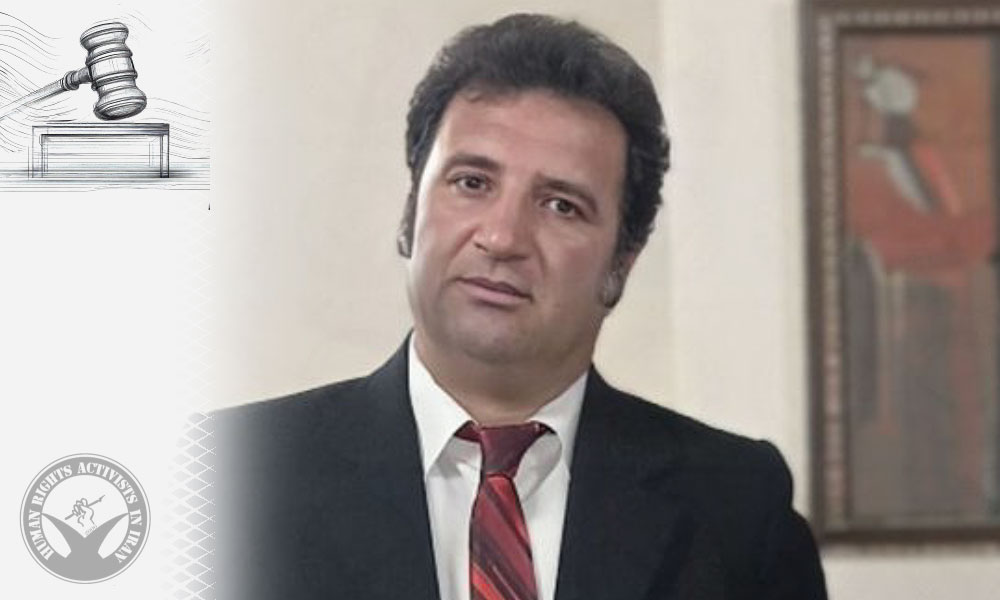
HRANA News Agency – Bijan Kazemi, a resident of Kuhdasht,  remains in limbo in Evin Prison more than four months after his arrest.

Kazemi has been in detention for over four months and remains in an uncertain state. A source informed HRANA that Kazemi has been denied visitation rights and access to his lawyer. No legal proceedings have taken place regarding his case thus far.

Bijan Kazemi was transferred to the Ministry of Intelligence’s detention facility, known as Ward 209 of Evin Prison, on January 22, 2025. He was initially arrested by Intelligence Ministry agents in Kuhdasht, Lorestan province, on January 19, 2025.

As of the time of this report, the reasons for his arrest and the charges against him remain unknown.

Kazemi has previously faced legal action due to his activism.

Businessman Saeed Mohammadi Doraki Held in Legal Limbo in Evin Prison

HRANA News Agency – Saeed Mohammadi Doraki, a 61-year-old businessman from Isfahan, remains in a state of legal limbo in Evin Prison more than a year after his arrest.

A source close to his family told HRANA: “Mr. Doraki has been held in Evin Prison for over a year without any clear judicial process. In protest of this indefinite detention, he is currently on a hunger strike.”

Doraki was arrested on April 21, 2024, upon arrival at Tehran’s Imam Khomeini International Airport after returning to Iran.

It is noteworthy that he had previously written a letter from prison claiming to offer solutions for improving Iran’s economic and social conditions. Some close to him believe these activities may have contributed to the continuation of his detention.

Saeed Mohammadi Doraki, a businessman originally from Isfahan, had been residing in Turkey prior to his arrest.

Subscribe to Our Newsletter

Now is definitely not the time to stop reading!

Death Row Inmate Aydin Shari’atmadar Killed During Escape Attempt

HRANA – Aydin Shari’atmadar, a death row prisoner held for nearly two decades in Ghezel Hesar Prison in Karaj, was fatally shot by police on Saturday, June 7, during an attempted escape from Imam Ali Hospital.

According to the HRANA, Shari’atmadar had been transferred to the hospital due to internal bleeding. While hospitalized, he reportedly overpowered the accompanying officers with the help of armed individuals believed to be his relatives and attempted to flee. Police opened fire after issuing a warning, killing him at the scene.

News of Shari’atmadar’s death sparked protests among inmates at Ghezel Hesar. Dozens of prisoners reportedly chanted slogans such as “Freedom or death,” and for several hours, they prevented the prison yard gates from being closed.

The protest prompted a heightened security presence inside the facility. Unconfirmed reports also suggest limited clashes between inmates and prison guards, though no official statements have been released regarding the incident.

Ongoing Detention of 19 “Yamani” Followers in Mashhad’s Vakilabad Prison

HRANA News Agency – Nineteen individuals affiliated with the “Yamani” religious movement, remain in legal limbo in Vakilabad Prison in Mashhad, one week after their arrest.

These detainees are Amir Zorami, Amin Akbari, Reza Ghiasi, Amir Zohan, Seyed Yahya Tarrahomi, Hamed Nejad-Nik, Emad Eftetahi, Alireza Salim Kaviani, Ghasem Hatami, Seyed Ali Hosseini, Sajjad Rezvan, Mohammad Hossein Nazarnajhad, Mostafa Tavana, Mohammad Kazem Fathi, and five others.

Based on information received by HRANA, these individuals were arrested by IRGC forces while attending a religious gathering.

As of the time of this report, no information has been released regarding the charges brought against these citizens.

Every year in Iran, individuals are arrested merely for claiming a connection to the Shi’a messianic figure, the Hidden Imam. The “Yemeni” movement, led by Ahmad al-Hasan Yamani, operates based on messianic claims related to Mahdism.

Iran’s security apparatus—particularly the Ministry of Intelligence—maintains dedicated divisions tasked with confronting religions, spiritual groups, and ideological-religious communities that do not align with the state’s official ideology.

Parivash Moslemi on Hunger Strike in Evin Prison

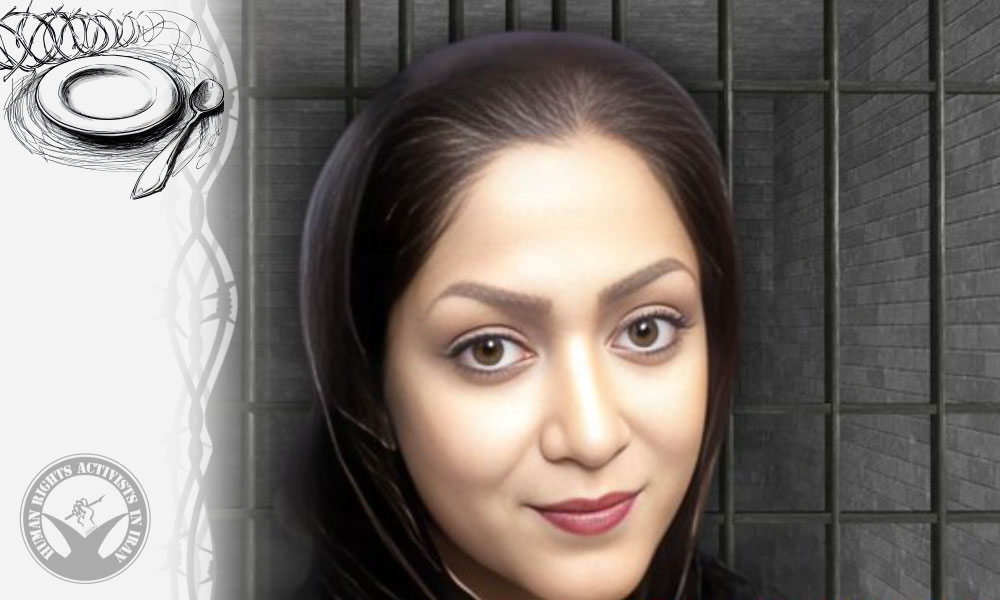
HRANA News Agency – Parivash Moslemi, a political prisoner held in Evin Prison, has been on a hunger strike since Saturday, June 7, in protest against the opening of a new judicial case against her.

Based on information received by HRANA, Moslemi began her hunger strike on Saturday, June 7. The protest is in response to the opening of a new case against her, in which she is charged with “spreading falsehoods.” This charge relates to a time before she had reported to prison to serve her sentence.

A source close to her family confirmed the news to HRANA and stated: “Ms. Moslemi was initially promised conditional release, but was later informed of a new case filed against her. She began the hunger strike in protest against this abrupt change in legal proceedings and the authorities’ broken promise.”

It is worth noting that Moslemi, who suffers from multiple health conditions, had previously gone on hunger strike to protest the lack of medical attention for her condition.

Moslemi had previously been arrested by security forces in April 2024 in the city of Noor and was released three days later from a security detention facility in the city. She was re-arrested on July 7, 2024, after reporting to the Evin Prosecutor’s Office and was transferred to the women’s ward of Evin Prison.

Moslemi was sentenced by the Tehran Revolutionary Court on August 20, 2024, to a total of three years and eight months in prison. She received two years for “assembly and collusion,” one year for “insulting the Supreme Leader,” and eight months for “propaganda against the regime.”

She was also arrested in September 2023, during the anniversary of Mahsa Amini’s death, by security forces and released a month later from Qarchak Varamin Prison after posting bail.

HRANA’s data from the past decade shows that during this ten-year period, over 2,050 political prisoners and prisoners of conscience in Iran prisons have been forced to go on hunger strike in protest of various abuses—including prolonged detention, being held in legal limbo, unfair trials, poor prison conditions, and being held in solitary confinement or alongside inmates convicted of violent crimes.

Family Concern Grows Over Incommunicado Detention of Farhad Kadkhoda-Ghaderi

HRANA News Agency – Farhad Kadkhoda-Ghaderi, a resident of Mahabad, was arrested on Saturday, May 31, by intelligence agents of the Islamic Revolutionary Guard Corps (IRGC) and taken to an undisclosed location. His continued incommunicado detention has raised serious concerns among his family and loved ones.

The arrest was carried out violently and without a judicial warrant. Despite five days passing since his detention, his family’s efforts to obtain information about his condition and whereabouts have been unsuccessful, heightening their concerns.

As of the time of this report, the reasons for Kadkhoda-Ghaderi’s arrest and any charges against him remain unknown.

Farhad Kadkhoda-Ghadri is a resident of Sarchenar village, located in the Mahabad region.

Arbitrary arrests, transferring detainees to undisclosed locations, and leaving families in the dark about the fate of their loved ones are routine practices of the Iranian regime’s security agencies, such as the Ministry of Intelligence and the IRGC Intelligence Unit. This pattern of behavior stands in clear violation of the United Nations Standard Minimum Rules for the Treatment of Prisoners, known as the Nelson Mandela Rules.

Supreme Court Upholds Death Sentence of Political Prisoner Azad Shojaei

HRANA News Agency – The Supreme Court of Iran has upheld the death sentence of Azad Shojaei, a political prisoner currently held in Urmia Prison. Shojaei, a resident of Sardasht, was initially convicted by Branch 3 of the Urmia Revolutionary Court on charges of “spying for Israel” and “transferring equipment used in the assassination of Mohsen Fakhrizadeh.”

According to information received by HRANA, the ruling was recently confirmed by Branch 39 of the Supreme Court.

The case dates back to early 2024, when Shojaei was arrested along with two others, Edris Ali and Rasoul Ahmad Mohammad, by security forces and transferred to Urmia Prison. In November of the previous year, a judiciary spokesperson announced that all three had been sentenced to death.

Judiciary official Asghar Jahangir claimed that the men had transported equipment used in Fakhrizadeh’s assassination “under the guise of alcohol smuggling” and also accused them of espionage.

Mohsen Fakhrizadeh, a senior figure in Iran’s nuclear program, was killed in November 2020 in an ambush involving a car explosion and gunfire between his security team and unknown assailants.