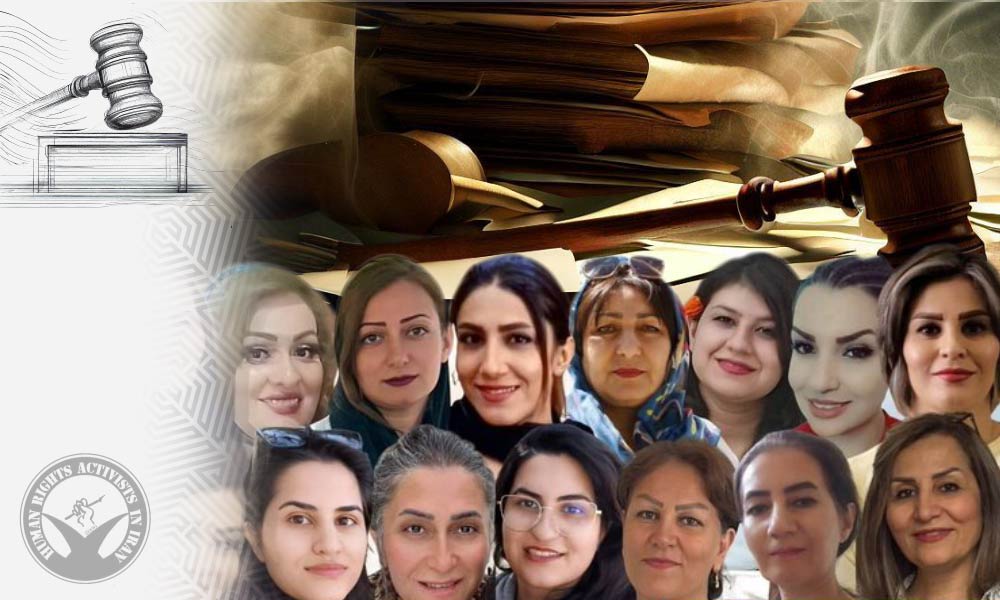
Baha’i Educator Keyvan Rahimian’s Nine-Year Sentence Sustained on Appeal

The Appellate Court of Tehran Province has maintained a nine-year sentence and additional penalties for Baha’i educator Keyvan Rahimian.

In a verdict issued by Branch 36 of the Appellate Court of Tehran Province, presided over by Judge Abbasali Hoozan, Rahimian was sentenced to five years for “educational activities and propagating against the Islamic Sharia” and four years for “assembly and collusion against national security.” Alongside the prison term, Rahimian has been stripped of social rights and fined.

Per Article 134 of the Islamic Penal Code, five years of the prison term will be enforced.

Rahimian was apprehended by security forces in Tehran on July 18, 2023, and subsequently detained in Evin prison. His detention has been extended for four consecutive months, with Rahimian granted leave from November 25 to 29, 2023, to attend his mother’s funeral.

This is not Rahimian’s first encounter with legal repercussions for his activism. In August 2017, he was released from Rajai Shahr Prison after serving a five-year sentence. The current sentence raises concerns about the continued suppression of Baha’i individuals involved in educational and community activities.

Baha’is are subjected to violations of their religious rights, comprising 82% of reports on infringements against religious minorities, according to HRA’s 2023 annual report.

The Baha’i faith is not recognized as a legitimate religion by Iranian authorities, leading to systematic and longstanding violations of the rights of Baha’is in the country. This includes the denial of their fundamental right to practice their religion, which constitutes a clear breach of both Article 18 of the Universal Declaration of Human Rights and Article 18 of the International Covenant on Civil and Political Rights. The United Nations covenant holds that every person has the right to freedom of religion, freedom of converting religion, as well as freedom of expression, individually or collectively; openly or secretly.
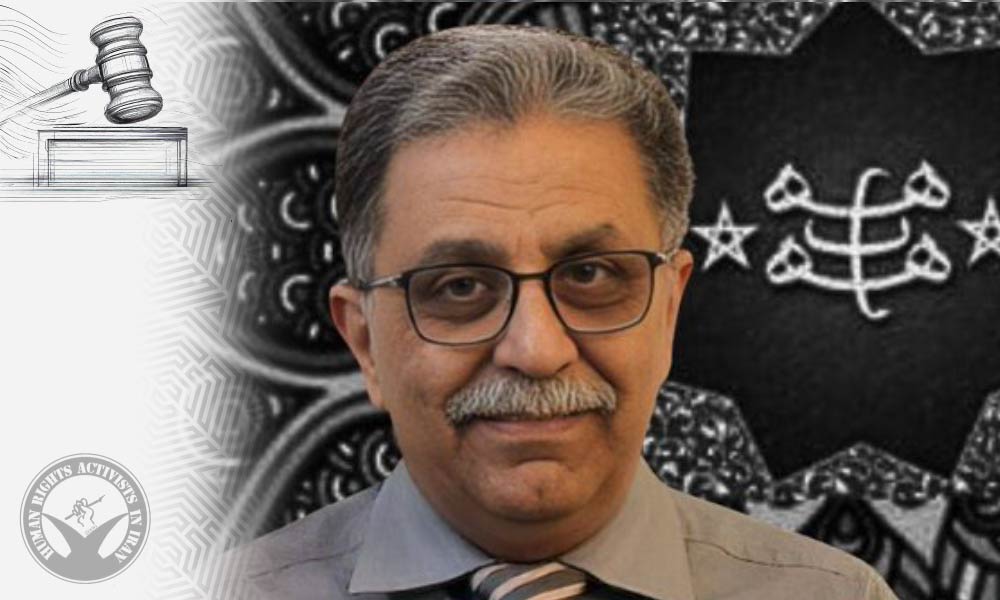
 

Latest Developments on Baha’i Citizen Mina Karami’s Legal Situation

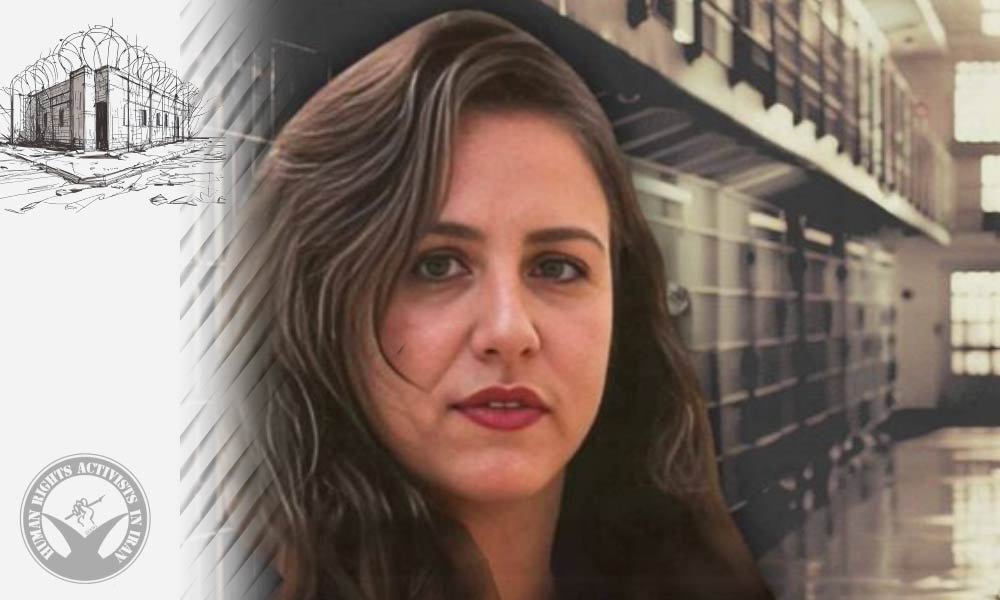
Baha’i citizen Mina Karami continues to serve her five-year prison term in Adelabad prison after the Appellate Court of Fars Province, influenced by the Ministry of Intelligence, recently rejected her request to complete her sentence outside prison with a monitoring ankle device.

A source close to Karami’s family has confirmed to HRANA the repeated denials of Karami’s release requests. Additionally, the Supreme Court rejected her plea for a retrial.

On April 13, 2021, security forces raided Karami’s residence, conducted a search, and subsequently summoned and interrogated her at the Ministry of Intelligence detention facility known as House No. 100. She was later released on bail.

In August-September 2022, the Revolutionary Court of Shiraz, presided over by Seyed-Mahmood Sadati, found Karami guilty of “engaging in education and propaganda activities against Islamic Sharia,” resulting in a five-year imprisonment, a fine, social restrictions for ten years, and a two-year ban from leaving the country. This verdict was upheld on appeal.

On February 13, 2024, security forces arrested her in Shiraz and transferred her to Adelabad Prison to commence serving her sentence.

Baha’i Citizen Hourieh Sadat Mohseni Receives Four-Year Prison Sentence

The Court of Appeals in Razavi Khorasan Province has recently sentenced Hourieh Sadat Mohseni, a Baha’i resident of Mashhad, to four years in prison.

A reliable source has confirmed this development to HRANA, revealing that Mohseni received three years for “membership in groups and communities to act against national security” and an additional year for “spreading propaganda against the regime.”

According to Article 134 of the Islamic Penal Code, Mohseni is set to serve three years in prison for the first charge.

The initial verdict was issued by the Revolutionary Court of Mashhad, led by Hadi Mansouri, in December 2023. The source reports that Mohseni’s private lawyer was not accepted by the Revolutionary Court, and the verdict was swiftly issued upon taking over the case. Earlier, her lawyer, Mohammad-Hadi Erfainian Kaseb, had conveyed the court’s rejection of his legal representation.

Mohseni was indicted on November 11, 2023, and was subsequently released on bail. This is not the first instance of arrest and conviction she has faced.

Baha’is are subjected to violations of their religious rights, comprising 82% of reports on infringements against religious minorities, according to HRA’s 2023 annual report.

The Baha’i faith is not recognized as a legitimate religion by Iranian authorities, leading to systematic and longstanding violations of the rights of Baha’is in the country. This includes the denial of their fundamental right to practice their religion, which constitutes a clear breach of both Article 18 of the Universal Declaration of Human Rights and Article 18 of the International Covenant on Civil and Political Rights. The United Nations covenant holds that every person has the right to freedom of religion, freedom of converting religion, as well as freedom of expression, individually or collectively; openly or secretly.
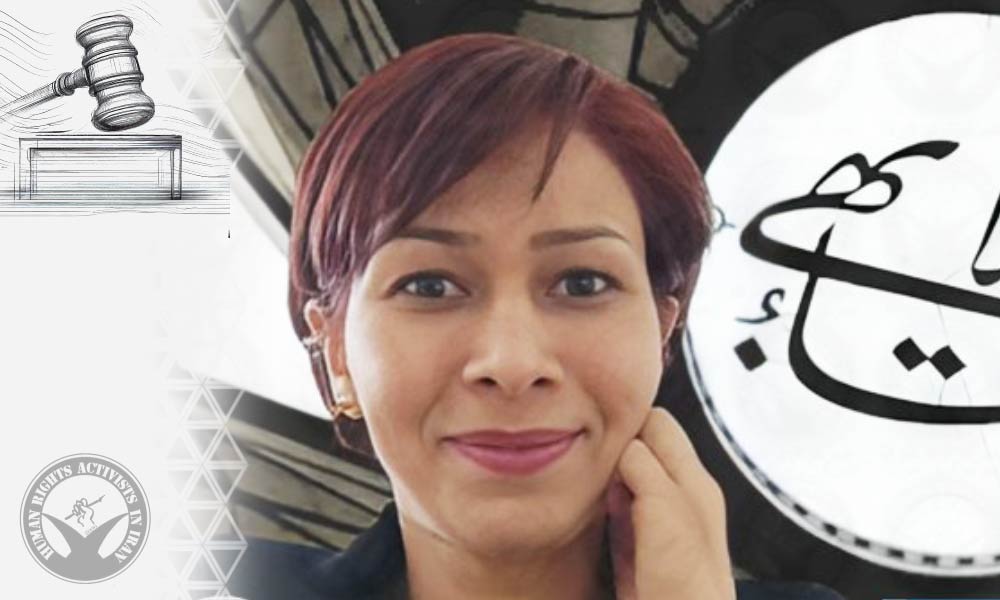
Government Seizes Baha’i Lands in Sari County

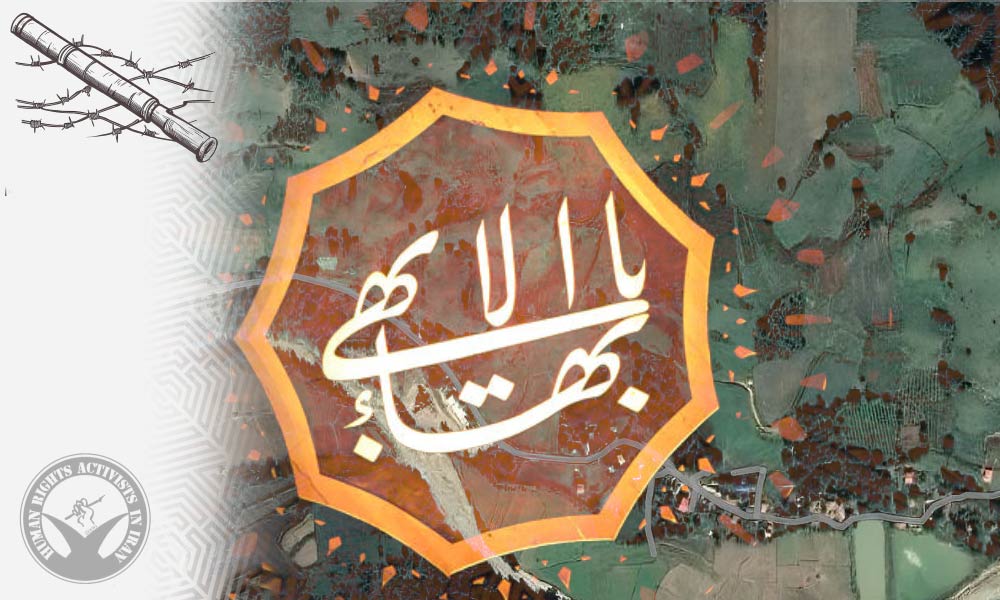
On January 1, 2024, police agents and forest rangers carried out the confiscation of approximately 60 hectares of Baha’i-owned land in the Ahmadabad Village, adjacent to Sari in Mazandaran Province.

Acting on the orders of the Sari Prosecutor, the agents blocked access to the village and took possession of the lands. Ahmadabad Village is predominantly inhabited by Baha’is, and according to a resident who spoke to HRANA, the police have cordoned off the confiscated lands with barbed wire. Of these lands, 25 are already under wheat cultivation, a practice maintained by Baha’is for decades.

In an interview with IRNA, the Representative of the Mazandaran governor attempted to justify the seizure, citing unauthorized use and construction on the lands. However, HRANA’s sources dispute this claim, asserting that there has been no illegal construction, and the landowners have been cultivating these plots since 1947.

A villager shared with HRANA that a few years ago, a dam construction plan near the village was approved, and the landowners were supposed to receive alternative plots in exchange for the lands submerged by the dam construction. Following this recent confiscation, it appears they will receive no compensation.

This incident is part of a pattern of the government confiscating Baha’i lands and properties. In a similar occurrence in 2021 and 2022, the government seized cultivating lands belonging to Baha’is in Ivel, Roshan Kouh, Sari County.

Four Baha’i Citizens Sentenced Each to Five Years in Prison

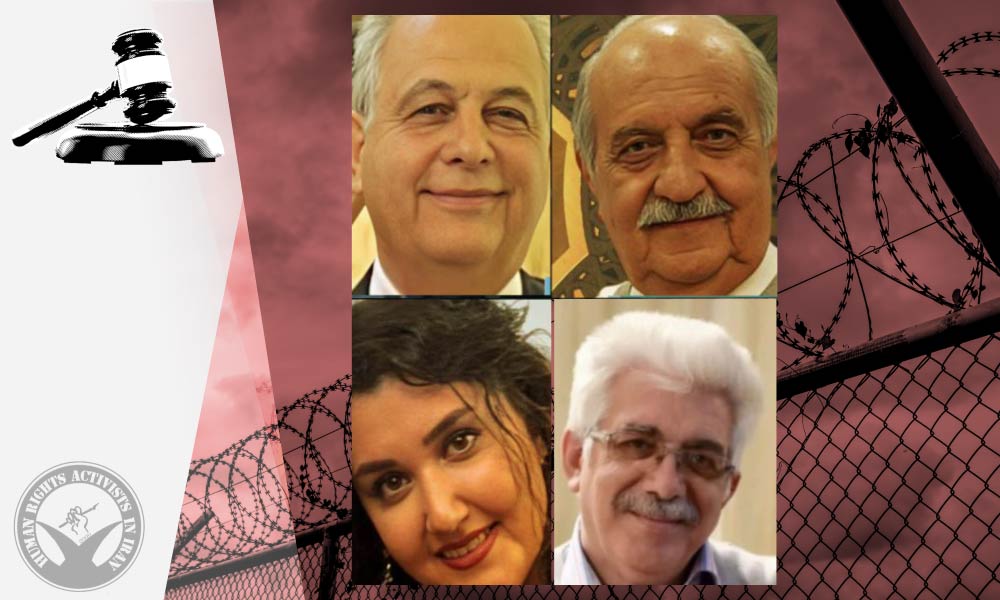
In a ruling by the Tehran Revolutionary Court, Shadi Shahidzadeh, Mansour Amini, Valiollah Ghadamian, and Ataollah Zafar, four Baha’i citizens, have each been sentenced to five years in prison.

Judge Iman Afshar, presiding over the court, issued these sentences based on the charge of “membership in illegal groups to disrupt national security.” The court session took place on May 31, 2023.
According to a reliable source close to their families, who spoke to HRANA, despite starting their trial, they are still under interrogation as they are jailed in Ward 209 of Evin Prison.

These Bahais were arrested by security forces on May 1, 2023, and transferred to Ward 209 of Evin Prison.

According to HRANA annual report, from the total human rights reports regarding the violation of religious minorities’ rights, 64.63% belonged to the violation of the rights of Baha’is.

The deprivation of the freedom to practice their religion is a breach of Article 18 of the Universal Declaration of Human Rights and Article 18 of the International Covenant on Civil and Political Rights. The United Nations covenant holds that every person has the right to freedom of religion, freedom of converting religion, as well as freedom of expression, individually or collectively; openly or secretly.
Subscribe to Our Newsletter

Now is definitely not the time to stop reading!

Baha’i Citizen Sara Sabet Rasekh Receives Eight-Year Prison Sentence

The Court of Appeals in Isfahan Province has handed down a verdict, sentencing Baha’i citizen Sara Sabet Rasekh to eight years in prison. Since February 7, 2023, Sabet has been serving her previous one-year sentence outside of prison with curfew tags.

The recent ruling states that Sabet will serve five years for charges of “blasphemy,” two years for “insulting the former and current Supreme Leader of Iran,” and one year for “propaganda against the regime.” Pursuant to Article 134 of the Islamic Penal Code, she will serve five years in prison for the first charge.
Sabet was arrested in November-December 2021 by security forces at his residence and released on bail after about one month.

Sabet was originally arrested in November-December 2021 at her residence by security forces. She was later released on bail after approximately one month.

In March-April 2022, the Isfahan Revolutionary Court initially sentenced Sabet to two years for “insulting the former and current Supreme Leader of Iran” and one year for “propaganda against the regime on the internet.” Subsequently, she received an additional one-year sentence for “insulting regime authorities and officials.” Currently, she is serving the latter sentence outside of prison under curfew, monitored by an electronic tag.

According to HRANA annual report, from the total human rights reports regarding the violation of religious minorities’ rights, 64.63% belonged to the violation of the rights of Baha’is.

According to unofficial sources, it is estimated that more than 300,000 Baha’is live in Iran, but the Iranian Constitution recognizes only Islam as the official religion, in addition to Christianity, Judaism, and Zoroastrianism. Bahai faith is not considered legitimate by the authorities, and the rights of Baha’is in Iran have been systematically violated for years.

The deprivation of the freedom to practice their religion is a breach of Article 18 of the Universal Declaration of Human Rights and Article 18 of the International Covenant on Civil and Political Rights. The United Nations covenant holds that every person has the right to freedom of religion, freedom of converting religion, as well as freedom of expression, individually or collectively; openly or secretly.


Baha’i Enayatollah Naeimi Receives 15-Year Prison Sentence

Enayatollah Naeimi, a Baha’i citizen, has been sentenced to 15 years in prison, with 10 years to be enforced, by the Isfahan Revolutionary Court. He was also fined and subjected to social deprivation.

The verdict was issued by Judge Morteza Barai, who found Naeimi guilty of “forming groups to act against national security” for which he received 10 years, and “propaganda against the regime,” for which he received five years. The evidence presented for these charges included Naeimi’s involvement with the Baha’i group “Yaran e Iran” or “Friends of Iran,” as well as his association with Baha’i communities in Israel

Under Article 134 of the Islamic Penal Code, if the verdict is upheld on appeal, Naeimi will serve 10 years in prison for the first charge.
Naeimi was arrested by security forces on September 28, 2022, and his house, workplace, and garden in the Isfahan suburbs were searched. He was later released on bail from Isfahan Prison but now faces a lengthy prison sentence.

According to HRANA annual report, from the total human rights reports regarding the violation of religious minorities’ rights, 64.63% belonged to the violation of the rights of Baha’is.

According to unofficial sources, it is estimated that more than 300,000 Baha’is live in Iran, but the Iranian Constitution recognizes only Islam as the official religion, in addition to Christianity, Judaism, and Zoroastrianism. Baha’i faith is not considered legitimate by the authorities, and the rights of Baha’is in Iran have been systematically violated for years.

The deprivation of the freedom to practice their religion is a breach of Article 18 of the Universal Declaration of Human Rights and Article 18 of the International Covenant on Civil and Political Rights. The United Nations covenant holds that every person has the right to freedom of religion, freedom of converting religion, as well as freedom of expression, individually or collectively; openly or secretly.
 

Three Baha’i Citizens Arrested

HRANA, Human Rights Activists news agency–On May 1, 2023, three Baha’i citizens, Ataollah Zafar, Shadi Shahidzadeh, and Mansour Amini, were separately arrested and taken to undisclosed locations.

According to an informed source, this morning, May 1, three intelligence agents raided Zafar’s house and arrested him. During the raid, the agents searched his house and confiscated some of his belongings.

Zafar, who is 78 years old, had previously served a one-year sentence starting in August 2022. He was released on bail on October 29, 2022, and his case was closed in March 2023 when he received a pardon.

Shahidzadeh was also arrested at her house in Tehran on the same day. In the days leading up to her arrest, she had been summoned by judicial authorities via SMS following her frequent inquiries about obtaining a burial permit for her grandmother.

Amini was arrested in his residence, and agents searched his house during the arrest.

According to HRANA annual report, from the total human rights reports regarding the violation of religious minorities’ rights, 64.63% belonged to the violation of the rights of Baha’is. The Baha’i community in Iran has been subjected to various forms of discrimination and persecution for decades. The Iranian government has imposed severe restrictions on Baha’is’ religious practices, education, employment, and civil rights.


Two Baha’i Citizens Arrested

HRANA, Human Rights Activists news agency– Two Baha’i citizens, Afif Naeimi (Naimi) and Valliollah Ghadamian, were arrested by security forces on April 29 and May 1, 2023, respectively.

According to a source close to Naimi’s family, on April 29, Naeimi and several of his relatives were gathered in a garden near Karaj when security forces raided the location and arrested Naeimi. He was then taken to Rajai Shahr Prison.

Naeimi is a former member of a now-disbanded Baha’i group known as the “Yaran e Iran” or “Friends of Iran” that addressed the spiritual and social needs of the Baha’i community.

n 2018, Naeimi was released from Ghezel Hesar prison after serving approximately 10 years in prison. However, on July 31, 2022, he was arrested again, and the Karaj Revolutionary Court sentenced him to seven years in prison in a legal case along with twelve other Baha’i co-defendants.

On May 1, 2023, Valliollah Ghadamin was also arrested by security forces and taken to an undisclosed location.

On May 1, 2023, security forces also arrested Valliollah Ghadamian at his residence in Tehran and took him to an undisclosed location. Ghadamian is a member of a Baha’i association that maintains a Baha’i cemetery in Tehran known as Golestan-e-Javid. In recent days, regime officials have refused to issue burial permits to Baha’is in this cemetery.
The reason for these arrests is currently unknown.

According to HRANA annual report, from the total human rights reports regarding the violation of religious minorities’ rights, 64.63% belonged to the violation of the rights of Baha’is. The Baha’i community in Iran has been subjected to various forms of discrimination and persecution for decades. The Iranian government has imposed severe restrictions on Baha’is’ religious practices, education, employment, and civil rights.


Baha’i Bardia Basiri Arrested

On December 17, 2022, security forces arrested Baha’i citizen Bardia Basiri at his home in Tehran. His wife, Ayda Rasti, is also detained. The intelligence agents searched his house and confiscated some of his belongings.

According to HRANA, the news agency of Human Rights Activists, on December 17, 2022, Baha’i Bardia Basiri was arrested by security forces in Tehran.

An informed source told HRANA that Aida Rasti got a severe nervous attack and was hospitalized when she found out about his husband’s arrest.

Earlier, Basiri had been interrogated following his wife’s arrest.

Ayda Rasti is still in detention in Qarchak Prison after 81 days. During her detention, she suffered from nervous problems and lost weight.