HRANA – Iranian authorities have launched a new wave of restrictions targeting social media users, online businesses, and commercial establishments across the country in recent weeks. The crackdown has included the blocking of social media pages, the mass removal of online content, the forced publication of written pledges, summonses and judicial action against account administrators, the sealing of businesses, and restrictions on online commercial activity.
A review of information collected by HRANA, including interviews with business owners and social media page administrators, indicates that these measures have affected a broad cross-section of individuals and businesses rather than any single group or sector. Those targeted include bloggers, content creators, media outlets, athletes, artists, fashion and beauty professionals, online businesses, cafés, and other commercial establishments. The similarities in the methods of enforcement, the repeated use of comparable allegations and official terminology, and the involvement of law enforcement, judicial, and security agencies across multiple cases suggest a broader pattern of enforcement rather than a series of isolated or unrelated actions.
A significant portion of these measures has been linked to compulsory hijab regulations, the presence of women with optional hijab, and vague concepts such as “norm-breaking,” “content contrary to public morality,” and “failure to observe Islamic standards.” The simultaneous pressure on online activities, businesses, and public gathering places points to a renewed intensification of mechanisms of social control, a trend that has affected both cyberspace and the public sphere at the same time.
This report examines documented incidents that occurred between July 11 and August 1, 2026. The information was compiled through monitoring social media platforms, reviewing notices posted on blocked or restricted pages, examining statements issued by judicial and law enforcement authorities, reviewing remarks by government officials, collecting reports from business owners and media sources, as well as conducting numerous interviews with page administrators.
Where possible, HRANA has identified duplicate cases and avoided counting them more than once. Only pages whose names or identities could be verified and for which evidence indicated that the restrictions resulted from intervention by government authorities have been included in the documented statistics.
The figures for blocked pages, published pledges, and sealed businesses overlap in some instances. For example, the social media page of a business may have been blocked, its administrator compelled to publish a written pledge, and the business itself sealed. Therefore, these totals should not be interpreted as representing the number of individuals, legal cases, or independent enforcement actions.
Aggregate reports in which the names of pages or specific details of the measures were not disclosed are listed separately and have not been included in the statistics for individually documented cases. Furthermore, because of deleted content, deactivated accounts, and restricted access to official information, the figures presented represent only the minimum number of identifiable cases and do not necessarily encompass all enforcement actions carried out during this period.
Government authorities have justified these actions using allegations such as “disturbing public opinion,” “norm-breaking,” “publishing content contrary to public morality,” “criminal activity,” and “insulting religious sanctities.” However, an examination of the documented incidents suggests that they cannot all be regarded as isolated and unrelated measures. The diversity of the targeted groups, the broad geographic scope, the similarities in enforcement methods, and the repeated use of common language in official statements, page-blocking notices, and written pledges all point to the emergence, or renewed intensification, of a coordinated pattern of enforcement targeting online activity, businesses, and public spaces.
In some respects, particularly the use of judicial and law enforcement mechanisms to impose restrictions on dress, lifestyle, and cultural and social activities, this pattern is reminiscent of the social control policies implemented in the years preceding the “Woman, Life, Freedom” protests. However, in the absence of any publicly available directive or document indicating the existence of a centralized, nationwide decision, it cannot be stated with certainty that all of these measures are part of a single coordinated policy.
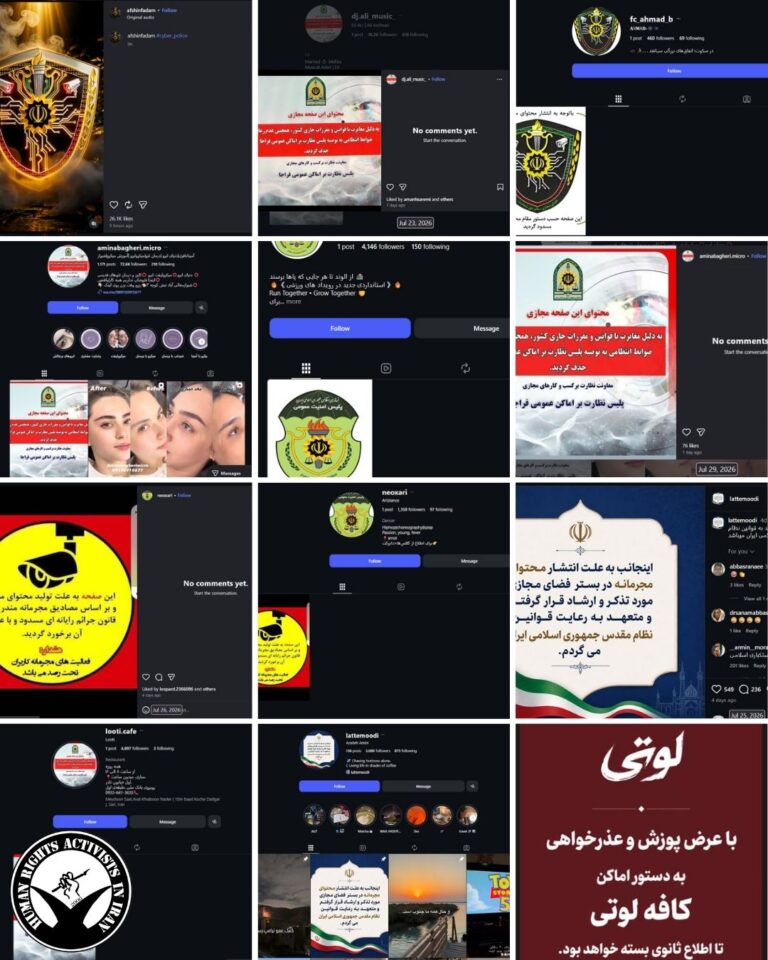
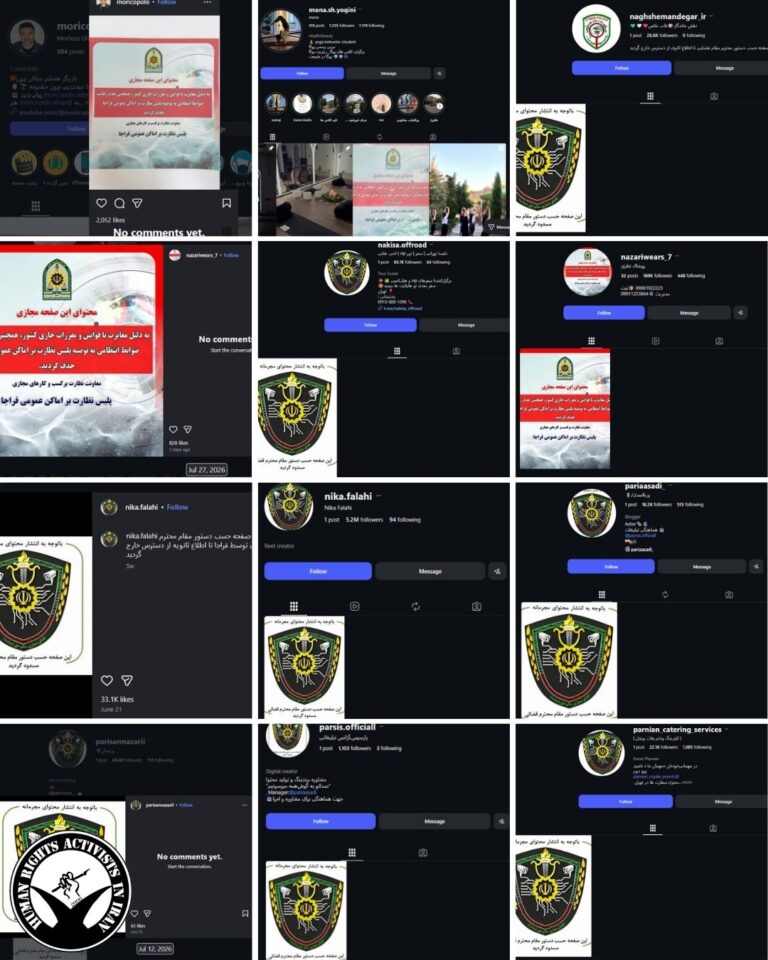
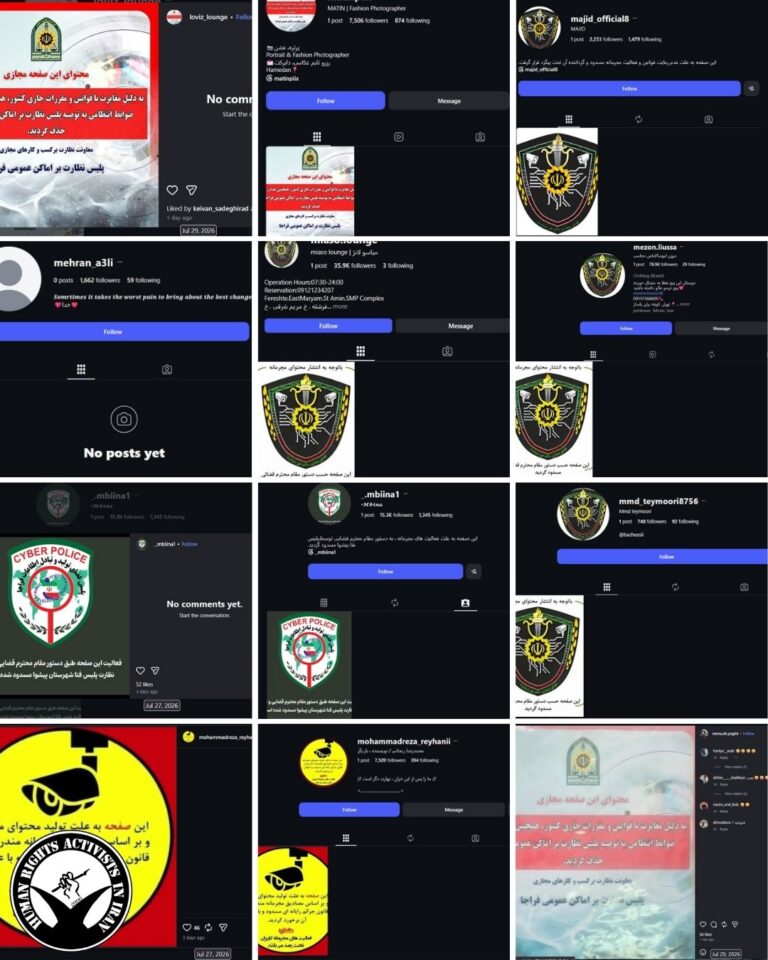
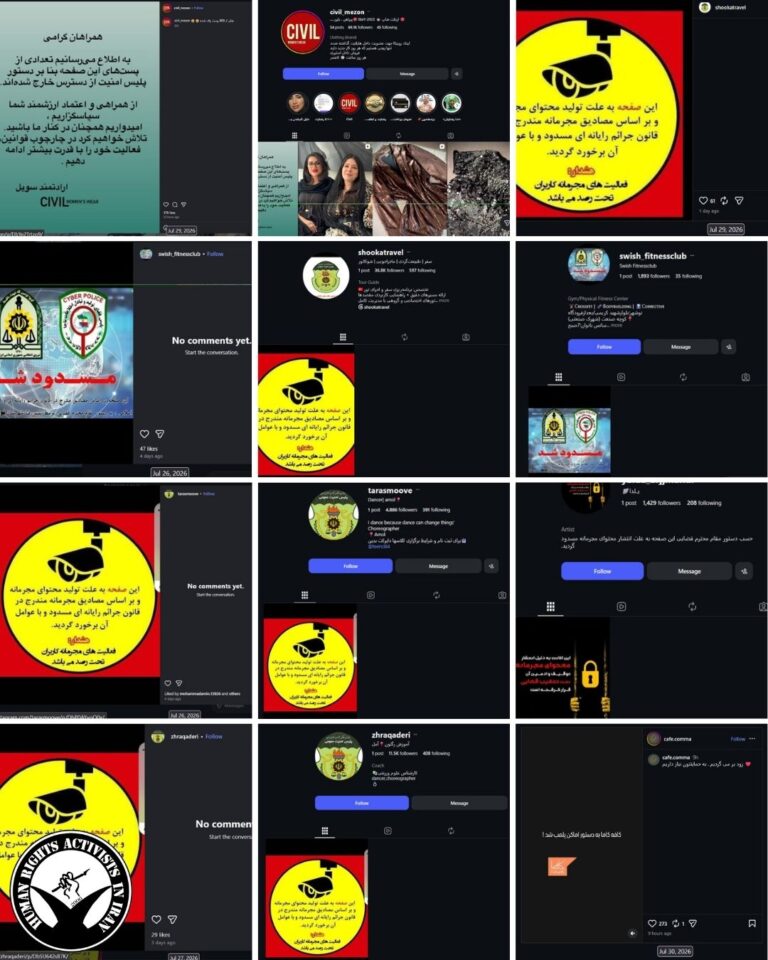
One of the defining features of this wave has been the expansion of enforcement beyond political and media activists. Bloggers, content creators, online businesses, travel agencies, figures in the fashion and beauty industry, sports coaches, commercial establishments, and pages associated with cultural and commercial activities have also faced restrictions. HRANA’s review of the collected information indicates that, in recent weeks alone, at least 72 high-profile social media pages or accounts have been blocked, seized, or taken offline.
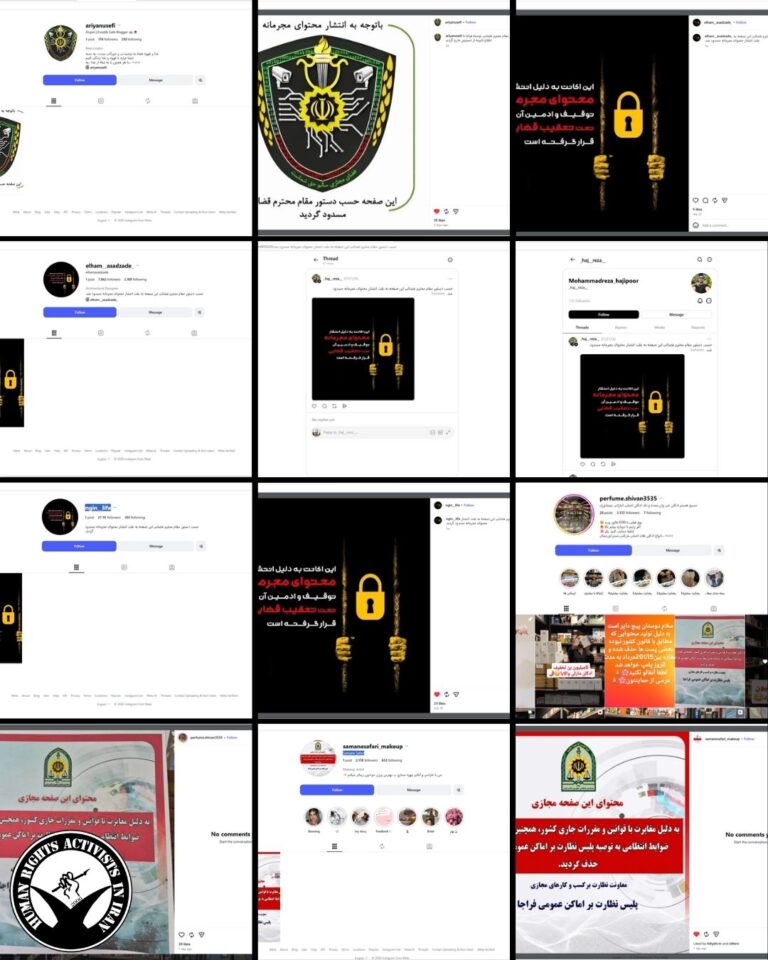
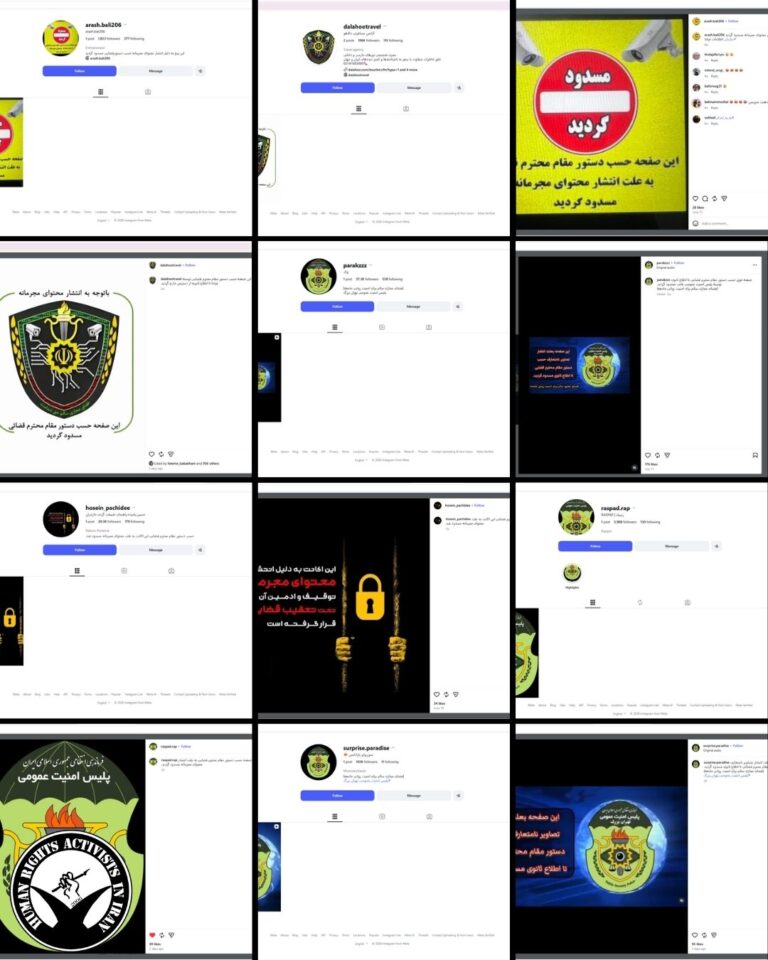
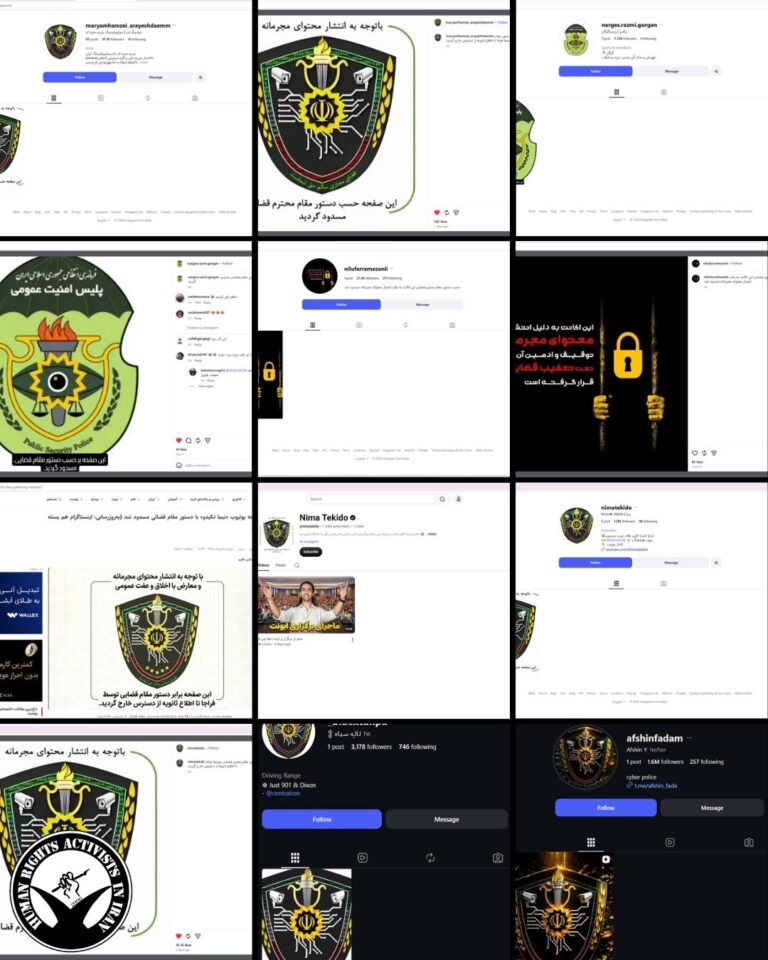
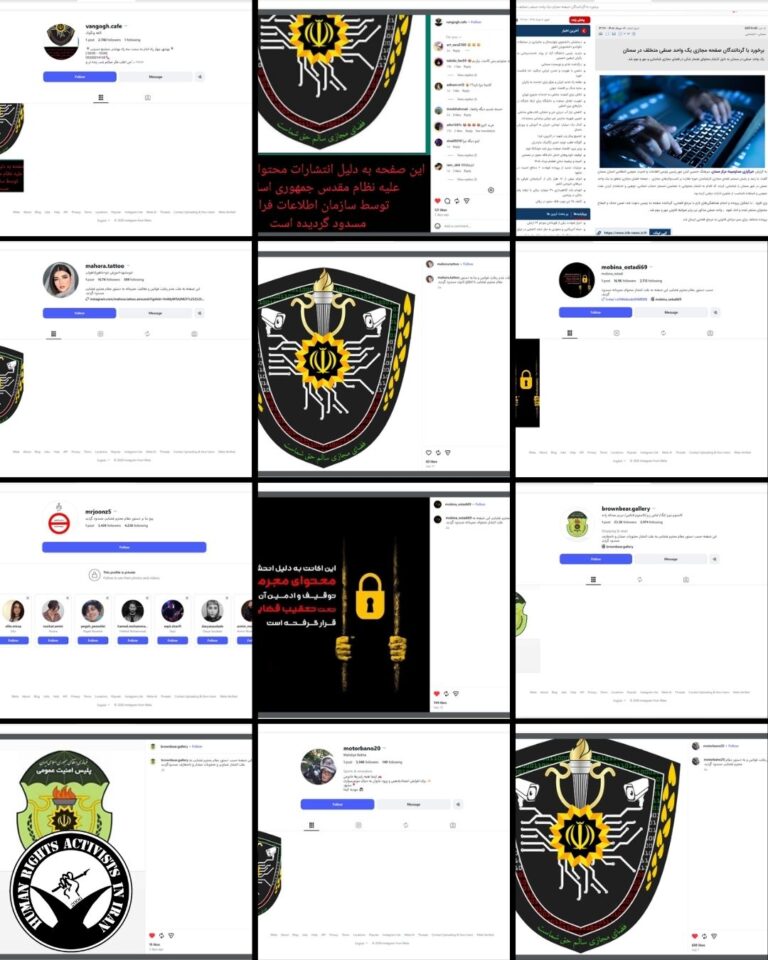
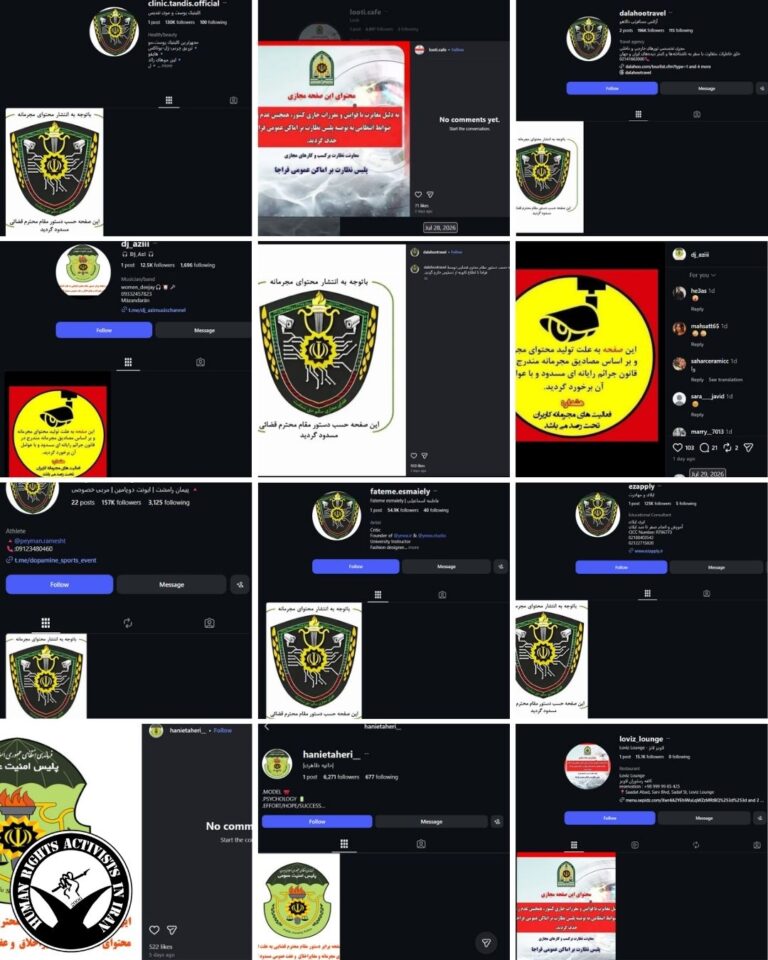
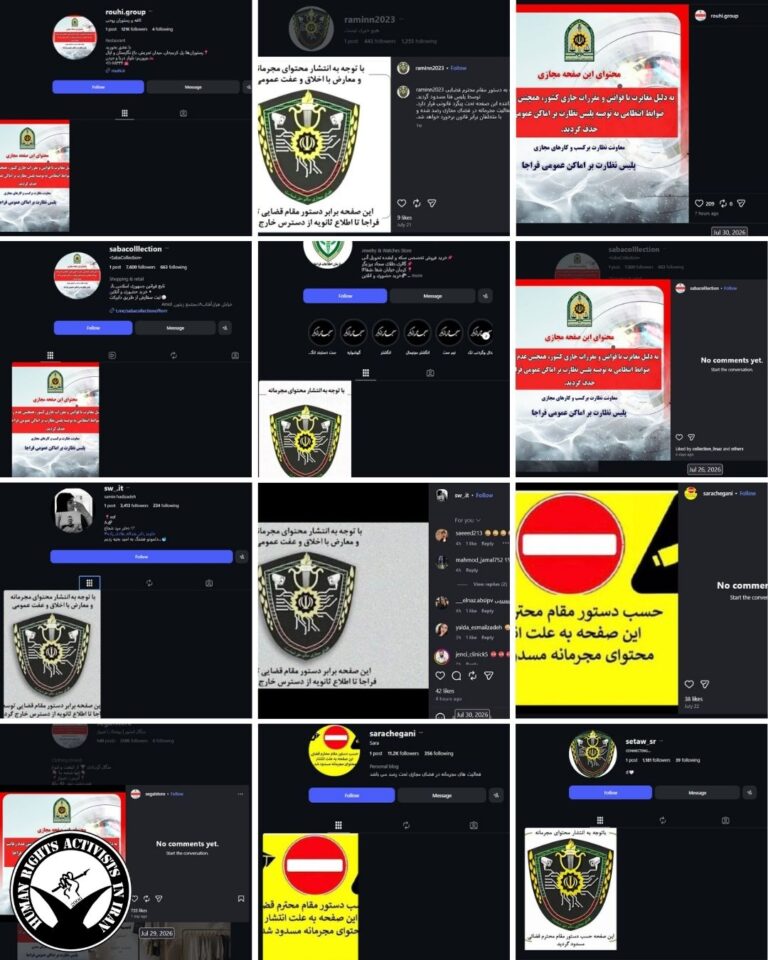
In many cases, previously published content was removed and replaced with nearly identical notices stating that the page had been blocked by order of a judicial authority or alleging the publication of “criminal content,” “failure to comply with the law,” or “content contrary to public morality and decency.” In addition, at least 21 pages, following warnings or intervention by law enforcement and judicial authorities, were compelled to publish written pledges committing to comply with regulations and refrain from repeating their previous activities. During the same period, at least 23 businesses were sealed in cities across the country.
Because, in some cases, page blocking, content removal, the extraction of written pledges, and the sealing of business premises occurred simultaneously, these figures represent the number of documented enforcement measures rather than the number of separate cases or individuals. The repeated use of similar methods, including content removal, page blocking, and the compulsory publication of written pledges, indicates a coordinated pattern of enforcement targeting a broad spectrum of online actors and businesses.
Breakdown by Category of Blocked or Seized Social Media Pages
The following is a breakdown by category of high-profile and widely followed social media pages that were subjected to action by security agencies or the Cyber Police (FATA) during the reporting period:
• Bloggers, online personalities, and personal accounts: Approximately 25 cases, including lifestyle bloggers, content creators, entertainment pages, and personal accounts belonging to Nima Takido, Haj Reza, Mobina Ostadi, Arshia, Niloufar Ramezani, Negin, Mahdieh Keikha, Arian Yousefi, Parya Asadi, Yalda Arjmandi, Laleh Siah, Ahmad, Mehran, Saeed, Setareh, Mohammad Teymouri, Ramin, Hanieh Taheri, Sara Chegeni, Mobina, Morteza Ghafouri, Nika Fallahi, Samin Hadizadeh, Afshin Fada, and Zahra Rafizadeh.
Among the cases that received significant attention on social media was the blocking of Nima Takido’s YouTube and Instagram accounts by order of a judicial authority and carried out by Iran’s Law Enforcement Command (FARAJA). The action came several days after a controversial gathering of his supporters at Iran Mall and rendered inaccessible his YouTube channel, which had approximately one million subscribers, and his Instagram page, which had more than 1.5 million followers.
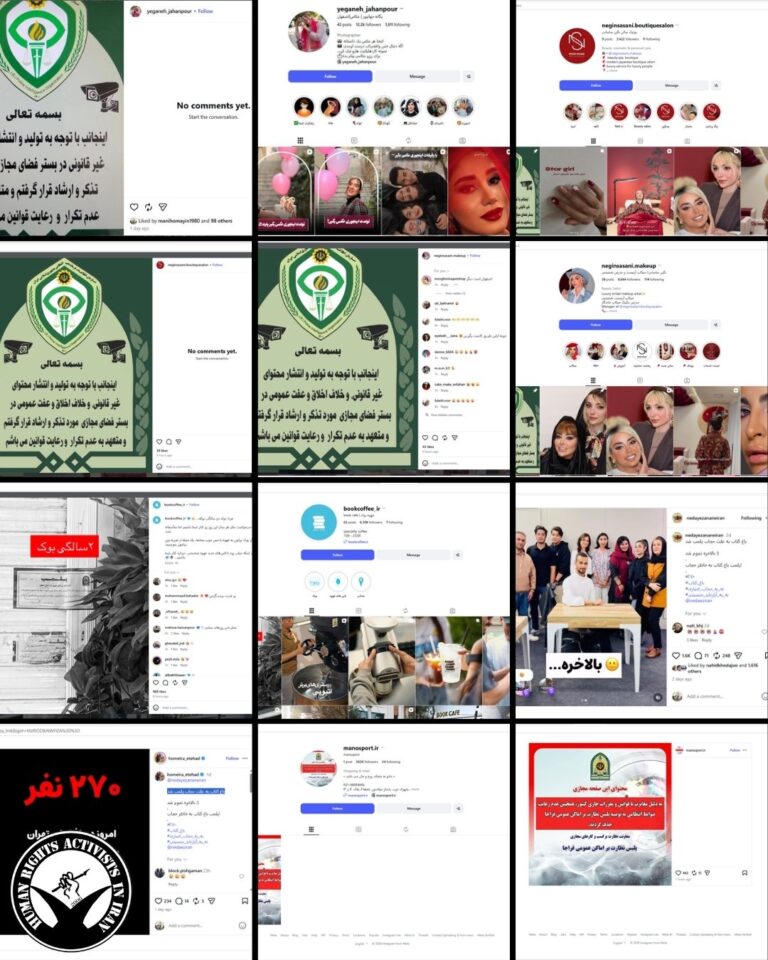
• Commercial, retail, and service businesses: Approximately 19 cases, including shops, beauty centers, event management companies, advertising agencies, and other online businesses, including Miaso Lounge Café, Surprise Paradise, Elham Asadzadeh, Van Gogh Café, Brown Bear Gallery (owned by Maryam Abdollahzadeh), Parsis Advertising Agency, Sajjad Barzigar Gold & Jewelry Store, Naqsh-e Mandegar, Parnian Catering & Events, Easy Apply, Tandis Skin and Hair Clinic, Liosa Fashion House, Nazari Clothing Store, Louti Café, Saba Collection, Segal Store, Laviz Café-Restaurant, Manto Sport, and Rouhi Café & Restaurant.
• Beauty, fashion, cosmetics, and modeling: Approximately 10 cases, involving makeup artists, tattoo artists, fashion designers, and beauty service providers, including Fatemeh Esmaeili, Mahoura Yahooei, Parak, Negin, Samaneh Safari, Maryam Hamzeh’i, Matin, Majid, Amina Bagheri, and Parisan Nazari.
• Sports, coaching, and athletic activities: Approximately 9 cases, including sports clubs, coaches, athletes, dance instructors, and sports groups, including Arash Bali, Dopamine Event (managed by Peyman Ramesht), Alvand Running Club, Tara, Swish Sports Club, Mona, dance instructor known professionally as Ari, Zahra Gaderi, and Narges, a martial artist based in Gorgan.
• Arts, music, and cultural activities: Approximately 5 cases, including singers, DJs, actors, writers, and cultural pages, namely Ekhtesasi Marjoon, rapper Respa, DJ Azi, Mohammadreza Reyhani, and Ali Keshvari.
• Tourism, nature travel, and travel services: Approximately 4 cases, including travel agencies, tour guides, and eco-tour organizers: Dalahoo Travel Agency, Hossein Pachideh, Nikisa Tehrani, and Shooka Tour.
Among this category, the blocking of Dalahoo Travel Agency’s Instagram page by judicial order attracted the greatest media attention. The measure followed the publication of images showing women without compulsory hijab during tours organized by the agency. After the page was blocked, all of its content was removed and replaced with a single notice stating: “This page has been blocked pursuant to the order of the respected judicial authority.”
Some pages operated across more than one field. For example, several bloggers were simultaneously active in fashion, beauty, sports, or tourism. Accordingly, the above classification is based on each page’s primary area of activity.
In addition to the specifically identified pages, the Qazvin Province Public Places Supervision Police announced the identification and “cleansing” of 56 Instagram pages, describing them as containing “norm-breaking promotional content and culturally harmful material.” Because neither the names of these pages nor the precise measures taken against them were disclosed, these cases have not been included in the total of 72 specifically identified pages.
Similarly, in Gilan Province, the Public Places Supervision Police reported identifying 32 businesses in Rasht and removing more than 3,258 pieces of content from their Instagram pages. Since content removal does not necessarily amount to the complete blocking of an account, these cases have likewise not been included in the count of blocked pages.
Breakdown by Category of Pages Required to Publish Written Pledges
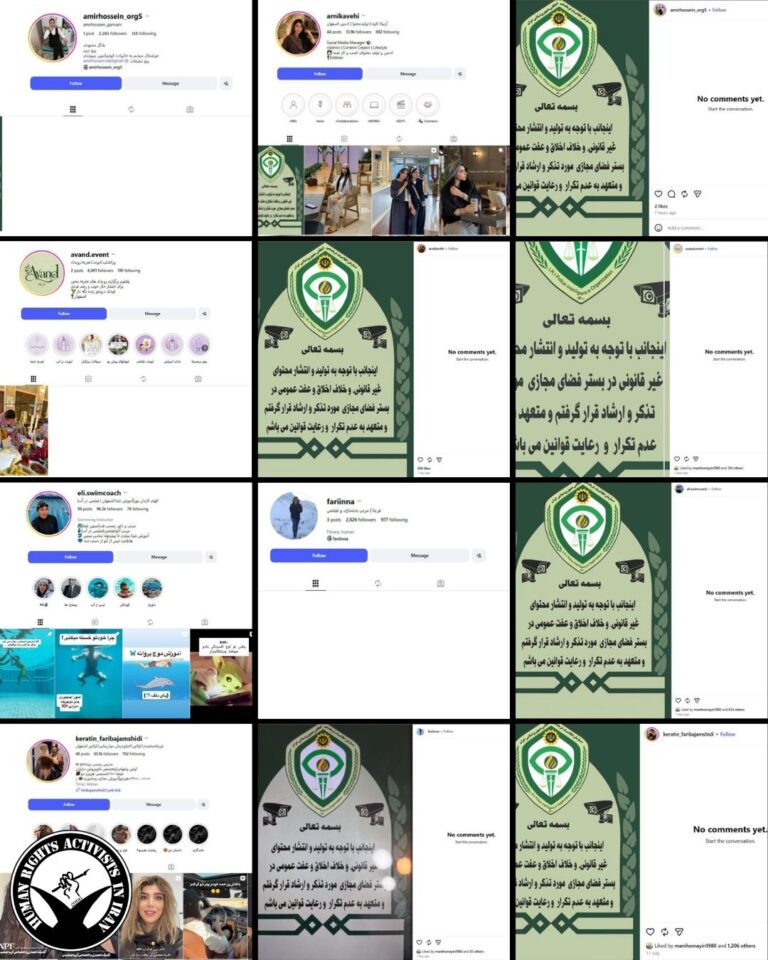
• Fashion, clothing, modeling, and beauty services: 9 cases, involving Fariba Jamshidi (beauty services), Nasrin Ghadiri, Sarar Beauty Salon, Leila Nazari, Ala Zandi, Sovil Fashion House, Negin Sasani, the Milad Clothing sales page, and fashion and beauty blogger Sana Allahi.
• Sports and coaching: 4 cases, including Farina (fitness and bodybuilding), Elham Kardanpour (swimming and aquatic fitness coach), Mohammad Nateghi (bodybuilding athlete), and Afaq (middle- and long-distance running coach).
• Bloggers and lifestyle/social content creators: 3 cases, involving Arnika Kaveh, Azadeh Amini, and Amirhossein Garivani.
• Other professional and commercial fields: 5 cases, including photographer Yeganeh Jahanpour, general surgeon Dr. Mohammad Hassan Izadian, Omid Hamidvand (active in the audio systems industry), the Avand cultural and artistic platform, and A&A Hypermarket.
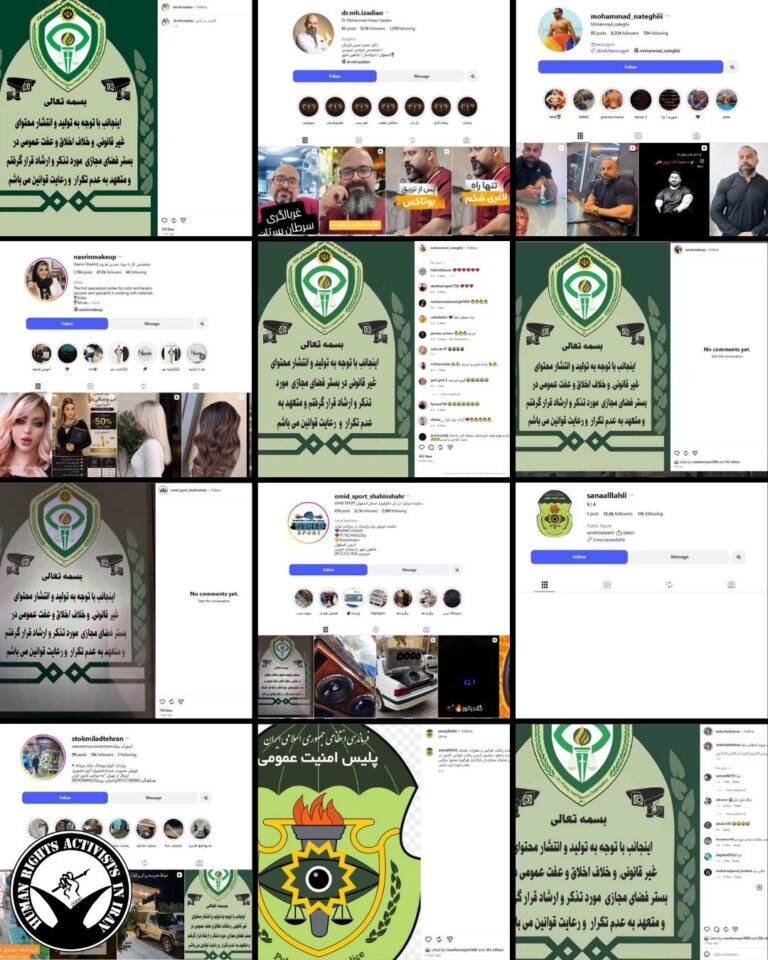
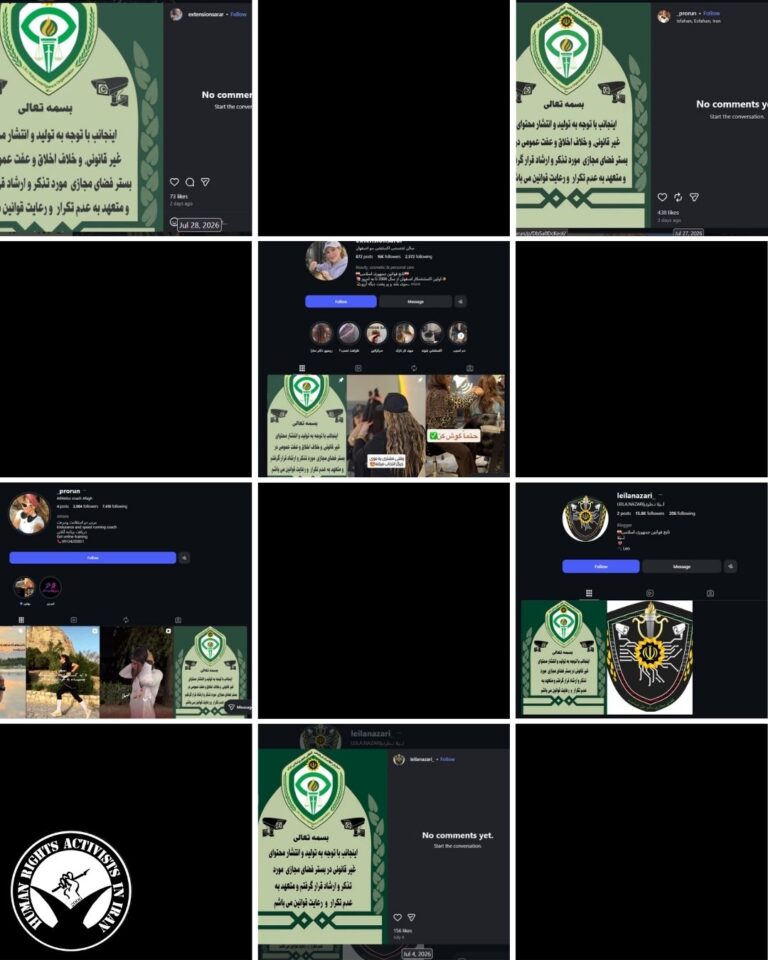
In a significant number of these cases, the written pledges were published bearing the logo of FARAJA’s Intelligence Organization. They contained nearly identical language referring to “compliance with the law,” “non-repetition,” “warning and guidance,” and refraining from publishing the content that had prompted the authorities’ intervention. The similarity in both the wording and format of these statements suggests the use of standardized templates and the implementation of a common procedure in dealing with the administrators of different social media pages.
In several of these cases, the publication of a written pledge was accompanied by additional enforcement measures. The page of a fashion and beauty blogger, as well as the pages of Amirhossein Garivani and Leila Nazari, were blocked in addition to being required to publish pledges. The pages of Ala Zandi and Farina also had their previous content removed, while Sovil Fashion House reported that more than 800 posts had been deleted from its page on the orders of the Security Police. In Semnan, action taken against the social media page of a commercial establishment resulted in the removal or modification of its content, the extraction of a written pledge from its administrator, and the sealing of the business premises.
Breakdown of Sealed Businesses
• Cafés and restaurants on Sanai and Iranshahr streets in Tehran: 7 cases, including Joe Café, 1401, Sam Café, Do Bar, Man, Novuk, and Theory.
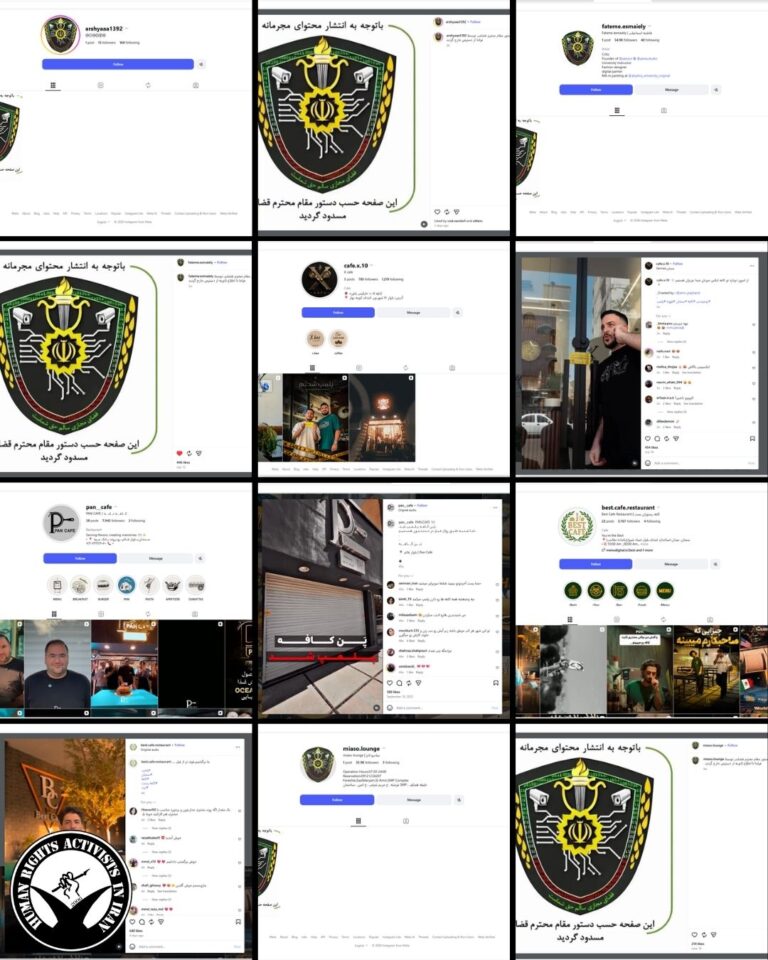
• Businesses in Semnan: 4 cases, including Tabeh Café, X Café, Best Café, and another business that was sealed after publishing content described by the authorities as “mocking the Islamic hijab.”
• Other businesses: 12 cases, including cafés and commercial establishments in Tehran, Dezful, Behbahan, Sari, Tonekabon, and Isfahan, among them Caspian Café in Tonekabon, Mohseni Mansion in Behbahan, Kama Café, Gol-e Yakh Café, Rouhi Café, Pizza Davood, Mansha Mansion in Tehran, and other reported businesses.
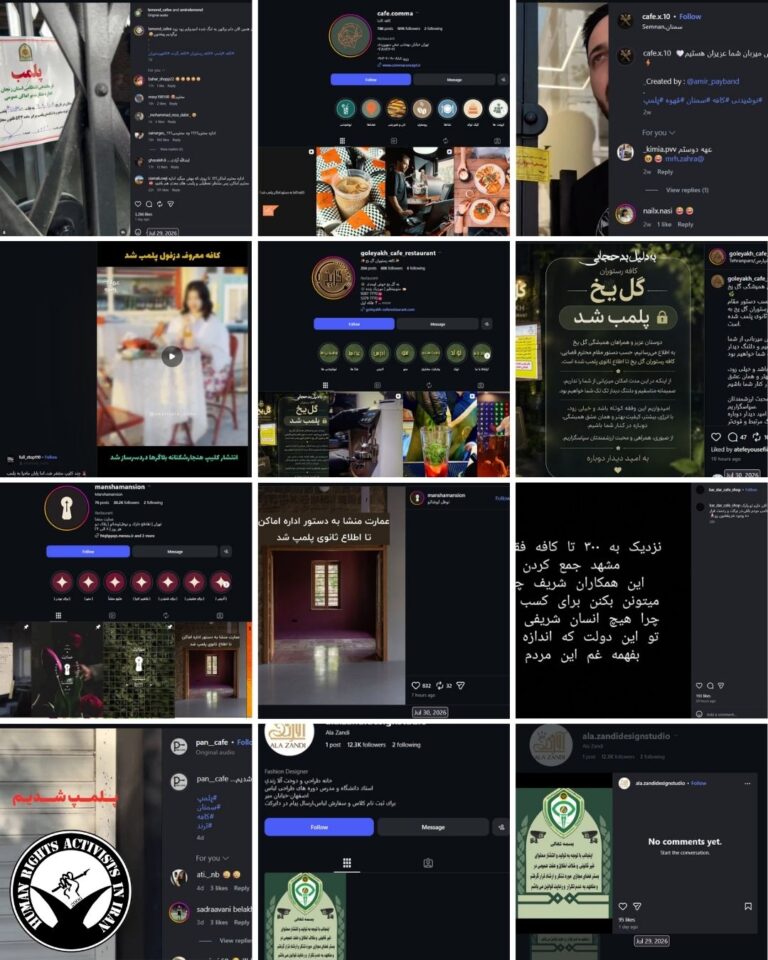
One of the most notable examples of this pattern was the simultaneous enforcement action against several café-restaurants on Sanai and Iranshahr streets in Tehran. On July 20, at least seven café-restaurants in the area were sealed on allegations including failure to enforce the compulsory hijab and what authorities described as violations of “Islamic standards.” At the same time, the Instagram pages of several of these businesses were also blocked by order of a judicial authority.
Several days after these actions, reports emerged that curbs, flower beds, raised seating areas, and outdoor seating spaces in front of cafés on Sanai Street had been demolished, while benches along Iranshahr Street were removed. The timing of these measures, alongside the closure of the cafés, has raised concerns that the restrictions extend beyond businesses themselves to encompass informal public gathering spaces used by residents.
In Dezful, a café was sealed after videos showing women with optional hijab were published, and judicial cases were opened against individuals connected to the establishment. Mohseni Mansion in Behbahan was also sealed because customers were present without compulsory hijab and music was being played. Several businesses sealed in Semnan later announced that the closure orders had been lifted after a few days and that they had resumed operations. A perfume store was likewise sealed for two days. Pizza Davood, one of Tehran’s oldest pizzerias, was sealed in recent weeks because customers were present without compulsory hijab; it later announced that the seal had been lifted and that it had reopened.
Caspian Café-Restaurant in Tonekabon was sealed after a video of a football match viewing event was published, with authorities alleging the occurrence of “social abnormalities.” In Ardabil, a café was sealed on accusations including “norm-breaking,” “failure to observe Islamic standards,” and “promoting corruption,” while two of its owners were arrested.
Kama Café and Mansha Mansion were also sealed by order of the Public Places Supervision Office. Gol-e Yakh Café-Restaurant in Tehran reported that it had been sealed by judicial order based on allegations of “improper hijab.” Ghahveh Book Café in Isfahan was likewise sealed, although no explanation was provided regarding the reason for the closure.
Expansion of Enforcement from Cyberspace to the Public Sphere
A review of the documented incidents indicates that these restrictions have not been confined to the online sphere. In a number of cases, page blocking, content removal, the compulsory publication of written pledges, the summoning of page administrators, and the sealing of business premises were carried out simultaneously or within a short period of one another. The targeting of cafés and popular gathering places for young people, the demolition or removal of public seating areas, restrictions on group sporting activities, and action against organizers of tours and cultural events all suggest that this policy extends beyond regulating online content and also seeks to control how citizens use public spaces.
The names of numerous state bodies, including Iran’s Law Enforcement Command (FARAJA), the Public Security Police, the Public Places Supervision Police, the Cyber Police (FATA), FARAJA’s Intelligence Organization, and judicial authorities, appear repeatedly in blocking notices, written pledges, and official statements issued during this period.
On many blocked pages, in addition to references to judicial orders, the names or logos of the Deputy for Supervision of Online Businesses and the Public Places Supervision Police also appeared. The repeated presence of these agencies in cases involving businesses and social media pages indicates their involvement in parts of the process of identifying alleged violations, removing content, and blocking accounts. This suggests that enforcement against online activity—particularly activity connected to commercial businesses—has not been carried out solely through the Cyber Police (FATA), but has also involved agencies responsible for supervising online businesses and public establishments.
Common Terminology and Ambiguity in the Legal Basis for Enforcement
Terms such as “norm-breaking,” “psychological security of society,” “culturally harmful content,” “content contrary to public morality,” “harmful advertising,” “criminal activity,” and “content contrary to public ethics and decency” have been repeatedly used across a large number of official statements, page-blocking notices, and written pledges.
In many cases, however, the specific conduct or content that allegedly justified the enforcement action was never identified. Likewise, in a number of cases, pages were blocked pursuant to judicial orders, yet the identity of the issuing judicial authority, the case number, and the available procedures for legal appeal or challenge were not disclosed.
In this context, on July 25, the official responsible for online activists in Kohgiluyeh and Boyer-Ahmad Province announced that the Ministry of Culture and Islamic Guidance had launched a process to “organize and provide insurance coverage for online activists.” According to the announcement, online activists would be formally recognized, while individuals who violated applicable laws and regulations would be dealt with in accordance with the law.
However, one day later, on July 26, the Secretariat of the Supreme Council of Cyberspace denied the announcement, stating that “the Supreme Council of Cyberspace has not convened for more than a year to adopt such a resolution, and no such proposal is under consideration.”
These contradictory statements, and the subsequent denial, at the very least point to a lack of transparency and coordination in the official narrative regarding the origin and legal basis of this initiative.
Conclusion
A review of the statistics and documentation collected by HRANA indicates that the enforcement measures carried out in recent weeks cannot be regarded merely as a series of isolated judicial or law enforcement actions. During the reporting period, at least 72 identified social media pages and accounts were blocked or seized, the administrators of 21 pages were compelled to publish written pledges—or statements committing to comply with applicable regulations, and at least 23 businesses were sealed.
In addition, official reports indicate enforcement measures against 56 Instagram pages in Qazvin Province and the removal of 3,258 pieces of content from the Instagram pages of 32 businesses in Rasht. Because the names of the pages, the identities of their administrators, and the precise nature of the measures taken were not disclosed, these cases have not been included in the statistics for specifically identified cases presented in this report.
Several page administrators who spoke with HRANA described similar experiences regarding the conduct of law enforcement authorities. According to their accounts, officers from the Cyber Police (FATA) initially contacted them by telephone before summoning them to a designated location. During these visits, some individuals had their mobile phones inspected, and conditions were imposed on their continued activity online. These conditions included signing a written pledge, deleting previously published content, and posting a statement on their personal or business pages committing to comply with applicable regulations.
Some interviewees stated that these actions were carried out directly by police officers at the location where they had been summoned. According to their accounts, officers used the individual’s mobile phone to access their social media accounts, deleted selected content, published the required written pledge, obtained the individual’s signed undertaking, and then returned the phone.
However, the method of enforcement was not identical in every case. Other interviewees reported that, depending on the city in which they operated and the nature of their page or business, instructions to remove content, publish a written pledge, and refrain from repeating the activities objected to by the authorities were communicated solely by telephone, without requiring an in-person appearance.
Taken together, these accounts, alongside the diversity of targeted groups, the broad geographic scope of the enforcement measures, the similarities in implementation, the repeated use of common official terminology, and the concurrent involvement of judicial, security, and law enforcement bodies, suggest the emergence of a pattern that extends well beyond isolated or case-specific enforcement actions.
The fact that a significant proportion of these measures relate to compulsory hijab, women’s dress, the publication of images of women without compulsory hijab, collective sporting and cultural activities, and the way citizens use public spaces further strengthens the possibility that the Islamic Republic is once again intensifying its mechanisms of social control. This trend appears to target the online sphere, economic activity, and the public realm simultaneously.
Given the limited access to information, the deletion or deactivation of some social media pages, and the absence of publicly available details for many cases, the actual number of enforcement actions is likely to be significantly higher than the documented figures presented here. If this trend continues, it may lead to a further expansion of restrictions on online users, businesses, and public spaces in the weeks and months ahead.
The following section presents a collection of images and supporting documentation gathered by HRANA relating to blocked social media pages and pages whose administrators were compelled to publish written pledges.
 |  |
 |  |
 |  |
 |  |
 |  |
 |  |
 |  |
 |  |