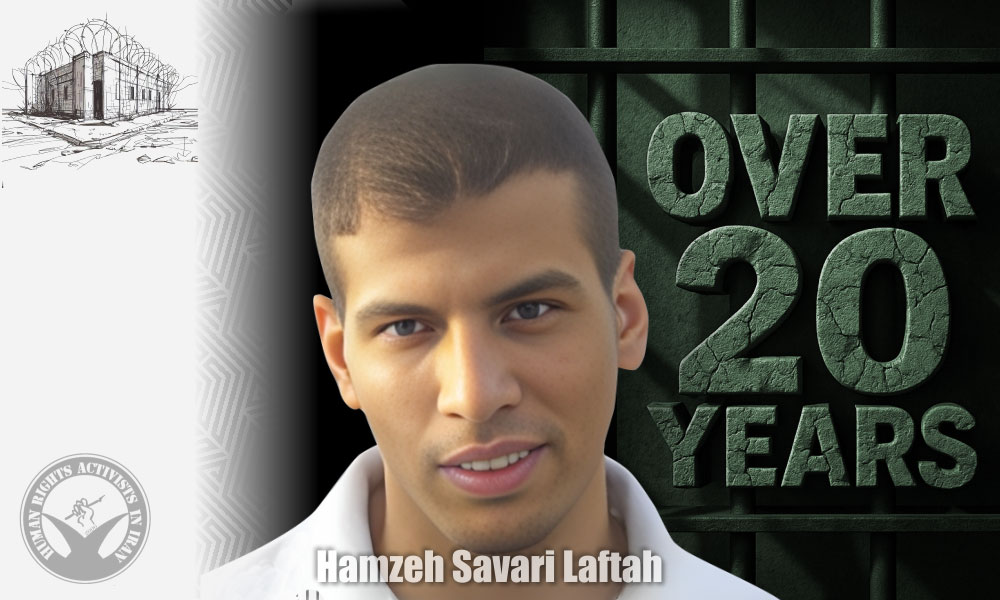
More than Two Decades Behind Bars, Introducing Prisoners – No. 2: Hamzeh Sawari

HRANA – A large number of political prisoners and the prisoners of conscience have spent more than two decades of their lives in Iran’s prisons. To ensure their names are not forgotten amid daily news cycles, HRANA is publishing a series introducing these prisoners and their conditions. Each report reviews their judicial case, detention situation, access rights, and urgent needs.

In this report, HRANA, the news agency of Human Rights Activists in Iran, examines the latest situation of Hamzeh Sawari Laftah after two decades of imprisonment.


Information Summary

• Name: Hamzeh Savari Leftah

• Year of Arrest: 2005 (1384 SH)

• Charges Announced: “Corruption on Earth (efsad fel-arz), moharebeh (enmity against God), and acting against national security”

• Initial Sentence:
Death penalty

• Current Sentence:
Life imprisonment (reduced by one degree)

• Places of Detention:
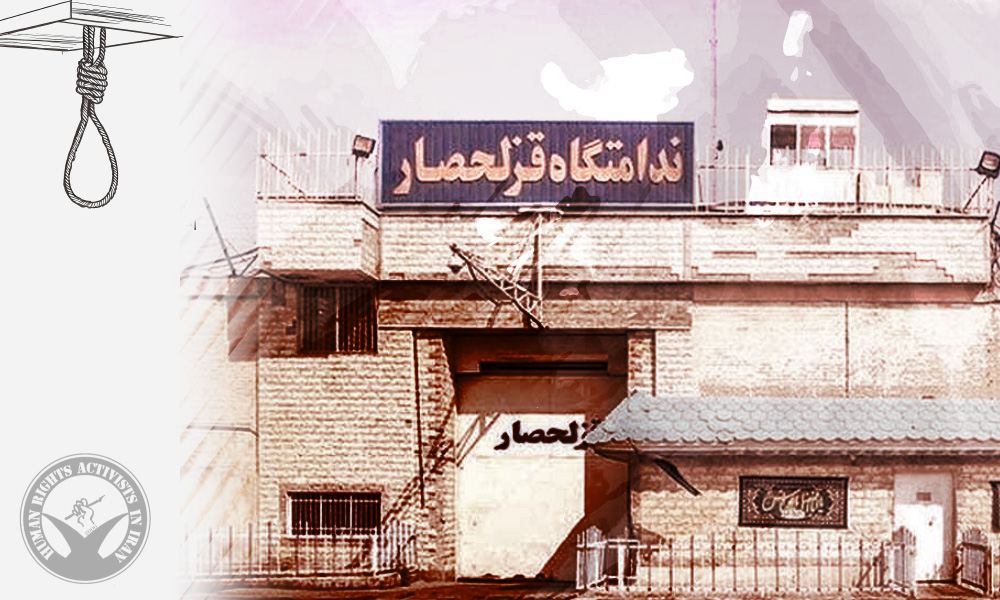
Three months in Sheiban Prison (Ahvaz), eight years in Karun Prison (Ahvaz), transferred to Rajai Shahr Prison (Karaj) until 2023, held in Ward 8 of Evin Prison in August 2023, transferred to Ghezel Hesar Prison (Karaj) in September 2023 where he remains.

• Leave/Access:
No furlough reported in recent years; limited access to family and lawyer.

• Current Status:
Still serving a life sentence despite legal changes that could allow for review or reduction.

Case History and Judicial Process

On September 2, 2005, at the age of just sixteen, Hamzeh Sawari was arrested by security forces. He was sentenced to death by the Ahvaz Revolutionary Court on charges of “corruption on Earth, moharebeh, and acting against national security.” The sentence was later commuted to life imprisonment. While this change prevented the implementation of the death penalty, it placed him among those condemned to indefinite imprisonment – effectively a punishment that can last for decades and severely limits the possibility of judicial review.

Key points in the process:

• Heavy security charge: The label of “moharebeh” is among the most severe accusations in Iran’s political-security cases, carrying extensive judicial and executive consequences.

• Sentence reduction: The initial death penalty, later converted to life imprisonment, illustrates both the severity of the charges and the possibility of judicial intervention, but does not necessarily mean injustices in the process were remedied.

• Ongoing imprisonment despite legal changes: Although legal reforms could allow for retrial, reduced sentences, or conditional release, Sawari remains in prison.

Detention Conditions and Transfers

Throughout his imprisonment, Hamzeh Savari has been held in multiple prisons: eight years in Karun Prison (Ahvaz), three months in Sheiban Prison (Ahvaz), then transferred to Rajai Shahr Prison (Karaj). In 2014, he was held in Hall 12 of Rajai Shahr, and in 2017 he was violently moved to Ward 10 (Unit 4) of the same prison.

In August 2023, he was transferred to Ward 8 of Evin Prison, but after one month, he was moved to the security unit (Ward 3) of Ghezel Hesar Prison (Karaj). He staged a hunger strike in protest of these transfers and spent some time in solitary confinement. He has remained in Ghezel Hesar since then.

Observations Related to Detention Standards

• Frequent transfers: Repeated relocations between wards and prisons disrupt access to family, legal counsel, and medical care.

• Solitary confinement as punishment: After arrest, Sawari spent nine months in solitary confinement in The Ministry of Intelligence’s detention facilities in Ahvaz and Shiraz. He was repeatedly placed in solitary confinement during his years in Karun Prison. He was again sent to solitary in 2017 after protesting his transfer to Ward 10 of Rajai Shahr, in September 2023 after objecting to being moved from Evin to Ghezel Hesar, and once more in August 2025. Such practices conflict with international standards, where solitary confinement must be exceptional, limited, and supervised.

• Exposure to violence in prison: Reports document physical and verbal abuse during his eight years in Karun Prison. In August 2017, he was beaten after being moved from Hall 12 to Ward 10 of Rajai Shahr. In September 2023, he was subjected to violence during his forced transfer from Evin to Ghezel Hesar. In August 2025, following his protest against the transfer of political prisoner Saeed Masouri to Zahedan Prison and the executions of Behrouz Ehsani Eslamloo and Mehdi Hassani, he and several other prisoners were beaten by Ghezel Hesar’s special guard unit. These incidents underscore the need for independent documentation and legal follow-up.

• Deprivation of medical care: Despite suffering from heart disease, lung inflammation, a torn cruciate ligament in his right knee with severe Baker’s cyst, chronic stomach pain, cervical arthritis, and needing spinal surgery, Sawari has been consistently denied hospital transfers and specialist treatment. Denying prisoners access to medical care constitutes inhuman treatment and violates both the right to health and the right to life, often used as a tool of pressure and suppression.

Access to Family, Lawyer, and Leave

In recent years, Sawari has not been granted furlough, and his access to family and lawyer remains limited. These restrictions not only harm his social and psychological well-being but also undermine his ability to mount an effective defense and pursue retrial options.

Potential Legal Avenues (General Recommendations)

1. Retrial (E’adeye Dadrasi): Assessing new evidence or substantive/procedural flaws.

2. Sentence reduction/commutation: If legal grounds are available.

3. Conditional release/suspension: Evaluating eligibility based on time served, conduct, and health.

4. Pursuing rights violations during imprisonment: Including denial of medical care, exposure to violence, lack of visitation, and restricted access to legal counsel.

5. International documentation and advocacy: Turning to human rights mechanisms if domestic remedies are blocked.

Timeline Summary

• 2005 (1384): Arrested at age 16 on charges of “corruption on Earth, moharebeh, and acting against national security.”

• Initial Sentence: Death penalty, later commuted to life imprisonment.

• Post-conviction: Eight years in Karun Prison.

• 2014 (1393): Held in Hall 12 of Rajai Shahr Prison (Karaj).

• 2017 (1396): Beaten; transferred to Ward 10 of Rajai Shahr.

• August 2023 (Mordad 1402): Transferred to Ward 8 of Evin Prison.

• September 2023 (Shahrivar 1402): Violently transferred to Ghezel Hesar; solitary confinement.

• August 2025 (Mordad 1404): Beaten and placed in solitary again in Ghezel Hesar.

• Recent years: No furlough, denied medical care, restricted family and lawyer visits.

• Current status: Life sentence continues despite legal reforms that could allow for review.

Conclusion and Importance of Review

Despite legal changes enabling retrial, reduced sentences, or conditional release for those convicted of moharebeh, Hamzeh Sowari remains imprisoned. His case exemplifies the situation of long-term political-security prisoners in Iran whose cases require urgent review.

It highlights both the denial of fundamental rights during imprisonment (furlough, visits, legal counsel) and the necessity of using all possible domestic and international legal mechanisms to reduce sentences and secure release.

Urgent Needs

• Regular and non-discriminatory access to family and lawyer.

• Independent medical evaluation in cases of alleged abuse or long-term conditions.

• Examination of the possibility of retrial or other mechanisms for reducing/suspending the sentence under updated laws.

• Enforcement of prison regulations regarding contact, visitation, and furlough.

• Access to adequate medical care and treatment.

About this Series

This report is part of the “More than Two Decades behind Bars” series, which aims to document the cases of long-term prisoners and to highlight the collective responsibility to ensure their visibility and pursue their rights.
Two Prisoners Executed in Ghezel Hesar Prison on Drug-Related Charges

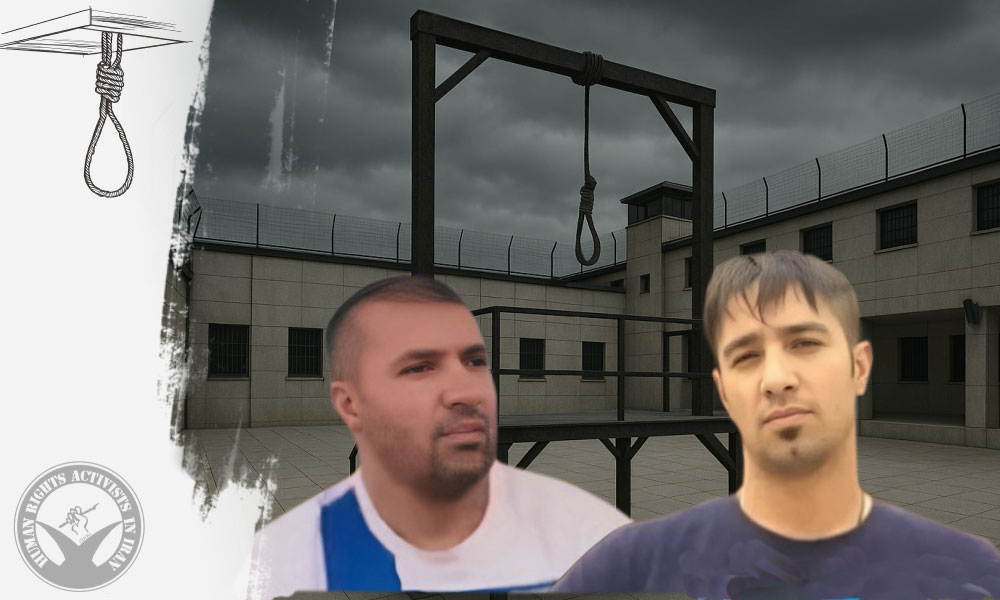
HRANA – At dawn today, Tuesday, September 16, the death sentences of two prisoners previously convicted on drug-related charges were carried out in Ghezel Hesar Prison, Karaj.

HRANA has identified the executed prisoners as Masoud Okhtizadeh, from Kuhdasht, and Akbar Emami, from Nourabad.

Information obtained by HRANA indicates that both men had been arrested on charges related to narcotics offenses and later sentenced to death by Revolutionary Courts.

As of the time of this report, the executions have not been officially announced by prison authorities or other responsible institutions.

According to HRANA’s statistics, Ghezel Hesar Prison in Karaj carried out the highest number of executions among all Iranian prisons, with 150 inmates hanged. This figure has nearly doubled compared to the previous year – a deeply alarming increase that underscores the escalating use of capital punishment in Iran.

Evin Prison Evacuated After Airstrikes: Detainees Transferred Amid Inhumane Conditions and Family Blackout

HRANA News Agency – Following the mass transfer of political and security prisoners from Evin Prison to facilities such as Qarchak Varamin, the Greater Tehran Penitentiary, and Ghezel Hesar in Karaj, reports indicate that these relocations were conducted without regard for fundamental standards — including separation based on offense type, adequate living conditions, access to basic services, and the right to contact family members. These abrupt and forced transfers were made without transparent communication from the responsible authorities, sparking serious concern among the prisoners’ families.

A photo showing damage to Ward 209, the bakery, and the medical clinic at Evin Prison.

In addition to causing infrastructural damage, the attack on Evin Prison has led to psychological distress and serious concerns for the families of prisoners. As of the time of this report, officials have not provided clear information about the status and conditions of the transferred prisoners.

Overcrowding

According to information obtained by HRANA, following the mass transfer of male political prisoners from Evin Prison, more than 70 individuals were relocated to Quarantine Unit 3 at Ghezel Hesar Prison in Karaj. These prisoners are enduring severe shortages of basic necessities and face tight restrictions on communicating with their families.

Female political prisoners who were abruptly and forcibly transferred to Qarchak Varamin Prison were initially confined in a cramped, unsanitary quarantine ward. They were later moved to a gymnasium lacking even the most basic facilities, including beds, and equipped with only a few restrooms. Eventually, they were returned to the quarantine ward, where they continue to be held in conditions that disregard crime-based classification and fail to meet minimum living standards.

At Greater Tehran Prison, inmates housed in Halls 3 and 4 of Ward 2 are being held in rooms that far exceed their intended capacity of 20 people. This extreme overcrowding has led to widespread floor-sleeping, heightened tensions among inmates, and a serious deterioration in sanitary conditions.

Poor Sanitation and Living Conditions

Sanitary conditions in Qarchak and Greater Tehran prisons have been reported as extremely poor. A family member of one of the women transferred to Qarchak told HRANA that in the prison’s gym and quarantine ward, there are only two toilets and one shower for dozens of inmates. The quarantine space is very small and unhygienic, and in the hot summer weather, access to outdoor areas is practically impossible. Reports speak of infestations of insects and pests such as mice, and even snakes in prisoners’ sleeping quarters.

According to HRANA, similar conditions exist in Greater Tehran Prison, where 70 to 80 inmates must share one toilet, one sink, and one shower. This lack of sanitary facilities significantly raises the risk of infectious and skin diseases, endangering prisoners’ health.

Limited Access to Food and Drinking Water

The food and clean water situation in Qarchak and Greater Tehran prisons is described as critical. In Qarchak, the tap water is salty and contaminated, making it undrinkable, and many prisoners must pay for bottled water. The prison has only one central kitchen that provides low-quality, insufficient food. Dinner is distributed at 4 p.m., and prisoners are forced to eat cold, tasteless meals at any later time. There is a fast food outlet in the prison, but prices are high and unaffordable for most inmates.

In Greater Tehran Penitentiary, the increase in prisoner numbers has seriously disrupted food distribution. According to a prisoner’s family, some inmates receive meals late or receive incomplete portions. Drinking water is also undrinkable due to its poor quality and high salinity, with no suitable alternatives available. Combined with the lack of hygiene facilities, this has created serious physical problems for prisoners.

Lack of Medical Services

Female prisoners in Qarchak and many of the inmates transferred to Greater Tehran Prison have been denied access to medical services. According to a relative of one prisoner, Qarchak provides no medical care or basic health facilities for women, who are held in security conditions without sanitary support. Greater Tehran Prison faces similar issues; for example, Morteza Seydi, who was injured during the Israeli airstrike, has been denied even the most basic treatment despite having a severe hand infection.

Restricted Contact with Families

Prisoners transferred to Qarchak and Ghezel Hesar are facing severe restrictions on contact with their families. At Qarchak, political prisoners held in the quarantine ward have been almost completely cut off from the outside world. According to a relative of one incarcerated woman, phone calls were still prohibited as of yesterday, with only a single malfunctioning phone available—enabling some prisoners to place short calls lasting just two to five minutes. Meanwhile, political and security detainees sent to Ghezel Hesar are being held under strict security conditions and have been entirely denied access to phone communication with their families.

On social media, relatives and friends of political prisoners transferred to Greater Tehran and Qarchak prisons have shared posts raising concerns about their conditions. Keyvan Mohtadi stated that his wife Anisha Asadollahi, along with Raheleh Rahemipour and Kobra Beiki, were transferred to Qarchak. He reported a lack of basic facilities, overcrowding, and that prisoners’ belongings were left behind in Evin. He emphasized that the situation is even harder for elderly inmates like Rahemipour and Beiki.

A social media page associated with Varisheh Moradi expressed concern about her health in Qarchak, stating that the transfer has disrupted access to medical care for ill prisoners.

Another page associated with Mostafa Mehraeen, who was arrested on June 15, reported that he was transferred to Greater Tehran Penitentiary but remains in solitary confinement and has so far had only one brief phone call with his family.

It is important to note that on Monday, June 23, amid Israeli airstrikes on Tehran, Evin Prison was directly hit. Multiple sections of the facility were damaged, including the main entrance gate, the on-site courthouse, the medical clinic, Ward 209, the bakery, and the visitation hall. The attack resulted in the death or injury of several conscripted soldiers, while dozens of prison staff and inmate laborers—some of whom were gardening at the time—were also reported wounded. In the aftermath, the Prisons Organization announced the transfer of Evin’s inmates to various detention facilities across Tehran Province.

Death Row Inmate Aydin Shari’atmadar Killed During Escape Attempt

HRANA – Aydin Shari’atmadar, a death row prisoner held for nearly two decades in Ghezel Hesar Prison in Karaj, was fatally shot by police on Saturday, June 7, during an attempted escape from Imam Ali Hospital.

According to the HRANA, Shari’atmadar had been transferred to the hospital due to internal bleeding. While hospitalized, he reportedly overpowered the accompanying officers with the help of armed individuals believed to be his relatives and attempted to flee. Police opened fire after issuing a warning, killing him at the scene.

News of Shari’atmadar’s death sparked protests among inmates at Ghezel Hesar. Dozens of prisoners reportedly chanted slogans such as “Freedom or death,” and for several hours, they prevented the prison yard gates from being closed.

The protest prompted a heightened security presence inside the facility. Unconfirmed reports also suggest limited clashes between inmates and prison guards, though no official statements have been released regarding the incident.

Pedram Madani Executed

HRANA News Agency – On Wednesday, May 28, Mizan, Iranian Judiciary’s media center, announced the execution of Pedram Madani, a prisoner convicted of espionage. He had recently been transferred from Evin Prison to Ghezel Hesar Prison in Karaj.

The Judiciary’s media outlet claimed that “Mr. Madani was arrested and prosecuted in 2020 on charges of espionage for the Zionist regime, under the accusations of ‘enmity against God’ (Moharebeh) and ‘spreading corruption on Earth.’ Following the completion of legal proceedings and the Supreme Court’s confirmation of the verdict, the execution was carried out.”

This claim comes despite a video released yesterday by Madani’s mother, in which she stated that her son had been sentenced to death without a fair trial.

Earlier this week, Pedram Madani was transferred from Ward 4 of Evin Prison to a solitary confinement cell in Ghezel Hesar Prison.

Pedram Madani was 41 years old and the father of one child.

In 2024, according to 812 reports compiled by HRANA, the Iranian regime executed 930 individuals in its prisons—marking the highest number of executions in the past 12 years. Despite the scale of these executions, prison officials and other relevant authorities publicly acknowledged only 6% of them, highlighting the regime’s lack of transparency and accountability.

Subscribe to Our Newsletter

Now is definitely not the time to stop reading!

Two Prisoners Executed in Ghezel Hesar Prison

HRANA News Agency – At dawn on Wednesday, May 21, two prisoners previously sentenced to death on charges related to drug trafficking and murder were executed in Ghezel Hesar Prison in Karaj.

HRANA has identified the executed individuals as Halim Brahouei (Brahui), 67, originally from Zahedan and residing in Karaj, and Jahanshah Afshari.

According to information obtained by HRANA, Mr. Brahouei had been sentenced to death by the Revolutionary Court for transporting 145 kilograms of narcotics into Tehran. Mr. Afshari had received a death sentence in connection with a murder charge.

As of the time of this report, the executions have not been officially confirmed by prison authorities or relevant state institutions.

According to HRANA’s statistics, Ghezel Hesar Prison in Karaj carried out the highest number of executions among all Iranian prisons, with 150 inmates hanged. This figure has nearly doubled compared to the previous year — a deeply alarming increase that underscores the escalating use of capital punishment in Iran.

Report on the Latest Status of Akbar Bagheri in Ghezel Hesar Prison, Karaj

HRANA News Agency – Akbar Bagheri, a political detainee, remains in custody at Ghezel Hesar Prison in Karaj more than 177 days after his arrest, with his legal status still unresolved.

Based on information received by HRANA, Mr. Bagheri has been imprisoned for nearly six months. He remains in a state of legal uncertainty at Ghezel Hesar Prison in Karaj. His court hearing will be held on May 13, 2025, at Branch 26 of Tehran’s Revolutionary Court, presided over by Judge Iman Afshari. He is charged with “assembly and collusion to disrupt national security through cooperation with opposition groups.”

Bagheri was transferred from Evin Prison to Ghezel Hesar in mid-February 2024. He is currently held in Ward 4 of the facility.

Mr. Bagheri, who suffers from blood-related hemoglobin disorders, intestinal and liver issues, and hemorrhoids, was arrested by security forces in Tehran on November 10, 2023.

He was previously arrested in 2017 by security forces in Tehran and taken to Evin Prison. In the summer of 2018, Branch 15 of the Tehran Revolutionary Court, presided over by Judge Salavati, sentenced him to nine years in prison on charges of “propaganda against the regime” and “assembly and collusion.” This sentence was later upheld in the appeals court. Following the events at Evin Prison in October 2022, he was transferred along with several others to Rajai Shahr Prison in Karaj. He was eventually released on May 8, 2023, under a general pardon directive.

Mahboobeh Rezaei and Reza Mohammad-Hosseini Receives 5 Years in Prison After Retrial

HRANA News Agency – The prison sentences of political prisoners Reza Mohammad-Hosseini and Mahboobeh Rezaei have each been reduced to five years following the acceptance of their request for retrial and a re-examination of their cases by Branch 21 of the Tehran Province Court of Appeals. They were previously sentenced to six years and three months in prison.

Ali Sharifzadeh Ardakani, their attorney, announced today, Sunday, May 4, that following the Supreme Court’s acceptance of the retrial request in January 2025, their cases were referred to a parallel branch for review. Branch 21 of the Tehran Appeals Court reduced their sentences to five years each.

Mahboobeh Rezaei was arrested by security forces on May 22, 2023, and later transferred to the women’s ward of Evin Prison. She was ultimately sentenced by Branch 36 of the Tehran Appeals Court to 19 years and 9 months in prison and a fine of eight million tomans on charges including: “membership in anti-state groups with the aim of disrupting national security,” “assembly and collusion against national security,” “propaganda against the regime,” “blasphemy,” “removing hijab and showing the act of depravity on the Internet.”

Reza Mohammad-Hosseini was arrested in May 2023 at his home by security forces. In January 2024, he was sentenced by Branch 36 of the Tehran Appeals Court to 14 years and 6 months in prison and a fine on charges including: “membership in anti-state groups with the aim of disrupting national security,” “assembly and collusion to commit crimes against national security,” “propaganda against the Islamic Republic of Iran,” and “disobedience toward law enforcement officers during duty.” He is currently serving his sentence in Ghezel Hesar Prison in Karaj.

Number of Executions in Ghezel Hesar Prison Rises to Four

HRANA News Agency – Today, April 30, alongside the execution of Mohsen Langarneshin, a political prisoner, in Ghezel Hesar Prison in Karaj, three other inmates previously sentenced to death on drug-related and murder charges were also executed.

In addition to the execution of Mohsen Langarneshin—who had been convicted of espionage and collaboration with hostile governments—three other inmates were also put to death. HRANA has confirmed the identity of one of them as Asghar Vatanparast, sentenced to death for drug-related offenses. The two others were executed on murder charges, though their identities have not yet been confirmed.

Further details, including the identities of the two other individuals executed, are still under investigation by HRANA.

Earlier, HRANA had reported the transfer of 11 inmates to solitary confinement in preparation for their executions.

As of the time of this report, the executions of these three prisoners have not been officially announced by prison authorities or relevant institutions.

According to data gathered by the Department of Statistics and Publication of Human Rights Activists, Ghezel Hesar Prison in Karaj witnessed the highest number of executions in 2024. For a comprehensive examination of the details and statistics surrounding the executions in Iran, refer to HRANA’s report.

Mohsen Langarneshin Executed

HRANA News Agency – Today, April 30, Mizan, the Judiciary’s media center, announced the execution of Mohsen Langarneshin (Langar-Neshin), a prisoner accused of espionage and collaboration with hostile governments. His mother had released a video the previous day stating that she had her final visit with him at Ghezel Hesar Prison in Karaj.

Mizan claimed that Mr. Langarneshin had been arrested and tried on charges of moharebeh (enmity against God) and corruption on earth due to alleged intelligence cooperation and espionage in favor of the “Zionist regime.” The report claimed that “throughout interrogation, prosecution, and trial, he fully confessed to the crimes and detailed the actions he had taken when presented with the flawless evidence in the case.” The statement added that “after completing the full criminal procedure and the Supreme Court’s confirmation, the sentence was carried out.”

These claims come despite a recent statement to HRANA from a source close to the family, who said: “Mohsen had been promised that if he repeated what the interrogators wanted on camera, he would only face imprisonment. As a result, the confessions were extracted under pressure and coercion.”

Earlier this week, Langarneshin had been transferred to a solitary confinement cell in Ghezel Hesar Prison for the execution of his sentence.

The death sentence had previously been issued by Judge Abolghasem Salavati, head of Branch 15 of the Tehran Revolutionary Court, and was upheld by Branch 41 of the Supreme Court. Three requests for a retrial were rejected by the Supreme Court. According to informed sources close to the family, the most recent request, filed in recent days, was dismissed within two days without any legal explanation.

Masoud Langarneshin, Mohsen’s father, also released a video the previous day asserting that his son had been sentenced to death without a fair trial. He emphasized that the case was full of ambiguities and procedural flaws, and he appealed to the public and human rights organizations for support.

His mother, in her video message, expressed grave concern about the impending execution and said she had her final visit with Mohsen on Tuesday, April 29. She too pleaded for help from the public and human rights bodies.

A source close to Langarneshin told HRANA that “during detention, he was pressured to make forced confessions. He was told to say that he had transported a motorcycle to the Pol-e Choobi area and filmed there. He was also accused of having a role in surveillance operations related to General Hassan Sayyad Khodaei, who was assassinated in June 2022. Furthermore, he was taken to the specified location and forced to narrate a prewritten script by interrogators, which was filmed.”

According to the same source, “He was transferred to Ghezel Hesar Prison in Karaj on February 15, 2025. At that time, the official prison documents only mentioned a sentence of imprisonment, monetary fine, and restitution—there was no mention of a death sentence.”

Mohsen Langarneshin was arrested by security forces on July 3, 2023. He was held for 20 months in Evin Prison, including 12 months in The Ministry of Intelligence’s detention facility, known as Ward 209 of Evin Prison.