Over 5 Executions Per Day on Average: 26 Prisoners Executed Across Iran Since Start of the Week

HRANA News Agency – Since the beginning of this week, Iranian prisons have witnessed a significant surge in executions. Over the past five days, at least 26 prisoners—mostly convicted of murder and drug-related offenses—have been executed across various prisons in Iran. Among them were five prisoners executed on political-security charges.

According to HRANA, the news agency of Human Rights Activists in Iran, executions in Iranian prisons have sharply increased in recent days.

Since the start of the week, at least 26 prisoners have been executed in Ghezel Hesar (Karaj), Shiraz, Kermanshah, Gonabad, Shahrud, Vakilabad (Mashhad), Aligudarz, Bukan, Dezful, Qom, Zanjan, and Sepidar (Ahvaz) prisons. This averages over five executions per day. Vakilabad Prison alone accounted for at least 10 executions in a single day, the highest recorded among these facilities.

On Wednesday, April 9, four prisoners—Bahram Hodavand-Khani, Salar Amir Jalali, Abolfazl Karimi, and another unidentified individual—were executed in Ghezel Hesar Prison for separate murder cases. Also on Wednesday, Esmail Dahmardeh, convicted on drug-related charges by the Revolutionary Court of Gonabad, was executed in Gonabad Prison. Gholamreza Pardakhteh faced a similar fate in Shahroud Prison. Another prisoner, Kambiz Fathi, was hanged in Kermanshah Prison for murder. Two more prisoners, Vahid Ashouri (30) and Afghan national Saud Mirzaei, were executed in Shiraz Prison, both convicted of murder.

On Tuesday, April 8, at least 10 prisoners—including three women—were executed in Vakilabad Prison, Mashhad. Five of them—Farhad Shakeri, Abdolhakim Azim Gorgij, Abdolrahman Gorgij, Taj Mohammad Khormali, and Malek Ali Fadaie Nasab—were executed on political-security charges. Four others, including two women, were executed on drug-related charges. HRANA identified two of them as Ahmad Sanaie and Mohammadreza Damideh. Additionally, one woman convicted of murder was also executed at the same facility.

On Monday, April 7, Shahram Goodarzi (36) and Taher Shabani (35) were executed in Aligudarz Prison in separate murder cases. That same day, Seyed Taha Hassani, a prisoner from Bukan, was executed in Bukan Prison, and Hamid Abdouli was hanged in Dezful Prison—both convicted of murder.

On Sunday, April 6, a prisoner named Samir Ghasemi was executed in Qom Prison. He had been sentenced to death by the criminal court for murder.

On Saturday, April 5, Hossein Molazadeh (29), convicted on drug charges, was executed in Zanjan Prison. Simultaneously, Zahir Shamsi (32), a father of a five-year-old girl from Dezful, was executed in Sepidar Prison, Ahvaz. Shamsi had been arrested four years ago for the alleged murder of his cousin.

This recent escalation in executions has sparked serious concerns over widespread violations of the right to life in Iran. Human rights organizations consider Iran’s extensive use of the death penalty to be in stark violation of its international obligations and have called for an immediate moratorium on capital punishment.
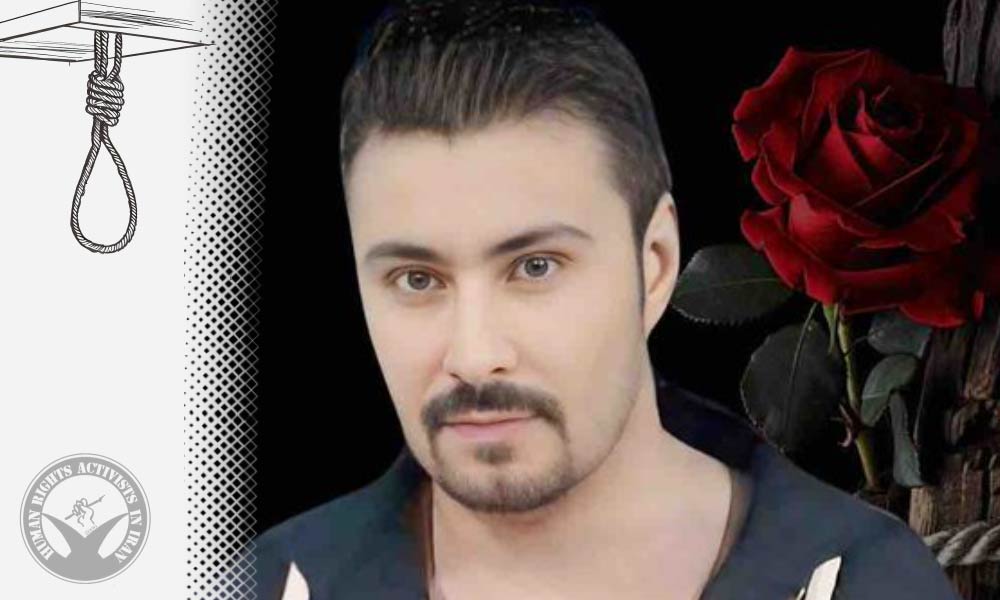
Sixteen Prisoners Transferred to Solitary Confinement for Execution in Ghezel Hesar Prison, Karaj

On August 4th, sixteen prisoners in Ghezel Hesar Prison in Karaj, who had previously been sentenced to death for non-political crimes, were transferred to solitary confinement for the execution of their sentences.

This transfer is for the execution of their death sentences. Four of them had previously been sentenced to death for murder charges. Additionally, five of these prisoners are Afhghan national.

Further details, including the identities of these prisoners and the charges against the remaining tweleve prisoners, are being investigated by HRANA.

In 2023, the Department of Statistics and Publication of Human Rights Activists in Iran registered the execution of 767 individuals. Out of these, 7 were carried out in public. Among the executed individuals whose genders were identified, 21 were female. Additionally, 2 juvenile offenders, defined as individuals under the age of 18 at the time of their alleged crimes, were also executed.

Sunni Death-Row Prisoner Khosrow Besharat Executed in Ghezel Hesar

On May 15, 2024, Sunni prisoner Khosrow Besharat was executed in Ghezel Hesar Prison in Karaj after enduring over 14 years of imprisonment.

As reported by HRANA earlier, he was moved to solitary confinement 14 days ago to await his execution. On May 13, he had his final family visit.

In the same legal case, Ghasem Abasteh, Ayoub Karimi, Davoud Abdollahi, Farhad Salimi, and Anvar Khezri were also executed in the same prison. Khezri was executed today, May 15, 2024.

The case stems from the assassination of Abdolrahim Tina, the Imam of a mosque in Mahabad, in September 2008. In January and February 2010, Besharat and six other Sunni suspects were arrested in connection with the killing.

Initially sentenced to death by Branch 28 of the Tehran Revolutionary Court, presided over by Mohammad Moghiseh, Besharat’s sentence was initially overturned by the Supreme Court. The case was then reassigned to Branch 15 of the same court, presided over by Judge Salavati, who reinstated the death sentences for Besharat and six other defendants. The Supreme Court ultimately upheld their death sentences on February 3, 2020.

Concerns Rise Over Health of Political Prisoner Hamzeh Savari

Political prisoner Hamzeh Savari Laftah, currently serving a life sentence in Ghezel Hesar Prison, Karaj, is facing alarming health issues amidst inadequate medical care. Despite his urgent need for treatment outside the prison walls, authorities have repeatedly denied him access to essential medical attention.

According to a source close to Savari’s family, he has been enduring a painful baker’s cyst in his knee for five years, which has worsened over time, extending to his tendon due to the absence of proper medical intervention. Shockingly, prison officials, under orders from the prosecutor, have refused to transfer him to a hospital for necessary treatment.

Reports obtained by HRANA indicate that Savari has also been battling Varicose disease for eleven years, with a recurrence three years ago following a surgery nine years ago. Despite his persistent requests for medical assistance, he has been consistently denied access to treatment.

Arrested at the tender age of 16 on September 2, 2005, Savari was initially sentenced to death by the Ahvaz Revolutionary Court on charges of “spreading corruption on earth, enmity against God (moharebeh), and acting against national security.” However, his sentence was later commuted to life imprisonment.

The troubling case of Savari adds to a larger pattern of neglect within Iranian prisons. In 2023, the Department of Statistics of Human Rights Activists in Iran documented 1,390 instances of denial or neglect of medical care for prisoners, highlighting a systemic issue that demands urgent attention.

Political Detainee Saman Yasin Moved to Psychiatric Hospital

Saman Seydi (Yasin), detained during the 2022 nationwide protests, was transferred from Ghezel Hesar prison in Karaj to Aminabad Psychiatric Hospital on March 5, 2024.

A source close to his family confirmed Seydi’s relocation to Aminabad Hospital. In a recent open letter addressed to the head of the Judiciary, Saman Yasin expressed his objection to his 18-month detention, stating a preference for a death sentence over being held in legal limbo.

Seydi has been temporarily moved to a hospital outside the prison environment. The Revolutionary Court of Tehran’s Branch 15, presided over by Judge Abolqasem Salavati, has taken charge of Seydi’s case. A recent court session was postponed due to the absence of the public defender. Frustrated by the prolonged detention and as a form of protest, Seydi injured himself by hitting his head on the wall.

Reza Shafa-Khah, Seydi’s legal representative, has condemned the extended detention, citing it as a violation of the law.

Arrested by security forces on October 2, 2022, during the nationwide Mahsa Amini Protests, Seydi faced convictions on various charges, including “enmity against God (Moharebeh)” and “assembly and collusion against national security,” resulting in a death sentence on October 29, 2023. However, the Supreme Court of Iran overturned this verdict, leading to the transfer of his case to another court branch for retrial.

Despite Seydi’s requests, he has not been granted representation from a private lawyer. On August 2, 2023, along with six other political prisoners, he was transferred from Rajai Shahr Prison, Karaj, to Evin Prison. On September 3, 2023, he was moved to Ghezel Hesar Prison, along with twelve other prisoners, without prior notice, and has since been held in the ward designated for prisoners with drug-related convictions.

On January 28 of this year, Seydi sustained injuries during an altercation between political prisoners and prison guards.

Subscribe to Our Newsletter

Now is definitely not the time to stop reading!

Sunni Prisoner Davoud Abdollahi Executed in Ghezel Hesar

On January 2, 2024, Davoud Abdollahi, a Sunni prisoner, was executed in Ghezel (Qezel) Hesar Prison, Karaj, marking the end of his 13-year incarceration.

A source close to his family informed HRANA that the execution occurred without prior notice to his family. Abdollahi had been transferred to solitary confinement on December 26, following a hunger strike he initiated.

In a related legal case, two other Sunni defendants, Ghasem Abasteh and Ayoub Karimi, were executed on November 5 and November 29, 2023, respectively.

The origins of the case date back to September 2008 when Abdolrahim Tina, the Imam of a mosque in Mahabad, was assassinated by unidentified individuals. In January-February 2010, Abdollahi and six other Sunni suspects were arrested in connection to the assassination.

While in detention, Abdollahi faced multiple charges, including enmity against God (Moharebeh), allegedly through sympathizing with Salafism—a charge he consistently refuted. After spending fourteen months in legal limbo, Abdollahi was transferred to Rajai Shahr Prison, Karaj, where he remained until his relocation to Ghezel Hesar Prison in August of the current year.

Initially sentenced to death by Branch 28 of the Tehran Revolutionary Court, presided over by Mohammad Moghiseh, the verdict was later overturned by the Supreme Court. The case was then assigned to Branch 15 of the court, presided over by Judge Salavati, who reinstated the death sentences for Abdollahi and six others—Anvar Khezri, Kamran Sheikheh, Farhad Salimi, Khosro Besharat, Ghasem Abasteh, and Ayoub Karimi. This time, the Supreme Court confirmed the death sentences for him and his co-defendants.

Sunni Prisoner Ayoub Karimi Executed in Karaj

Ayoub Karimi, a Sunni prisoner, was executed today, November 29, in Qezel (Ghezel) Hesar Prison, Karaj, after enduring more than 13 years of incarceration.

Karimi had been moved to solitary confinement in the prison the previous Sunday, foreshadowing his imminent execution.
Notably, in this legal case, another Sunni prisoner, Ghasem Abasteh, met the same fate in the same prison on November 5 of this year.

The legal case traces back to September 2008 when Abdolrahim Tina, the Imam of a mosque in Mahabad, was assassinated by unidentified individuals. In January-February 2010, Ayoub Karimi and six other Sunni suspects were arrested and accused in connection to the assassination.

Subsequently, Karimi was charged with “enmity against God (Moharebeh) through sympathizing with Salafism,” a charge he consistently refuted. After spending fourteen months in legal limbo, Karimi was transferred to Rajai Shahr prison, Karaj, where he remained until his relocation to Qezel Hesar Prison in August of this year.

Initially sentenced to death by Branch 28 of the Tehran Revolutionary Court, presided over by Mohammad Moghiseh, the verdict was later overturned by the Supreme Court. The case was then assigned to Branch 15 of the court, presided over by Judge Salavati, who reinstated the death sentences for Ayoub Karimi and six others – Anvar Khezri, Kamran Sheikheh, Farhad Salimi, Khosro Besharat, Ghasem Abasteh, and Davoud Abdollahi.

This time, the Supreme Court confirmed the death sentences for Ayoub Karimi and his co-defendants.

Mohammad Boroughani Receives Five-Year Prison Term and Ten Years Exile

The Tehran Revolutionary Court has issued a verdict, sentencing Mohammad Boroughani, a detainee from the 2022 nationwide protests, to five years in prison and ten years of mandatory residence in Naeen County, situated in Isfahan province, as reported by Shargh Newspaper.

Initially facing a death sentence on charges of “enmity against God (Moharebeh) through the use of a cold weapon, altercation with police officers, and setting fire to the Pakdasht governorate building,” Boroughani’s fate took a different turn. The Supreme Court overturned the initial verdict, leading to a retrial in another court branch.

Currently held in Qezel Hesar Prison in Karaj, Boroughani was apprehended during the 2022 protest in Pakdasht, Tehran Province.

Five Inmates Executed at Qezel Hesar Prison

In a grim turn of events, on November 1, five inmates were executed in Qezel (Ghezel) Hesar Prison, Karaj.

According to HRANA, the individuals who faced this unfortunate fate were identified as Ehsan Haddad, Abbas Anaraki, Sadegh Tajik (an Afghan national), Yadollah Foruoughi, and Behrooz (last name unknown). Foruoughi had been convicted of drug-related offenses, while Haddad, Tajik, and Anaraki were found guilty of murder. Behrooz was convicted of rape and murder.

Just the day before, HRANA had reported the transfer of eight inmates to solitary confinement as they awaited their impending execution.

At the time of writing, no official sources or domestic media outlets within the country have reported on these executions.

According to data compiled by the Center of Statistics of Human Rights Activists in Iran (HRA), between October 10, 2022, and October 8, 2023, a total of 659 individuals were executed by hanging in Iran, representing a 24% increase compared to the corresponding period in the previous year. Seven of these executions were conducted publicly. Concerningly, many of the defendants were denied access to a fair trial and due process. For details and statistics, read HRANA’s report.


Four Inmates Executed in Qezel Hesar

On October 11, Qezel Hesar (Ghezel Hesar) Prison in Karaj witnessed the execution of four inmates who had been convicted of murder. HRANA, citing Etemad News, had previously reported the execution of another inmate at the same facility.

Three of the executed individuals have been identified by HRANA as Nazir-Mohamad Tajik, Nour-Mohammad Barbari, both Afghan nationals, and Shahab Elhami.

Just yesterday, HRANA disclosed the transfer of six death-row inmates to solitary confinement in Qezel Hesar, hinting at the impending executions.

HRANA is actively pursuing further information regarding these recent executions.

According to data compiled by the Center of Statistics of Human Rights Activists in Iran (HRA), between October 10, 2022, and October 8, 2023, a total of 659 individuals were executed by hanging in Iran, representing a 24% increase compared to the corresponding period in the previous year. Seven of these executions were conducted publicly. Concerningly, many of the defendants were denied access to a fair trial and due process. For details and statistics, read HRANA’s report.