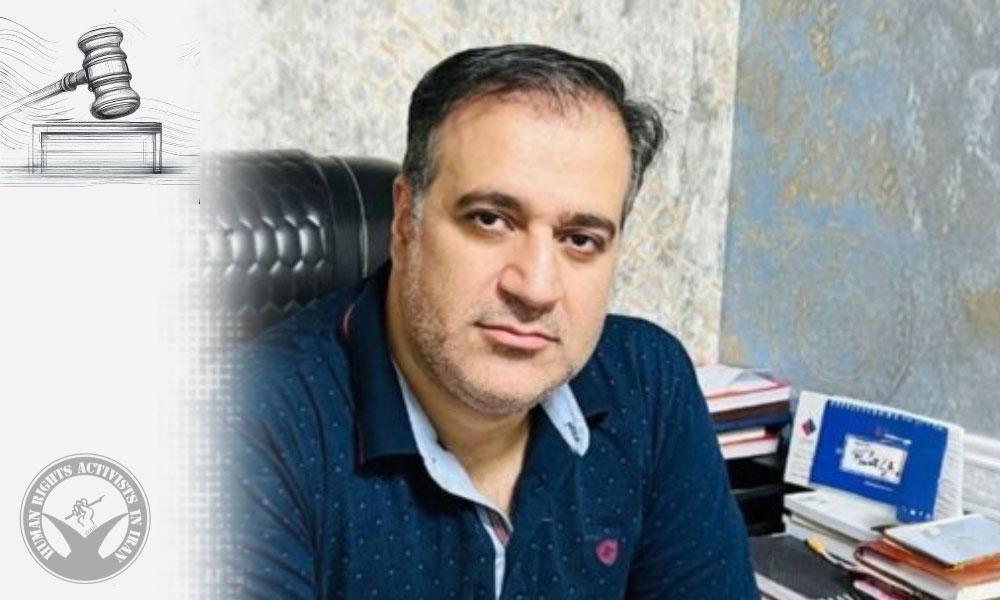
Mohammad Asadi Sentenced to Two Years in Prison on Appeal

HRANA – Branch 16 of the Khuzestan Province Court of Appeals has sentenced political prisoner Mohammad Asadi, who is currently held in Sheiban Prison in Ahvaz, to two years in prison. In the initial trial, he had been sentenced to two years of imprisonment along with supplementary punishments.

Based on the ruling issued by Branch 16 of the Khuzestan Province Court of Appeals, Mohammad Asadi was sentenced to two years in prison on the charge of “disrupting public order.” The supplementary punishments imposed in the initial ruling were removed from his sentence.

Previously, during the initial stage of proceedings, Branch 1 of the Ahvaz Revolutionary Court had sentenced him to two years in prison on the same charge. The Revolutionary Court judge had also imposed supplementary punishments, including a two-year travel ban and one year of mandatory attendance at the Office for the Promotion of Virtue and Prevention of Vice. The specific acts forming the basis of the charges against this political prisoner remain unknown.

Mohammad Asadi was arrested on January 14, 2026, and is currently being held in Sheiban Prison, Ahvaz.

Appeals Court Sentences Mohammad Hosseini Chamani to More Than 30 Months in Prison

HRANA – Branch 18 of the Khuzestan Province Court of Appeals has sentenced political prisoner Mohammad Hosseini Chamani, currently held in Sheiban Prison in Ahvaz, to two years, six months, and two days in prison. In the initial trial, he had been sentenced to four years in prison along with supplementary punishments.

According to HRANA, Branch 18 of the Khuzestan Province Court of Appeals has reduced the initial sentence issued against Mohammad Hosseini Chamani.

Under the appellate ruling, Mr. Hosseini Chamani was sentenced to 15 months and one day in prison on the charge of “disrupting public order” and to an additional 15 months and one day in prison for “insulting the Supreme Leader.” The supplementary punishments imposed at the trial stage were also removed from his sentence.

No information is available regarding the specific acts that formed the basis of the charges against this political prisoner.

Previously, during the initial trial, Branch 1 of the Ahvaz Revolutionary Court had sentenced him to two years in prison for “disrupting public order” and two years in prison for “insulting the Supreme Leader.” The Revolutionary Court judge had also imposed supplementary punishments, including a two-year travel ban and one year of mandatory attendance at the Office for the Promotion of Virtue and Prevention of Vice.

Mohammad Hosseini Chamani was arrested on January 8, 2026, and is currently being held in Sheiban Prison in Ahvaz.

Homeyra Sharifi Sentenced to Five Years in Prison; Denied Medical Care in Evin Prison

HRANA – Homeyra Sharifi, one of those arrested during the January 2026 protests and currently imprisoned in Evin Prison, has been sentenced to five years in prison. The Afghan national is reportedly suffering from both physical and psychological health problems and has been denied adequate medical care.

The five-year prison sentence was recently communicated to Ms. Sharifi while she was being held in Evin Prison. According to information received by HRANA, she suffers from a skin disease and is experiencing serious psychological distress. Despite her condition, she has not received adequate medical or mental health care.

A source familiar with her situation told HRANA:

“Homeyra Sharifi does not possess identity documents. Since her transfer to Evin Prison, she has attempted suicide twice, the most recent incident occurring last week. After fellow prisoners expressed concern, she was sent for a single counseling session, but no effective follow-up care was provided afterward.”

Homeyra Sharifi was arrested during the nationwide January protests and transferred to Qarchak Prison in Varamin. On February 16, 2026, she was transferred from Qarchak Prison to Evin Prison, where she has remained ever since.

HRANA’s investigation into the charges brought against Ms. Sharifi and the authority that issued the sentence is ongoing.

Teacher Zahra Arefi Mehr Arrested Following Court Hearing

HRANA – A court hearing on the charges against Zahra Arefi Mehr, a teacher and artist, was held on May 31, 2026, at the Revolutionary Court of Sabzevar. At the conclusion of the hearing, she was arrested and transferred to Torbat-e Heydarieh Prison.

The hearing took place on May 31, 2026, at the Revolutionary Court of Sabzevar. Ms. Arefi Mehr personally defended herself against charges of “propaganda against the regime” and “disturbing public opinion,” without access to legal counsel.

An informed source told HRANA: “During the hearing, the publication of posts and images related to individuals who lost their lives in 2026 protests was cited as evidence supporting the charges brought against this teacher. Following the conclusion of the court session, Zahra was arrested and transferred to Torbat-e Heydarieh Prison.”

Zahra Arefi Mehr is an Iranian teacher, children’s literature writer, and artist. She is also active in the field of visual arts, and her paintings have been exhibited in international group exhibitions.

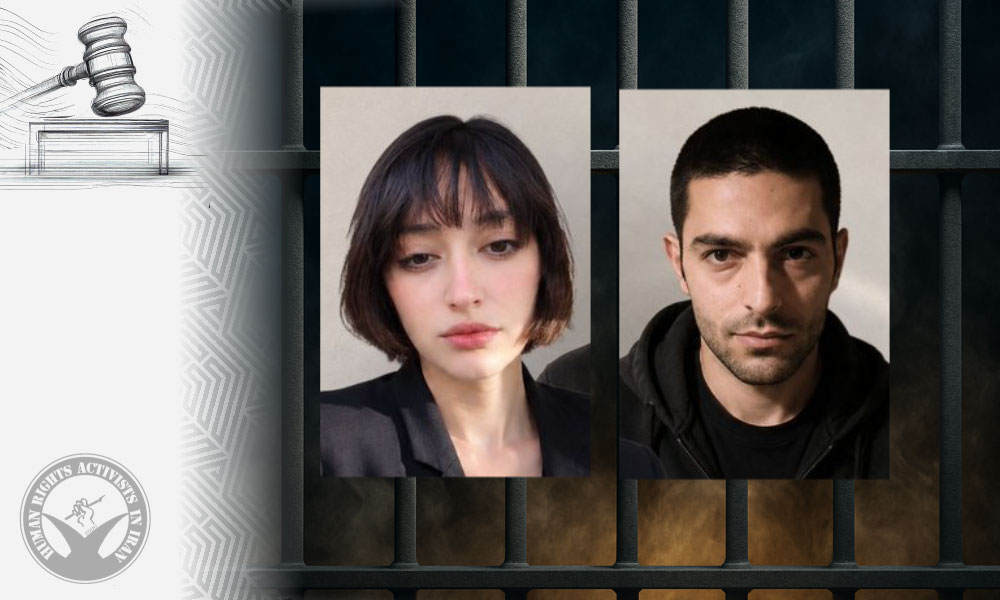
Ariana Kouchaki, Sharif University Student, Arrested

HRANA – Ariana Kouchaki, a student at Sharif University of Technology, was arrested by security forces in Tehran yesterday and taken to an undisclosed location.

The Student Council of Sharif University of Technology announced that the student was arrested by security forces in Tehran on Monday, June 1, 2026.

So far, no information has been made available regarding the reasons for his arrest or his place of detention.

Ariana Kouchaki is an undergraduate Industrial Engineering student who entered Sharif University of Technology in 2021.

Subscribe to Our Newsletter

Now is definitely not the time to stop reading!

Mahmoud Talkh Abi Sentenced to 5 Years in Prison on Appeal

HRANA – The five-year prison sentence of Mahmoud Talkh Abi, one of those arrested during the nationwide protests of 2026 and currently held in Sheiban Prison in Ahvaz, has been upheld in full by Branch 16 of the Khuzestan Province Court of Appeals.

Based on a ruling issued by Branch 16 of the Khuzestan Province Court of Appeals, Mr. Talkh Abi was sentenced to five years in prison on the charge of “disrupting public order,” pursuant to the Note to Article 286 of the Islamic Penal Code.

Previously, at the trial stage, Branch 1 of the Ahvaz Revolutionary Court had sentenced him to five years in prison, a two-year ban on leaving the country, and two years of mandatory attendance at the Office for the Promotion of Virtue and Prevention of Vice in connection with this charge. The supplementary punishments were overturned during the appeals process.

Mahmoud Talkh Abi was arrested on December 30, 2025, in connection with the nationwide protests and is currently being held in Sheiban Prison in Ahvaz.

In this case, the charge of “disrupting public order” was brought under the Note to Article 286 of the Islamic Penal Code. Under Iran’s legal framework, Article 286 itself pertains to the offense of “corruption on earth” (efsad-e fel-arz). However, according to its Note, if a defendant’s actions are deemed to have caused disorder or insecurity but are not considered sufficiently extensive to meet the threshold of “corruption on earth,” the death penalty is not applied, and the court may instead impose a Grade Five or Grade Six discretionary prison sentence (up to five years’ imprisonment). The court’s reliance on this Note rather than Article 618 of the Islamic Penal Code—which addresses ordinary public-order offenses and carries a maximum sentence of one year in prison—indicates that the case was handled through a security-oriented approach, with the harsher penalties provided under the Note to Article 286 serving as the basis for the sentence.

Rouya Ostovar Sentenced to 6 Years in Prison and Additional Punishments

HRANA – The conviction of Rouya Ostovar, a Baha’i citizen from Isfahan, has been fully upheld by Branch 47 of the Isfahan Province Court of Appeals. She had previously been sentenced to six years in prison along with additional penalties.

According to HRANA, on Tuesday, May 19, the sentence issued against Rouya Ostovar was upheld in its entirety by Branch 47 of the Isfahan Province Court of Appeals.

According to the court ruling, Ms. Ostovar was sentenced to five years in prison, a monetary fine, and deprivation of social rights for 15 years on charges of “conducting educational and promotional activities deemed contrary to Islamic law through the creation and administration of a WhatsApp group related to the Baha’i faith.” She was also sentenced to one year in prison on charges of “propaganda against the regime through publishing content online.”

The international Baha’i community has issued a statement expressing concern regarding the sentence imposed on this Baha’i citizen.

In response to the ruling, Ms. Ostovar stated that the WhatsApp group in question had only nine members, three of whom were Baha’is. According to her, the evidence presented against her mainly consisted of congratulatory messages for various occasions and an image in which a symbol of the Baha’i faith appeared in part of the picture.

The lower court’s verdict was formally communicated to her in April of this year.

Over the past decade, the Baha’i community in Iran has been subjected to more security and judicial pressure than any other religious minority in the country. HRA’s annual reports indicate that in 2025, an average of 62.41% of all reports concerning religious minorities involved violations of the rights of Baha’i citizens.

January 2026 Protests: Morteza Kiani Sentenced to Prison

HRANA – Morteza Kiani, one of those arrested during the 2025 nationwide protests in Izeh, has been sentenced by Branch 1 of the Revolutionary Court of Izeh to six months and one day in prison.

Based on information received by HRANA, the verdict was recently issued by Branch 1 of the Revolutionary Court of Izeh and communicated to his attorney, Hossein Ali Hatami. Mr. Kiani was sentenced to six months and one day in prison on the charge of “assembly and collusion against national security.”

A source familiar with the case and close to Mr. Kiani’s family told HRANA: “The court applied mitigating provisions, including notes related to Article 286 of the Islamic Penal Code, and, having found no evidence of more serious national security offenses, imposed a reduced sentence below the statutory minimum for the charge of assembly and collusion. As a result, Mr. Kiani was sentenced to six months and one day in prison.”

Previously, an indictment had been issued against the detained protester on charges of insulting the Supreme Leader, propaganda against the regime, and assembly and collusion against national security. He was acquitted of the first two charges during the initial trial proceedings.

Morteza Kiani was released from detention on January 27, 2026, after posting bail set at 500 million tomans. He had been arrested by security forces on January 1, 2026, during nationwide protests in the city of Izeh.

It should be noted that protests and strikes by shopkeepers and bazaar merchants began in Tehran on Sunday, December 28, 2025, and within two days spread beyond markets and commercial centers. With the participation of students, citizens, and various social groups, these protests became one of the largest protest movements of recent years. Following the crackdown by security and law enforcement forces, thousands were killed or injured, and tens of thousands were arrested or summoned by security agencies. For more information, readers may refer to HRANA’s comprehensive report titled “Crimson Winter,” documenting the first fifty days following the outbreak of Iran’s nationwide protests.

Baha’i Citizen Barsa Maleki Sentenced to Prison and Additional Punishments

HRANA – Barsa Maleki, a Baha’i resident of Mashhad, has been sentenced by the Revolutionary Court of Mashhad to two years of imprisonment, a monetary fine, and deprivation of social rights.

According to a ruling issued by Branch 1 of the Revolutionary Court of Mashhad and served on this Baha’i citizen, Mr. Maleki was convicted under Article 500 bis of the Islamic Penal Code for the charge of engaging in educational or propagandistic activities deemed deviant, contrary to, or disruptive of the sacred laws of Islam. He was sentenced to two years and one day in prison, an 80 million toman fine, and deprivation of social rights for a period of six years.

A source familiar with the matter confirmed the news to HRANA, stating: “The verdict was issued some time ago and was formally communicated to this Baha’i citizen last week.”

Barsa Maleki was arrested on January 22 of 2026, along with eleven other individuals, during a birthday gathering in Mashhad.

After 24 days in detention, he was released from Vakilabad Prison in Mashhad on bail.

Over the past decade, the Baha’i community in Iran has been subjected to more security and judicial pressure than any other religious minority in the country. HRA’s annual reports indicate that in 2025, an average of 62.41% of all reports concerning religious minorities involved violations of the rights of Baha’i citizens.

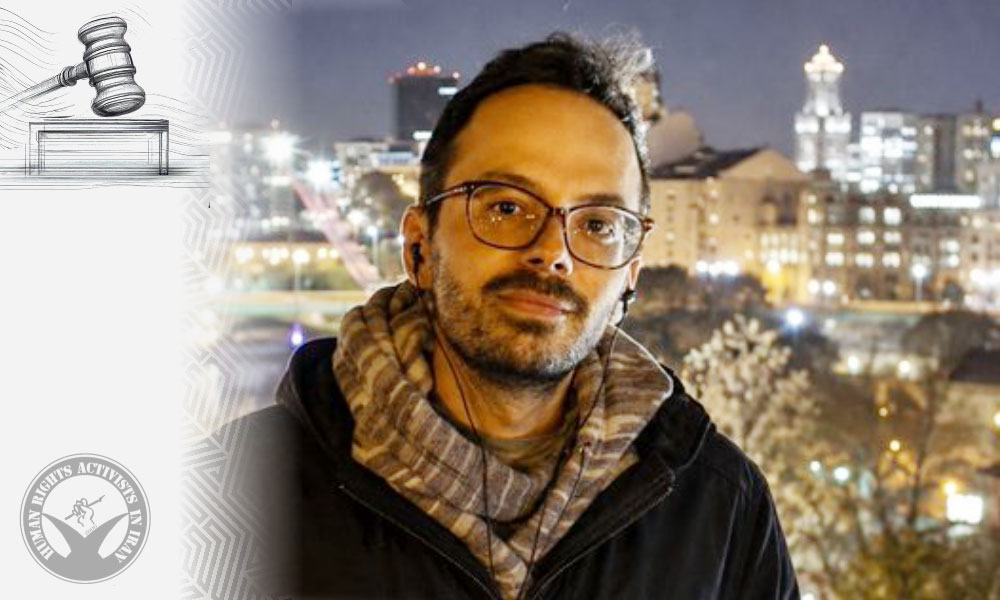
Seyed Sadra Hosseini Arrested in Tehran

HRANA – Seyed Sadra Hosseini, a graduate of the University of Tehran, was arrested by security forces in Tehran on Monday, June 1, and transferred to an undisclosed location.

Based on information received by HRANA, Mr. Hosseini was arrested by security forces in Tehran on Monday, June 1.

As of the time of this report, no information has been obtained regarding the authority responsible for his arrest, the place of detention, the reasons for his detention, or any charges brought against him.

Seyed Sadra Hosseini is a bookseller, a graduate of the University of Tehran, and a resident of Tehran.