Unusual Searches Before Visits: Families Protest at Greater Tehran Prison

HRANA – Several families of political prisoners held in Greater Tehran Prison have expressed dissatisfaction with what they describe as arbitrary and unusual body searches prior to visiting their loved ones. These families report that the intensity and manner of the searches have changed compared to previous visits, causing distress and sparking protests among some visitors.

Numerous calls to HRANA from prisoners’ families indicate that the searches have become stricter than before, with some describing the new measures as “incompatible with human dignity.”

The wife of one prisoner, who asked to remain anonymous for security reasons, told HRANA: “Some of the inspection officers used aggressive tones and physical contact, which led to verbal altercations between families and staff. Families expect mutual respect, especially in such sensitive situations.”

According to HRANA’s findings, these changes in search procedures were implemented without any clear explanation, leading to growing dissatisfaction among visitors. Some families reported feeling humiliated by the manner of the body inspections.

Greater Tehran Prison has previously faced criticism for poor detention conditions, overcrowding, and inadequate infrastructure. Past reports have shown that families often encounter numerous difficulties during visitation processes, and the new inspection policies have only added to these challenges.

Prisoner Executed in Khorramabad Prison

HRANA – At dawn on Sunday, July 13, the death sentence of a prisoner previously convicted of murder was carried out in Khorramabad Prison.

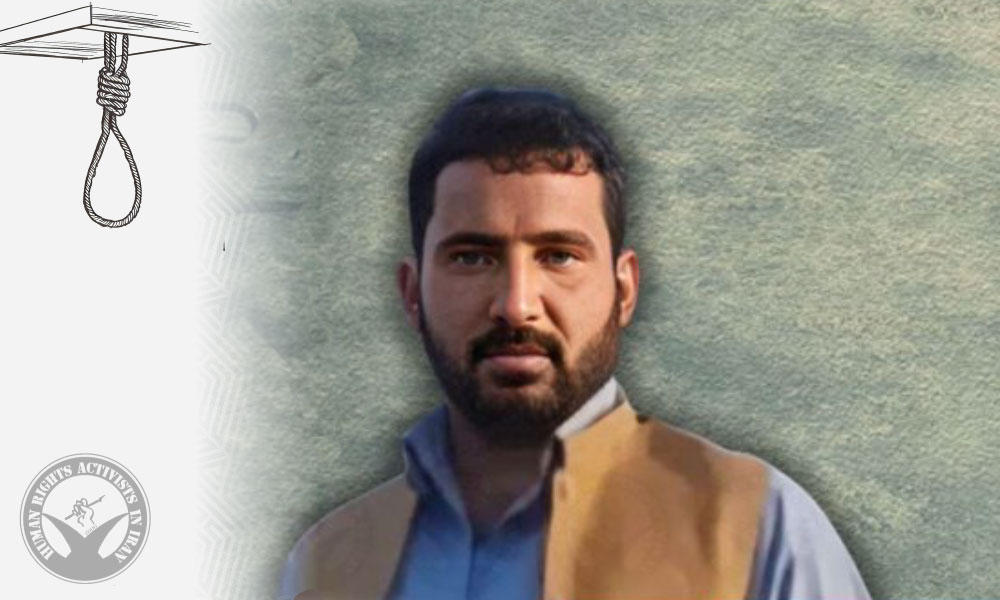
HRANA has identified the executed individual as Mosib Segvand. He was hanged at dawn on Sunday, July 13. According to information received by HRANA, Segvand was arrested in 2020 on murder charges and later sentenced to death by the criminal court.

As of the time of this report, the execution has not been officially announced by prison authorities or responsible institutions.

In 2024, according to 812 reports compiled by HRANA, the Iranian regime executed 930 individuals in its prisons—marking the highest number of executions in the past 12 years. Despite the scale of these executions, prison officials and other relevant authorities publicly acknowledged only 6% of them, highlighting the regime’s lack of transparency and accountability.

Prisoner Executed in Lakan Prison, Rasht

HRANA– On Wednesday, July 16, the execution of a prisoner previously sentenced to death for murder was carried out in Lakan Prison in Rasht.

HRANA has identified the prisoner hanged at dawn on Wednesday as Peyman Afshar, approximately 43 years old. According to information received by HRANA, Mr. Afshar had been arrested on murder charges and later sentenced to death by the criminal court.

As of the time of this report, the execution has not been officially announced by prison authorities or responsible institutions.

According to HRANA reports, in 2024, only 6% of executions were announced by official bodies or domestic media outlets. Over the past five years, 77% of executions have gone unreported—commonly referred to as secret executions. In some of these cases, the lack of transparency is so severe that the death-row prisoners are denied even the chance for a final visit with their families.

Execution of Two Prisoners in Kermanshah

HRANA– At dawn on Tuesday, July 15, the execution of a prisoner previously sentenced to death for murder was carried out at Dizelabad Prison in Kermanshah.

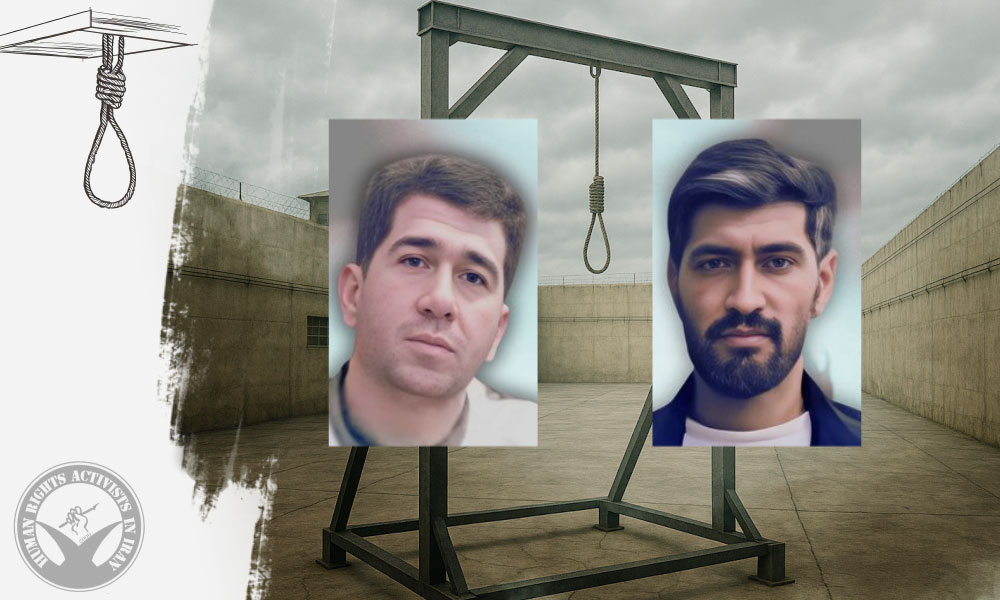
HRANA has confirmed the identity of one of the executed prisoners as Hamed Jalilian. He had been arrested on charges of murder and later sentenced to death by the criminal court.

Iran Human Rights has identified the second executed prisoner as Kianoush Khosravi Siah Bidi, a resident of Kermanshah County. According to the report, Mr. Khosravi was arrested about six years ago on murder charges and subsequently sentenced to death by the criminal court.

As of the time of this report, the execution of these prisoners has not been officially announced by prison authorities or relevant institutions.

In 2024, according to 812 reports compiled by HRANA, the Iranian regime executed 930 individuals in its prisons—marking the highest number of executions in the past 12 years. Despite the scale of these executions, prison officials and other relevant authorities publicly acknowledged only 6% of them, highlighting the regime’s lack of transparency and accountability.

Drug-Related Offenses: A Prisoner Executed in Malayer Prison

HRANA – On Saturday, July 12, the death sentence of a prisoner previously convicted on drug-related charges was carried out in Malayer Prison.

HRANA has identified the prisoner hanged at dawn on Saturday, July 12, as Jalal Nazarbeigi, a resident of Razan County in Hamadan Province.

According to information obtained by HRANA, Mr. Nazarbeigi had previously been arrested on drug-related charges and later sentenced to death by the Revolutionary Court.

As of the time of this report, the execution has not been officially announced by prison authorities or relevant institutions.

In 2024, according to 812 reports compiled by HRANA, the Iranian regime executed 930 individuals in its prisons—marking the highest number of executions in the past 12 years. Despite the scale of these executions, prison officials and other relevant authorities publicly acknowledged only 6% of them, highlighting the regime’s lack of transparency and accountability.

Subscribe to Our Newsletter

Now is definitely not the time to stop reading!

Report on the Latest Status of Afrooz Kian Ersi in Dolatabad Prison, Isfahan

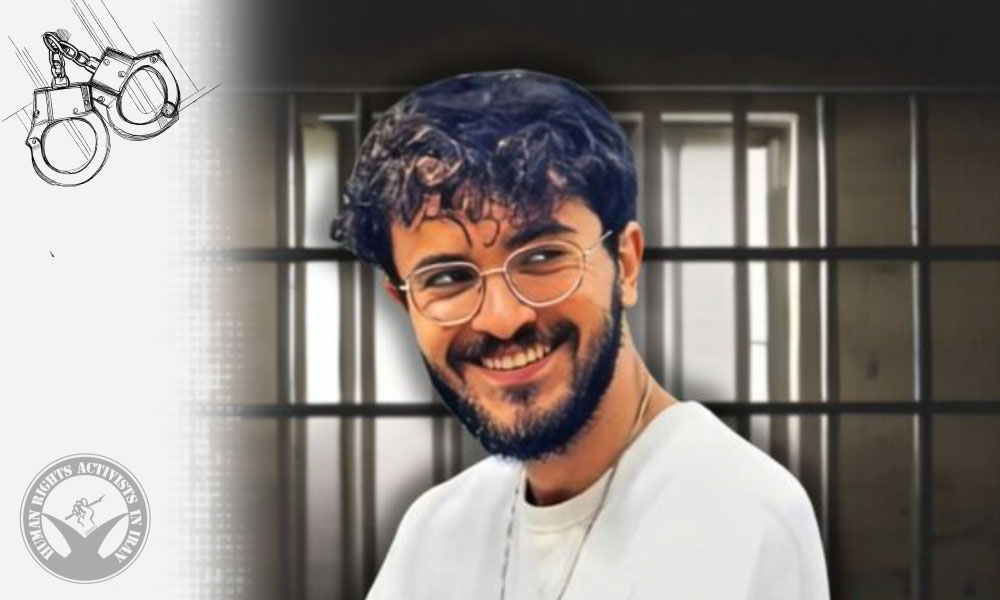
HRANA – Afrooz Kian Ersi, a political prisoner and artist based in Isfahan, is currently serving a prison sentence in Dolatabad Prison.

According to information received by HRANA, Ms. Kian Ersi began serving her sentence in early May 2025. In late 2023, the Revolutionary Court sentenced her to six months of discretionary imprisonment and an additional six months of suspended imprisonment on charges of “propaganda against the regime.” The Court of Appeals later upheld the verdict in full.

A source close to her family confirmed the details to HRANA, stating: “The charges against Afrooz were based on her creation of a mosaic artwork titled Woman, Life, Freedom. She is currently experiencing deteriorating mental health. She has submitted a request to serve her sentence under electronic monitoring and is awaiting a decision.”

Ms. Kian Ersi was previously arrested in 2023 in connection with her artistic and social activities.

Three Sentenced to Death, Two to Long Prison Terms in Khuzestan Political Case

HRANA – The Ahvaz Revolutionary Court has sentenced political prisoners Masoud Jamei, Alireza Merdasi, and Farshad Etemadifar each to two death sentences and one year in prison. In the same case, the court handed down a combined 27 years of imprisonment to Saman Hormatnejad and Davoud Hormatnejad.

Branch 1 of the Ahvaz Revolutionary Court, presided over by Judge Adibimehr, issued the verdicts and formally delivered them to the defendants on July 11. Judge Adibimehr convicted Jamei, Merdasi, and Etemadifar of corruption on earth (efsad fel-arz), membership in rebel groups, and propaganda against the regime, sentencing each to two executions and one year behind bars. He also sentenced Hormatnejad and Hormatnejad to 12 and 15 years in prison, respectively, on similar charges.

According to the court rulings, membership in the Mojahedin-e Khalq Organization (MEK) was cited as the basis for the charges. This case constitutes one of the harshest security-related verdicts issued in Khuzestan province in recent months.

A source familiar with the case, who spoke to HRANA on condition of anonymity due to security concerns, stated: “These individuals have spent nearly two years in pre-trial detention in a state of uncertainty. During this time, they were denied access to legal representation and adequate medical care. The verdicts were issued despite clear violations of fair trial standards. The confessions attributed to the defendants were obtained under coercion and in inhumane conditions.”

Farshad Etemadifar, Saman Hormatnejad, and Davoud Hormatnejad were arrested by agents of the Ministry of Intelligence on June 16, 2023. Masoud Jamei and Alireza Mordasi were also arrested by security forces in Ahvaz on August 1, 2023, and transferred to Sheyban Prison.

Following these arrests, Tasnim News Agency, affiliated with the Islamic Revolutionary Guard Corps (IRGC), published a report claiming the detainees were connected to the “Monafeqin network” (a term used by the Islamic Republic to refer to the MEK) and were planning “sabotage operations” in Khuzestan, Fars, and Kohgiluyeh and Boyer-Ahmad provinces.

Farshad Etemadifar is from Kohgiluyeh and Boyer-Ahmad Province, while Masoud Jamei and Alireza Merdasi (also known as Hamidavi) are residents of Ahvaz. Masoud Jamei, 47, suffers from liver disease and stomach cancer. His health condition in prison is critical, and he urgently needs treatment in specialized medical facilities outside the prison. Before his arrest, he worked for the National Iranian Oil Company. In March 2025, he, along with his wife Zeinab Hezbapour and children Nahid, Dalal, and Roghayeh Jamei, was tried in the Bavi Revolutionary Court on charges related to alleged connections with an opposition group.

Sajjad Haeri Arrested by Security Forces

HRANA – On Saturday, July 12, Sajjad Haeri, the brother of political prisoner Ahmadreza Haeri—currently held in Ghezel Hesar Prison in Karaj—was arrested by security forces in Damavand and taken to an undisclosed location.

His arrest took place on the evening of Saturday, July 12, at his family’s home in Damavand. As of the time of this report, no information is available regarding the reasons for his arrest, his whereabouts, or the charges against him.

Sajjad Haeri is the brother of Ahmadreza Haeri, a political prisoner held in Ghezel Hesar Prison in Karaj.

Four Citizens Arrested by Security Forces

HRANA– Farya Chavoshini, Mohammadollah Rezaei, Esmail Choukali, and Zubair Mahmoudi—residents of Dehgolan, Bukan, and Piranshahr—have been arrested by security forces and taken to an undisclosed location.

According to Kurdpa, Mohammadollah Rezaei was arrested in Dehgolan, while Farya Chavoshini and Esmail Choukali were detained in Bukan, and Zubair Mahmoudi in Piranshahr.

Mr. Mahmoudi was arrested on Thursday, July 10, and the other three individuals on Saturday, July 12.

As of the time of this report, no information has been made available regarding the reasons for the arrests, the whereabouts of the detainees, or the charges against them.

Supreme Court Rejects Death-Row Political Prisoner Mehdi Hasani’s Retrial Request for the Fourth Time

HRANA — The Supreme Court has, for the fourth time, rejected the retrial request of Mehdi Hasani, a political prisoner on death row currently held in Ghezel Hesar Prison in Karaj.

Amin Adel Ahmadian, Hasani’s defense attorney, announced the decision in a public statement, saying: “The Supreme Court rejected the retrial request without retrieving the original case file from the lower court and likely without reviewing the legal brief I submitted. I have also not yet been granted access to examine Mr. Hasani’s case file.”

This marks the fourth rejection of a retrial request for Hasani. The third was denied in April 2025, and the second earlier that same month. The first request was dismissed on February 24, 2024, by Branch 39 of the Supreme Court.

On January 26, 2025, Mehdi Hasani and fellow death row political prisoner Behrooz Ehsani Eslamlou were transferred from Evin Prison to Ghezel Hesar under the pretense of receiving medical care. The execution of their death sentences was subsequently paused after their retrial requests were registered and initially accepted by the Supreme Court.

In September 2024, both men were tried by Branch 26 of Tehran’s Revolutionary Court, presided over by Judge Iman Afshari. They were sentenced to death on charges including baghi (armed rebellion), moharebeh (waging war against God), efsad-e fel arz (corruption on earth), gathering classified information, and assembly and collusion against national security.

Alleged membership in the People’s Mojahedin Organization of Iran (PMOI/MEK) is among the central charges brought against them.

Mehdi Hasani, approximately 49 years old, is married and the father of two. He was arrested on September 9, 2022, while attempting to leave the country through Zanjan and was subsequently transferred to Evin Prison.