Number of Executions in Karaj Central Penitentiary Rises to Three

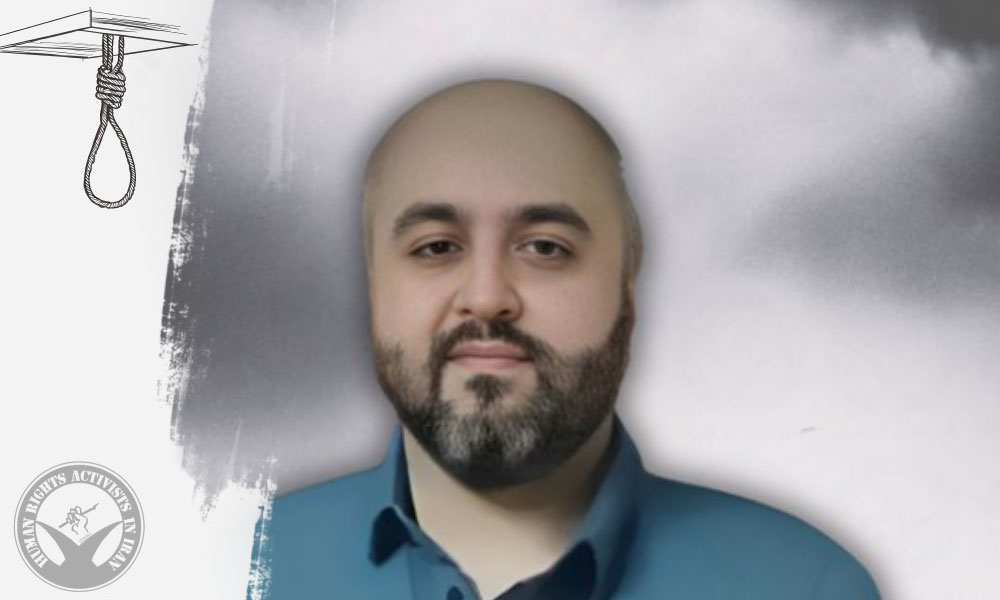
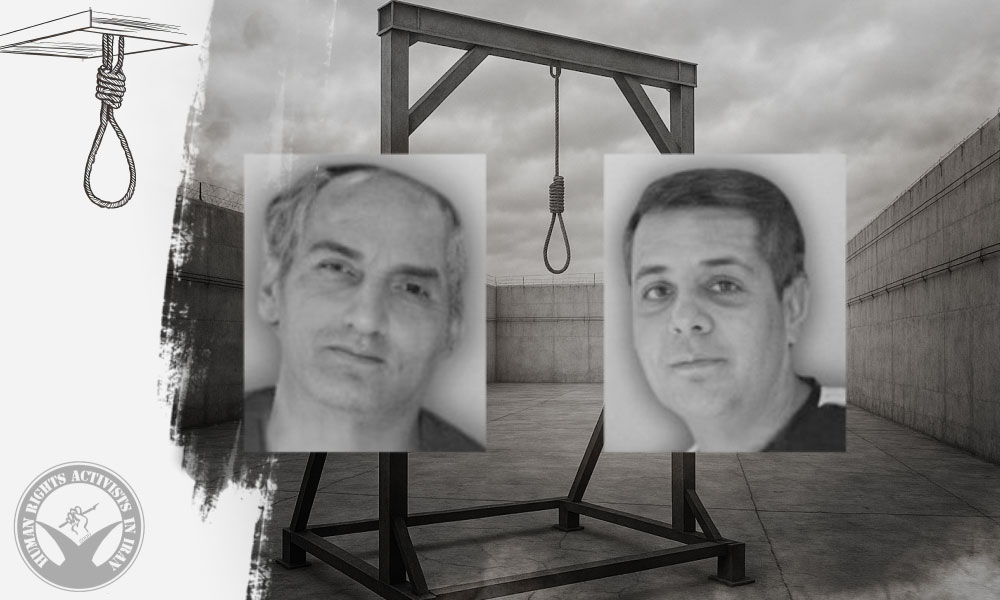
HRANA– With the identification of two additional inmates executed on Wednesday, July 10 (18 Tir), in Karaj Central Penitentiary, the number of people executed that day in the prison has risen to three.

In addition to the execution of Amin Shokripour, who had previously been sentenced to death on drug-related charges, two more inmates were hanged. HRANA has confirmed their identities as Abdolhossein Jaberi and Saeed Mehrabi, both from Khorramabad.

According to information received by HRANA, these inmates were arrested four years ago on drug-related charges and were later sentenced to death by the Revolutionary Court.

As of the time of this report, prison authorities and official sources have not publicly confirmed these executions.

According to HRANA’s report, in 2024, over 52 percent of executed prisoners had been convicted on drug-related charges. Over the past ten years, individuals convicted of drug trafficking have accounted for 40 percent of all executions. Unfortunately, HRANA’s statistics show no progress in reducing executions for drug-related offenses.

Number of Executions in Qom Prison Rises to Five

HRANA – With the identities of two additional inmates confirmed, the number of individuals executed at Qom Prison on the morning of Tuesday, June 24, has risen to five.

According to HRANA, citing Iran Human Rights, five inmates—including one woman—were executed at Qom Prison on Tuesday, June 24, 2025.

In addition to the previously reported executions of Azim Mohammadi, Hassan Rostam Nejad, and Tal’at Sabzi—who had all been sentenced to death for murder—the executions of two more inmates were carried out. These individuals were identified as Fereydoun Naziri, 36, from Mehrshahr, Karaj, and Hadi Naseri, 26, from Robat Karim.

According to the report, Mr. Naziri was arrested three years ago on murder charges following a dispute over financial matters. Mr. Naseri was also arrested three years ago for murder. Both were later sentenced to death by the criminal court.

As of now, prison authorities and official sources have not publicly confirmed these executions.

Iranian Foreign Minister Confirms Arrest of Franco-German Citizen

HRANA– Abbas Araghchi, Iran’s Minister of Foreign Affairs, confirmed in an interview with a French magazine that Lennart Monterlos, a Franco-German national, has been arrested in Iran. He claimed that the individual was detained for committing a crime.

According to ISNA, in an interview with a French publication, Araghchi stated that the arrest was due to “committing a crime.” According to him, “an official notice regarding this individual’s status has been sent to the French embassy.”

A while ago, a German-language news outlet covering news related to France and the world reported that Lennart Monterlos, an 18-year-old French citizen, had traveled to Iran by bicycle. He went missing on June 16 , and there has been no news of him since.

Two Prisoners Executed in Qom Prison

HRANA News Agency – At dawn on Thursday, July 10, two prisoners previously sentenced to death on murder charges were executed in Qom Prison.

According to HRANA, the news agency of Human Rights Activists in Iran, the executions took place early this morning, with both individuals hanged after being convicted of murder in criminal courts.

Efforts by HRANA to confirm the identities of the executed prisoners and obtain further details are ongoing.

As of the time of this report, prison authorities and relevant institutions have not officially announced the executions.

In 2024, according to 812 reports compiled by HRANA, the Iranian regime executed 930 individuals in its prisons—marking the highest number of executions in the past 12 years. Despite the scale of these executions, prison officials and other relevant authorities publicly acknowledged only 6% of them, highlighting the regime’s lack of transparency and accountability.

Arrest of Alleged Israeli Agents Accused of Disrupting Iran’s Gold and Currency Markets

HRANA– The spokesperson for Iran’s Parliamentary Economic Commission has announced the arrest of several individuals she described as “Israeli operatives” accused of disrupting the country’s gold and currency markets.

According to HRANA, quoting ILNA, Commission spokesperson Fatemeh Maghsoudi claimed that the detainees were arrested for “links to Israel and for destabilizing the gold and currency markets.”
She alleged that “the turbulence in Iran’s gold and currency markets has been caused by foreign interference,” and said: “Israeli agents were entering the markets with large sums of money and triggering extreme volatility. They were previously unknown figures who played a major role in the economic imbalance. These spies were the key cause of the disruptions, but now they’ve been neutralized.”

Maghsoudi offered no details on the judicial proceedings or legal status of the detainees. She added: “Many of them have been identified and arrested. Security agencies are continuing efforts to locate and remove these individuals from the market.”

The report did not mention the number or identities of those arrested.

In recent years, Iranian officials across various branches of government have frequently attributed political and economic crises to the interference of “foreign enemies” or “infiltrators.” Currency and gold rates remain key indicators of Iran’s economic health and are closely watched by both citizens and economic actors.

Subscribe to Our Newsletter

Now is definitely not the time to stop reading!

Details on the Current Condition of Political Prisoner Omid Fathi in Vakilabad Prison, Mashhad

HRANA – Omid Fathi, a political prisoner, is serving his sentence in Vakilabad Prison in Mashhad without being held separately from prisoners convicted of non-political crimes, in violation of the principle of separation of crimes.

Based on information received by HRANA, Mr. Fathi is being held in Ward 104, designated for general crimes, without regard for the principle of separating prisoners based on the nature of their charges. On June 11, 2025, Branch 1 of the Mashhad Revolutionary Court sentenced him to a fine of 50 million tomans in lieu of six months in prison. Due to his inability to pay the fine, he is now serving the prison sentence.

A source close to Mr. Fathi’s family confirmed to HRANA: “After his arrest, Omid Fathi was interrogated at Branch 901 of the Mashhad Prosecutor’s Office and faced charges such as ‘propaganda against the regime,’ ‘disturbing public opinion,’ and ‘calling for an election boycott on social media.’ The charge of insulting judicial officials was also raised. Another part of his case, which includes charges such as insulting the Supreme Leader, was supposed to be handled in a separate court session. However, due to the timing of Israel’s attack on Iran, that session was not held.”

It is worth noting that Omid Fathi suffers from a Lumbar disc pain. According to the same source, due to sciatic nerve pressure, he walks with a stoop and is in poor physical condition.

Omid Fathi was arrested by security forces in Mashhad on June 3, 2025, and was later transferred to Vakilabad Prison.

Fathi, a resident of Mashhad, has previously faced security-related pressures due to his activism.

Miandoab: Prisoner Executed in Public

HRANA– On Wednesday, July 9, a prisoner previously sentenced to death for the murder of four women was executed in public in the Baruq District of Miandoab County.

According to Mizan News Agency, the Chief Justice of West Azerbaijan Province stated: “The convict was accused of committing four counts of premeditated murder of Muslim women in the Baruq District of Miandoab. After proceedings in the prosecutor’s office and criminal court—with the presence of the defendant, their attorney, and the victims’ families—the Criminal Court Branch One issued a death sentence, which was later upheld by the Supreme Court.”

Nasser Atabati added: “At the request of the victims’ families, the death sentence was carried out at dawn today in public in the Baruq District of Miandoab County.”

In 2024, according to 812 reports compiled by HRANA, the Iranian regime executed 930 individuals in its prisons—marking the highest number of executions in the past 12 years. Despite the scale of these executions, prison officials and other relevant authorities publicly acknowledged only 6% of them, highlighting the regime’s lack of transparency and accountability.

Two Prisoners Executed in Tabriz Prison

HRANA News Agency – At dawn yesterday, two prisoners who had previously been sentenced to death in a joint case involving drug-related charges and the killing of an officer during their arrest were executed in Tabriz Prison.

The identities of the two prisoners executed on Monday, July 7, have been confirmed by HRANA as Amin Khosravi and Saeed Asadzadeh.

According to information received by HRANA, the two were arrested in 2021 in a joint case on charges related to drug offenses and the killing of an officer. They were initially arrested for drug-related crimes and allegedly killed a law enforcement officer during the arrest.

As of the time of this report, the execution of these individuals has not been officially announced by prison authorities or relevant institutions.

In 2024, according to 812 reports compiled by HRANA, the Iranian regime executed 930 individuals in its prisons—marking the highest number of executions in the past 12 years. Despite the scale of these executions, prison officials and other relevant authorities publicly acknowledged only 6% of them, highlighting the regime’s lack of transparency and accountability.

Five Protesters from the 2022 Nationwide Protests Sentenced to Death

HRANA– Rezgar Beigzadeh Babamiri, Pejman Soltani, Ali (Soran) Ghasemi, Kaveh Salehi, and Teyfour Salimi Babamiri — all detained during the 2022 nationwide protests — have been sentenced to death by the Revolutionary Court of Urmia.

According to HRANA, the news agency of the Human Rights Activists in Iran, these individuals were jointly tried and sentenced to death in the same case. The charges against them include baghi (armed rebellion), moharebeh (enmity against God), and leading and forming a rebellious criminal group. Four of them were sentenced to death more than once. The verdicts were officially communicated to their lawyers today, Monday, July 7.

Ali (Soran) Ghasemi, Pejman Soltani, and Kaveh Salehi have each been sentenced to death three times on charges of baghi, moharebeh, and leading and forming a rebellious criminal group. Rezgar Beigzadeh Babamiri received two death sentences on charges of baghi and leadership in a rebellious group. Teyfour Salimi Babamiri has also been sentenced to death for allegedly leading and forming such a group.

Additionally, eight other defendants in the same case have received prison sentences and monetary fines.

Currently, Pejman Soltani, Rezgar Beigzadeh Babamiri, and Ali (Soran) Ghasemi are being held in Ward 2 of Urmia Prison. Previously, they were sentenced to death, 15 years, and 10 years in prison, respectively, for allegedly killing a security officer.

Pejman Soltani, Rezgar Beigzadeh Babamiri, Ali (Soran) Ghasemi, and Kaveh Salehi were arrested in April 2023. Teyfour Salimi Babamiri was arrested by security forces in March 2023 and released after approximately 18 months in detention.

Baha’i Citizen Leva Samimi Arrested in Sari

HRANA – Leva Samimi, a Baha’i citizen from Juybar and the wife of Noyan Hejazi, was arrested earlier today by security forces outside Kachouei Detention Center in Sari and taken to an undisclosed location.

According to HRANA, the news agency of Human Rights Activists in Iran, Samimi had been instructed to visit the detention center for a scheduled meeting with her husband. However, upon arriving at the facility, she was detained by security agents and transferred to an unknown location.

Her husband, Noyan Hejazi, also a Baha’i from Juybar, was arrested without a judicial warrant on Wednesday, June 25, at his home. He is currently being held in limbo at Kachouei Detention Center.

As of this report, no information has been made available regarding the charges against Leva Samimi or the reasons for her arrest.

Over the past decade, the Iranian Bahá’í community has been disproportionately targeted by Iran’s security forces and judiciary—more than any other minority group. In the past three years, an average of 72 percent of the reports on religious rights violations collected by HRANA have documented the Iranian regime’s repression of the Bahá’í community.