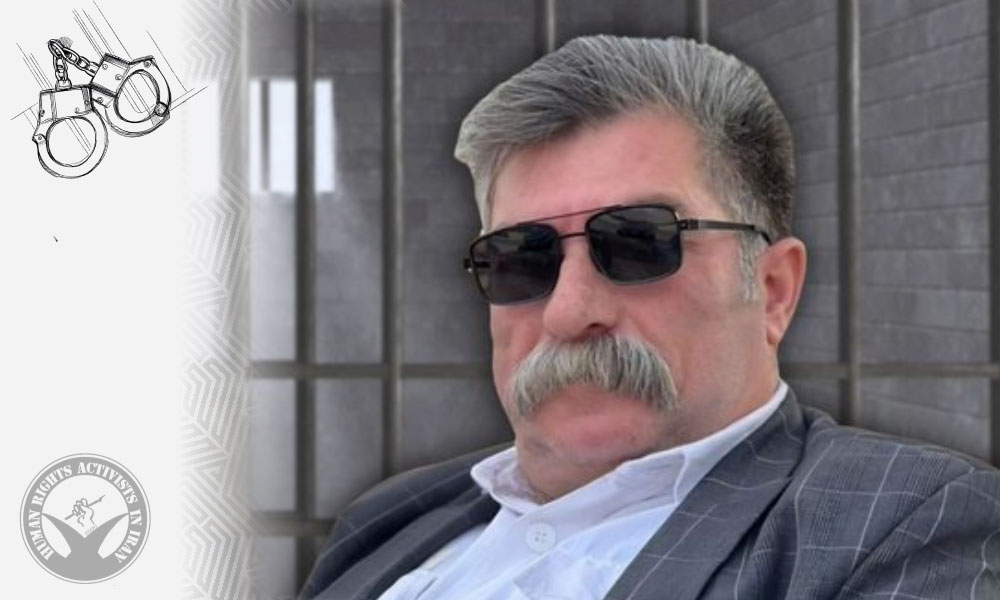
Mock Execution: Baha’i International Community Expresses Concern Over Peyvand Naimi’s Fate in Kerman Prison

HRANA – Peyvand Naimi (Naeimi), a Baha’i citizen, remains in a state of legal limbo more than two months after his arrest, held in solitary confinement in Kerman Prison. During this time, he has reportedly been subjected to mock executions and torture aimed at extracting forced confessions. In this regard, the Baha’i International Community has issued a statement expressing concern over his fate and calling for urgent international attention to his situation.

The Baha’i International Community, expressing concern over Naimi’s condition in a statement shared with HRANA, reported that he has endured two mock executions, torture, and prolonged interrogations, placing him at serious risk. Iranian authorities are reportedly attempting to coerce him into confessing to crimes he has not committed. Staged executions are among the most severe forms of psychological torture and are prohibited under international law. Naimi is currently held in solitary confinement in Kerman Prison and has developed involuntary eye twitching and digestive problems. Despite this, prison officials have denied him medical care.

The statement further notes that from March, Naimi was subjected to ten days of intense torture and interrogation. On some days, his hands and feet were bound and attached to a wall for up to 48 hours. In addition to physical abuse, he has faced insults targeting his religious beliefs and has repeatedly been subjected to staged executions.

A family member living outside Iran stated that his physical and psychological condition has severely deteriorated due to the mistreatment, and that during visits, he appeared emotionally broken under the pressure.

According to the statement, on February 28, Naimi was transferred to an IRGC detention facility and later returned to Kerman Prison. Authorities have claimed that he “expressed joy” on the day of Ali Khamenei’s death and that he was involved in attacks against Basij forces and the killing of a Basij member during protests on January 8. However, he had been arrested prior to the killing and, as a detainee without access to communication devices, could not have played any role in those events.

Additionally, on February 1, a video of Naimi’s forced confessions was broadcast on state television, though the conditions under which it was recorded remain unclear. To date, no trial has been held, no verdict has been issued, and no evidence has been presented to substantiate the allegations against him.

Pivand Naimi was arrested on January 8, 2026, by security forces at his workplace and transferred to Kerman Prison.

Over the past decade, the Baha’i community in Iran has faced more security and judicial pressure than any other religious minority. A review of HRA’s annual reports indicates that, over the past year, an average of 62.41% of reports concerning religious minorities involved violations of the rights of Baha’i citizens.

Day 24 of U.S. and Israeli Attacks on Iran: A Deadly Day for Civilians

HRANA– In the last 24 hours, and as of March 23, 2026, at 16:00 ET, HRANA has recorded at least 379 attacks across 206 incidents in 20 provinces, resulting in a total of at least 175 casualties (killed and injured, both civilian and military). Fifty-five percent of all attacks carried out in the past 24 hours were concentrated in Tehran.

According to information recorded and verified by HRANA, from the first minutes of the day until the end of March 23, 2026 (Tehran time), at least 36 civilians were killed and 138 civilians were injured.

Aggregated data since the beginning of the conflict on February 28, 2026, based on incidents recorded in the incident tab and using minimum values for figures marked “more than”:

• Civilian fatalities: 1,443 people (including at least 217 children)

• Military fatalities: 1,167 people

• Unclassified fatalities (civilian/military): 658 people

Note on Official Statements: Alongside HRANA’s independent reporting, several aggregated official figures were also published today by state-affiliated media, including:

The head of Tehran Province Emergency Center stated: “So far, 6,848 people in Tehran have been injured as a result of the Ramadan-imposed war. Of these, 5,608 were transferred to medical centers after receiving initial treatment by Tehran emergency teams. Unfortunately, 636 people have been killed in Tehran during this period.”

The Cultural Deputy of the Foundation of Martyrs and Veterans Affairs in Kohgiluyeh and Boyer-Ahmad Province stated: “The names of 16 individuals from this province who were killed in the U.S. and Zionist regime’s imposed war against our country, while in other provinces, have been identified and announced.”

1. Overview of Incidents in the Last 24 Hours

In the last 24 hours, incidents were reported across multiple provinces, reflecting a geographically dispersed pattern of hostilities. In a large portion of the incidents, the method/type of attack has not yet been confirmed and has been recorded as “undetermined.” In cases where the attack type was identifiable, airstrikes and drone attacks were reported.

Preliminary analysis indicates that Tehran Province, accounting for 55% of all recorded attacks, ranks first among the most targeted provinces. Isfahan and Alborz provinces follow jointly with 10% each, while East Azerbaijan ranks third with 7%. The list is followed by Yazd, Lorestan, and Hormozgan provinces, respectively.

Map of Attacks Day 24
2. List of Objects Reported Hit

In the past 24 hours, the recorded attacks have damaged 46 distinct objects or facilities. These include a range of different types of targets. In some cases, damage caused by nearby strikes or secondary consequences of the attacks has also been reported.

Examples of targets recorded over the past 24 hours:

• Meythami Base (Garmdareh)

• Imam Ali Garrison (Khorramabad)

• Air Base (Bushehr)

• Headquarters of the Air Force (Tehran)

• Army Aviation (Isfahan)

For a number of the listed targets, the exact nature of the target (civilian/military/dual-use) is still under review, and classifications may be revised as additional information becomes available.

Facilities Protected Under International Humanitarian Law:

Under international humanitarian law, medical facilities, educational institutions, humanitarian facilities, religious sites, and emergency service centers are among the many objects that maintain special protected status and are afforded special protection. In the past 24 hours, HRANA has preliminarily recorded the following cases:

• Shohada-ye Pasdar School (Khorramabad)

• A 17-unit residential building (Tehran)

• Velayat Cultural Center (Shahr-e Rey)

• Three residential units (Tehran)

• Gas Company (Tehran)

3. Civilian Casualties

In the past 24 hours, at least 36 civilian citizens, including 3 children, have been killed, and 138 civilians, including 2 children and 1 woman, have been injured. All classifications are preliminary and may be updated as new information becomes available.

4. Military Casualties

During the period covered by this report, no reports of military casualties have been received. Military casualties are generally reported in the context of attacks on Army and Islamic Revolutionary Guard Corps (IRGC) bases. Where possible, organizational affiliation and operational context are being assessed; however, not all details have yet been independently verified.

In some incidents, individuals have been killed in the vicinity of military targets; however, their official status has not yet been definitively determined. These cases remain under review, and if reliable information indicating a different status becomes available, the classification may be revised accordingly.

It is believed that military casualties are significantly higher than the figures reported in these reports. However, due to the sensitive nature of military information and the limited access of human rights groups and media to locations where military forces are present, this section largely reflects reports of senior officers or military personnel who were present in urban areas.

5. Confirmed but Unspecified Casualties

Of the reported casualties in the past 24 hours, one death remains classified as undetermined, meaning that HRANA has not yet been able to establish with sufficient certainty whether the individual was a civilian or military personnel.

Today, 16 burials resulting from attacks in previous days have been recorded.

A Note on HRANA Methodology

Note that, in line with HRANA policy, this report reflects only incidents that occurred within the territorial borders of Iran.

The information contained in this report is compiled through HRANA’s established documentation network. Data is collected from a combination of field reports, local contacts, medical and emergency sources, civil society networks, and open source materials, including publicly available images, videos, and official statements where relevant. Each reported incident is logged and assessed through an internal review process before publication.

Given the evolving nature of hostilities, information is gathered on a rolling basis and reflects the status of documentation at the time of publication.

The figures presented in this report may not reflect the full scope of harm. Ongoing hostilities, damage to infrastructure, communication disruptions, restricted access to affected areas, and security risks for sources may limit the ability to document incidents comprehensively.

Delays in medical reporting, difficulties in confirming identities, and restricted access to certain provinces may result in temporary undercounting. As access improves or additional evidence emerges, casualty figures and incident classifications may be revised accordingly.

HRANA remains committed to transparency, methodological rigor, and the continual updating of its findings as new verified information becomes available.

Report on the Arrest of an Austrian-Iranian Dual National in Tehran

HRANA – Abbas Danesh, an Iranian-Austrian dual national, was arrested in Tehran on March 10, 2026, by intelligence agents of the Islamic Revolutionary Guard Corps (IRGC). Despite the passage of time, no information has been obtained regarding his place of detention.

A family member, in an interview with HRANA, confirmed the arrest and stated that Mr. Danesh was detained in the Fereshteh area of Tehran without the presentation of a warrant or judicial order.

The source added that Mr. Danesh had returned to Iran in late February to attend to personal administrative and financial matters.

According to individuals close to Mr. Danesh, the family’s efforts to obtain information from security institutions about his health condition and whereabouts have so far been unsuccessful. This lack of information has heightened concerns among his relatives, particularly those in Austria.

As of the time of writing, no information is available regarding the reasons for his arrest or any charges brought against him.

Day 22 of the U.S.-Israeli War on Iran: More Than 50% of the Strikes Target Tehran

HRANA– In the last 24 hours, and as of March 21, 2026, at 16:00 ET, HRANA has recorded at least 348 attacks across 154 incidents in 16 provinces, resulting in a total of at least 16 casualties (killed and injured, both civilian and military). These numerous attacks, carried out on the first day of the new Persian year, were concentrated 53% in Tehran Province. On that day, 3 children and 2 women were killed.

According to information recorded and verified by HRANA, from the first minutes of the day until the end of March 21, 2026 (Tehran time), at least 8 civilians were killed and 6 civilians injured.

Aggregated data since the beginning of the conflict on February 28, 2026, based on incidents recorded in the incident tab and using minimum values for figures marked “more than”:

• Civilian fatalities: 1,406 people (including at least 213 children)

• Military fatalities: 1,167 people

• Unclassified fatalities (civilian/military): 657 people

Note on Official Statements: Alongside HRANA’s independent reports, several aggregated official statistics were also recorded today from state-affiliated media, including:

The Deputy for Security and Law Enforcement of the Khuzestan Governorate stated: “Since the beginning of the Ramadan War, 589 impacts have been recorded in the province, causing extensive damage to residential units, commercial properties, and service centers.”

The Ministry of Health announced: “At present, 970 individuals are hospitalized in medical centers. Thirteen children under the age of five have been killed, and the total number of those under 18 killed has reached 208. Seven hospitals have been evacuated, and 36 ambulances have been damaged. As of March 21, 2026, 234 women have been killed, and the number of injured women stands at 3,600.”

1. Overview of Incidents in the Last 24 Hours

In the last 24 hours, incidents were reported across multiple provinces, reflecting a geographically dispersed pattern of hostilities.  In a large portion of the incidents, the method/type of attack has not yet been confirmed and has been recorded as “undetermined.” In cases where the attack type was identifiable, airstrikes and drone attacks were reported.

Preliminary analysis indicates that Tehran Province, having borne 53% of all recorded attacks, ranks first among the provinces targeted. Khuzestan Province, with 12%, and Alborz Province, with 8%, follow in the next positions. The provinces of Mazandaran, Isfahan, and Gilan come next in the ranking, respectively.

Map of attacks Day 22

For a number of the listed targets, the exact nature of the target (civilian/military/dual-use) is still under review, and classifications may be revised as additional information becomes available.

Facilities Protected Under International Humanitarian Law:

Under international humanitarian law, medical facilities, educational institutions, humanitarian facilities, religious sites, and emergency service centers are among the many objects that maintain special protected status and are afforded special protection. In the past 24 hours, HRANA has preliminarily recorded the following cases:

• Ritaj Tourist and Accommodation Complex (Ahvaz)

• Shahid Ahmadi Roshan Enrichment Complex (Natanz)

• Imam Ali Hospital (Andimeshk)

• A sports hall (Tehran)

• Two passenger and fishing piers (Bushehr)

3. Civilian Casualties

In the past 24 hours, at least 8 civilians, including 3 children and 2 women, have been killed, and 6 civilians, including 2 children and 3 women, have been injured. All classifications are preliminary and may be updated as new information becomes available.

4. Military Casualties

During the reporting period, 2 military personnel were killed. Military casualties are generally reported in the context of attacks on Army and Islamic Revolutionary Guard Corps (IRGC) bases. Where possible, organizational affiliation and operational context are being assessed; however, not all details have yet been independently verified.

In some incidents, individuals have been killed in the vicinity of military targets; however, their official status has not yet been definitively determined. These cases remain under review, and if reliable information indicating a different status becomes available, the classification may be revised accordingly.

It is believed that military casualties are significantly higher than the figures reported in these reports. However, due to the sensitive nature of military information and the limited access of human rights groups and media to locations where military forces are present, this section largely reflects reports of senior officers or military personnel who were present in urban areas.

5. Confirmed but Unspecified Casualties

Today, 10 burials resulting from attacks in previous days have been recorded.

A Note on HRANA Methodology

Note that, in line with HRANA policy, this report reflects only incidents that occurred within the territorial borders of Iran.

The information contained in this report is compiled through HRANA’s established documentation network. Data is collected from a combination of field reports, local contacts, medical and emergency sources, civil society networks, and open source materials, including publicly available images, videos, and official statements where relevant. Each reported incident is logged and assessed through an internal review process before publication.

Given the evolving nature of hostilities, information is gathered on a rolling basis and reflects the status of documentation at the time of publication.

The figures presented in this report may not reflect the full scope of harm. Ongoing hostilities, damage to infrastructure, communication disruptions, restricted access to affected areas, and security risks for sources may limit the ability to document incidents comprehensively.

Delays in medical reporting, difficulties in confirming identities, and restricted access to certain provinces may result in temporary undercounting. As access improves or additional evidence emerges, casualty figures and incident classifications may be revised accordingly.

HRANA remains committed to transparency, methodological rigor, and the continual updating of its findings as new verified information becomes available.

Day 21 of the U.S.-Israeli War on Iran: New Year begins with 640 strikes

HRANA– In the last 24 hours, and as of March 20, 2026, at 17:00 ET, HRANA has recorded at least 640 attacks across 130 incidents in 17 provinces, resulting in a total of at least 68 casualties (killed and injured, both civilian and military). These numerous attacks took place simultaneously with the arrival of the New Year in Iran. Reports received indicate that many citizens viewed the Nowruz holidays as an opportunity to leave major cities, and heavy traffic formed on routes out of cities, particularly along routes toward the northern provinces of Gilan and Mazandaran.

According to information recorded and verified by HRANA, from the first minutes of the day until the end of March 20, 2026 (Tehran time), at least 4 civilians were killed and 8 civilians injured.

Aggregated data since the beginning of the conflict on February 28, 2026, based on incidents recorded in the incident tab and using minimum values for figures marked “more than”:

• Civilian fatalities: 1,398 people (including at least 210 children)

• Military fatalities: 1165 people

• Unclassified fatalities (civilian/military): 657 people

Note on official statements: Alongside HRANA News Agency’s independent reports, several aggregated official statistics were also recorded today by state-affiliated media, including:

The Deputy Security Governor of Lorestan stated: “Of the total recorded fatalities from the American–Zionist attacks in the province, 80 were military personnel and 64 were civilian citizens. During this period, 2,427 people were injured in Lorestan, of whom 266 were military personnel and 2,161 were civilians.”

The Ministry of Health announced: “At present, 1,016 individuals injured in the American–Zionist attacks are hospitalized in medical centers. From the beginning of the war until today, 208,073 people have been treated and discharged.”

1. Overview of Incidents in the Last 24 Hours

In the last 24 hours, incidents were reported across multiple provinces, reflecting a geographically dispersed pattern of hostilities.  In a large portion of the incidents, the method/type of attack has not yet been confirmed and has been recorded as “undetermined.” In cases where the attack type was identifiable, airstrikes and drone attacks were reported.

Preliminary analysis indicates that Tehran Province, having borne 36% of all recorded attacks, ranks first among the provinces targeted. Semnan Province, with 17%, and Isfahan Province, with 14%, follow in the next positions. Continuing down the list are Hormozgan, Alborz, and Khuzestan provinces, respectively.

Distribution of attacks-Day 21

2. List of Objects Reported Hit

In the past 24 hours, the recorded attacks have damaged 21 distinct objects or facilities. These include a range of different types of targets. In some cases, damage caused by nearby strikes or secondary consequences of the attacks has also been reported.

Examples of targets recorded over the past 24 hours:

• Al Mohammad Corps Headquarters (Semnan)

• 92nd Armored Division (Ahvaz)

• Army Air Base (Bandar Abbas)

• Al-Mahdi Corps Garrison (Urmia)

• Basij Resistance Base (Semnan)

For a number of the listed targets, the exact nature of the target (civilian/military/dual-use) is still under review, and classifications may be revised as additional information becomes available.

Facilities Protected Under International Humanitarian Law:

Under international humanitarian law, medical facilities, educational institutions, humanitarian facilities, religious sites, and emergency service centers are among the many objects that maintain special protected status and are afforded special protection. In the past 24 hours, HRANA has preliminarily recorded the following cases:

• Three residential and commercial buildings (Tehran)

• Falak-ol-Aflak Historic Site (Khorramabad)

• Accommodation complex of the Sepah Kolahdooz Complex (Shahmirzad)

• A residential building (Karaj)

• An administrative building on Palestine Street (Tehran)

3. Civilian Casualties

In the past 24 hours, at least 4 civilians have been killed and 8 civilians, including one child, have been injured. All classifications are preliminary and may be updated as new information becomes available.

4. Military Casualties

During the reporting period, 12 military personnel were killed. Military casualties are generally reported in the context of attacks on Army and Islamic Revolutionary Guard Corps (IRGC) bases. Where possible, organizational affiliation and operational context are being assessed; however, not all details have yet been independently verified.

In some incidents, individuals have been killed in the vicinity of military targets; however, their official status has not yet been definitively determined. These cases remain under review, and if reliable information indicating a different status becomes available, the classification may be revised accordingly.

It is believed that military casualties are significantly higher than the figures reported in these reports. However, due to the sensitive nature of military information and the limited access of human rights groups and media to locations where military forces are present, this section largely reflects reports of senior officers or military personnel who were present in urban areas.

5. Confirmed but Unspecified Casualties

Of the reported casualties in the past 24 hours, 18 deaths and 26 injuries remain classified as unverified, meaning that HRANA has not yet been able to determine with sufficient certainty whether these individuals were civilians or military personnel.

Burials: Today, 21 burials resulting from attacks in previous days have been recorded.

A Note on HRANA Methodology

Note that, in line with HRANA policy, this report reflects only incidents that occurred within the territorial borders of Iran.

The information contained in this report is compiled through HRANA’s established documentation network. Data is collected from a combination of field reports, local contacts, medical and emergency sources, civil society networks, and open source materials, including publicly available images, videos, and official statements where relevant. Each reported incident is logged and assessed through an internal review process before publication.

Given the evolving nature of hostilities, information is gathered on a rolling basis and reflects the status of documentation at the time of publication.

The figures presented in this report may not reflect the full scope of harm. Ongoing hostilities, damage to infrastructure, communication disruptions, restricted access to affected areas, and security risks for sources may limit the ability to document incidents comprehensively.

Delays in medical reporting, difficulties in confirming identities, and restricted access to certain provinces may result in temporary undercounting. As access improves or additional evidence emerges, casualty figures and incident classifications may be revised accordingly.

HRANA remains committed to transparency, methodological rigor, and the continual updating of its findings as new verified information becomes available.

Subscribe to Our Newsletter

Now is definitely not the time to stop reading!

140 Individuals Arrested on Charges of Sending Images to Foreign Media and Espionage

HRANA – Official domestic media have reported the arrest of at least 127 citizens in the cities of Tehran, Kazerun, and Zahedan, as well as in Alborz and Khuzestan provinces. These individuals were arrested on charges described as “sending images to foreign media and espionage.” At the same time, a video containing the forced confession of one of these individuals has been released, although the conditions under which it was recorded remain unclear. Additionally, Iran’s Ministry of Intelligence announced in a statement the arrest of 13 citizens and the killing of another individual by agents of this institution in Sistan and Baluchestan Province.

According to Fars News Agency, one citizen was arrested in Tehran. In the video report, it is claimed that this individual filmed locations targeted in airstrikes and sent the images to foreign media outlets. The video also includes his forced confession, though the circumstances of its recording are unknown.

Meanwhile, Mehr News Agency reported the arrest of a citizen in Kazerun by law enforcement officers. The county’s police commander stated that the individual had been “communicating via text messages with foreign media to disclose the coordinates of military and security bases.” The official added that the individual was referred to the prosecutor’s office for legal proceedings.

According to Fars, the police commander of Alborz Province announced that 41 citizens were arrested in the province. He claimed that these individuals had sent images of U.S. and Israeli attacks to foreign media.

Tasnim News Agency reported that Iran’s Ministry of Intelligence announced the arrest of 97 citizens. In its statement, the ministry claimed that 69 of them had intended to create unrest during the final days of the year. It also alleged that some of these individuals had participated in the protests of the month of Dey (December–January).

The statement further claimed that 13 individuals affiliated with opposition groups and allegedly supported and directly guided by Israeli intelligence services were identified and arrested in a joint operation by the Quds Headquarters of the IRGC Ground Forces and Faraja (Law Enforcement Command) in Sistan and Baluchestan Province. Their locations were reported to be the counties of Chabahar, Iranshahr, and Zahedan. It was also reported that one citizen, identified as “Nematollah Shahbakhsh, known as Jamuk,” was killed during the operation.

Moreover, another four-member team affiliated with the same group was identified in hard-to-access mountainous areas around Zahedan and arrested in a joint operation by intelligence agents from Sistan and Baluchestan and Kerman provinces.

In addition, at least 11 citizens in Khuzestan Province, described as “armed and in contact with the enemy,” were identified and arrested.

The reports do not mention the identities or places of detention of these individuals.

Since February 28, Iranian territory has been targeted by military attacks carried out by Israel and the United States. For further details, see HRANA’s report on the twentieth day since the onset of these attacks, published last night.

At Least 220 Citizens Arrested Across Various Provinces

HRANA – Domestic media have reported the arrest of at least 220 citizens across several provinces in Iran, including Tehran, Alborz, Hamedan, and West Azerbaijan.

According to Fars News Agency, 75 citizens were arrested in Alborz Province. The IRGC in Alborz stated that these individuals were “key elements linked to anti-regime groups.” The report claims that they had sent images of projectile impacts on locations and arrests of individuals to foreign media outlets. It also alleges that some of them were involved in insulting the Supreme Leader, online activities, and connecting to satellite internet.

Meanwhile, Tasnim News Agency released a video report showing the arrest of several citizens. In the footage, eight individuals are seen being detained in Tehran. The forced confessions of two of them were also broadcast, although it is unclear under what circumstances these statements were obtained. The report claims that these individuals were in contact with opposition groups and intended to carry out related activities.

Additionally, according to Tasnim, agents of the Ministry of Intelligence arrested at least 111 citizens in operations across 26 provinces. These individuals have been accused of supporting opposition groups and maintaining connections with foreign countries.

Furthermore, four citizens in Hamedan and West Azerbaijan provinces were arrested on charges of “espionage and sending the locations of headquarters, equipment, and troop deployments to the enemy.” Another 21 individuals, accused of “sending information and images to foreign media,” were also identified and detained.

According to Jamaran, one citizen was arrested by security forces in Valiasr Square. The reason for his arrest was reported to be the alleged throwing of an explosive object.

These reports did not disclose the identities of the detainees or their place of detention.

Since February 28, 2026, Iranian territory has been targeted by military attacks by Israel and the United States. For further details, you can refer to HRANA’s report published last night on the eighteenth day since the beginning of these attacks.

Six Citizens Arrested by Security Forces

HRANA – Sasan Chamanara and Parastoo Chamanara in Ilam; Sobhan Azizi and Omid Khorshidi in Saqqez; Davood Ganji, a gamer and computer programmer, in Neyshabur; and Pejman Zare, a Baha’i citizen, in Shiraz were arrested on different dates. Meanwhile, Yaser Rahmani-Rad, a general practitioner, was released from Khorramabad Prison on bail.

Based on reports received by HRANA, yesterday Sasan Chamanara and Parastoo Chamanara were arrested by security forces in Ilam and transferred to an undisclosed location. In addition, on March 14, Davood Ganji, a gamer and computer programmer in Nishapur, was arrested. A Baha’i resident of Shiraz, Pejman Zare, was also arrested at his home by security forces on March 15.

Separately, the Kurdpa news agency reported that two citizens, Sobhan Azizi and Omid Khorshidi, were arrested in Saqqez on March 14.

At the time of writing, no information is available regarding the reasons for the arrests, the detainees’ whereabouts, or the charges brought against them.

Additionally, Yaser Rahmani-Rad, a general practitioner, was released from Khorramabad Prison on Wednesday, March 11, on bail. He had previously been arrested on February 9 by the IRGC Intelligence Organization in Khorramabad in connection with the nationwide protests. He faces charges of spreading falsehoods with the intent to disturb public opinion and propaganda against the state.

Among these individuals, Yaser Rahmani-Rad and Sasan Chamanara have previously faced security-related actions due to their activities.

It is worth noting that gatherings and strikes by shopkeepers and bazaar merchants began on Sunday, December 28, in Tehran, and after two days expanded beyond markets and commercial centers. With the participation of students, citizens, and various social groups, the protests became one of the largest waves of demonstrations in recent years. Following the crackdown on the protests by law enforcement and security forces, thousands of people were killed or injured, and tens of thousands were arrested or summoned by security institutions. For more information, readers can refer to HRANA’s comprehensive report titled “Crimson Winter,” which documents the first fifty days after the start of Iran’s nationwide protests.

Day 17 of the U.S.-Israeli War on Iran: Increase in Civilian Casualties

HRANA– In the last 24 hours, and as of March 16, 2026, at 17:00 ET, HRANA has recorded at least 243 attacks across 117 incidents in 17 provinces, resulting in a total of at least 66 casualties (killed and injured, both civilian and military). Reports today indicate that 65% of the attacks have been concentrated on Tehran Province.

According to information recorded and verified by HRANA, from the first minutes of the day until the end of March 16, 2026 (Tehran time), at least 21 civilians were killed and 31 civilians injured.

Aggregated data since the beginning of the conflict on February 28, 2026, based on incidents recorded in the incident tab and using minimum values for figures marked “more than”:

• Civilian fatalities: 1,351 people (including at least 207 children)

• Military fatalities: 1126 people

• Unclassified fatalities (civilian/military): 622 people

Note on Official Statements: Alongside HRANA’s independent reporting, several aggregated figures from official sources were also reported today by state-affiliated media, including:

U.S. Central Command (CENTCOM) claimed in a statement that more than 6,000 locations in Iran have so far been targeted by U.S. warplanes.

Tavakoli, head of Tehran Emergency Services, said in a televised interview: “Since the beginning of the war, we have had 5,700 injured and 503 killed.” The figures appear to be limited to Tehran.

Government spokesperson Mohajerani, during a press conference, stated: “The number of women killed in the Ramadan War has reached 226, while 3,002 women have been injured. Two pregnant mothers were also killed.”

Since these figures are presented in aggregate form and cannot be precisely matched with specific incidents, they have not been included in the event-based calculations used in HRANA’s independent reporting in this overview. They are mentioned here solely as a record of official statements.

1. Overview of Incidents in the Last 24 Hours

Over 500 People Arrested for Sending Information to Media Outlets About the War

HRANA – The Commander-in-Chief of Iran’s Law Enforcement Force announced the arrest of 500 citizens. Ahmadreza Radan, without specifying the locations of these arrests, claimed that the individuals were detained for sending information to and communicating with foreign media outlets. In a separate development, the Public Relations Office of the IRGC Quds Base in Gilan Province announced the arrest of four citizens in Astaneh-ye Ashrafiyeh, alleging that they were affiliated with opposition groups.

According to Fars News Agency, the Commander-in-Chief of the country’s Law Enforcement Force announced the arrest of 500 citizens. Ahmadreza Radan claimed that 250 of the 500 detainees were among individuals with “significant cases” who had been in contact with certain groups and foreign media outlets and had provided information and identified certain targets, thereby facilitating attacks on them. He also alleged that these individuals had attempted to disrupt public order.

Fars also reported that four citizens were arrested in Astaneh-ye Ashrafiyeh. In a statement regarding these individuals, the Public Relations Office of the IRGC Quds Base in Gilan Province claimed that they were affiliated with opposition groups and had been arrested in the city.

The reports did not provide further details, including the identities of those arrested or the locations where they are being held.

Since February 28, Iranian territory has been targeted by military attacks by Israel and the United States. For more information, you can refer to HRANA’s report on the sixteenth day after the start of these attacks, published last night.