Day 26 of U.S. and Israeli Attacks on Iran: Explosions Reach Razavi Khorasan Province

HRANA– In the last 24 hours, and as of March 25, 2026, at 17:00 ET, HRANA has recorded at least 90 attacks across 53 incidents in 13 provinces, resulting in a total of at least 27 casualties (killed and injured, both civilian and military). Today, Razavi Khorasan Province, considered one of the geographically most distant regions of Iran from the current conflict, was also targeted by the United States and Israel.

According to information recorded and verified by HRANA, from the first minutes of the day until the end of March 25, 2026 (Tehran time), at least nine civilians were killed and 18 civilians were injured.

Aggregated data since the beginning of the conflict on February 28, 2026, based on incidents recorded in the incident tab and using minimum values for figures marked “more than”:

• Civilian fatalities: 1,464 people (including at least 217 children)

• Military fatalities: 1,167 people

• Unclassified fatalities (civilian/military): 669 people

Note on Official Statements: Alongside HRANA’s independent reports, several aggregated official statistics were also reported today by state media, including:

The head of the Iranian Red Crescent Society stated in a televised interview: “In these attacks, 66 children have lost their lives and around 3,000 women have been severely injured. Additionally, three emergency helicopters and 48 rescue vehicles have been completely destroyed. The organization’s rapid response teams have been placed on alert across the country, and in Tehran, 680 people have been rescued from under the rubble.”

The governor of Zanjan announced: “In these attacks, 43 people from the province, mostly women, children, workers, and road maintenance personnel, and 16 other residents from the province in other parts of the country were killed. Their bodies have been buried in Zanjan, bringing the total number of fatalities from the province to 59. Among them were five children, 11 women, four individuals over the age of 50, and 15 aged between 19 and 25. In total, 324 residents of the province, including women, children, and urban and rural workers, were injured.”

The Israeli Minister of Defense, regarding the country’s operations against Iran, stated that so far, more than 15,000 bombs have been dropped on Iran. This number is four times the amount used in the 12-day war.

1. Overview of Incidents in the Last 24 Hours

In the last 24 hours, incidents were reported across multiple provinces, reflecting a geographically dispersed pattern of hostilities. In a large portion of the incidents, the method/type of attack has not yet been confirmed and has been recorded as “undetermined.” In cases where the attack type was identifiable, airstrikes and drone attacks were reported.

Preliminary analysis indicates that, for the second time since the beginning of the war, Tehran Province ranks first among the provinces targeted, accounting for 23% of the attacks. Alborz and Hormozgan provinces, each with a 13% share, jointly rank second, while Isfahan Province, with 9%, ranks third. Following these are East Azerbaijan, Razavi Khorasan, and Fars provinces, respectively.

Map of Attacks Day 26

2. List of Objects Reported Hit

In the past 24 hours, the recorded attacks have damaged 23 distinct objects or facilities. These include a range of different types of targets. In some cases, damage caused by nearby strikes or secondary consequences of the attacks has also been reported.

Examples of targets recorded over the past 24 hours:

• Airbase (Bandar Abbas)

• Marine Brigade (Bandar Abbas)

• Shipyard (Bandar Abbas)

• Airport (Shiraz)

• Airport (Lamerd)

For a number of the listed targets, the exact nature of the target (civilian/military/dual-use) is still under review, and classifications may be revised as additional information becomes available.

Facilities Protected Under International Humanitarian Law:

Under international humanitarian law, medical facilities, educational institutions, humanitarian facilities, religious sites, and emergency service centers are among the many objects that maintain special protected status and are afforded special protection. In the past 24 hours, HRANA has preliminarily recorded the following cases:

• Railway staff housing (Tabriz)

• Damage to residential homes in eastern Tehran (Tehran)

• Imam Sajjad Mosque (Mashhad)

• Kiarostami House-Museum (Tehran)

• Industrial Town No. 5 (Ahvaz)

3. Civilian Casualties

In the past 24 hours, at least nine civilians have been killed and 18 injured. All classifications are preliminary and may be updated as new information becomes available.

4. Military Casualties

During the period covered by this report, no reports of military casualties have been received. Military casualties are generally reported in the context of attacks on Army and Islamic Revolutionary Guard Corps (IRGC) bases. Where possible, organizational affiliation and operational context are being assessed; however, not all details have yet been independently verified.

In some incidents, individuals have been killed in the vicinity of military targets; however, their official status has not yet been definitively determined. These cases remain under review, and if reliable information indicating a different status becomes available, the classification may be revised accordingly.

It is believed that military casualties are significantly higher than the figures reported in these reports. However, due to the sensitive nature of military information and the limited access of human rights groups and media to locations where military forces are present, this section largely reflects reports of senior officers or military personnel who were present in urban areas.

5. Confirmed but Unspecified Casualties

Today, one burial was recorded, related to casualties from previous days’ attacks.

A Note on HRANA Methodology

Note that, in line with HRANA policy, this report reflects only incidents that occurred within the territorial borders of Iran.

The information contained in this report is compiled through HRANA’s established documentation network. Data is collected from a combination of field reports, local contacts, medical and emergency sources, civil society networks, and open source materials, including publicly available images, videos, and official statements where relevant. Each reported incident is logged and assessed through an internal review process before publication.

Given the evolving nature of hostilities, information is gathered on a rolling basis and reflects the status of documentation at the time of publication.

The figures presented in this report may not reflect the full scope of harm. Ongoing hostilities, damage to infrastructure, communication disruptions, restricted access to affected areas, and security risks for sources may limit the ability to document incidents comprehensively.

Delays in medical reporting, difficulties in confirming identities, and restricted access to certain provinces may result in temporary undercounting. As access improves or additional evidence emerges, casualty figures and incident classifications may be revised accordingly.

HRANA remains committed to transparency, methodological rigor, and the continual updating of its findings as new verified information becomes available.


Death Sentence of Hossein Shahoozahi Upheld by the Supreme Court

HRANA – Hossein Shahoozahi, a detainee held in Vakilabad Prison in Mashhad, has been sentenced to death by the Mashhad Revolutionary Court, a verdict that has recently been upheld by the Supreme Court.

Following his arrest by the Islamic Revolutionary Guard Corps (IRGC) Intelligence Organization, Shahoozahi has been accused of attempting to assassinate the Supreme Leader’s representative in Razavi Khorasan Province and of planning an attack on the governor’s office.

According to Haal Vsh, Mashhad Revolutionary Court had previously issued the initial death sentence against Shahoozahi, which has now been upheld by the country’s highest judicial authority.

Hossein Shahoozahi, 29, a native of Zahedan, is currently being held in Vakilabad Prison in Mashhad.

He was arrested by IRGC Intelligence forces at the Mashhad bus terminal. On December 9, 2022, the Public Relations Office of the IRGC in Razavi Khorasan Province confirmed the arrest of several individuals, including Shahouzehi, claiming that they were affiliated with an opposition group. The IRGC’s statement further alleged that “a significant quantity of weapons, ammunition, and explosives was discovered and confiscated from these individuals.”

Following his arrest, Shahoozahi faced multiple charges, including possession of weapons, attempting to assassinate Ahmad Alamolhoda -the Supreme Leader’s representative in Razavi Khorasan Province – and planning an attack on the governor’s office in Mashhad. The Revolutionary Court ultimately sentenced him to death. Throughout the judicial process, he was denied the right to access legal counsel.

According to local media reports, Shahouzehi was held for about six months in the IRGC Intelligence detention facility, where he was subjected to pressure and violent treatment by interrogators. During this period, he was also denied any contact or visits with his family.

Local sources further reported that Shahoozahi had been arrested simultaneously with another individual named Yousef Mohammad-Hosseini, 25, and a native of Mirjaveh. To date, there has been no information about Mohammad-Hosseini’s fate, which remains unknown.

Appeals Court Upholds Prison and Exile Sentence for Mehrdad Moghiseh

HRANA – The Appeals Court of Razavi Khorasan Province has upheld the sentence of Mehrdad Moghiseh, confirming seven months and 15 days in prison and one year of exile.

According to information obtained by HRANA, the ruling—originally issued by Branch 1 of the Sabzevar Revolutionary Court—convicted Moghiseh of “propaganda against the regime” and sentenced him to imprisonment and exile to the town of Darmian. The appeals court affirmed the verdict without modification. His trial took place on March 11, 2025.

Mehrdad Moghiseh was among those arrested during the 2022 nationwide protests in Sabzevar. He has previously faced arrest and conviction related to his activism.

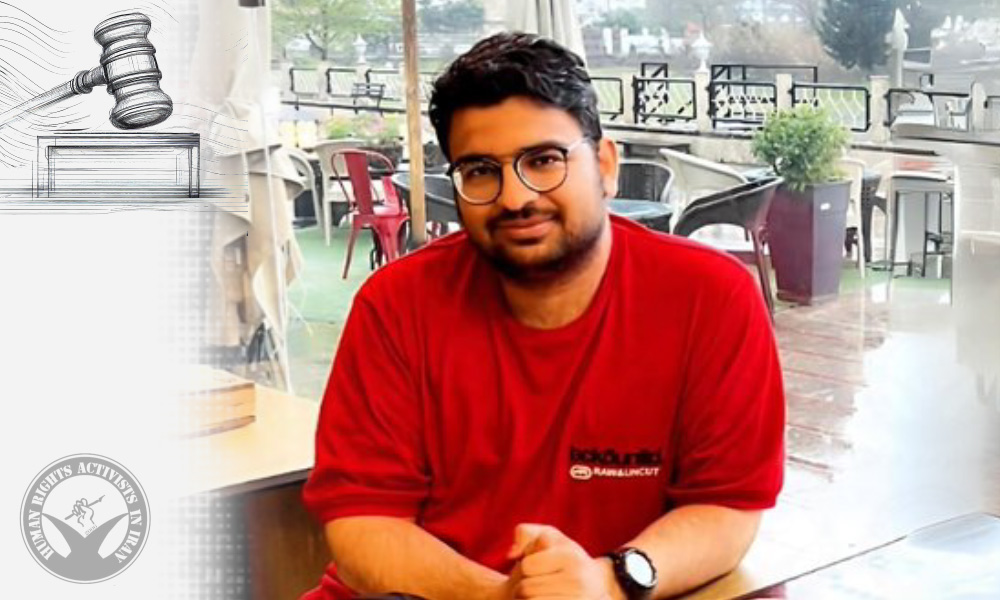
Hamid Haji Abdolpour Sentenced to Prison after Retrial

The six years, seven months, and sixteen days prison sentence of Hamid Haji Abdolpour, a graduate of Amirkabir University of Technology, has been fully upheld by Branch 20 of the Appeals Court of Razavi Khorasan Province.

After the acceptance of Mr. Haji Abdolpour’s request for a retrial by Branch 39 of the Supreme Court, his case was sent to a parallel branch. Recently, Branch 20 of the Appeals Court of Razavi Khorasan Province upheld his sentence of six years, seven months, and sixteen days in prison.

Haji Abdolpour was initially sentenced by Branch 1 of the Revolutionary Court of Mashhad to six years in prison for the charge of “forming a Telegram group with the intent of disrupting national security,” and eight months for the charge of “propaganda against the regime.”

In June-July 2023, Branch 4 of the Appeals Court of Razavi Khorasan Province reduced his sentence for propaganda against the regime by 14 days, resulting in a final sentence of six years, seven months, and sixteen days in prison. Finally, in late November of last year, after spending 46 days in solitary confinement at the IRGC’s detention facility in Razavi Khorasan Province, he was transferred to Vakilabad Prison in Mashhad to serve his sentence.

In separate letters to the Office of the Supreme Leader’s Representative in Universities, the Judiciary’s Intelligence Protection Unit, and the General Inspection Organization of the IRGC, Haji Abdolpour revealed the mistreatment he suffered during interrogations, aimed at extracting forced confessions.

He recently submitted a request for a retrial to the highest judicial authority in the country. After the Supreme Court accepted his request for a retrial and he was temporarily released on bail, the president of Amirkabir University expressed support for him in a letter to the head of the Judiciary in Razavi Khorasan Province. However, these efforts were unsuccessful, and after the case was reviewed again, Mr. Haji Abdolpour was sentenced to prison by the Appeals Court of Razavi Khorasan Province.

Amir Sheibani Zaveh’s Conviction Upheld on Appeal

The Court of Appeal of Razavi Khorasan Province upheld the ten-month prison sentence and additional punishments for Amir Sheibani Zaveh, a political prisoner held in Vakilabad Prison in Mashhad.

Based on a recent ruling issued by Branch 35 of the Court of Appeal of Razavi Khorasan Province and communicated to him, Mr. Sheibani Zaveh has been sentenced to ten months of imprisonment, an eighteen-month travel ban, and an eighteen-month ban on online activities for the charge of “propaganda against the regime through online activities.”

This political prisoner was indicted on May 5 by Branch 901 of the Mashhad Public and Revolutionary Prosecutor’s Office.

In January of 2024, Sheibani Zaveh faced another legal case for which he recevied by Branch 1 of the Revolutionary Court of Mashhad, presided over by Judge Hadi Mansouri, to one year of discretionary imprisonment, a two-year travel ban, and a two-year ban on online activities for the same charge of “propaganda against the regime.” This sentence was later upheld op appeal.

In April of this year, Sheibani was arrested and transferred to Vakilabad Prison to serve his sentence.

Sheibani has a history of arrests and convictions due to his activities.

Subscribe to Our Newsletter

Now is definitely not the time to stop reading!

Execution of Inmate at Neyshabur Prison

On June 2, 2024, an inmate convicted of murder was executed at Neyshabur Prison, located in Razavi Khorasan Province, as reported by the Iran Human Rights Organization.

Iman Rezaiepour, a 40-year-old father of two, had been sentenced to death for murder three years prior. Previously, he had been placed in solitary confinement twice while awaiting execution, but he recevied a reprieve in order to get amnesty from the victim’s family, who demanded five billion tomans (approximately 100,000 dollars) as blood money to spare his life. However, he was unable to raise the required sum.

No official sources or domestic media outlets within the country have provided coverage of these executions at the time of writing. In 2023, 66% of HRANA’s reports on executions lacked official announcements by judicial authorities and went unreported by media inside Iran, highlighting a troubling lack of transparency in due process.

In 2023, the Department of Statistics and Publication of Human Rights Activists in Iran registered the execution of 767 individuals. Out of these, 7 were carried out in public. Among the executed individuals whose genders were identified, 21 were female. Additionally, 2 juvenile offenders, defined as individuals under the age of 18 at the time of their alleged crimes, were also executed.

Three Inmates Executed in Taybad for Drug Offenses

On April 21, 2024, three inmates convicted of drug-related crimes were executed in Taybad Prison in Razavi Khorasan province, according to a report by Haal Vsh.

Two of the inmates have been identified as Esmaeil Esmaeil-Zadeh, 37, and Mohammad-Amin Mohammad-Pour, around 38, both from Iran’s Sunni community. The third inmate executed is an Afghan national, whose identity has not been disclosed.

These individuals were sentenced to death by the Revolutionary Court in Taybad four years ago.

No official sources or domestic media outlets within the country have provided coverage of these executions at the time of writing.

The reports from the Department of Statistics and Publication of Human Rights Activists for the year 2023 reveal a concerning prevalence of executions for drug offenses in Iran, constituting 56.4% of the total executions. For a comprehensive examination of the details and statistics surrounding the executions in Iran, refer to HRANA’s report.


Execution of Female Inmate in Sabzevar Prison

In Sabzevar Prison, Razavi Khorasan province, an inmate convicted of murder was executed on January 31, 2024. The hanged individual has been identified as 27-year-old Zahra Nazarian.

A reliable source confirmed Nazarian’s execution, revealing that she had been found guilty of killing her sister’s husband four years ago.

No official sources or domestic media outlets within the country have provided coverage of this execution at the time of writing. The lack of official information raises concerns about transparency and accountability in the execution process.

In 2023, the Department of Statistics and Publication of Human Rights Activists in Iran registered the execution of  746 individuals. Out of these, 6 were carried out in public. Among the executed individuals whose genders were identified, 597 were male and 20 were female. Additionally, 2 juvenile offenders, defined as individuals under the age of 18 at the time of their alleged crimes, were also executed. For a comprehensive examination of the details and statistics surrounding the executions in Iran, refer to HRANA’s annual report.

Baha’i Women Upheld with Three Years and Eight Months Sentence on Appeal

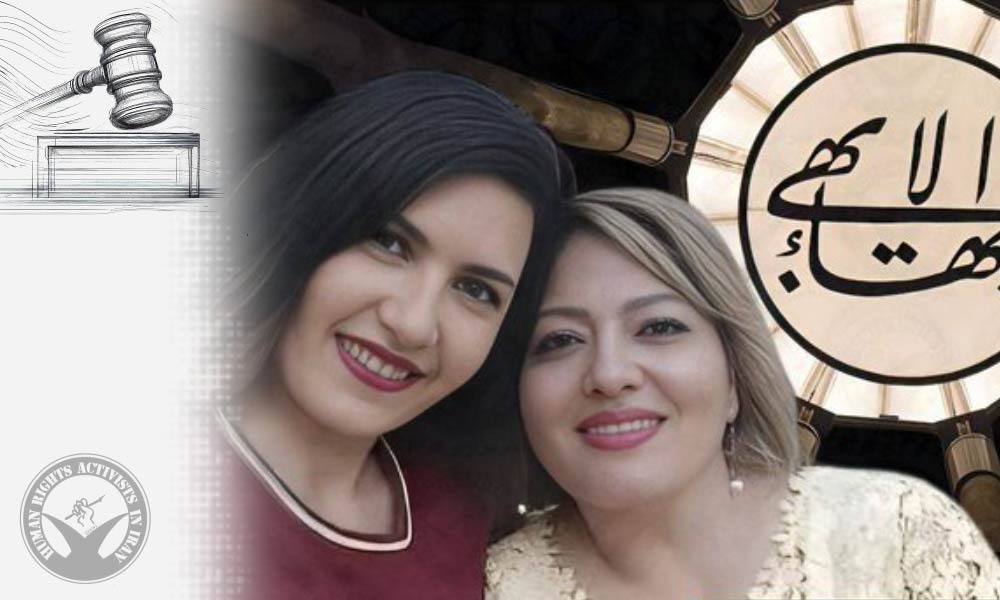
The Court of Appeal in Razavi Khorasan Province has affirmed the three-year, eight-month sentence for each of Baha’i citizens Golnoosh Nasiri and Farideh Moradi.

According to a source close to these women, who confirmed the news to HRANA, the verdict includes three years for “membership in groups to act against national security” and eight months for “spreading propaganda against the regime.”

The initial judgment was issued by the Mashhad Revolutionary Court, presided over by Judge Hadi Mansouri, during a court session held on October 11, 2023.

Their investigation procedures took place in late August 2023, during which each was granted bail with five billion tomans, approximately equivalent to 100,000 dollars.

Baha’is are subjected to violations of their religious rights, comprising 82% of reports on infringements against religious minorities, according to HRA’s 2023 annual report.

The Baha’i faith is not recognized as a legitimate religion by Iranian authorities, leading to systematic and longstanding violations of the rights of Baha’is in the country. This includes the denial of their fundamental right to practice their religion, which constitutes a clear breach of both Article 18 of the Universal Declaration of Human Rights and Article 18 of the International Covenant on Civil and Political Rights. The United Nations covenant holds that every person has the right to freedom of religion, freedom of converting religion, as well as freedom of expression, individually or collectively; openly or secretly.

Lawyer Khosrow Alikordi Receives One-Year Prison Sentence

The Court of Appeal in Razavi Khorasan Province has confirmed a one-year prison sentence for lawyer Khosrow Alikordi, coupled with a two-year prohibition on practicing law, exile, and restrictions on internet and social media usage.

Alikordi has been found guilty of alleged “propaganda against the regime in favor of anti-regime groups.” Additionally, the court has mandated a two-year residence in Nehbandan, South Khorasan province. During the trial, interviews with media outside Iran were presented as evidence for this charge.

The initial verdict was issued in September 2023 by the Mashhad Revolutionary Court.

Alikordi was arrested on August 1, 2023, after his presence in the Publish and Revolutionary Courthouse in Mashhad. Subsequently, he was detained in Vakilabad prison and released on bail after four days.

In a separate aspect of this legal case, Alikordi had earlier been sentenced to pay a fine for “disseminating false information and breaching confidentiality.”