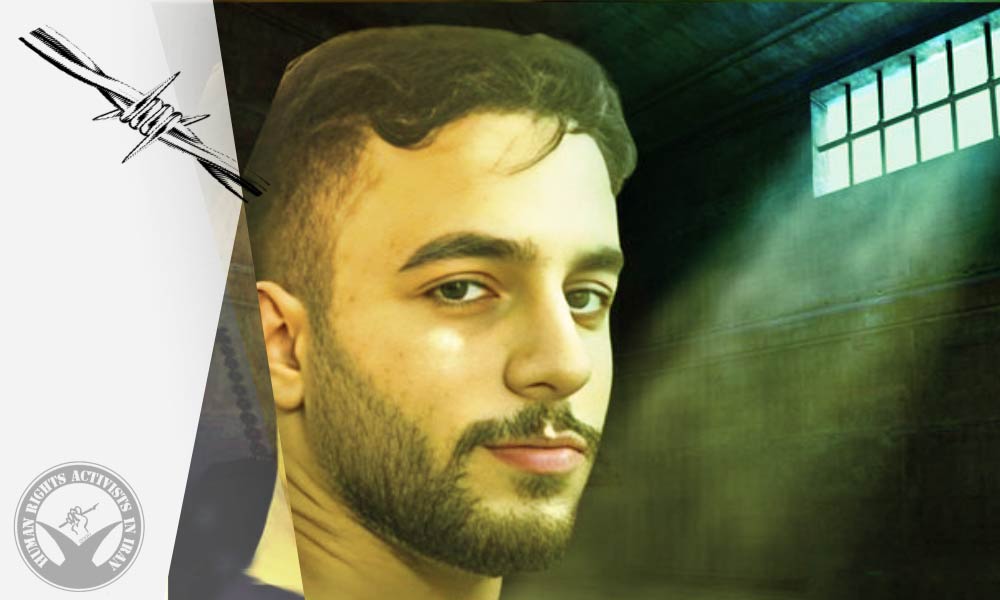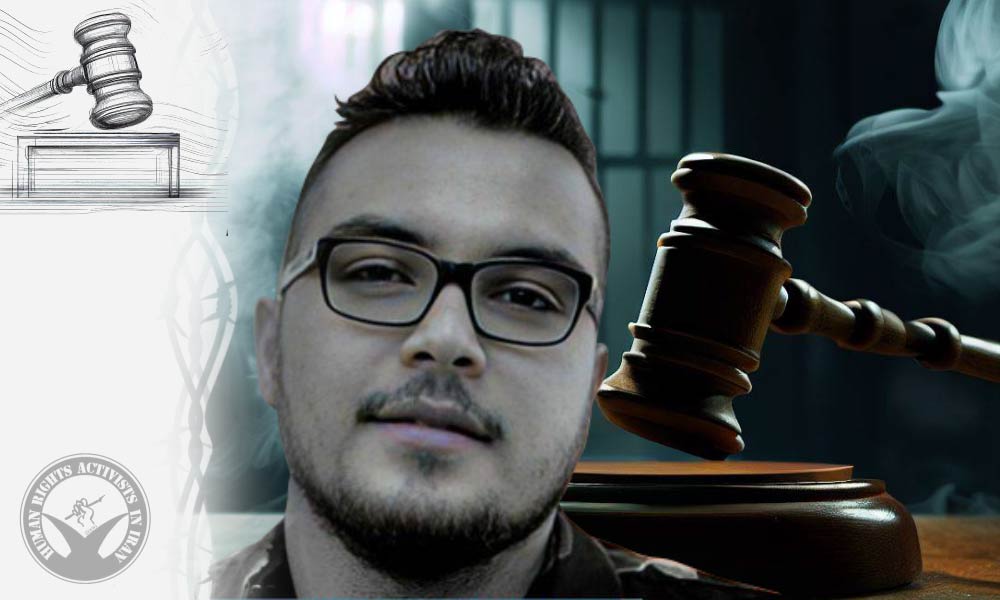
Mohammad Moradi Kia-pey Sentenced to Six Years in Prison

The Court of Appeal in Mazandaran Province has confirmed the initial six-year prison sentence and travel ban imposed on Mohammad Moradi Kia-pey, a resident of Sari.

Initially, Moradi Kia-pay was sentenced to five years for “inciting actions against national security through activities on social media” and an additional year for “repeatedly promoting anti-regime propaganda.”

Among the items seized were technical and telecommunications equipment, as well as SIM cards. Additionally, he is prohibited from traveling abroad for two years, engaging in information technology-related work, and using the Internet and social media without restrictions.

On June 25, 2023, IRGC intelligence agents apprehended Moradi Kia-Pey in Sari. Subsequently, he was detained in a facility located in Tir Kola Village. After 16 days of detention, he was released on bail.

Moradi Kia-Pey had a prior encounter with the law during the nationwide protests of 2022. He was granted amnesty through a general “commutation and pardon” directive, leading to his release after approximately 30 days of confinement.

Security Forces Detain Four Family Members of Deceased Protester Hananeh Kia

Masoumeh Azari, Helia, Vahid, and Amir Kia Kojuri – four family members of Hananeh Kia, who was killed by regime forces during the nationwide protests of 2022 – have been apprehended at their residence and subsequently transported to an undisclosed location.

A source, with close ties to the Kia family, disclosed to HRANA that on the evening of Sunday, August 27, Vahid, Helia, and Amir Kia, all siblings of Hananeh, as well as their mother Masoumeh Azari, were arrested at their residence in Nowshahr, Mazandaran province.

The specific grounds for these detentions and the whereabouts of their confinement remain undisclosed at this time.

Hananeh Kia, a 22-year-old, was shot dead by security forces on September 21, 2022, during protests in Nowshahr.

As the approaching anniversary of the 2022 nationwide protests, commonly referred to as the Mahsa Amini Protests looms, families of the victims are grappling with heightened pressures stemming from security and judicial entities. For more details, please refer to HRANA’s report on the arrest of some family members.

Fourteen Bahai Citizens Sentenced to a Total of 31 Years in Prison

In a concerning development, the Ghaemshahr Revolutionary Court has handed down a collective prison sentence of 31 years to 14 Bahai citizens.

The individuals affected by this ruling are Mani Gholinejad, Bita Haghighi, Sanaz Hekmat Shoar, Negar Darabi, Sam Samimi, Mahsa Fathi, Samieh Gholinejad, Majir Samimi, Anis Senaei, Afnaneh Nematian, Basir Samimi, Hengameh Alipour, Gulben Fallah, and Nazanin Goli.
Bita Haghighi and Sanaz Hekmat Shoar have received three years and paying a fine. The rest have been sentenced to two years and one month. All their confiscated belongings during the arrest have also been seized.

The charges against these Bahai individuals revolve around allegations of engaging in “educational activities and propaganda at variance and against Islamic Sharia law.”

Security forces arrested these individuals in Sari and Babolsar, located in the Mazandaran Province, on August 31, 2022. Subsequently, they were released on bail in the months following their arrest.

During the time of their apprehension, the Ministry of Intelligence issued a statement accusing these citizens of being members of an espionage organization, further claiming that two among them had received training from Zionists in Israel.

According to HRANA annual report, from the total human rights reports regarding the violation of religious minorities’ rights, 64.63% belonged to the violation of the rights of Baha’is.

The deprivation of the freedom to practice their religion is a breach of Article 18 of the Universal Declaration of Human Rights and Article 18 of the International Covenant on Civil and Political Rights. The United Nations covenant holds that every person has the right to freedom of religion, freedom of converting religion, as well as freedom of expression, individually or collectively; openly or secretly.


Multiple Executions Carried Out in Yasuj, Shiraz, Karaj

Four inmates, convicted of drug-related crimes and murder, were executed in Yasuj, Shiraz and Karaj. Also, according to Modara, an individual was sentenced to death by the criminal court of Mazandaran accused of killing the parliament member, Abbasali Soleimani.

According to the Iran Human Rights Organization, on June 11, two inmates, Alireza Shahcheragh and Taher Nouri (aged 38), were executed at Adelabad Prison in Shiraz. Nouri had been sentenced to death three years prior.
Furthermore, on June 14, Milad Ghobadi, an inmate held at Yasuj Prison, was executed.
In another incident reported by Javan Online on June 13, an unidentified inmate was executed at Rajai Shahr Prison. The individual had been charged with the murder of his wife three years ago.

Iran Protests: Yasin Moghadam Still in Detention for Over Four Months

Yasin Moghadam, arrested at the 2022 nationwide protests, is still detained for over four months in Sari Prison with an unclear status of due process.

According to HRANA, the news agency of Human Rights Activists, Yasin Moghadam has been detained for over four months in Sari Prison, Mazandaran Province.

An informed source told HRANA, “Moghadam is held in a ward of prisoners of violent crimes in Tirkala Prison, Sari, for 133 days, with an unclear status of due process.”

On November 29, 2022, 20-year-old Moghadam was arrested by security forces. After 26 days, he was transferred from a detention facility to Sari Prison.

About the 2022 Nationwide Protests

The arrest of Mahsa Amini by Tehran Morality Police for her improper hejab and her suspicious death on September 16 sparked protests sweeping across Iran. During the nationwide protests, about 19600 people, including journalists, artists, lawyers, teachers, students and civil rights activists, were arrested.


Subscribe to Our Newsletter

Now is definitely not the time to stop reading!

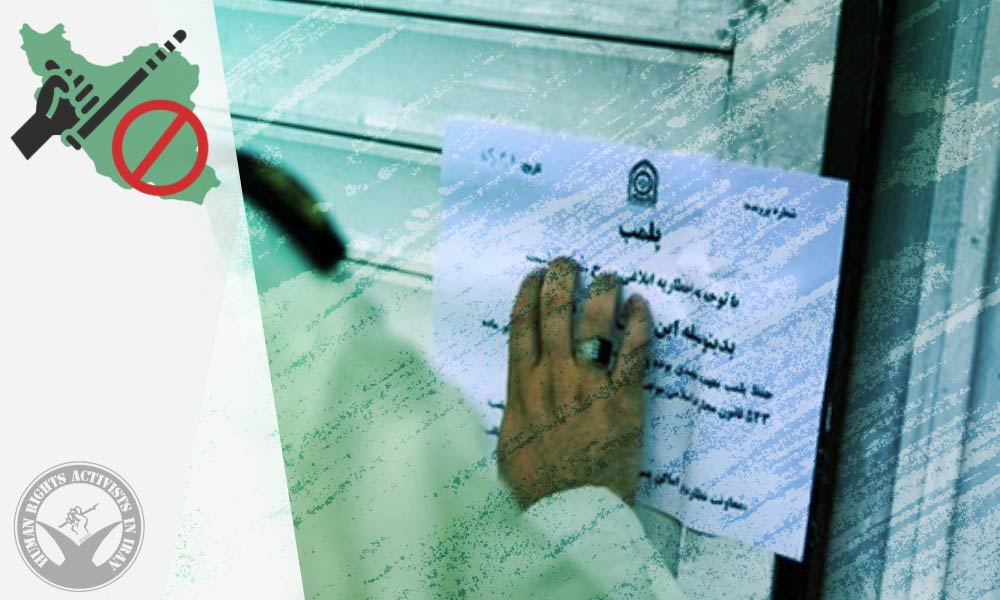
Eight Businesses Closed in Nowshahr and Rasht for Failing to Observe Hijab Rules

The Police Chief of Nowshahr announced that three cafe restaurants were closed for playing live music and failing to observe Hijab rules. Similarly, five businesses were closed in Rasht for the same reason.

According to HRANA, the news agency of Human Rights Activists, quoting IRNA, three cafe restaurants were closed for improper Hijab, playing live music and serving alcoholic beverages.

This Police chief also warned tourists coming to Mazandaran Province about not observing Ramadan rules and improper Hijab.
Also, Rokna News Agency reported that in Rasht, five shops were closed for failing to observe Hijab rules.

Imposing a certain lifestyle on citizens stands in blatant violation of Article 3 of the Universal Declaration of Human Rights which entitles everyone to the right to life, liberty and security of person. Additionally, Article 12 of this declaration affirms, “One shall be subjected to arbitrary interference with his privacy, family, home or correspondence, nor to attacks upon his honor and reputation. Everyone has the right to the protection of the law against such interference or attacks.”

Baha’i Citizen Shiva Khalili Arrested and Released on Bail in Babol

On Tuesday, November 16, Baha’i citizen Shiva Khalili was arrested after being summoned and appearing at Branch 1 of the Public and Revolutionary Court of Babol.

According to HRANA, the news agency of Human Rights Activists, Khalili was released the following day on a bail of 700 million tomans until the end of legal proceedings. Shiva Khalili, a resident of Babol in Mazandaran Province, was summoned to the Revolutionary Court of Babol by phone.

According to unofficial sources, it is estimated that more than 300,000 Baha’is live in Iran, but the Iranian constitution recognizes only Islam, Christianity, Judaism, and Zoroastrianism. Because their faith is not considered legitimate by authorities, the rights of Baha’is in Iran have been systematically violated for years.

This deprivation of the freedom to practice their religion is a breach of Article 18 of the Universal Declaration of Human Rights, and Article 18 of the International Covenant on Civil and Political Rights. The United Nations covenant holds that every person has the right to freedom of religion, freedom of converting religion, as well as freedom of expression, individually or collectively; openly or secretly.

The reason for Khalili’s arrest and the charges against her are unknown as of this writing.

Baha’i Citizen Manijeh Azamian’s One Year Sentence Upheld by Court of Appeals

The court of appeals in Mazandaran Province recently upheld Baha’i citizen Manijeh Azamian’s one year prison sentence.

According to HRANA, the news agency of Human Rights Activists, 52-year-old Azamian had previously been sentenced on a charge of “propaganda against the regime” by Branch 1 of the Revolutionary Court of Babol.

On April 10, security forces searched Azamian’s house and confiscated several of her personal belonging such as her cell phone, PC hard drive, flash drives, and books about the Baha’i faith. They summoned her to appear at the Ministry of Intelligence office on the same day afternoon.

An informed source told HRANA, “During the interrogation, they called several phone numbers from the list on her cell phone and at least three of her non-Baha’i friends or neighbors were summoned for interrogation.”

Three days later, security forces arrested her and transferred her to Babol Prison. The next day, she was released on bail of 50 million tomans.

According to unofficial sources, it is estimated that more than 300,000 Baha’is live in Iran, but the Iranian constitution recognizes only Islam, Christianity, Judaism, and Zoroastrianism. Because their faith is not considered legitimate by authorities, the rights of Baha’is in Iran have been systematically violated for years.

This deprivation of the freedom to practice their religion is a breach of Article 18 of the Universal Declaration of Human Rights, and Article 18 of the International Covenant on Civil and Political Rights. The United Nations covenant holds that every person has the right to freedom of religion, freedom of converting religion, as well as freedom of expression, individually or collectively; openly or secretly.


Baha’i Citizen Sheida Taeed Released on Bail

On Monday, October 11, Baha’i citizen Sheida Taeed, a resident of Qaemshahr city in Mazandaran Province, was released on a bail of 900 million Tomans (approx 33,000 dollars)  from a security detention center in this city.

According to HRANA, the news agency of Human Rights Activists, Taeed had been arrested by security forces at her home on September 23, 2021, and then transferred to an unknown location. During the arrest, officers inspected her home and confiscated a number of her belongings, including her cell phone, electronics, books, photographs, and manuscripts.

According to an informed source, the security forces initially put Farideh Taeed, Sheida’s elderly mother, in the car as well, and dropped her off somewhere along the road.

Sheida Taeed had been detained and convicted once before because of her faith. She was arrested in the city of Noor in January of 2013 and was finally sentenced to one year in prison in 2015, which she served out in Babol Prison.

According to unofficial reports, by estimated there are more than 300,000 Baha’is in Iran. While the constitution recognizes Islam, Christianity, Judaism, and Zoroastrianism as accepted religions (People of Book, as articulated in Sharia law), it denies recognizing the Baha’i faith, which conclusively leads to the systematic violation of their rights.

Baha’i citizens are denied the right to exercise their religion. This systematic deprivation stands in violation of Article 18 of the Universal Declaration of Human Rights and Article 18 of the International Covenant on Civil and Political Rights, which both affirm that everyone has the right to freedom of thought, conscience, and religion.

Baha’i Citizen Sheida Taeed Arrested in Ghaemshahr

On Thursday, September 23, Sheida Taeed, a Baha’i citizen living in Ghaemshahr in Mazandaran Province, was arrested in her home by security forces.

According to HRANA, the news agency of Human Rights Activists, Taeed  was taken by security forces to an unknown location following the arrest.

Security forces also raided her home and confiscated a number of her belongings, including her mobile phone, electronics, books, photographs, and manuscripts.

According to an informed source, the security forces initially put Farideh Taeed, Sheida’s elderly mother, in the car as well, and dropped her off somewhere along the road.

Ms. Taeed has a history of detention and conviction. She was arrested in the city of Noor in January of 2013 and was finally sentenced to one year in prison in 2015, which she served out in Babol Prison.

According to unofficial sources, it is estimated that more than 300,000 Baha’is live in Iran, but the Iranian constitution recognizes only Islam, Christianity, Judaism, and Zoroastrianism. Because their faith is not considered legitimate by authorities, the rights of Baha’is in Iran have been systematically violated for years.

This deprivation of the freedom to practice their religion is a breach of Article 18 of the Universal Declaration of Human Rights, and Article 18 of the International Covenant on Civil and Political Rights. The United Nations covenant holds that every person has the right to freedom of religion, freedom of converting religion, as well as freedom of expression, individually or collectively; openly or secretly.