Ramin Haeri Sentenced to Sixteen Months in Prison

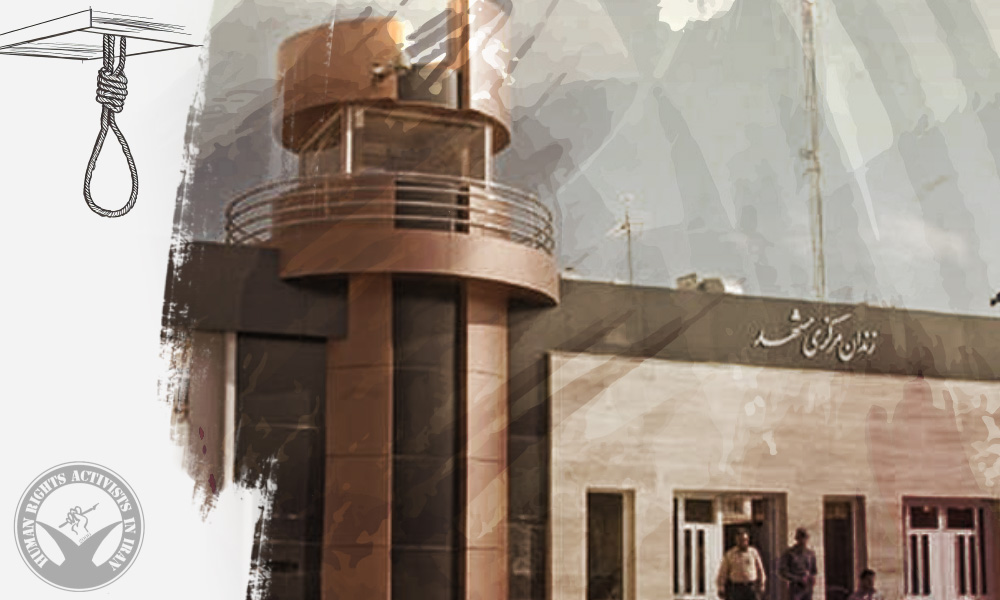
Ramin Haeri, a political prisoner held in Vakilabad Prison in Mashhad, has been sentenced to sixteen months in prison by Branch 2 of the Revolutionary Court in this city.

Based on a recent verdict issued by Branch 2 of the Revolutionary Court of Mashhad and communicated to this political prisoner in prison, Mr. Haeri was sentenced to sixteen months in prison on charges including “propaganda against the regime” and “disturbing public opinion.”

A source close to the political prisoner’s family confirmed the news to HRANA, adding, “Mr. Haeri is also facing another case on the charge of insulting the Supreme Leader, for which no court hearing has yet been held.”

Haeri was arrested by Ministry of Intelligence agents at his home in Mashhad on February 27, 2024, and was taken to The Ministry of Intelligence’s detention facility in the city.

He was eventually transferred to Vakilabad Prison, Mashhad, on March 28, 2024. He is currently being held in Ward 104 of this prison, alongside violent crime offenders, without regard for the principle of separating different types of crimes.

Hamid Haji Abdolpour Sentenced to Prison after Retrial

The six years, seven months, and sixteen days prison sentence of Hamid Haji Abdolpour, a graduate of Amirkabir University of Technology, has been fully upheld by Branch 20 of the Appeals Court of Razavi Khorasan Province.

After the acceptance of Mr. Haji Abdolpour’s request for a retrial by Branch 39 of the Supreme Court, his case was sent to a parallel branch. Recently, Branch 20 of the Appeals Court of Razavi Khorasan Province upheld his sentence of six years, seven months, and sixteen days in prison.

Haji Abdolpour was initially sentenced by Branch 1 of the Revolutionary Court of Mashhad to six years in prison for the charge of “forming a Telegram group with the intent of disrupting national security,” and eight months for the charge of “propaganda against the regime.”

In June-July 2023, Branch 4 of the Appeals Court of Razavi Khorasan Province reduced his sentence for propaganda against the regime by 14 days, resulting in a final sentence of six years, seven months, and sixteen days in prison. Finally, in late November of last year, after spending 46 days in solitary confinement at the IRGC’s detention facility in Razavi Khorasan Province, he was transferred to Vakilabad Prison in Mashhad to serve his sentence.

In separate letters to the Office of the Supreme Leader’s Representative in Universities, the Judiciary’s Intelligence Protection Unit, and the General Inspection Organization of the IRGC, Haji Abdolpour revealed the mistreatment he suffered during interrogations, aimed at extracting forced confessions.

He recently submitted a request for a retrial to the highest judicial authority in the country. After the Supreme Court accepted his request for a retrial and he was temporarily released on bail, the president of Amirkabir University expressed support for him in a letter to the head of the Judiciary in Razavi Khorasan Province. However, these efforts were unsuccessful, and after the case was reviewed again, Mr. Haji Abdolpour was sentenced to prison by the Appeals Court of Razavi Khorasan Province.

Death Sentences for Six Prisoners Upheld by the Supreme Court

Branch 39 of  the Supreme Court has upheld the death sentences of Malek Ali Fadaie-Nasab, Farhad Shakeri, Isa Eidmohammadi, Abdolhakim Azim Gorgij, Abdolrahman Gorgij, and Taj Mohammad Khormali, political prisoners held in Vakilabad Prison in Mashhad.

In early July 2023, Branch 4 of the Mashhad Revolutionary Court sentenced each of these prisoners to death on the charge of “armed rebellion (Baghi)” after a retrial in a joint case.

A source close to the family of one of these political prisoners confirmed the news to HRANA, stating that the Supreme Court’s 39th Branch had upheld their death sentences.

In 2019, Branch 1 of the Mashhad Revolutionary Court, presided over by Judge Mahmoud Davoodabadi, sentenced these prisoners to death on charges of “armed rebellion through membership in the Salafi group Hizb al-Furqan and membership in the National Solidarity Front of Sunni Muslims of Iran.”

Subsequently, Branch 4 of the Supreme Court, presided over by Judge Ali Razini, overturned their death sentences and referred the case to a another court branch for retrial. In July 2023, Branch 4 of the Mashhad Revolutionary Court, presided over by Judge Ahmadian Salami, re-issued death sentences for these prisoners after a retrial.

After the death sentences were issued, the case was referred back to Branch 39 of the Supreme Court for further review.

A source close to the families of these prisoners previously informed HRANA that “this case is fraught with fundamental flaws, and there is insufficient evidence to convict these individuals of the charges against them. The use of pepper spray against one of the prisoners is an example of the torture inflicted upon them. The effects of such torture remain on their bodies even after several years.”

A Report on the Latest Situation of Ali Pasban in Vakilabad Prison, Mashhad

Ali Pasban, a political prisoner, is serving his seven-year sentence in Vakilabad Prison in Mashhad. He is being held in the same ward as prisoners convicted of violent crimes, in violation of prison regulations.

A source close to Mr. Pasban’s family told HRANA, “He is being held in the violent criminals’ ward, Salon 102, Ward 5 of Vakilabad Prison in Mashhad, without adherence to the principle of separation of crimes. Recently, after he protested against the inappropriate behavior of a prison official, he was threatened. The guards told him they would hire individuals in that ward to harm him. He reported to his family about ongoing harassment, threats, and the danger to his life, and requested legal assistance.”

This citizen was arrested on August 26, 2021, in Mashhad and transferred to Vakilabad Prison in this city. In January 2022, he was sentenced to seven years in prison by Branch 1 of the Revolutionary Court of Mashhad on charges of “membership in opposition groups intending to disrupt national security.”
Additionally, in March-April 2022, he was sentenced to one year in prison on charges of “insulting the Supreme Leader.”
Mr. Pasban had previously been convicted and served prison sentences in Isfahan and Kashan in 2018 and 2019 on charges of “propaganda against the regime” and “insulting the Supreme Leader.”

Amir Sheibani Zaveh’s Conviction Upheld on Appeal

The Court of Appeal of Razavi Khorasan Province upheld the ten-month prison sentence and additional punishments for Amir Sheibani Zaveh, a political prisoner held in Vakilabad Prison in Mashhad.

Based on a recent ruling issued by Branch 35 of the Court of Appeal of Razavi Khorasan Province and communicated to him, Mr. Sheibani Zaveh has been sentenced to ten months of imprisonment, an eighteen-month travel ban, and an eighteen-month ban on online activities for the charge of “propaganda against the regime through online activities.”

This political prisoner was indicted on May 5 by Branch 901 of the Mashhad Public and Revolutionary Prosecutor’s Office.

In January of 2024, Sheibani Zaveh faced another legal case for which he recevied by Branch 1 of the Revolutionary Court of Mashhad, presided over by Judge Hadi Mansouri, to one year of discretionary imprisonment, a two-year travel ban, and a two-year ban on online activities for the same charge of “propaganda against the regime.” This sentence was later upheld op appeal.

In April of this year, Sheibani was arrested and transferred to Vakilabad Prison to serve his sentence.

Sheibani has a history of arrests and convictions due to his activities.

Subscribe to Our Newsletter

Now is definitely not the time to stop reading!

Four Prisoners Executed in Vakilabad Prison, Mashhad

On June 30, 2024, four inmates previously sentenced to death on drug-related charges were executed in Vakilabad Prison, Mashhad.

These prisoners were hanged at dawn on Sunday, June 30th. Two of them were from Mashhad, one was from Quchan, and the other was an Afghan national. They had previously been arrested on drug-related charges and subsequently sentenced to death. The two prisoners from Mashhad were arrested in 2019.

Based on information received by HRANA, the execution of these prisoners was carried out without a final meeting with their families. Two of them were identified by HRANA as Yaser Ghafoorian and 47-year-old Mohammad Hooshyar Alizadeh.

No official sources or domestic media outlets within the country have provided coverage of these executions at the time of writing.

According to data gathered by the Department of Statistics and Publication of Human Rights Activists, Ghezel Hesar Prison in Karaj witnessed the highest number of executions in 2023, with Zahedan Prison following closely behind. For a comprehensive examination of the details and statistics surrounding the executions in Iran, refer to HRANA’s report.

Five-Year Sentence for Mohammad-Hassan Sadeghian Confirmed by Appellate Court

The Appellate Court of Razavi Khorasan Province has upheld the five-year prison sentence of Mohammad-Hassan Sadeghian, who was detained during the nationwide protests in 2022. He is currently incarcerated in Vakilabad Prison.

Originally, the Revolutionary Court of Mashhad convicted Sadeghian on several charges, including “assembly and collusion against national security,” “propaganda against the regime,” and “disturbing public order.”

Sadeghian was arrested at his home on September 25, 2022, and has been held in Vakilabad Prison since his arrest.

Ali Aghel Begins Four-Year Sentence on Political Charges

Ali-Asghar Aghel Moghaddam, a resident of Mashhad, was transferred to Vakilabad Prison on May 9, 2024, to commence a four-year prison term.

Aghel was initially arrested on October 23, 2023, following his appearance at the Public and Revolutionary Courthouse in Mashhad. He was detained at Vakilabad Prison but was released on bail six days later, pending further legal proceedings.

The Revolutionary Courts subsequently convicted Aghel for “membership in anti-regime groups,” resulting in a four-year sentence, and for “propaganda against the regime,” which carried a one-year sentence. The combined verdict was upheld on appeal.

According to Article 134 of the Islamic Penal Code, which stipulates that the harshest sentence is enforced in cases involving multiple charges, Aghel is required to serve a four-year term.

Four Afghan Nationals Executed in Mashhad for Drug Convictions

On April 18, 2024, four Afghan nationals were executed in Vakilabad Prison in Mashhad for drug-related offenses, according to Haal Vsh.

The individuals, identified as Zaman Taheri, Salam Taheri, Gholam Ghader Samani, and Ebrahim Nour-Zahi, were sentenced to death four years ago.

No official sources or domestic media outlets within the country have provided coverage of these executions at the time of writing. In 2023, 66% of HRANA’s reports on executions lacked official announcements by judicial authorities and went unreported by media inside Iran, highlighting a troubling lack of transparency in due process.

The reports from the Department of Statistics and Publication of Human Rights Activists for the year 2023 reveal a concerning prevalence of executions for drug offenses in Iran, constituting 56.4% of the total executions. For a comprehensive examination of the details and statistics surrounding the executions in Iran, refer to HRANA’s report.


Five Executed for Drug Offenses in Mashhad

In a recent development, five individuals convicted of drug-related offenses faced execution in Vakilabad Prison, Mashhad, on April 15, 2024, according to Haal Vsh.

The identities of the executed individuals were withheld from the report. However, it was noted that four of them hailed from Mashhad, while one was identified as an Afghan national.

No official sources or domestic media outlets within the country have provided coverage of these executions at the time of writing. In 2023, 66% of HRANA’s reports on executions lacked official announcements by judicial authorities and went unreported by media inside Iran, highlighting a troubling lack of transparency in due process.

The reports from the Department of Statistics and Publication of Human Rights Activists for the year 2023 reveal a concerning prevalence of executions for drug offenses in Iran, constituting 56.4% of the total executions. For a comprehensive examination of the details and statistics surrounding the executions in Iran, refer to HRANA’s report.