Three Prisoners Executed in Dastgerd Prison, Isfahan

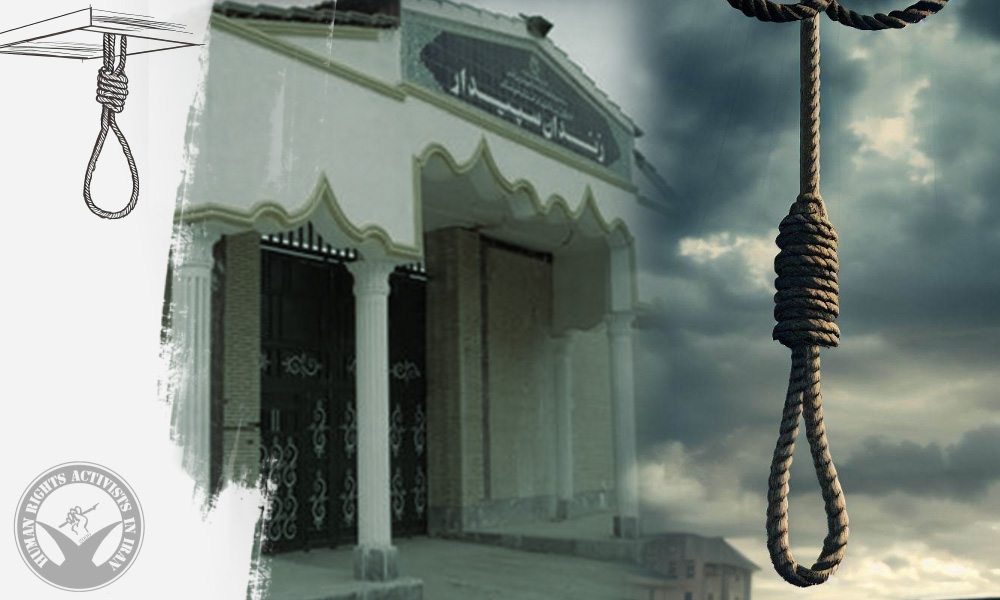
Today, October 31, the death sentences of three prisoners, previously convicted on charges of murder and drug-related offenses, were carried out in Dastgerd Prison, Isfahan.

HRANA has confirmed the identities of the prisoners as Kourosh Salehian, Amir Jahandar, and Reza Bidabadi. Early this morning, Reza Bidabadi, sentenced to death on murder charges, was executed by hanging. Meanwhile, Salehian and Jahandar were executed on Monday, October 28, with Salehian convicted of murder and Jahandar on drug-related charges.

As of this report, prison officials and relevant authorities have yet to publicly confirm these executions.

According to latest HRANA’s annual report over between October 10, 2023, and October 8, 2024, at least 811 individuals were executed by hanging in Iran, rising to 23.06% compared to the same period last year. Of these executions, four were carried out in public. Many of the defendants were denied a fair trial.

Prisoner Executed in Naqadeh Prison for Drug Offenses

Today, October 31, the death sentence of a prisoner previously convicted on drug-related charges was carried out in Naqadeh Prison.

HRANA has identified the prisoner as Vahid Binami, a 40-year-old resident of Piranshahr. He was previously arrested on drug-related charges and subsequently sentenced to death by the judiciary.

As of this report, prison officials and responsible authorities have not yet publicly announced the execution of this prisoner.

The reports from the Department of Statistics and Publication of Human Rights Activists for the year 2023 reveal a concerning prevalence of executions for drug offenses in Iran, constituting 56.4% of the total executions. For a comprehensive examination of the details and statistics surrounding the executions in Iran, refer to HRANA’s report.

Execution of Prisoner Carried Out in Ahvaz’s Sepidar Prison

Early Wednesday morning, October 30, a prisoner sentenced to death on murder charges was executed in Sepidar Prison, Ahvaz.

HRANA has identified the individual as Sardar Safarpour, who was initially detained on murder charges and later received a death sentence from the judiciary.

As of this report, officials from the prison and relevant authorities have not officially announced Safarpour’s execution.

According to the Department of Statistics and Publication of Human Rights Activists in Iran, in 2023, at least 767 citizens, including 21 women and 2 juvenile offenders, were executed. Of these, the executions of 7 individuals were carried out in public. Additionally, during this period, 172 others were sentenced to death, with 5 of them sentenced to public execution. It is worth noting that during the same period, the initial death sentences of 49 other individuals were also upheld by the Supreme Court.

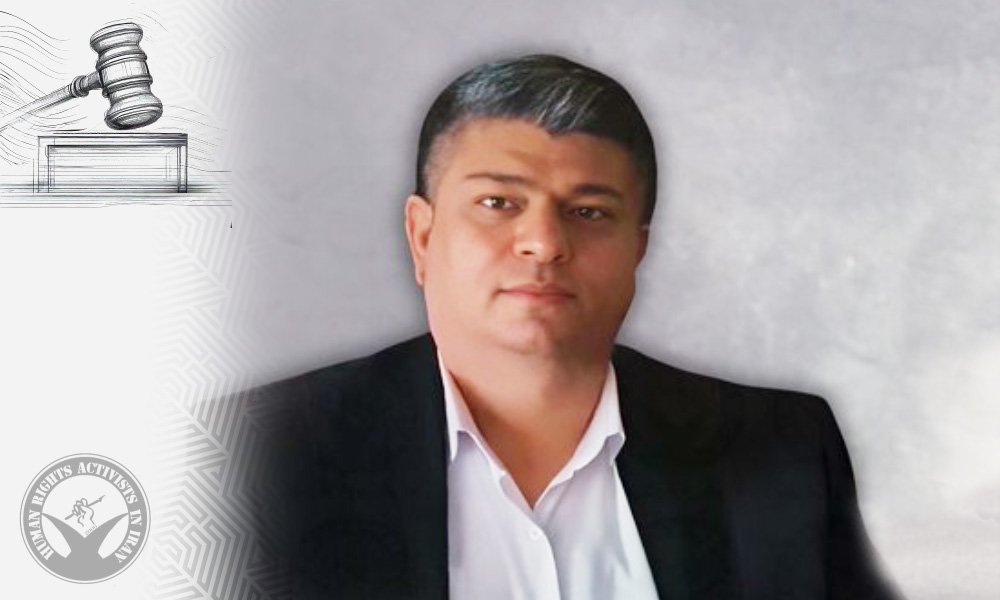
Vadood Asadi Sentenced to Five Years and Six Months in Prison

After his appeal was accepted and a retrial held, Azerbaijani-Turk activist Vadood Asadi has been sentenced to five years and six months in prison by Branch 3 of the Revolutionary Court in Rasht.

Asadi was originally sentenced in absentia by the same court. He had received a one-year sentence for “propaganda against the regime,” three years and six months for “membership in opposition groups,” and an additional one year for “insulting the Supreme Leader.” Following Asadi’s appeal, the court reconvened on Sunday, October 27, ultimately reissuing a verdict of five years and six months in prison.

In a separate case, Asadi was recently sentenced to four years in prison by the Revolutionary Court in Tehran, following a hearing held on May 21, 2024.

Asadi’s recent detainment history began in February 2024, when he was arrested by security forces in Rasht. He was transferred to Evin Prison in March, where he remained briefly before being released on bail.

Asadi has faced previous legal action due to his activism, adding to a history of judicial confrontations related to his advocacy work.

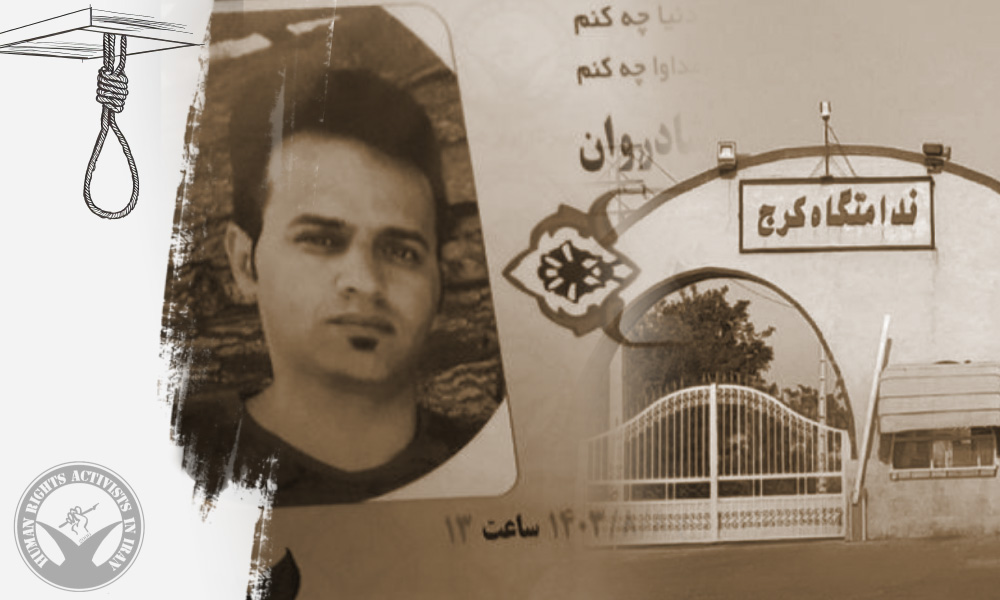
Four Prisoners Executed in the Central Prison of Karaj on Drug-Related Charges

At dawn yesterday, October 29, four prisoners convicted on drug-related charges were executed in the Central Prison of Karaj.

According to HRANA, the news agency of Human Rights Activists in Iran, three of the executed prisoners have been identified as Mohammad Nedaei, Ali Akbar (Mohsen) Akhayer, and Akbar Khorram Taj. These individuals were arrested approximately six years ago on drug-related charges and later sentenced to death.

Kurdpa identified the fourth prisoner as Morovat-Ali Karami, from Kermanshah, who was also executed on similar charges on Tuesday morning.

As of this report, prison authorities and relevant institutions have not publicly confirmed these executions.

The reports from the Department of Statistics and Publication of Human Rights Activists for the year 2023 reveal a concerning prevalence of executions for drug offenses in Iran, constituting 56.4% of the total executions. For a comprehensive examination of the details and statistics surrounding the executions in Iran, refer to HRANA’s report.

Subscribe to Our Newsletter

Now is definitely not the time to stop reading!

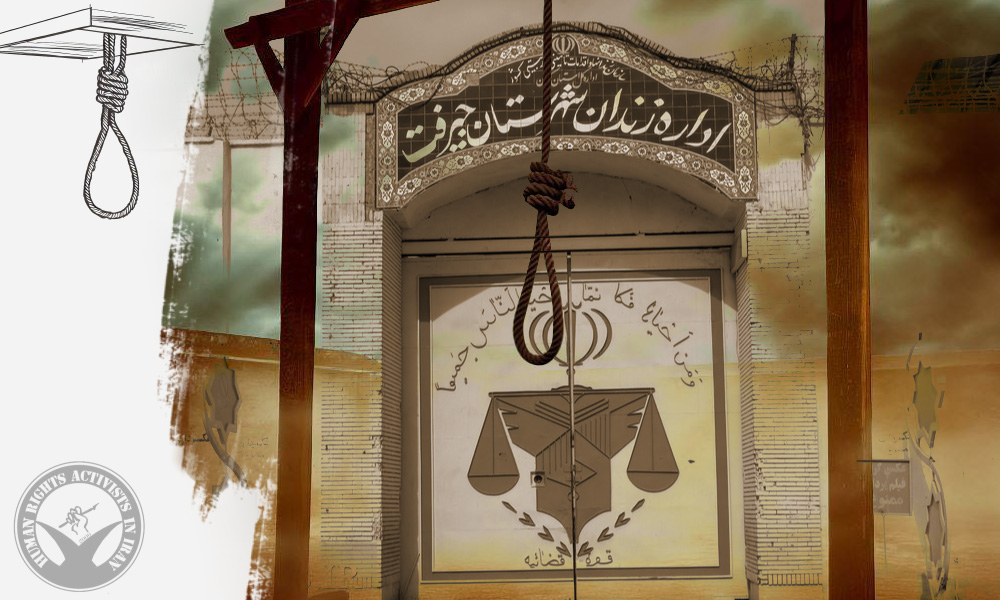
Prisoner Executed at Jiroft Prison on Murder Charges

At dawn today, October 30, a prisoner previously sentenced to death on murder charges was executed in Jiroft Prison, Kerman Province.

The prisoner has been identified by HRANA as “Ahmad Salari.” Mr. Salari was arrested ten years ago on murder charges and subsequently sentenced to death by the judiciary.

As of the time of this report, prison officials and relevant authorities have not publicly announced the execution.

According to latest HRANA’s annual report over between October 10, 2023, and October 8, 2024, at least 811 individuals were executed by hanging in Iran, rising to 23.06% compared to the same period last year. Of these executions, four were carried out in public. Many of the defendants were denied a fair trial.

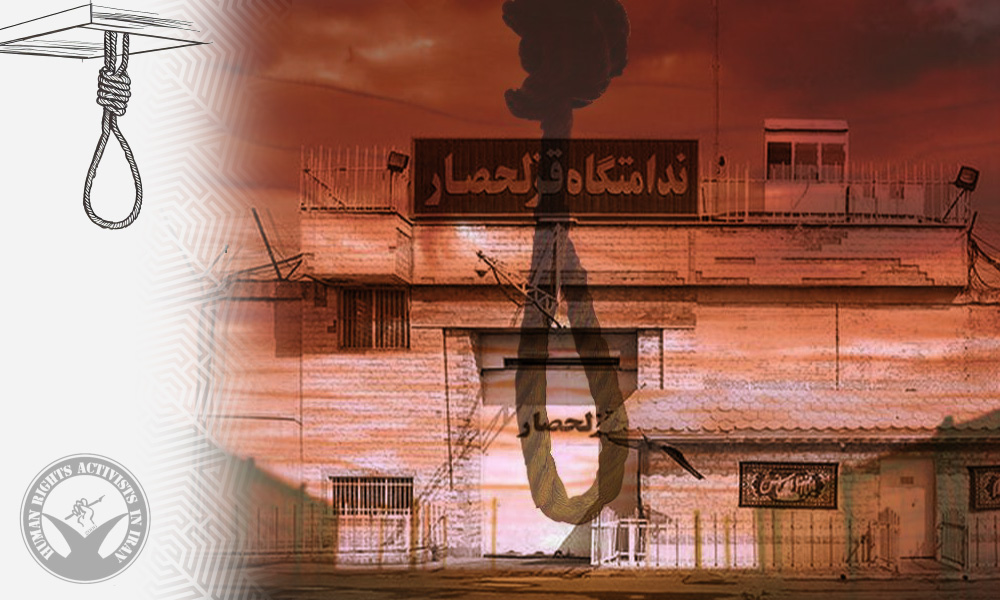
Four Prisoners Executed at Ghezel Hesar Prison in Karaj

At dawn on October 30, four prisoners were executed at Ghezel Hesar Prison in Karaj. Two of these individuals had been sentenced to death on drug-related charges, while the other two were convicted of “moharebeh” (enmity against God) due to armed robbery.

HRANA, the news agency of Human Rights Activists in Iran, identified the executed prisoners as “Abdullah Tajik, an Afghan national, Mostafa Gholamzadeh, Mohammad Jalali, and Saman Anbari.” According to HRANA, Mr. Tajik and Mr. Gholamzadeh were sentenced for drug-related offenses, while Mr. Jalali and Mr. Anbari were convicted of moharebeh for their involvement in armed robbery.

Earlier, on Monday, HRANA reported that eight prisoners had been moved to solitary confinement in Ghezel Hesar Prison, all of whom were facing death sentences on drug-related charges. Except for Abdullah Tajik and Mostafa Gholamzadeh, the remaining prisoners were subsequently returned to the general ward.

As of this report, prison authorities and relevant institutions have not officially announced these executions.

According to data gathered by the Department of Statistics and Publication of Human Rights Activists, Ghezel Hesar Prison in Karaj witnessed the highest number of executions in 2023, with Zahedan Prison following closely behind. For a comprehensive examination of the details and statistics surrounding the executions in Iran, refer to HRANA’s report.

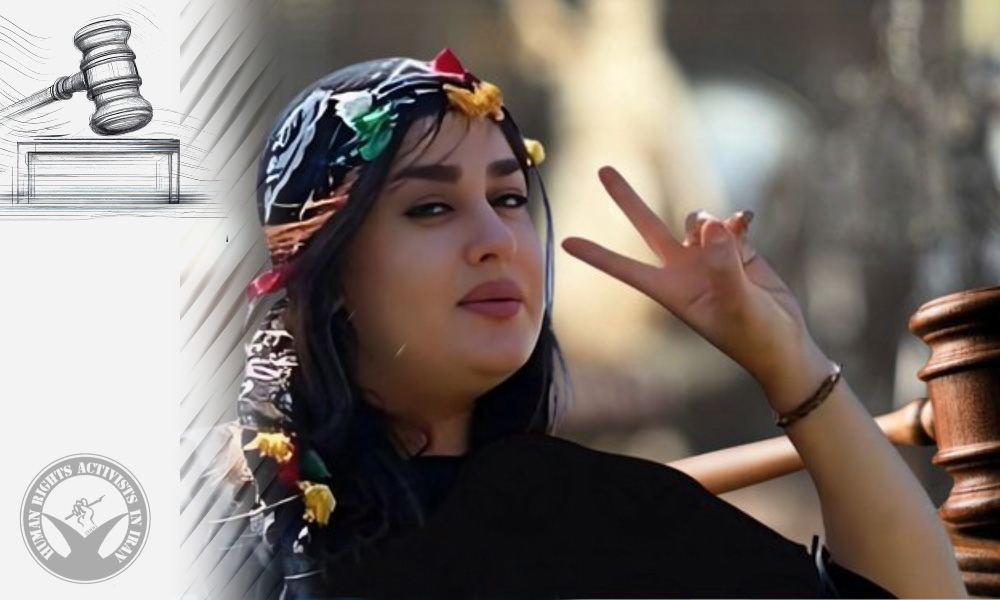
Solmaz Hassanzadeh Sentenced to One Year in Prison

Solmaz Hassanzadeh, sister of Mohammad Hassanzadeh, who was killed by regime forces during the 2022 nationwide protests, has been sentenced to one year in prison by judicial authorities.

According to Kurdpa, the one-year sentence was issued by Branch 101 of Criminal Court Two in Bukan, presided over by Judge Mehdi Fakhri, on the charge of “propaganda against the regime.”

Though cases of this nature typically fall under the jurisdiction of the Revolutionary Court, the lack of such a court in Bukan means security-related cases are first referred to the Revolutionary Court in Mahabad. Once a decision is reached, the case is returned to Bukan’s Criminal Court for sentencing.

On July 30, Solmaz and her father were arrested by security forces while attempting to hold a memorial ceremony for Mohammad’s birthday. The next day, her father, Ahmad Hassanzadeh, was released on a bail of four billion tomans, while Solmaz was released on August 13 after posting a bail of 500 million tomans.

Solmaz Hassanzadeh had previously been detained by security forces at a checkpoint between Bukan and Saqqez on September 27 of last year, and was subsequently released.

Mohammad Hassanzadeh, a 28-year-old Bukan resident, was fatally shot during the 2022 protests and passed away on November 16 of that year.

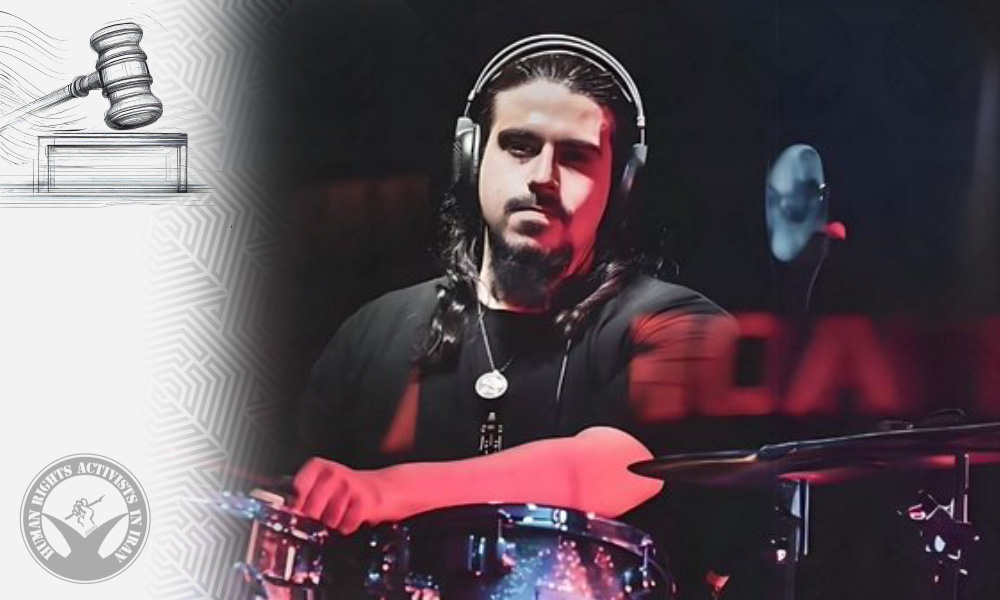
Behrad Azargan, Baha’i Musician, Sentenced to 11 Years in Prison

Behrad Azargan, a Baha’i musician residing in Tehran, has been sentenced by the Revolutionary Court of Tehran to 11 years in prison, in addition to the confiscation of his seized belongings.

According to HRANA, the news agency of Human Rights Activists in Iran, Branch 15 of the Tehran Revolutionary Court, presided over by Judge Salavati, sentenced Azargan to five years in prison for “engaging in educational or promotional activities against Sharia of Islam” through affiliation with a sect or similar group, four years for “membership in anti-regime groups,” and two years for “spreading false information.” Additionally, the court ordered the confiscation of items seized from his home and imposed a two-year ban on his use of social media and travel abroad.

The court session addressing Azargan’s case was held on October 6.

Azargan’s home was raided on July 3 by security agents, who seized several personal items, including his phone and laptop.

He was subsequently detained on August 4 after appearing at the Third Branch of the Security Prosecutor’s Office to defend himself against charges of anti-regime propaganda. He was later released on bail from Evin Prison.

Finger Amputation Sentences Executed on Two Prisoners in Urmia Prison

On October 30, two prisoners convicted of theft had their sentences of finger amputation carried out in Urmia Prison.

According to HRANA, the news agency of Human Rights Activists in Iran, brothers Shahab and Mehrdad Teimouri were each sentenced by Branch 1 of the Juvenile Court in West Azerbaijan Province to the amputation of four fingers on their right hands, as well as restitution of stolen goods. After being transferred to solitary confinement in preparation, the prisoners were taken to the execution unit in Urmia Prison, where the sentences were executed. They were then transported to Imam Khomeini Hospital in Urmia for medical care.

The Teimouri brothers were initially arrested in 2019 on theft charges and later sentenced to finger amputation by the court. This ruling was upheld in April 2020 by Branch 24 of the Supreme Court, presided over by Judge Mohammad Karami, who confirmed the Teimouri brothers’ sentences but overturned a similar sentence for a co-defendant, Ebrahim Khatibi, ultimately sentencing him to 20 years in prison.

In part of his defense, which HRANA obtained, Mehrdad Teimouri stated, “I admit to theft. I am a thief, but not as recorded by the police. In 2015, I was forced to confess to 11 thefts… I had debts to other victims, which led me to this theft.”

A source close to the case told HRANA, “The initial trial was held on July 24, 2019, in Branch 1 of the Juvenile Court in Urmia, where all three defendants were sentenced to amputation. Following appeals filed by their court-appointed attorneys, the case was referred to the Supreme Court, which confirmed the Teimouri brothers’ sentences in April 2020 and overturned Ebrahim Khatibi’s sentence.”

Due to the involvement of the Juvenile Court, it appears the defendants may have been under 18 at the time of their trial. However, with no official statements and limited access to court records, HRANA continues its independent investigation to confirm this information.

Shahab and Mehrdad Teimouri are from Sarpol-e Zahab and currently reside in Malard, Karaj.

Amputation as a legal punishment violates fundamental principles of human dignity, and the International Covenant on Civil and Political Rights explicitly prohibits inhumane or degrading punishments.